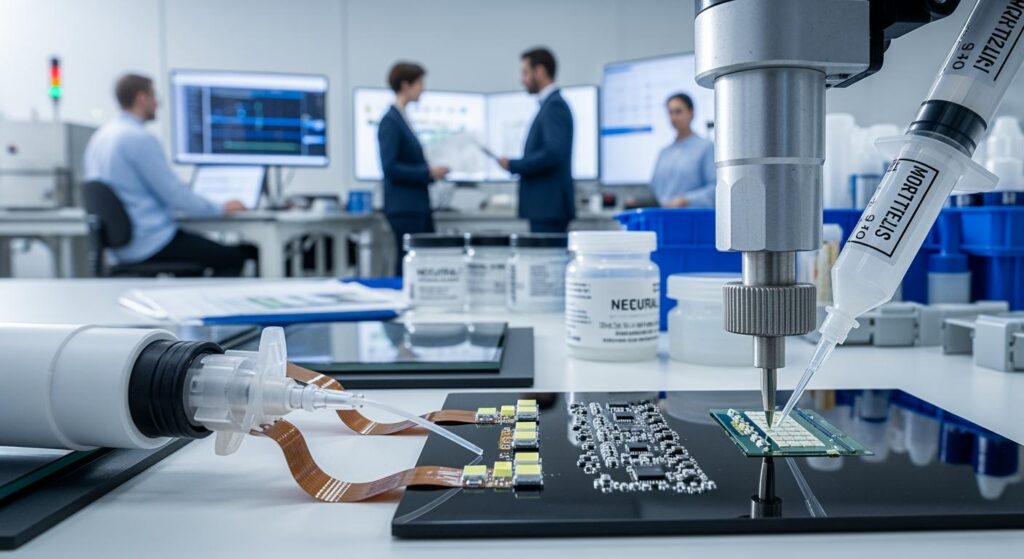
Technical Insights
Behind every successful bonded joint lies a combination of correct chemistry, careful design, and disciplined process control. The goal of this section is to translate complex adhesive science into practical guidance that engineers, technicians, and managers can use in their daily work.
Understanding Major Adhesive Families
Different adhesive chemistries have distinct strengths and limitations. Knowing these helps you quickly narrow down suitable options.
Each family brings its own requirements in terms of surface preparation, mixing, curing, and safety. QinanX supports customers in selecting and adapting these chemistries according to their exact needs.
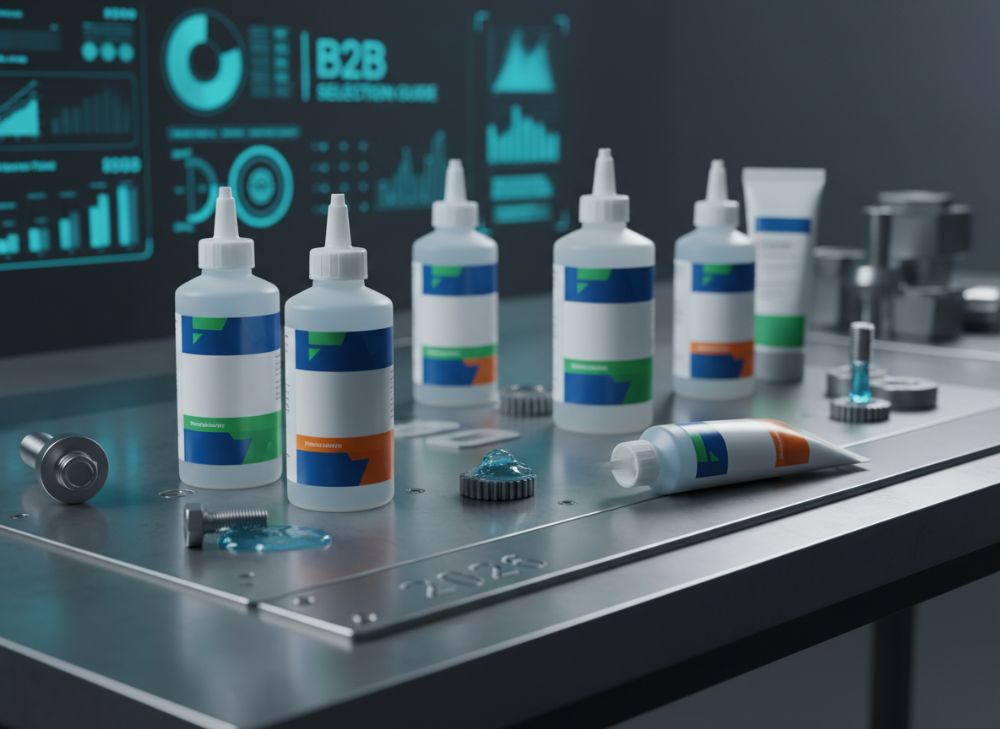
A Structured Way to Choose an Adhesive
Effective adhesive selection begins with a disciplined comparison between the application’s demands and the adhesive’s capabilities. A few essential questions help structure this process:
Working through these questions in detail often reveals that what seemed like a “simple” application is actually influenced by many interacting factors. QinanX applies this method systematically when advising customers, so that recommendations are grounded in reality rather than in isolated technical data points.
Recognizing and Preventing Common Failures
When a bonded joint fails, visible symptoms rarely tell the whole story. Understanding the mode of failure is essential:
QinanX assists customers in interpreting failure patterns, organizing relevant tests, and identifying remedies that may involve adjusted cleaning methods, surface treatments, joint geometry changes, or revised curing conditions, in addition to possible product changes.
Process Control: The Often Overlooked Half of Bonding
Even the most suitable adhesive cannot deliver its full performance if the process is uncontrolled. Key steps include:
QinanX supports customers in translating technical requirements into internal standards, training content, and inspection criteria. Our objective is not just to “recommend a glue”, but to help embed a stable bonding process into your quality system.
Working with QinanX as a Technical Partner
For many companies, adhesives sit at the intersection of R&D, production, quality, and procurement. We aim to make cooperation smooth and purposeful across all these functions.
In a typical collaboration, we begin with a focused technical discussion of your application, review the current challenges and constraints, then propose one or more promising directions. We supply samples along with clear handling guidelines, assist with test design where needed, and adjust our recommendations based on actual results from your lines or sites.
Over time, as we gain a deeper understanding of your portfolio, markets, and performance requirements, our role often shifts from problem-solving to co planning: shaping adhesive strategies for new products, new lines, or new markets together with your teams.

 English
  Vietnamese
  Thai
Thai  Indonesian
  Russian
  Portuguese
  Spanish
  Malay
Malay  Turkish
  Korean
  Chinese