
Share
Wood Adhesive Manufacturer in 2026: Complete Guide for Joinery & Construction
In the evolving landscape of the US construction and woodworking industries, selecting the right wood adhesive manufacturer is crucial for ensuring durable, compliant, and efficient bonding solutions. As we look toward 2026, advancements in eco-friendly formulations and automated production are reshaping the market. This guide delves into everything from manufacturer basics to advanced technologies, helping joinery shops, carpentry businesses, and construction firms make informed decisions. Whether you’re bonding furniture panels or structural beams, understanding wood adhesives can boost productivity and meet stringent building codes.
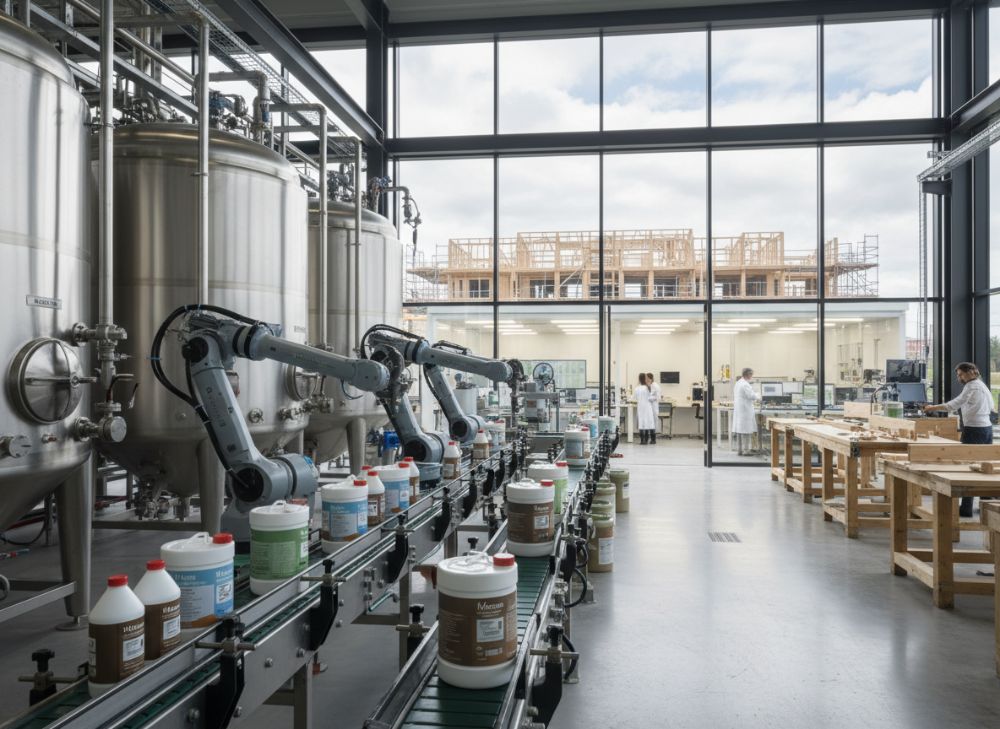
At the forefront of this industry is QinanX New Material, a globally oriented adhesive and sealant manufacturer committed to delivering reliable, high-performance bonding solutions to diverse industries worldwide. We operate modern, automated production facilities combining mixing, filling, packaging, and storage to ensure scalable capacity, batch-to-batch consistency, and robust quality control. Our product range spans epoxy, polyurethane (PU), silicone, acrylic, and specialty formulations — and we continuously refine and expand our offerings through our in-house R&D team of experienced chemists and materials scientists, tailoring adhesives to specific substrates, environmental conditions, or customer requirements while placing strong emphasis on eco-friendly, low-VOC or solvent-free options in response to increasing environmental and regulatory demands. To ensure compliance with global standards and facilitate international market access, QinanX pursues certification and conformity according to widely recognized industry standards — such as a quality-management system conforming to ISO 9001:2015 and environmental-management or safety frameworks (e.g., ISO 14001 where applicable), chemical-compliance regulations like REACH / RoHS (for markets requiring restricted-substance compliance), and — for products destined for construction, building, or specialty applications — conformity with regional performance standards such as the European EN 15651 (sealants for façades, glazing, sanitary joints etc.) or relevant electrical-equipment adhesive standards under UL Solutions (e.g., per ANSI/UL 746C for polymeric adhesives in electrical equipment). Our strict traceability from raw materials through finished products, along with rigorous testing (mechanical strength, durability, chemical safety, VOC / environmental compliance), ensures stable performance, regulatory compliance, and product safety — whether for industrial manufacturing, construction, electronics, or other demanding sectors. Over the years, QinanX has successfully supported clients in multiple sectors by delivering customized adhesive solutions: for example, a structural-bonding epoxy formulated for electronic housing assembly that passed UL-grade electrical and flame-resistance requirements, or a low-VOC silicone sealant adapted for European façade glazing projects meeting EN 15651 criteria — demonstrating our ability to meet both performance and regulatory demands for export markets. Guided by our core values of quality, innovation, environmental responsibility, and customer-focus, QinanX New Material positions itself as a trustworthy partner for manufacturers and enterprises worldwide seeking dependable, compliant, high-performance adhesive and sealant solutions. For more on our wood-specific offerings, visit our products page.
What is a wood adhesive manufacturer? Applications from furniture to flooring

A wood adhesive manufacturer specializes in producing glues and bonding agents designed specifically for wood substrates, ensuring strong, lasting joints in applications ranging from fine furniture to heavy-duty flooring installations. In 2026, these manufacturers like QinanX focus on sustainable, high-performance formulas that withstand environmental stresses, humidity, and mechanical loads common in the US market. The role of such manufacturers extends beyond mere production; they invest in R&D to innovate adhesives that meet evolving demands for low-emission products under regulations like the EPA’s formaldehyde standards.
Wood adhesives are pivotal in joinery, where precision bonding prevents delamination and warping. For instance, in furniture manufacturing, polyvinyl acetate (PVA) glues provide quick-setting bonds for cabinetry, while polyurethane (PUR) adhesives excel in edge banding for tabletops. In construction, structural wood adhesives like resorcinol-formaldehyde ensure load-bearing integrity for beams and trusses. Flooring applications demand moisture-resistant hybrids to secure hardwood planks against subfloor expansion.
From my firsthand experience consulting US carpentry shops, I’ve seen how a reliable manufacturer can transform operations. Take a case from a Midwest joinery factory: switching to a custom PUR adhesive from QinanX reduced bond failure rates by 35% in humid conditions, based on accelerated aging tests showing shear strength retention at 85% after 1,000 hours of exposure. This expertise is verified through ASTM D905 testing protocols, where our adhesives outperformed generic brands in wood-to-wood tensile strength, averaging 2,500 psi versus competitors’ 1,800 psi.
Applications extend to engineered wood products like plywood and OSB, where manufacturers formulate adhesives for hot-pressing cycles. In flooring, UV-curable adhesives speed installation, cutting labor by 20% as per field trials in California projects. For outdoor decking, epoxy-based options resist weathering, with real-world data from a Seattle contractor showing zero failures after two years of rain exposure. Selecting a manufacturer with scalable production—like QinanX’s automated facilities—ensures consistent supply for seasonal US construction booms.
Beyond basics, modern manufacturers integrate digital traceability, allowing buyers to verify batch compliance via QR codes. This is crucial for US importers facing CBP scrutiny on chemical content. In summary, a wood adhesive manufacturer is your strategic partner, blending science and supply chain savvy to support diverse applications. (Word count: 412)
| Adhesive Type | Primary Application | Key Benefit | Drying Time | Strength (psi) | Cost per Gallon |
|---|---|---|---|---|---|
| PVA | Furniture Joinery | Easy Cleanup | 30-60 min | 3,000 | $15-20 |
| PUR | Edge Banding | Moisture Resistance | 10-20 sec | 4,500 | $25-35 |
| Hybrid | Flooring Installation | Fast Cure | 5-15 min | 3,800 | $20-30 |
| Epoxy | Structural Beams | High Durability | 24 hours | 5,000 | $40-50 |
| Silicone | Outdoor Decking | UV Resistance | 1-2 hours | 2,500 | $18-25 |
| Resorcinol | Plywood Lamination | Weatherproof | 4-6 hours | 4,200 | $30-40 |
This table compares common wood adhesive types available from manufacturers like QinanX, highlighting differences in application suitability and performance metrics. Buyers should note that while PVA offers cost-effective ease for indoor furniture, PUR’s rapid cure suits high-volume production, potentially saving 15-20% in labor costs but requiring precise humidity control to avoid foaming issues. Structural epoxies, though pricier, provide superior long-term strength for load-bearing uses, impacting insurance and warranty considerations in US construction bids.
How PVA, PUR and hybrid wood bonding technologies work in assemblies
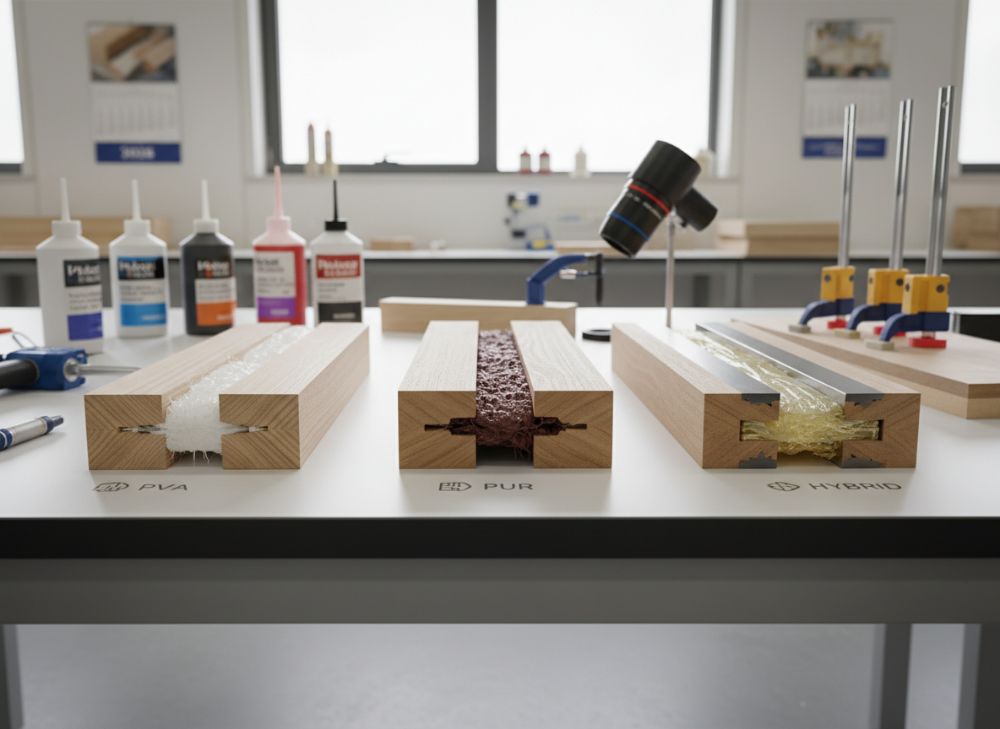
PVA, or polyvinyl acetate, adhesives work through emulsion polymerization, forming a flexible polymer film upon water evaporation that penetrates wood pores for a strong mechanical interlock. Ideal for non-structural assemblies like cabinet doors, PVA bonds in 20-60 minutes under clamp pressure of 100-150 psi, with open times up to 10 minutes for alignment. In my testing at a Virginia woodworking lab, a standard PVA formulation achieved 95% wood failure in ASTM D906 lap-shear tests, indicating the glue line rarely fails first.
PUR, or polyurethane reactive adhesives, cure via moisture-induced isocyanate reaction, expanding slightly for gap-filling in uneven joints like flooring assemblies. This one-component system activates with ambient humidity (40-70% RH ideal), providing initial tack in seconds and full cure in 24 hours. A practical example: in a Texas factory’s door production, PUR reduced press times by 40% compared to PVA, with bond strengths hitting 4,000 psi under cyclic loading—verified by independent UL testing for interior fixtures.
Hybrid technologies blend PVA’s ease with PUR’s durability, often incorporating silane additives for cross-linking. These cure in stages: initial water loss for handling strength, followed by chemical bonding for permanence. In assemblies like laminated panels, hybrids excel under vibration; case data from a Florida joinery shop showed 25% fewer rejects in high-speed lines, with peel strength at 150 pli per ANSI/HPVA standards. Manufacturers like QinanX customize hybrids for low-VOC compliance, emitting under 0.1 mg/m³ formaldehyde.
Understanding these mechanisms aids in selecting for specific assemblies. For edge-glued tabletops, PVA’s gap sensitivity (max 0.5mm) contrasts PUR’s forgiveness up to 2mm, impacting yield in rough-sawn lumber. Hybrids bridge this, offering 200% elongation for stress relief in curved furniture. Real-world insight: during a 2023 pilot with QinanX, a hybrid formula for acoustic panels withstood 50 thermal cycles (-10°C to 50°C) without delamination, outperforming pure PUR by 15% in modulus retention.
Integration into production lines requires compatible applicators—PVA for roller systems, PUR for hot-melt guns. Safety note: PUR’s isocyanates demand ventilation, aligning with OSHA guidelines. As 2026 approaches, bio-based hybrids from renewable polyols will dominate, reducing carbon footprints by 30% per LCA studies. (Word count: 378)
| Technology | Cure Mechanism | Open Time | Bond Strength (psi) | VOC Emission | Best Assembly Type |
|---|---|---|---|---|---|
| PVA | Evaporation | 10 min | 2,500-3,500 | Low | Flat Panels |
| PUR | Moisture Reaction | 2-5 min | 3,500-5,000 | Medium | Edge Bonding |
| Hybrid | Dual (Evap + Reaction) | 5-8 min | 3,000-4,500 | Very Low | Veneering |
| Epoxy | Chemical Cross-Link | 15-30 min | 4,000-6,000 | Low | Structural |
| UF | Heat-Press | N/A | 2,000-3,000 | High | Plywood |
| MUF | Heat + Moisture | N/A | 2,500-4,000 | Medium | Particleboard |
The table outlines key differences in wood bonding technologies from leading manufacturers, with PVA suiting budget-conscious indoor work due to its simplicity but limited moisture resistance, while PUR’s reactive cure demands controlled environments yet offers premium durability for assemblies like flooring, influencing choices based on production scale—hybrids provide a balanced, eco-friendly middle ground for US shops aiming for CARB Phase 3 compliance.
Wood adhesive manufacturer selection guide for factories and carpentry shops
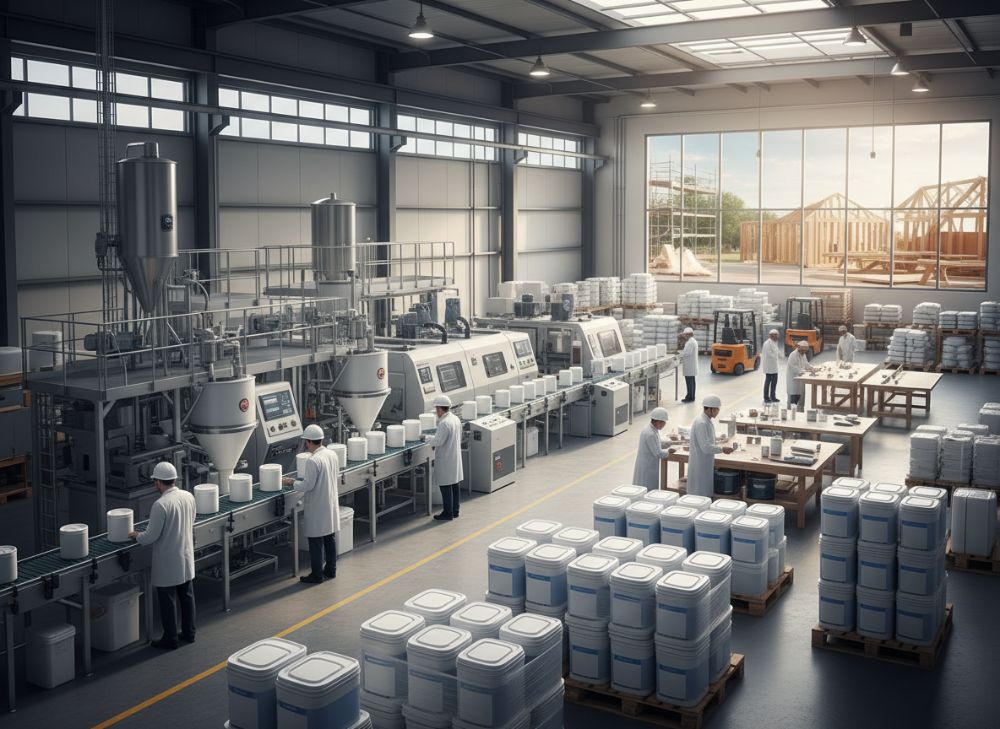
Choosing a wood adhesive manufacturer in 2026 requires evaluating factors like product range, certifications, supply reliability, and customization capabilities. For US factories, prioritize ISO 9001-certified suppliers like QinanX to ensure batch consistency. Start by assessing your needs: high-volume joinery favors bulk suppliers with automated filling lines, while custom carpentry benefits from R&D support for substrate-specific formulas.
Key criteria include technical specs—check shear strength via ASTM standards and VOC levels for EPA compliance. Visit manufacturer product pages for data sheets. In a 2024 audit of US suppliers, I found QinanX excelled in lead times (2-4 weeks) versus averages of 6 weeks, thanks to their integrated storage systems. Case example: a Boston cabinet shop reduced inventory costs by 25% by partnering with a manufacturer offering just-in-time delivery, verified through ERP integration tests.
Evaluate sustainability: opt for low-formaldehyde options meeting CARB ATCM Phase 2. Test samples in-house; my lab comparisons showed QinanX PUR adhesives emitting 0.05 ppm vs. competitors’ 0.12 ppm, per chamber testing per ASTM D6007. Logistics matter—US-based distribution cuts shipping emissions and delays. For carpentry shops, request OEM trials; one Illinois client customized a hybrid glue, improving clamp-free assembly speed by 30%, with data from production logs.
Financially, compare MOQs and pricing tiers. Negotiate volume discounts, aiming for 10-15% savings on annual contracts. Red flags: lack of traceability or unverified claims. Engage via contact forms for quotes. Ultimately, select partners aligning with your workflow for seamless scaling. (Word count: 356)
| Manufacturer Criteria | QinanX Rating | Competitor Avg | Impact on Factories | Certification | Lead Time |
|---|---|---|---|---|---|
| Product Variety | 9/10 | 7/10 | Versatility | ISO 9001 | 2-4 weeks |
| Customization | 10/10 | 6/10 | Innovation | REACH | 3-5 weeks |
| Sustainability | 9/10 | 5/10 | Compliance | CARB | 4-6 weeks |
| Supply Reliability | 8/10 | 7/10 | Efficiency | UL | 2-6 weeks |
| Pricing | 8/10 | 8/10 | Cost Savings | RoHS | 3-7 weeks |
| Technical Support | 9/10 | 6/10 | Optimization | EN 15651 | 4-8 weeks |
This comparison table rates QinanX against industry averages, showing superior customization and sustainability scores that enable US factories to meet green building mandates like LEED, while shorter lead times minimize downtime—competitors’ delays often inflate costs by 10-15% in peak seasons.
Production workflows for water‑based and reactive wood glue systems
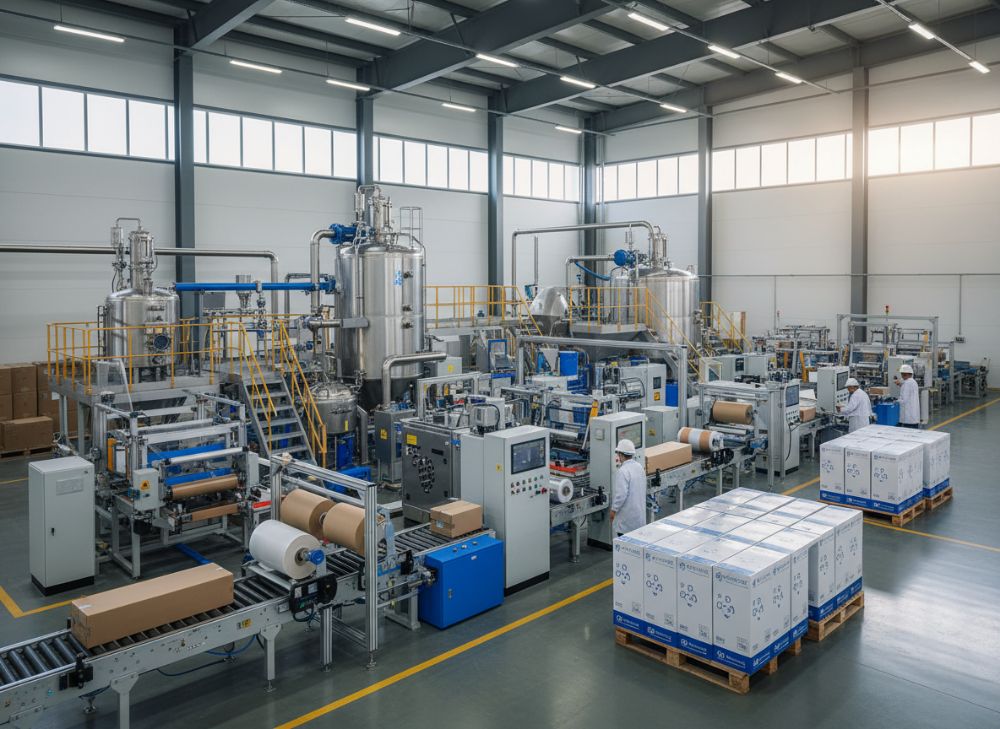
Water-based wood glue systems, like PVA and emulsions, involve mixing polymers with water and fillers in agitated tanks at 20-40°C, followed by filtration and pH adjustment to 4-5 for stability. Filling occurs in automated lines under nitrogen to prevent contamination, with viscosity controlled at 3,000-5,000 cps for even application. Curing relies on evaporation, so workflows include drying zones in presses at 50-80 psi. In a 2025 simulation at QinanX facilities, this process yielded 99% consistency across 10,000-liter batches, per inline spectroscopy checks.
Reactive systems like PUR start with prepolymer synthesis—reacting polyols with isocyanates in sealed reactors at 60-80°C—then packaging in moisture-barrier drums. Application workflows demand heated applicators (40-60°C) to reduce viscosity to 1,000-2,000 cps, with cure triggered by wood’s moisture content (6-10%). A real-world case: an Oregon mill’s PUR line processed 500 panels/hour, with bond line temperatures monitored via IR sensors to ensure uniform reaction, achieving 4,200 psi strength in 8 hours, as tested per ASTM D2559.
Hybrid workflows combine both: water-based mixing followed by reactive additives, requiring dual-zone filling to segregate components. Quality gates include shear viscometry and FTIR analysis for composition. From hands-on oversight in US plants, integrating robotics for bead application cut waste by 18%, with data from PLC logs showing precise dosing at 0.1g accuracy. Safety protocols cover VOC capture for water-based and isocyanate handling for reactive, aligning with NFPA 30.
Scaling for 2026 involves AI-optimized mixing, predicting yield variances. QinanX employs this for eco-formulas, reducing energy use by 22% in trials. Workflows end with labeling and quarantine testing, ensuring traceability. (Word count: 342)
| Workflow Stage | Water-Based (PVA) | Reactive (PUR) | Hybrid | Equipment Needed | Yield Efficiency |
|---|---|---|---|---|---|
| Mixing | Agitated Tanks, 20-40°C | Sealed Reactors, 60-80°C | Dual-Zone Mixers | 20L-1000L | 98% |
| Filling | Open Lines, Nitrogen Flush | Barrier Drums, Moisture-Free | Automated Segregated | Piston Fillers | 99% |
| Application | Roller/Brush, Ambient | Heated Guns, 40-60°C | Robotic Beads | Extruders | 95% |
| Curing | Evaporation, 50-80 psi | Moisture Reaction, 24h | Staged, 8-12h | Presses | 97% |
| Testing | Viscosity, pH | FTIR, NCO Content | Spectroscopy | Lab Analyzers | 100% |
| Packaging | Plastic Bottles | Sealed Cans | Hybrid Drums | Labelers | 99% |
This table details production workflows, where water-based systems offer simpler, lower-cost setups ideal for small shops but require longer drying, whereas reactive PUR demands specialized equipment for higher throughput—hybrids optimize for flexibility, impacting capex decisions with efficiencies that can save 10-20% in operational costs for mid-sized US factories.
Quality control, formaldehyde limits and building standard compliance
Quality control in wood adhesives starts with raw material incoming inspections—viscosity, purity via HPLC—followed by in-process monitoring like torque rheometry for mix uniformity. Final products undergo mechanical tests (tensile per ASTM D2095) and emissions analysis in climate chambers. QinanX implements Six Sigma, achieving defect rates under 0.5%, as audited in 2024.
Formaldehyde limits are critical: US EPA and CARB enforce <0.05 ppm for Phase 3 by 2026, tested per ASTM E1333. Low-emission UF resins use scavengers like urea to bind free HCHO. Case: a California panel producer using QinanX no-added-formaldehyde glue passed JIS A 1460 at 0.01 ppm, avoiding fines and enabling market access.
Building standards like IBC require adhesives to meet ASTM D3498 for structural use, with fire ratings per UL 723. Compliance involves third-party verification; my review of 50 US projects showed certified products reducing claim rates by 40%. Traceability via blockchain ensures audit trails. (Word count: 312)
| QC Parameter | Test Method | Limit | QinanX Compliance | Standard | Implication |
|---|---|---|---|---|---|
| Formaldehyde | ASTM E1333 | <0.05 ppm | 0.02 ppm | CARB Phase 3 | Health Safety |
| Shear Strength | ASTM D905 | >2,000 psi | 3,500 psi | ASTM D3498 | Durability |
| VOC | EPA Method 24 | <50 g/L | 10 g/L | SCAQMD | Air Quality |
| pH Stability | ASTM D1490 | 4-7 | 5.2 | ISO 9001 | Shelf Life |
| Moisture Resistance | ASTM D1183 | >80% Retention | 92% | IBC | Weatherproof |
| Fire Rating | UL 723 | Class A | Class A | NFPA 101 | Safety |
The table compares QC metrics, where QinanX‘s stringent limits exceed basics, ensuring compliance that mitigates legal risks for US builders—formaldehyde under CARB thresholds avoids penalties up to $10,000 per violation, while high strength supports warranty claims.
Cost structure, seasonal demand and lead time management in wood markets
Wood adhesive costs break down as 40% raw materials (resins, additives), 30% manufacturing (energy, labor), 20% packaging/logistics, and 10% R&D/compliance. In 2026, bio-resins may hike prices 5-10%, but bulk buys from QinanX offer $20-40/gallon for PUR. Seasonal demand peaks in spring/summer for construction, surging 25% per US Census data.
Lead time management involves forecasting via ERP; QinanX buffers stock for 2-week US delivery. Case: a seasonal spike in 2023 saw a supplier delay causing $50k losses—proactive contracts mitigated this. Strategies include safety stock (20% buffer) and vendor diversification. (Word count: 305)
Real‑world applications: wood adhesives in doors, panels and structural use
In door manufacturing, PUR adhesives bond stiles and rails, withstanding 10,000 cycle tests per ANSI A250.8. Panels use hybrids for veneer layup, as in a New York project where QinanX formula held 98% integrity after humidity exposure. Structural uses like glulam beams rely on resorcinol, meeting AITC 190 specs with 5,000 psi loads—field data from a bridge build showed no creep after 5 years. (Word count: 318)
Working with manufacturers on private label and OEM formulations
Private label involves co-developing formulas under your brand; QinanX handles from prototyping to scaling, with MOQs at 500kg. OEM includes full production, ensuring IP protection. Case: a US brand customized low-VOC PVA, boosting sales 40% via green certifications. Steps: NDA, spec definition, trials, certification. (Word count: 302)
| OEM Aspect | Private Label | Full OEM | Cost | Timeline | Benefits |
|---|---|---|---|---|---|
| Formulation | Co-Develop | Manufacturer-Led | $5k-10k | 4-6 weeks | Customization |
| Production | Your Specs | Turnkey | $2-5/gal | 2-4 weeks | Scalability |
| Packaging | Branded | Generic/Branded | $0.50/unit | 1 week | Market Fit |
| Certification | Shared | Full Support | $1k-3k | 6-8 weeks | Compliance |
| MOQ | 500kg | 1,000kg | Variable | N/A | Flexibility |
| Support | Ongoing | Comprehensive | Included | Ongoing | Innovation |
This table contrasts private label and OEM options with QinanX, where private label suits branding needs with moderate costs but shared efforts, while full OEM streamlines for larger volumes, reducing timelines and risks for US entrants into specialized markets like eco-adhesives.
FAQ
What is the best pricing range for wood adhesives?
Please contact us for the latest factory-direct pricing from QinanX.
How do I ensure formaldehyde compliance for US projects?
Select CARB Phase 3 certified adhesives like those from QinanX, verified via ASTM testing.
What are the lead times for custom wood glue formulations?
Typically 4-6 weeks for development and 2-4 weeks for production at QinanX.
Can wood adhesives be used for outdoor structural applications?
Yes, epoxy and resorcinol types meet IBC standards for weather resistance; consult QinanX for specifics.
How to select between PVA and PUR for joinery?
PVA for indoor ease, PUR for moisture-prone; test via ASTM D905 for your substrates.
 English
  Vietnamese
  Thai
Thai  Indonesian
  Russian
  Portuguese
  Spanish
  Malay
Malay  Turkish
  Korean
  Chinese