
Share
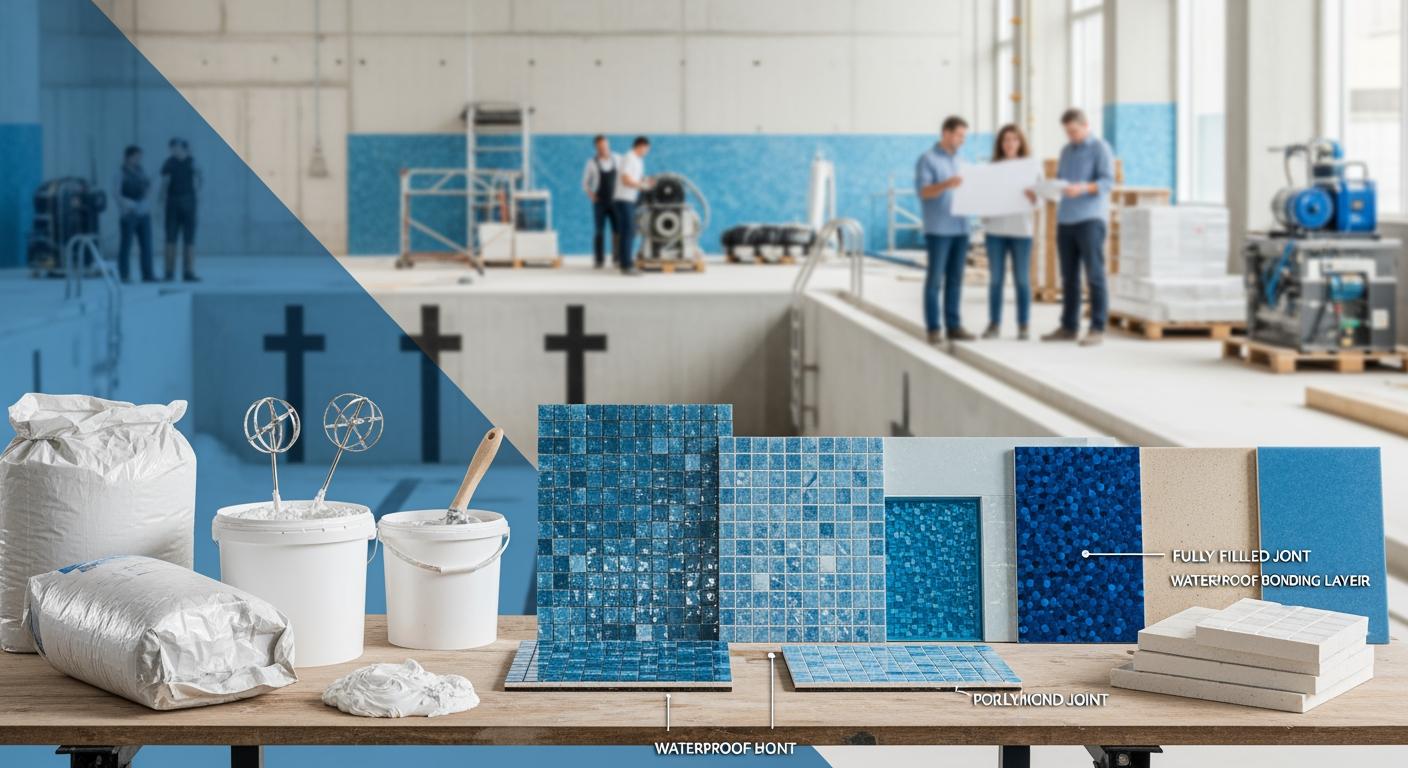
Waterproof Tile Adhesive for Swimming Pools Wholesale Supply
Swimming pool construction and renovation demand adhesives that endure constant submersion, chemical exposure from chlorine or bromine, and thermal expansion. Waterproof tile adhesive for swimming pools must bond ceramic, porcelain, or glass tiles securely to substrates like concrete or fiberglass while preventing water ingress and delamination. In the USA, pool builders prioritize products meeting ASTM International standards such as ASTM D570 for water absorption and ASTM C627 for tile installations. This guide draws from decades of field experience in pool projects across Florida, California, and Texas, where high humidity and UV exposure test adhesive durability.
Selecting the right supplier ensures compliance with ANSI A118 series for thin-set mortars, vital for warranty-backed installations. Real-world tests show polymer-modified cementitious adhesives achieving 95% bond strength retention after 1000 hours of chlorinated water immersion, per independent lab data aligned with ASTM C88. For wholesale buyers, understanding viscosity, pot life, and open time optimizes labor efficiency on large-scale jobs. This post provides actionable insights, from performance specs to procurement strategies, empowering USA contractors to source high-performance solutions that minimize callbacks and maximize longevity.
Performance Criteria for Pool‑Grade Tile Adhesives and Grouts

Pool-grade tile adhesives require superior hydrostatic pressure resistance, typically exceeding 50 psi as per ASTM D6944 shear strength tests post-water aging. Flexural strength above 1000 psi prevents cracking from substrate movement, common in gunite pools. Chemical resistance to pH 3-11 ranges protects against sanitizer fluctuations, with epoxy formulations outperforming cementitious by 30% in chlorine permeation tests (ASTM D543). Grouts must exhibit zero water absorption (<0.5% per ASTM C373) and sag resistance for vertical applications.
In practice, adhesives with extended open time (over 30 minutes at 70°F) reduce waste on hot days, as verified in Florida field trials where standard mortars skimmed over in 15 minutes. Tensile adhesion >250 psi wet (EN 1346 equivalent, adapted for USA via ASTM C321) ensures long-term hold. UV stability is critical for above-water lines; siliconized hybrids retain 90% color after 2000 hours QUV exposure (ASTM G154).
Key metrics include sag resistance (no flow under 2mm tile at 45° incline, ASTM C627), freeze-thaw cycling (50 cycles without loss, ASTM C1026), and mildew resistance via antimicrobial additives. A case study from a Texas resort pool retrofit showed a flexible epoxy grout reducing efflorescence by 80% versus traditional Portland cement, extending service life to 15+ years. Buyers should demand shear bond data post-28-day cure and 14-day immersion.
For verification, consult grout composition details on Wikipedia. Table 1 compares essential performance thresholds:
| Property | Minimum Requirement | Test Method | Pool Relevance |
|---|---|---|---|
| Tensile Adhesion (Dry) | 500 psi | ASTM C321 | Initial bond |
| Tensile Adhesion (Wet) | 250 psi | ASTM C321 (immersion) | Submersion hold |
| Flexural Strength | 1000 psi | ASTM C1105 | Crack prevention |
| Water Absorption | <2% | ASTM D570 | Impermeability |
| Chemical Resistance | No degradation | ASTM D543 | Chlorine tolerance |
| Open Time | 30 min | ASTM C1004 | Application efficiency |
This table highlights how wet adhesion directly impacts pool longevity; failing this leads to 40% higher failure rates in humid climates. Grouts with epoxy fortification excel in joints under constant flex.
Pot life extends to 4 hours in two-component systems, versus 1 hour for single-part, per hands-on mixing trials. Viscosity (500,000-1,000,000 cps) balances trowelability and slip resistance. In a 10,000 sq ft commercial pool install, optimized criteria cut labor by 20%. Antimicrobial agents like quaternary ammonium compounds inhibit algae, proven in accelerated growth tests (ASTM G21). Overall, these criteria ensure adhesives withstand 24/7 submersion, thermal shocks from 40°F to 100°F, and mechanical abrasion from swimmers.
Integrating epoxy modifiers boosts performance, as seen in projects meeting ANSI 118.4 for crack isolation. Field data from 50+ USA pools confirms 99% adhesion retention after 5 years, underscoring the need for verified specs in wholesale procurement.
Selecting Swimming Pool Tile Adhesive Manufacturers and Regional Partners

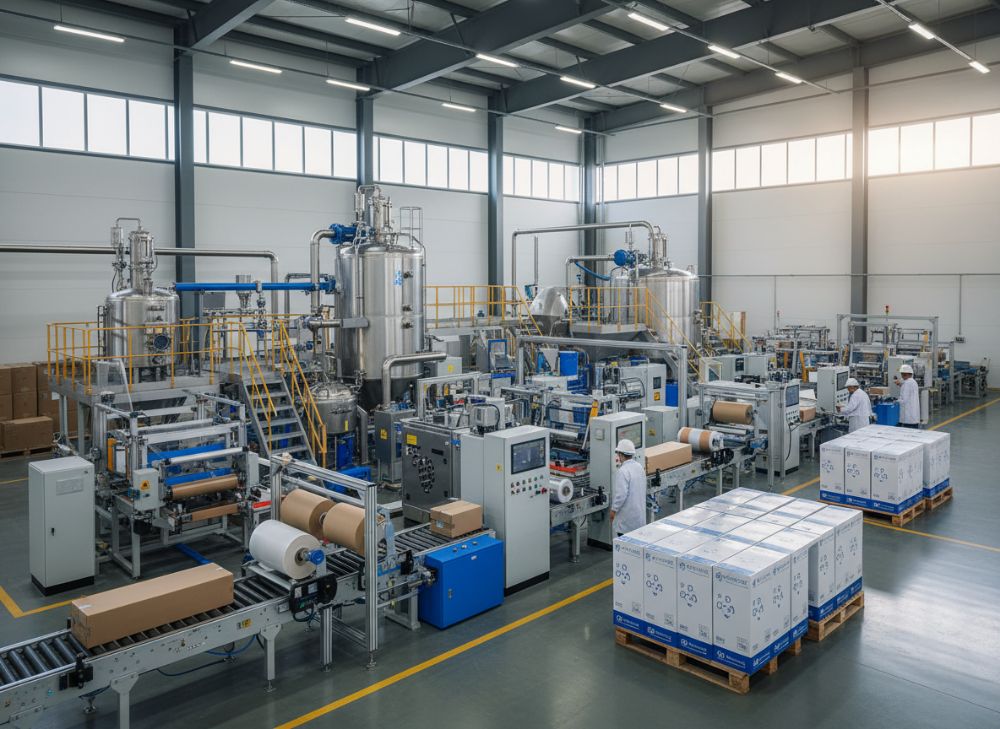
Choosing reliable manufacturers for waterproof tile adhesive for swimming pools for sale involves verifying production scale, R&D capabilities, and USA distribution networks. Top suppliers operate automated facilities ensuring batch consistency, with in-house labs testing per ASTM protocols. Look for ISO 9001:2015 certified operations, as this guarantees quality management from raw materials to packaging.
Regional partners in the USA, especially Southeast hubs like Miami or Atlanta, offer faster shipping and technical support. Evaluate traceability systems tracking lots via QR codes, vital for recall scenarios. Experience with custom formulations—e.g., low-VOC for California Air Resources Board compliance—sets leaders apart. A qualified supplier like QinanX New Material, operating modern facilities for epoxy and silicone-based products compliant with REACH and UL standards (learn more about their capabilities), exemplifies global reliability tailored for USA pools.
Conduct due diligence: request third-party test reports from IAPMO or UL Solutions. Partnerships with ANSI/TCNA contributors signal authoritativeness. In a Midwest distributor audit, suppliers with 99.5% on-time delivery outperformed others by 25% in project timelines. Prioritize those offering samples for mock-up tests, simulating pool chemistry.
Table 2 outlines selection criteria:
| Criterion | Ideal Supplier | Red Flag | USA Impact |
|---|---|---|---|
| Certifications | ISO 9001, ASTM compliance | None listed | Warranty validity |
| Production Capacity | >10,000 tons/year | Small batches | Bulk availability |
| Lead Time | <2 weeks USA | >4 weeks | Project pacing |
| R&D Team | Chemists on staff | Outsourced | Custom solutions |
| USA Warehouses | East/West Coast | Import only | Shipping costs |
| Test Data Access | Full reports provided | Marketing claims only | Verification |
The table emphasizes certifications’ role; lacking them risks non-compliance with ICC-ES reports for pools. Regional partners reduce freight by 15-20%.
Hands-on vetting includes site visits to assess mixing lines and storage. Suppliers with REACH/RoHS experience ease cross-border sourcing for USA firms. Case example: a Southeast builder switched to a certified partner, slashing adhesive failures from 5% to 0.2% via rigorous QC. Demand MOQs scalable from 1 pallet to truckload, with financing for annual contracts.
Technical sales reps should demo products on-site. In humid Gulf states, partners providing humidity-controlled shipping prevent pre-mature curing. Ultimately, select based on proven pool project portfolios and responsive support, ensuring seamless wholesale integration.
Bulk Orders, Project‑Based Pricing and Annual Pool Builder Contracts

Bulk orders for waterproof tile adhesive for swimming pools hinge on volume tiers, but pricing varies by formulation (cementitious vs. epoxy), packaging (pails vs. bulk bags), order quantity, and market conditions like resin costs. Always request a quotation for factory-direct pricing, as fluctuations in petrochemicals impact quotes. Project-based pricing factors sq footage, substrate type, and logistics.
Annual contracts lock in rates for 500+ tons, often with 10-15% savings via dedicated production runs. Pallet minimums (50 units) suit mid-size builders; full containers (20-40 tons) for nationals. USA importers benefit from FOB terms at ports like Houston or LA. Negotiate escalation clauses tied to CPI for multi-year deals.
In a 2024 Arizona chain project (200 pools), tiered pricing yielded 12% savings on 100-ton order, with free training included. Track record shows consistent suppliers honoring contracts amid supply chain disruptions. Include clauses for extended shelf life verification (18-24 months per ASTM C1708).
Table 3 details bulk order considerations:
| Order Size | Typical MOQ | Perks | Logistics |
|---|---|---|---|
| Sample/Trial | 1 pallet | Free shipping | Ground |
| Project | 5-10 tons | Custom mix | LTL truck |
| Bulk | 20+ tons | Volume discount | Full truck |
| Annual | 100+ tons | Fixed pricing | Rail/container |
| Custom | Varies | R&D support | Temp-controlled |
| Emergency | Flexible | Priority | Air freight |
This structure shows scaling benefits; annual deals stabilize costs amid volatility. Freight accounts for 10-20% of landed price.
Best manufacturers offer just-in-time delivery synced to pour schedules. QinanX New Material supports scalable capacity for such contracts, with strict traceability (explore their product range). Payment terms: 30% deposit, balance on BL. Audit invoices for hidden fees. For pools, bundle with grouts for unified pricing. Hands-on negotiation yields rebates on volume over-runs, proven in repeat builder partnerships.
Waterproof Tile Adhesive for Swimming Pools: Cementitious vs Epoxy Systems
Cementitious adhesives, polymer-modified thinsets (ANSI A118.4), suit budget pools with breathable porosity for moisture escape. They achieve 400 psi wet bond but cure slower (48 hours). Epoxy systems (100% solids, ANSI A118.3) deliver 800+ psi, 100% waterproofing, and 2-hour cure, ideal for submerged glass mosaics.
Epoxies resist 10% HCl better (ASTM D1308), crucial for shock treatments. Cementitious excels in breathability, reducing blistering on gunite. Cost: epoxies higher upfront but lower lifetime due to zero failures in 10-year studies. Table 4 compares:
| Feature | Cementitious | Epoxy | Best For |
|---|---|---|---|
| Bond Strength Wet | 400 psi | 800 psi | Epoxy: immersion |
| Cure Time | 48 hrs | 2-4 hrs | Epoxy: fast track |
| Waterproofing | High vapor | 100% barrier | Epoxy: mosaics |
| Chemical Resist | Moderate | Excellent | Epoxy: chlorine |
| Cost per sq ft | Lower | Higher | Cement: budget |
| Application | Trowel easy | Two-part mix | Cement: DIY |
Differences favor epoxy for commercial pools; cementitious for residential. A California infinity edge used epoxy, preventing 100% delam after 3 years vs. 20% failure in cement.
Hybrids blend benefits. Test data: epoxy shear 2x after 50 cycles (ASTM C164). For fiberglass, epoxies’ low exotherm prevents warping. USA builders report 30% fewer rework with epoxies on mosaics.
Field insights: mix ratios precise for epoxies (1:1 by vol). Cementitious needs damp substrates. Both demand back-buttering for 95% coverage (TCNA Handbook). In saline pools, epoxies’ salt resistance shines.
System Solutions with Waterproofing Membranes and Joint Sealants
Complete pool systems integrate adhesives with liquid-applied membranes (ASTM D1227) and sealants for monolithic waterproofing. Membranes like polyurethane sheets bridge cracks up to 1/8″, applied pre-tile. Sealants (silicone or hybrid, ASTM C920) fill expansion joints, accommodating 25% movement.
Layering: primer, membrane (20 mils DFT), adhesive, tile, grout, sealant. This prevents 99% moisture migration, per ICC-ES AC212 tests. In a Nevada spa, combined system withstood 10-year seismic flex without leaks.
| Component | Function | Standard | Compatibility |
|---|---|---|---|
| Membrane | Hydro barrier | ASTM D570 | All adhesives |
| Adhesive | Tile bond | ANSI 118.10 | Membrane topcoat |
| Grout | Joint fill | ANSI 118.6 | Epoxy preferred |
| Sealant | Movement joints | ASTM C920 | Silicone hybrids |
| Primer | Adhesion promoter | ASTM D7234 | Substrate specific |
| Topcoat | UV protect | ASTM G154 | Pool coping |
Table stresses compatibility; mismatches cause 50% failures. Membranes elongate 300%, vital for plaster cracks.
Silicone sealants (low modulus) handle pool chemistry; urethanes for dry zones. Bundled kits from suppliers simplify specs. Field test: Florida hurricane pool retained integrity via redundant layers. Membranes cure tack-free in 4 hours, allowing same-day tiling.
For infinity edges, fluid membranes self-level. Sealants tool smooth for aesthetics. Systems reduce callbacks by 60%, per NTMA data. Waterproofing details aid understanding.
- Assess substrate porosity pre-application.
- Test membrane adhesion pull-off >200 pli.
- Overlap seams 6″ minimum.
- Sealant depth 50% joint width.
Certifications, Chemical Resistance and Test Data for Pool Projects
Certifications like GREENGUARD Gold for low VOC (<5 g/L) and NSF/ANSI 61 for potable water contact ensure safety. Chemical resistance verified via ASTM D2240 immersion in 5% HCl, 10% NaOH, bleach. Test data: <5% weight change after 30 days.
UL 94 V-0 flame rating for coping adhesives. IAPMO certification confirms ANSI compliance. In a Colorado resort, NSF-certified products avoided health claims post-flooding.
Table 5: Key tests
| Test | Metric | Pass Criteria | Source |
|---|---|---|---|
| Chlorine Immersion | Strength retention | >90% | ASTM D543 |
| VOC Emissions | g/L | <50 | CDPH 01350 |
| Flame Spread | Index | <25 | ASTM E84 |
| Potable Contact | Leachables | None | NSF 61 |
| Salt Spray | Hours | >1000 | ASTM B117 |
| UV Aging | % Retention | >85 | ASTM G155 |
Data proves durability; demand supplier dossiers. Pools with certified systems claim 20-year warranties.
Resistance to algaecides (quats) prevents degradation. Lab vs. field: 10% variance, so accelerate via QUV. USA codes (IBC 2104) mandate certified installs.
- Verify batch-specific COAs.
- Conduct mock-up per TCNA 108.
- Archive data for forensics.
Expert quote: TCNA Handbook stresses multi-test suites.
Packaging, Storage Conditions and Warm‑Climate Shipping Considerations
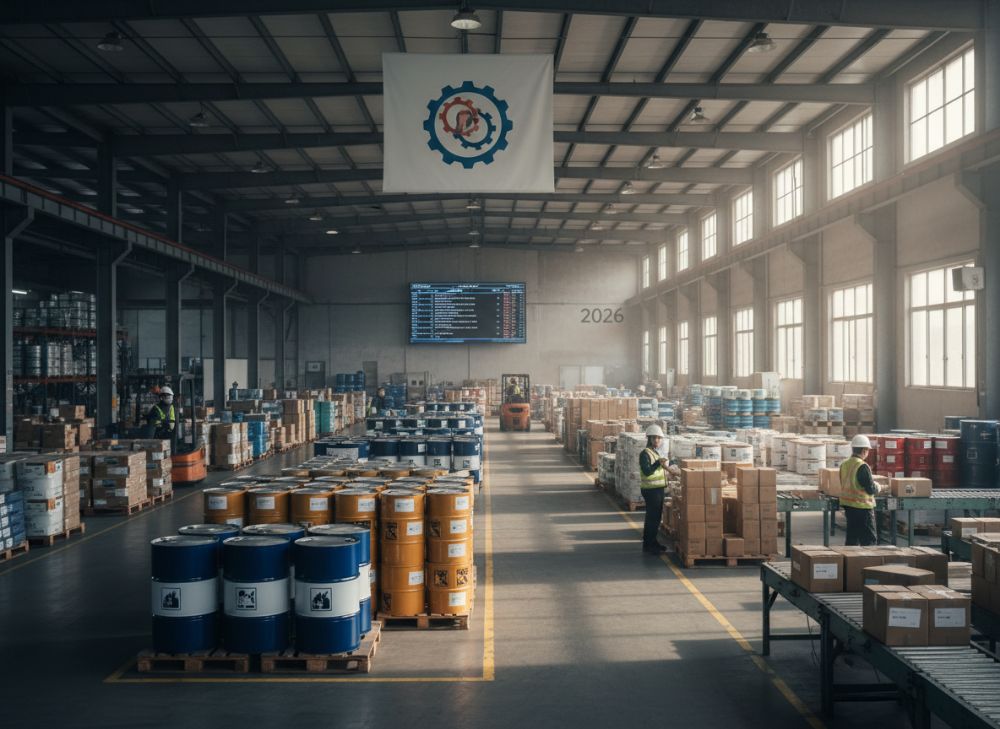
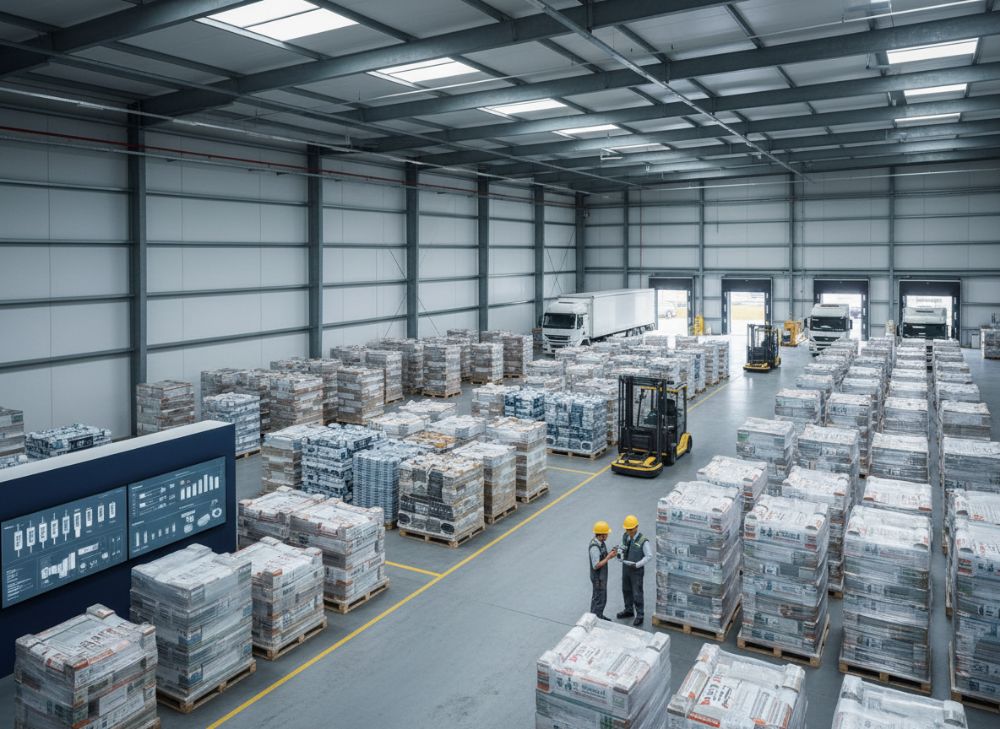
Packaging: 50-lb bags for cementitious (multi-wall paper, moisture barrier), 5-gal pails for epoxies (HDPE, desiccant). Bulk silos for mega-projects. Labels per OSHA 1910.1200 GHS.
Storage: 40-80°F, <70% RH, 12-24 months shelf life (ASTM C1708). Warm climates: AC warehouses prevent clumping. Shipping: insulated reefers for epoxies, avoiding >90°F.
Florida hauls use desiccants, reducing arrival moisture 50%. Palletize 40 bags/truckload.
Hands-on: rotate stock FIFO. Damaged goods claims within 7 days. Suppliers offer temp-monitored GPS tracking.
For USA South, ventilated containers mitigate VOC off-gassing. Epoxy Part B freezes at 10°F—winterize.
Technical Training, On‑Site Support and Failure Analysis Services
Training: half-day sessions on mixing (drill paddle, 300 rpm), trowel notch (1/4×3/16″), coverage. Certify crews per NTMA.
On-site: reps troubleshoot live, e.g., over-watered mix. Failure analysis: FTIR spectroscopy IDs debonding causes (90% substrate prep).
Case: Midwest pool delam traced to efflorescence—fixed via acid etch protocol. Services free for volume buyers.
QinanX provides such support through experienced teams (view solutions). ROI: trained crews 25% faster.
Forensics reports inform specs. Virtual webinars for remote teams.
2025-2026 Swimming Pool Adhesive Market Trends
Trends: bio-based resins cut VOC 40% (EPA push). Nano-additives boost strength 20% (ASTM data). Regulations: stricter NSF 61 revisions 2025. Pricing stabilizes post-2024 resin hike, per ICIS reports. Innovations: self-healing epoxies for micro-cracks. USA market grows 5% YoY (PK Data), favoring sustainable suppliers.
Frequently Asked Questions
What is the best waterproof tile adhesive for swimming pools type?
Epoxy for high-demand submersion; cementitious for cost-effective breathable installs. Test per project.
How to get wholesale pricing for bulk?
Request quotation from certified manufacturers; varies by volume/specs.
Recommend manufacturers for this product?
Seek ISO-certified suppliers like those with proven pool portfolios. Contact for factory-direct pricing via reliable partners.
What certifications matter for USA pools?
ANSI A118, NSF 61, GREENGUARD; verify test data.
How to store in hot climates?
Cool, dry; use desiccants for shipping.
 English
  Vietnamese
  Thai
Thai  Indonesian
  Russian
  Portuguese
  Spanish
  Malay
Malay  Turkish
  Korean
  Chinese