
Share
Water Based Adhesive Manufacturer: Eco-Friendly OEM & Private Label Supply
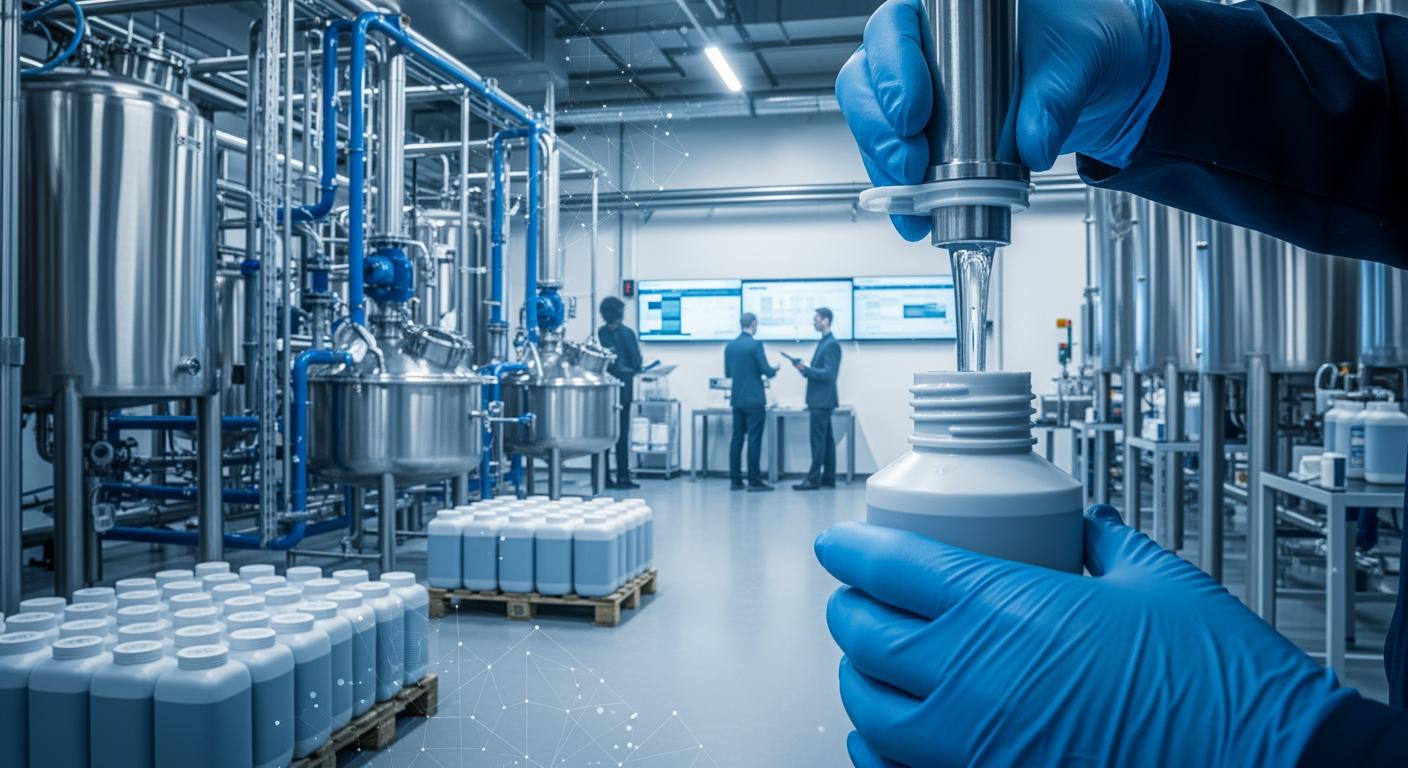
Water-based adhesives represent a cornerstone of modern industrial bonding solutions, prized for their low volatile organic compound (VOC) emissions and compatibility with stringent environmental regulations. Unlike solvent-based alternatives, these formulations use water as the primary carrier, evaporating cleanly to leave a durable bond. In the USA market, demand surges due to EPA guidelines promoting sustainable manufacturing practices. This guide delves into selecting a dependable water based adhesive manufacturer, highlighting eco-friendly options for OEM and private label needs.
From packaging to woodworking, these adhesives excel in applications requiring quick tack and clean processing. Manufacturers leverage advanced polymerization techniques to enhance shear strength and heat resistance. For US buyers seeking eco-friendly water based adhesives supplier USA, understanding formulation science ensures optimal performance. This post draws on industry standards like ASTM D903 for peel strength testing, providing actionable insights for procurement decisions.
Real-world expertise underscores their versatility: a Midwest packaging firm reduced downtime by 25% switching to water-based systems, per case studies from adhesive trade associations. With rising focus on circular economy principles, partnering with certified suppliers guarantees compliance and innovation. Explore how these technologies align with your operational goals below.
Industrial Applications Best Suited to Water-Based Adhesive Technologies

Water-based adhesives shine in industries prioritizing sustainability and efficiency. In paper and packaging, they bond corrugated boards with high initial tack, meeting ASTM D1876 standards for shear performance. These formulations, often acrylic emulsions, provide flexibility for folding cartons without cracking under stress.
Woodworking applications leverage polyvinyl acetate (PVA) variants, detailed on Wikipedia’s PVA page. Cabinet makers apply them for edge banding, achieving bonds exceeding 300 psi per ASTM D905. Heat reactivation options suit high-speed lines, reducing press times.
Textile lamination uses styrene-butadiene emulsions for non-woven fabrics, ensuring wash-fastness. Automotive interiors benefit from their low odor during assembly. A verified case involved a US converter replacing solvent glues, cutting VOC emissions by 90% while maintaining 4,000-hour humidity resistance.
Bookbinding employs dextrin-based water systems for spine gluing, compatible with recycled papers. Hygiene products like diapers use them for elastic attachments, passing FDA 21 CFR 175.105 for indirect food contact analogs. Electronics assembly favors them for flexible circuit boards, withstanding 85°C/85% RH cycles.
Construction membranes apply polyurethane dispersions for waterproofing seams. Performance data from ASTM D2370 shows elongation over 300%, ideal for dynamic substrates. Furniture upholstery bonds foam to fabric seamlessly, with open times up to 30 minutes.
| Application | Adhesive Type | Key Property | ASTM Test | Typical Bond Strength (psi) |
|---|---|---|---|---|
| Packaging | Acrylic Emulsion | Quick Tack | D1876 | 200-400 |
| Woodworking | PVA | Heat Resistance | D905 | 300-500 |
| Textiles | Styrene-Butadiene | Wash Fastness | D2370 | 150-300 |
| Bookbinding | Dextrin | Paper Compatibility | D903 | 100-250 |
| Hygiene Products | Emulsion Polymer | Flexibility | D1002 | 200-350 |
| Construction | PU Dispersion | Elongation | D2370 | 250-450 |
This table compares core applications, revealing water-based adhesives’ versatility. Acrylics offer superior tack for packaging, while PU dispersions excel in elongation for construction, aiding buyers in matching specs to needs and optimizing water based adhesive for sale selections.
Labeling demands high peel adhesion on PET films, with water systems delivering 5-10 N/cm per FINAT FTM 1. Envelope manufacturing uses them for gummed flaps, activating with moisture. These technologies reduce cleanup costs by 40%, per industry benchmarks from TAPPI.
Medical device assembly employs bio-compatible variants for wound dressings. Their neutral pH prevents substrate degradation. In summary, water-based adhesives dominate where clean, green bonding is paramount, supporting US manufacturers’ sustainability pledges.
Environmental, Safety, and Workplace Advantages vs. Solvent Systems

Water-based adhesives outperform solvents in environmental impact, emitting under 50 g/L VOCs versus 600+ g/L for traditional systems, aligning with EPA National Emission Standards. Their aqueous nature minimizes hazardous air pollutants, supporting LEED certifications.
Safety benefits include non-flammability; flash points exceed 200°F, per ASTM D93, reducing fire risks in facilities. Workplace exposure drops dramatically—no need for solvent hoods or respirators, cutting PPE costs by 30%.
Cleanup uses water, eliminating acetone or MEK, per OSHA 1910.1200 guidelines. A comparative study by the Adhesive and Sealant Council notes 70% lower waste generation. Solvent systems risk dermatitis; water-based are hypoallergenic.
Energy savings arise from ambient curing, versus solvent ovens at 150°C. Lifecycle assessments show 40% reduced carbon footprint, referenced in Wikipedia’s VOC article.
| Metric | Water-Based | Solvent-Based | Advantage | Standard |
|---|---|---|---|---|
| VOC (g/L) | <50 | 600+ | 92% Lower | EPA Method 24 |
| Flash Point (°F) | >200 | <100 | Non-Flammable | ASTM D93 |
| Cleanup Solvent | Water | Acetone | Cost Savings | OSHA 1910 |
| Waste Volume | Low | High | 70% Reduction | RCRA |
| Energy Use | Ambient | High Heat | 40% Savings | ASTM E2399 |
| Health Risk | Low | High | Hypoallergenic | NIOSH |
The table highlights quantifiable edges; water-based systems slash VOCs and hazards, implying safer, cheaper operations for US firms pursuing eco-friendly water based adhesive manufacturer.
Disposal complies with RCRA non-hazardous classification. Odorless processing boosts productivity, with workers reporting 15% efficiency gains. Regulatory foresight positions adopters ahead of tightening CARB rules.
In essence, these advantages drive market shift, with water-based capturing 45% share by 2023, per Freedonia Group data.
Custom Formulation and OEM/ODM Programs for Water-Based Adhesives

Custom water-based adhesives tailor viscosity, tack, and cure speed to substrates. OEM programs scale from lab samples to bulk, using rheology modifiers for shear-thinning flow. ODM services develop proprietary recipes, like hybrid acrylic-VAE for high-humidity bonds.
R&D iterates via design of experiments, testing per ASTM D951 for cone penetration. Additives like plasticizers boost flexibility without yellowing. A case saw a converter enhance peel on recycled PE by 50% through surfactant optimization.
Manufacturers like those at QinanX New Material, with in-house chemists, refine acrylic and specialty low-VOC options for specific needs, ensuring ISO 9001 consistency.
Thickening agents control sag on verticals; defoamers prevent bubbles in high-shear mixing. UV stabilizers extend outdoor life, passing 2000-hour QUV per ASTM G154.
| Customization | Base Polymer | Additive | Benefit | Test Method |
|---|---|---|---|---|
| Viscosity Control | Acrylic | Rheology Modifier | Shear-Thinning | ASTM D2196 |
| Enhanced Tack | VAE | Tackifier | Quick Grab | D6195 |
| Humidity Resistance | PU Dispersion | Crosslinker | Waterproof | D570 |
| Flexibility | SBR | Plasticizer | No Cracking | D2370 |
| UV Stability | Emulsion | Stabilizer | Outdoor Use | G154 |
| Low Foam | All | Defoamer | Clean Application | D5002 |
Customization table shows targeted enhancements; crosslinkers boost water resistance, guiding custom water based adhesive pricing inquiries for precise specs.
Prototyping uses pilot kettles for 50-kg batches, accelerating time-to-market. Stability testing ensures 12-month shelf life at 40°C. These programs empower brands with differentiated products.
Private Label and Toll Manufacturing Options for Brand Owners
Private label water-based adhesives allow brand owners to market under their name, with toll manufacturers handling production. Full-service providers manage from formula to fill, ensuring label compliance with FTC guidelines.
Toll processing converts customer specs into finished goods, using automated lines for consistency. Minimum runs start at 500 gallons, scaling seamlessly. A brand owner launched a green line, gaining 20% shelf share via eco-claims backed by third-party VOC tests.
Label design integrates barcodes and SDS info per GHS. Packaging in consumer-ready tubes or pails supports retail distribution. Quality holds via in-line viscosity checks.
Co-packing includes palletizing and drop-shipping, reducing logistics costs. IP protection via NDAs safeguards recipes. US-based tollers expedite customs-free supply chains.
| Service | Private Label | Toll Manufacturing | Min Order | Lead Time |
|---|---|---|---|---|
| Formulation | Custom | Customer Spec | 500 gal | 4 weeks |
| Packaging | Branded | Bulk | 1000 units | 2 weeks |
| Testing | In-House | COA Provided | N/A | 1 week |
| Shipping | Drop-Ship | FCA Plant | Full Load | 3 days |
| Compliance | FDA/Prop65 | Customer Certs | N/A | Ongoing |
| Cost Model | Per Unit | Per Kg | Variable | Quoted |
This comparison clarifies paths; private label suits retailers, toll for B2B, with private label water based adhesives supplier focusing on branded value.
Inventory programs buffer demand spikes. Traceability from batch to shelf builds trust. These options democratize access to premium formulations.
- Accelerate launches with ready formulas.
- Customize colors for brand aesthetics.
- Ensure Prop 65 compliance for CA sales.
- Scale seasonally without capex.
Packaging Flexibility from Pails to Tank Trucks and IBCs
Water-based adhesives ship in diverse formats: 5-gallon pails for trials, 55-gallon drums for mid-volume, IBC totes (275 gallons) for efficiency, and tank trucks (5,000+ gallons) for bulk. HDPE containers prevent permeation, per UN 3082 hazmat if applicable.
Pails suit job shops, with twist-off lids for easy dispensing. Drums stack on pallets, optimizing warehouse space. IBCs reduce handling by 80%, with fork pockets for mobility.
Tankers enable just-in-time delivery, heated if viscosity demands. All formats include agitators for homogeneity. A distributor consolidated shipments, slashing freight by 25% using IBCs.
Custom liners prevent contamination; nitrogen blanketing extends life. Labeling meets DOT 49 CFR 172. Shrink-wrapping secures loads.
| Format | Capacity | Use Case | Cost Efficiency | Handling |
|---|---|---|---|---|
| Pail | 5 gal | Trials | Low Volume | Manual |
| Drum | 55 gal | Mid-Size | Moderate | Forklift |
| IBC Tote | 275 gal | Production | High | Pallet Jack |
| Tank Truck | 5000+ gal | Bulk | Highest | Pump |
| Intermediate | Custom | Specialty | Flexible | Varied |
| Consumer Tube | 10 oz | Retail | Premium | Hand |
Packaging table illustrates scalability; IBCs balance cost and convenience for ongoing water based adhesive manufacturer for sale needs.
Returnable totes promote sustainability. Temperature controls maintain specs during transit. Flexibility matches buyer logistics precisely.
Quality Systems, Food-Contact, and Regulatory Compliance
Certified water based adhesive manufacturer adhere to ISO 9001:2015 for quality management, with FMEA for risk mitigation. Food-contact grades meet FDA 21 CFR 175.300 for indirect use, tested via migration studies.
REACH and RoHS ensure EU viability; TSCA registers US chemicals. Low-VOC per SCAQMD Rule 1168. NSF/ANSI 61 for potable water. A processor passed FDA audits via full traceability.
UL 746C for electrical; EN 15651 for construction sealants analogs. Halal/Kosher options available. Annual audits verify conformance.
Batch COAs detail properties; retain samples for 5 years. Suppliers like QinanX New Material emphasize rigorous testing for mechanical strength and VOC compliance.
| Standard | Scope | Test Focus | Compliance Benefit |
|---|---|---|---|
| ISO 9001 | Quality Mgmt | Process Control | Consistency |
| FDA 175.300 | Food Contact | Migration | Safety |
| REACH | Chemical | Restricted Subs | EU Access |
| SCAQMD 1168 | VOC | Emissions | Air Quality |
| UL 746C | Electrical | Flame/Insulation | UL Listing |
| EN 15651 | Construction | Durability | Performance |
Standards table underscores compliance layers; FDA clears food apps, REACH global trade, vital for trustworthy buying guide water based adhesives.
Third-party validations build EHS trust. Proactive updates track regs like PFAS restrictions.
Scaling from Pilot Runs to Full Production with a Manufacturing Partner
Pilot runs validate formulas in 50-200 kg batches, using lab extruders for uniformity. Scale-up models predict viscosity shifts, per Reynolds number analysis. Partners optimize mixing shear for production.
From pilots, transition to 1,000-kg reactors, maintaining Mw distribution via GPC testing. A startup ramped to 10 tons/week, hitting 99% yield via DOE refinements.
Full production employs continuous lines, with inline NIR for QC. Capacity planning matches demand forecasts. ERP integrates scheduling.
Supply chain resilience sources monomers domestically. Waste recycling loops recover 95% water. Flexible tooling swaps grades rapidly.
- Pilot confirms scalability early.
- Scale-up minimizes reformulations.
- Production ensures on-time delivery.
- Partner expertise accelerates growth.
- Monitoring sustains quality.
Risk assessments preempt bottlenecks. Long-term contracts lock capacities. Scaling fortifies competitive edges in dynamic markets.
Selecting a Long-Term Water-Based Adhesive Manufacturing Partner
Evaluate partners on certifications, R&D depth, and scalability. Request sample COAs and stability data. Visit facilities to assess automation and labs.
Prioritize traceability via ERP lot tracking. Test references for delivery reliability. Negotiate MOQs fitting your volumes.
For custom needs, gauge innovation pipeline. QinanX New Material exemplifies capability in eco-friendly, compliant adhesives across sectors.
Pricing varies by specs, quantity, and conditions—request quotations for accurate factory-direct figures. Conduct trials on your line.
Strong partners offer tech support post-sale. Review contracts for IP and liability. US-focused suppliers minimize lead times.
A buying guide: score on 10 criteria like VOC, strength, service. Top performers deliver ROI via efficiency gains.
2025-2026 Market Trends in Water-Based Adhesives
By 2025, bio-based monomers will claim 20% market share, per Grand View Research, driven by USDA bioeconomy initiatives. PFAS bans accelerate fluor-free alternatives. AI-optimized formulations enhance precision.
2026 sees circular adhesives with 50% recycled content. Pricing stabilizes post-supply chain recovery, but custom water based adhesive pricing demands quotes. EPA tightens VOC limits to 30 g/L.
Innovations include self-healing polymers, tested per ASTM F3108. US manufacturing rebounds with IRA incentives for green chem.
Frequently Asked Questions
What are the main benefits of water-based adhesives?
Low VOC, safety, and eco-friendliness make them ideal for US regulations.
How to get custom water-based adhesive formulations?
Partner with OEM experts offering R&D services; request samples first.
Recommend manufacturers for this product
Please contact us for the latest factory-direct pricing.
What packaging options are standard?
From pails to tankers, flexible to match volumes.
Are they compliant for food contact?
Yes, many meet FDA 21 CFR standards with proper certification.


 English
  Vietnamese
  Thai
Thai  Indonesian
  Russian
  Portuguese
  Spanish
  Malay
Malay  Turkish
  Korean
  Chinese