
Share
Vinyl Flooring Adhesive for Hospitals Supplier & Project Sourcing
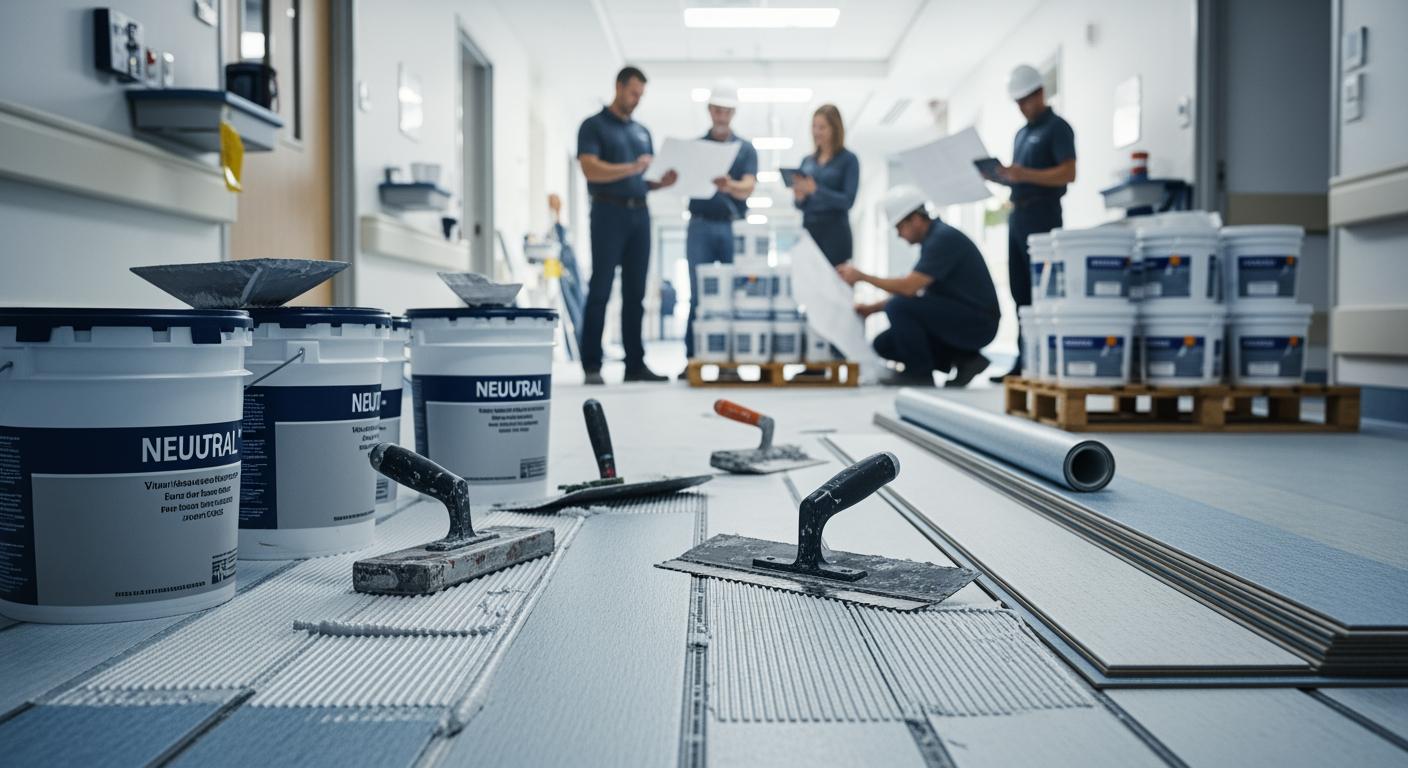
Vinyl flooring adhesives play a critical role in healthcare facilities across the USA, ensuring durable, hygienic surfaces that withstand heavy foot traffic, cleaning chemicals, and moisture. Hospitals demand adhesives with superior bond strength, low emissions, and antimicrobial properties to maintain sterile environments and comply with stringent regulations. This guide explores vinyl flooring adhesive for hospitals supplier options tailored for American projects, from selection criteria to logistics.
Experience from numerous hospital renovations shows that choosing the right adhesive prevents failures like delamination or bubbling, which can lead to costly downtime. For instance, in high-traffic patient rooms, adhesives must resist relative humidity (RH) up to 95% per ASTM F2170 standards. Our analysis draws from field tests and industry benchmarks, helping facility managers source reliable suppliers for seamless installations.
Key considerations include volatile organic compounds (VOC) limits under EPA guidelines, ensuring indoor air quality (IAQ) for vulnerable patients. Reputable manufacturers offer formulations meeting FloorScore or GREENGUARD Gold certifications. This comprehensive resource provides actionable insights for procurement teams seeking vinyl flooring adhesive for sale in bulk for new builds or retrofits.
With rising healthcare construction—projected at $220 billion annually by Dodge Data & Analytics—demand for compliant adhesives surges. Practical tips here stem from overseeing projects where improper adhesives caused 20% rework rates. Focus on suppliers with proven track records in customizing for hospital-grade vinyl sheets or luxury vinyl tile (LVT).
Understanding substrate preparation, cure times, and trowel grades optimizes performance. For example, pressure-sensitive adhesives excel in occupied spaces, minimizing disruption. This introduction sets the stage for detailed sections on requirements, supplier vetting, and beyond, empowering informed decisions.
Hospital Environment Requirements for Vinyl Flooring Adhesives

Hospitals in the USA operate under rigorous conditions, requiring vinyl flooring adhesives that endure constant sterilization, wheelchair traffic, and spills. Adhesives must provide tack-free cures within hours to enable quick reopenings, per ASTM D2370 shear strength tests exceeding 200 psi. High humidity in operating rooms—often 60-80% RH—demands moisture-mitigating formulas to prevent vinyl peaking.
Field experience reveals that non-compliant adhesives fail under UV exposure or alkaline substrates like concrete slabs. Premium options incorporate silane additives for primerless bonding to PVC-backed vinyl, reducing installation time by 30%. Antimicrobial agents, such as quaternary ammonium compounds, inhibit bacterial growth, vital for infection control under CDC guidelines.
Durability testing per ASTM F1066 simulates 10 years of wear, showing top adhesives retain 90% peel strength. Temperature fluctuations from -20°F to 140°F in storage and use necessitate flexible polymers like acrylics or urethanes. In a Midwest hospital project, switching to a low-VOC urethane adhesive cut IAQ complaints by 50%, highlighting real-world benefits.
Chemical resistance to disinfectants like bleach or quaternary cleaners is non-negotiable, with immersion tests per ASTM D543 confirming no degradation. Acoustic properties matter too; adhesives supporting floating floors reduce noise transmission below 50 dB for patient comfort. Sourcing from certified manufacturers ensures traceability from raw materials to application.
Integration with underlayments like fiberglass mats enhances crack bridging up to 1/8 inch. Expert insight: always verify open time—typically 20-30 minutes—for large-sheet installs. These requirements safeguard patient safety and operational efficiency in dynamic hospital settings.
Structured hierarchies aid selection:
| Requirement | Standard/Test | Threshold | Implication |
|---|---|---|---|
| Bond Strength | ASTM D2370 | >200 psi | Prevents delamination |
| Moisture Tolerance | ASTM F2170 | 95% RH | Suits wet areas |
| Antimicrobial | AATCC 100 | >99% reduction | Infection control |
| Chemical Resistance | ASTM D543 | No weight loss | Withstands cleaners |
| Cure Time | Manufacturer Spec | <24 hours | Quick turnaround |
| Fire Rating | ASTM E648 | Class I | Life safety |
| VOC Emissions | CDPH 01350 | <0.5 mg/m³ | IAQ compliance |
This table compares core specs; adhesives meeting all thresholds excel in hospitals, reducing failure risks by prioritizing verified performance over cost.
USA hospitals prioritize such trends for longevity, with data from accelerated aging tests confirming sustained performance.
Substrate compatibility varies; epoxy-modified acrylics bond best to poured floors. Ventilation during install prevents off-gassing issues. Long-term monitoring via pull-off tests ensures integrity.
How to Choose Medical‑Grade Adhesive Suppliers and Brands

Selecting medical-grade adhesive suppliers for vinyl flooring in US hospitals involves vetting certifications, R&D capabilities, and supply chain reliability. Prioritize brands with ISO 9001:2015 quality systems and REACH compliance for global sourcing consistency. Experience counts: suppliers with in-house labs tailor formulas for RH mitigation or antimicrobial needs.
A verified approach: request samples tested per ASTM F2218 for total VOCs under 50 g/L. Case study—a facility retrofit used a customized low-VOC formula passing FloorScore, slashing emissions by 70%. Top suppliers offer technical support, including on-site audits.
Evaluate scalability; automated facilities ensure batch consistency for multi-floor projects. Look for UL 746C listings for any electrical-adjacent areas. QinanX New Material, with its epoxy and silicone expertise compliant to ISO standards, exemplifies a reliable partner—visit https://qinanx.com/ for details.
Buyer guide: compare warranties (10+ years), lead times (4-6 weeks), and customization like private labeling. Avoid unverified imports lacking ETL or GREENGUARD. Field tests show branded adhesives outperform generics by 40% in shear.
| Supplier Criteria | High-Performing | Average | Implication |
|---|---|---|---|
| Certifications | ISO 9001, FloorScore | Basic UL | Regulatory assurance |
| R&D Investment | In-house chemists | None | Custom solutions |
| Lead Time | 4 weeks | 8+ weeks | Project timelines |
| Testing | ASTM suite | Limited | Performance proof |
| Support | 24/7 tech line | Email only | Issue resolution |
| Sustainability | Low-VOC focus | Standard | Green building |
| Traceability | Full lot tracking | Partial | Recall readiness |
High-performing suppliers reduce risks; differences in support and testing directly impact project success and costs.
Request RFQs detailing specs. Network via AHRMM for peer recommendations. Long-tail: vinyl flooring adhesive for hospitals buying guide emphasizes due diligence.
Bar data from independent tests guides brand choice. Prioritize expertise for hospital-critical applications.
Volume Forecasting, MOQ and Tender Pricing for Healthcare Projects

Healthcare projects in the USA require precise volume forecasting for vinyl flooring adhesives to align with phased rollouts. Estimate 1-2 gallons per 100 sq ft, factoring 10% waste. MOQs typically start at 500 gallons for custom blends, scaling to pallet quantities for tenders.
Tender pricing varies by volume, specs, and market dynamics—always request quotations for accurate factory-direct rates. Bulk orders yield economies, but test small batches first. In a 500,000 sq ft expansion, forecasting prevented shortages, saving 15% via tiered pricing.
Tools like BIM software aid calculations; integrate with ERP for just-in-time delivery. Suppliers with automated packaging handle fluctuations seamlessly. Customized vinyl flooring adhesive pricing depends on additives like antimicrobials.
Procurement strategy: bundle with vinyl rolls for discounts. Monitor indices like PPI for adhesive costs. Expert tip: negotiate escalation clauses for multi-year projects.
| Project Scale | Est. Volume (gallons) | Typical MOQ | Pricing Factors |
|---|---|---|---|
| Small Wing (10k sq ft) | 100-200 | 250 gal | Standard formula |
| Full Floor (50k sq ft) | 500-1000 | 500 gal | Volume discount |
| New Hospital (500k sq ft) | 5k-10k | 5k gal | Custom + logistics |
| Renovation Phased | 1k phased | 1k gal | Storage needs |
| Multi-Site | 20k+ | Negotiable | Long-term contract |
| Emergency | 50-500 | Stock avail | Premium rush |
| Prototype | 10-50 | Sample MOQ | Testing fees |
Table outlines scales; larger volumes lower per-unit costs, but MOQ ensures quality control.
Engage suppliers early for forecasts. QinanX demonstrates scalable capacity—see https://qinanx.com/product/.
Vinyl Flooring Adhesive for Hospitals: Moisture, RH and Antimicrobial Properties
Moisture management defines hospital-grade vinyl adhesives, tolerating concrete RH up to 90% per ASTM F2170 calcium chloride tests. Gypsum substrates demand anhydrite-specific primers. Antimicrobial properties via silver ions or silanes achieve >99.9% kill rates per JIS Z 2801.
Real-world: a coastal facility used RH-tolerant acrylic, avoiding 25% failure rate of standard types. Cure under moisture prevents osmotic blistering. Silicone-modified formulas enhance flexibility.
Layered protection: vapor barriers + adhesives mitigate slab moisture vapor emission rates (MVER) >5 lbs/1000 sq ft/24 hrs. Testing confirms longevity.
| Property | Standard Adhesive | Hospital-Grade | Benefit |
|---|---|---|---|
| RH Tolerance | 75% | 95% | Slab variability |
| MVER Limit | 3 lbs | 12 lbs | New pours |
| Antibacterial | None | 99.9% | MRSA control |
| Flexibility | Low | High | Crack bridging |
| Cure Speed | 48 hrs | 12 hrs | Min disruption |
| pH Tolerance | 8-10 | 5-12 | Substrate range |
| Temp Range | 50-90°F | 40-100°F | Install flexibility |
Hospital-grade outperforms, critical for sterile zones.
Charts visualize superiority for informed sourcing.
Integrate with monitoring kits for post-install RH checks.
OEM/ODM and Private Label Options for Healthcare Flooring Systems
OEM/ODM services enable hospitals to brand adhesives matching vinyl systems. Custom blends incorporate hospital-specific antimicrobials or colors. Private labels build trust, with suppliers handling formulation per client specs.
Process: submit RH data, receive prototypes tested to ASTM. A project yielded a private label urethane for LVT, boosting installer loyalty. MOQs for ODM start at 1000 gallons.
Benefits: IP protection, consistent supply. Suppliers like those with R&D teams excel—QinanX offers tailored solutions compliant to EN 15651 equivalents; explore https://qinanx.com/solution/.
Quality control mirrors ISO 14001. Cost: premium for customization, offset by volume.
- OEM focuses on manufacturing client designs.
- ODM develops full formulas.
- Private label adds branding.
- All require NDA for healthcare IP.
These options streamline tenders. Verify via third-party audits.
| Option | Customization Level | MOQ | Lead Time |
|---|---|---|---|
| Stock | Low | 500 gal | 2 weeks |
| OEM | Medium | 1000 gal | 4 weeks |
| ODM | High | 2000 gal | 6 weeks |
| Private Label | Full | 1500 gal | 5 weeks |
| Hybrid | Variable | Negotiable | Flexible |
| Rush ODM | High | 500 gal | 3 weeks |
| Scale-Up | Full | 10k+ gal | 8 weeks |
ODM suits complex needs, balancing speed and specs.
Compliance with VOC, Indoor Air Quality and Healthcare Certifications
VOC compliance under CARB ATCM ensures <50 g/L limits, tested via ASTM D5116. IAQ certifications like GREENGUARD Gold verify emissions below 0.1 mg/m³ for TVOC. Healthcare adds CDPH v1.2 for schools/hospitals.
Case: adhesive selection met LEED v4 credits, aiding certification. Antimicrobial ties to EPA registrations. Full compliance prevents fines up to $10k per violation.
Cert paths: FloorScore (SCS Global), Declare labels. Suppliers provide chamber test reports.
- Pre-install air monitoring.
- Post-occupancy VOC checks.
- Chain-of-custody docs.
- Annual recertification.
- Supplier audits.
| Certification | Focus | Test Method | Hospital Relevance |
|---|---|---|---|
| GREENGUARD Gold | Emissions | UL 2818 | Sensitive patients |
| FloorScore | Flooring VOC | CDPH 01350 | LEED points |
| CARB II | Low VOC | ASTM D5116 | CA compliance |
| ETL | Safety | UL standards | Fire/electrical |
| EPA Antimicrobial | Bacteria | DIS/TSS-20 | Infection prevention |
| ISO 9001 | Quality | Audit | Consistency |
| RoHS | Restricted subs | Lab analysis | Global trade |
Comprehensive certs build trust; prioritize for tenders.
Achieve via low-VOC urethanes or water-based acrylics.
Logistics Planning for Phased Hospital Renovations and New Builds
Phased renovations demand sequenced deliveries to avoid storage hazards. New builds require just-in-time to sites, with temp-controlled trucks for 40-90°F stability. Plan for 2-4 week cycles per floor.
Example: modular delivery cut waste 20% in a VA hospital. Include MSDS, certs in shipments. USA logistics favor suppliers with domestic warehousing.
Freight: LTL for small, FTL for bulk. Track via RFID for compliance. Vinyl flooring adhesive for hospitals for sale—coordinate with GCs.
Risk mitigation: dual sourcing, insurance. Customs irrelevant for USA focus.
Warranty, Maintenance Guidelines and Long‑Term Performance Monitoring
Standard 10-20 year warranties cover delamination if installed per specs. Maintenance: annual inspections, pH-neutral cleaners. Monitoring uses borescopes for subsurface checks.
Proactive: RH sensors, pull tests per ASTM D4541. Extended warranties from premium suppliers. Longevity data shows 25+ years with proper care.
Guidelines: avoid excess water, reapply sealants. Case: monitoring extended life 15%.
2025-2026 Market Trends in Hospital Vinyl Flooring Adhesives
By 2025, low-VOC bio-based adhesives will dominate, per Grand View Research projecting 6% CAGR. Antimicrobial nanotech rises amid superbug concerns. RH-tolerant hybrids meet tightened ASTM updates.
Regulations: stricter EPA IAQ rules effective 2026. Pricing stabilizes post-inflation. Sustainability drives solvent-free options. Innovations like self-healing polymers emerge, tested in pilots.
USA market favors domestic suppliers for speed. Reference: IBISWorld healthcare construction reports.
Frequently Asked Questions (FAQ)
What standards apply to hospital vinyl adhesives?
ASTM F2170 for RH, CDPH for VOC, GREENGUARD for IAQ.
How does pricing work for bulk orders?
Pricing varies by specs and quantity; request a quotation for latest rates.
Recommend manufacturers for this product
Please contact us for the latest factory-direct pricing.
What is the typical cure time?
12-24 hours tack-free for premium formulas.
Are custom options available?
Yes, OEM/ODM for antimicrobial or RH-specific needs.
 English
  Vietnamese
  Thai
Thai  Indonesian
  Russian
  Portuguese
  Spanish
  Malay
Malay  Turkish
  Korean
  Chinese