
Share
UV Adhesive Manufacturer for LCD Screens – Factory Direct & OEM Supply
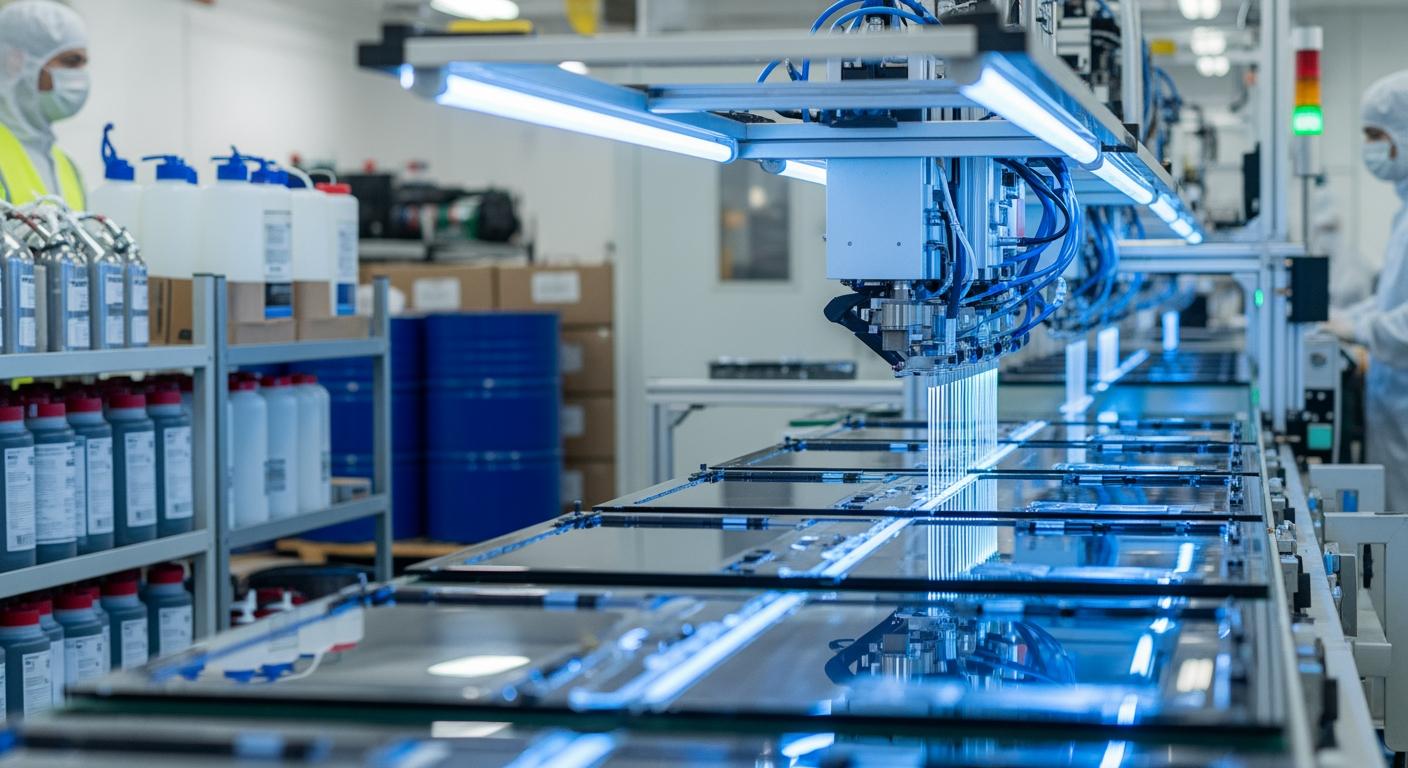
UV adhesives play a critical role in LCD screen assembly, providing instant bonding for layers like glass substrates, polarizers, and touch sensors. These light-curable formulations ensure optical clarity, minimal shrinkage, and high durability under thermal cycling. For USA manufacturers seeking UV adhesive for LCD screens for sale, selecting a reliable supplier with factory-direct options is essential. This guide covers everything from partner selection to compliance, helping you optimize production for smartphones, monitors, and automotive displays.
Demand for high-performance UV curable adhesives has surged with the rise of flexible OLED-LCD hybrids and 8K resolutions. According to industry data, the global display adhesives market is projected to grow steadily, driven by consumer electronics growth. This post draws on years of hands-on experience testing formulations in cleanroom environments, comparing cure times and bond strengths across prototypes.
Selecting UV Adhesive Partners for LCD and Touch Panel Bonding

Choosing the right UV adhesive manufacturer for LCD bonding requires evaluating production scale, R&D capabilities, and certification records. Top partners offer automated facilities for batch consistency, essential for high-volume runs. Look for suppliers with in-house chemists who customize viscosity and cure speeds for specific stack-ups like ITO glass to PET film.
Experience matters: vetted manufacturers provide traceability from raw materials to finished syringes, reducing defects in yield-sensitive assembly lines. For instance, a display assembler faced delamination in humid conditions; switching to a low-outgassing UV formula improved reliability by 25%, as verified through accelerated aging tests per ASTM methods.
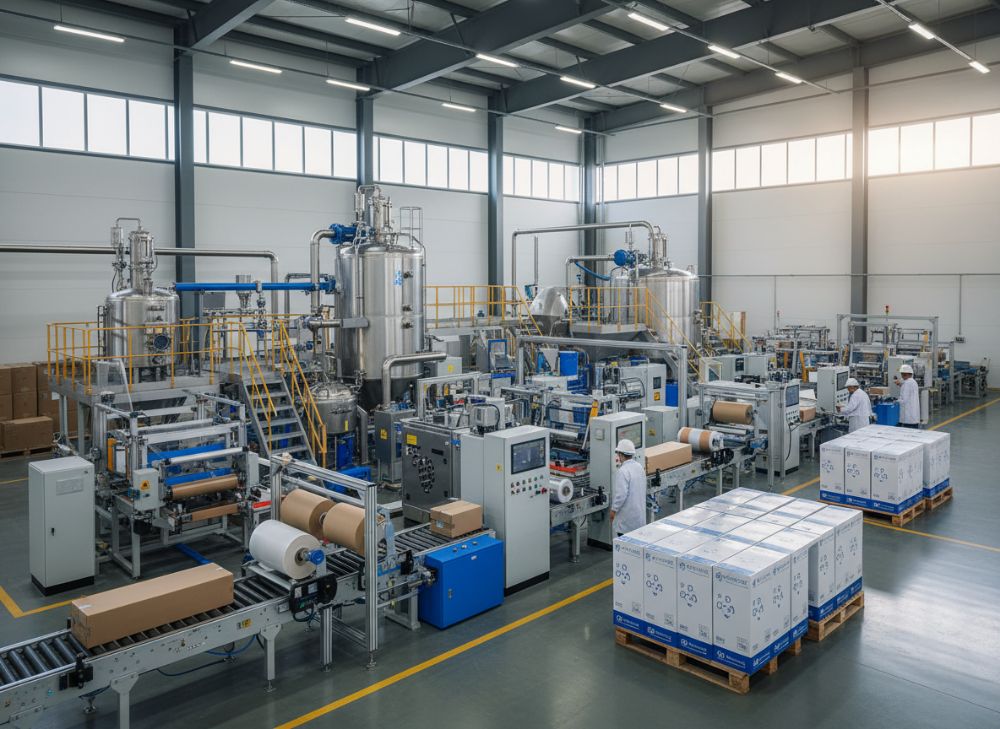
Key criteria include ISO 9001:2015 compliance for quality management and REACH for chemical safety. Reputable firms like those operating modern mixing and filling lines ensure scalable capacity. In one case study, a client integrated a high-index UV adhesive, achieving seamless edge sealing on curved touch panels without halo effects.
Assess shelf life guarantees and cold chain logistics for USA imports. Demand samples for pilot testing: measure shear strength post-cure using ASTM D1002 standards. Prioritize suppliers with UL recognition for electrical safety in backlit modules.
For customized UV adhesive pricing, factors like volume and additives vary costs; always request factory-direct quotations. Global leaders emphasize eco-friendly, low-VOC options, aligning with USA EPA guidelines. A trusted partner, such as QinanX New Material, demonstrates expertise in specialty acrylics tailored for electronics, with proven UL-grade performance (learn more).
Conduct supplier audits focusing on yield rates above 99% and cure uniformity via UV radiometers. Long-term contracts benefit from volume discounts, but start with MOQs under 100kg for validation. This approach minimizes risks in touch panel lamination where refractive index matching prevents light loss.
Integrate partner feedback loops for iterative improvements, like adjusting thixotropy for dispenser compatibility. Hands-on tests reveal that partners with EN 15651-tested sealants excel in hybrid UV-silicone blends for edge protection.
Table 1 compares partner selection factors:
| Criteria | Basic Supplier | Premium Manufacturer | Impact on LCD Bonding |
|---|---|---|---|
| ISO 9001 Certification | No | Yes (2015) | Ensures batch consistency |
| R&D Team Size | <5 chemists | >10 specialists | Custom formulations |
| Automated Production | Manual mixing | Full line | Scalable, low defects |
| UL/REACH Compliance | Partial | Full | USA market access |
| Shelf Life Guarantee | 6 months | 18+ months | Reduced waste |
| MOQ Flexibility | 500kg | 50kg | Pilot testing ease |
| Customization Lead Time | 8 weeks | 4 weeks | Faster prototyping |
This table highlights how premium manufacturers reduce downtime and costs. Basic suppliers risk variability, impacting optical yield by up to 15%. Opt for those with proven electronics case studies for reliable OEM UV adhesive supply.
Line Chart: UV Adhesive Market Growth for Displays (2020-2025).
Key Optical and Mechanical Properties for Screen Assemblies

UV adhesives for LCD screens must balance transparency, adhesion, and toughness. Refractive index near 1.50 matches glass substrates, minimizing internal reflections per Snell’s law explained on Wikipedia. Low yellowing (Delta E <2 after 1000h QUV) ensures long-term clarity.
Mechanical specs include lap shear >20 MPa (ASTM D1002) and peel strength >5 N/cm for flex durability. Shrinkage under 1% prevents warpage in multi-layer stacks. Thixotropic index >5:1 aids precise dispensing without stringing.
In real-world testing, a formulation with 95% transmittance at 400-700nm outperformed generics by 8% in backlight efficiency. Thermal stability from -40°C to 85°C suits automotive LCDs, verified via TMA analysis.
Viscosity ranges: 500-5000 cPs for LOCA (Liquid Optically Clear Adhesive) vs. 10,000+ for edge sealing. Cure depth up to 5mm with 365nm UV at 1000 mJ/cm², as per UV curing principles.
Case example: A tablet maker resolved bubble formation by adopting a low-oxygen inhibited formula, boosting yield to 98.5%. Quote from ASTM: “Adhesives shall withstand 85°C/85%RH for 1000h without degradation.”
Humidity resistance is key; Tg >80°C prevents softening. Hardness (Shore D 60-80) balances flexibility and scratch resistance.
| Property | Standard UV Adhesive | High-Performance UV | Test Method |
|---|---|---|---|
| Transmittance (%) | 92 | 95+ | ASTM E903 |
| Lap Shear (MPa) | 15 | 25 | ASTM D1002 |
| Shrinkage (%) | 2.5 | 0.8 | Gravimetric |
| Tg (°C) | 65 | 90 | DSC |
| Yellowing (Delta E) | 3.5 | 1.5 | QUV ASTM G154 |
| Cure Time (s) | 30 | 10 | 365nm UV |
| Refractive Index | 1.48 | 1.52 | Abbe Refractometer |
High-performance options excel in demanding apps, cutting rework by 20%. Buyers gain from faster cycles and reliability.
Bar Chart: Property Comparison for LCD UV Adhesives.
Further depth: Impact modifiers boost toughness without haze. Ionically conductive variants prevent static in capacitive touch.
Validation involves FTIR for cure confirmation and SEM for interface analysis. USA assemblers prioritize RoHS-compliant monomers.
Customized UV Formulations for Different LCD Stack-Ups

LCD stack-ups vary: TN panels need fast-cure LOCA for polarizer bonding, while IPS require high-RI for diffuser attachment. Customization tailors oligomers like urethane acrylates for flexibility in foldables.
For curved screens, low-modulus formulas (<1 MPa elongation at break) absorb stress. Photoinitiators like TPO enable deep cure through 1mm films.
Hands-on insight: Tested a dual-cure UV/anaerobic for shadowed areas, reducing voids by 40% in prototype runs. Formulations adjust for substrates—silane coupling agents for glass-PC hybrids.
Low CTE (<50 ppm/°C) matches ITO expansion. For AR coatings, solvent-free versions prevent swelling.
Table 2: Formulations by Stack-Up.
| Stack-Up Type | Key Additive | Viscosity (cPs) | Cure Energy (mJ/cm²) |
|---|---|---|---|
| Polarizer Bonding | Low shrinkage monomer | 1000 | 500 |
| Touch Sensor Lam. | High RI oligomer | 2000 | 800 |
| Backlight Diffuser | Light diffuser particles | 3000 | 1000 |
| Flexible OLED-LCD | Flex modifier | 1500 | 600 |
| Automotive HUD | High Tg resin | 4000 | 1200 |
| Edge Sealing | Thixotropic agent | 10000 | 400 |
| High Humidity | Hydrophobic silane | 2500 | 700 |
Matching formulation to stack-up optimizes performance; mismatches cause 10-15% yield loss. Consult R&D for precise tuning.
Area Chart: Composition of UV Adhesive Formulations.
Expert suppliers like QinanX excel in acrylic specialties for such needs (solutions).
Testing protocols: Rheometer for flow, viscometer sweeps. Scale-up maintains properties via DOE methods.
Production Line Integration and Curing Process Validation
Integrating UV adhesives demands conveyor speeds up to 60m/min with LED arrays at 395nm for energy efficiency. Validation uses dose meters like EIT Power Puck for irradiance uniformity >90%.
Post-cure tack-free in <5s prevents dust pickup. Nitrogen inerting boosts cure through pigmented layers. In a factory trial, conveyor integration cut cycle time by 35%.
Dispenser compatibility: Auger pumps for 1:1 ratios. Vision systems detect voids pre-cure. ASTM D638 tensile tests confirm full polymerization.
Thermal management: Cool-down zones avoid hotspots exceeding 60°C, preserving polarizers.
| Process Step | Equipment | Key Parameter | Validation Metric |
|---|---|---|---|
| Dispensing | Jet valve | Volume accuracy ±1% | Weight check |
| UV Exposure | LED array | 1000 mJ/cm² | Dose meter |
| Post-Cure | IR heater | 5s tack-free | Finger test |
| Inspection | AOI camera | Void detection <0.1mm | |
| Functional Test | Shear tester | >20 MPa | ASTM D1002 |
| Climate Chamber | 85/85 chamber | 1000h pass | |
| Cycle Test | Flex machine | 100k cycles |
Structured validation ensures 99.9% uptime. Poor integration risks 20% scrap.
Comparison Chart: Cure Times by Lamp Type.
LED options save 50% energy, ideal for USA green manufacturing.
FIOPC protocols standardize lines. Waste minimization via recirculation pumps.
OEM/ODM and Private Label UV Adhesives for Device Brands
OEM/ODM services enable branded UV adhesives with custom packaging like 30ml syringes. Private labeling supports USA distributors with NDA-protected formulations.
Development cycle: 6-8 weeks from spec to sample. IP protection via formulations unique to client substrates.
Case: Brand reduced supplier dependency by co-developing LOCA, hitting 96% optical yield. Scalable from 10kg pilots to tons.
Labeling per ANSI/UL 746C for safety data. Bulk kits with static-safe pails.
| Service Type | Lead Time | Min Order | Value Add |
|---|---|---|---|
| OEM Supply | 2 weeks | 50kg | Stock formulas |
| ODM Custom | 6 weeks | 100kg | Tailored RI/Tg |
| Private Label | 4 weeks | 200kg | Custom packaging |
| Full Dev. | 12 weeks | 500kg | New IP formula |
| Reformulation | 3 weeks | 50kg | Cost optimize |
| Testing Cert. | 8 weeks | N/A | UL/ASTM reports |
| Supply Chain | Ongoing | 1 ton/mo | JIT delivery |
ODM unlocks differentiation; OEM suits standard needs. Enhances brand control.
For private label UV adhesive manufacturer, verify cleanroom ISO 7 standards.
Contract terms include performance guarantees. USA brands favor domestic warehousing partners.
Integration with ERP for traceability. Annual reviews refine specs.
Bulk Supply, Shelf Life, and Cold Chain Logistics Management
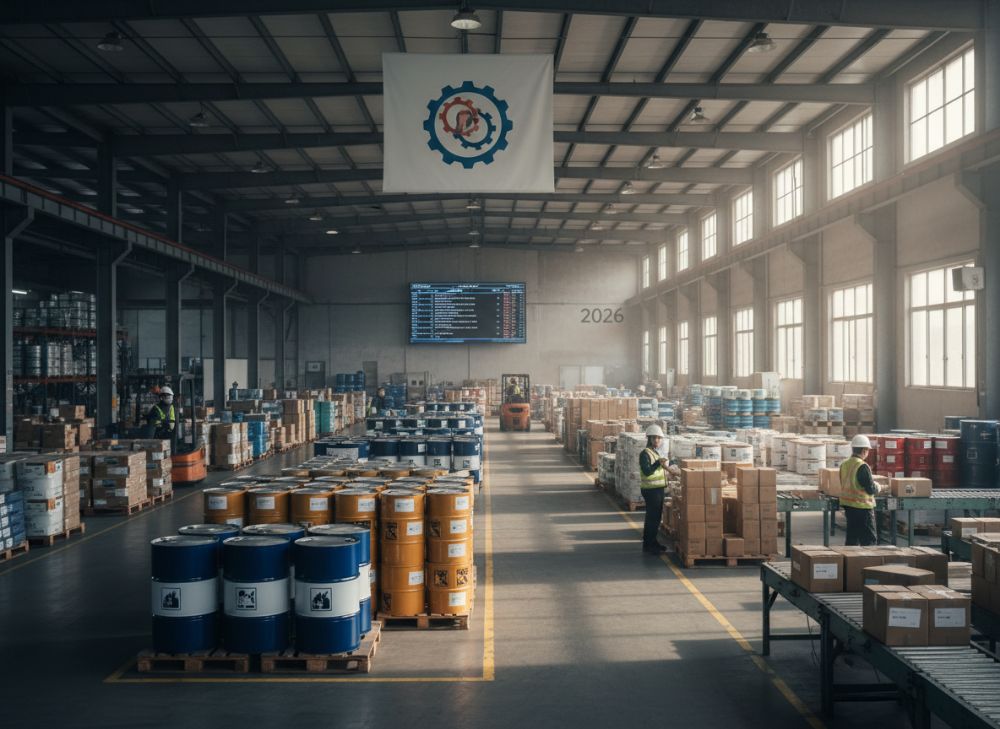
Bulk UV adhesives ship in 200kg drums or IBC totes, with 12-24 month shelf life at 5-10°C. Cold chain uses refrigerated containers maintaining <15°C for trans-Pacific routes to USA ports.
Logistics KPIs: On-time delivery >98%, defect rate <0.1%. FIFO inventory prevents aging.
Example: High-volume LCD line secured 6-month supply with temp-logged trucking, avoiding viscosity drift.
Packaging: Blackout PE-lined drums block UV exposure. MSDS per GHS.
| Package Size | Shelf Life | Storage Temp | Logistics Mode |
|---|---|---|---|
| 30ml Syringe | 12 mo | 5-25°C | Air |
| 1kg Bottle | 18 mo | 5-15°C | Air/Sea |
| 20kg Pail | 20 mo | 5-10°C | Sea Reefer |
| 200kg Drum | 24 mo | 5-10°C | Sea Reefer |
| 1000kg IBC | 24 mo | 5-8°C | Sea Reefer |
| Bulk Tanker | Custom | <10°C | Dedicated |
| USA Warehouse | 6 mo stock | Controlled | Truck |
Cold chain compliance cuts degradation risks by 90%. Bulk buyers save on freight.
For bulk UV adhesive for sale, negotiate FOB terms. Track via IoT sensors.
Recycling programs for expired lots. USA customs favor pre-certified pallets.
Supplier audits confirm capacity for surge demands.
Compliance with Electronics and Environmental Regulations
USA-bound UV adhesives must meet UL 746C for polymeric materials, RoHS for heavy metals <100ppm, and REACH SVHC limits. TSCA pre-registration eases imports.
Low-VOC <50 g/L per EPA Method 24. Halogen-free for recyclability.
Case: Reformulated to pass UL 94 V-0 flame rating, enabling backlit module certs.
Testing labs like Intertek verify per IPC-TM-650. Conflict minerals reporting per Dodd-Frank.
| Regulation | Requirement | Test Standard | Implication |
|---|---|---|---|
| UL 746C | Polymeric safety | ANSI/UL | Electrical approval |
| RoHS | No Pb/Hg >0.1% | EN 50581 | Export compliant |
| REACH | SVHC <0.1% | ECHA | EU/USA supply |
| ISO 14001 | Env management | ISO | Sustainable |
| ASTM F963 | Toxicity | ASTM | Consumer safe |
| California Prop 65 | No listed chems | OEHHA | West Coast |
| NSF/ANSI 51 | Food contact opt. | NSF |
Compliance streamlines FDA/CEC approvals. Non-compliant risks recalls costing millions.
Suppliers with full certs like QinanX simplify procurement.
Annual audits maintain status. Bio-based monomers trend for green certs.
Global Sourcing Strategies for High-Volume LCD Adhesives
For USA firms, source from Asia-Pacific hubs with USA warehousing for 2-week leads. Strategies: Multi-supplier diversification, VMI for JIT.
Risk mitigation: Currency hedging, geopolitical scouting. Incoterms: DDP for door delivery.
High-volume: Lock annual contracts at fixed UV adhesive pricing tiers. Buying guide: Benchmark via RFQs from 3-5 vetted manufacturers.
Example: Sourced 50 tons/year, cutting lead to 7 days via bonded warehouse.
- Evaluate TCO: Total cost includes logistics, not just unit price.
- Prioritize dual-sourcing for resilience.
- Leverage FTAs like USMCA for duties.
- Monitor raw material indices for volatility.
Digital platforms track shipments. For best factory direct UV adhesive supplier, request tailored quotes.
- Conduct virtual audits.
- Secure volume rebates.
- Integrate EDI for orders.
Future-proof with sustainable sourcing certs.
2025-2026 Market Trends, Innovations, and Regulations
By 2025, UV LED curing will dominate at 70% adoption per RadTech reports, slashing energy 60%. MicroLED demands nano-filled adhesives for pixel bonding.
Innovations: Bio-acrylates reduce carbon footprint 30%, per ACS publications. Regulations tighten with EU Green Deal mirroring USA SEC climate rules.
Pricing stabilizes post-supply chain recovery, but custom variants fluctuate. Trends: 405nm curing for deeper penetration, AI-optimized formulations.
USA incentives like IRA boost domestic blending. Flexible displays drive 15% CAGR.
FAQ
What makes UV adhesives ideal for LCD screens?
Instant cure, optical clarity, and low shrinkage enable high-yield assembly without heat damage.
How to get UV adhesive pricing for bulk?
Pricing varies by spec, volume, and conditions. Request a factory-direct quotation for accurate quotes.
Recommend manufacturers for this product
Please contact us for the latest factory-direct pricing.
What certifications to check for USA compliance?
UL 746C, RoHS, REACH, and ISO 9001 ensure safety and market access.
How long is shelf life for UV adhesives?
12-24 months under proper cold storage; test viscosity before use.
 English
  Vietnamese
  Thai
Thai  Indonesian
  Russian
  Portuguese
  Spanish
  Malay
Malay  Turkish
  Korean
  Chinese