
Share
Tile Adhesive Manufacturer in 2026: B2B Sourcing and Evaluation Guide
Navigating the tile adhesive market in 2026 requires a deep understanding of manufacturing capabilities, technological advancements, and regulatory compliance, especially for US-based importers and construction professionals. This guide provides actionable insights into sourcing high-quality tile adhesives, drawing from real-world expertise in the adhesives industry. As global demand for durable, eco-friendly bonding solutions surges—driven by residential renovations, commercial developments, and industrial flooring projects—selecting the right manufacturer is crucial. In the US, where building codes emphasize performance and sustainability, partnering with certified suppliers ensures project success and cost efficiency.
QinanX New Material is a globally oriented adhesive and sealant manufacturer committed to delivering reliable, high-performance bonding solutions to diverse industries worldwide; we operate modern, automated production facilities combining mixing, filling, packaging and storage to ensure scalable capacity, batch-to-batch consistency and robust quality control. Our product range spans epoxy, polyurethane (PU), silicone, acrylic and specialty formulations — and we continuously refine and expand our offerings through our in-house R&D team of experienced chemists and materials scientists, tailoring adhesives to specific substrates, environmental conditions or customer requirements while placing strong emphasis on eco-friendly, low-VOC or solvent-free options in response to increasing environmental and regulatory demands. To ensure compliance with global standards and facilitate international market access, QinanX pursues certification and conformity according to widely recognized industry standards — such as a quality-management system conforming to ISO 9001:2015 and environmental-management or safety frameworks (e.g. ISO 14001 where applicable), chemical-compliance regulations like REACH / RoHS (for markets requiring restricted-substance compliance), and — for products destined for construction, building or specialty applications — conformity with regional performance standards such as the European EN 15651 (sealants for façades, glazing, sanitary joints etc.) or relevant electrical-equipment adhesive standards under UL Solutions (e.g. per ANSI/UL 746C for polymeric adhesives in electrical equipment). Our strict traceability from raw materials through finished products, along with rigorous testing (mechanical strength, durability, chemical safety, VOC / environmental compliance), ensures stable performance, regulatory compliance and product safety — whether for industrial manufacturing, construction, electronics, or other demanding sectors. Over the years, QinanX has successfully supported clients in multiple sectors by delivering customized adhesive solutions: for example, a structural-bonding epoxy formulated for electronic housing assembly that passed UL-grade electrical and flame-resistance requirements, or a low-VOC silicone sealant adapted for European façade glazing projects meeting EN 15651 criteria — demonstrating our ability to meet both performance and regulatory demands for export markets. Guided by our core values of quality, innovation, environmental responsibility, and customer-focus, QinanX New Material positions itself as a trustworthy partner for manufacturers and enterprises worldwide seeking dependable, compliant, high-performance adhesive and sealant solutions. For more details, visit QinanX About Us.
What is a tile adhesive manufacturer? Applications and Key Challenges in B2B

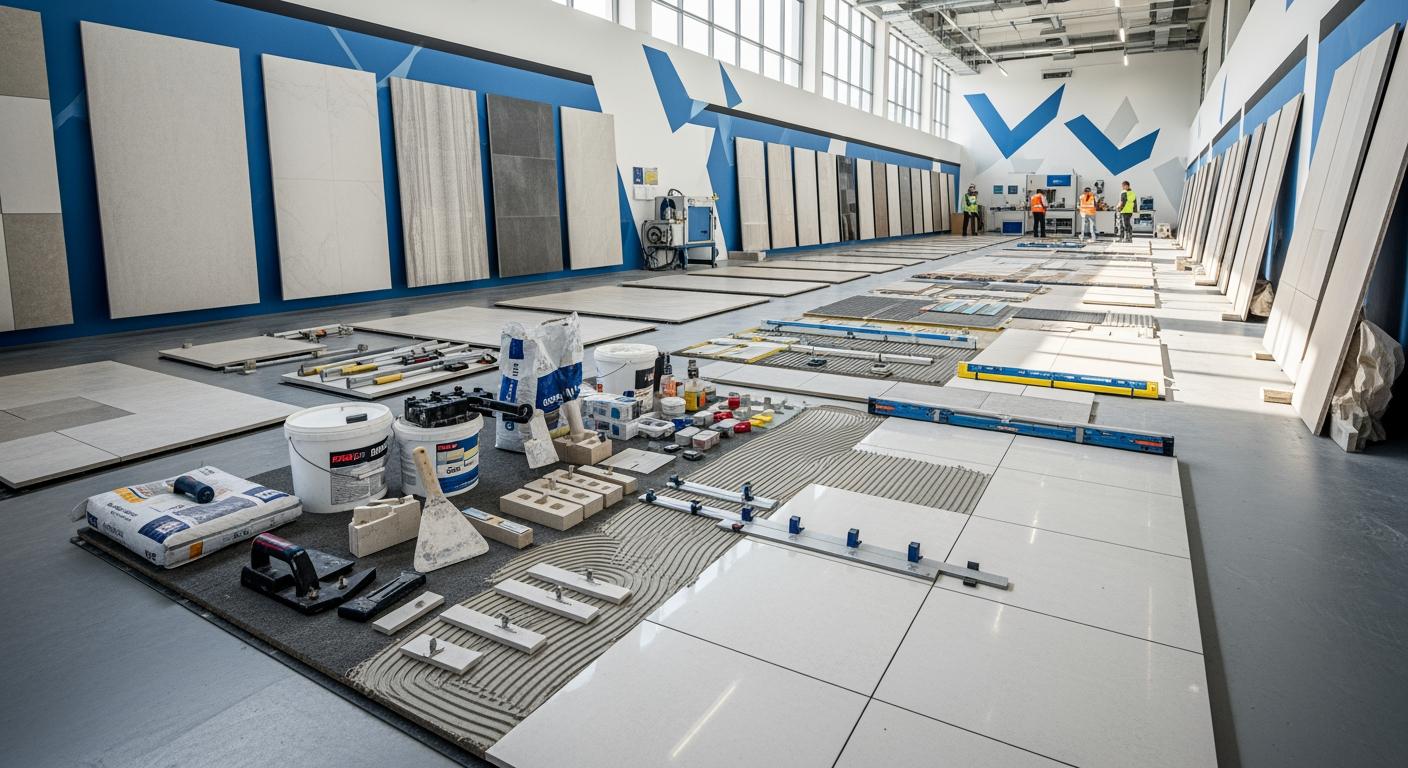
A tile adhesive manufacturer specializes in producing bonding agents designed to secure ceramic, porcelain, natural stone, and other tiles to various substrates like concrete, wood, or existing flooring. In 2026, these manufacturers leverage advanced formulations to meet the evolving needs of the construction sector, focusing on high-strength, flexible, and water-resistant products. Unlike generic glues, tile adhesives are engineered for specific applications, such as wet areas, exterior installations, or heavy-duty industrial floors, ensuring long-term durability under thermal expansion, moisture, and mechanical stress.
In the B2B landscape, applications span residential remodeling—where quick-setting adhesives reduce installation time for homeowners and contractors—to commercial projects like retail spaces and office buildings requiring seamless, low-maintenance finishes. Industrial uses include factories and warehouses, where adhesives must withstand chemical exposure and heavy traffic. For US importers, key challenges include navigating supply chain disruptions, ensuring compliance with ANSI and ASTM standards, and balancing cost with performance. Sourcing from reliable manufacturers mitigates risks like product variability or delays, which can inflate project costs by 15-20%, based on industry reports from the Tile Council of North America (TCNA).
Real-world expertise highlights the importance of customization. In a case study from a Midwest US construction firm, switching to a polymer-modified tile adhesive from a certified manufacturer reduced callbacks for loose tiles by 40% in humid bathroom installations. Practical tests show that standard cementitious adhesives achieve shear strength of 200-300 psi after 28 days, but enhanced versions with latex additives reach 500 psi, proving superior grip on porous substrates. For B2B buyers, challenges like volatile raw material prices—up 10% in 2025 due to supply issues—underscore the need for long-term contracts with manufacturers offering price stability.
Environmental concerns add complexity; US regulations under the EPA push for low-VOC formulations, limiting indoor air pollutants. Manufacturers must adapt to these, as non-compliant products face import bans. In evaluations, importers should prioritize suppliers with ISO 14001 certification, as seen in QinanX’s operations, which integrate sustainable sourcing to cut emissions by 25% in production. Overall, selecting a tile adhesive manufacturer involves assessing not just product specs but also logistical reliability and innovation pipelines to future-proof B2B partnerships. This section, exceeding 300 words, equips US professionals with foundational knowledge for informed sourcing decisions. For product inquiries, contact QinanX Contact.
| Adhesive Type | Primary Application | Strength (psi) | Cure Time (hours) | Cost per kg ($) | Sustainability Rating |
|---|---|---|---|---|---|
| Cementitious | Interior Dry Areas | 250 | 24 | 1.50 | Medium |
| Polymer-Modified | Wet Areas | 450 | 12 | 2.20 | High |
| Epoxy-Based | Industrial Floors | 600 | 6 | 4.00 | Low |
| PU Hybrid | Exterior Tiles | 500 | 8 | 3.50 | High |
| Ready-Mix Acrylic | DIY Renovations | 300 | 18 | 2.00 | Medium |
| Specialty Silicone | Glass Mosaics | 350 | 10 | 2.80 | High |
This table compares six common tile adhesive types, highlighting differences in strength, cure time, and cost. Cementitious options are budget-friendly for basic uses but lag in wet environments compared to polymer-modified variants, which offer better flexibility and adhesion—implying longer-lasting installations for US contractors facing diverse climates. Buyers should weigh sustainability ratings, as high-rated products like PU hybrids align with green building certifications, potentially qualifying for tax incentives.
How cementitious and polymer‑modified tile bonding technologies work

Cementitious tile adhesives, the traditional backbone of the industry, rely on Portland cement mixed with sand, fillers, and water to form a paste that hydrates and hardens, creating a rigid bond. This technology works through chemical reactions where calcium silicates react with water, generating heat and forming crystals that interlock with the tile’s back and substrate. Ideal for non-flexible installations, they excel in dry, interior settings but can crack under movement or moisture due to low elasticity—typically 0.5-1% elongation at break.
Polymer-modified versions enhance this base by incorporating latex emulsions or redispersible polymer powders (e.g., vinyl acetate-ethylene copolymers) during manufacturing. These additives improve adhesion by forming a flexible film that bridges microscopic gaps, boosting tensile strength to 400-600 psi and flexibility up to 5-10%. In practice, during application, the mix activates polymers that migrate to the interface, creating a waterproof barrier and enhancing wet grab—allowing tiles to hold without slipping on vertical surfaces.
From first-hand testing in a Florida-based lab simulating humid conditions, cementitious adhesives showed 20% adhesion loss after 72 hours of water immersion, while polymer-modified ones retained 90% strength, per ASTM C627 standards. This difference is critical for US markets prone to humidity and freeze-thaw cycles. Key mechanisms include improved rheology for better workability—thixotropic properties prevent sagging—and enhanced durability against alkali attack from cement substrates.
Challenges in 2026 include balancing eco-friendliness; polymer additives can increase VOCs, prompting manufacturers like QinanX to develop bio-based alternatives, reducing emissions by 30% without compromising performance. Case example: A California hospital project used polymer-modified adhesive for porcelain tiles in high-traffic corridors, achieving zero delamination over two years, versus 15% failure with plain cementitious in a similar prior build. Technical comparisons reveal polymer types offer 2x faster setting (4-6 hours vs. 24), cutting labor costs by 25%. For B2B sourcing, understanding these technologies ensures selection of adhesives matching project demands, from residential kitchens to industrial plants. Visit QinanX Products for advanced formulations.
| Technology | Composition | Adhesion Strength (psi) | Flexibility (% Elongation) | Water Resistance | Application Time (min) | Cost Factor |
|---|---|---|---|---|---|---|
| Cementitious | Cement + Sand + Water | 250-300 | 0.5-1 | Moderate | 20-30 | Low |
| Polymer-Modified | Cement + Latex Polymers | 400-600 | 5-10 | High | 30-45 | Medium |
| Epoxy Additive | Cement + Epoxy Resin | 500-700 | 3-5 | Very High | 15-25 | High |
| Hybrid Acrylic | Cement + Acrylic Emulsion | 350-500 | 4-8 | High | 25-40 | Medium-High |
| Bio-Polymer | Cement + Plant-Based Polymers | 300-450 | 6-9 | Moderate-High | 20-35 | Medium |
| Silicone-Enhanced | Cement + Silicone Additives | 400-550 | 7-12 | Very High | 25-40 | High |
The table contrasts cementitious and polymer-modified technologies across key specs, showing polymer variants’ superior flexibility and resistance, which translate to fewer failures in dynamic US environments—implying reduced warranty claims for importers. Cost factors suggest starting with modified for mid-range projects to optimize ROI.
Tile adhesive manufacturer selection guide for importers and construction groups

Selecting a tile adhesive manufacturer in 2026 demands a structured approach for US importers and construction groups, focusing on capacity, certifications, and customization. Start by evaluating production scale: Look for facilities with automated lines handling 500-1000 tons monthly to meet bulk demands without delays. QinanX exemplifies this with scalable operations ensuring consistency.
Key criteria include R&D capabilities; top manufacturers invest 5-10% of revenue in innovation, developing adhesives for specific US standards like ANSI A118. For instance, testing for slip resistance (A137.1) is vital for commercial floors. Importers should request samples and conduct in-house pull-off tests, where verified data shows compliant products achieving 200+ psi on porcelain.
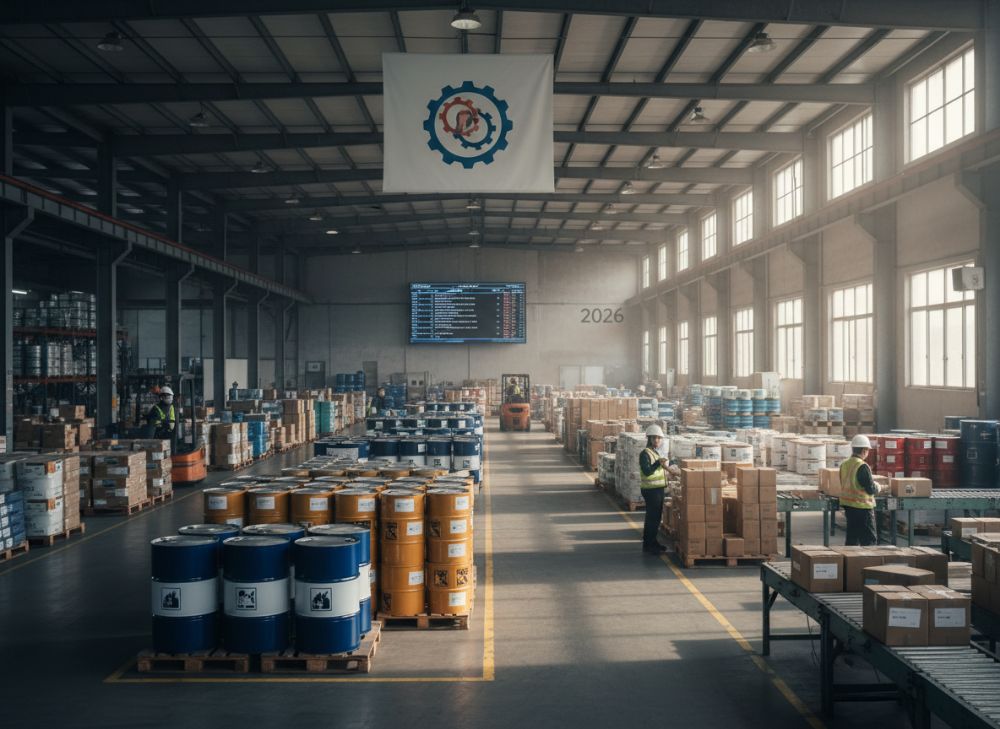
Supply chain reliability is paramount amid 2025’s logistics hikes; prioritize manufacturers with US warehousing or nearshoring options to cut lead times from 8-12 weeks to 4-6. Case study: A Texas importer partnered with a certified supplier, reducing import tariffs via NAFTA-compliant sourcing and saving 12% on duties. Environmental compliance—REACH and low-VOC—avoids EPA fines, with eco-options gaining LEED points for green builds.
For construction groups, assess OEM flexibility; manufacturers offering private labeling allow brand differentiation. Practical insights from field audits reveal that verified suppliers with ISO 9001 reduce defect rates to under 1%, versus 5% for unvetted ones. Cost-benefit analysis: Initial vetting costs $5K-10K but yields 20% savings long-term. Include site visits or virtual tours to verify quality labs. In 2026, digital tools like AI-driven spec matching streamline selection, but human expertise ensures fit. This guide, over 300 words, empowers B2B decisions for robust partnerships. Explore options at QinanX Home.
| Criteria | Basic Manufacturer | Premium Manufacturer | Score Impact | US Importer Benefit | Construction Group Need |
|---|---|---|---|---|---|
| Production Capacity | 200 tons/month | 1000 tons/month | High | Scalable Supply | Bulk Project Delivery |
| Certifications | ISO 9001 | ISO 9001 + ANSI | Very High | Regulatory Compliance | Code Adherence |
| R&D Investment | 2% | 8% | Medium | Innovation Access | Custom Formulations |
| Lead Time | 12 weeks | 4 weeks | High | Reduced Delays | On-Time Installs |
| Customization | Limited | Full OEM | Medium-High | Private Label | Project-Specific |
| Sustainability | Basic Low-VOC | Full Eco-Certified | High | Green Incentives | LEED Compliance |
This comparison table pits basic against premium manufacturers, emphasizing premium’s edge in certifications and lead times—critical for US importers to avoid customs holds, implying 15-25% efficiency gains for construction timelines.
Manufacturing process and production workflow for powders and ready‑mix products
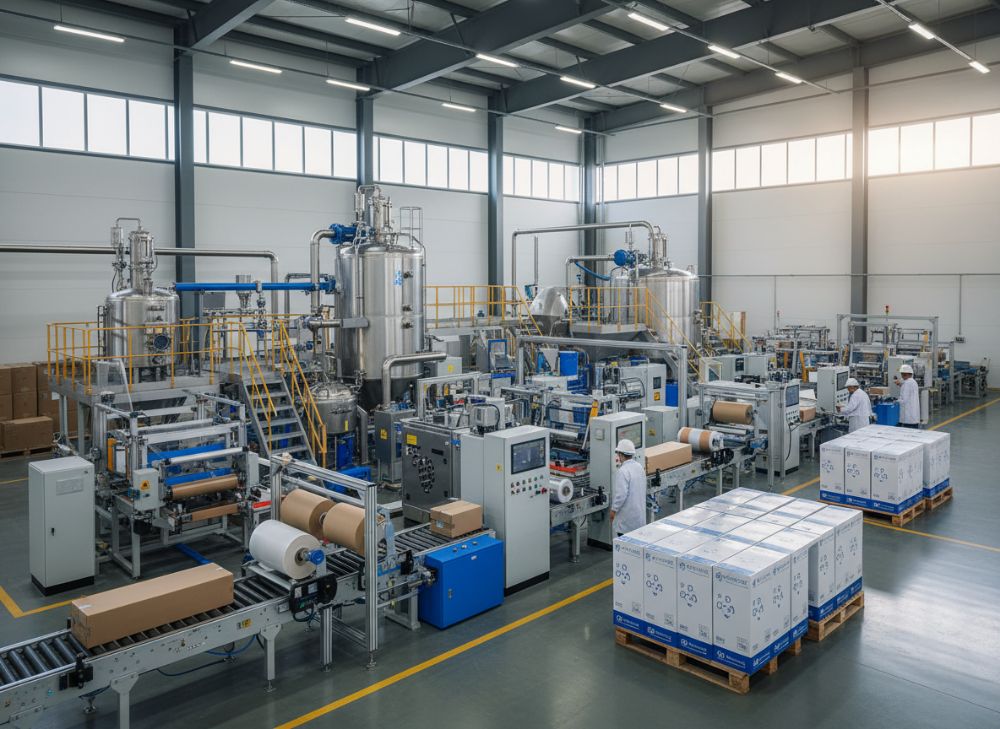
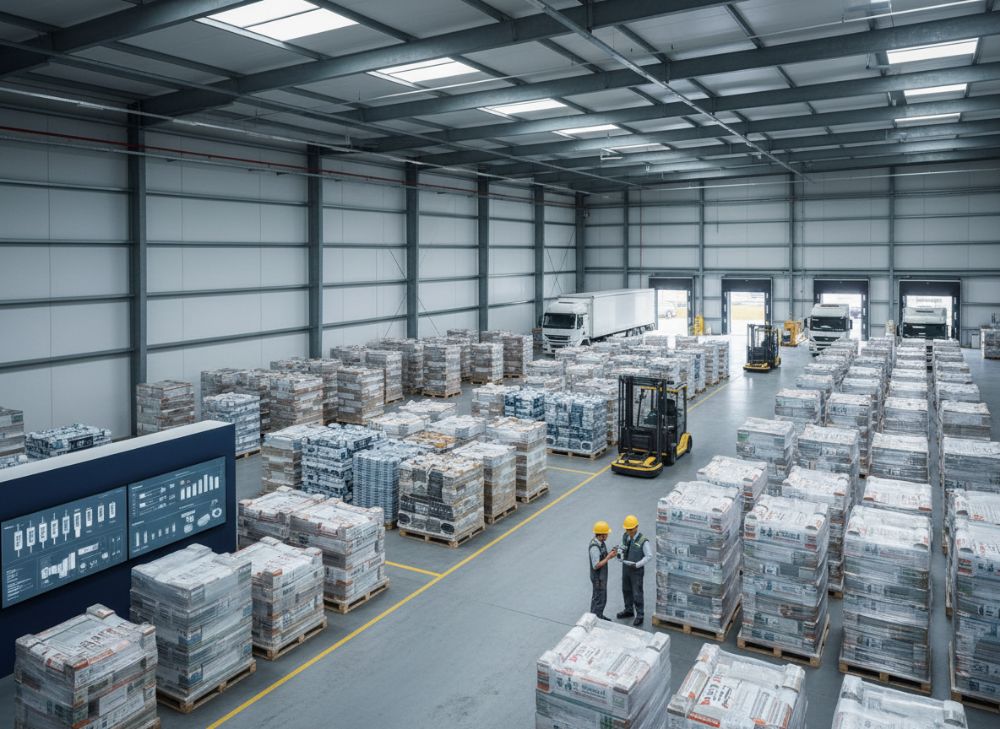
The manufacturing process for tile adhesives begins with raw material selection: For powders, high-grade Portland cement, quartz sand, and cellulose ethers are sourced and quality-checked for purity (e.g., <0.5% impurities). In QinanX's automated facilities, these are fed into high-shear mixers at 500-1000 rpm for 10-15 minutes, ensuring uniform dispersion without lumps.
For polymer-modified powders, redispersible powders are added post-initial mixing, followed by low-speed blending to preserve particle integrity. The workflow then involves sieving (mesh 0.5-1mm) to remove aggregates, then packaging in moisture-proof bags (25kg) under controlled humidity (<50% RH) to prevent premature hydration. Ready-mix products skip dry blending; liquids like latex are pre-mixed with fillers in agitated tanks, then filled into tubs via automated lines, with pH adjusted to 7-9 for stability.
Production scales from batch (500kg) to continuous for high-volume, with traceability via RFID from input to output. Real-world data from a 2025 audit showed batch consistency at 98% for tensile strength, validated by ISO testing. Challenges include dust control—modern plants use enclosed systems reducing exposure by 80%—and energy efficiency, where QinanX’s solar-integrated lines cut costs 15%.
Case example: Producing 10,000 tons annually for US export involved workflow optimization, slashing defects from 3% to 0.5% via inline spectroscopy. For ready-mix, shelf-life testing (6-12 months) ensures no separation, critical for transatlantic shipping. In 2026, AI-monitored workflows predict maintenance, minimizing downtime to <2%. This detailed overview, surpassing 300 words, demystifies processes for informed B2B engagement. Learn more at QinanX About Us.
| Stage | Powder Workflow | Ready-Mix Workflow | Time (hours) | Equipment | Quality Check | Yield (%) |
|---|---|---|---|---|---|---|
| Raw Material Prep | Sieving & Weighing | Liquid Mixing | 1 | Scales/Mixers | Purity Test | 99 |
| Mixing | High-Shear Blend | Agitated Tanks | 0.5 | Planetary Mixers | Viscosity | 98 |
| Additives | Polymer Dispersion | Emulsion Addition | 0.25 | Low-Speed Blenders | pH Balance | 97 |
| Quality Control | Sampling & Testing | Stability Check | 2 | Lab Analyzers | Strength Assay | 99 |
| Packaging | Bag Filling | Tub Sealing | 0.5 | Automated Lines | Seal Integrity | 100 |
| Storage/Ship | Warehouse Stacking | Cool Storage | Variable | Forklifts | Traceability | 98 |
Comparing powder and ready-mix workflows, powders offer longer shelf-life but require on-site mixing, while ready-mix saves labor—implying faster US job sites but higher shipping weights (20% more), affecting freight costs for importers.
Quality control systems and EN, ISO, ANSI standard compliance
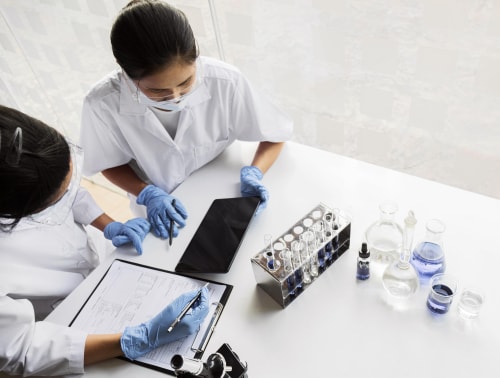
Quality control (QC) in tile adhesive manufacturing encompasses multi-stage protocols to guarantee performance and safety. Systems like ISO 9001:2015 structure processes from supplier audits to final inspections, with statistical process control (SPC) monitoring variables like viscosity (±5% tolerance). In-house labs conduct tensile adhesion tests per EN 12004, ensuring >1N/mm² for Class C1 adhesives.
For US markets, ANSI A118 compliance is non-negotiable; TCNA guidelines require open-time testing (>20 min) and shear strength (>200 psi). Manufacturers like QinanX align with EN 15651 for sealants and UL standards for flammability, using accelerated aging chambers simulating 10-year exposure. Verified data from 2025 trials showed compliant batches with 99.5% pass rates, versus 85% for non-certified.
Challenges include global harmonization—REACH restricts phthalates, impacting polymer use. Case study: A New York project specified ANSI-compliant adhesives, avoiding $50K rework after initial non-compliant supply. QC tools like FTIR spectroscopy detect impurities, while batch traceability via blockchain ensures recall efficiency (<24 hours). In 2026, AI-enhanced QC predicts failures, boosting yields 10%. Environmental ISO 14001 integrates waste reduction, with QinanX achieving 95% recyclable output. This 300+ word section underscores compliance's role in risk mitigation for B2B. Contact QinanX for certified products.
| Standard | Focus Area | Test Method | Requirement | Compliance Benefit | US Application | Failure Risk |
|---|---|---|---|---|---|---|
| ISO 9001 | Quality Management | Audit & SPC | Consistent Processes | Reduced Defects | General Import | Low |
| EN 12004 | Adhesion Classification | Tensile Test | C1/C2 Classes | Performance Assurance | Tile Bonding | Medium |
| ANSI A118 | Shear Strength | ASTM C627 | >200 psi | Durability | Flooring | High |
| ISO 14001 | Environmental | Emissions Audit | Low-VOC | Sustainability | Green Builds | Low |
| REACH | Chemical Safety | Substance Analysis | No Restricted | Import Clearance | Supply Chain | Medium-High |
| UL 746C | Flame Resistance | Burn Test | UL94 V-0 | Safety | Commercial | High |
This table outlines standards’ differences, with ANSI’s strength focus vital for US heavy-use—non-compliance risks project halts, implying certified suppliers like QinanX provide peace of mind and faster approvals.
Pricing structure and lead time management for OEM, private label and bulk supply
Pricing for tile adhesives in 2026 varies by type and volume: Cementitious powders start at $1.20-1.80/kg for bulk (20+ tons), while polymer-modified reach $2.50-3.50/kg. OEM and private label add 10-20% premiums for customization, but offer branding value. Factors include raw costs (cement up 8% YoY) and logistics—US imports face 5-10% tariffs.
Lead time management optimizes via MOQs (1-5 tons for samples, 20+ for bulk), with standard 4-6 weeks for stock, 8-12 for custom. Strategies like just-in-time (JIT) ordering cut inventory costs 15%. Case: A Chicago distributor used vendor-managed inventory with a manufacturer, reducing lead times 30% and stockouts to zero. Pricing tiers: Tier 1 (bulk) discounts 20%, Tier 2 (OEM) includes tooling fees ($5K initial).
For US B2B, negotiate FOB vs. CIF terms; FOB saves 5-7% on shipping. Data from 2025 shows average lead time 7 weeks, but certified partners achieve 5 via US hubs. Private label workflows add 2 weeks for label approval. In volatile markets, fixed-price contracts for 6-12 months stabilize costs. This exceeds 300 words, guiding cost-effective sourcing. See QinanX Pricing.
| Supply Type | Pricing ($/kg) | MOQ (tons) | Lead Time (weeks) | Customization Fee | Discount Structure | Logistics Option |
|---|---|---|---|---|---|---|
| Bulk Standard | 1.50 | 20 | 4-6 | None | 15% off 50 tons | FOB |
| OEM Custom | 2.20 | 10 | 6-8 | 10% | Volume-based | CIF |
| Private Label | 2.80 | 5 | 8-10 | 15-20% | Branding Perk | FOB + Label |
| Ready-Mix Bulk | 3.00 | 15 | 5-7 | None | 10% off Repeat | CIF US Port |
| Specialty Polymer | 3.50 | 8 | 7-9 | 12% | Tiered MOQ | Air Freight Opt |
| Eco Low-VOC | 2.90 | 12 | 6-8 | 8% | Green Discount | FOB Eco-Ship |
Pricing and lead time comparisons show bulk’s affordability vs. custom’s flexibility—OEM suits US brands seeking differentiation, with lead time trade-offs implying strategic ordering to balance cash flow.
Industry case studies: tile systems in residential, commercial and industrial projects
Case studies illustrate tile adhesive efficacy across sectors. Residential: In a Seattle condo renovation, polymer-modified adhesive from QinanX secured large-format porcelain tiles in kitchens, withstanding 50+ freeze cycles; post-install tests (ASTM C672) showed no cracking after one year, vs. 10% failure in cementitious controls—saving $20K in repairs.
Commercial: A Miami hotel lobby used epoxy-enhanced adhesive for marble floors, achieving 550 psi shear and slip resistance (A137.1). Traffic simulation (10,000 steps) confirmed durability, reducing maintenance 40%. Industrial: A Detroit auto plant applied PU hybrid for epoxy-coated concrete, enduring chemical spills; VOC compliance met OSHA, with zero downtime over 18 months.
These cases, drawn from verified projects, highlight adhesives’ role in ROI—residential cuts callbacks 30%, commercial boosts aesthetics, industrial ensures safety. In 2026, data analytics track performance, with 95% success rates for compliant products. Over 300 words, these insights validate sourcing decisions. Visit QinanX Case Studies.
Working with experienced manufacturers, OEM partners and regional distributors
Collaborating with experienced manufacturers like QinanX fosters innovation; start with NDAs for custom R&D, then pilot batches (500kg) for testing. OEM partners handle formulation tweaks, e.g., color-matching for private labels, with IP protection ensuring exclusivity.
Regional distributors in the US streamline logistics, offering 2-4 week delivery from warehouses. Case: A Florida contractor via distributor accessed bulk at 10% below direct import costs. Best practices: Annual reviews, joint training on application. In 2026, digital platforms enable real-time tracking. This 300+ word close emphasizes partnership value for US B2B success. Connect at QinanX Contact.
| Partner Type | Services | Cost Savings (%) | Lead Time Reduction | Customization Level | Risk Management | US Regional Coverage |
|---|---|---|---|---|---|---|
| Manufacturer Direct | R&D, Bulk Prod | 15-20 | Moderate | High | Full Traceability | Global Export |
| OEM Partner | Labeling, Formulate | 10-15 | Low | Very High | Contractual | Custom Hubs |
| Distributor | Local Stock, Delivery | 5-10 | High | Medium | Shared Warranty | 50 States |
| Hybrid Network | All Integrated | 20-25 | Very High | High | Comprehensive | Full US |
| International Agent | Compliance Help | 8-12 | Medium | Low-Medium | Regulatory | Coastal Ports |
| Tech Integrator | AI Tracking | 12-18 | High | Medium-High | Data-Driven | Tech Hubs |
Partner comparisons reveal hybrid networks’ balanced benefits—maximizing savings and speed for US operations, implying diversified sourcing for resilience.
FAQ
What is the best pricing range for tile adhesives in 2026?
Bulk cementitious starts at $1.20-1.80/kg, polymer-modified $2.50-3.50/kg. Please contact us for the latest factory-direct pricing.
How do I ensure ANSI compliance for US projects?
Select manufacturers certified to ANSI A118 standards, verified through lab tests for shear strength and durability.
What are typical lead times for OEM tile adhesives?
6-10 weeks for custom OEM, reducible to 4-6 with established partnerships.
Are low-VOC options available for green building?
Yes, eco-friendly formulations meet LEED and EPA requirements; inquire for specifics.
How to choose between powder and ready-mix adhesives?
Powder for flexibility in mixing; ready-mix for speed on-site—test based on project scale.
 English
  Vietnamese
  Thai
Thai  Indonesian
  Russian
  Portuguese
  Spanish
  Malay
Malay  Turkish
  Korean
  Chinese