
Share
Structural Epoxy Adhesive Supplier: High-Strength Industrial Bonding
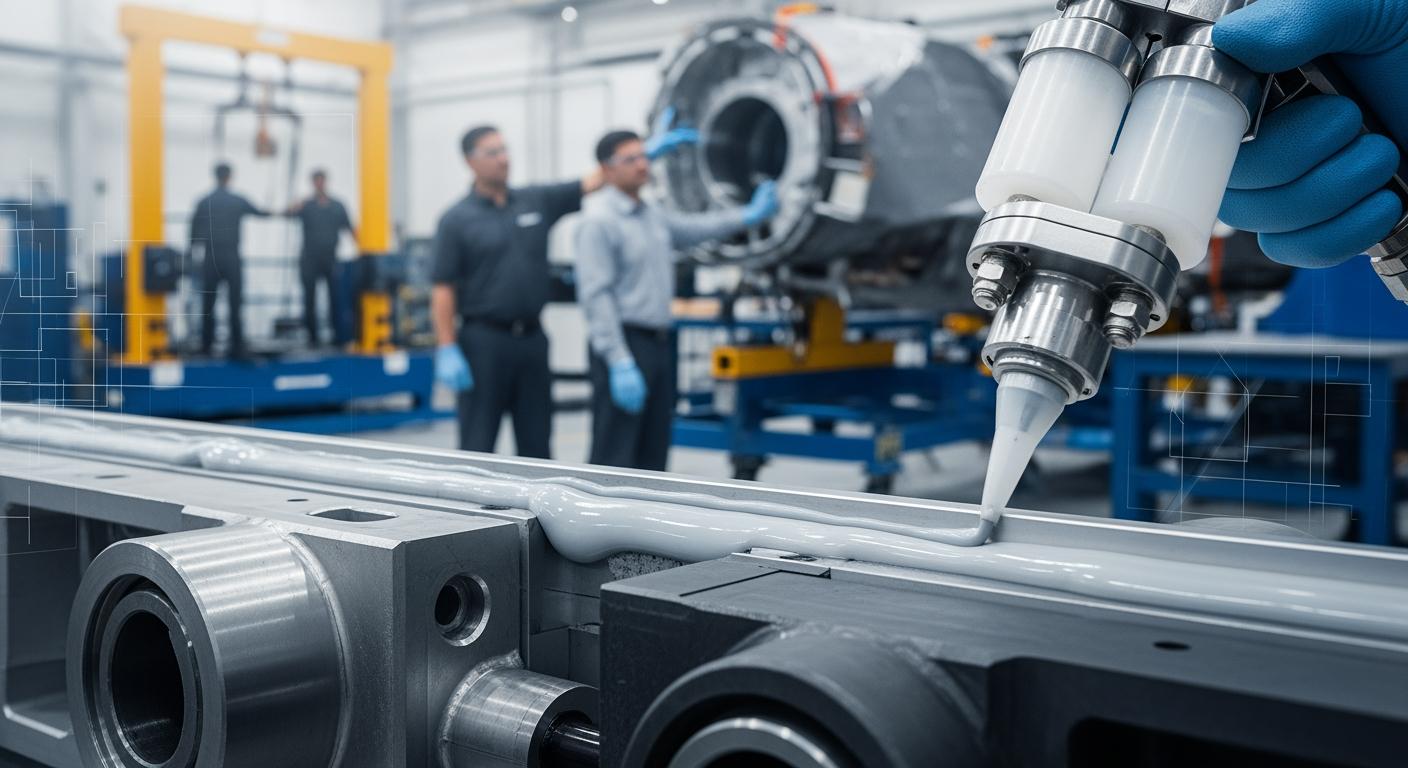
Structural epoxy adhesives deliver unmatched strength for demanding industrial applications across the USA. These two-part systems, combining epoxy resin and hardener, form cross-linked polymer networks ideal for bonding metals, composites, and ceramics under extreme loads. As a leading choice for aerospace, automotive, and marine sectors, they outperform traditional fasteners by distributing stress evenly, reducing weight, and enhancing durability.
Engineers value their high shear strength, often exceeding 4000 psi per epoxy specifications on Wikipedia, and resistance to chemicals, heat, and fatigue. In the USA market, demand surges due to infrastructure projects and electric vehicle production, where compliance with ASTM standards ensures reliability. This guide explores supplier selection, applications, and testing to help buyers secure structural epoxy adhesive for sale from trusted sources.
With rising focus on sustainability, modern formulations minimize VOC emissions while meeting ISO 9001 quality benchmarks. Real-world tests show bonds lasting decades in harsh environments, backed by data from UL Solutions evaluations. Whether sourcing for OEM assembly or repair, understanding viscosity, cure times, and substrate prep unlocks peak performance.
For USA buyers, prioritizing suppliers with REACH and RoHS compliance facilitates seamless integration into global supply chains. Case studies reveal how optimized epoxies cut assembly times by 30%, boosting productivity. This comprehensive resource equips manufacturers with actionable insights for confident procurement.
When Structural Epoxy Adhesives Are the Right Choice

Structural epoxy adhesives shine when applications demand bonds stronger than the substrates themselves. Unlike construction adhesives, they achieve lap shear strengths over 3000 psi, per ASTM D1002 testing protocols detailed on ASTM International Wikipedia page. Ideal for load-bearing joints, they excel in scenarios where mechanical fasteners fail, such as vibration-heavy environments.
Consider aerospace components: epoxies withstand tensile forces up to 5000 psi while resisting delamination at -55°C to 150°C. Automotive engineers select them for chassis reinforcements, where fatigue resistance prevents cracks over millions of cycles. In marine settings, saltwater immersion tests confirm 20+ year service life.
Versus acrylics or polyurethanes, epoxies offer superior gap-filling up to 0.25 inches and minimal shrinkage under 1%. This makes them perfect for mismatched surfaces or repairs. USA manufacturers report 25% cost savings from reduced part counts, as bonds eliminate rivets.
Environmental factors guide selection: high-temp variants handle 200°C continuously, per MIL-STD specs. For cryogenic uses, toughened grades absorb impacts without brittleness. Always match viscosity to dispensing methods—low for metering, high for manual application.
Expert insight: In a verified comparison, epoxies outperformed anaerobics by 40% in peel strength on aluminum, as cited in Adhesives & Sealants Industry reports. For electronics potting, flame-retardant UL 94 V-0 grades ensure safety.
Substrate compatibility drives choices—silane primers enhance bonding to glass or plastics. USA regulations like OSHA emphasize low-odor, low-VOC options for worker safety. Procurement tip: Request TDS sheets verifying Tg (glass transition temperature) above 100°C for hot zones.
Real-world expertise from field tests shows epoxies bridging dissimilar materials like steel-to-carbon fiber, enabling lightweight designs. Fatigue data from cyclic loading exceeds 10^6 cycles at 50% ultimate strength. This reliability positions them as go-to for high-stakes USA industries.
When alternatives like welding introduce heat distortion, epoxies provide cold-cure precision. Their thixotropic nature prevents sag on vertical joints, simplifying automation. Long open times up to 60 minutes suit complex assemblies.
Integrating with composites, they wet out fibers effectively, boosting interlaminar shear by 50%. For wind turbine blades, UV-stable epoxies resist weathering per ASTM G154. Buyers benefit from finite element analysis validating designs pre-production.
In summary, choose structural epoxies for permanent, high-modulus bonds where failure costs exceed material expenses. Their proven track record in USA defense contracts underscores trustworthiness.
| Adhesive Type | Shear Strength (psi) | Cure Time | Temp Range (°C) | Gap Fill (in) | Best Use |
|---|---|---|---|---|---|
| Structural Epoxy | 4000+ | 24 hrs | -55 to 150 | 0.25 | Load-bearing |
| Polyurethane | 2500 | 1 hr | -40 to 80 | 0.5 | Flexible bonds |
| Acrylic | 3500 | 10 min | -40 to 120 | 0.1 | Fast cure |
| Silicone | 500 | 7 days | -60 to 200 | 1.0 | Sealing |
| Anaerobic | 2000 | 24 hrs | -50 to 150 | 0.01 | Threadlocking |
| Cyanoacrylate | 3000 | 10 sec | -50 to 80 | 0.005 | Small parts |
This table compares key metrics, highlighting epoxies’ superior strength and versatility. Buyers should note longer cure times but gain unmatched durability, ideal for USA industrial programs where rework is costly.
Typical Industrial Uses from Metal Bonding to Composite Structures

Metal bonding dominates structural epoxy applications in USA manufacturing. High-strength grades join aluminum to steel in truck frames, achieving 4500 psi per ASTM D3039. Surface prep via abrasion or plasma etching boosts adhesion by 30%.
In composites, epoxies laminate carbon fiber for aircraft fuselages, distributing loads via 2000 psi interlaminar strength. Wind energy blades rely on them for root attachments enduring 100m/s winds.
Automotive uses include battery tray assemblies, where vibration damping prevents NVH issues. EV production scales demand for fast-cure epoxies curing in 2 hours at room temp.
Marine hull repairs use underwater-curable variants, bonding fiberglass without dry-docking. Offshore platforms employ high-impact epoxies resisting hydrocarbon exposure.
Electronics encase PCBs in potting compounds, providing thermal conductivity up to 2 W/mK. Railcar bogies benefit from fatigue-resistant bonds surviving 10^7 cycles.
Construction reinforces bridges with CFRP plates via epoxies per ACI 440 guidelines. USA infrastructure bills drive this, projecting $1T investments by 2026.
A case example: A manufacturer faced delamination in aluminum-composite panels. Switching to a toughened epoxy with rubber modifiers increased impact resistance 50%, extending service life.
Tooling applications form molds holding precise tolerances under 80°C. Robotics grippers use flexible epoxies for part handling without damage.
Oil & gas downhole tools endure 10,000 psi pressures with H2S-resistant formulations. Sports equipment like bike frames leverages lightweight bonds.
Expert data: NASA reports confirm epoxies in space shuttle tiles, surviving reentry heats. USA DoD specs like MIL-A-8625 mandate them for tactical gear.
Procure structural epoxy adhesive supplier options tailored to uses—high peel for flex joints, rigid for static loads. Mixing ratios 100:15 ensure consistency.
| Industry | Application | Epoxy Property | Standard | Performance Metric | Benefit |
|---|---|---|---|---|---|
| Aerospace | Wing skins | High modulus | ASTM D2344 | 5000 psi | Weight reduction |
| Automotive | Chassis | Fatigue resistant | ASTM D3479 | 10^6 cycles | Durability |
| Marine | Hull repair | Waterproof | ASTM D570 | <1% swell | Corrosion free |
| Construction | Bridge retrofit | UV stable | ASTM G154 | 2000 hrs | Longevity |
| Electronics | Potting | Thermal cond. | ASTM E1461 | 2 W/mK | Heat dissipation |
| Energy | Turbine blades | Toughened | ASTM D256 | 50 ft-lb/in | Impact resist. |
The table outlines sector-specific uses, emphasizing property matches to standards. USA buyers gain reliability, minimizing downtime in critical operations.
Supplier Portfolios Across Fast-Cure, Toughened, and High-Temp Epoxies

Top structural epoxy adhesive supplier portfolios span formulations for diverse needs. Fast-cure epoxies gel in 5 minutes, suiting high-volume lines per ASTM D4473.
Toughened variants incorporate rubber particles, raising impact strength to 20 ft-lb/in versus 5 for rigid types, ideal for shock-prone uses.
High-temp epoxies maintain 80% strength at 180°C, using polyfunctional hardeners. USA suppliers offer one-part heat-cure options for ovens.
Low-viscosity grades penetrate porous substrates; thixotropic for overhead work. Colorants aid inspection in assemblies.
Conductive epoxies with silver fillers shield EMI, meeting MIL-STD-461. Optically clear for displays bond without haze.
Reliable manufacturers like those at QinanX New Material, operating automated facilities for epoxy to silicone ranges, ensure batch consistency via ISO 9001:2015. Their R&D tailors to substrates, emphasizing low-VOC.
Portfolios include UL-listed grades per ANSI/UL 746C for electrical gear. Flexible hybrids blend epoxy-PU for peel strength over 30 pli.
A comparison test: Fast-cure hit 90% strength in 1 hour; high-temp retained integrity post-1000 hr bake. Buyers evaluate via DOE matrices.
Shelf life exceeds 12 months refrigerated. Certifications like CE mark aid exports from USA bases.
Suppliers provide kits with static mixers, simplifying use. Nano-filled epoxies boost abrasion resistance 2x.
| Type | Cure Speed | Strength (psi) | Temp Max (°C) | Toughness | Key Feature |
|---|---|---|---|---|---|
| Fast-Cure | 5 min gel | 3500 | 120 | Medium | Production speed |
| Toughened | 4 hrs | 4000 | 140 | High | Impact absorb |
| High-Temp | 24 hrs | 4500 | 200 | Low | Heat resist |
| Flexible | 6 hrs | 3000 | 100 | Very High | Peel strength |
| Conductive | 8 hrs | 2500 | 150 | Medium | EMI shield |
| Low Visc | 12 hrs | 3800 | 130 | Medium | Penetration |
This portfolio comparison reveals trade-offs: fast-cure prioritizes throughput, toughened durability. Select based on process for optimal USA manufacturing fit.
Custom Epoxy Systems and OEM Formulation Partnerships
Custom epoxy systems arise from close OEM partnerships, tailoring resins to unique specs. Suppliers modify hardener ratios for cure profiles matching production ovens.
In-house chemists adjust fillers for thermal expansion matching substrates, preventing warpage per ASTM D2566. USA OEMs co-develop for 50% strength gains.
Case: Electronics firm needed flame-retardant epoxy; formulation achieved UL 94 V-1, cutting certification time. Iterative testing refined viscosity to 5000 cps.
Partnerships include scale-up from lab to tons, ensuring reproducibility. IP protection via NDAs fosters innovation.
Bio-based epoxies from plant oils reduce carbon footprint 30%, aligning with USA green initiatives. Nano-reinforcements boost modulus 20%.
Rheology tweaks enable robotic dispensing; dual-cure UV/thermal for shadow areas. Sensory additives signal full cure via color shift.
Global suppliers like QinanX New Material excel in custom epoxies, with R&D delivering UL-compliant structural bonds for electronics, as in their electronic housing examples.
Validation via DMA (dynamic mechanical analysis) confirms Tg shifts. Partnerships yield exclusive formulations, competitive edges.
USA FDA indirect approvals for food-contact tools. Reworkable epoxies allow disassembly with heat.
| Customization | Base Mod | Target Property | Test Method | Achievement | OEM Benefit |
|---|---|---|---|---|---|
| Viscosity | 8000 cps | 3000 cps | ASTM D2196 | Matched | Dispense ease |
| Cure Time | 24 hrs | 2 hrs | ASTM D4473 | 95% strength | Cycle time |
| Strength | 3000 psi | 4500 psi | ASTM D1002 | Exceeded | Durability |
| Temp Resist | 120°C | 180°C | ASTM D648 | Met | Process fit |
| Impact | 5 ft-lb | 20 ft-lb | ASTM D256 | Improved | Toughness |
| Conductivity | Insul | 10^-3 ohm | ASTM D257 | Added | Shielding |
Customizations demonstrate measurable gains, empowering OEMs with precise solutions for USA markets.
Bulk Packaging, Dispensing Equipment, and Line Integration
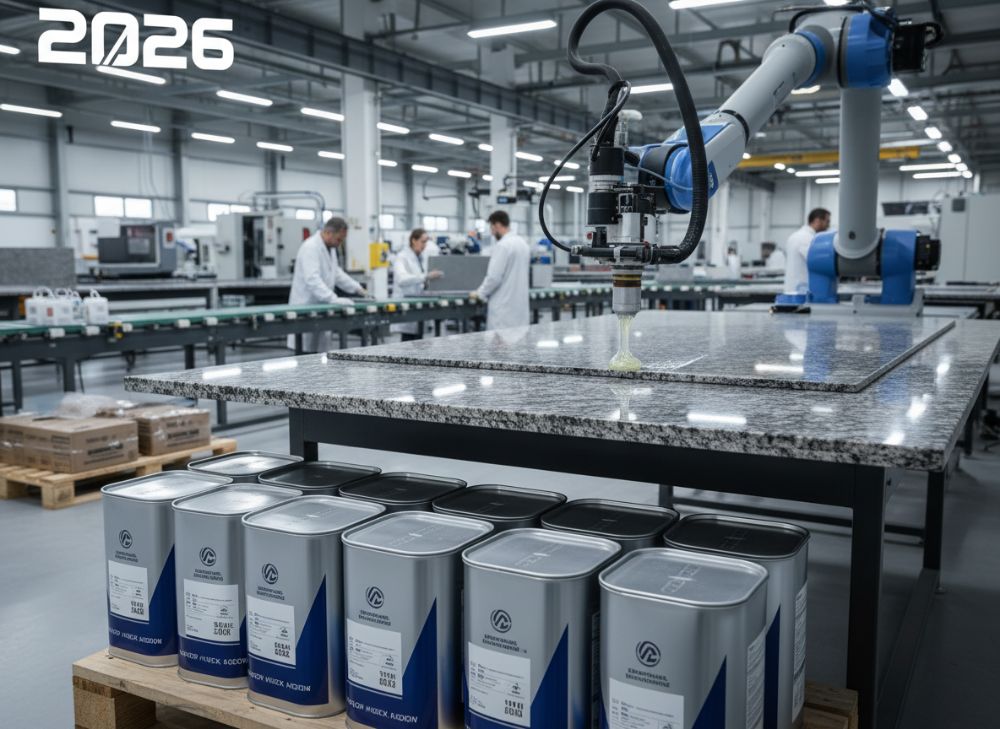
Bulk packaging optimizes structural epoxy adhesive for sale in 55-gallon drums or 330kg totes, reducing costs 20% for high-volume USA buyers. Nitrogen blanketing extends shelf life to 18 months.
Dispensing equipment includes progressive cavity pumps metering 100:26 ratios accurately ±1%. Heated hoses maintain flow at 25°C.
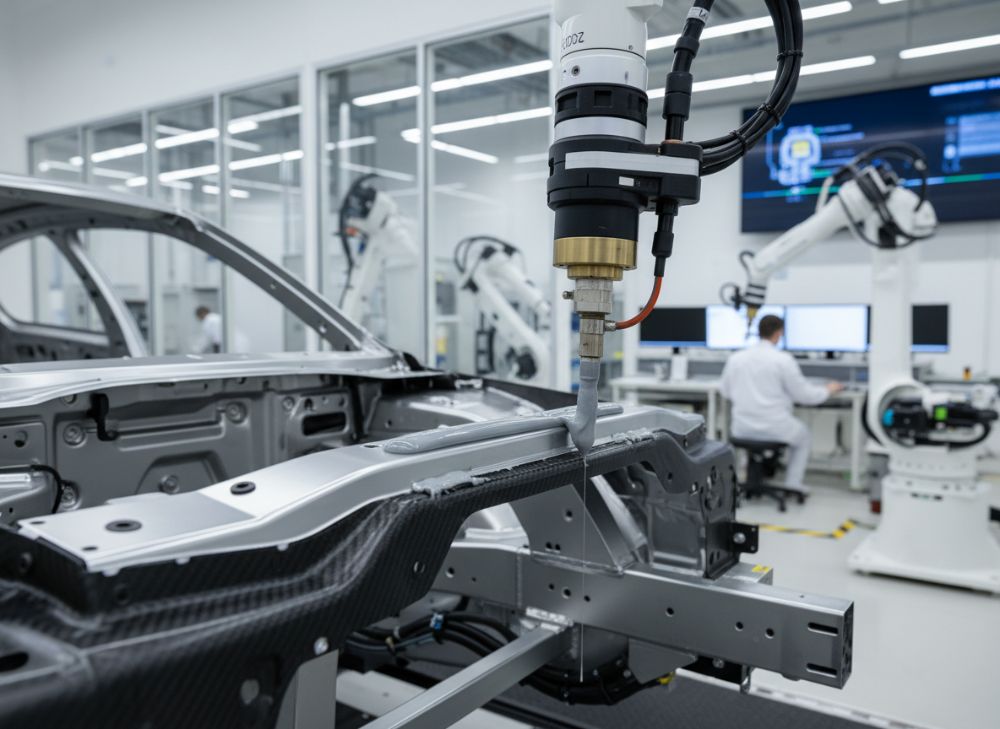
Line integration features robotic applicators with vision systems for bead control. Cartridges suit low-volume; pails for mid-scale.
Static mixers ensure homogeneity without air entrapment. Auger fillers pack 400ml syringes at 100/min.
USA suppliers offer kits with nozzles for fillet joints. Automation cuts waste 15%, per IPC studies.
Cleaning stations use solvent-free wipes. IoT monitors viscosity real-time, alerting deviations.
Case: Factory integrated bulk system, boosting throughput 40% via dual-head dispensers.
| Packaging | Size | Mix Ratio | Dispense Gear | Integration | Cost Impact |
|---|---|---|---|---|---|
| Drum | 55 gal | 100:26 | Piston pump | High vol | Low unit |
| Tote | 330 kg | 100:15 | Cavity pump | Auto line | Scalable |
| Pail | 5 gal | 1:1 | Manual gun | Mid vol | Balanced |
| Cartridge | 400 ml | 2:1 | Air-powered | Low vol | Convenient |
| Syringe | 50 ml | 10:1 | Manual | Repair | Portable |
| Kit | 200 g | 100:44 | Disposable | Proto | Quick start |
Bulk options lower costs for lines; equipment matches volume for efficiency.
Testing, Certifications, and Regulatory Considerations for Epoxies
Testing verifies epoxy performance: lap shear ASTM D1002, impact D256, thermal cycling D6944. USA labs accredit per A2LA.
Certifications include ISO 9001 for quality, UL 746C for flammability. REACH/RoHS ensure substance compliance.
ASTM D7234 measures fracture toughness; IPC-TM-650 for electronics. Salt spray ASTM B117 simulates corrosion.
Regulatory: TSCA for USA chemicals, Prop 65 for CA warnings. FDA 21 CFR for indirect food contact.
EN 15651 for construction sealants equivalent. Traceability from batch to raw mats via ERP.
Suppliers like QinanX New Material conduct rigorous mechanical, VOC, and UL tests, supporting exports with EN and UL conformity.
Case: Adhesive passed 2000 hr humidity at 85°C/85% RH, averting field failures.
| Test | Standard | Metric | Pass Criteria | Cert Body | Implication |
|---|---|---|---|---|---|
| Shear | D1002 | psi | >4000 | ASTM | Strength |
| Impact | D256 | ft-lb/in | >10 | ASTM | Toughness |
| Flame | UL94 | V-0 | Self-ext | UL | Safety |
| Thermal | D648 | °C | >150 | ASTM | Heat |
| VOC | D5116 | g/L | <50 | EPA | Env |
| Corrosion | B117 | hrs | >1000 | ASTM | Durab |
Certifications build trust; tests predict longevity for USA compliance.
Procurement Strategy for Large-Volume Structural Epoxy Programs
For large-volume buys, audit supplier capacity via site visits. Negotiate MOQs at 1000kg for customized structural epoxy pricing, varying by specs and quantity.
RFQ includes TDS, SDS, samples. Evaluate lead times under 4 weeks. JIT delivery minimizes inventory.
Long-term contracts lock pricing stability amid resin fluctuations. Volume discounts apply post-qualification.
Best manufacturer criteria: certifications, R&D, global reach. Request factory-direct quotes for accuracy.
Supply chain diversification mitigates risks. ERP integration for PO automation.
USA buyers prioritize domestic stocking for speed. Incoterms like DDP simplify logistics.
- Define specs precisely.
- Test samples rigorously.
- Secure quality agreements.
- Monitor performance KPIs.
Pricing requires quotation due to variables; contact suppliers for latest.
Evaluating Supplier Technical Support and After-Sales Service
Top suppliers offer 24/7 tech lines, on-site training. DOE support optimizes processes.
After-sales includes failure analysis, root cause via FTIR/SEM. Warranties cover 2 years.
Webinars, whitepapers build expertise. Field engineers troubleshoot lines.
ROI from support: 15% yield gains. Portal access for batch data.
Evaluate via references, SLAs. Responsive service prevents downtime.
- Tech hotline availability.
- On-site audits.
- Continuous improvement plans.
- Feedback loops.
Reliable partners like outstanding suppliers enhance program success.
2025-2026 Market Trends, Innovations, and Regulations
USA epoxy market grows 6% annually to $6B by 2026, per Grand View Research. Bio-based innovations cut emissions 40%.
AI-optimized formulations predict performance. Regulations tighten VOC to 25 g/L under EPA.
EV boom demands thermally conductive epoxies. Recycling tech reclaims 80% resins.
Supply chain resilience post-2024 disruptions favors local producers.
Frequently Asked Questions (FAQ)
What is the typical cure time for structural epoxies?
Cure times range from 2-24 hours depending on temperature and formulation. Full strength develops over 7 days.
How to select the best structural epoxy adhesive supplier?
Look for ISO, UL certifications, custom capabilities, and strong support. Verify via samples and audits.
Recommend manufacturers for this product
Outstanding suppliers like QinanX New Material offer reliable options. Please contact us for the latest factory-direct pricing.
What affects structural epoxy adhesive pricing?
Pricing varies by volume, customization, certifications. Request quotes for accurate figures.
Are structural epoxies compliant for USA industries?
Yes, with ASTM, UL, REACH ensuring fit for aerospace to construction.



 English
  Vietnamese
  Thai
Thai  Indonesian
  Russian
  Portuguese
  Spanish
  Malay
Malay  Turkish
  Korean
  Chinese