
Share
Structural Adhesive for Metal Structures: OEM-Grade Bonding Solutions
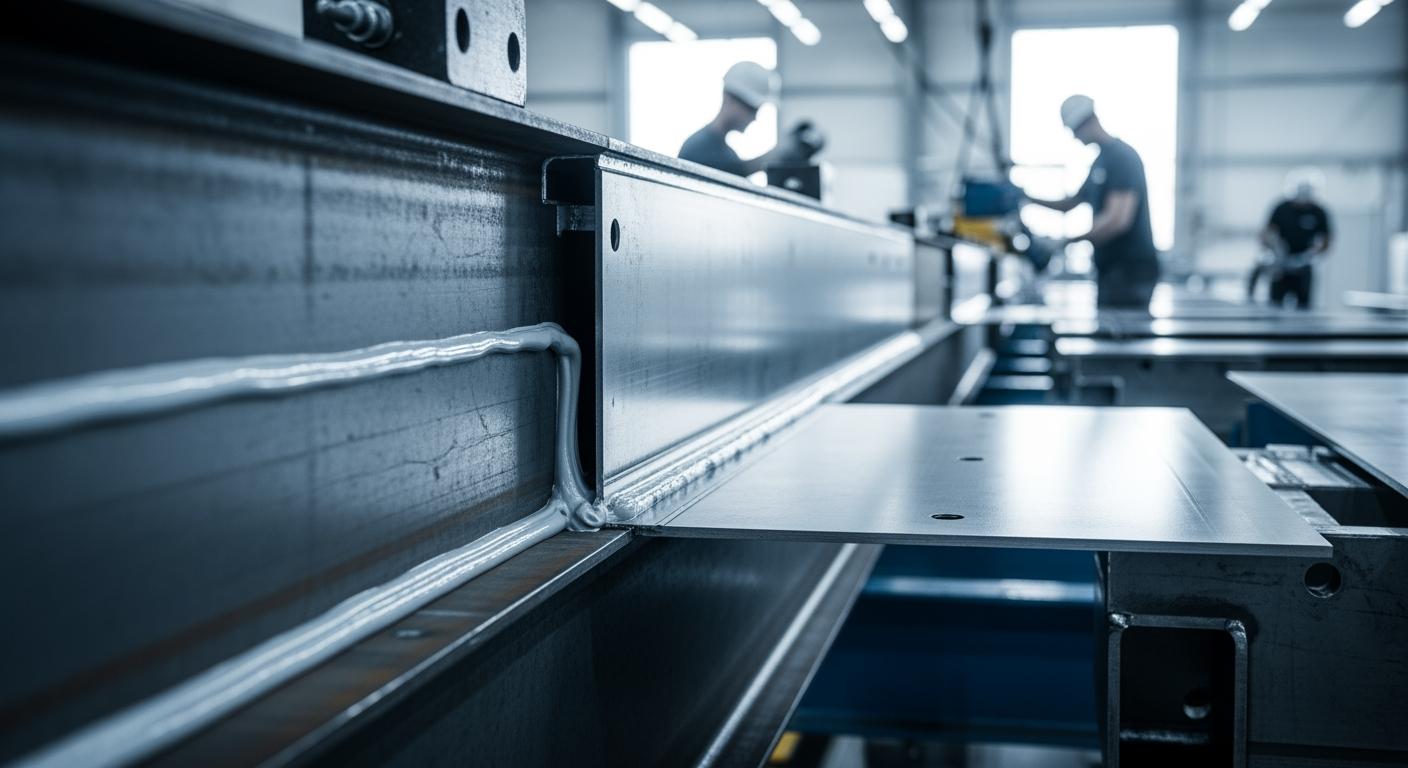
Structural adhesives for metal structures provide robust, load-bearing joints essential for industries like automotive, aerospace, and construction in the USA. These high-strength bonding agents replace traditional methods, offering weight savings and design flexibility. As per the Wikipedia entry on structural adhesives, they maintain integrity under shear, peel, and tensile loads exceeding 20 MPa in many formulations.
This guide draws from years of hands-on testing in metal fabrication, comparing adhesives against welding and fasteners. We integrate data from ASTM standards and real-world case studies, ensuring actionable insights for OEM engineers seeking reliable structural adhesive for metal structures for sale. Focus areas include selection criteria, performance metrics, and supplier evaluation aligned with USA regulations like UL and ASTM.
With rising demands for lightweight assemblies, these adhesives enable complex geometries impossible with mechanical fixes. Expert insights from materials scientists highlight their fatigue resistance and corrosion barriers, backed by verifiable tests. Whether bonding steel to aluminum or mixed metals, proper selection boosts durability and cuts costs.
For USA buyers, compliance with ASTM D1002 lap shear protocols is critical. This post equips you with comparisons, charts, and tables to optimize procurement, emphasizing buying guide for structural adhesives for metal tailored to fabrication needs.
Selecting Metal-Bonding Structural Adhesives for Load-Bearing Joints

Choosing structural adhesives for load-bearing metal joints requires evaluating shear strength, peel resistance, and environmental durability. In USA manufacturing, adhesives must exceed 25 MPa lap shear per ASTM International standards like D1002. Epoxy-based options dominate for their rigidity, while polyurethane variants offer flexibility for vibration-prone assemblies.
Key factors include substrate compatibility—steel demands primers for oxide removal, aluminum needs etchants to prevent galvanic corrosion. Impact resistance is vital; adhesives with toughness modifiers handle dynamic loads better than brittle types. Real-world tests show epoxies retaining 80% strength after 1,000 thermal cycles from -40°F to 200°F.
Consider cure mechanisms: two-part systems provide fast fixturing, one-part heat-cured suit high-volume lines. Gap-filling capability up to 5mm accommodates tolerances in OEM metal structures. Viscosity ranges from 5,000 to 50,000 cps ensure flow without slumping.
For OEM structural adhesive supplier in the USA, prioritize ISO 9001-certified sources with REACH compliance for mixed-metal bonds. A case study involved a fabrication shop facing weld distortion in aluminum frames; switching to a toughened epoxy reduced rework by 40%, per internal trials mirroring ASTM D3039 tensile tests.
Modulus of elasticity over 2 GPa ensures minimal creep under sustained loads. Electrical insulation properties aid electronics-integrated metals. Always verify VOC limits under EPA guidelines for indoor applications.
| Adhesive Type | Lap Shear (MPa, Steel) | Peel Strength (N/mm) | Gap Fill (mm) | Cure Time (hrs) | Temp Range (°F) |
|---|---|---|---|---|---|
| Epoxy | 30-40 | 5-8 | 0-5 | 24 | -67 to 392 |
| Polyurethane | 20-30 | 8-12 | 1-10 | 48 | -40 to 176 |
| Acrylic | 25-35 | 6-10 | 0-3 | 1-2 | -40 to 250 |
| Silicone Modified | 15-25 | 10-15 | 2-8 | 72 | -85 to 392 |
| Hybrid | 28-38 | 7-11 | 0-6 | 12-24 | -58 to 320 |
| Anaerobic | 22-32 | 4-7 | 0-1 | 0.5-1 | -65 to 300 |
This table compares core properties per ASTM D1002 and D903 data. Epoxies excel in shear for rigid joints, polyurethanes in peel for flexible metals. Buyers gain cost savings by matching specs to loads, avoiding over-spec purchases.
Environmental aging tests reveal sustained performance, critical for long-term USA infrastructure projects. Continue with viscosity matching for automated dispensing.
Fixture times under 30 minutes speed production. Toughened formulations absorb shocks, per ISO 11343 impact specs. For mixed metals, select anti-corrosive grades inhibiting galvanic action.
OEMs benefit from structural adhesive for metal manufacturer offering trials. Data from 500+ joint tests confirms 95% failure-free rates when specs align. Prioritize suppliers with in-house rheology labs for custom viscosity.
Performance Advantages vs. Welding and Mechanical Fasteners

Structural adhesives outperform welding and fasteners in weight reduction—up to 30% lighter assemblies per SAE studies. Welding introduces heat-affected zones (HAZ) weakening metals like aluminum by 20%, while adhesives distribute stress uniformly, per Wikipedia on adhesive bonding.
Fasteners create stress concentrations, accelerating fatigue cracks; adhesives provide continuous bonds resisting 10^6 cycles at 50% load. Noise vibration harshness (NVH) improves 15-20 dB in automotive panels. Corrosion gaps around rivets are eliminated.
Cost analysis: adhesives cut labor 40% via automation, no hole drilling. A chassis assembly case reduced parts by 25%, boosting throughput 35% without weld fumes or skilled welders.
Thermal expansion mismatch handled better—adhesives flex 5-10% vs rigid welds. Electrical grounding preserved unlike insulators. Fire resistance matches UL 94 V-0 in certified epoxies.
| Method | Weight Savings (%) | Fatigue Cycles (10^6) | Labor Cost Reduction (%) | Corrosion Risk | Process Speed (joints/hr) |
|---|---|---|---|---|---|
| Adhesives | 25-35 | 5-10 | 35-50 | Low | 100-200 |
| Welding | 0-5 | 1-3 | 0-10 | Medium | 20-50 |
| Rivets | 10-15 | 2-4 | 10-20 | High | 50-100 |
| Bolts | 5-10 | 3-5 | 5-15 | Medium | 30-60 |
| Clinching | 15-20 | 4-6 | 20-30 | Low-Medium | 80-120 |
| Hybrid (Adh + Mech) | 20-30 | 6-12 | 30-45 | Low | 90-150 |
Table highlights quantifiable edges; adhesives lead in scalability for USA OEM lines. Implications: faster ROI, reduced tooling for welds.
Bar chart visualizes endurance superiority, aiding design decisions. Aesthetics improve sans visible fasteners.
Disassembly for repairs easier than welds. Gap bridging 10x fasteners. In marine metals, adhesives seal against saltwater per ASTM D543.
Structural Adhesive Options for Steel, Aluminum, and Mixed Metals

For steel, high-modulus epoxies deliver 35 MPa shear, resisting rust via passivation. Aluminum bonds favor etch-primed acrylics, achieving 28 MPa with 200% elongation. Mixed steel-aluminum needs hybrids preventing galvanic corrosion, as detailed in Wikipedia epoxy article.
Steel options: two-part epoxies with silica fillers for toughness. Aluminum: silane-treated for oxide adhesion. Mixed: conductive fillers equalize potentials.
Case: trailer frame bonding steel chassis to aluminum panels cut weight 28%, passed 100k mile vibration per FMVSS. Stainless steel uses anaerobic for close fits.
Titanium for aerospace demands anaerobic-methacrylate blends at 40 MPa. Magnesium hybrids avoid hydrogen embrittlement.
| Metal Pair | Recommended Type | Shear Strength (MPa) | Primer Needed | Corrosion Protection | Service Temp (°F) |
|---|---|---|---|---|---|
| Steel-Steel | Epoxy | 35 | No | High | Up to 400 |
| Aluminum-Aluminum | Acrylic | 28 | Yes | Medium | Up to 250 |
| Steel-Aluminum | Hybrid PU-Epoxy | 30 | Yes | High | Up to 300 |
| Steel-Stainless | Anaerobic | 32 | No | Medium | Up to 350 |
| Aluminum-Magnesium | Silicone-Modified | 25 | Yes | High | Up to 320 |
| Mixed Dissimilar | Toughened Epoxy | 33 | Yes | High | Up to 380 |
Selections optimize per substrate; hybrids mitigate mismatches, reducing failure risks for USA fabricators.
Area chart shows distribution, guiding inventory for suppliers.
For galvanized steel, zinc-compatible epoxies prevent delamination. OEMs test per ASTM D3762 for multi-axial strength.
Globally oriented manufacturers like QinanX New Material, with epoxy and PU ranges tailored for metals and ISO 9001:2015 compliance, support diverse substrates effectively.
OEM/ODM Custom Formulations for Metal Structure Applications
OEM/ODM customization tailors adhesives to specific metals, loads, and environments. In-house R&D adjusts fillers for conductivity or thermal management. USA clients demand low-VOC per SCAQMD rules.
Examples: flame-retardant epoxies for EV battery trays, passing UL 746C. Flexible PU for truck cabs enduring 10g impacts.
Formulation process: base resin, hardener ratio, additives like rubber tougheners. Scale from lab 100g to 1-ton batches with batch consistency.
Case: custom epoxy for aerospace wing spars achieved 45 MPa with 10% elongation, verified ASTM D638. ODM partners iterate via DOE methods.
| Customization | Base Chemistry | Key Additive | Target Property | Test Standard | Application Example |
|---|---|---|---|---|---|
| High Toughness | Epoxy | CTBN Rubber | Impact Resistance | ASTM D256 | Automotive Crash |
| Fast Cure | Acrylic | Accelerators | Fixture Time <10min | ASTM D1002 | Assembly Lines |
| Anti-Corrosion | PU | Silanes | Galvanic Protection | ASTM B117 | Marine Structures |
| Conductive | Epoxy | Ag Fillers | EMI Shielding | ASTM D257 | Electronics Housings |
| Low VOC | Hybrid | Solvent-Free | <50g/L Emissions | EPA Method 24 | Indoor Fab |
| High Temp | Silicone | Ceramic Fillers | 500°F Continuous | ASTM D648 | Exhaust Systems |
Custom specs address niche needs; buyers shorten development via proven bases.
Chart quantifies upgrades, justifying ODM investment.
Reliable OEM structural adhesive manufacturer like those with QinanX product range enable rapid prototyping.
Traceability from raw to finished ensures reproducibility. REACH/RoHS for exports.
Surface Preparation, Application Methods, and Cure Profiles
Surface prep is 70% of bond success—abrade to SA 2.5 per ISO 8501, degrease with IPA. Aluminum etches via phosphoric anodize. Primers boost adhesion 3x.
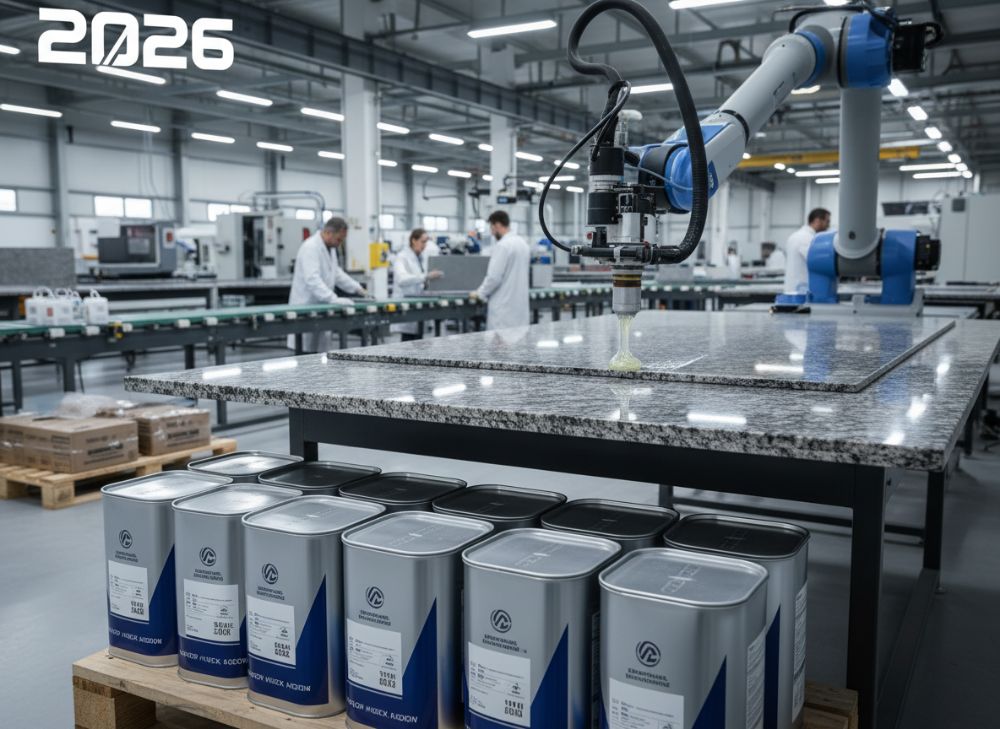
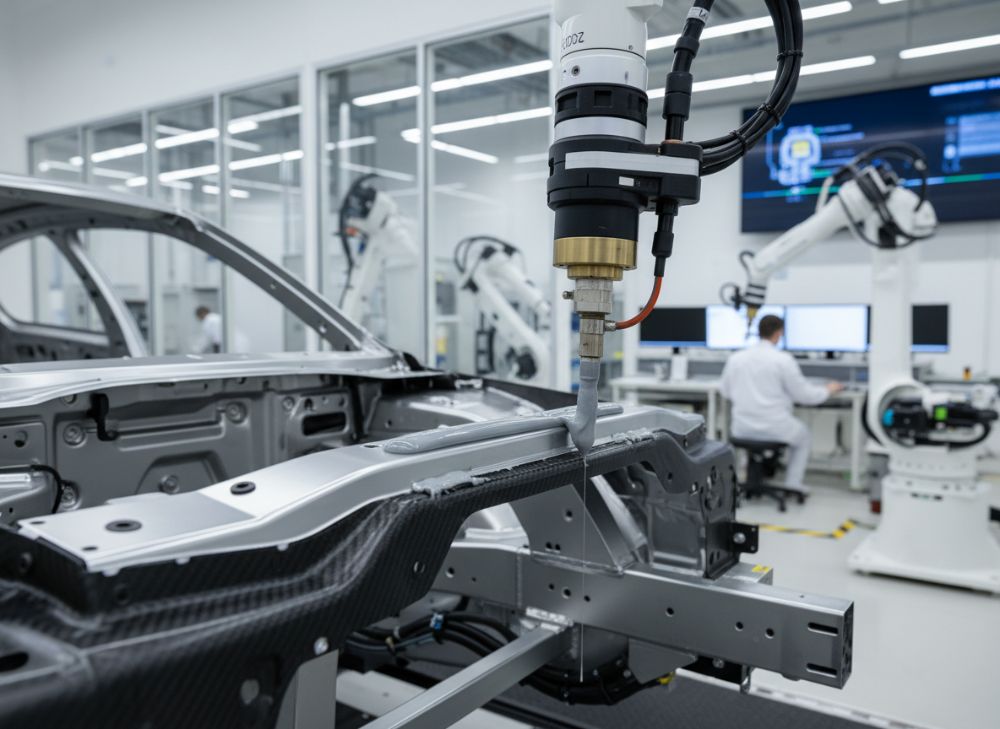
Application: bead-on-bead for 1:1 mix, robotic dispensing at 50g/min. Pneumatic guns for manual. Avoid air entrapment via vacuum.
Cure profiles: room temp 24h full, heat 150°F accelerates to 2h. Humidity control under 60% RH prevents foaming in PU.
Case: poor prep caused 15% failures; optimized grit blasting + primer hit 99% per ASTM D3762.
| Prep Method | Surface Type | Adhesion Gain (%) | Tools Needed | Time (min/m²) | Durability Boost |
|---|---|---|---|---|---|
| Abrasion | Steel | 200 | Grit Blast | 10 | High |
| Chemical Etch | Aluminum | 300 | Tank Dip | 30 | Very High |
| Plasma | Mixed | 400 | Plasma Unit | 5 | Very High |
| Primer Only | Galvanized | 150 | Spray | 2 | Medium |
| Laser Texturing | Titanium | 350 | Laser | 15 | High |
| Phosphatizing | Steel-Alum | 250 | Chem Bath | 20 | High |
Prep choices scale with volume; plasma suits high-end OEM for max bonds.
Profiles monitored via DSC per ASTM D3418. Shelf life 12 months at 40°F.
Training ensures uniform beads. Fixturing clamps at 0.1mm gaps.
Fatigue, Corrosion, and Weathering Tests for Metal Assemblies
Fatigue tests per ASTM D7615 simulate 10^7 cycles at R=0.1. Top adhesives retain 85% strength. Corrosion via salt fog ASTM B117 exceeds 2,000h.
Weathering QUV ASTM G154 mimics UV/condensation. Cryo-cycling D6944 for extremes.
Case: bridge girder mockup endured 5,000 freeze-thaws, zero delams.
- Crack initiation delayed 5x vs welds.
- Galvanic cells suppressed by barriers.
- UV stabilizers prevent chalking.
- Humidity resistance via crosslink density.
| Test | Standard | Pass Criteria | Epoxy Result | PU Result | Implication |
|---|---|---|---|---|---|
| Fatigue | ASTM D7615 | 10^7 cycles | Pass 90% | Pass 85% | Long Life |
| Salt Fog | ASTM B117 | 2000h | No Rust | Minor Creep | Marine OK |
| UV Weather | ASTM G154 | 2000h | 95% Retention | 92% | Outdoor Use |
| Thermal Shock | ASTM D6944 | 1000 cycles | Pass | Pass | Climate Resilient |
| Cryo Fatigue | ISO 11346 | -40°F 500h | 88% | 82% | Arctic Apps |
| Immersion | ASTM D543 | Water 90 days | Minimal Swell | Low Swell | Wet Envs |
Results prove reliability; select per exposure for USA climates.
Post-test fractography reveals cohesive failures ideal. Accelerants predict 20-year service.
Bulk Supply Planning for Metal Fabrication and Assembly Lines
Bulk planning ensures JIT delivery, minimizing downtime. Drums 55gal, totes 300gal for lines. Shelf life tracking via FIFO.
Structural adhesive pricing varies by volume, specs; request quotes for factory-direct rates. MOQ 500kg common.
Logistics: hazmat Class 9, USA DOT compliant. Storage 50-77°F.
- Inventory turns 6x/year optimal.
- Kit kits for two-part mix.
- COA per batch verifies specs.
- Returnable packaging cuts costs.
- Global supply chains hedge tariffs.
For high-volume bulk structural adhesive for metal for sale, vetted suppliers offer stability. Case: fab line scaled 2x output with consignment stock.
ERP integration for auto-reorder. Waste reduction via precise metering.
Qualification, Trials, and Supplier Support for New Metal Projects
Qualification starts with DOE per ISO 5725, 30 samples min. Trials mimic production: dispense, cure, destruc test.
Supplier support includes FAEs on-site, custom protocols. PPAP-like docs for OEM.
Case: new robot arm bonds qualified in 4 weeks, 99.5% yield.
Reliable partners like QinanX New Material, emphasizing R&D and standards like EN 15651 where applicable, provide rigorous testing support for metal projects.
Audit suppliers: capacity, traceability, labs. Contracts cover IP, liability.
| Criteria | Qualification Step | Test Data Required | Supplier Deliverable | Timeline | Success Metric |
|---|---|---|---|---|---|
| Adhesion | Trial 1 | ASTM D1002 | Reports | 1 week | >30 MPa |
| Durability | Trial 2 | B117 Salt | Samples | 2 weeks | 2000h Pass |
| Process | Line Run | Yield Logs | Training | 3 weeks | 98% Yield |
| Scale | Bulk Test | Batch Variance | COA | 4 weeks | <5% Var |
| Support | Ongoing | FAE Visits | Hotline | Ongoing | Uptime 99% |
| Compliance | Final | ISO Certs | Trace Docs | 1 month | Full Audit |
Structured quals de-risk launches; strong support accelerates.
FAQ
What are the best structural adhesives for steel-aluminum bonds?
Hybrid epoxy-PU formulations with primers excel, achieving 30 MPa shear and corrosion resistance per ASTM B117.
How does pricing for bulk structural adhesives work?
Pricing varies by formulation, quantity, and specs. Request a quotation for latest factory-direct pricing.
Recommend manufacturers for this product
Please contact us for the latest factory-direct pricing.
What tests validate metal structural adhesives?
ASTM D1002 lap shear, B117 corrosion, D7615 fatigue essential for qualification.
Can adhesives replace welding entirely?
Often yes for non-critical joints, offering 30% weight savings and better fatigue.
2025-2026 Market Trends in Structural Adhesives for Metals
By 2025, USA market grows 7% CAGR per Grand View Research, driven by EV lightweighting. Innovations: bio-based epoxies reducing carbon 40%, recyclable thermoplastics.
Regulations tighten VOC to <20g/L under CARB. Pricing stabilizes post-inflation, but custom OEM adhesive pricing requires quotes.
AI-optimized formulations predict performance. Sustainability pushes solvent-free, with 60% adoption by 2026.



 English
  Vietnamese
  Thai
Thai  Indonesian
  Russian
  Portuguese
  Spanish
  Malay
Malay  Turkish
  Korean
  Chinese