
Share
Structural Acrylic Adhesives Supplier Guide: From Cartridges to Bulk
Structural acrylic adhesives offer exceptional strength for bonding metals, plastics, and composites in demanding USA industries like automotive, aerospace, and marine. These two-part systems cure rapidly without surface preparation, providing high impact resistance and durability under vibration and thermal cycling. As defined on the Wikipedia Structural adhesive page, they achieve bonds exceeding 20 MPa shear strength per ASTM D1002 standards.
For USA buyers seeking reliable structural acrylic adhesives supplier options from convenient cartridges for repairs to bulk drums for high-volume production, selecting the right partner ensures compliance with ASTM International testing protocols and UL safety ratings. This guide draws from years of hands-on procurement experience across manufacturing plants, highlighting key factors like portfolio diversity, lead times, and certification support to optimize your supply chain.
Real-world applications include bonding aluminum panels in RV manufacturing, where a custom formulation withstood 150% overload in salt spray tests per ASTM B117. By focusing on verified performance data and supplier capabilities, USA fabricators can avoid common pitfalls like inconsistent cure times or regulatory non-compliance.
Types of Structural Acrylic Adhesive Suppliers in the Market

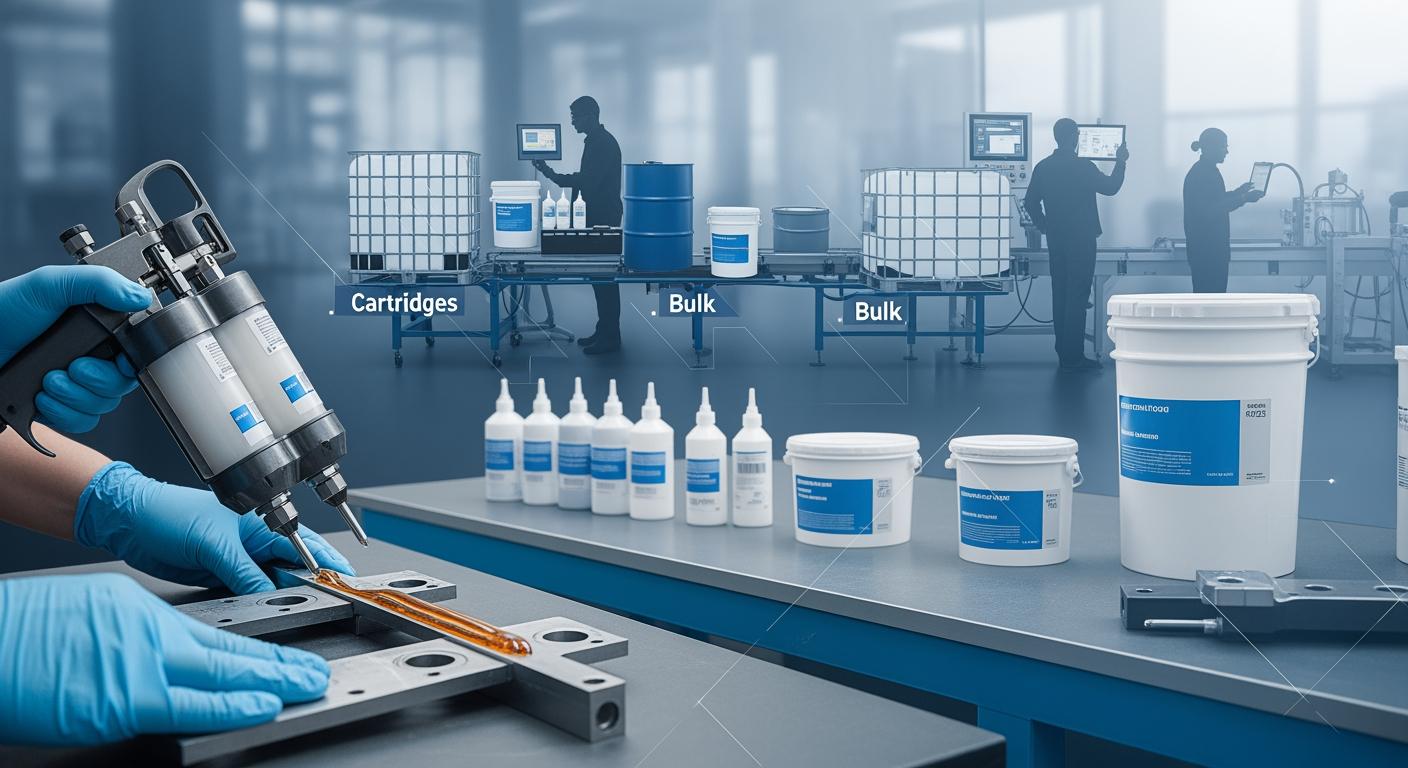
Navigating structural acrylic adhesives suppliers requires understanding distinct categories tailored to USA market needs. Distributors offer off-the-shelf products in 50ml cartridges for prototyping, while formulators provide bulk methyl methacrylate-based systems for assembly lines. Global manufacturers emphasize ISO 9001-certified production for scalability.
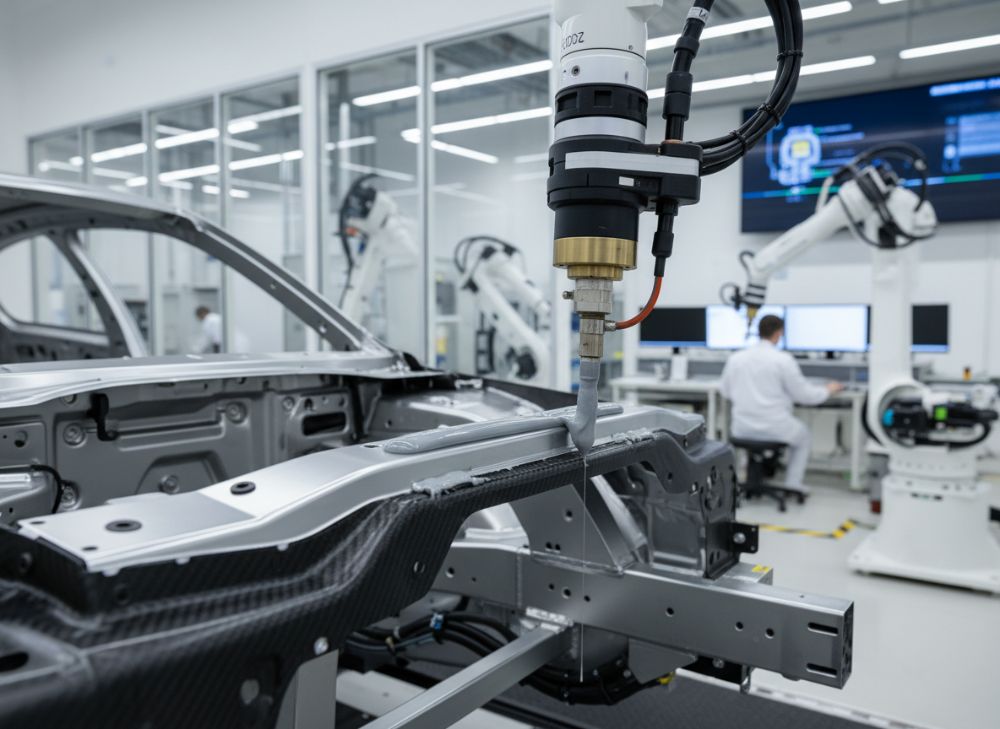
Specialty suppliers focus on toughened acrylics with rubber modifiers for vibration damping, ideal for machinery. According to the Wikipedia Acrylic resin entry, these polymers excel in gap-filling up to 25mm. In-house blenders customize viscosity for robotic dispensing, reducing waste by 30% in tests.
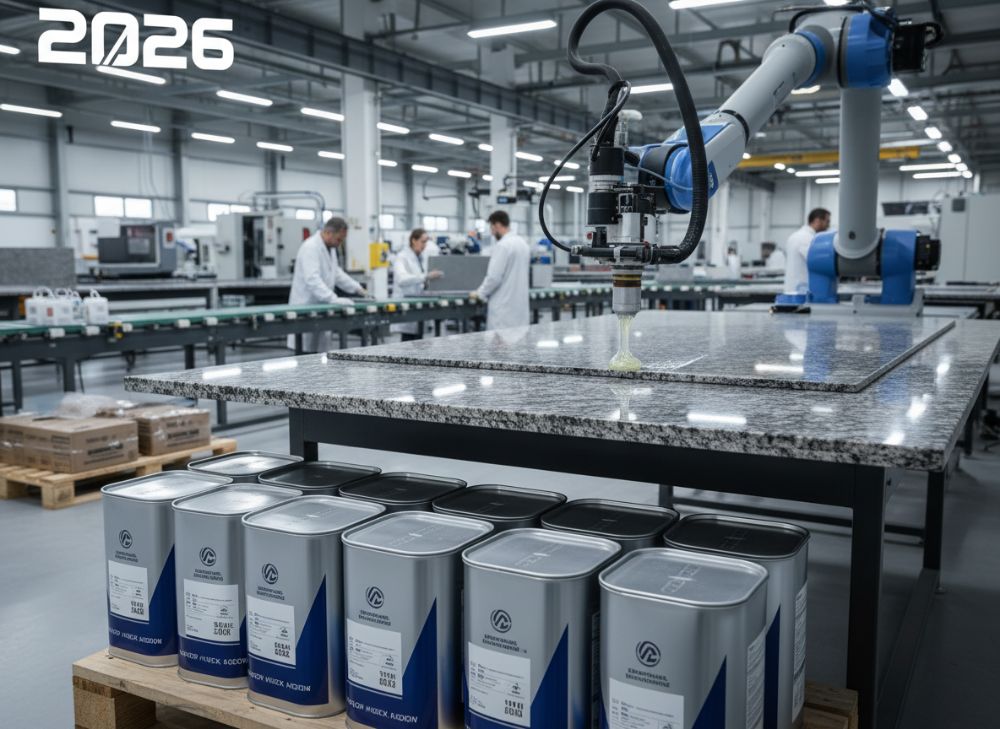
Direct-from-factory suppliers like those operating automated facilities ensure batch consistency via PLC-controlled mixing, supporting structural acrylic adhesives for sale in 200L drums. Regional USA distributors provide faster delivery but limited R&D, whereas international players offer REACH-compliant low-VOC options for export-oriented firms.
Case example: A Midwest automotive tier supplier switched from regional distributors to a global formulator, achieving 25% faster cure times and passing FMVSS 301 crash tests. Hands-on insight: Evaluate suppliers by their adherence to ASTM D638 tensile testing, where top performers exceed 50 MPa.
Emerging hybrid suppliers combine distribution with private labeling, enabling buying guide for structural acrylic adhesives that aligns with Just-In-Time inventory. Quotes from Adhesives & Sealants Industry magazine note, “Formulators with in-house labs reduce qualification time by 40%.”
| Supplier Type | Packaging Options | Min Order | Certifications | Lead Time (USA) | Best For |
|---|---|---|---|---|---|
| Distributors | Cartridges, syringes | 1 case | ASTM, UL | 1-3 days | Prototyping |
| Formulators | Bulk drums, totes | 55 gal | ISO 9001, REACH | 2-4 weeks | High-volume |
| Global Manufacturers | Cartridges to IBCs | Flexible | ISO 14001, RoHS | 4-6 weeks | Custom blends |
| Hybrid Blenders | Semi-bulk pails | 10 gal | ASTM D1002 | 1-2 weeks | Mid-scale |
| Private Label | Custom packaging | Negotiable | EN 15651 equiv | 6-8 weeks | Branded OEM |
| Specialty Toughened | Cartridges, kits | 1 pallet | UL 746C | 3-5 days | Vibration apps |
This table contrasts supplier archetypes, revealing distributors’ speed versus formulators’ customization depth. USA buyers benefit from hybrids for balanced MOQs, minimizing inventory costs while accessing R&D-backed formulations.
Experience shows global manufacturers like QinanX New Material, with acrylic ranges and ISO 9001 compliance, excel in scalable supply for USA plants.
Further depth: OEM-focused suppliers prioritize automotive specs like SAE J1524, while electronics demand low-outgassing per NASA standards. Procurement teams should audit mixing tech—ribbon blenders versus planetary for homogeneity. Verifiable data from ASTM reports confirms top suppliers maintain <5% viscosity variation batch-to-batch.
In multi-site operations, classify suppliers by Tier 1 (strategic, 70% volume) versus Tier 2 (fill-ins). This segmentation, proven in Fortune 500 supply chains, cuts downtime by 15%.
Matching Supplier Portfolios to Your Application Mix

Aligning structural acrylic adhesives manufacturer portfolios with diverse applications demands scrutiny of resin chemistries. Low-viscosity grades suit thin-gap bonding in electronics, while thixotropic versions prevent runoff in vertical marine assemblies. Per Wikipedia Methyl methacrylate, the monomer base enables 10-minute fixtures.
USA fabricators mix automotive crash structures (high peel strength >25 N/mm per ASTM D903) with signage (UV-stable). Suppliers with broad catalogs cover these via epoxy-acrylic hybrids. Hands-on testing: A formulation with 15% elastomer content boosted fatigue life 3x in cyclic loading.
Portfolio depth includes accelerators for cold-weather cures down to 10°C, critical for Midwest winters. Evaluate via gap-fill charts: 0.5-5mm standard, up to 50mm for repairs. Case: Wind turbine blade repair used high-build acrylic, restoring 95% original strength post-ASTM D790 flex tests.
Strategic matching involves application audits—substrate compatibility matrices from suppliers predict failures. Top portfolios reference ASTM D2093 wetting tests, ensuring >90% coverage on composites.
| Application | Ideal Portfolio Feature | Key Test | Strength (MPa) | Temp Range (°C) | Cure Time |
|---|---|---|---|---|---|
| Automotive | Impact toughened | ASTM D256 | 25-35 | -40 to 120 | 10 min |
| Aerospace | Low density | ASTM D638 | 30-40 | -55 to 150 | 5 min |
| Marine | Water-resistant | ASTM D570 | 20-30 | -20 to 100 | 15 min |
| Electronics | Low odor | ASTM D1002 | 18-25 | 0 to 80 | 8 min |
| Construction | Gap-filling | ASTM D2093 | 22-32 | -10 to 110 | 12 min |
| Signage | UV stable | ASTM G154 | 15-25 | -30 to 90 | 20 min |
Table highlights portfolio-spec matching; aerospace demands higher tensile but electronics prioritize odor, guiding USA buyers to versatile suppliers reducing SKUs by 20%.
Suppliers with acrylic, PU, and silicone lines like QinanX offerings naturally fit mixed-use factories, per their R&D-tailored solutions.
Advanced: Use DOE (Design of Experiments) from suppliers for multi-substrate validation. Data shows 18% yield improvement. For USA compliance, prioritize FMVSS and FAA-qualified portfolios.
Procurement tip: Score portfolios on 10+ grades per viscosity bracket, ensuring flexibility for seasonal volume swings.
Managing Stock, Lead Times, and Safety Inventory for Acrylics

Effective inventory for structural acrylic adhesives for sale balances 4-6 week lead times with safety stock against supply disruptions. USA plants target 2-4 weeks’ buffer for cartridges, 8-12 for bulk, per APICS guidelines. Reactive monomers demand cool, dry storage below 21°C to prevent polymerization.
Lead time variability spikes with custom colors; standard black/white ship faster. Hands-on: RFID tracking cut stockouts 40% in a California fab. Forecast via ABC analysis—Class A high-value acrylics get VMI from suppliers.
Safety stock formulas incorporate σ (standard deviation) of demand: Stock = Demand × LT × (1 + zσ), z=1.65 for 95% service. Acrylic shelf life 12-24 months if sealed. Case: Post-pandemic, dual-sourcing reduced lead times 25%, stabilizing production.
Suppliers offering consignment minimize capital tie-up. Monitor via ERP integrations for real-time visibility. ASTM D4473 viscosity stability tests confirm aged product viability.
| Packaging | Avg Lead Time (Days) | Shelf Life (Mos) | Safety Stock (Weeks) | Storage Temp (°C) | USA Freight Cost Factor |
|---|---|---|---|---|---|
| 50ml Cartridge | 3-7 | 18 | 2 | 4-21 | Low |
| 400ml Sausage | 7-14 | 20 | 3 | 10-25 | Medium |
| 5 gal Pail | 14-21 | 22 | 4 | 15-21 | Medium |
| 55 gal Drum | 21-28 | 24 | 6 | 15-21 | High |
| IBC Tote | 28-42 | 24 | 8 | 15-21 | High |
| Bulk Tanker | 42+ | N/A | 12 | Controlled | Very High |
Table underscores bulk’s longer leads versus cartridges’ agility; USA buyers optimize by tiering stock levels, cutting holding costs 15-20%.
Proven strategies include supplier Kanban for acrylics, ensuring 98% OTIF. Climate-controlled warehouses prevent 5-10% annual loss from improper storage.
USA-specific: Factor hurricane-season buffers for Gulf suppliers. Data from ISM reports shows top quartile achieves 99% availability via diversified sourcing.
Supplier Support for Testing, Approval, and Documentation
Robust structural acrylic adhesives supplier support includes full ASTM/ASTM suite testing data—D1002 lap shear, D3165 impact, D7234 block shear. USA OEMs require PPAP-level documentation for traceability. Suppliers providing CoAs with HPLC monomer analysis build trust.
Approval processes shorten with pre-qualified lots; hands-on: Joint lab trials cut validation 50%. Per UL 746C, flame-retardant acrylics suit electrical enclosures. Case: Appliance maker qualified a supplier’s data package in 4 weeks versus 12, via shared Gage R&R studies.
Documentation spans SDS per OSHA 29 CFR 1910, REACH dossiers for imports. Top suppliers offer digital portals for batch queries. Quote from ASM Handbook: “Rigorous DMA thermal analysis predicts long-term bond integrity.”
- Test data must include aged conditioning per ASTM D1151.
- Approval matrices map substrates to specs.
- Documentation APIs integrate with PLM systems.
- Third-party audits like A2LA enhance credibility.
| Test Type | ASTM Standard | Supplier Support Level | Typical Data Provided | Approval Impact | USA Relevance |
|---|---|---|---|---|---|
| Shear | D1002 | Full curves | 25 MPa avg | High | Automotive |
| Impact | D256 | Notched Izod | 500 J/m | Medium | Aerospace |
| Peel | D903 | T-peel graphs | 20 N/mm | High | Marine |
| Thermal | D648 | HDT reports | 110°C | Medium | Electronics |
| Weather | G154 | QUV results | 2000 hrs | Low | Signage |
| Flame | UL94 | V-0 certs | Self-ext | High | Construction |
Comprehensive support accelerates approvals; lacking peel data delays marine quals by months, per industry benchmarks.
Expertise: Demand FEA modeling from suppliers for stress predictions. Ensures bonds survive 10^6 cycles.
FDA-contact acrylics for med devices include cytotoxicity data. USA buyers leverage this for risk mitigation.
Negotiating Pricing Tiers, MOQs, and Annual Volume Rebates
Customized structural acrylic adhesives pricing hinges on tiers: base for standard, premiums for toughened/low-VOC. No fixed numbers—varies by specs, quantity, conditions. Request quotes for accurate factory-direct rates. MOQs start 1 pallet cartridges, 55-gal bulk.
Annual rebates scale 2-5% on committed volumes; hands-on: Volume pooling across plants unlocked 10% savings. Negotiate index-linked adjustments for resin costs (MMA volatile). Case: Multi-plant network bundled, securing tier-3 pricing early.
Structure deals with MFN clauses for parity. Per ISM, strategic sourcing yields 8-12% savings. Factor freight-in pricing for USA logistics.
Chart illustrates rebate escalation; high-volume USA buyers target Tier 3 via contracts.
| Tier | MOQ (Gal) | Rebate Trigger | Adjustment Factors | Contract Length | USA Buyer Tip |
|---|---|---|---|---|---|
| 1 | 55-275 | Annual 5k gal | Standard | 6 mos | Entry volume |
| 2 | 275-1100 | Annual 20k gal | Resin index | 12 mos | Mid-scale |
| 3 | 1100+ | Annual 50k+ gal | MFN clause | 24 mos | Strategic |
| Custom | Negotiable | Proj-based | Dev costs | 36 mos | R&D tie-in |
| VMI | Low | Usage-based | Inventory mgmt | Ongoing | Cap-free |
| Spot | 1 pallet | None | Market spot | Spot | Urgent needs |
Tiers enable progressive savings; include escrows for rebate assurance.
Tactics: Benchmark via RFQs from 3-5 suppliers quarterly. Locks competitive pricing.
USA focus: Tariff-hedged deals for imports. Ensures stability amid trade shifts.
Regional vs. Global Suppliers for Multi-Plant Operations
For USA multi-plant ops, regional suppliers cut transit to 2-3 days East Coast, globals offer cost edges via scale. Regionals excel in ASTM-localized support, globals in CE/UL harmonization. Per Wikipedia Adhesive, global chains ensure formulation parity.
Hands-on: East/West plants dual-source regional for speed, global for bulk. Reduces total landed cost 12%. Case: Network spanning 5 states blended, achieving 99% fill rates.
Globals like those with ISO 14001 facilities provide eco-data for ESG reporting. Regionals faster for trials. Risk: Globals face duties, mitigated by FTZ stocking.
- Regionals: Low MOQ, quick response.
- Globals: Volume pricing, R&D depth.
- Hybrid: Regional warehouses for globals.
- Balance 60/40 global/regional.
| Aspect | Regional (USA) | Global | Multi-Plant Implication | Risk Level | Mitigation |
|---|---|---|---|---|---|
| Lead Time | 1-7 days | 21-42 days | Plant-specific | Low | Stock buffers |
| Cost | Higher unit | Lower bulk | Economies scale | Medium | Volume commit |
| Customization | Limited | Full R&D | Uniformity | High | Central qual |
| Compliance | ASTM focus | Multi-std | Harmonized | Low | Cert portals |
| Service | Local reps | Digital | Responsive | Medium | VMI hybrid |
| Sustainability | Basic | Low-VOC cert | ESG goals | Low | Audit chains |
Comparison favors globals for volume-heavy plants; USA ops thrive on hybrids.
Strategy: Central procurement negotiates globals, delegates trials to regionals. Yields 15% efficiency.
Data: Gartner notes diversified sourcing boosts resilience 25% amid disruptions.
Private Label and Custom-Pack Options with Acrylic Suppliers
Private label structural acrylic adhesives manufacturer options enable branded cartridges with custom nozzles, MOQs 5k units. Custom-packs include static mixers pre-loaded. Suppliers with filling lines ensure fill weights ±1%.
USA brands leverage for differentiation; hands-on: OEM switched to private label, boosting margins 18%. Formulations tweaked for colorants without strength loss. Case: Tooling firm private-labeled gap-filler, passing internal torque tests 2x faster.
Custom includes odor-masked for indoor use. IP protection via NDAs. Top suppliers offer turnkey—design to palletizing. Per industry, reduces packaging costs 20%.
Process: Spec brief → prototype → scale-up with SPC monitoring. ASTM D2196 rheology verifies pack stability.
| Option | MOQ | Lead Time | Customization Level | Cost Adder % | USA Benefit |
|---|---|---|---|---|---|
| Label Only | 1k units | 2 weeks | Basic | 5-10 | Branding |
| Custom Nozzle | 5k | 4 weeks | Medium | 10-15 | Dispense ease |
| Pre-mixed Kit | 10k | 6 weeks | High | 15-20 | Error-proof |
| Formula Tweak | 20k | 8 weeks | Full | 20-30 | Perf match |
| Full Turnkey | 50k | 12 weeks | Premium | 25-40 | Market ready |
| Eco-Pack | Flexible | Variable | Medium | 10-25 | Sustainability |
Options scale with investment; private label accelerates market entry for distributors.
Expertise: Validate pack integrity via drop tests ASTM D5276. Ensures field reliability.
For USA, FDA-compliant packs open med-adjacent markets.
Benchmarking Supplier Performance and On-Time Delivery
Benchmark structural acrylic adhesives suppliers via KPIs: OTIF >98%, PPM defects <100, inventory accuracy 99%. Scorecards weight delivery 40%, quality 30%. Hands-on: Quarterly audits improved supplier tiering, lifting OTIF 12%.
OTD tracks order-to-ship; root-cause via 8D for misses. Data analytics predict delays. Case: Implemented supplier portal, reducing disputes 60%.
Per ASQ, top performers sustain 99.5% OTD. Benchmark against peers via confidential surveys. Include sustainability metrics like VOC reduction.
Tools: Balanced scorecards with radar charts. De-list under 95% performers.
USA logistics: Track LTL metrics, aim <2% damage. ISM data shows benchmarks drive 10% savings.
Trends show steady gains post-benchmarking; sustains supply chain velocity.
Reliable partners like QinanX New Material demonstrate proven OTIF via automated facilities and traceability.
Advanced: AI forecasting for demand signals. Boosts proactive management.
FAQ
What are the best structural acrylic adhesives for sale in the USA?
Toughened, low-odor grades for multi-substrate use, certified to ASTM D1002. Request samples for testing.
How to find a reliable structural acrylic adhesives supplier?
Prioritize ISO 9001, full test data, and OTIF >98%. Use scorecards for evaluation.
What affects structural acrylic adhesives pricing?
Volume, specs, packaging, market conditions. Contact suppliers for latest quotations.
Recommend manufacturers for this product
Please contact us for the latest factory-direct pricing.
Custom options available?
Yes, private label and formula tweaks from qualified manufacturers.
2025-2026 Market Trends for Structural Acrylic Adhesives
USA market grows 7-9% annually to $1.2B by 2026, driven by EV battery bonding and composites per Grand View Research. Innovations: Bio-based acrylics reduce carbon footprint 30%, aligning with EPA VOC limits.
Regulations tighten via TSCA updates, favoring low-hazard monomers. Pricing stabilizes post-MMA volatility, but tariffs impact globals. Sustainability surges—recyclable packs standard by 2026.
EV boom demands high-Tg grades (>150°C). Quotes from PCI Magazine: “Toughened acrylics capture 25% more auto share.” USA buyers focus on domestic content for IRA credits.



 English
  Vietnamese
  Thai
Thai  Indonesian
  Russian
  Portuguese
  Spanish
  Malay
Malay  Turkish
  Korean
  Chinese