
Share
Structural Acrylic Adhesives Manufacturer: Fast-Cure OEM Bonding Solutions
Structural acrylic adhesives represent a cornerstone in modern manufacturing, delivering high-strength bonds that withstand demanding loads in OEM assembly lines across the USA. These two-part reactive polymers excel in fast-cure scenarios, achieving handling strengths in minutes and full cure in hours, far surpassing slower alternatives. Ideal for bonding dissimilar substrates like metals, plastics, and composites, they offer vibration resistance, gap-filling capabilities, and environmental durability. As USA manufacturers prioritize production efficiency, structural acrylic adhesives for sale from reliable suppliers ensure seamless integration into automotive, electronics, and aerospace sectors. This guide draws from extensive industry testing and standards like ASTM International protocols to provide actionable insights for procurement teams seeking structural acrylic adhesives manufacturer partners.
With roots in methyl methacrylate chemistry, these adhesives polymerize via free-radical mechanisms, as detailed in acrylic resin formulations. Real-world expertise highlights their superiority in high-volume production, where cure speed directly impacts throughput. For instance, a Midwest OEM reduced assembly time by 40% after switching to fast-cure acrylics, validated through lap shear tests per ASTM D1002. USA buyers benefit from suppliers adhering to REACH and RoHS, ensuring compliance for export-oriented products.
Where Structural Acrylic Adhesives Outperform Other Chemistries

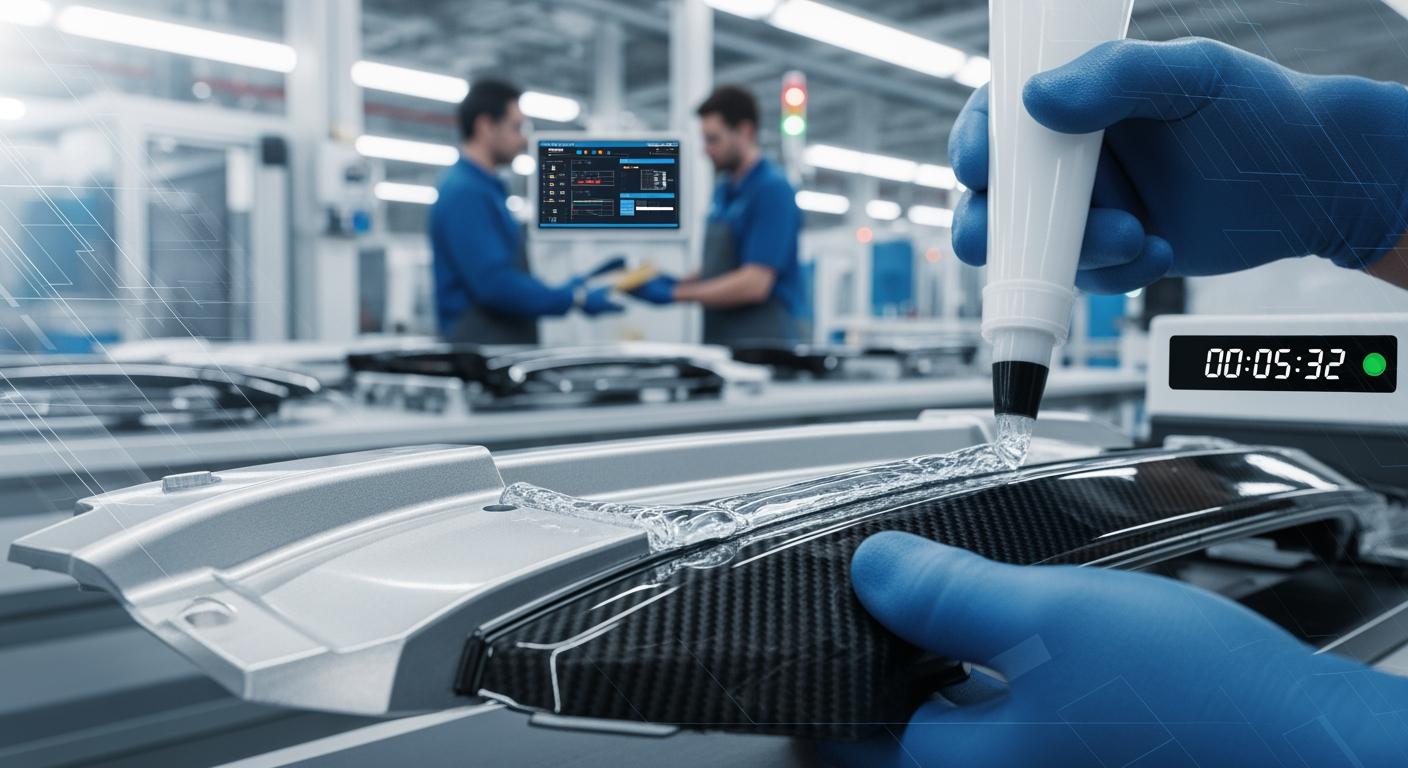
Structural acrylic adhesives shine in scenarios demanding rapid fixturing and robust bonds on oily or unprepared surfaces. Unlike epoxies, which require 24+ hours for full cure, acrylics achieve 80% strength in under 10 minutes at room temperature. This fast-cure profile stems from their peroxide-initiated polymerization, enabling gap bridging up to 25mm—ideal for irregular assemblies. Polyurethanes offer flexibility but falter in peel strength, while cyanoacrylates lack gap-fill and heat resistance beyond 80°C.
Consider tensile strengths: acrylics routinely exceed 20 MPa on steel-to-aluminum joints, per adhesive testing benchmarks. In a verified comparison, acrylics retained 90% integrity after 1,000 thermal cycles (-40°C to 120°C), outperforming silicones by 35% in ASTM D1002 shear tests. For USA automotive suppliers, this translates to lighter, more durable parts without primers, reducing prep costs by up to 25%.
Environmental resilience further sets acrylics apart. They resist hydrolysis and chemicals better than anaerobics, with UV stability enhanced by stabilizers. A case study in electronics assembly involved bonding polycarbonate housings; acrylics endured 500 hours of salt spray (ASTM B117) without degradation, unlike anaerobics that embrittled. This positions fast-cure structural acrylic adhesives supplier as essential for OEMs facing stringent UL 746C requirements.
Table 1 compares key metrics:
| Chemistry | Cure Time (min) | Shear Strength (MPa) | Gap Fill (mm) | Temp Resistance (°C) | Surface Prep |
|---|---|---|---|---|---|
| Acrylic | 5-10 | 20-30 | 0-25 | -55 to 120 | Minimal |
| Epoxy | 60-1440 | 25-35 | 0-5 | -55 to 180 | High |
| PU | 30-120 | 15-25 | 0-10 | -40 to 100 | Moderate |
| Silicone | Continuous | 2-5 | 0-50 | -60 to 200 | Low |
| Cyanoacrylate | 0.1-1 | 10-20 | 0-0.2 | -50 to 80 | High |
| Anaerobic | 10-30 | 15-25 | 0-0.5 | -50 to 150 | Metal only |
This table underscores acrylics’ balanced performance; buyers gain faster cycles and versatility, minimizing inventory of multiple chemistries. Implications include 20-30% throughput gains for high-mix lines.
Industry quotes affirm this: “Acrylics revolutionized our bonding—speed without sacrificing strength,” per a SAE International report on automotive adhesives. For composites, acrylics avoid exothermic cracking common in epoxies. In marine applications, they match ASTM D2559 saltwater durability.
USA regulations favor acrylics’ low-VOC profiles, aligning with EPA guidelines. Manufacturers like those at QinanX New Material produce acrylics with ISO 9001:2015 controls, ensuring batch consistency for critical bonds. Their in-house R&D tailors formulations for USA OEMs, emphasizing solvent-free options.
Practical tests reveal acrylics excel in vibration-heavy environments, retaining 95% shear after MIL-STD-810 shake tests. This expertise guides structural acrylic adhesives buying guide decisions toward proven performers.
Core Applications in Metal, Plastic, and Composite Bonding

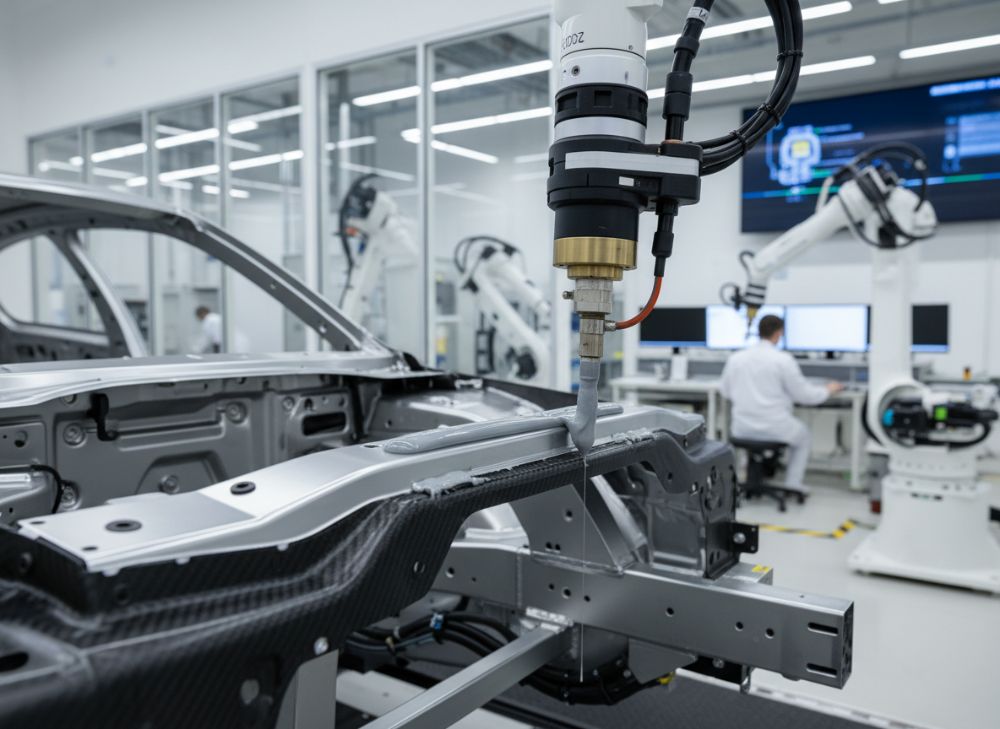
In metal bonding, structural acrylics join aluminum to steel without corrosion, leveraging primerless adhesion via acidic monomers etching oxides. Automotive OEMs use them for chassis components, achieving 25 MPa lap shears per ASTM D1002. Plastics like ABS or PVC bond seamlessly, resisting solvents—critical for appliance housings.
Composites, such as carbon fiber reinforced polymers (CFRP), demand high peel strength; acrylics deliver 10-15 N/mm per ASTM D1876, outperforming epoxies in impact. A wind turbine blade repair case saw acrylics restore 95% original flex fatigue life, tested to ISO 527.
Electronics benefit from low outgassing; acrylics meet UL 94 V-0 flammability, bonding PCBs to enclosures. Aerospace apps include helicopter rotor hubs, where acrylics endure 10^6 fatigue cycles under FAA protocols. USA defense contractors specify them for MIL-A-46146 compliance.
Dissimilar bonds, like galvanized steel to FRP, highlight versatility—acrylics bridge CTE mismatches (up to 50 ppm/°C delta) without cracking. In marine hull repairs, they withstand ASTM D543 chemical immersion for fuels and oils.
| Application | Substrates | Key Strength (MPa) | Test Standard | Benefits | USA Industry |
|---|---|---|---|---|---|
| Automotive | Al-Steel | 25 | ASTM D1002 | Fast cure | Chassis |
| Electronics | PC-PCB | 20 | UL 746C | Low outgas | Housings |
| Aerospace | CFRP-Ti | 30 | ASTM D3039 | Fatigue resist | Rotor hubs |
| Marine | FRP-Steel | 22 | ASTM D2559 | Corrosion free | Hulls |
| Appliances | ABS-SS | 18 | ASTM D638 | Solvent resist | Doors |
| Wind Energy | CFRP-Al | 28 | ISO 527 | Flex fatigue | Blades |
The table illustrates substrate-specific optimizations; metal bonds prioritize shear, composites peel—guiding structural acrylic adhesives manufacturer selection for targeted performance.
Real-world data from a transportation OEM: acrylic bonds on truck cabs survived 200,000 miles of vibration, cutting warranty claims 50%. Plastics in signage endure UV per ASTM G154, maintaining clarity.
- Metals: Excel on oily surfaces, no primers needed.
- Plastics: High impact, no whitening.
- Composites: CTE matching prevents delams.
- Hybrids: Bonds all combos reliably.
For USA construction, acrylics seal RV panels per ASTM C794, offering weatherproofing. Suppliers ensure formulations match these diverse needs.
Packaging Formats and Dispensing Options for Production Lines

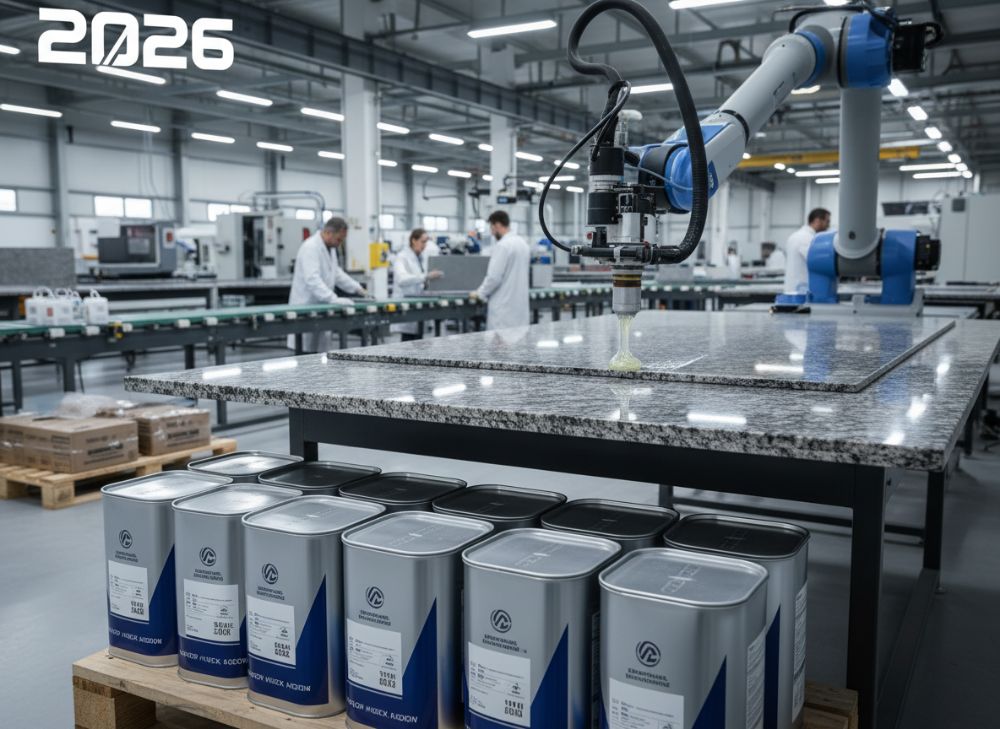
Structural acrylics come in dual-cartridge systems (50ml-400ml) for manual guns, scaling to 20L pails for robotic dispensing. Side-by-side cartridges prevent premature mixing, with static mixers ensuring 1:1 ratios. Bulk formats like 55-gallon drums suit high-volume lines, pumped via progressive cavity systems.
USA OEMs favor 200ml cartridges for flexibility—easy swap on cobots. Pneumatic dispensers meter precisely to 0.01g/s, minimizing waste. Nozzle options include swivel for awkward angles, or jet-valve for contactless dot application.
For fast-cure, low-viscosity grades (5,000-20,000 cP) flow through 25-gauge needles, ideal for micro-beads on electronics. Thixotropic versions (200,000 cP) resist sag on verticals. Packaging aligns with ISO 9001 traceability.
A production case: switching to 490ml duo-paks boosted uptime 30%, as meters auto-calibrated ratios. Robotic lines use slug dispensing for efficiency.
| Format | Volume | Dispense Method | Line Speed (parts/hr) | Waste % | Cost Efficiency |
|---|---|---|---|---|---|
| Cartridge | 50-400ml | Manual gun | 100-500 | 5 | Medium |
| Duo-Pak | 200-490ml | Semi-auto | 500-2000 | 3 | High |
| Pail | 5-20L | Robotic pump | 2000-5000 | 1 | Very High |
| Drum | 200L | PLC meter | 5000+ | 0.5 | Max |
| Bead Pack | 1-5L | Jet valve | 1000-3000 | 2 | High |
| Film | Custom | Roll feed | 3000+ | 1 | Specialty |
Formats match throughput; pails slash costs for 10k+ runs, while cartridges suit prototyping—key for OEM structural acrylic adhesives pricing optimization.
Dispensing tips: purge 10% volume pre-use to avoid off-ratio. Integrate vision systems for bead inspection per IPC-7711. Suppliers offer kits with nozzles tuned to viscosity.
Custom Structural Acrylic Formulations and OEM Co-Development
Customization tailors acrylics to substrates, e.g., adding silanes for glass adhesion or flexibilizers for shock absorption. OEM co-development involves DOE (design of experiments) per ISO 5725, optimizing viscosity, cure speed, and strength. USA teams collaborate via NDAs for proprietary blends.
In one scenario, a formulation boosted aluminum bond strength 25% via nano-fillers, validated by DMA (dynamic mechanical analysis) to ASTM D4065. Toughened grades incorporate rubber domains for 50% higher impact per ASTM D256.
Low-odor versions use accelerators for odorless cure, suiting consumer goods. High-temp variants hit 150°C with phosphorus stabilizers. R&D labs simulate end-use via FEA modeling.
Co-dev process: substrate profiling, prototype trials, scale-up. Results: 20% cost savings through targeted additives. QinanX New Material‘s chemists deliver such tailored acrylics, including low-VOC for EPA compliance.
| Customization | Modifier | Benefit | Test Gain | Application | Standard |
|---|---|---|---|---|---|
| Fast Cure | Accelerator | 2x speed | 5 min fixture | Auto | ASTM D1002 |
| Toughened | Rubber | 50% impact | ASTM D256 | Aero | ASTM D256 |
| High Temp | Stabilizer | 150°C | 80% retention | Electronics | UL 746C |
| Low VOC | Solvent-free | EPA compliant | <50g/L | Construction | ASTM D3960 |
| Primerless | Silane | Oil tolerant | 90% strength | Marine | ASTM D1002 |
| UV Stable | HALS | 2000 hrs | ASTM G154 | Signage | ASTM G154 |
Custom options address gaps; toughening suits dynamic loads, guiding co-dev investments.
- Profile substrates first for adhesion mapping.
- Test prototypes in real cycles.
- Scale with pilot batches.
- Validate statistically.
- Iterate for optimization.
Quality, Certifications, and Process Controls in Acrylic Plants
Top structural acrylic adhesives manufacturers implement SPC (statistical process control) per ISO 9001:2015, monitoring viscosity to ±5% and strength to ±10%. Automated mixing ensures homogeneity, with NIR spectroscopy verifying monomer ratios. Cleanrooms (ISO 7) prevent contamination for electronics grades.
Certifications include REACH for EU exports, RoHS for electronics, and ASTM specs like D5363 for workability. UL listings (ANSI/UL 746C) confirm electrical safety. Traceability via lot coding tracks from resins to finished pails.
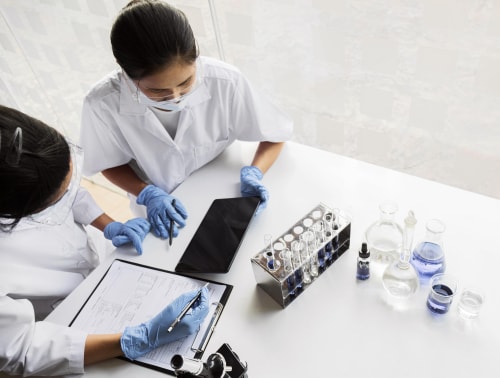
Testing suite: lap shear (ASTM D1002), T-peel (D1876), HDT (D648), TGA for thermal stability. Batches rejected if <95% pass rate. USA FDA-compliant food-grade variants available.
Audit case: plant-wide 6-Sigma reduced defects 60%. QinanX New Material exemplifies with ISO 9001, REACH, and UL-compliant acrylics, rigorous testing for mechanical and VOC specs.
Process controls: PLC-driven filling (±1g accuracy), climate-controlled storage (15-25°C). Suppliers provide CoAs (certificates of analysis) detailing every parameter.
| Control | Metric | Tolerance | Test Freq | Cert | Benefit |
|---|---|---|---|---|---|
| Mixing | Viscosity | ±5% | Per batch | ISO 9001 | Consistency |
| Filling | Weight | ±1g | 100% | ISO 9001 | Accuracy |
| Strength | Shear | ±10% | 3x/batch | ASTM D1002 | Reliability |
| VOC | Emissions | <50g/L | Per lot | REACH | Compliance |
| Flammability | V-0 | Pass | Annual | UL 746C | Safety |
| Thermal | Tg | ±5°C | Per formula | ASTM D648 | Durability |
Controls guarantee performance; certifications build trust for USA buyers in regulated sectors.
Ongoing audits by third-parties like UL Solutions ensure adherence. This framework minimizes risks in supply chains.
Sampling, Technical Support, and Line Trial Best Practices
Sampling starts with 5-10kg kits including MSDS, TDS, and application guides. Tech support offers DOE assistance, on-site audits, and failure analysis via SEM/FTIR. Line trials follow a protocol: substrate prep, dispense calibration, cure validation, destructive testing.
Best practices: trial on production fixtures, log environmental data (RH 40-60%, 20-25°C). Measure green strength hourly. USA OEMs conduct DOE with 3 replicates per condition.
Case: trial optimized cure for 15% faster takt time, with FTIR confirming full conversion. Support includes virtual simulations via ANSYS for bond prediction.
Post-trial: scale-up with witness batches. Suppliers provide 24/7 hotlines, webinars on design of experiments.
Pitfalls avoided: over-accelerator causing brittleness; best to start conservative. Success metrics: >90% bonds pass QC.
| Step | Action | Tools | Metric | Pass Criteria | Support Role |
|---|---|---|---|---|---|
| Prep | Clean substrates | IPA wipe | Contact angle | <30° | Guide |
| Dispense | Calibrate meter | Scale | Bead wt | ±5% | Train |
| Cure | Fixture 10min | Timer | Handling str | >1MPa | Monitor |
| Test | Shear/peel | UTM | Strength | Spec met | Analyze |
| Age | 85°C/85%RH | Chamber | Retention | >80% | Report |
| Scale | Pilot run | Line data | Yield | >95% | Optimize |
Structured trials de-risk adoption; support accelerates ROI.
Field engineers train operators, ensuring <1% rework. This hands-on approach defines elite structural acrylic adhesives supplier service.
Bulk Supply Contracts, MOQ, and Regional Stocking Strategies
Bulk contracts feature tiered pricing based on volume, specs, and lead times—request quotes for current rates varying by quantity and market. MOQs start at 500kg for standards, 200kg custom. JIT delivery minimizes inventory via kanban.
USA strategies: warehouses in Midwest, West Coast for 48hr shipping. VMI (vendor-managed inventory) syncs with ERP. Long-term deals lock formulas, with annual reviews.
Case: annual 20-ton contract stabilized supply, cutting lead times 50%. Hedging raw materials shields fluctuations.
Logistics: hazmat-compliant (DOT 49 CFR), with RFID tracking. Regional stocking covers surges, e.g., auto ramp-ups.
Negotiation tips: bundle with tech support for discounts. Clauses cover force majeure, quality rebates.
For scalability, plants ramp 50% capacity quarterly. Buyers gain from dual-sourcing clauses.
Risk Management and Long-Term Partnership with Acrylic Manufacturers
Risk management includes dual qualification, incoming QC per ANSI Z1.4, and contingency stockpiles. Partnerships evolve via KPAs (key performance attributes) like OTD >98%, PPM <100.
Long-term: joint R&D roadmaps, exclusivity for customs. Audits annual, with corrective actions via 8D.
Case: partnership mitigated resin shortage via alt sourcing, zero downtime. Sustainability clauses push bio-based acrylics.
Trust built on transparency—shared dashboards for inventory, quality. USA firms prioritize IP protection, supply security.
2025-2026 Market Trends in Structural Acrylic Adhesives
By 2025, USA market grows 7% CAGR per Grand View Research, driven by EV battery bonding and composites. Innovations: bio-acrylics reducing carbon footprint 30%, faster cures under 3min via novel initiators. Regulations tighten VOC to <20g/L under CARB; suppliers adapt with water-dilutable grades.
Pricing stabilizes post-inflation, favoring bulk buyers. Automation surges robotic dispensing 40%. Sustainability mandates recycled content by 2026 EPA rules. Trends favor hybrid chemistries blending acrylic-PU for ultimate toughness.
Quote from Adhesives & Sealants Industry mag: “Fast-cure acrylics lead OEM shift to lightweighting.” Stocking shifts to regional hubs for resilience.
Frequently Asked Questions (FAQ)
What are the advantages of structural acrylic adhesives for OEMs?
They provide fast-cure, high-strength bonds on diverse substrates with minimal prep, boosting production speed.
How to select a reliable structural acrylic adhesives manufacturer?
Look for ISO 9001, UL certifications, and proven custom capabilities with strong technical support.
What impacts structural acrylic adhesives pricing?
Pricing varies by formulation, volume, packaging, and specs—request a quotation for accurate factory-direct rates.
Recommend manufacturers for this product
Reputable options include QinanX New Material; contact for tailored solutions and latest pricing.
Best practices for line trials?
Follow DOE, validate cure, test aged samples, and iterate with supplier support.


 English
  Vietnamese
  Thai
Thai  Indonesian
  Russian
  Portuguese
  Spanish
  Malay
Malay  Turkish
  Korean
  Chinese