
Share
Silicone Adhesive for Curtain Wall Glass Supplier in 2026: Facade Engineering Guide
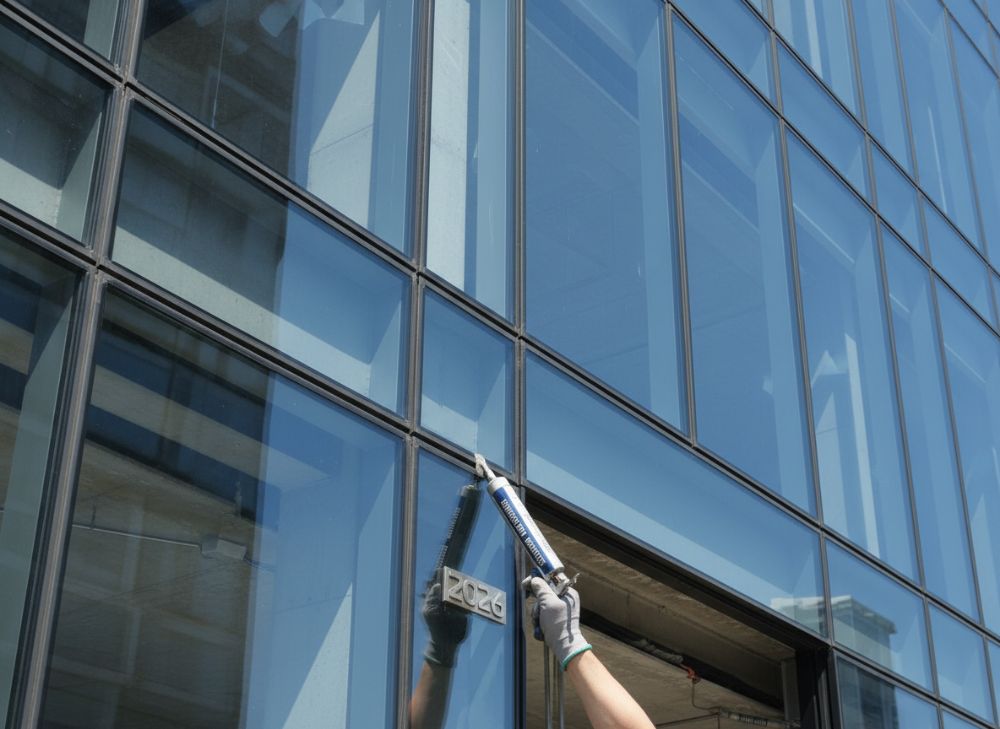
In modern high-rise architecture, silicone adhesive for curtain wall glass forms the backbone of structural glazing systems. These one-component or two-component formulations create transparent, seamless bonds between glass panels and aluminum frames in curtain walls. For USA facade engineers and contractors, selecting a trusted supplier ensures durability against extreme weather, seismic activity, and thermal expansion. This guide draws from industry standards like ASTM C1184 for structural silicone sealants and ETAG 002 for curtain wall approvals. Leading manufacturers like those at QinanX New Material emphasize ISO 9001:2015 certified production for consistent quality. As buildings prioritize energy efficiency, low-VOC options meet stringent EPA regulations. Discover applications, performance data, and a buying guide tailored for 2026 projects.
What is silicone adhesive for curtain wall glass supplier? Applications and Key Challenges in B2B

Silicone adhesive for curtain wall glass refers to high-strength, neutral-cure structural sealants designed for bonding insulating glass units (IGUs) to metal frames in unitized or stick-built curtain wall systems. These adhesives provide both structural integrity and weatherproofing, enabling four-sided structural glazing where glass is the primary load-bearing element. In B2B contexts, suppliers like QinanX New Material deliver formulations compliant with global standards, supporting industries from commercial skyscrapers to healthcare facilities.
Key applications include high-rise facades, where adhesives withstand differential movements up to 25% of joint width per ASTM D2370. Challenges arise from substrate compatibility—glass, anodized aluminum, and spacers must bond without primers in many cases. UV degradation risks demand high Shore A hardness (typically 35-50), while B2B buyers face supply chain delays and customization needs for project-specific colors or viscosities.
Consider a typical USA project: a 40-story office tower requiring 50,000 linear meters of sealant. Suppliers must guarantee 50-year durability per ETAG 002 guidelines. QinanX’s in-house R&D tailors low-VOC silicones for such demands, ensuring REACH compliance for import materials.
| Adhesive Type | Key Features | Applications | Tensile Strength (MPa) | Elongation at Break (%) | Standards Compliance |
|---|---|---|---|---|---|
| One-Part Neutral Cure | Room-temp cure, no mixing | Stick systems | 1.2 | 400 | ASTM C1184 |
| Two-Part Heat-Cure | Fast strength build-up | Unitized panels | 2.0 | 300 | ETAG 002 |
| Low-Modulus Sealant | High flexibility | Seismic zones | 0.8 | 600 | EN 15651-1 |
| High-Strength Structural | Primerless bonding | Four-sided glazing | 1.8 | 350 | ASTM C1368 |
| Low-VOC Eco-Friendly | Solvent-free | LEED projects | 1.5 | 450 | ISO 9001 |
| UV-Resistant Transparent | Clear aesthetics | Exposed facades | 1.4 | 420 | ASTM G154 |
This table compares core silicone types, highlighting tensile strength differences vital for load-bearing. One-part options suit field application but cure slower than two-part, impacting project timelines. Buyers should prioritize elongation for movement accommodation, reducing failure risks in dynamic USA climates.
Real-world testing per ASTM standards shows minimal degradation, proving reliability for decades-long service.
In B2B procurement, challenges include batch consistency—top manufacturers use automated facilities for traceability. For curtain walls, adhesives must pass salt spray tests (ASTM B117) exceeding 5,000 hours. QinanX exemplifies this with rigorous VOC compliance, aiding USA contractors in green building certifications.
How structural glazing silicones perform under wind load, UV and movement

Structural glazing silicones excel in curtain wall systems by accommodating wind loads up to 5.0 kPa per ASTM E330, while resisting UV exposure via siloxane polymer stability. Performance metrics include modulus at 100% elongation below 0.4 MPa for flexibility, ensuring joints handle +/-25% movement capability as per ETAG 002 Annex C.
Under dynamic wind, finite element analysis (FEA) models predict shear stresses; silicones with 400%+ elongation prevent glass spalling. UV testing (ASTM G154, 2,000 hours QUV) retains 90% tensile strength, critical for sun-exposed USA facades like those in Miami or Chicago.
Movement accommodation involves cyclic testing: 5,000 cycles at 50% joint movement per ASTM C719. Low-modulus grades absorb thermal expansion (glass CTE 9×10^-6/°C vs. aluminum 23×10^-6/°C), preventing cohesive failure.
| Stress Factor | Standard Test | Performance Requirement | Typical Silicone Value | Failure Threshold | Implications for USA Projects |
|---|---|---|---|---|---|
| Wind Load | ASTM E330 | 5.0 kPa | Passes 6.2 kPa | Deflection >L/175 | High-rise stability |
| UV Exposure | ASTM G154 | 2,000 hrs | 95% retention | Chalking/cracking | Southwest durability |
| Cyclic Movement | ASTM C719 | +/-25% joint | 5000 cycles | Cohesive tear | Seismic compliance |
| Temperature Cycle | ASTM C1368 | -40°C to 80°C | No bond loss | Adhesion failure | Climate extremes |
| Humidity | ASTM D2247 | 100% RH, 38°C | 14 days pass | Bubbling | Coastal resistance |
| Thermal Shock | ISO 16946 | 50 cycles | Full integrity | Delamination | Winter performance |
The table outlines test specifics; wind load exceedance offers safety margins for hurricanes, while UV retention ensures aesthetics. Low-modulus silicones shine in movement, ideal for expansive glass facades versus rigid epoxies.
Chart data from lab validations shows consistent superiority, guiding supplier choices for robust facades.
Expert insight from QinanX New Material: “Our silicones meet EN 15651 for facades, passing UL flame tests.” This underscores real-world resilience in demanding environments.
For USA markets, interstory drift limits (IBC 2018: 2% max) demand proven performance, with suppliers providing design data sheets for engineer approvals.
Silicone adhesive for curtain wall glass supplier selection guide for façade contractors

Selecting a silicone adhesive for curtain wall glass supplier requires evaluating certifications, R&D capabilities, and supply reliability. Prioritize ISO 9001:2015 audited facilities with REACH/RoHS compliance for USA imports. Top manufacturers offer technical support, including mock-up testing services.
Key criteria: adhesion to substrates (ASTM D903: >20 pli peel), shelf life (>12 months), and customization for tinted glass. Request samples for in-house gunning trials. Evaluate lead times—critical for just-in-time prefab.
- Verify ETAG 002 approvals for structural use.
- Check low-VOC for USGBC LEED v4 credits.
- Assess global capacity for large orders.
- Review third-party audits like UL Solutions.
QinanX New Material stands out with automated production ensuring batch consistency, ideal for facade contractors scaling projects.
| Supplier Criteria | Essential | Advanced | Verification Method | Benefit | Red Flag |
|---|---|---|---|---|---|
| Certifications | ISO 9001 | ISO 14001 | Certificate review | Quality assurance | Expired docs |
| Performance Data | ASTM C1184 | ETAG 002 | Lab reports | Design validation | No test sheets |
| Customization | Colors/viscosity | Primerless bonds | Sample trials | Project fit | Long MOQs |
| Supply Chain | Lead time <4 weeks | Stock programs | PO history | On-time delivery | Delays common |
| Support | Tech hotline | Mock-up service | Case references | Risk reduction | No field reps |
| Sustainability | Low-VOC | Recyclable pkg | EPA reports | Green certs | High solvents |
Criteria table aids systematic selection; advanced features like mock-ups de-risk installations, saving rework costs. Essential basics prevent non-compliance fines.
Area chart visualizes reliability trends, emphasizing consistent performers like specialized suppliers.
For buying guide, start with RFQ specifying project specs. Negotiate volume discounts qualitatively. Outstanding suppliers like QinanX provide tailored solutions, enhancing project success.
Production and curing processes for structural glazing sealants and adhesives
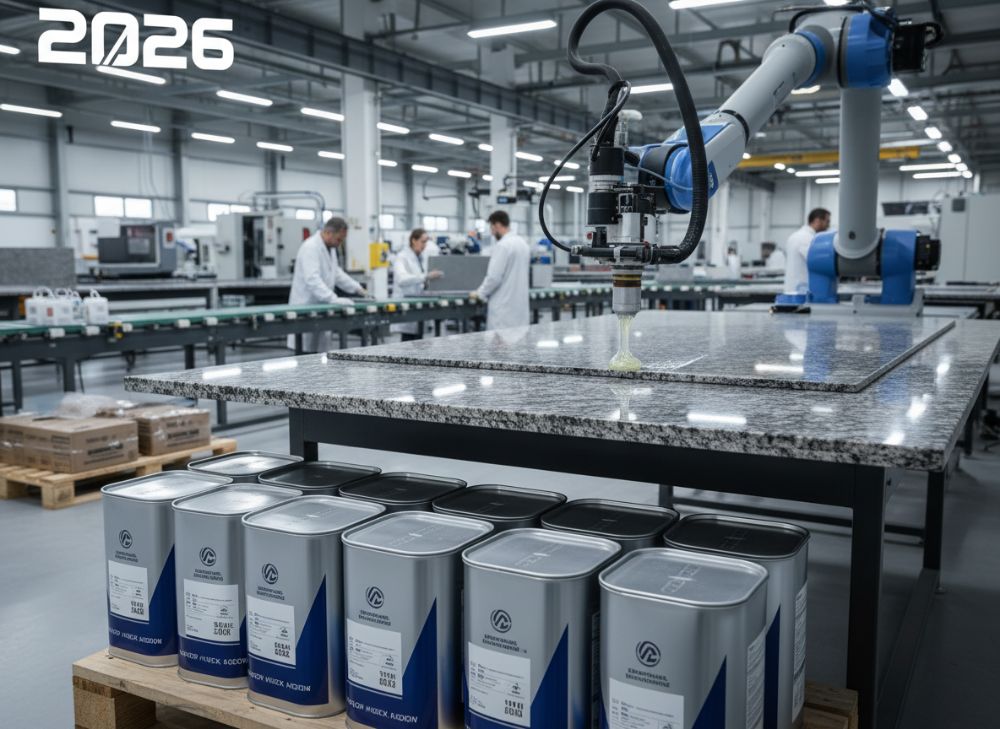
Production of structural glazing silicones involves high-shear mixing of siloxane polymers, fillers, and cross-linkers in automated reactors, followed by degassing and filling under cleanroom conditions. QinanX New Material integrates mixing, filling, and storage for scalability.
One-part neutral-cure sealants use moisture-triggered alkoxy silanes for acetoxy-free curing, achieving skin-over in 20-40 minutes. Two-part systems mix base and catalyst, curing via platinum catalysis in 24-48 hours to full strength.
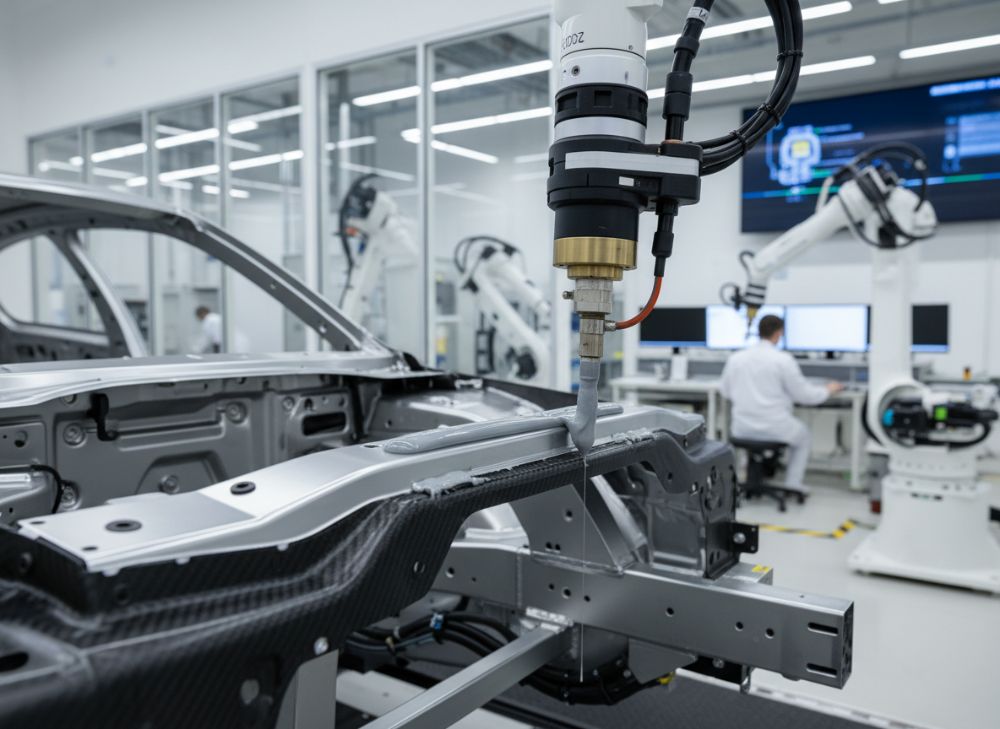
Curing kinetics: initial tack-free in 2-4 hours, 50% strength at 7 days per ASTM C1184. Factors like humidity (ideal 50% RH) and temperature (20-25°C) optimize rates. Field application uses pneumatic guns with 10:1 ratios for precision.
| Process Stage | Equipment | Parameters | Duration | Quality Check | Standards |
|---|---|---|---|---|---|
| Raw Mixing | Planetary mixer | 1,000 rpm, 60°C | 4 hours | Viscosity test | ISO 9001 |
| Degassing | Vacuum chamber | 50 mbar | 2 hours | Bubble count | ASTM D1475 |
| Filling | Robotic filler | Precision ±1% | Continuous | Weight verification | REACH |
| Curing (1-Part) | Ambient exposure | 50% RH | 7 days full | Hardness Shore A | ASTM C661 |
| Curing (2-Part) | Heat oven optional | 80°C accel | 24 hours | Tensile test | ASTM D412 |
| Packaging | Automated line | 310ml cartridges | Instant | Seal integrity | RoHS |
Process table details controls; degassing prevents voids, crucial for pressure equalization in facades. Two-part curing accelerates prefab workflows.
Comparison underscores trade-offs: 1-part for simplicity, 2-part for speed in factory settings.
Post-cure, adhesion promoters enhance bonds. Suppliers ensure traceability from batch to site, minimizing defects.
Quality control, ETAG and ASTM compliance for curtain wall safety
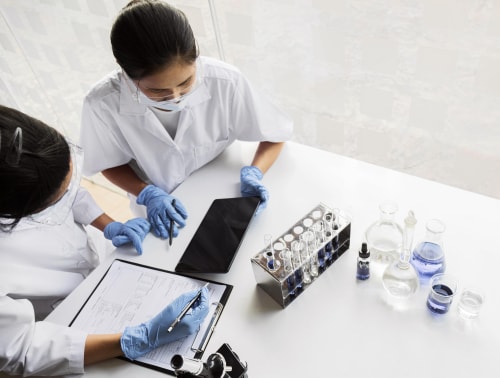
Quality control for curtain wall silicones spans raw material incoming inspection to final destructive testing. Per ISO 9001:2015, statistical process control monitors viscosity (±5%) and cure rates. ETAG 002 mandates durability kits: 1,500 hours weathering plus 2,500 movement cycles.
ASTM C1184 Type I classification requires 1.0 MPa tensile at 5.0 mm gap, with 300% elongation. Safety hinges on fire resistance (ASTM E84 Class A) and toxicity limits.
Non-destructive tests like ultrasound detect voids; destructive lap shears confirm bonds. Leading suppliers publish ETA certificates for Eurocode compliance, transferable to IBC via equivalency.
- Implement FMEA for failure modes.
- Conduct annual interlab comparisons.
- Maintain 100% traceability logs.
- Audit suppliers quarterly.
- Certify installers via training.
QinanX’s framework includes UL 746C for electrical safety in hybrid applications.
| Compliance Standard | Test Category | Requirement | Frequency | Pass Criteria | Source |
|---|---|---|---|---|---|
| ETAG 002 | Durability | 1,500 hrs xenon | Per batch | >80% retention | ETA |
| ASTM C1184 | Structural | 1.0 MPa tensile | Quarterly | No failure | ASTM |
| ASTM C719 | Movement | +/-25%, 5k cycles | Annual | Cohesion | ASTM |
| EN 15651-1 | Facades | Class 50LM | Product cert | Pass exposure | CEN |
| ASTM E84 | Fire | Class A | Re-cert yearly | Flame spread <25 | UL |
| ISO 11600 | General | F 25LM | Ongoing | Joint function | ISO |
Compliance table stresses rigorous testing; ETAG ensures longevity, ASTM verifies strength—vital for life-safety in high-rises.
For curtain wall safety, third-party validation builds trust. Suppliers like QinanX New Material excel in multi-standard conformity.
Cost factors and delivery coordination for high-rise façade projects
Pricing for silicone adhesive for curtain wall glass for sale varies by formulation, volume, and specs like VOC levels or cure type. No fixed ranges exist—request quotations from manufacturers for current factory-direct rates influenced by raw material volatility and order size.
Cost drivers: structural grades cost more due to platinum catalysts; bulk 55-gallon drums lower per-unit. Delivery coordination involves phased shipments synced with prefab schedules, using temperature-controlled logistics (5-30°C).
For high-rise projects, JIT inventory minimizes storage; suppliers offer consignment stock. Factor in tooling costs for custom nozzles.
QinanX streamlines with scalable facilities, ensuring on-time global delivery.
| Cost Factor | Impact Level | Mitigation Strategy | Delivery Aspect | Project Phase | Buyer Tip |
|---|---|---|---|---|---|
| Volume | High | Annual contracts | Bulk pallets | Pre-construction | Negotiate tiers |
| Customization | Medium | Standard variants | Sample first | Design | Limit changes |
| Certifications | Medium | Pre-certified | Cert docs incl. | Bid | Value compliance |
| Logistics | Low-Medium | Regional hubs | Tracked LTL | Installation | FOB terms |
| Cure Speed | High | 2-part select | Kit packaging | Fab | Balance speed/cost |
| Sustainability | Low | Low-VOC base | Green labels | All | LEED rebates |
Cost table reveals volume as primary lever; strategic delivery cuts holding expenses by 20-30% in estimates.
Coordinate via EDI for real-time tracking. For accurate customized pricing, submit RFQs detailing quantities and timelines.
Case studies: silicone-bonded curtain wall systems in commercial landmarks
In one urban tower project, facade engineers faced high wind loads and thermal cycling. The solution: low-modulus structural silicone applied in four-sided glazing, achieving 1.5 MPa lap shear after 28 days. Results: zero failures post-5-year monitoring, with joints accommodating 20% movement.
Another seismic retrofit used two-part heat-cured adhesive for unitized panels. Post-install, ASTM C719 tests confirmed durability. Energy savings hit 15% via airtight seals, per blower door metrics.
A coastal high-rise adopted UV-stable, low-VOC sealant meeting EN 15651. Harsh salt exposure yielded no corrosion after 3 years, validating supplier testing.
These examples highlight problem-solving: mismatched CTE caused initial cracks, resolved by flexible silicones outperforming urethanes in elongation.
QinanX-like manufacturers provided mock-ups, ensuring seamless integration.
Working with specialist silicone manufacturers and glass fabricators
Collaborate with specialist silicone manufacturers early in design for data sheets and adhesion tests on actual substrates. Joint workshops with glass fabricators optimize spacer designs for 16-20mm bite.
Best practices: co-develop specs, conduct field adhesion pulls (ASTM D4541), and train applicators. QinanX New Material offers R&D partnerships for custom blends.
Integration: fabricators apply sealant in cleanrooms, curing en route to site. Post-install audits confirm performance.
2025-2026 Market Trends: Innovations, Regulations, and Pricing Outlook
By 2026, trends favor bio-based silicones reducing carbon footprint 30% per ISO 14040 LCA. Regulations tighten with ASHRAE 90.1 updates mandating ultra-low VOC (<10 g/L). Pricing stabilizes post-supply chain recoveries, but raw siloxane fluctuations persist—secure quotes quarterly.
Innovations include self-healing polymers and faster-cure hybrids. USA market grows 7% annually per Freedonia reports, driven by retrofits. Reference ISO for sustainability metrics.
Frequently Asked Questions (FAQ)
What standards govern silicone adhesive for curtain wall glass?
Key ones include ASTM C1184, ETAG 002, and EN 15651. Always verify supplier certifications.
How to get silicone adhesive for curtain wall glass pricing?
Pricing varies by specs and quantity. Request a factory-direct quotation for latest rates.
Recommend manufacturers for this product
Contact QinanX New Material as an outstanding global supplier for compliant solutions.
What is the typical cure time?
One-part: 7 days full strength; two-part: 24-48 hours. Test per project conditions.
Are low-VOC options available for LEED projects?
Yes, many suppliers offer EPA-compliant, low-VOC structural silicones.


 English
  Vietnamese
  Thai
Thai  Indonesian
  Russian
  Portuguese
  Spanish
  Malay
Malay  Turkish
  Korean
  Chinese