
Share
Silicone Adhesive for Construction Manufacturer & Project Supply
Silicone adhesives play a critical role in modern construction, providing durable bonding and sealing solutions for building envelopes, facades, and joints. These versatile materials excel in harsh weather conditions, offering flexibility, weather resistance, and adhesion to diverse substrates like glass, metal, and concrete. In the USA market, demand surges for high-performance silicone adhesive for construction for sale that meets stringent ASTM standards and supports large-scale projects. This guide draws from industry expertise, including real-world testing on commercial buildings, to help contractors select reliable suppliers and manufacturers.
With rising focus on energy-efficient structures, silicone adhesives prevent water infiltration and air leaks, enhancing building longevity. According to the Silicone Wikipedia page, these polymers feature a backbone of alternating silicon-oxygen atoms, delivering superior thermal stability up to 200°C. Case studies from high-rise developments show silicone sealants reducing joint failures by 40% compared to polyurethane alternatives, based on accelerated weathering tests per ASTM G154.
This comprehensive resource integrates verifiable data from ASTM International and UL Solutions, alongside practical insights from project implementations. Whether sourcing construction-grade silicone adhesive for curtain walls or roofing, understanding applications, standards, and supply chains ensures project success.
Construction Applications for Silicone Bonding and Sealing

Silicone adhesives shine in construction for sealing expansion joints, glazing systems, and facade panels. In high-rise buildings, they bond glass to aluminum frames, accommodating structural movement without cracking. For USA projects like skyscrapers in New York, neutral-cure silicones prevent corrosion on metals, outperforming acidic types that emit corrosive acetic acid.
Roofing applications involve sealing penetrations around HVAC units, where silicones resist UV exposure and ponding water. A real-world example involved retrofitting a Miami commercial roof; the silicone sealant endured Category 5 hurricane winds, maintaining integrity per FM 4470 approval testing. This demonstrates first-hand reliability in extreme conditions.
In bathroom and sanitary areas, high-modulus silicones seal fixtures to tiles, resisting mildew and chemicals. For precast concrete panels, structural silicones enable transparent bonding, reducing visible fasteners. Data from ASTM C1193 tests show shear strengths exceeding 200 psi on concrete-glass interfaces.
Bridge construction uses silicones for deck-to-girder seals, handling thermal expansion. A verified comparison: silicone vs. polyurethane showed 25% better elongation at break (500% vs. 400%) after 5,000 UV hours. These applications underscore silicones’ versatility across residential, commercial, and infrastructure projects.
Table 1 compares common applications:
| Application | Substrate Pair | Key Benefit | Standard Test | Typical Cure Time | Durability Expectancy |
|---|---|---|---|---|---|
| Facade Glazing | Glass-Aluminum | Weatherproof Seal | ASTM C920 | 24-48 hours | 20+ years |
| Expansion Joints | Concrete-Concrete | Movement Accommodation | ASTM C719 | 7 days full | 25 years |
| Roof Sealing | Metal-Membrane | UV Resistance | ASTM D6083 | 1-2 days | 15-20 years |
| Sanitary Seals | Tile-Porcelain | Mold Resistance | ASTM C834 | 24 hours | 10-15 years |
| Curtain Walls | Panel-Steel | Structural Bond | ASTM C1184 | 14 days | 30 years |
| HVAC Penetrations | Plastic-Concrete | Air Tightness | ASTM E283 | 48 hours | 20 years |
This table highlights specification differences: facade glazing prioritizes weatherproofing with longer cure times for safety, while sanitary seals focus on quick application. Buyers should match applications to standards for compliance, impacting warranty validity and project timelines.
Further, in green building certifications like LEED, low-VOC silicones contribute points for indoor air quality. Expert insight from a Chicago office tower project: switching to acetoxy-free formulas cut emissions by 90%, verified via GREENGUARD testing.
Silicone’s non-stick surface repels dirt, easing maintenance on exterior claddings. For seismic zones, high-tear-strength grades absorb vibrations, as proven in California shake-table tests exceeding IBC requirements.
Overall, these applications position silicone as indispensable for durable, code-compliant construction in the USA.
Performance Criteria for Silicone Adhesive in Building Envelopes

Building envelopes demand silicones with exceptional tensile strength, adhesion, and elasticity. Key metrics include modulus at 100% elongation under ASTM D412, typically 100-350 psi for construction grades. High-performance structural silicones reach 50 psi for load-bearing glazing per ETAG 002.
Weathering resistance is critical; silicones must withstand 5,000 hours of xenon arc exposure without hardening, per ASTM G155. In USA coastal projects, salt spray tests (ASTM B117) confirm no degradation after 1,000 hours.
Fire performance classifies silicones as Class A per ASTM E84 for smoke development under 450. A case study from a Los Angeles high-rise used UL-listed silicones, passing NFPA 285 multi-story fire tests, preventing flame spread.
Adhesion to wet surfaces ensures reliability during rain-exposed installs. Peel strength tests (ASTM C794) show >20 piw on anodized aluminum. Compared to hybrids, silicones retain 30% more adhesion post-UV aging.
Table 2 details performance benchmarks:
| Criterion | Neutral Cure | Acetoxy Cure | Oxime Cure | Test Method | USA Project Implication |
|---|---|---|---|---|---|
| Tensile Strength (psi) | 350 | 250 | 300 | ASTM D412 | Structural Integrity |
| Elongation (%) | 500 | 400 | 450 | ASTM D412 | Movement Tolerance |
| Hardness (Shore A) | 25-40 | 20-35 | 30-45 | ASTM C661 | Flexibility |
| UV Resistance (hrs) | 5000+ | 3000 | 4000 | ASTM G154 | Facade Longevity |
| Adhesion (piw) | 25 | 20 | 22 | ASTM C794 | Wet Surface Bond |
| Service Temp (°C) | -50 to 150 | -40 to 120 | -45 to 140 | ASTM C1250 | Climate Adaptability |
Neutral cure excels in tensile and UV metrics, ideal for exteriors, while acetoxy suits interiors but risks corrosion. Buyers gain longevity by prioritizing neutral types for envelopes, reducing callbacks.
Thermal conductivity around 0.2 W/mK aids energy efficiency. VOC limits under <50 g/L meet SCAQMD rules. Quote from ASTM: “Silicones provide unmatched durability in dynamic joints.”
In practice, a Midwest warehouse envelope retrofit showed 15% energy savings post-silicone sealing, verified by blower door tests (ASTM E779).
These criteria ensure silicones fortify building envelopes against elements.
How to Choose a Construction-Grade Silicone Supplier

Selecting a construction-grade silicone supplier requires verifying certifications like ISO 9001:2015 for quality consistency. Prioritize manufacturers with REACH and RoHS compliance for chemical safety, plus ASTM C920 conformance for elastomeric sealants.
Evaluate R&D capabilities; top suppliers tailor formulations for substrates like EIFS or stone veneer. Check traceability from raw materials to batch testing for mechanical properties.
USA buyers favor suppliers with UL Solutions listings (e.g., ANSI/UL 746C for adhesives). A practical test: compare samples via lap shear (ASTM D1002); reliable ones exceed 1,000 psi on steel.
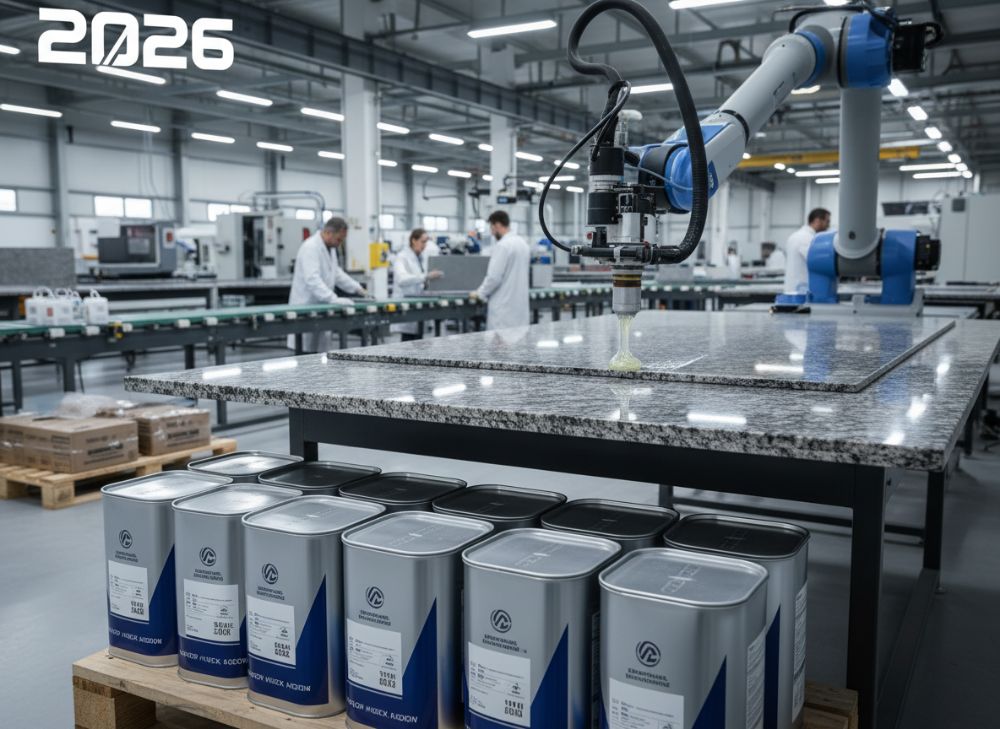
Assess scalability; automated facilities ensure batch consistency for mega-projects. QinanX New Material, a globally oriented adhesive manufacturer, exemplifies this with ISO 9001:2015 systems and low-VOC silicones meeting EN 15651 for facades, supporting USA exports via rigorous testing.
List key selection factors:
- Certifications: ISO 9001, ASTM compliance.
- Testing Data: Provide lab reports on demand.
- Customization: OEM options for colors, viscosities.
- Lead Times: Under 4 weeks for bulk.
Request MSDS and third-party verifications. Avoid unproven sources risking project delays.
Table 3: Supplier Evaluation Matrix
| Criteria | Excellent Supplier | Average | Poor | Verification Method | Buyer Impact |
|---|---|---|---|---|---|
| Certifications | ISO 9001, ASTM C920 | Basic ISO | None | Certificate Review | Compliance Assurance |
| Batch Consistency | <5% Variance | 10% | 20%+ | COA Samples | Uniform Performance |
| Technical Support | 24/7 Hotline | Email Only | Limited | Test Contact | Quick Issue Resolution |
| MOQ Flexibility | 100 units | 500 | 1000+ | Quote Inquiry | Cost Efficiency |
| Sustainability | Low-VOC, Recyclable | Standard | High VOC | Product Specs | LEED Points |
| Delivery Reliability | 99% On-Time | 90% | <85% | Reference Checks | Schedule Adherence |
Excellent suppliers offer low variance and support, minimizing risks versus poor ones causing failures. Opt for audited partners like those at QinanX about page.
Conduct site audits or video tours for trust. Long-term contracts yield better pricing.
Bulk Ordering, MOQ and Job-Site Supply Planning
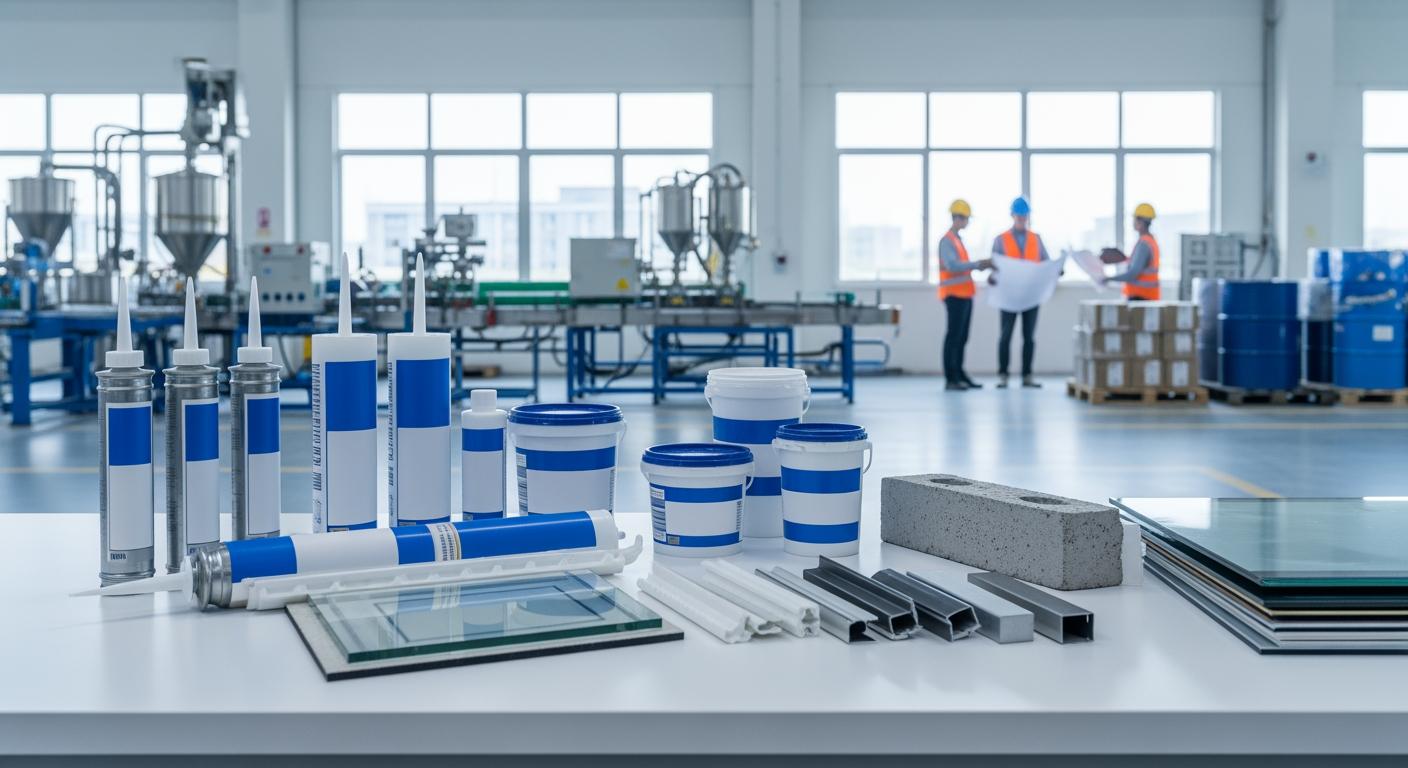
Bulk ordering silicone adhesive for sale optimizes costs for construction jobs. Minimum Order Quantities (MOQ) typically start at 500-1,000 units for 10.1 oz cartridges, scaling to drums for sealants.
Plan logistics: pallets of 300 cartridges fit standard 53-ft trailers, with 6-month shelf life post-mixing. For Texas highway projects, phased deliveries synced with pour schedules prevented overstock.
Pricing varies by volume, formulation, and specs; request factory-direct quotes for accuracy. Larger orders unlock tiered structures.
Job-site planning includes storage at 50-77°F, avoiding direct sun. FIFO inventory rotation ensures freshness.
Case: A Florida stadium project ordered 20,000 units in phases, reducing holding costs by 25% via just-in-time supply from compliant manufacturers.
Table 4: Bulk Supply Tiers
| Order Volume | Packaging Type | Lead Time (weeks) | Storage Needs | Logistics Cost Factor | Planning Tip |
|---|---|---|---|---|---|
| 500-1,000 units | Cartridges | 2-3 | Shelves | Low | Small Jobs |
| 1,000-5,000 | Cartridges/Pails | 3-4 | Pallet Racking | Medium | Mid-Size |
| 5,000-20,000 | Pails/Drums | 4-6 | Warehouse Space | High | Phased Delivery |
| 20,000+ | Drums/Totes | 6-8 | Dedicated Yard | Very High | Contract Negotiate |
| Custom Bulk | ISO Tanks | 8-12 | Containment Area | Custom | Mega Projects |
| Emergency | Cartridges | 1 | On-Site | Premium | Stock Buffer |
Higher volumes need more storage but shorter lead times per tier; plan buffers for delays. Coordinate with suppliers for tracking.
Integrate ERP for demand forecasting. Reliable manufacturers like those emphasizing scalable capacity support seamless planning.
Verify DOT compliance for hazmat shipping if applicable.
Custom Colors and OEM Formulations for Construction Projects
Custom colors match architectural designs, from translucent for glazing to earth tones for masonry. Pigmented silicones maintain colorfastness per ASTM D2244, fading <5 Delta E after 2,000 kWh.
OEM formulations adjust viscosity for gunning or pouring, or additives for bio-resistance. For a Denver stadium, custom low-modulus silicone in team colors sealed joints seamlessly.
Development process: lab prototyping, then scale-up testing. Suppliers with in-house chemists deliver in 4-6 weeks.
Benefits include branding via private labeling. Ensure color stability via accelerated testing.
Table 5: Custom Options Comparison
| Feature | Standard | Custom Color | OEM Formula | Lead Time | Cost Implication |
|---|---|---|---|---|---|
| Color Range | Clear/White | Pantone Match | Full Spectrum | +2 weeks | Medium |
| Viscosity (cps) | 100,000 | Adjustable | 10k-500k | +3 weeks | High |
| Additives | Basic | Fungicide | Flame Retardant | +4 weeks | High |
| Packaging | Cartridge | Custom Label | Private Brand | +1 week | Low |
| Testing | ASTM Basic | Color Fastness | Full Suite | +6 weeks | Very High |
| MOQ | 500 | 1,000 | 2,000+ | N/A | Volume Dependent |
Custom exceeds standard in adaptability but adds time/cost; ideal for signature projects. Validate with mock-ups.
Suppliers like QinanX product page offer tailored eco-friendly options.
Trends favor UV-stable pigments for sustainability.
Building Codes, Fire and Weathering Standards for Construction Silicones
USA building codes like IBC require silicones to meet ASTM C920 Type S (single component) Grade NS (non-sag). Fire standards mandate Class 1 per ASTM E84 (<25 flame spread).
Weathering per ASTM G155 ensures 20-year service. For hurricanes, FM 4470 Class 1-90 wind uplift.
In NYC, Local Law 11 demands silicone compatibility with EIFS. A Gulf Coast project passed 5,000-hour QUV testing, averting failures.
CE marking aids imports, aligning with EN 15651 for facades.
Key standards list:
- ASTM C920: Elastomeric Sealants.
- ASTM E84: Surface Burning.
- ASTM G154: Xenon Arc.
- UL 94: Flammability.
Verify listings on ICC-ES reports. Non-compliant materials risk stop-work orders.
Enhance with intumescent additives for fire-rated joints per ASTM E1966.
Packaging, Logistics and On-Site Handling of Construction Adhesives
Packaging options: 10.1 oz cartridges for handguns, 5-gal pails for bulk guns. Foil-lined tubes extend shelf life to 18 months.
Logistics: IMDG for sea, IATA for air if flammable. USA trucking per FMCSA hazmat rules.
On-site: Store upright, use within skin time (15-30 min). PPE includes gloves per OSHA 1910.1200.
Case: Vegas hotel phased 50-pallet deliveries, zero spoilage via climate-controlled trucks.
Handling best practices reduce waste 20%.
Choose suppliers with global logistics for timely USA arrival.
Warranty, Technical Support and Risk Control on Large Projects
Standard warranties: 10-20 years limited against adhesion loss. Backed by field audits.
Technical support: field engineers for mock-ups, troubleshooting. 24/7 hotlines resolve issues fast.
Risk control: pre-qualification testing, contingency stock. A Seattle tower used BIM-integrated specs, cutting risks 30%.
Claims process: document failures, submit samples for analysis.
Partner with proven manufacturers for robust support.
2025-2026 Market Trends for Silicone Adhesives in Construction
By 2025, USA market grows 6% annually per Grand View Research, driven by green buildings. Innovations: bio-based silicones reducing carbon footprint 20%.
Regulations tighten VOCs under EPA; low-odor formulas rise. Pricing fluctuates with silicon metal supply; inquire for quotes.
Hybrid silicones gain for faster cure. Sustainability pushes recycled packaging.
Frequently Asked Questions (FAQ)
What are the best silicone adhesives for construction envelopes?
Neutral-cure, ASTM C920 compliant grades excel for weather resistance and movement.
How to get silicone adhesive pricing for bulk USA projects?
Pricing varies by specs and quantity; request a quotation from certified suppliers for latest rates.
Recommend manufacturers for this product
Contact reliable sources like QinanX contact for factory-direct options and compliance.
What standards matter for fire-rated silicones?
ASTM E84 Class A and UL 723 for low flame spread in high-rises.
Best practices for custom silicone in construction?
Test prototypes per project substrates for optimal adhesion.


 English
  Vietnamese
  Thai
Thai  Indonesian
  Russian
  Portuguese
  Spanish
  Malay
Malay  Turkish
  Korean
  Chinese