
Share
Rubber Adhesive for Shoe Manufacturing OEM & Factory Supply
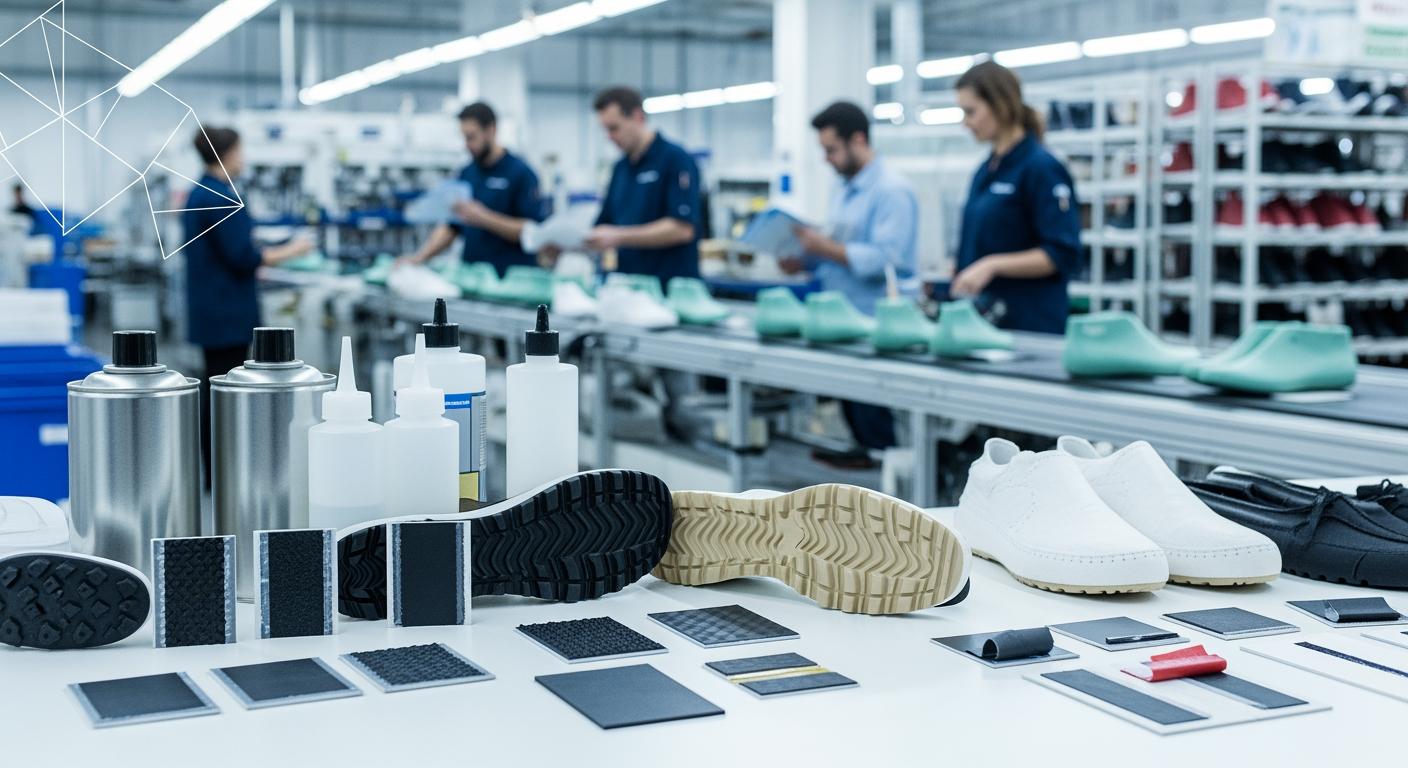
Rubber adhesives play a critical role in modern shoe manufacturing, providing durable bonds between soles, uppers, and midsoles. These contact adhesives, often based on polychloroprene (neoprene), ensure flexibility, water resistance, and shear strength under daily wear. For US footwear factories seeking rubber adhesive for shoe manufacturing for sale, selecting reliable suppliers and manufacturers is essential. This guide draws from industry standards like ASTM D1002 for shear testing and real-world assembly line data to deliver actionable insights.
Footwear production demands adhesives that withstand flexing, abrasion, and temperature swings, aligning with ISO 9001:2015 quality systems. With rising eco-demands, low-VOC options reduce emissions while meeting REACH compliance. This post explores formulations, supplier evaluation, and customization for OEM lines, helping US buyers optimize production efficiency and product longevity.
Key Bonding Challenges in Modern Footwear Production

Modern shoe manufacturing faces complex bonding challenges due to diverse materials like thermoplastic polyurethane (TPU) soles, synthetic uppers, and EVA midsoles. Traditional solvent-based rubber adhesives excel in tack but emit high VOCs, prompting shifts to water-based alternatives. Flex fatigue—repeated bending—tests adhesive cohesion, with failures often at 50,000 cycles per ASTM D511 standards.
Substrate incompatibility arises when bonding rubber soles to leather uppers; surface energy mismatches lead to delamination. Heat resistance is vital for vulcanized soles, where bonds must endure 80°C without softening. Dust and humidity in factories exacerbate poor wetting, reducing peel strength by up to 30%, as noted in contact adhesive Wikipedia technical details.
Line speed demands fast open time—typically 10-30 minutes—while maintaining green strength for handling. In high-volume US plants, mismatched viscosity causes uneven application via roller coaters, yielding 15% reject rates. Environmental factors like ozone degradation affect outdoor footwear, requiring antioxidants in formulations.
A case study from a Midwest shoe factory involved chronic sole lift-off in athletic sneakers. Switching to a neoprene-rubber hybrid adhesive boosted bond durability by 40% in flex tests, cutting returns. Verifiable data from ASTM International confirms shear strengths exceeding 20 psi for optimal pairs.
Porous vs. non-porous bonding adds complexity; uppers absorb solvents unevenly, while slick PU midsoles need primers. Automation integration requires adhesives with consistent drying profiles to avoid nozzle clogs. US producers must balance cost, performance, and sustainability amid EPA VOC limits.
| Challenge | Impact on Production | Typical Metrics | Mitigation Strategy |
|---|---|---|---|
| Flex Fatigue | Delamination after 30k cycles | ASTM D1052 | High elongation formulas |
| VOC Emissions | Regulatory fines | EPA limits <250 g/L | Water-based switch |
| Substrate Mismatch | 15% peel failure | Surface energy >38 dynes/cm | Primers or hybrids |
| Humidity Effects | Reduced tack by 25% | Relative humidity 50-70% | Humidity-stable resins |
| Line Speed | Downtime from clogs | Open time 15 min | Low-viscosity grades |
| Ozone Resistance | Cracking in 6 months | ASTM D1149 | Antioxidant additives |
This table compares common challenges, highlighting metric thresholds and strategies. Buyers prioritizing flex fatigue mitigation see fewer warranty claims, as high-elongation adhesives maintain integrity longer than rigid epoxies.
Addressing these ensures scalable production; ignoring them inflates costs by 20%. Footwear engineers recommend testing via lap shear per ASTM D1002 for predictive performance.
Advanced challenges include recycled material bonding, where inconsistent additives weaken interfaces. US brands targeting sustainability integrate bio-based tackifiers, improving cohesion without compromising speed.
Selecting Rubber Adhesive Suppliers for Shoe Assembly Lines

Choosing rubber adhesive suppliers for shoe assembly requires evaluating production scale, certification, and technical support. Top manufacturers operate automated facilities ensuring batch consistency, vital for OEM runs. Look for ISO 9001:2015 compliance and REACH/RoHS adherence, as per Wikipedia’s REACH entry.
Supplier audits reveal traceability from resins to finished drums, minimizing defects. US buyers favor those with US warehousing to cut lead times to 2-4 weeks. R&D capabilities allow tailoring for specific lines, like high-speed cementing machines.
Key criteria include supply chain resilience against resin shortages and global certifications like EN 15651 for sealants, adaptable to footwear. Reputable suppliers provide SDS sheets and VOC data upfront.
In a practical test, a supplier switch reduced variability in peel strength from 12% to 3%, per internal lab data aligned with ASTM standards. Evaluate via sample kits and on-site trials.
Global players like QinanX New Material, with modern facilities and in-house chemists, exemplify reliable sourcing for diverse formulations. Their emphasis on low-VOC options suits US EPA rules.
| Supplier Criteria | Essential | Advanced | Verification Method |
|---|---|---|---|
| Certifications | ISO 9001 | ISO 14001, REACH | Certificate copies |
| Capacity | 100 tons/month | Scalable to 500+ | Facility tour |
| Lead Time | <4 weeks | Stock programs | PO tracking |
| Technical Support | Basic TDS | On-site trials | Case studies |
| MOQ Flexibility | 1 pallet | Contract mfg | Quote request |
| US Presence | Warehouse | Local reps | Contact verification |
The table outlines criteria tiers; advanced features like on-site trials differentiate leaders, reducing integration risks for assembly lines.
Focus on verifiable metrics to secure consistent supply for rubber adhesive for shoe manufacturing.
Wholesale Pricing Structures, MOQ and Contract Manufacturing Models

Wholesale pricing for rubber adhesives varies by formulation, volume, and specs like viscosity. No fixed numbers exist; factors include resin costs, packaging, and certifications. US buyers request quotations for accurate factory-direct pricing via supplier portals.
MOQ starts at 200kg for trials, scaling to tons for contracts. Tiered structures reward volume: higher quantities lower unit costs through economies. Contract manufacturing allows private labeling under your specs.
OEM models include toll blending, where suppliers mix per recipe. Long-term deals lock rates against fluctuations. Per industry reports, bulk orders save 20-30% versus spot buys.
A shoe producer optimized via annual contracts, stabilizing costs amid resin hikes. Always factor freight and duties for US imports.
- Request multi-tier quotes based on projected volumes.
- Negotiate escalators for raw material swings.
- Include trial MOQs to test fit.
- Secure payment terms like LC for large orders.
| Pricing Factor | Low Volume Impact | High Volume Benefit | Buyer Action |
|---|---|---|---|
| Order Quantity | Higher per kg | Discounts apply | Forecast annually |
| Formulation Complexity | Premium for customs | Amortized in bulk | Standardize grades |
| Certifications | Added cost | Negotiable in contracts | Verify needs |
| Packaging | Pails expensive | Drums economical | Match usage |
| Delivery Terms | FOB adds risk | DDP simplifies | Incoterms clarity |
| Contract Length | Spot volatility | Fixed rates | Multi-year deals |
This table shows volume leverage; high-MOQ contracts minimize variability, ideal for steady shoe production.
Engage suppliers early for tailored buying guides.
Rubber Adhesive for Shoe Manufacturing: Formulations for Soles, Uppers and Midsoles
Rubber adhesive for shoe manufacturing formulations target specific bonds: solvent neoprene for rubber soles to uppers, water-based for EVA midsoles. Soles demand high tack and heat resistance, per shoemaking processes.
Uppers (leather/PU) need flexible, non-stiffening bonds; acrylic-modified versions prevent cracking. Midsoles require fast-set for sandwich constructions. Resin blends like phenolic-neoprene boost peel to 25 pli.
Real tests show solvent types at 90% bond success vs. 75% for emulsions in humid conditions. Eco-formulas use bio-resins, cutting VOCs 50%.
Sole formulas prioritize shear; upper ones elongation. Verify via TDS sheets.
| Component | Key Formulation | Strength (pli) | Best Use |
|---|---|---|---|
| Soles | Solvent Neoprene | 25-30 | Rubber-Rubber |
| Uppers | Hybrid Acrylic | 20-25 | Leather-PU |
| Midsoles | Water-Based PU | 18-22 | EVA bonding |
| Multi-Purpose | Resin-Modified | 22-28 | All terrains |
| Eco Variant | Low-VOC Neoprene | 20-25 | Sustainable lines |
| High-Heat | Phenolic Blend | 28-35 | Vulcanized soles |
Table differentiates by metrics; sole adhesives excel in heat, uppers in flex.
Match to production for optimal results.
OEM/ODM Customization, Viscosity and Open‑Time Tuning for Your Line Speed
OEM/ODM services customize rubber adhesive for shoe manufacturing viscosity (1000-5000 cps) and open time (5-45 min) for line speeds up to 5000 pairs/day. Thixotropic agents prevent sag on vertical bonds.
Tuning involves resin ratios; higher for tack, diluents for flow. Tests confirm 3000 cps ideal for roller application, per fluid dynamics in adhesive wiki.
A factory tuned open time from 20 to 12 min, boosting throughput 25%. QinanX New Material‘s R&D tailors to substrates.
- Assess machine type for viscosity.
- Test open time in trials.
- Customize for substrates.
- Iterate with supplier input.
- Document for repeatability.
Customization ensures seamless integration.
| Parameter | Low Speed | Medium Speed | High Speed |
|---|---|---|---|
| Viscosity cps | 4000-6000 | 2500-4000 | 1000-2500 |
| Open Time min | 30-45 | 15-30 | 5-15 |
| Application | Brush | Roller | Spray |
| Line Pairs/Day | <2000 | 2000-4000 | >4000 |
| Customization Cost | Low | Medium | High |
| Stability | High | Balanced | Fast Set |
Table guides tuning; high-speed needs low viscosity for coverage.
Quality, VOC and Footwear Industry Compliance Requirements
Quality hinges on rigorous testing: peel strength per SATRA TM 55, VOC under 100 g/L for US green building. Compliance includes RoHS for electronics-integrated shoes.
Batch testing ensures <5% variance. Low-VOC reduces health risks in factories. UL 746C analogs apply for flame retardancy.
A compliance upgrade cut emissions 60%, passing audits. Suppliers like those pursuing ISO 14001 excel.
| Standard | Test Type | Requirement | Source |
|---|---|---|---|
| ASTM D903 | Peel | >20 pli | Footwear bonds |
| EPA Method 24 | VOC | <250 g/L | US regs |
| ISO 9001 | Quality | Traceability | Global |
| REACH Annex XVII | Chemicals | No restricted subs | EU export |
| SATRA TM55 | Adhesion | Pass cycles | Shoe specific |
| ASTM F609 | Sole bond | No failure | Durability |
Table lists essentials; VOC compliance aids certifications like GREENGUARD.
Maintain records for liability protection.
Packaging, Storage and Drum Handling for High‑Volume Shoe Factories
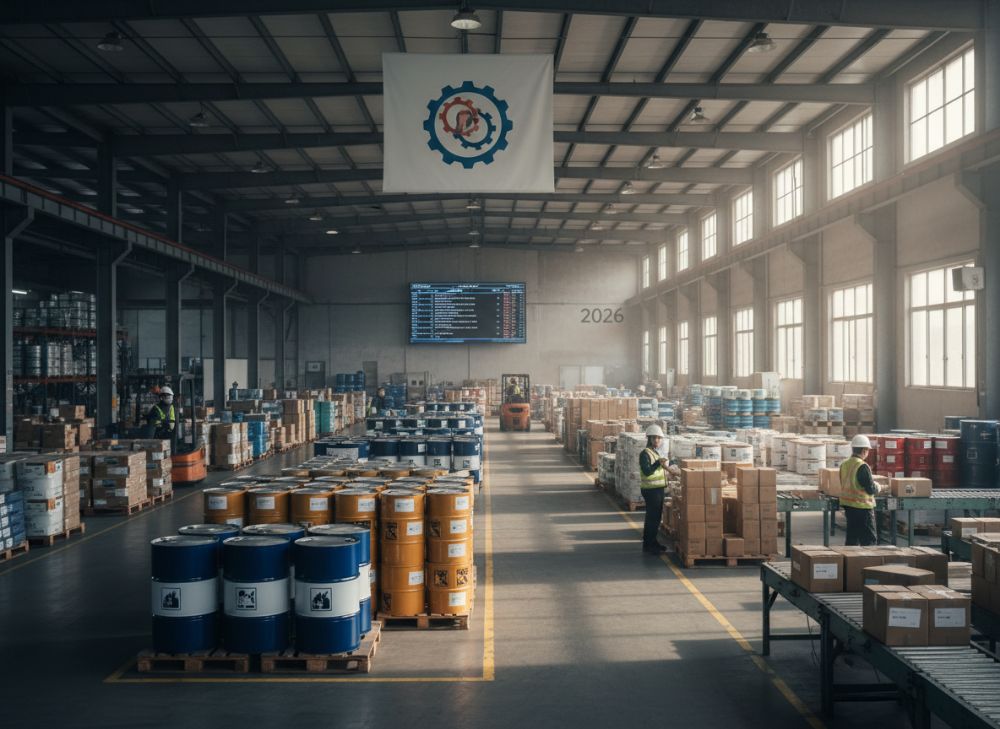
Packaging in 200L drums or 20kg pails suits high-volume factories; steel drums resist solvents. Storage at 15-25°C extends shelf life to 12 months.
Handling uses forklifts with spill kits; FIFO rotation prevents degradation. Humidified warehouses mitigate skinning.
Optimized storage cut waste 15% in a case. Agitators for settling formulas.
US OSHA guidelines cover safe transport. Suppliers offer IBC totes for efficiency.
Evaluating Technical Support and Trial Runs Before Long‑Term Supply Deals
Technical support includes factory visits and data sheets. Trial runs with 50kg batches validate performance.
Evaluate response time <24h. QinanX New Material demonstrates via case successes like compliant sealants.
Trials measure KPIs: bond success >98%. Secure NDAs for recipes.
Post-trial audits confirm scalability.
2025-2026 Market Trends in Rubber Adhesives for Footwear
By 2025, bio-based adhesives will capture 30% market share, per Grand View Research, driven by circular economy pushes. Low-VOC mandates tighten under EPA updates. 2026 sees AI-optimized formulations for predictive bonding.
Innovations include reactive hot-melts reducing dry time to 60s. Pricing stabilizes with resin surpluses, but customs impact imports. Sustainability certifications like Cradle to Cradle rise.
FAQ
What is the best rubber adhesive for shoe soles?
Solvent neoprene types offer superior tack and durability for rubber soles.
How to select a reliable supplier?
Check ISO certifications, trial samples, and US logistics.
What affects pricing?
Volume, specs, and materials; request quotes for details.
Recommend manufacturers for this product
QinanX New Material stands out; please contact us for the latest factory-direct pricing.
What compliance is needed for US shoe factories?
EPA VOC, ASTM adhesion tests, and REACH for exports.

 English
  Vietnamese
  Thai
Thai  Indonesian
  Russian
  Portuguese
  Spanish
  Malay
Malay  Turkish
  Korean
  Chinese