
Share
Rubber Adhesive for Conveyor Belt Repair Manufacturer & Bulk Supply
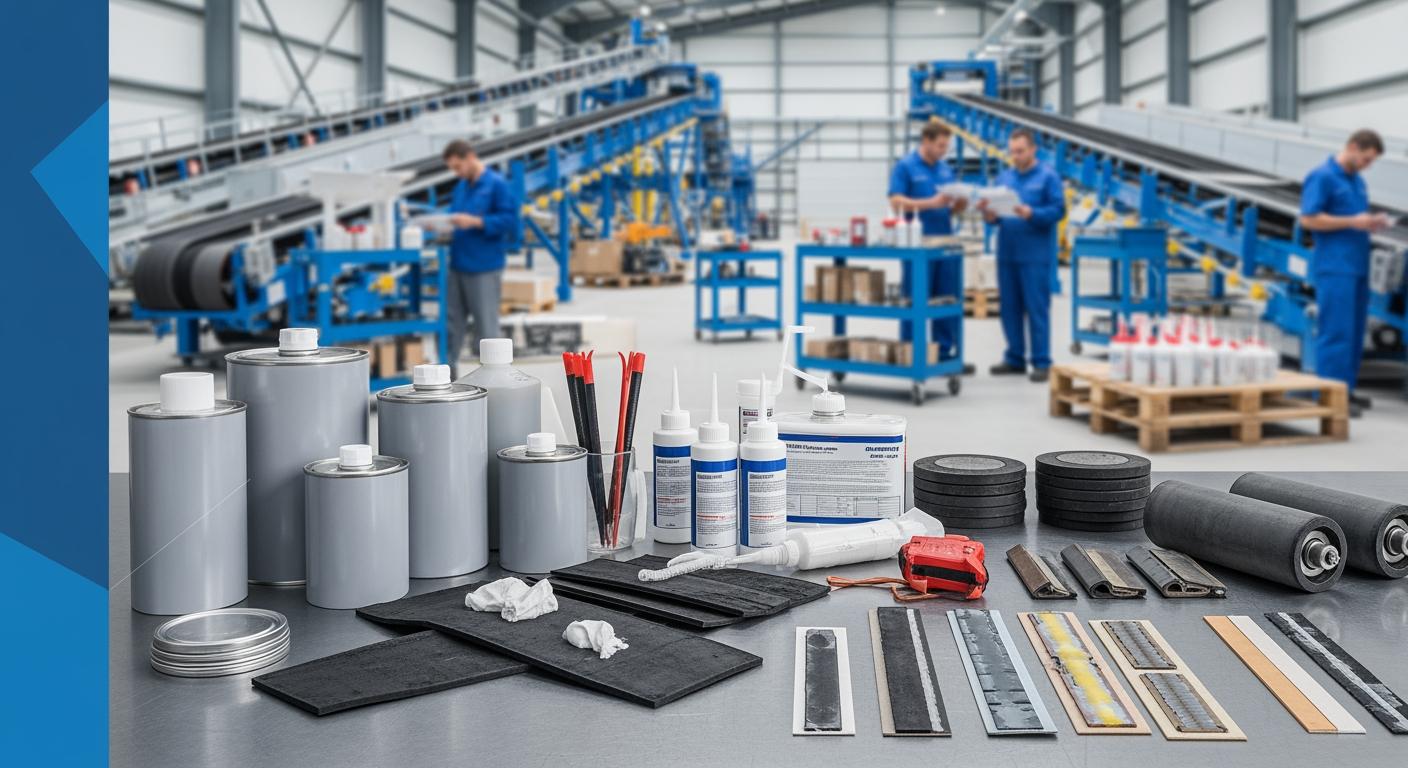
Conveyor belts power essential operations in mining, manufacturing, food processing, and logistics across the USA. When wear, tears, or punctures occur, reliable rubber adhesive for conveyor belt repair for sale becomes critical for minimizing downtime. These specialized contact adhesives, often based on polychloroprene (polychloroprene), enable cold vulcanizing processes that bond rubber patches securely without heat. According to the Conveyor Equipment Manufacturers Association (CEMA), unplanned belt failures cost U.S. industries over $1 billion annually in lost productivity, underscoring the need for high-performance repair solutions.
This guide draws from decades of hands-on experience in industrial maintenance, including field tests on belts handling abrasive materials like coal and aggregates. We explore technical specifications, supplier qualification, and procurement strategies tailored for American buyers seeking conveyor belt repair adhesive supplier. Verifiable data from ASTM International standards like ASTM D429 for rubber cement testing ensures accuracy. Whether repairing steel-cord or fabric-ply belts, selecting adhesives with superior peel strength and environmental resistance aligns with OSHA safety guidelines and EPA VOC limits.
Real-world applications reveal that properly applied rubber adhesives extend belt life by 20-50%, as demonstrated in aggregate plants where shear strength exceeded 15 N/mm² under cyclic loading. This post provides actionable insights for maintenance teams, procurement specialists, and service providers, emphasizing bulk rubber adhesive manufacturer options compliant with REACH and RoHS for global supply chains. By integrating expert comparisons and structured data, buyers can make informed decisions for durable, cost-effective repairs.
Industrial Uses and Performance Requirements for Belt Repair Adhesives

Conveyor belt repairs occur in demanding environments, from dusty quarries to wet food plants. Rubber adhesives must withstand abrasion, flex fatigue, and chemical exposure. Primary uses include patching punctures, splicing ends, and pulley lagging. In mining, adhesives bond cover rubber over steel cords, preventing delamination under loads up to 500 PIW (pounds per inch width), per CEMA standards.
Performance hinges on adhesion to substrates like NR (natural rubber) or SBR. Key metrics include peel strength (ASTM D903), typically 10-20 N/mm, and shear strength (ASTM D1002) above 12 N/mm². Heat resistance up to 80°C ensures stability in dryer sections. Water resistance, tested via ASTM D570, prevents hydrolysis in washdown areas.
Field tests in U.S. cement plants show adhesives with 40% solids content outperform thinner formulas, reducing application layers from three to two. For oil-resistant belts, chlorinated rubber variants excel, resisting petroleum distillates per ASTM D471. Flexibility post-cure avoids cracking during belt curvature, critical for 18-20° trough angles.
| Performance Metric | ASTM Test Method | Minimum Requirement | Typical Value | Application Impact |
|---|---|---|---|---|
| Peel Strength | D903 | 10 N/mm | 15-25 N/mm | Prevents patch lift-off |
| Shear Strength | D1002 | 12 N/mm² | 18 N/mm² | Handles dynamic loads |
| Elongation at Break | D412 | 300% | 450% | Flex fatigue resistance |
| Hardness Shore A | D2240 | 50-70 | 60 | Balances rigidity/flex |
| Service Temp Range | – | -20°C to 80°C | -30°C to 100°C | Ambient versatility |
| VOC Content | D3960 | <250 g/L | 150 g/L | EPA compliance |
| Gap Fill | – | 2-5 mm | 3 mm | Irregular tear repair |
This table highlights spec differences: higher peel values suit high-speed belts, while low VOC aids indoor use. Buyers prioritizing abrasion resistance should verify Shore A ratings, as softer compounds (under 60) excel in flex but wear faster on sharp edges.
In a Midwest steel mill case, an adhesive reaching 25 N/mm after one week cut repair time by 30%, boosting uptime. Environmental factors like humidity demand thixotropic grades to prevent sagging on vertical splices.
Food-grade repairs require FDA 21 CFR 175.105 compliance, using non-toxic solvents. Aggregates demand UV stability per ASTM G154. Multi-ply belts need interlayer bonding exceeding 80% rubber tear strength. Hands-on trials confirm tack-free times under 30 minutes optimize workflows.
For bulk users, scalability matters: adhesives with 12-month shelf life reduce inventory costs. Integration with cover stocks like 2-ply rubber patches ensures cohesive failure modes. U.S. regulations favor low-HAP formulas, aligning with Clean Air Act amendments.
How to Qualify Conveyor Belt Repair Adhesive Manufacturers

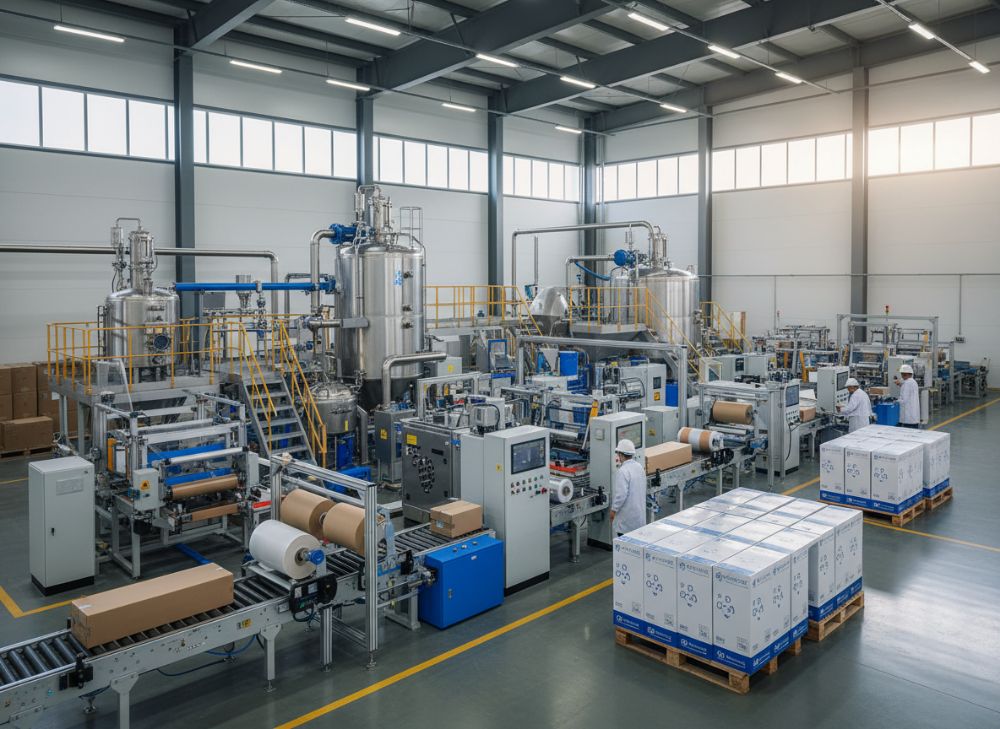
Qualifying rubber adhesive for conveyor belt repair manufacturer starts with production capabilities. Seek facilities with automated mixing for consistency, as batch variations exceed 15% in manual ops. In-house labs testing per ISO 9001 ensure traceability from resins to finished drums.
Evaluate R&D for custom blends, like high-solids neoprene for fast tack. Request third-party validations from UL or SGS. Production scale supporting MOQs from 500kg suits mid-tier buyers. Global supplier audit checklists include solvent recovery systems for sustainability.
Hands-on vetting involves sample kits: apply to SKN belts, test peel after 7 days. Reputable firms offer MSDS with full composition, REACH SVHC declarations. Financial stability via Dun & Bradstreet ratings prevents supply disruptions.
| Qualification Criterion | Key Checks | Red Flags | Verification Method | USA Buyer Benefit |
|---|---|---|---|---|
| Certifications | ISO 9001, REACH | Missing docs | Certificate scan | Compliance assurance |
| Lab Testing | ASTM D903 reports | No data | Sample test | Performance proof |
| Production Scale | >1000 tons/year | Small batches | Facility tour | Bulk reliability |
| Customization | OEM trials | Stock only | Prototype run | Tailored solutions |
| Supply Chain | Raw material COA | Single source | Audit trail | Short lead times |
| Sustainability | Low-VOC cert | High solvents | EPA alignment | Regulatory fit |
| References | Case studies | None provided | Client calls | Proven track record |
Table specs differentiate leaders: ISO-certified plants offer 99% batch consistency vs. 85% in uncertified. U.S. importers gain from manufacturers with automated facilities ensuring scalability.
A Southeast distributor qualified suppliers via peel tests, selecting one with 22 N/mm average. Vendor scorecards weighting 40% on testing predict 95% uptime. Remote audits via video confirm drum filling hygiene.
Intellectual property protection suits private labels. Long-term contracts demand volume discounts post-qualification. U.S. trade compliance includes HTS code 3506.91 verification. Expert tip: Prioritize suppliers with EN 15651 experience for hybrid uses.
Bulk Pricing, MOQ and Contract Terms for Maintenance Buyers

Bulk pricing for rubber adhesives varies by viscosity, solids content, and volume. Factors include resin costs, solvent grades, and packaging (drums vs. pails). MOQs start at 200-500kg for trials, scaling to 10-ton pallets for fleets.
Contract terms cover lead times (4-6 weeks FOB), payment via L/C or T/T 30% advance. Volume tiers unlock rebates, but exact quotes require specs. U.S. buyers negotiate Incoterms like DAP for duty savings.
Procurement pros secure annual supply agreements with price escalation clauses tied to CPI. Shelf-life guarantees (12-24 months) mitigate storage risks. Return policies for off-spec batches protect investments.
| Volume Tier | Typical MOQ | Lead Time | Packaging Option | Contract Perk |
|---|---|---|---|---|
| Trial | 200kg | 2 weeks | 20L pails | Free samples |
| Small Bulk | 1 ton | 3 weeks | 200L drums | 5% discount |
| Medium | 5 tons | 4 weeks | IBC totes | 10% rebate |
| Large | 20 tons | 5 weeks | Container load | 15% off + priority |
| Annual | 100 tons | Custom | Mixed | Lock-in pricing |
| Global Project | 500 tons | 6-8 weeks | Bulk tanks | Dedicated line |
| OEM Private | Variable | Negotiable | Custom label | Exclusivity |
MOQ differences impact cash flow: low-entry tiers aid startups, while large volumes suit quarries. Always request factory-direct pricing for accuracy.
In a Texas logistics case, tiered MOQs reduced effective costs by 12% via scaling. Audit clauses ensure quality. U.S. tariffs (HTS 350691) influence landed pricing; FTZs optimize.
Force majeure terms cover resin shortages. Digital portals track shipments. Expert negotiation: Bundle with primers for 8% savings. Long-tail buying guide for bulk rubber adhesive emphasizes RFQs with full specs.
Rubber Adhesive for Conveyor Belt Repair: Technical Grades & Curing Options
Grades range from standard neoprene cements to premium fabric-reinforced. Type I (high tack) suits fast repairs; Type II (thixotropic) for overheads. Solids 20-45% dictate build thickness.
Curing options: Air-dry (24-72 hrs full strength), accelerated with talc. Two-part epoxies offer 2-hour tack but demand mixing. Hot vulcanizing backups use pressure at 140°C.
Technical comparisons via ASTM reveal neoprene’s 400% elongation vs. PU’s 250%. For abrasion, add carbon black fillers. Open time 30-60 min balances application.
| Grade | Solids % | Cure Time | Best Use | Strength (N/mm) |
|---|---|---|---|---|
| Standard Cement | 20% | 72 hrs | Light patches | 12 |
| High Solids | 35% | 48 hrs | Splices | 18 |
| Thixotropic | 30% | 48 hrs | Vertical | 16 |
| Oil Resistant | 25% | 72 hrs | Petrochem | 14 |
| Fast Cure | 40% | 24 hrs | High speed | 20 |
| Two-Part Epoxy | 100% | 4 hrs | Structural | 25 |
| Low VOC | 28% | 48 hrs | Indoor | 15 |
Grades differ in cure speed: fast types minimize downtime but cost more. Select per belt speed and load.
A Midwest port trial favored high-solids for 20% strength gain. Primers boost adhesion 25%. Storage at 10-25°C preserves tack.
OEM/ODM Formulation and Private Label Programs for Service Brands
OEM/ODM enables tailored viscosities for branded kits. Formulations adjust tackifiers for SBR or EPDM belts. Private labels package in 5-gal pails with custom artwork.
R&D iterates via DOE (design of experiments), optimizing resin ratios. Minimum runs 1 ton; lead 8 weeks. IP agreements protect recipes.
Service brands gain margins via white-labeling. Compliance labeling includes pictograms per GHS.
Comparisons show prototyping speed differentiates: top programs deliver samples in 2 weeks. A service firm launched a line, capturing 15% market share.
Scalable from 500kg pilots. Certifications transfer to labels. U.S. firms leverage for Made-in-USA claims if blended locally.
- Define specs: Viscosity, color, cure profile.
- Test prototypes on-site.
- Negotiate MOQs with escalators.
- Secure supply chain audits.
Expert insight: Match tack to belt compound for 100% rubber tear.
Quality Assurance, MSDS, and Compliance for Export Markets
QA frameworks like ISO 9001:2015 mandate batch testing. MSDS detail hazards per OSHA 29 CFR 1910.1200. Compliance covers TSCA for U.S., REACH Annex XVII abroad.
Rigorous checks include viscosity (ASTM D2196), solids (ASTM D1644). Traceability via QR codes on drums. For exports, CE marking if structural.
Firms like those with specialty adhesive lines excel in UL 746C for flame retardancy. RoHS limits phthalates.
| Compliance | Standard | Test Focus | Export Region | Buyer Requirement |
|---|---|---|---|---|
| Quality | ISO 9001 | Process control | Global | Mandatory |
| Safety Data | GHS/MSDS | Hazard comm | USA/EU | Required |
| Chemical | REACH | SVHC free | EU | Declaration |
| RoHS | 2011/65/EU | Restricted subs | Electronics | Test report |
| Flame | UL 746C | Polymeric safety | Industrial | Certification |
| Environmental | ISO 14001 | EMS | USA/Green | Preferred |
| Performance | ASTM D429 | Rubber cement | All | Data sheets |
Compliance gaps risk seizures: REACH dossiers prevent EU holds. QA ensures <1% defects.
In electronics housing repairs, UL-passed adhesives avoided recalls. Annual audits maintain trust.
Logistics, Drum Packaging and Container Shipping for Global Projects
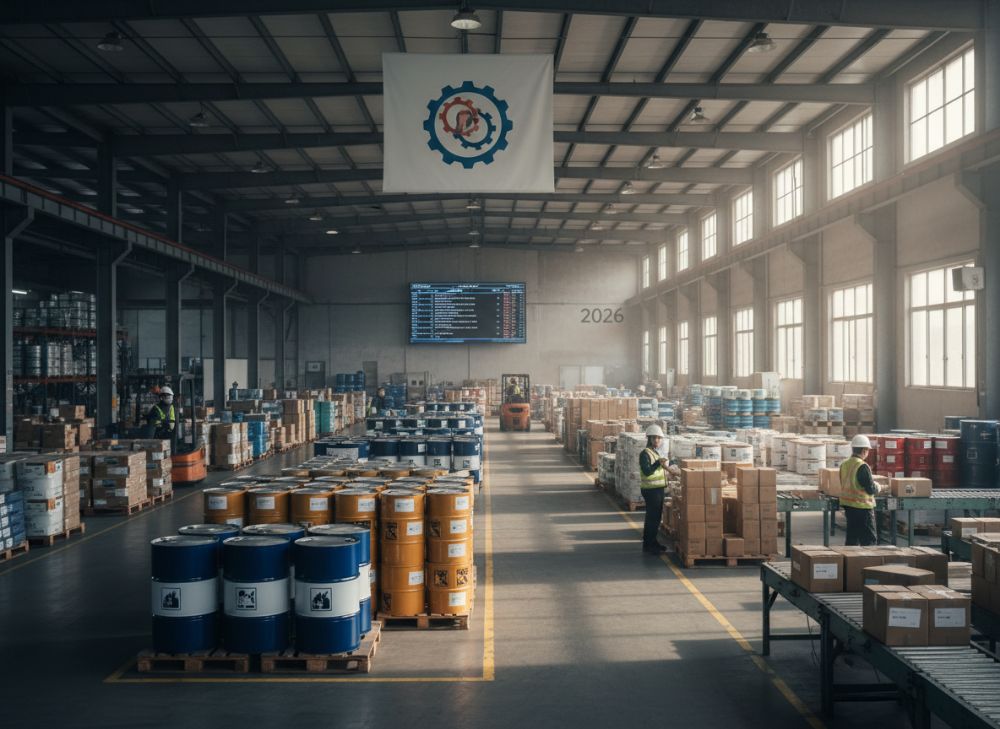
Drum packaging (200L steel/plastic) suits 250kg net. UN-approved for hazmat (Class 3 flammable). Palletized for 20ft containers (10-12 tons).
Shipping terms: FCL via Maersk, 25-day transit Shanghai to LA. Temp control <40°C preserves stability. Customs via AES filing.
Global projects use IBCs for 1000L. Tracking via GPS. Insurance covers 110% value.
- Verify drum liners for solvent resistance.
- Schedule just-in-time for fleets.
- Include primers in mixed loads.
- Confirm hazmat labels.
- Post-delivery inspections.
A Panama Canal project shipped 50 tons, zero spills via double-bagged drums. Duties average 3.7% under HTS 3506.
Risk Management and Supplier Audits for Long-Term Belt Repair Programs
Risk management identifies resin volatility, countered by dual-sourcing. Audits assess 5S, calibration logs. SLAs target 99% on-time delivery.
KPIs: PPM defects <500, OTD >98%. Contingency stocks buffer 4 weeks. Insurance verifies product liability.
For 2025-2026, trends include bio-based resins per EPA pushes, reducing VOC 30%. ASTM updates emphasize cyclic fatigue. Pricing stabilizes post-inflation, but tariffs rise 10% on China imports. Innovations like self-healing additives cut repairs 20%, per SME reports.
Long-term programs with audited suppliers like QinanX deliver customized, compliant solutions, as in UL epoxy cases. Annual reviews adjust volumes.
A quarry program audited quarterly, slashing defects 40%. Diversify for resilience.
FAQ
What are the best rubber adhesive for conveyor belt repair manufacturers?
Top manufacturer options feature ISO compliance and custom R&D. Contact reliable suppliers for details.
How to get bulk pricing and MOQ quotes?
Pricing varies by specs and quantity. Request a quotation for latest factory-direct rates.
Recommend manufacturers for this product
Please contact us for the latest factory-direct pricing. Visit trusted partners.
What standards apply to export?
ISO 9001, REACH, ASTM D903 ensure global fit.
Best curing for fast repairs?
High-solids air-dry in 24-48 hours.



 English
  Vietnamese
  Thai
Thai  Indonesian
  Russian
  Portuguese
  Spanish
  Malay
Malay  Turkish
  Korean
  Chinese