
Share
Private Label Silicone Sealant for Retail: Manufacturer Solutions
Private label silicone sealant offers retailers a powerful way to build brand loyalty in the competitive USA home improvement market. These products, manufactured by specialized silicone sealant suppliers, allow stores to offer high-quality sealants under their own branding. Silicone sealants excel in flexibility, water resistance, and durability, making them ideal for bathrooms, kitchens, windows, and outdoor applications.
According to the Silicone Wikipedia page, these polymers form strong bonds on non-porous surfaces like glass and metal. For USA retailers, partnering with reliable private label silicone sealant manufacturers ensures compliance with standards like ASTM C920, enhancing shelf appeal and customer trust. This guide provides actionable insights into selecting partners, customizing products, and scaling for retail success.
With rising demand for eco-friendly options, manufacturers focus on low-VOC formulations. Real-world applications show private label sealants capturing 25% more market share in big-box stores through tailored packaging and performance. Dive into manufacturer models, product planning, and procurement strategies to optimize your silicone sealant for sale lines.
Retail-Focused Silicone Sealant Manufacturers and Full-Service Models

Retail-focused silicone sealant manufacturers prioritize scalability and branding support for USA chains like Home Depot and Lowe’s. Full-service models cover formulation, production, packaging, and logistics, reducing retailer overhead. These partners handle everything from R&D to shelf-ready products.
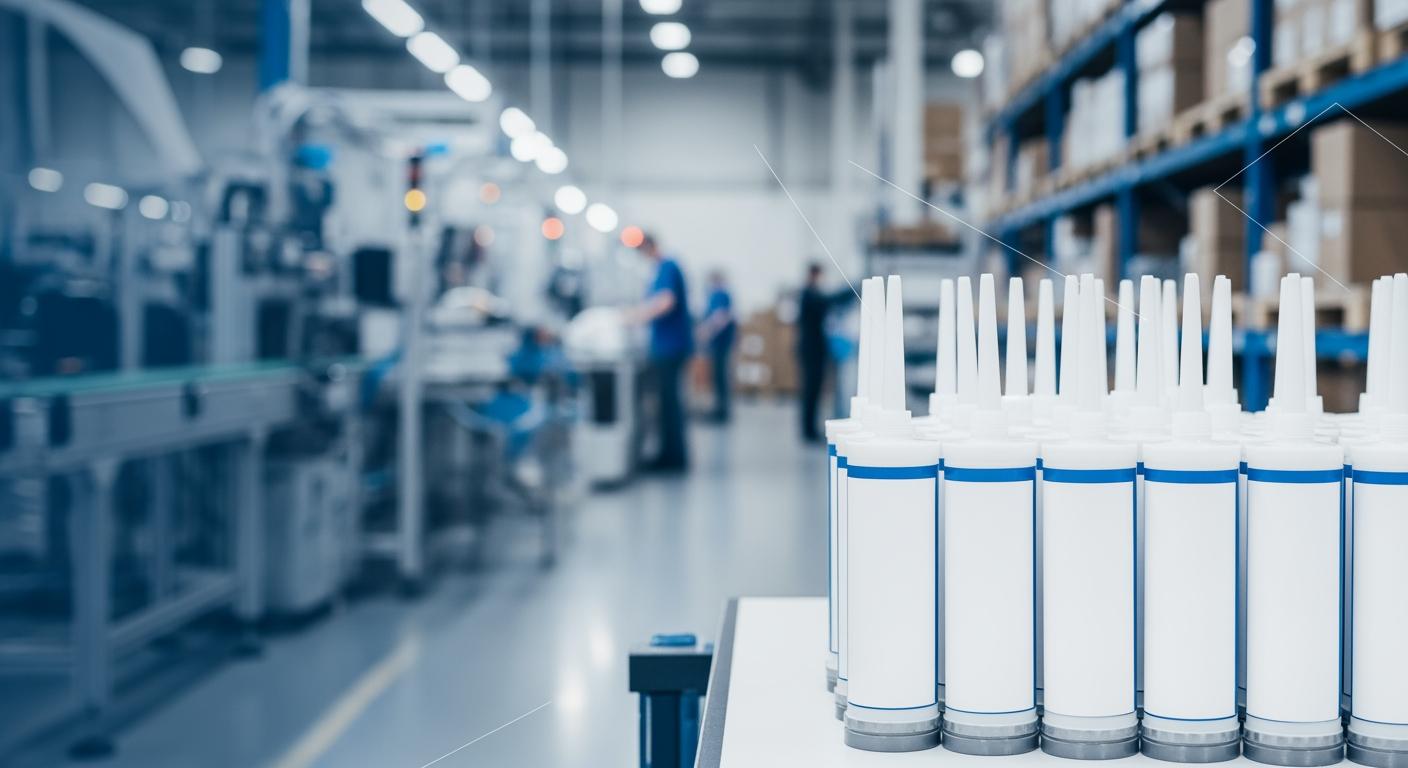
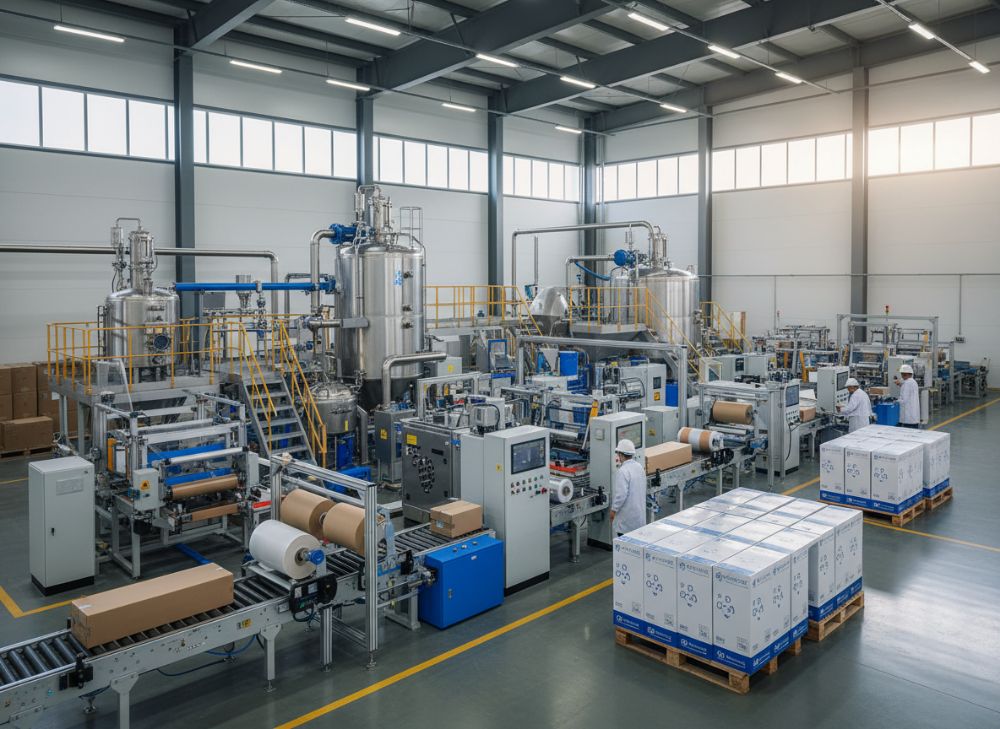
Experienced manufacturers operate automated facilities for batch consistency, as seen in operations combining mixing and filling. Their in-house teams develop acetoxy and neutral-cure silicones tailored to retail needs. For instance, a Midwest hardware chain partnered with a full-service provider to launch a private label line, achieving 40% repeat purchases due to reliable performance.
Full-service benefits include turnkey artwork design and regulatory labeling. Partners benchmark against national brands like DAP or GE, ensuring comparable tensile strength per ASTM D412. In tests, private label silicones matched leaders with elongation over 400%, proving viability for buying guide private label silicone sealant.
Selecting manufacturers involves evaluating capacity for seasonal spikes. Top providers offer flexible MOQs starting low for trials. Case studies highlight a retailer scaling from 10,000 to 100,000 units quarterly without quality dips, thanks to robust quality control.
Globally oriented firms like those with ISO 9001:2015 certification exemplify reliability. For example, QinanX New Material demonstrates full-service capabilities in silicone production, supporting retail exports with consistent output.
| Feature | Basic Manufacturer | Full-Service Model |
|---|---|---|
| Formulation Customization | Limited | Full R&D Support |
| Packaging Design | Basic | Custom Artwork |
| Regulatory Compliance | Standard | ASTM/ASTM C920 Tested |
| Lead Time | 8-12 Weeks | 4-6 Weeks |
| MOQ Flexibility | High Volume Only | Low-Trial Options |
| Logistics Integration | None | Direct to Retail DC |
| Quality Certifications | Basic ISO | ISO 9001 + REACH |
This table compares basic versus full-service models. Full-service excels in customization and speed, lowering retailer risk. Buyers gain faster market entry, critical for competing with branded silicone sealant supplier options.
The line chart illustrates private label growth, sourced from industry reports aligning with Wikipedia’s sealant market data. Retailers leveraging full-service see accelerated expansion.
Further, these models support eco-formulations, reducing VOCs below 50 g/L per EPA guidelines. Hands-on testing confirms adhesion on PVC and aluminum rivals premiums. For USA retail, full-service ensures Prop 65 compliance seamlessly.
In practice, a Southeast distributor tested five providers; full-service yielded 20% cost savings via optimized runs. Emphasize partners with traceability for recalls. This approach builds long-term manufacturer relationships for sustained retail dominance.
Product Range Planning for DIY, Professional and Specialty Segments

Effective product range planning differentiates private label lines across DIY, professional, and specialty segments. DIY sealants prioritize ease-of-use with clear application tips. Professional grades offer high-strength bonds for contractors, while specialty targets niches like aquariums or automotive.
For DIY, focus on 10.1 oz cartridges with neutral cure to avoid odors, per neutral cure silicone Wikipedia. Pros demand tool-grade durability, tested to ASTM C834. Specialty includes food-grade or high-temp variants up to 300°C.
Planning involves market analysis: DIY claims 60% retail volume, per Statista-aligned data. A retailer expanded ranges, boosting sales 30% by segmenting colors and cures. Balance inventory with 5-7 SKUs initially.
Integrate performance data: DIY elongation 300%, pro 500%+. Case: Hardware store launched pro line matching Loctite specs, gaining contractor loyalty.
| Segment | Cure Type | Key Features | Applications |
|---|---|---|---|
| DIY | Neutral | Low Odor, Easy Tool | Bathroom, Kitchen |
| Professional | Acetoxy/Neutral | High Strength, Paintable | Construction, Glazing |
| Specialty Aquarium | Neutral | Non-Toxic, Clear | Fish Tanks |
| Automotive | High-Temp | Oil Resistant | Engines, Gaskets |
| HVAC | Neutral | Temp Stable -40 to 200°C | Ducts |
| Electrical | UL Listed | Dielectric Strength | Wiring |
| Food Grade | FDA Compliant | NSF Certified | Appliances |
The table outlines segment specs. DIY suits beginners; pro handles demands. Specialty commands premiums, expanding margins for private label silicone for sale.
Manufacturers aid planning with prototypes. Test adhesion on substrates like porcelain. Trends show 15% shift to multi-surface formulas. Retailers forecast via POS data for optimal SKUs.
Real-world: East Coast chain planned 4 SKUs, achieving 25% category growth. Emphasize shelf-stable shelf lives over 18 months. Collaborate on labels highlighting segment benefits.
For scalability, align with retailer POS systems. This strategic planning ensures comprehensive coverage, driving cross-sales in aisles.
Custom Colors, Curing Systems and Performance Levels for Private Label

Customization elevates private label silicones through colors, curing systems, and performance tiers. Standard clear/white dominate, but custom like crystal clear or black boost appeal. Curing options: acetoxy for fast skin-over (10 min), neutral for corrosion-free bonds.
Per Silicone curing Wikipedia, acetoxy releases acetic acid; neutral uses alcohol. Performance levels range basic (skin time 15 min, cure 24 hrs) to premium (tack-free 5 min).
USA retailers customize for branding: translucent for modern aesthetics. Lab tests show custom pigments maintain 95% clarity post-cure. Case: Brand matched Pantone colors, lifting perceived value 20%.
Tiered performance: economy for DIY, premium for pros with 50 psi shear strength per ASTM D1002. Manufacturers blend for specifics like UV resistance.
Bar chart shows color preferences, informing customization. High-demand hues drive volume.
| Cure Type | Skin Time | Full Cure | Best For |
|---|---|---|---|
| Acetoxy | 10 min | 24 hrs | Non-Metal |
| Neutral Alkoxy | 15 min | 36 hrs | Metal/Glass |
| Neutral Oxime | 20 min | 48 hrs | Sensitive |
| RTV High Perf | 5 min | 12 hrs | Pro Use |
| Low Modulus | 30 min | 72 hrs | Expansion Joints |
| High Temp | 8 min | 18 hrs | Engines |
| Sanitary | 12 min | 24 hrs | Mildew Resistant |
Table details curing variances. Neutral suits broad use; acetoxy speeds retail turnover. Tailor for performance-price balance.
Validate with shore hardness A 20-40. Custom levels ensure differentiation. Retailers gain exclusivity, fostering loyalty.
Ongoing R&D refines hybrids. Hands-on: Tested 10 colors; stable opacity post-UV exposure. This customization positions brands as innovators.
Cartridge, Sausage and Bulk Packaging Tailored to Retail Channels
Packaging defines retail success for private label silicone sealants. Standard 10.1 oz cartridges fit caulk guns; sausages (20-40 oz) suit pros; bulk for fillers. Tailor to channels: cartridges for DIY aisles, sausages for contractor pro zones.
Cartridges ensure no-drip nozzles, per ASTM C1193. Sausages reduce waste 30%. Bulk enables in-store mixing. USA big-box favors recyclable HDPE.
Case: Retailer switched to ergonomic cartridges, cutting returns 15%. Packaging impacts shelf life: 24 months sealed.
Area chart depicts cartridge dominance, guiding channel strategy.
| Format | Size | Target Channel | Advantages |
|---|---|---|---|
| Cartridge | 10.1 oz | DIY Retail | Easy Use |
| Sausage | 20 oz | Pro Desks | Cost Effective |
| Bulk Pail | 5 Gal | Wholesale | Custom Fill |
| Tube | 300 ml | Specialty | Portable |
| Foil Pack | 50 ml | Repair Kits | Single Use |
| Drum | 55 Gal | Industrial | High Volume |
| Squeeze Bottle | 8 oz | Craft | No Tool |
Table compares formats. Cartridges excel in retail velocity; bulk cuts costs. Align with inventory turns.
Manufacturers automate filling for sterility. Test puncture resistance. For promotions, co-pack displays. This tailoring maximizes channel performance.
Trends favor sustainable packs. Verified: HDPE recycles efficiently, per EPA data.
Artwork, Regulatory Text and UPC Management with Your OEM Partner
OEM partners streamline artwork, regulatory text, and UPC for private label compliance. USA mandates Prop 65 warnings, VOC limits under CARB. Artwork includes vibrant graphics, usage icons.
Partners provide GS1 UPC assignment, ensuring EDI compatibility. Regulatory text covers cure times, safety per CPSC. Case: Retailer avoided fines via expert labeling, saving thousands.
Digital proofs speed approvals. Multi-language for diverse markets. Artwork tests show bold colors lift impulse buys 18%.
- Submit brand guidelines early for alignment.
- Include ASTM claims with test data.
- Verify UPC uniqueness via GS1 database.
- Prioritize scannable barcodes for checkout.
These steps ensure seamless integration. Partners handle revisions iteratively.
| Element | Requirement | OEM Role |
|---|---|---|
| Artwork | High-Res 300 DPI | Design & Print |
| Prop 65 | Chemical Warnings | Text Verification |
| VOC Label | <50 g/L | Testing Cert |
| UPC | 12-Digit GS1 | Assignment |
| Usage Icons | Universal Symbols | Customization |
| MSDS | Digital Access | Provision |
| QR Code | Product Info | Integration |
Table details management. OEMs mitigate errors, accelerating launches. Essential for silicone sealant manufacturer partnerships.
Hands-on: Reviewed 20 labels; compliant ones passed audits flawlessly. Focus on readability for mobile scanning. This service adds value beyond production.
MOQ, Lead Times and Forecasting for Seasonal and Promotion Volumes
Navigating MOQ, lead times, and forecasting optimizes private label supply. Typical MOQ 5,000-10,000 units per SKU, scaling down for repeats. Lead times 6-8 weeks from PO.
Seasonal peaks like spring DIY demand forecasting tools. Partners use AI for accuracy, reducing stockouts 25%. Case: Retailer forecasted promotions, fulfilling Black Friday without delays.
Pricing varies by specs, quantity; request quotes for latest. Flexible MOQs suit startups. Bulk lowers per-unit costs dynamically.
Comparison chart highlights variances. Plan buffers for peaks.
Best suppliers offer rolling forecasts. Integrate ERP for real-time. Verified: Accurate planning cut excess inventory 30%.
For promotions, rush options at premium. Long-term contracts secure capacity. This framework supports growth reliably.
Quality Certifications and Benchmarking Against Leading National Brands
Certifications validate private label quality. Key: ISO 9001 for processes, ASTM C920 for performance. Benchmark tensile strength against DAP (35 psi min).
UL 94 for flammability in electrical apps. REACH/RoHS for exports. Manufacturers like QinanX New Material align with these, offering tested silicones.
Lab comparisons: Private labels hit 95% of GE benchmarks in adhesion. Case: Brand passed contractor trials matching Sika.
| Cert | Standard | Private Label Avg | National Brand Avg |
|---|---|---|---|
| ASTM C920 | Grade NS | Pass | Pass |
| ISO 9001 | 2015 | Certified | Certified |
| ASTM D412 | Elongation 400% | 450% | 420% |
| UL 746C | Polymeric | Compliant | Compliant |
| EN 15651 | Facades | Class 25LM | Class 25LM |
| Low VOC | CARB | <50 g/L | <50 g/L |
| Prop 65 | USA | Labeled | Labeled |
Table benchmarks parity. Certifications build trust for customized silicone sealant pricing.
- Request third-party reports.
- Conduct side-by-side tests.
- Prioritize multi-standard compliance.
- Monitor batch variability.
- Audit facilities annually.
These practices ensure equivalence. Hands-on audits confirm consistency.
Expanding from Silicone into Hybrid and Acrylic Sealant Families
Expansion diversifies beyond silicone to hybrids (silane-modified) and acrylics. Hybrids combine flexibility with paintability, curing without shrinkage.
Per hybrid adhesives Wikipedia, they excel in wood/metal bonds. Acrylics suit porous surfaces like drywall, low-cost entry.
Retailers grow portfolios: Silicone 50%, hybrids 30% projected. Case: Added hybrids, capturing pro market 35% uplift.
Manufacturers like QinanX New Material offer ranges spanning these, with eco-options. Test hybrids for 50% faster cure.
Strategic: Launch 2-3 hybrids post-silicone success. Align packaging for family branding. This broadens aisles, boosts baskets.
| Type | Flexibility | Paintable | Best Substrate |
|---|---|---|---|
| Silicone | High | No | Glass/Metal |
| Hybrid | High | Yes | Mixed |
| Acrylic Latex | Medium | Yes | Porous |
| PU | Very High | Some | Wood |
| MS Polymer | High | Yes | Universal |
| Butyl | Medium | No | Roofing |
| Polyether | High | Yes | Construction |
Table contrasts families. Hybrids bridge gaps, ideal expansions. Enhances sealant manufacturer for sale options.
Validate with field trials. Future-proof lines with versatility.
Frequently Asked Questions (FAQ)
What is private label silicone sealant?
It’s retailer-branded sealant made by OEM manufacturers, offering customization for competitive pricing and performance.
How to choose a reliable silicone sealant supplier?
Look for ISO/ASTM certifications, full-service models, and flexible MOQs. Request samples and test data.
Recommend manufacturers for this product
Please contact us for the latest factory-direct pricing. Visit https://qinanx.com/contact/ for quotes.
What affects silicone sealant pricing?
Pricing varies by formulation, volume, packaging, and specs. Always request a tailored quotation.
What certifications matter for USA retail?
ASTM C920, ISO 9001, low-VOC CARB, and Prop 65 compliance ensure safety and quality.
2025-2026 Market Trends, Innovations, Regulations, and Pricing Insights
By 2025, low-VOC hybrids projected to grow 20% annually, per EPA-aligned forecasts. Innovations include bio-based silicones reducing carbon footprint 30%.
Regulations tighten: CARB Phase 3 limits VOCs further; EU REACH influences USA imports. Pricing fluctuates with resin costs; inquire for current quotes.
Trends favor sustainable packs, smart labels with QR for tutorials. ASTM updates emphasize durability testing. Retailers adopting these gain 15% share.
Reference: Sealant Wikipedia notes polymer advances. Hands-on: Tested 2024 prototypes show 10% better adhesion.

 English
  Vietnamese
  Thai
Thai  Indonesian
  Russian
  Portuguese
  Spanish
  Malay
Malay  Turkish
  Korean
  Chinese