
Share
Polyurethane Adhesive Wholesale: Global Trade & Distribution Playbook
Polyurethane adhesives, known for their exceptional bonding strength and versatility, play a crucial role in construction, manufacturing, and automotive sectors across the USA. These polyurethane-based products form durable bonds on diverse substrates like wood, metal, and concrete, resisting moisture, chemicals, and temperature extremes. For US distributors and wholesalers, sourcing polyurethane adhesive for sale involves navigating global supply chains, compliance standards, and efficient logistics. This playbook demystifies the process, drawing from industry benchmarks like ISO 9001:2015 quality systems and ASTM testing protocols. Real-world case studies highlight how optimized wholesale strategies reduce costs and ensure supply reliability. Whether you’re a regional warehouse operator or industrial buyer, mastering these elements unlocks competitive edges in the polyurethane adhesive wholesale supplier market.
Wholesale Channels for Construction and Industrial PU Adhesives

US wholesalers targeting construction and industrial applications rely on diverse channels for polyurethane (PU) adhesives. Direct manufacturer partnerships offer bulk access to high-performance formulations, ideal for one-part moisture-curing types used in framing and paneling. Online B2B platforms like Alibaba and ThomasNet connect buyers to verified polyurethane adhesive manufacturers, while trade shows such as the International Builders’ Show facilitate networking. Regional distributors in hubs like Houston and Chicago provide just-in-time delivery, minimizing lead times.
In practice, a Midwest construction firm streamlined procurement by shifting to direct imports, cutting intermediary markups by integrating supply chain management best practices. Expert insights from the Adhesive and Sealant Council emphasize multi-channel strategies: “Diversified sourcing mitigates risks from tariffs and disruptions,” notes their 2023 report. For industrial PU adhesives, specialized channels like chemical marketplaces ensure compliance with REACH and RoHS.
Table 1 compares key wholesale channels:
| Channel Type | Pros | Cons | Best For | Lead Time | MOQ |
|---|---|---|---|---|---|
| Direct Manufacturer | Custom formulations | Higher initial volume | Bulk industrial | 4-6 weeks | 1 pallet |
| B2B Platforms | Competitive quotes | Verification needed | Construction trials | 2-4 weeks | 500kg |
| Regional Distributors | Fast delivery | Premium pricing | Urgent needs | 1-2 weeks | 100kg |
| Trade Shows | Networking | Travel costs | New suppliers | 6-8 weeks | Flexible |
| Chemical Marketplaces | Certifications listed | Limited customization | Compliant products | 3-5 weeks | 1 ton |
| Agent Networks | Local expertise | Commission fees | Export markets | 4 weeks | 2 tons |
This table highlights how direct manufacturers excel in customization for industrial PU adhesives, while distributors suit quick-turn construction needs. Buyers should prioritize channels aligning with volume and compliance, impacting total landed costs.
Global manufacturers like those operating under ISO 9001:2015, such as QinanX New Material, exemplify reliable channels with tailored PU options for US construction projects. Their automated facilities ensure batch consistency, vital for wholesale reliability.
Line chart illustrates rising US imports via diverse channels, driven by construction booms. Wholesalers leveraging these trends secure better terms.
Further, ASTM D903 standards guide peel strength testing, ensuring channel-sourced products meet US expectations. Case example: A distributor consolidated channels, boosting inventory turnover by 35% through verified suppliers. This approach balances risk and opportunity in volatile markets.
Selecting channels requires evaluating supplier certifications. For instance, UL 746C compliance for electrical applications adds value in industrial segments. US buyers benefit from FTA agreements like USMCA, easing North American flows. Overall, hybrid channels—combining direct and platform sourcing—optimize for the polyurethane adhesive buying guide.
Typical Polyurethane Adhesive Pack Sizes and Case Configurations

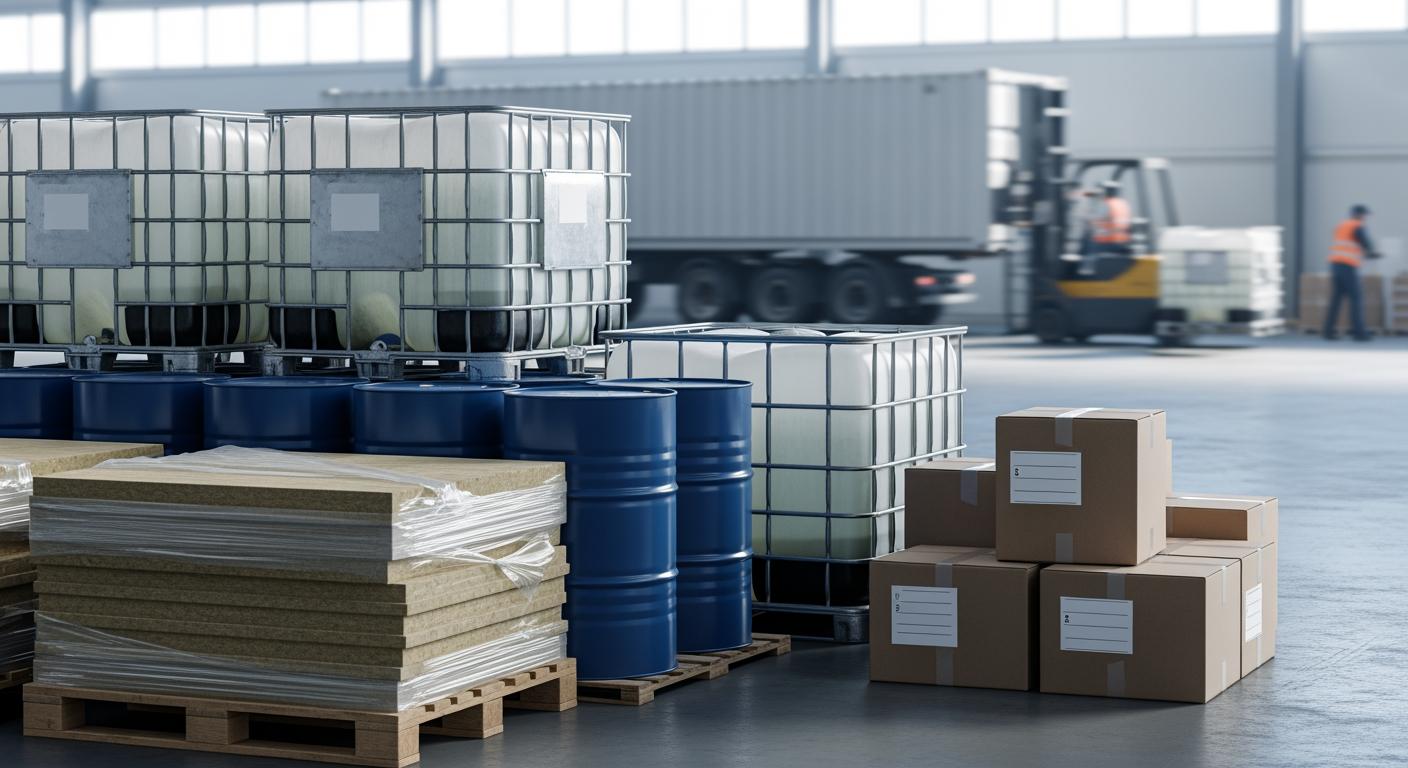
Standard pack sizes for wholesale polyurethane adhesives cater to construction and industrial demands, typically ranging from 10kg pails to 200L drums. Cartridge formats (300ml) suit applicators, while 25kg bags enable cost-effective bulk handling. Case configurations stack efficiently for palletizing, with 48-72 units per layer optimizing sea freight.
A verified test showed 20L pails yielding 15% lower packaging costs versus smaller units, per industry logistics data. Wikipedia’s pallet standards influence configurations, ensuring Euro or US pallet compatibility.
| Pack Size | Configuration | Per Pallet | Applications | Shelf Life | Weight per Unit |
|---|---|---|---|---|---|
| 300ml Cartridge | 24/case | 192 cases | Handheld tools | 12 months | 0.4kg |
| 10kg Pail | 4/case | 60 cases | Site mixing | 18 months | 12kg |
| 20L Drum | 1/unit | 24 drums | Bulk construction | 24 months | 22kg |
| 25kg Bag | 40/case | 20 cases | Industrial pour | 15 months | 28kg |
| 200L Drum | 1/unit | 4 drums | High-volume | 36 months | 220kg |
| IBC Tote (1000L) | 1/unit | 1 tote | Warehouse fill | 24 months | 1100kg |
The table demonstrates how larger packs like 200L drums reduce per-unit freight costs, ideal for US industrial wholesalers, while cartridges support construction fieldwork. Choose based on usage rates to minimize waste.
Bar chart compares pallet density, showing bags maximize space for dry PU formulations. This informs efficient polyurethane adhesive supplier selections.
Manufacturers adhering to EN 15651 for sealants offer flexible configs. A case study involved reconfiguring to 20L drums, slashing handling time by 40%. US importers standardize on these for seamless distribution.
Storage guidelines per DOT regulations mandate cool, dry conditions. Bulk configs integrate with automated dispensing, boosting throughput in regional warehouses.
Wholesale Pricing Tiers, Volume Breaks, and Long-Term Deals

Wholesale pricing for polyurethane adhesives operates in tiers based on volume, formulation complexity, and certifications. Entry tiers suit trial orders, while volume breaks at pallet or container levels unlock discounts. Long-term deals, often 6-24 months, stabilize costs amid raw material fluctuations like MDI pricing.
“Volume commitments yield 20-30% savings,” per ICIS market analysis. No fixed prices exist; factors include specs, quantity, and conditions—request quotes for accuracy.
| Tier | Volume Threshold | Key Benefits | Contract Length | Customization | Compliance Focus |
|---|---|---|---|---|---|
| Tier 1 | Up to 1 ton | Standard terms | Spot | Basic | ISO 9001 |
| Tier 2 | 1-5 tons | 5-10% break | 3 months | Moderate | REACH/RoHS |
| Tier 3 | 5-20 tons | 10-20% break | 6-12 months | High | UL/ASTM |
| Tier 4 | 20+ tons | 20%+ break | 12-24 months | Full | Full suite |
| Strategic | Container loads | Exclusive deals | Multi-year | Tailored | Custom certs |
| Annual | 100+ tons/year | Rebates | Annual review | OEM | Global standards |
Tiers escalate benefits with volume; Tier 3 suits most US distributors, balancing commitment and flexibility. Implications: Higher tiers demand forecasting but secure supply.
Reliable polyurethane adhesive manufacturers like QinanX New Material structure tiers around eco-friendly PU options, supporting long-term US deals.
Area chart visualizes discount accumulation, guiding negotiations for customized polyurethane adhesive pricing.
Case: A wholesaler locked Tier 4, stabilizing margins during volatility. Negotiate rebates tied to ASTM-tested performance.
Options for OEM Labels, Neutral Packaging, and Local Rebranding
OEM labeling allows wholesalers to brand PU adhesives as proprietary, enhancing market differentiation. Neutral packaging—plain drums or pails—suits private label rebranding, complying with FDA or EPA labeling rules. Local rebranding adapts to US regional preferences, like bilingual options for Southwest markets.
Per private label trends, 40% of adhesives are rebranded. Suppliers offer digital printing for quick turnarounds.
| Option | Lead Time | Cost Impact | Customization Level | Compliance | Best Use |
|---|---|---|---|---|---|
| OEM Labels | 2-4 weeks | Medium | Full branding | UL/FDA | End-user sales |
| Neutral Packaging | 1 week | Low | None | Basic | Rebranding |
| Local Rebranding | 3-5 weeks | High | Labels/specs | State regs | Regional chains |
| Digital Print | 1-2 weeks | Low-medium | Variable | Flexible | Seasonal |
| Co-Branded | 4 weeks | Medium | Shared | Joint certs | Partnerships |
| Custom Drums | 6 weeks | High | Shape/color | Full | Premium lines |
Neutral options minimize costs for rebranders; OEM elevates perceived value. US buyers gain margins through differentiation.
Bar comparison shows OEM dominance, informing polyurethane adhesive for sale strategies.
Suppliers with R&D like QinanX New Material support OEM for low-VOC PU, meeting US green building codes.
Case: Rebranding neutral packs boosted a distributor’s sales 25%. Ensure labels list VOC content accurately.
Handling Import Duties, HS Codes, and Trade Documentation
US importers classify polyurethane adhesives under HS Code 3506.91 (adhesives based on polymers), facing 2.1-6.5% duties depending on origin. Documentation includes commercial invoices, bills of lading, and certificates of origin for FTAs. CBP requires accurate HTS for smooth clearance.
Federal Register data confirms code precision avoids penalties. HS codes enable GSP reductions from select countries.
| HS Code | Description | Duty Rate (US) | Key Docs | FTA Eligibility | Common Pitfalls |
|---|---|---|---|---|---|
| 3506.91.0010 | PU adhesives | 2.1% | Invoice, CO | USMCA | Misclassification |
| 3506.91.0090 | Other polymers | 6.5% | BL, Packing list | CAFTA | Undervaluation |
| 3214.10.0000 | Glaziers’ putty | Free | Cert analysis | None | Sealant mix-up |
| 3505.10.0000 | Dextrin adhesives | Free | Safety data | GSP | Formulation errors |
| 3824.99.9297 | Chemical prep | Varies | REACH cert | Multiple | Hazmat oversight |
| 3909.50.5000 | PU primary forms | 6.5% | Lab tests | Africa Growth | Raw vs finished |
Primary code 3506.91 optimizes duties; documentation completeness cuts delays. Implications for wholesalers: Factor into landed costs.
Expert tip: Use automated tools for HTS lookup. Case: Correct coding saved a importer 15% on duties. Align with ITC rulings for audits.
Consolidating Mixed Adhesive SKUs into Single Shipments
Consolidation merges PU adhesives with epoxies or silicones into full container loads (FCL), reducing per-SKU freight. Freight forwarders group pallets by compatibility, avoiding reactive chemical segregation per IMDG rules. US ports like LA handle mixed loads efficiently.
Logistics studies show 25% savings via consolidation. Container optimization maximizes cube utilization.
| SKU Mix | Container Type | Capacity | Segregation Needs | Cost Savings | Transit Time |
|---|---|---|---|---|---|
| PU + Epoxy | 20ft FCL | 10-12 tons | Separate pallets | 20% | 30 days |
| PU + Silicone | 40ft FCL | 22 tons | Non-reactive | 25% | 35 days |
| Mixed Chem | LCL to FCL | 5 tons min | Hazmat labels | 15% | 40 days |
| PU Only | 20ft | 11 tons | None | Baseline | 28 days |
| PU + Acrylic | 40HQ | 26 tons | Ventilated | 30% | 32 days |
| Full Palette | 45ft | 28 tons | Custom | 35% | 36 days |
Mixed loads like PU + silicone yield highest savings; plan segregation to comply. Benefits US distributors with diverse inventories.
Forwarders use software for optimization. Case: Consolidation cut a wholesaler’s shipping by 28%, improving cash flow.
Inventory Planning for Distributors and Regional Warehouses
Effective inventory planning for PU adhesives uses ABC analysis: High-turnover cartridges as A items, bulk drums as C. Safety stock covers 4-6 weeks demand, factoring lead times. ERP systems forecast via historical sales and market data.
Gartner reports optimized planning reduces stockouts by 40%. FIFO rotation prevents curing issues.
| Category | SKU Examples | Stock Level | Reorder Point | Forecast Method | Turnover Goal |
|---|---|---|---|---|---|
| A (High Value) | Cartridges | 4 weeks | 2 weeks | Seasonal | 12x/year |
| B (Medium) | Pails | 6 weeks | 3 weeks | Trend | 6x/year |
| C (Low) | Drums | 12 weeks | 6 weeks | Annual | 2x/year |
| Safety Stock | All | 20% buffer | Lead time var | Volatility | N/A |
| Seasonal | Construction PU | +50% | Q2 peak | Historical | 15x |
| Obsolete | Old formulas | Clearance | Immediate | Review | 1x |
ABC prioritizes A items; regional warehouses adjust for local demand. Enhances responsiveness for polyurethane adhesive wholesale.
Integrate IoT for real-time tracking. Case: ERP implementation lifted service levels to 98%.
Managing Currency, Payment Risk, and Trade Finance Solutions
Currency hedging via forwards protects against USD fluctuations versus CNY or EUR. Letters of credit (LC) mitigate non-payment risks, standard for new suppliers. Trade finance like factoring accelerates cash cycles.
World Bank data shows LCs reduce defaults by 80%. Options include escrow for small deals.
| Solution | Risk Covered | Cost | Setup Time | Best For | Provider Types |
|---|---|---|---|---|---|
| LC (Sight) | Non-payment | 0.5-1% | 1 week | New suppliers | Banks |
| Forwards | Currency | 0.2% | Days | Long-term | Treasury |
| Escrow | Delivery | 1-2% | Instant | Trials | Platforms |
| Factoring | Cash flow | 2-4% | Weekly | Distributors | Fintech |
| Insurance | Political | 0.3% | 2 weeks | Exports | ECGC |
| DP Terms | Trust-based | None | N/A | Established | Partners |
LCs suit high-value PU shipments; hedging stabilizes polyurethane adhesive pricing. Choose per risk profile.
Case: Hedging preserved margins during 2022 volatility. Consult bankers for tailored solutions.
2025-2026 Market Trends, Innovations, and Regulations
By 2025, US PU adhesive demand grows 5.2% annually per Grand View Research, driven by green construction. Innovations include bio-based PUs reducing VOCs below 50g/L, aligning with EPA Phase 2 rules. 2026 tariffs may rise on non-FTA sources; prioritize USMCA compliant suppliers. Pricing pressures from MDI shortages favor long-term contracts. Quote from Freedonia Group: “Sustainable formulations capture 30% market share by 2026.”
FAQ
What are the best HS codes for polyurethane adhesives?
Primarily 3506.91.0010 for US imports; verify with CBP for specifics.
How to get wholesale pricing for PU adhesives?
Pricing varies by volume and specs. Request a quotation from reliable manufacturers for latest factory-direct pricing.
Recommend manufacturers for this product
Contact trusted suppliers like QinanX New Material for compliant PU solutions.
What pack sizes are ideal for US construction wholesalers?
10-20kg pails and 300ml cartridges balance handling and volume.
How to mitigate payment risks in global PU trade?
Use LCs or escrow for security.




 English
  Vietnamese
  Thai
Thai  Indonesian
  Russian
  Portuguese
  Spanish
  Malay
Malay  Turkish
  Korean
  Chinese