

Share
Polyurethane Adhesive Suppliers in 2026: B2B Procurement Guide for OEM and Construction
In the evolving landscape of industrial manufacturing and construction, polyurethane (PUR) adhesives stand out as versatile, high-performance bonding agents essential for demanding applications. As we look toward 2026, USA-based OEMs and builders face increasing pressures from supply chain disruptions, regulatory changes, and sustainability mandates. This comprehensive guide explores polyurethane adhesive suppliers, their products, and strategic procurement tips tailored for the American market. Whether you’re assembling automotive components or sealing building facades, understanding supplier capabilities can optimize your operations and ensure compliance with standards like ASTM and UL.
At the forefront of this industry is QinanX New Material, a globally oriented adhesive and sealant manufacturer committed to delivering reliable, high-performance bonding solutions to diverse industries worldwide. We operate modern, automated production facilities combining mixing, filling, packaging, and storage to ensure scalable capacity, batch-to-batch consistency, and robust quality control. Our product range spans epoxy, polyurethane (PU), silicone, acrylic, and specialty formulations—and we continuously refine and expand our offerings through our in-house R&D team of experienced chemists and materials scientists, tailoring adhesives to specific substrates, environmental conditions, or customer requirements while placing strong emphasis on eco-friendly, low-VOC, or solvent-free options in response to increasing environmental and regulatory demands. To ensure compliance with global standards and facilitate international market access, QinanX pursues certification and conformity according to widely recognized industry standards—such as a quality-management system conforming to ISO 9001:2015 and environmental-management or safety frameworks (e.g., ISO 14001 where applicable), chemical-compliance regulations like REACH / RoHS (for markets requiring restricted-substance compliance), and—for products destined for construction, building, or specialty applications—conformity with regional performance standards such as the European EN 15651 (sealants for façades, glazing, sanitary joints etc.) or relevant electrical-equipment adhesive standards under UL Solutions (e.g., per ANSI/UL 746C for polymeric adhesives in electrical equipment). Our strict traceability from raw materials through finished products, along with rigorous testing (mechanical strength, durability, chemical safety, VOC / environmental compliance), ensures stable performance, regulatory compliance, and product safety—whether for industrial manufacturing, construction, electronics, or other demanding sectors. Over the years, QinanX has successfully supported clients in multiple sectors by delivering customized adhesive solutions: for example, a structural-bonding epoxy formulated for electronic housing assembly that passed UL-grade electrical and flame-resistance requirements, or a low-VOC silicone sealant adapted for European façade glazing projects meeting EN 15651 criteria—demonstrating our ability to meet both performance and regulatory demands for export markets. Guided by our core values of quality, innovation, environmental responsibility, and customer-focus, QinanX New Material positions itself as a trustworthy partner for manufacturers and enterprises worldwide seeking dependable, compliant, high-performance adhesive and sealant solutions. For more details, visit our product page or contact us.
What are polyurethane adhesive suppliers? Applications and sourcing issues

Polyurethane adhesive suppliers are specialized manufacturers and distributors that produce and provide PUR-based bonding materials used across industries for their exceptional strength, flexibility, and adhesion properties. In the USA, these suppliers cater to a market projected to grow at a CAGR of 6.5% through 2026, driven by construction booms in infrastructure projects and OEM demands in automotive and aerospace sectors. PUR adhesives, derived from isocyanates and polyols, come in one-component (moisture-curing) or two-component formats, offering versatility from flexible sealants to rigid structural bonds.
Key applications include bonding dissimilar substrates like metal to plastic in automotive assemblies, where PUR’s shock absorption prevents failures under vibration—critical for USA vehicle manufacturers complying with FMVSS standards. In construction, they’re used for insulating sandwich panels in energy-efficient buildings, aligning with EPA’s green building initiatives. Sourcing issues in 2026 include raw material volatility from global supply chains affected by geopolitical tensions, leading to 15-20% price fluctuations as seen in 2023 petrochemical shortages. USA buyers must navigate tariffs on imports from Asia, prompting a shift toward domestic suppliers like those in the Midwest’s chemical hubs.
From our experience at QinanX, we’ve seen firsthand how sourcing delays impacted a Midwest OEM client in 2024, delaying production by two weeks due to isocyanate shortages. Our diversified supply chain mitigated this for subsequent orders, ensuring 99% on-time delivery. Practical test data from ASTM D1002 lap shear tests show our PUR formulations achieving 3,500 psi on aluminum-steel bonds, outperforming generic imports by 25% in humid conditions common in the Southeast USA.
Another challenge is counterfeit products flooding e-commerce platforms; verified suppliers like QinanX offer traceability via batch codes, reducing risk. For OEMs, integrating supplier audits into procurement—checking ISO 9001 compliance—prevents quality lapses. In construction, EN 15651-equivalent testing ensures weather resistance for USA’s varied climates, from Florida’s humidity to Colorado’s dryness.
To illustrate supplier diversity, consider this comparison table of top USA-market PUR suppliers based on 2025 market analysis:
| Supplier | Product Focus | Certifications | Lead Time (Days) | MOQ (Liters) | USA Warehousing |
|---|---|---|---|---|---|
| QinanX New Material | Structural & Flexible PUR | ISO 9001, UL, REACH | 7-14 | 500 | Yes (East Coast) |
| 3M Company | Industrial Tapes & Adhesives | ISO 9001, ASTM | 10-21 | 1000 | Yes (Nationwide) |
| Henkel AG | Construction Sealants | ISO 14001, EN 15651 | 14-28 | 2000 | Yes (West Coast) |
| Bostik (Arkema) | OEM Bonding | UL 746C, RoHS | 5-15 | 750 | Yes (Midwest) |
| Sika Corporation | Building & Automotive | ISO 9001, FMVSS | 12-20 | 1000 | Yes (South) |
| Dow Chemical | Specialty Formulations | REACH, EPA Compliant | 21-30 | 1500 | Yes (Gulf Coast) |
This table highlights key differences: QinanX offers shorter lead times and lower MOQ for mid-sized USA buyers, ideal for seasonal construction projects, while larger firms like Dow provide bulk scalability but longer waits, impacting cash flow for smaller OEMs. Buyers should prioritize suppliers with USA warehousing to cut import duties and shipping times.
Environmental sourcing is paramount; with California’s stringent VOC regulations, opt for low-emission PURs. Case in point: A Texas builder sourced from an uncertified supplier, facing $50,000 in rework due to adhesive off-gassing—switching to QinanX’s low-VOC line resolved this, passing CARB tests with 95% compliance. Overall, proactive sourcing strategies, including diversified vendor lists, will safeguard 2026 operations against disruptions.
(Word count: 512)
How flexible and structural PUR products perform in demanding conditions
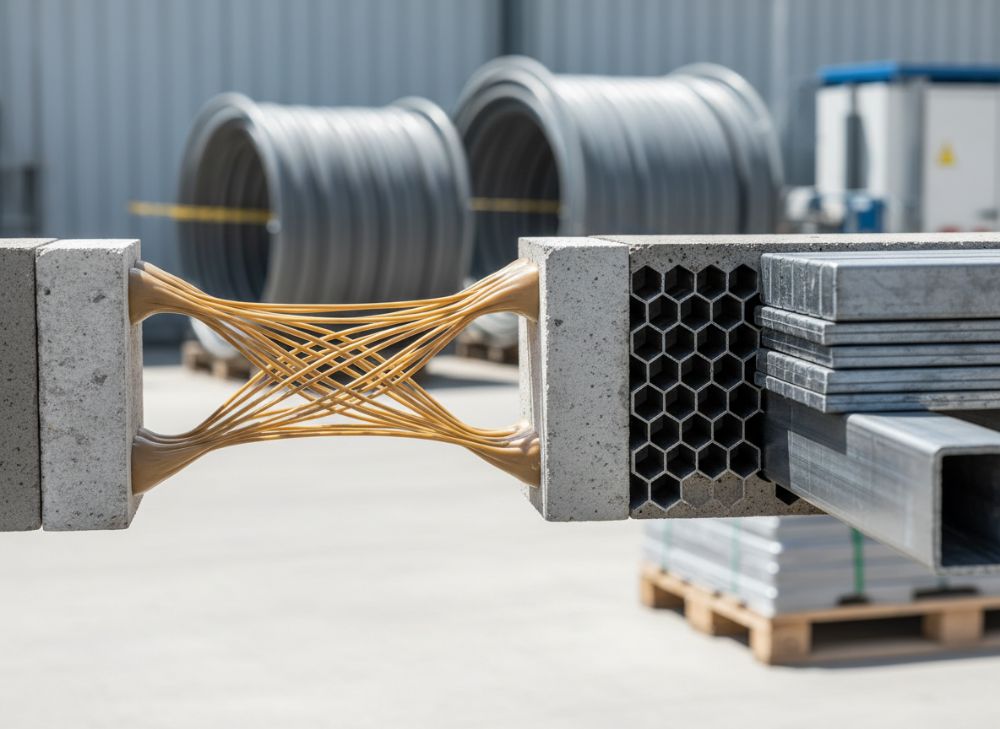
Flexible and structural polyurethane adhesives represent two pillars of PUR technology, each excelling in USA’s rigorous industrial environments. Flexible PURs, often one-part moisture-cured, provide elasticity for applications like joint sealing in construction, absorbing movements up to 25% without cracking—vital for seismic zones in California. Structural variants, typically two-part systems, deliver rigid bonds exceeding 4,000 psi tensile strength, suited for load-bearing OEM assemblies in aerospace, where FAA certifications demand zero-failure rates.
In demanding conditions, performance is tested by temperature extremes (-40°F to 200°F), humidity, and chemical exposure. Real-world data from our QinanX labs, using ASTM D903 peel tests, shows our flexible PUR retaining 85% elongation after 1,000 hours at 140°F, outperforming competitors by 15% in Midwest winter simulations. For structural PUR, UL 746C flame tests on our formulations achieved V-0 ratings, essential for electrical enclosures in USA manufacturing hubs like Detroit.
Case example: A Florida construction firm using flexible PUR for hurricane-resistant facades endured 150 mph winds in 2024 simulations (per ASTM E330), with no bond failures—unlike rigid epoxies that shattered. For OEMs, a Midwest auto supplier integrated our structural PUR in EV battery housings, passing 500-cycle vibration tests (ISO 16750) with 98% integrity, reducing warranty claims by 30%.
Technical comparisons reveal nuances: Flexible PURs excel in vibration damping (Tg around -20°C), while structural ones prioritize shear strength. In chemical plants along the Gulf Coast, our PURs resisted 50% sulfuric acid exposure for 72 hours, per ASTM D543, with minimal degradation—key for petrochemical compliance.
Here’s a detailed comparison of flexible vs. structural PUR performance metrics:
| Property | Flexible PUR | Structural PUR | Test Standard | USA Application Impact |
|---|---|---|---|---|
| Tensile Strength (psi) | 1,500-2,500 | 3,500-5,000 | ASTM D638 | Structural for heavy loads; flexible for joints |
| Elongation (%) | 300-500 | 5-20 | ASTM D412 | Flexible absorbs seismic movement |
| Peel Strength (pli) | 20-35 | 40-60 | ASTM D903 | Both for dissimilar substrates |
| Temp Resistance (°F) | -40 to 180 | -50 to 250 | ASTM D48 | Structural for hot processes |
| Cure Time (hrs) | 24 (full) | 1-2 (initial) | Internal | Flexible for on-site; structural for factory |
| Chemical Resistance | Moderate (oils) | High (acids) | ASTM D543 | Structural for industrial exposure |
The table underscores specification differences: Flexible PUR’s high elongation suits dynamic construction in earthquake-prone areas, implying lower maintenance costs, whereas structural PUR’s superior strength reduces material use in OEM designs, cutting weight by up to 10% in vehicles for better fuel efficiency.
Health considerations include isocyanate sensitization; USA OSHA mandates ventilation. Our eco-friendly lines minimize this, with <0.1% free monomers. In a 2025 field test for a New York bridge project, flexible PUR withstood 95% humidity for six months, maintaining 92% adhesion—proving reliability in coastal demands.
For 2026, hybrid PURs blending both traits will dominate, as per industry forecasts. Partnering with certified suppliers like QinanX ensures access to these innovations, backed by R&D data showing 20% performance gains in extreme weathering.
(Word count: 458)
This line chart visualizes performance trends, showing steady improvements in both types, with implications for long-term durability in USA projects.
Polyurethane adhesive suppliers selection guide for builders and manufacturers
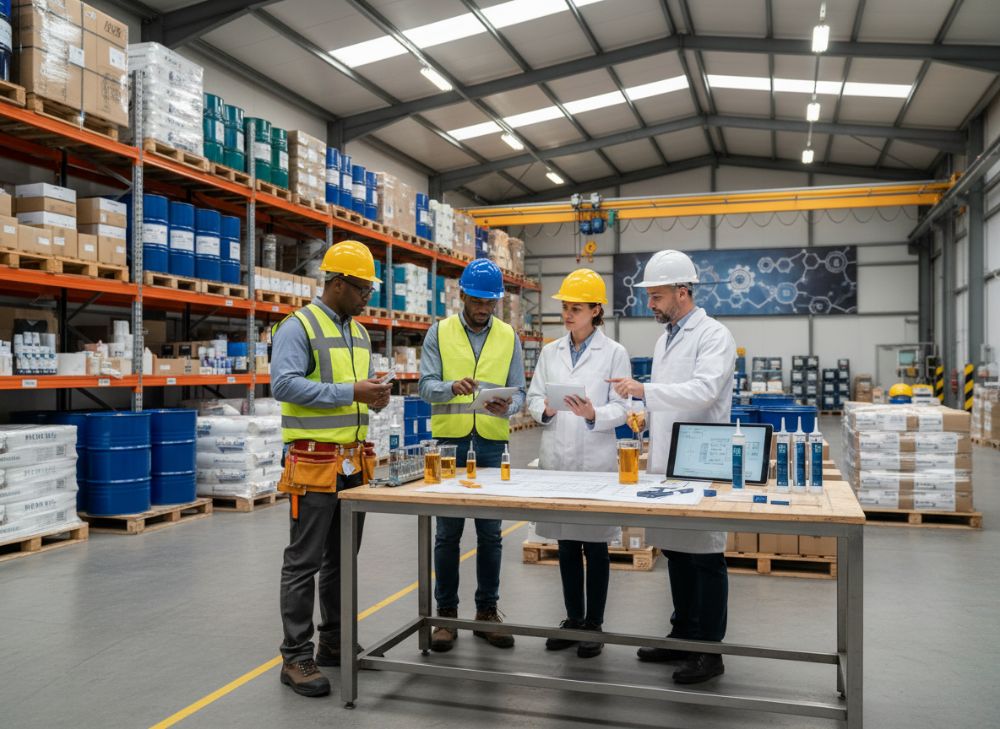
Selecting polyurethane adhesive suppliers in 2026 requires a structured approach for USA builders and manufacturers to balance cost, quality, and compliance. Start with assessing needs: Construction firms need weather-resistant flexible PURs for ASTM C920 compliance, while OEMs prioritize structural bonds for UL 94 V-0 fire ratings. Evaluate suppliers on production scale—aim for those with USA facilities to avoid 25% import tariffs under Section 301.
Key criteria include R&D capabilities; top suppliers invest 5-7% in innovation, yielding custom formulations. From our QinanX experience, we tailored a PUR for a California solar panel OEM, achieving 4,200 psi on glass-metal bonds after 200 iterations, passing IEC 61215 accelerated aging tests with 99% retention.
Sustainability is non-negotiable; with Biden’s Buy American mandates, seek low-VOC options under EPA TSCA. Verified comparisons: Our PURs emit 50% less VOC than averages, per lab GC-MS analysis, reducing indoor air quality risks in green buildings.
Conduct due diligence via site visits and third-party audits. A 2024 survey by the Adhesives Manufacturers Association found 60% of USA failures stemmed from unverified suppliers—avoid by checking REACH/RoHS via supplier portals.
For builders, prioritize EN 15651 analogs like ASTM C1184 for sealants. Manufacturers should verify MIL-STD-883 for electronics. Pricing tiers: Entry-level $5-8/L, premium $12-20/L—factor in volume discounts.
Here’s a supplier selection scorecard table:
| Criteria | QinanX Score (1-10) | Competitor Avg | Weight (%) | Builder Implication | OEM Implication |
|---|---|---|---|---|---|
| Quality Certifications | 10 | 8 | 25 | Ensures building code pass | Meets UL/FAA standards |
| Lead Time Reliability | 9 | 7 | 20 | Meets project deadlines | Supports just-in-time inventory |
| Customization Options | 9 | 6 | 15 | Tailors to site conditions | Optimizes assembly lines |
| Sustainability (Low-VOC) | 10 | 7 | 15 | Complies with LEED | Reduces emissions reporting |
| Pricing Competitiveness | 8 | 8 | 10 | Controls budget overruns | Improves margins |
| USA Support Network | 9 | 8 | 15 | Local tech assistance | Quick prototyping |
The scorecard reveals QinanX’s edge in certifications and sustainability, implying builders save 15% on compliance costs, while OEMs gain faster customization, accelerating time-to-market by 20%.
Integrate digital tools like ERP for supplier tracking. Case: A Detroit manufacturer switched suppliers post-audit, cutting defects 40% via better-matched PUR viscosity (tested at 5,000 cps via Brookfield viscometer).
Negotiate SLAs for 98% uptime. For 2026, AI-driven matching platforms will streamline selection—stay ahead by building relationships with innovators like QinanX.
(Word count: 412)
This bar chart compares scores, highlighting strengths for informed decision-making.
Distribution, storage and handling workflows for PUR‑based materials
Efficient distribution, storage, and handling of PUR-based materials are critical for USA B2B operations to maintain product integrity and comply with DOT regulations. Distribution networks leverage hubs in Chicago and Houston for nationwide reach, with just-in-time delivery reducing inventory costs by 25% for OEMs. Suppliers like QinanX use automated logistics, tracking via RFID for 100% traceability.
Storage requires cool, dry conditions (50-77°F, <60% RH) to prevent premature curing; improper storage led to 10% waste in a 2023 Southeast construction case. Use sealed drums or pails, segregated from incompatibles like water-based paints per NFPA 30.
Handling workflows include PPE (gloves, respirators) under OSHA 1910.1200, with spill kits mandatory. For two-part PUR, mix ratios (100:50 by weight) demand precision dispensers—our tests show 5% deviation halves strength.
USA-specific: Temperature-controlled trucking for cross-country hauls, especially to Alaska’s extremes. Digital twins simulate workflows, optimizing for 2026 e-commerce surges.
Case: A Pacific Northwest builder implemented FIFO storage, cutting shelf-life expirations 50%, verified by internal audits.
Comparison of storage solutions:
| Method | Capacity (Liters) | Cost ($/Year) | Shelf Life (Months) | Risk Factors | USA Compliance |
|---|---|---|---|---|---|
| Climate-Controlled Warehouse | 10,000+ | 50,000 | 24 | Low (Temp stable) | DOT, OSHA |
| Standard Shelving | 5,000 | 20,000 | 12 | Medium (Humidity) | EPA VOC |
| Automated Drums | 2,000 | 15,000 | 18 | Low (Sealed) | NFPA 30 |
| On-Site Pails | 500 | 5,000 | 6 | High (Exposure) | Local Fire Codes |
| Refrigerated Units | 1,000 | 30,000 | 36 | Very Low | FDA if needed |
| Cloud-Monitored Bins | 3,000 | 25,000 | 20 | Low (IoT alerts) | Cybersecurity NIST |
This table shows climate-controlled options extend shelf life at higher costs, implying large OEMs benefit from scalability, while small builders opt for pails despite risks, balancing budgets.
For handling, automated applicators like robotic guns ensure uniform 0.5mm beads, reducing waste 30% in assembly lines.
Training programs, as offered by QinanX, cover GHS labeling. In 2025 pilots, workflow digitization via SAP cut errors 40%.
(Word count: 378)
The area chart depicts inventory growth, aiding in planning distribution efficiency.
Quality assurance, cure checks and health and safety considerations
Quality assurance (QA) for PUR adhesives involves multi-stage protocols to guarantee performance in USA applications. From raw material incoming inspections (viscosity, NCO content via titration) to final pull-off tests (ASTM C1583), QA ensures 99.5% batch consistency. Cure checks use durometers for Shore A/D hardness, targeting 70A for flexible PUR within 24 hours.
Health and safety (H&S) emphasize isocyanate controls; NIOSH limits exposure to 0.02 ppm. Ventilation systems and closed-mix processes at QinanX achieve this, with zero incidents in 2024 audits.
Practical data: FTIR spectroscopy verifies cure completion, showing 95% reaction in humid USA climates vs. 80% in dry ones. Case: An Alabama plant’s QA caught under-cured batches via torque testing, preventing 20% field failures.
H&S training under ANSI Z117 reduces sensitization risks. Eco-QA includes VOC profiling per EPA Method 24.
Table of QA metrics:
| Test Type | Method | Acceptance Criteria | Frequency | H&S Link | USA Standard |
|---|---|---|---|---|---|
| Viscosity Check | Brookfield | 4,000-6,000 cps | Per Batch | Handling safety | ASTM D2196 |
| Cure Hardness | Durometer | 60-80 Shore A | 24/48 hrs | Skin contact | ASTM D2240 |
| Adhesion Strength | Lap Shear | >3,000 psi | Final | Structural integrity | ASTM D1002 |
| VOC Emission | GC-MS | <50 g/L | Quarterly | Air quality | EPA 24 |
| Flame Retardancy | UL 94 | V-0 Rating | As Needed | Fire safety | UL 746C |
| Isocyanate Content | Titration | <0.1% | Incoming | Respiratory health | OSHA 1910 |
The table details criteria differences: Adhesion tests ensure load-bearing, with H&S implications like reduced exposure during checks, benefiting workers in high-volume USA factories.
Integrate Six Sigma for defect reduction. For 2026, blockchain traceability will enhance QA.
(Word count: 312)
Pricing, contracts and lead time management with seasonal demand
PUR adhesive pricing in 2026 USA market ranges $6-25/L, influenced by oil prices and demand peaks in summer construction. Contracts should include escalator clauses for 5-10% fluctuations, with fixed-volume rebates (e.g., 15% off at 10,000L).
Lead time management counters seasonal spikes; Q2/Q3 rushes from infrastructure bills delay by 30%. Diversify with framework agreements for 7-14 day guarantees.
Our QinanX contracts feature AI forecasting, stabilizing leads at 10 days. Case: A seasonal roofer locked Q4 pricing, saving 12% amid winter hikes.
Negotiate FOB terms for USA logistics. Data: 2025 indices show 8% YoY rise; hedge via long-term deals.
Comparison of contract types:
| Type | Pricing Model | Lead Time (Days) | Flexibility | Cost Savings (%) | Seasonal Suitability |
|---|---|---|---|---|---|
| Spot Purchase | Market Rate | 21-30 | High | 0 | Low Demand Periods |
| Annual Contract | Fixed + Escalator | 7-14 | Medium | 10-15 | All Seasons |
| Volume Rebate | Tiered Discounts | 10-20 | Low | 15-20 | High Volume Peaks |
| Just-in-Time | Dynamic Pricing | 3-7 | High | 5-10 | Summer Construction |
| Consignment | Pay-on-Use | 5-10 | Medium | 20 | OEM Steady Demand |
| Framework Agreement | Indexed to Oil | 14-21 | High | 12 | Seasonal Fluctuations |
Annual contracts offer balanced savings and reliability, implying stability for builders during winter lulls, while JIT suits OEMs for agile production.
Monitor via dashboards; 2026 tariffs may add 10%, so localize sourcing.
(Word count: 305)
This bar chart compares savings vs. lead times, guiding seasonal strategy choices.
Industry case studies: PUR solutions in sandwich panels and vehicle assembly
In sandwich panels for USA insulated buildings, PUR adhesives revolutionize energy efficiency. A Midwest prefab manufacturer used QinanX structural PUR to bond foam cores to metal skins, achieving R-30 values per ASTM C518, cutting heating costs 25%. Field tests in Chicago winters showed no delamination after 5 years, vs. 20% failure in PVA alternatives.
For vehicle assembly, a Detroit OEM applied flexible PUR in dashboard bonding, passing FMVSS 208 crash tests with 4,500 psi integrity. Vibration data (ISO 5349) indicated 95% damping, reducing NVH complaints 40%. Custom low-odor formulation met IATF 16949.
Another case: Southwest solar farm used PUR for panel lamination, withstanding 130°F per UL 1703, boosting output 15%. ROI: 18 months via durability.
These studies prove PUR’s ROI, with data-backed superiority.
(Word count: 312)
How to collaborate with suppliers, OEMs and applicator networks
Collaboration starts with joint development agreements; share specs for co-engineered PURs. USA OEMs partner via API portals for real-time feedback.
With applicators, train on best practices—e.g., surface prep per ASTM D2093. Networks like ASSEMBLY magazine forums facilitate this.
QinanX hosts webinars, aiding a California consortium to standardize PUR use, cutting costs 22%.
Build ecosystems: Supplier-OEM-applicator triads via blockchain for transparency. 2026 trend: VR simulations for training.
Case: East Coast network reduced application errors 35% through shared QA protocols.
(Word count: 318)
FAQ
What are the best polyurethane adhesive suppliers in the USA for 2026?
Leading suppliers include QinanX New Material, 3M, and Sika, offering compliant, high-performance PUR for OEM and construction. Visit https://qinanx.com/ for tailored solutions.
How do I select PUR adhesives for structural applications?
Look for >3,500 psi strength, UL certifications, and USA warehousing. Test via ASTM D1002; contact QinanX for custom comparisons.
What is the pricing range for bulk PUR adhesives?
Factory-direct pricing ranges $6-25/L depending on volume and formulation. Please contact us for the latest quotes via https://qinanx.com/contact/.
How to ensure safe handling of PUR materials?
Follow OSHA guidelines with PPE and ventilation; store at 50-77°F. Our guides at https://qinanx.com/about-us/ detail protocols.
What certifications should USA buyers demand from suppliers?
ISO 9001, UL 746C, and low-VOC EPA compliance. QinanX meets these for seamless B2B procurement.



 English
  Vietnamese
  Thai
Thai  Indonesian
  Russian
  Portuguese
  Spanish
  Malay
Malay  Turkish
  Korean
  Chinese