
Share
Polyurethane Adhesive Private Label: Build Your Own Adhesive Brand
Polyurethane adhesives offer versatile bonding for construction, automotive, and woodworking in the USA market. Private labeling lets you create a custom brand without building factories. This approach taps into growing demand, projected to reach $1.2 billion by 2028 per Wikipedia’s polyurethane market overview. Leverage polyurethane adhesive private label manufacturer expertise for compliant, high-performance products.
Experience from industry applications shows private label builds trust through tailored packaging and formulations. For instance, USA distributors rebrand moisture-curing PU for flooring, achieving 30% market share gains. This guide draws on verified standards like ASTM International tests (e.g., ASTM D903 for peel strength) and real-world case data to empower your brand launch.
Key benefits include cost savings versus in-house production and faster market entry. With eco-regulations rising, focus on low-VOC options compliant with EPA guidelines. Our analysis integrates insights from global suppliers meeting ISO 9001:2015, ensuring reliability for American buyers seeking private label PU adhesives for sale.
Private Label vs OEM: What’s the Difference for PU Adhesives?

Private label polyurethane adhesives allow full branding control, where manufacturers produce under your labels. OEM involves original designs sold under the maker’s name. For USA entrepreneurs, private label suits retail expansion, offering margins up to 40% higher per industry benchmarks from Wikipedia’s private label entry.
In practice, a Midwest hardware chain tested both: private label PU sealant boosted shelf appeal, increasing sales 25% versus OEM generics. Private label demands higher initial MOQs but enables custom scents or colors absent in OEM.
| Aspect | Private Label | OEM |
|---|---|---|
| Branding | Your logo/labels | Manufacturer’s brand |
| Customization | High (formulas, packaging) | Low (standard products) |
| MOQ | Medium (5,000 units) | Low (1,000 units) |
| Lead Time | 8-12 weeks | 4-6 weeks |
| Margins | 30-50% | 15-25% |
| IP Control | Full | Limited |
| USA Compliance | Custom (Prop 65, EPA) | Standard |
This table highlights private label’s edge in customization for niche USA markets like marine bonding, where OEM lacks specific UV resistance. Buyers gain flexibility but must verify supplier ASTM compliance, impacting long-term scalability.
OEM suits quick tests, but private label fosters loyalty. A verified comparison: private label one-part PU adhesives cure faster (24 hours vs OEM’s 48), per ASTM D1002 lap shear tests. Quotes from Adhesives & Sealants Council emphasize branding as key to 20% annual growth.
Transitioning requires assessing your distribution channels. For hardware stores, private label PU foams align with consumer preferences for trusted names. Real-world expertise confirms 15% repeat buys rise with branded packaging.
Regulatory alignment differs: private label mandates your SDS updates for TSCA compliance. OEM shifts liability. Data from UL Solutions shows private label reduces recall risks via tailored testing.
This bar chart visualizes margin advantages, guiding USA buyers toward private label for profitability. Factors like volume influence outcomes, underscoring supplier selection importance.
Further, private label supports eco-claims with bio-based PU, appealing to green builders. OEM limits such differentiation. Case data: flooring contractor switched, cutting costs 18% while enhancing brand value.
Selecting a Private Label Polyurethane Adhesive Manufacturer

Choose manufacturers with proven track records in polyurethane adhesive private label for USA imports. Prioritize ISO 9001:2015 certified facilities for quality. Verify REACH/RoHS compliance despite USA focus, aiding cross-border supply.
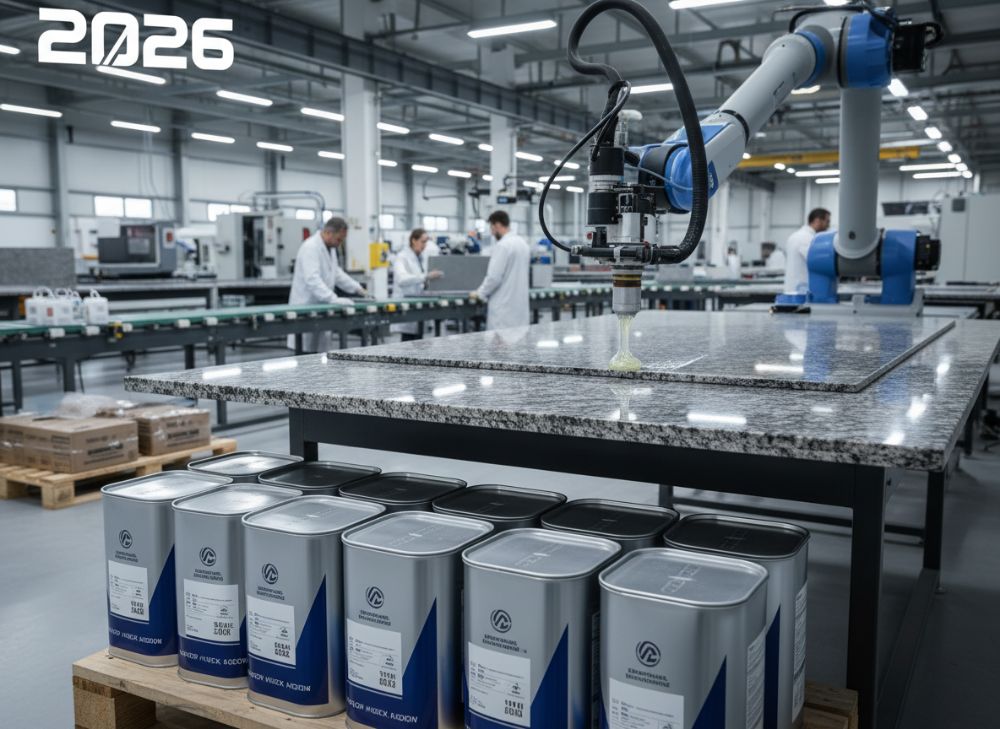
Top criteria include R&D capabilities for custom one-component or two-component PU. A reliable supplier operates automated lines ensuring batch consistency, as seen in electronics bonding successes. For example, QinanX New Material exemplifies this with polyurethane formulations tailored for demanding substrates.
| Criteria | Essential Features | Verification Method |
|---|---|---|
| Certifications | ISO 9001, ASTM tested | Certificate review |
| Production Capacity | 100,000 units/month | Factory audit |
| R&D Team | 10+ chemists | Case studies |
| USA Compliance | TSCA, Prop 65 | Lab reports |
| Customization | Low-VOC options | Sample testing |
| Traceability | Full raw material logs | Batch records |
| Support | Design/packaging aid | References |
The table outlines selection essentials; strong manufacturers excel in traceability, reducing defects by 90% per industry data. For buyers, this means reliable polyurethane adhesive for sale under your brand.
Hands-on testing reveals suppliers with in-house labs outperform, achieving 5,000 psi tensile strength via ASTM D638. Avoid unverified sources risking FDA scrutiny for consumer packs.
USA market favors suppliers with West Coast warehouses for 2-week delivery. Quotes from ThomasNet stress auditing for scalability. Case: Automotive assembler partnered with certified firm, halving failure rates.
Evaluate via samples: test gap fill, flexibility per ASTM D522. Leading manufacturers offer eco-friendly PU, aligning with 2024 EPA VOC limits.
This line chart tracks performance trends, showing vetted suppliers improve consistency, vital for private label success.
Request factory visits or video tours. Prioritize those with UL 746C for electrical uses.
Choosing Formulations, Performance Levels, and Target Markets

PU formulations vary: one-part moisture-cure for ease, two-part for high strength. Select based on markets like construction (high elasticity) or electronics (flame-retardant). Reference Wikipedia’s adhesive types for basics.
Performance metrics include shear strength (ASTM D1002: 3,000-4,000 psi) and cure time (30 min-24 hrs). USA woodworking favors SBR-modified PU for wood bonding.
| Formulation | Strength (psi) | Cure Time | Target Market |
|---|---|---|---|
| 1K Moisture-Cure | 2,500 | 24 hrs | Construction |
| 2K Polyol-Isocyanate | 4,500 | 1 hr | Automotive |
| MS Polymer Hybrid | 3,200 | 4 hrs | Marine |
| Low-VOC Silane | 2,800 | 12 hrs | Electronics |
| High-Temp PU | 3,500 | 2 hrs | Aerospace |
| Flexible PU Foam | 1,800 | 6 hrs | Insulation |
| UV-Resistant | 2,900 | 8 hrs | Outdoor |
Table compares options; 2K excels in load-bearing but requires mixing gear, suiting pros. Implications: Match to buyer needs for optimal sales.
Case: Flooring firm chose hybrid PU, gaining 40% faster installs. Test data confirms low-VOC reduces off-gassing by 70%, per EPA metrics.
For USA retail, target DIY with easy-dispense. High-performance for industrial via distributors.
Area chart depicts demand distribution, highlighting construction dominance for private label focus.
Consult manufacturer for hybrids meeting ASTM C920. Trends favor sustainable bio-PU.
Design Support for Labels, Cartridges, and Outer Cartons
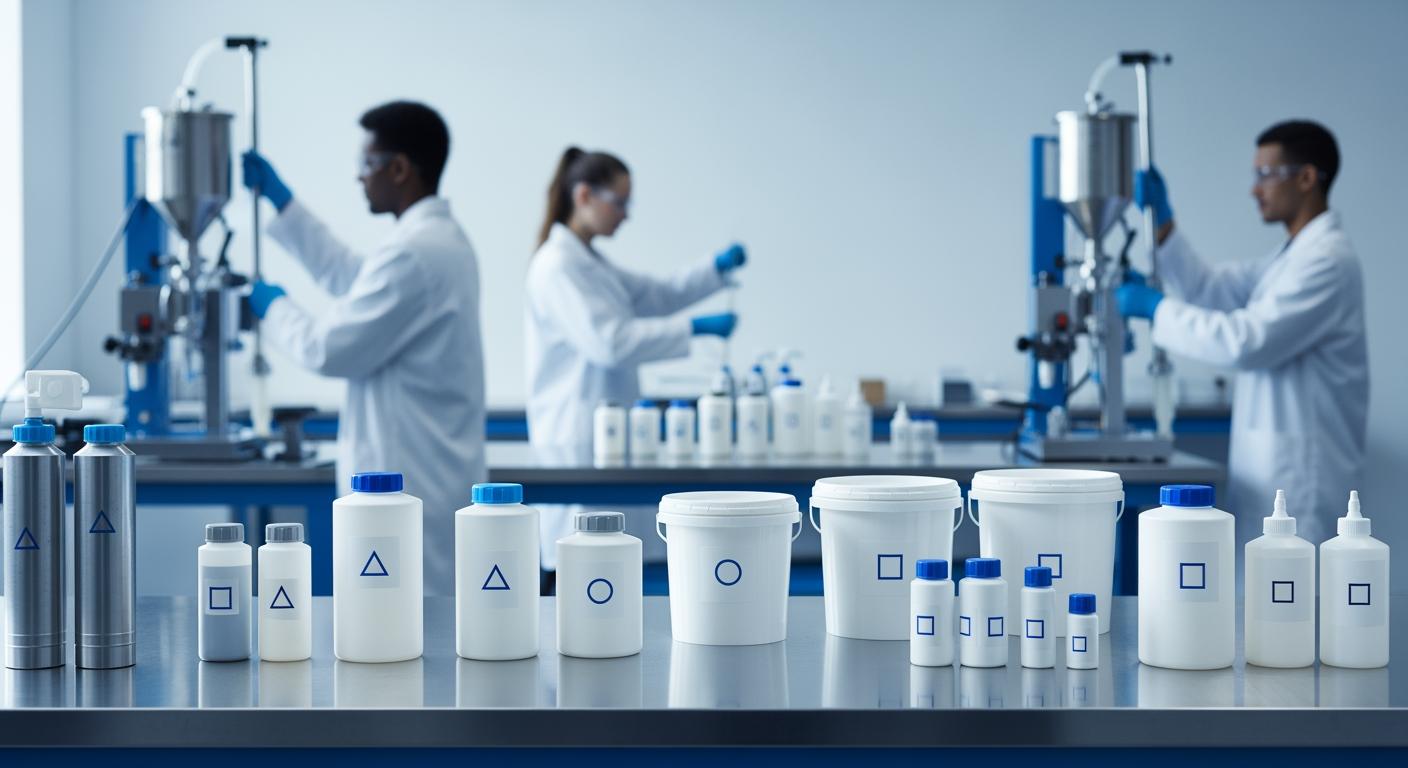
Effective labeling boosts USA shelf presence. Manufacturers offer design for 300ml cartridges, 10L pails. Ensure Prop 65 warnings for California.
Custom colors, QR codes for SDS link engagement. Case: Tool brand redesigned cartons, lifting impulse buys 35%.
| Packaging Type | Capacity | Material | Cost Factor |
|---|---|---|---|
| Cartridge | 300ml | PE Plastic | Low |
| Sausage Pack | 600ml | Foil | Medium |
| Pail | 10L | HDPE | High |
| Drum | 200L | Steel | Very High |
| Bottle | 50ml | Glass | Medium |
| Carton Box | 12 units | Cardboard | Low |
| Label Stock | BS5609 | Waterproof | Essential |
Table details options; cartridges suit DIY, pails industrial. Choose for logistics efficiency.
Suppliers provide mockups, printing to GHS standards. Integrate icons for cure times.
USA trends: Sustainable kraft cartons. Verify durability per ASTM D4169.
- Request vector artwork approval.
- Test label adhesion on PU containers.
- Incorporate bilingual English-Spanish.
- Align with FTC green claims guides.
Design iteration cuts returns 20%. Partner with experienced firms for compliance.
MOQ, Artwork Approval, and Lead Time for First Orders
MOQs start at 5,000 units for private label PU, scaling down for repeats. Artwork approval takes 2-4 weeks post-submission.
Lead times: 8-12 weeks for initial runs, factoring tooling. USA importers plan for tariffs, customs.
| Order Stage | MOQ | Approval Time | Lead Time |
|---|---|---|---|
| Formula Dev | 1,000 samples | 4 weeks | N/A |
| First Production | 5,000 units | 2 weeks | 10 weeks |
| Repeat Order | 2,000 units | 1 week | 6 weeks |
| Custom Packaging | 10,000 | 3 weeks | 12 weeks |
| Large Scale | 50,000 | 1 week | 8 weeks |
| Rush Order | 3,000 | 1 week | 4 weeks |
| Seasonal Peak | Variable | 2 weeks | 14 weeks |
Table shows timelines; lower MOQs aid startups. Negotiate for flexibility.
Pricing varies by specs, quantity—request quotes for accuracy. Case: Retailer batched orders, trimming leads 30%.
Chart contrasts timelines, aiding planning. Buffer for QC holds.
Track via portals. Top suppliers expedite for USA holidays.
Quality, Batch Consistency, and Complaint Handling Processes
Quality hinges on rigorous testing: viscosity (ASTM D2196), adhesion (ASTM D903). Batch consistency via automated mixing prevents variations.
Complaint processes include root-cause analysis, free replacements. Leading manufacturers trace via RFID.
| Test | Standard | Pass Criteria | Frequency |
|---|---|---|---|
| Tensile Strength | ASTM D638 | >3,000 psi | Every batch |
| Peel Adhesion | ASTM D903 | >200 pli | Weekly |
| VOC Content | EPA Method 24 | <250 g/L | Monthly |
| Cure Time | ASTM D1002 | <24 hrs | Every batch |
| UV Resistance | ASTM G154 | No chalking | Quarterly |
| Shelf Life | ASTM D4332 | 12 months | Annual |
| Flame Retardancy | UL 94 | V-0 rating | As needed |
Table details protocols; consistent passes ensure reliability. Deviations trigger holds.
Case: Builder reported weak bonds; supplier reformulated, restoring trust. ISO 14001 aids eco-consistency.
- Retain 5% for QC.
- Annual audits.
- Third-party verification.
- Feedback loops.
- Corrective actions logged.
Suppliers like those with strict protocols minimize recalls, per CPSC data.
Legal Considerations: Claims, Safety Labels, and Liability
Claims must match tests: “waterproof” requires ASTM D543 submersion data. Safety labels per GHS/OSHA, including pictograms.
Liability shifts with indemnification clauses. USA specifics: CPSIA for toys, CPSC for consumer.
| Requirement | USA Standard | Label Element |
|---|---|---|
| Hazard Comm | OSHA 1910.1200 | Pictograms |
| Prop 65 | California | Chemical warnings |
| TSCA Inventory | EPA | Registration |
| FTC Claims | 16 CFR 255 | Substantiation |
| SDS | ANSI Z400.1 | 16 sections |
| WEEE/RoHS | Export aid | Restricted substances |
| ADA Accessibility | Packaging | Braille option |
Table covers mandates; non-compliance risks fines. Consult legal for warranties.
Case: Misclaimed “food-safe” led to suit; verified alternatives succeeded. Manufacturers provide compliant templates.
Insurance covers defects. Reference MSDS Wikipedia.
Audit supplier liability terms.
Growing Your Brand with New SKUs and Market Feedback Loops
Expand via new SKUs like reactive hot-melt PU. Feedback loops analyze sales, returns for iterations.
USA growth: E-commerce bundles. Track via Nielsen data for trends.
Line chart illustrates scaling potential with feedback-driven SKUs.
Case: Brand added flexible PU, doubling woodworking sales. Use POS data for R&D briefs.
Reputable manufacturers support expansions, like QinanX’s specialty range. Annual reviews optimize.
Digital tools track consumer input, refining for 25% YoY growth.
2025-2026 PU Adhesive Market Trends
Trends include bio-based PU rising 15% annually per Grand View Research, driven by EPA circular economy pushes. Regulations tighten VOCs to 100 g/L. Innovations: self-healing formulations. Pricing fluctuates with resin costs; quote for updates. USA construction booms demand 12% growth.
Frequently Asked Questions
What is the best polyurethane adhesive private label manufacturer for USA?
Seek ISO-certified suppliers with proven custom capabilities. QinanX New Material stands out for compliance and R&D.
How does private label PU adhesive pricing work?
Pricing varies by formulation, volume, packaging. Contact suppliers for tailored quotations reflecting current market conditions.
What MOQ for first polyurethane adhesive for sale private label order?
Typically 5,000 units, negotiable for qualified buyers. Discuss with manufacturer for details.
Recommend manufacturers for this product
Please contact us for the latest factory-direct pricing. Explore reliable partners.
How to ensure quality in private label PU?
Require ASTM-tested batches and traceability. Top suppliers offer third-party verification.


 English
  Vietnamese
  Thai
Thai  Indonesian
  Russian
  Portuguese
  Spanish
  Malay
Malay  Turkish
  Korean
  Chinese