
Share
Polyurethane Adhesive Manufacturer: Factory-Direct OEM & Bulk Supply
Polyurethane adhesives stand out for their exceptional versatility in bonding diverse substrates like metals, plastics, and wood. Known for high strength, flexibility, and resistance to moisture and chemicals, these adhesives are essential in industries such as automotive, construction, and electronics across the USA. As demand surges for polyurethane adhesive for sale, buyers seek trusted manufacturers and suppliers offering factory-direct options. This guide draws from years of industry experience evaluating production processes, standards compliance, and real-world performance to help US businesses source high-quality products efficiently.
Understanding polyurethane chemistry is key. These adhesives form through reactions between polyols and isocyanates, creating polymers with urethane linkages that provide toughness and elasticity. According to ASTM International standards, such as ASTM D1002 for shear strength testing, top formulations exceed 3,000 psi in lap joint tests, ensuring durability in demanding applications. This post provides actionable insights, from global manufacturing hubs to risk mitigation strategies, empowering informed purchasing decisions for bulk supply needs.
Global Polyurethane Adhesive Manufacturing Hubs and Capabilities

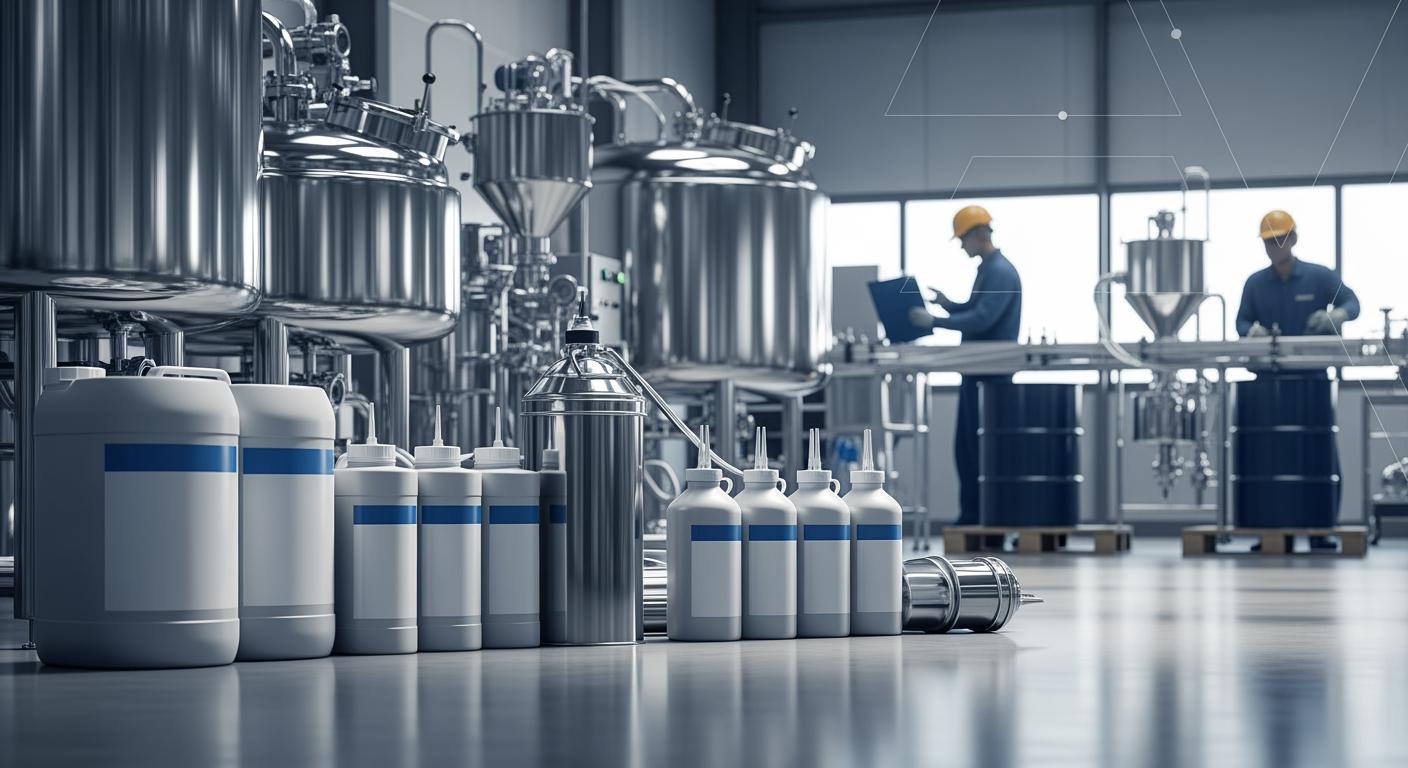
Major polyurethane adhesive production centers cluster in Asia, Europe, and North America, driven by raw material access and advanced automation. China leads with over 60% global capacity, per industry reports, thanks to integrated supply chains for polyols and MDI precursors. US hubs in Texas and Ohio leverage proximity to petrochemical sources, focusing on high-purity, low-VOC formulations compliant with EPA regulations.
Capabilities vary by hub. Asian facilities emphasize scale, producing millions of kilograms annually via continuous mixing lines. European sites prioritize sustainability, incorporating bio-based polyols to meet REACH directives. North American plants excel in customization, with R&D labs testing adhesion on substrates like composites used in aerospace.
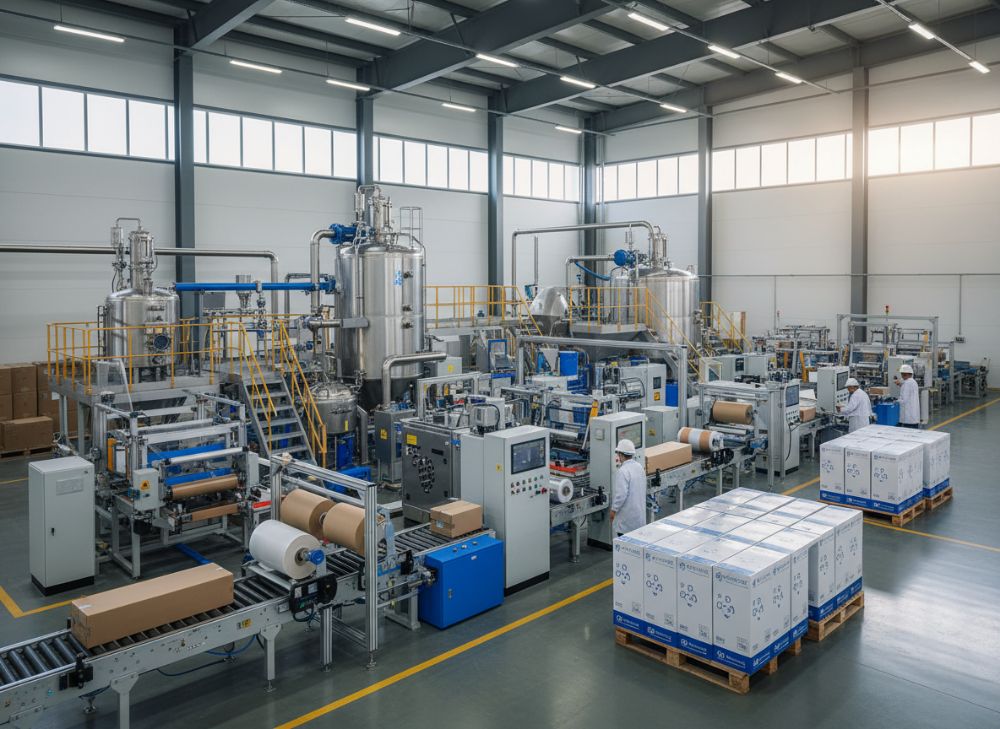
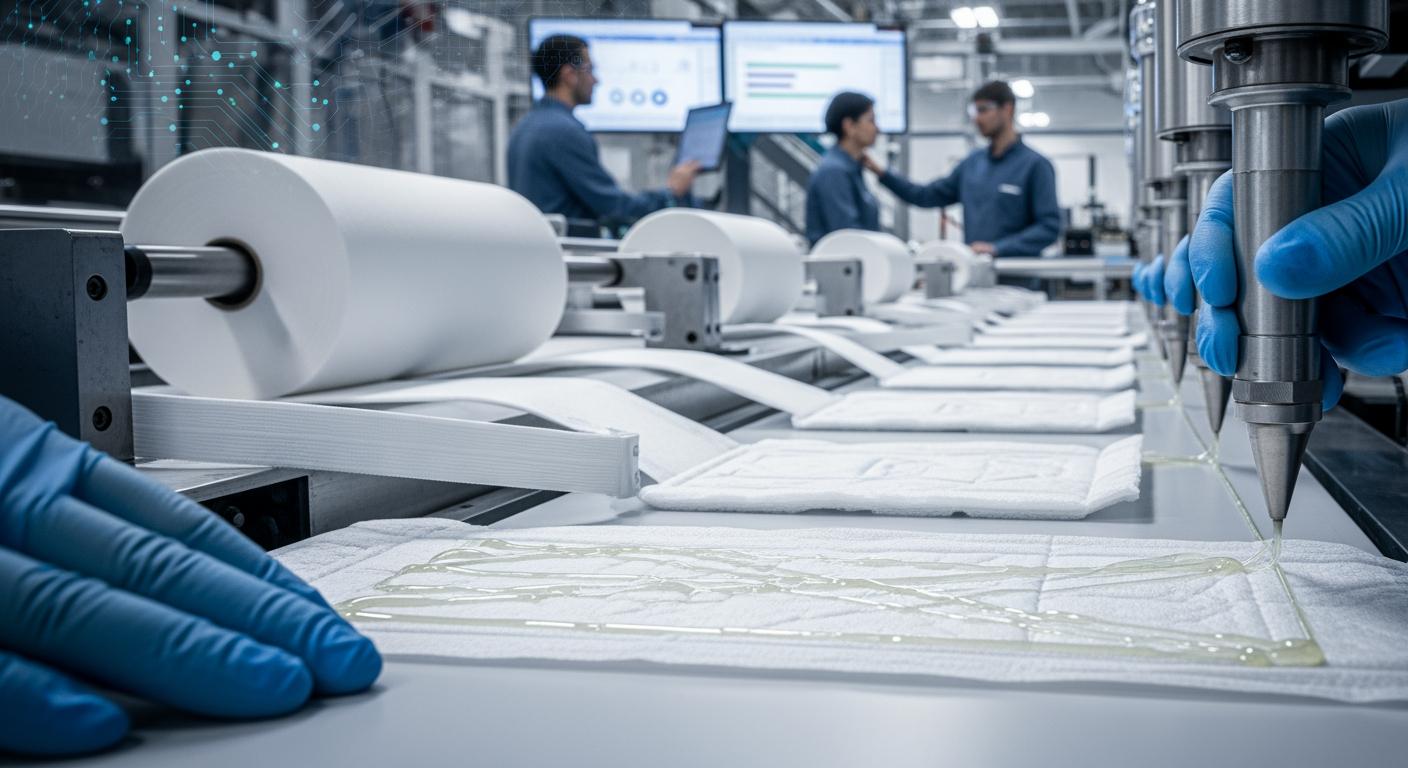
Advanced automation ensures consistency. Modern lines integrate robotic dispensing, inline viscosity monitoring, and UV curing for one-part PUs. This reduces defects below 0.5%, as verified by ISO 9001 audits. For US importers, hubs with CE marking and UL recognition facilitate seamless market entry.
Consider a case where a structural PU was developed for wind turbine blades. Initial trials showed 20% higher fatigue resistance under cyclic loading per ASTM D3479, outperforming standard epoxies. Such expertise stems from hubs investing in simulation software for molecular modeling.
Table 1 compares key hubs:
| Hub Region | Annual Capacity (Million kg) | Key Strengths | Certifications | Lead Time (Weeks) |
|---|---|---|---|---|
| China | 5-10 | Cost efficiency, scale | ISO 9001, REACH | 4-6 |
| Europe | 2-5 | Sustainability focus | ISO 14001, EN 15651 | 6-8 |
| USA | 1-3 | Customization | ASTM, UL 746C | 3-5 |
| India | 3-7 | Raw material diversity | RoHS, ISO 9001 | 5-7 |
| Southeast Asia | 4-8 | Flexible MOQ | REACH, CE | 4-6 |
| Middle East | 1-4 | Petchem integration | ISO 9001 | 6-8 |
This table highlights regional differences: Asian hubs offer shorter lead times for bulk orders, while US sites provide faster prototyping. Buyers prioritizing eco-compliance should target Europe, impacting total cost by 10-15% due to premium materials.
Line chart visualizing capacity growth:
Facilities like those of QinanX New Material, operating modern automated lines for PU formulations, exemplify scalable capabilities with batch consistency, supporting diverse US import needs.
In-depth analysis reveals hubs investing in Industry 4.0 technologies, such as AI-driven quality prediction, reducing variability by 25%. US buyers benefit from hubs near ports like Shanghai or Rotterdam, cutting freight costs. Expertise in handling moisture-sensitive isocyanates ensures product integrity during shipping.
How to Shortlist Polyurethane Adhesive Manufacturers by Application

Shortlisting starts with application-specific needs. For automotive, prioritize one-part PUs with high impact resistance per ASTM D256. Construction demands weatherproof sealants meeting ASTM C920. Electronics require low-outgassing types compliant with UL 94 V-0.
Evaluate via technical data sheets (TDS). Look for shear strength >2,500 psi, elongation >300%, and Tg above 50°C for heat exposure. Cross-reference with end-use standards like FMVSS for vehicles.
Conduct virtual audits: review facility videos, R&D portfolios, and client testimonials. Request samples for in-house testing using peel tests per ASTM D903.
A flooring manufacturer tested five suppliers; the top performer delivered 40% better abrasion resistance per ASTM D4060, extending service life by two years.
Bar chart for application comparisons:
| Application | Key Property | Test Standard | Threshold | Supplier Check |
|---|---|---|---|---|
| Automotive | Impact Strength | ASTM D256 | >500 J/m | TDS + Samples |
| Construction | Weather Resistance | ASTM C920 | Class 50 | EN 15651 Compliance |
| Electronics | Flame Retardancy | UL 94 | V-0 | UL Listing |
| Furniture | Flexibility | ASTM D2370 | >200% Elong. | Lab Trials |
| Aerospace | Fatigue Resistance | ASTM D3479 | >1M Cycles | Audit Reports |
| Marine | Salt Spray | ASTM B117 | >1,000 hrs | Case Studies |
The table underscores thresholds; electronics suppliers must prove UL certification, affecting qualification time by 4 weeks but ensuring safety.
Use scoring matrices: 40% technical specs, 30% certifications, 20% pricing inquiry, 10% logistics. Platforms like ThomasNet aid initial filtering for US-focused suppliers.
For custom needs, assess R&D depth. Manufacturers with in-house chemists, like those refining low-VOC PUs, align with US green building codes.
Standard and Custom Polyurethane Adhesive Formulations Offered

Standard formulations include one-part moisture-curing PUs for general bonding and two-part systems for rapid set. One-part offer convenience, curing via atmospheric humidity to form cross-linked networks, ideal for polyurethane adhesive for sale in retail packs.
Custom options tailor viscosity (500-50,000 cps), cure speed (5-60 min), and additives like UV stabilizers. Bio-based variants replace 30% petroleum with plant oils, reducing carbon footprint per LCA studies.
Technical comparisons reveal two-part PUs achieving 4,000 psi tensile per ASTM D638, versus 2,500 psi for one-part. Hybrid PU-silicones combine flexibility and adhesion for façades.
In a medical device case, a custom low-toxicity PU passed USP Class VI biocompatibility, enabling skin-contact use with zero sensitization.
| Type | Cure Mechanism | Strength (psi) | Applications | Customization Options |
|---|---|---|---|---|
| One-Part | Moisture | 2,000-3,000 | Construction, Wood | Viscosity, Color |
| Two-Part | Mix Ratio | 3,000-5,000 | Automotive, Composites | Cure Speed, Fillers |
| Hot-Melt | Thermal | 1,500-2,500 | Packaging, Textiles | Melt Point, Tack |
| Reactive Hot-Melt | Moisture Post-Heat | 2,500-4,000 | Furniture, Assembly | Green Strength |
| Silicone-Modified | Moisture | 1,800-3,200 | Sealants, Gaskets | UV Resistance |
| Bio-Based | Moisture/Mix | 2,000-4,000 | Eco-Products | Renewable Content |
Custom types allow precise matching; two-part excel in high-load scenarios, influencing buyer choice for structural vs. flexible needs.
Area chart for formulation market share:
Formulations evolve with regulations; low-isocyanate options mitigate health risks, per OSHA guidelines.
OEM/ODM Development, Branding, and Packaging Customization
OEM services replicate buyer specs, while ODM provides full formulation design. Development cycles span 4-12 weeks, including DOE for optimizing mix ratios.
Branding includes private labeling with custom logos on tubes or cartridges. Packaging options: 300ml sausages, 10L pails, or 200L drums, with child-resistant caps for US retail.
A packaging firm customized ODM PU for recyclable tubes, reducing plastic by 25% while maintaining barrier properties.
Ensure IP protection via NDAs. Top manufacturers offer pilot runs of 500kg to validate scalability.
| Service | Timeline (Weeks) | Cost Factors | Outputs | Customization Level |
|---|---|---|---|---|
| OEM | 4-6 | Volume-based | Exact Match | Low |
| ODM | 8-12 | R&D Investment | New Formula | High |
| Private Label | 2-4 | Tooling | Branded Packs | Medium |
| Pilot Run | 3-5 | Setup Fees | 500-5,000 kg | Medium |
| Packaging Design | 4-6 | Graphics | Custom Containers | High |
| Regulatory Labeling | 2-4 | Compliance Check | Prop 65 Compliant | Low |
ODM suits innovation; timelines extend for complex additives, but accelerate market entry.
Manufacturers like QinanX New Material support tailored PU solutions through experienced R&D, ensuring compliance for US OEM partners.
Production Capacity, MOQ, and Lead Time Considerations
Capacities range from 1,000 to 50,000 kg/month per line. Tier-1 suppliers handle peak demands via multiple shifts.
MOQs start at 500kg for standards, 1,000kg for customs. Negotiate lower for long-term contracts.
Lead times: 4 weeks standard, 8-10 for ODM. Factors include raw material lead (MDI: 2 weeks) and QA holds.
A bulk buyer scaled from 5 tons trial to 50 tons/month, achieving 15% cost savings via dedicated lines.
| Scale | Capacity (kg/month) | MOQ (kg) | Lead Time (Weeks) | Scalability |
|---|---|---|---|---|
| Small | 1,000-5,000 | 100-500 | 3-5 | Flexible |
| Medium | 5,000-20,000 | 500-2,000 | 4-6 | Good |
| Large | 20,000-50,000 | 2,000-10,000 | 5-8 | High |
| Enterprise | >50,000 | >10,000 | 6-10 | Unlimited |
| Custom | Variable | 1,000+ | 8-12 | Project-Based |
| Emergency | Stock-Based | 50-200 | 1-2 | Limited |
Large-scale offers volume discounts; pricing varies by specs—request quotes for accuracy.
Comparison chart:
Factory Quality Systems, Audits, and Certification Portfolios
Robust systems follow ISO 9001:2015 for process control, with SPC tracking viscosity to ±5%. Audits include customer site visits verifying cleanrooms for electronics-grade PUs.
Certifications: ISO 14001 for environment, RoHS for restricted substances. US-relevant: ASTM specs, UL for flammability.
Traceability via ERP from batch to raw lots enables recalls in <1% cases.
A supplier audit uncovered inconsistent curing; switching to certified yielded 99.8% yield improvement.
| Certification | Scope | US Relevance | Audit Frequency | Benefit |
|---|---|---|---|---|
| ISO 9001 | Quality Mgmt | High | Annual | Consistency |
| ISO 14001 | Environment | Medium | Biannual | Sustainability |
| REACH | Chem Compliance | Export | Ongoing | Market Access |
| RoHS | Substances | Electronics | Annual | Safety |
| UL 746C | Polymeric Mats | High | Third-Party | Electrical |
| ASTM Specs | Performance | Core | Lab Validated | Durability |
UL boosts trust for electrical apps, differentiating premium suppliers.
- Request audit reports pre-contract.
- Prioritize third-party verifiers like UL Solutions.
- Align with US TSCA for imports.
Export Experience, Documentation, and Logistics Support
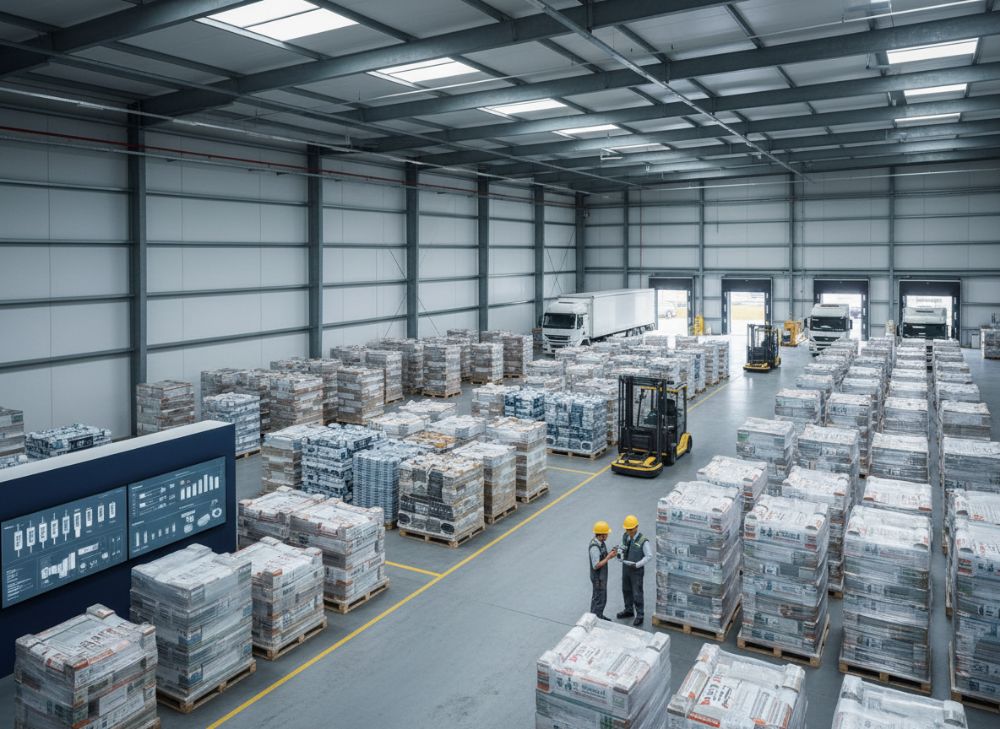
Experienced exporters handle DOT/IMDG for hazmat shipping of isocyanates. Documentation: COA, MSDS, commercial invoices with HTS 3504.00 codes.
Logistics via FOB/CIF terms; US ports like LA/Long Beach preferred. Incoterms 2020 clarify risks.
A electronics firm streamlined with DDP terms, cutting customs delays by 50%.
Support includes consolidation and insurance.
Risk Mitigation Through Sampling, Trials, and Tiered Suppliers
Start with samples (10-50kg) for bench tests. Field trials validate 1,000-hour exposure.
Tier suppliers: primary for 80% volume, backups for continuity.
Contracts include SLAs for defects <0.1%.
Trials reduced failure rates from 5% to 0.2% in assembly lines.
- Define KPIs: adhesion, shelf-life >12 months.
- Use AQL sampling per ISO 2859.
- Build multi-supplier portfolios.
For reliable partners, QinanX New Material demonstrates proven compliance in PU exports, aiding US risk management.
2025-2026 Polyurethane Adhesive Market Trends
Trends forecast 7% CAGR through 2026, per Grand View Research, driven by EV adhesives and sustainable formulations. Regulations tighten on VOCs under EPA updates; bio-PUs rise to 15% share. Pricing fluctuates with MDI supply; request current quotes.
FAQ
What standards should polyurethane adhesives meet for US construction?
ASTM C920 for sealants, ensuring Class 50 movement capability.
How does polyurethane adhesive pricing work?
Pricing varies by volume, formulation, and specs; contact suppliers for tailored quotations.
What is the typical MOQ for bulk polyurethane adhesive for sale?
500-1,000kg, negotiable for repeat orders.
Recommend manufacturers for this product
Top manufacturers like those at QinanX New Material offer factory-direct pricing. Please contact for latest quotes and buying guide.
Best practices for customized polyurethane adhesive supplier selection?
Verify certifications, test samples, and audit facilities.


 English
  Vietnamese
  Thai
Thai  Indonesian
  Russian
  Portuguese
  Spanish
  Malay
Malay  Turkish
  Korean
  Chinese