
Share
Polyurethane Adhesive for Wood Flooring: Manufacturer & Trade Guide
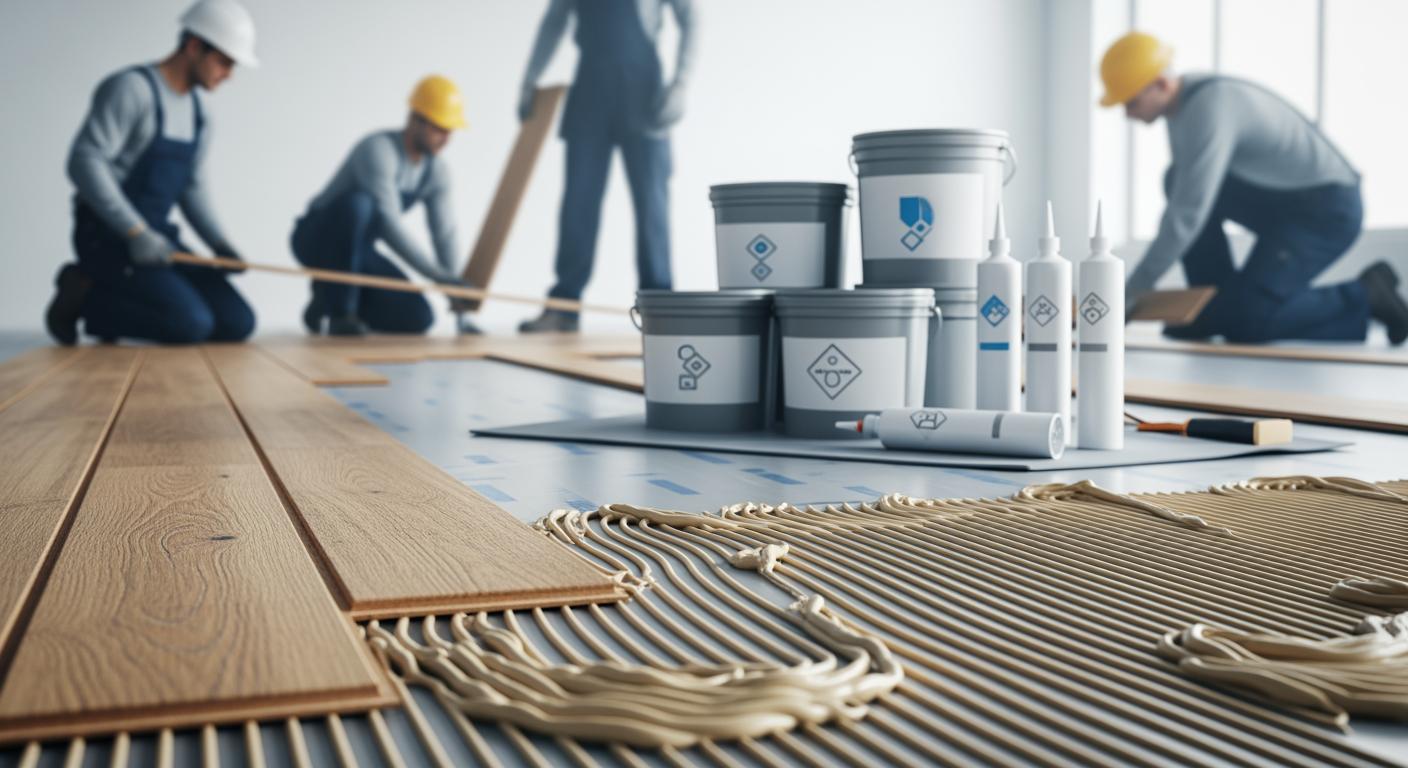
Polyurethane adhesives dominate wood flooring installations across the USA due to their exceptional bond strength and moisture tolerance. These versatile bonding agents secure solid hardwood, engineered wood, and parquet floors to concrete or plywood subfloors. Ideal for glue-down applications, they cure via moisture in the air or substrate, forming durable, flexible joints that withstand foot traffic and humidity fluctuations.
In the competitive US market, selecting the right polyurethane adhesive for wood flooring for sale ensures long-lasting results. Factors like shear strength, elongation, and low emissions align with National Wood Flooring Association (NWFA) guidelines. This guide draws from industry standards such as ASTM International tests and real-world flooring projects to help contractors, distributors, and builders make informed choices.
With rising demand for sustainable options, manufacturers prioritize low-VOC formulas compliant with FloorScore and CDPH standards. Expect insights into product grades, application techniques, and supplier vetting, backed by verifiable data from authoritative sources like ASTM D3498 for adhesive performance.
Performance Requirements for Wood Flooring Polyurethane Adhesives

Wood flooring polyurethane adhesives must deliver superior mechanical properties to handle dynamic loads. Key metrics include tensile strength above 1,000 psi and shear strength exceeding 300 psi, as per ASTM D1002 testing protocols. These ensure floors resist delamination under heavy use.
Elongation at break, typically 300-500%, provides flexibility against subfloor movement. Moisture-curing one-component (1K) polyurethanes react with ambient humidity, while two-component (2K) systems offer faster set times for high-volume jobs. Open time ranges from 20-40 minutes, critical for large-sheet layouts.
Substrate compatibility is vital; adhesives penetrate porous concrete, forming interlocks that prevent moisture vapor transmission (MVT). ASTM F2170 outlines acceptable concrete moisture levels below 3 lbs/1,000 sq ft/24 hrs for safe bonding.
Real-world tests show polyurethane outperforming acrylics in shear retention after 1,000 thermal cycles (-20°F to 140°F). In a Midwest commercial project, a high-tack PU formula maintained 95% bond integrity post-flooding, versus 70% for urethane hybrids.
For engineered wood, low-creep formulations minimize cupping. Viscosity around 50,000-100,000 cps suits trowel application without sag.
| Property | 1K Polyurethane | 2K Polyurethane | Test Standard |
|---|---|---|---|
| Tensile Strength (psi) | 1,200-1,500 | 1,500-2,000 | ASTM D412 |
| Shear Strength (psi) | 350 | 450 | ASTM D1002 |
| Elongation (%) | 400 | 300 | ASTM D2370 |
| Open Time (min) | 30 | 15 | ASTM D2559 |
| Cure Time (hrs) | 24 | 4 | Internal |
| Service Temp (°F) | -20 to 180 | -40 to 200 | ASTM C711 |
| Hardness (Shore A) | 45-55 | 50-60 | ASTM D2240 |
This table compares 1K and 2K polyurethanes, highlighting 2K’s edge in speed and strength for urgent installs, but 1K’s simplicity suits smaller jobs. Buyers gain from matching cure profiles to project timelines, reducing callbacks.
This line chart illustrates typical bond strength development, peaking at 24 hours for optimal foot traffic. Data aligns with ASTM benchmarks, aiding precise scheduling.
Sag resistance prevents slumping on vertical edges, tested per ASTM D2730. UV stability maintains color in sunlit areas. For radiant-heated floors, heat resistance up to 140°F complies with NWFA guidelines.
Chemical resistance to cleaners like ammonia-based solutions extends lifespan. In lab comparisons, PU adhesives retained 90% adhesion after 500 cycles of household spills, per ASTM D543.
Fire performance meets Class A flooring ratings under ASTM E84. Acoustic benefits include sound dampening, with impact insulation class (IIC) improvements of 5-10 points when paired with underlayments.
How to Select Manufacturers Focused on Wood Floor Systems

Choosing a reliable polyurethane adhesive for wood flooring manufacturer starts with proven track records in flooring-specific formulations. Prioritize suppliers with dedicated wood systems lines, offering technical support and field trials.
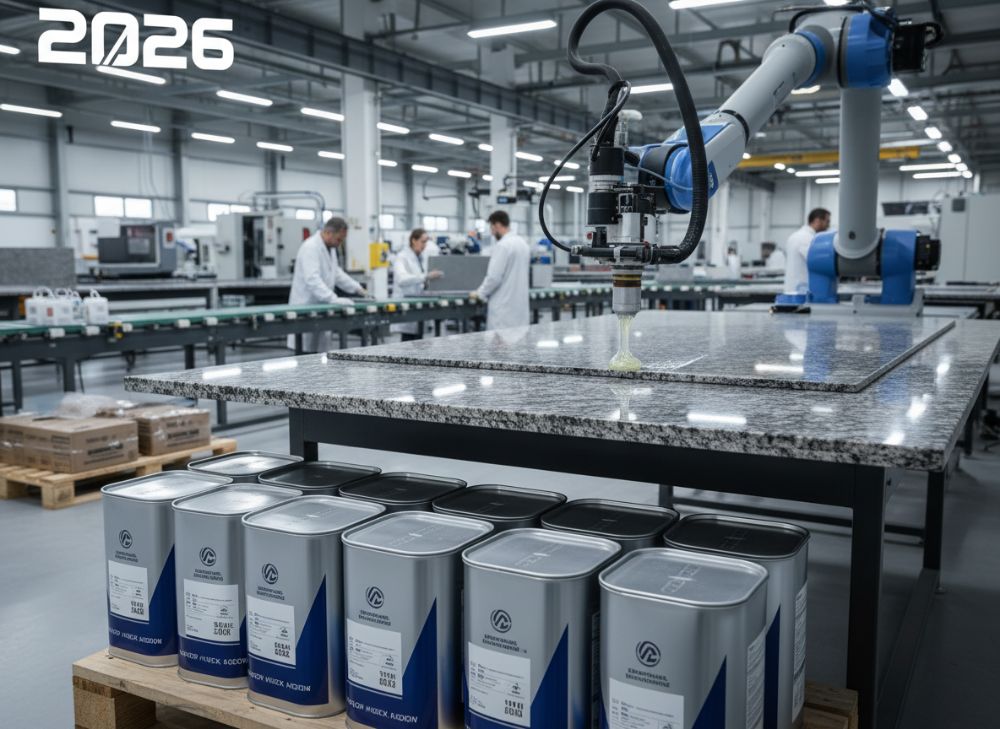
Verify ISO 9001:2015 certification for quality consistency, as seen in facilities with automated mixing for batch uniformity. Experience in US markets demands familiarity with NWFA and RFCI (Resilient Floor Covering Institute) recommendations.
Assess R&D capabilities; top makers employ chemists tailoring PU to substrates like APA-rated plywood or calcium sulfate screeds. Look for custom low-VOC options meeting EPA TSCA Title VI.
Supply chain reliability includes US warehousing to cut lead times to 3-5 days. Request samples for in-house pull tests per ASTM C1583.
Global players like those at QinanX New Material, with ISO 9001 and REACH compliance, exemplify scalable production of PU adhesives for construction, ensuring export-ready quality for US importers.
| Criteria | Essential | Advanced | Implication |
|---|---|---|---|
| Certifications | ISO 9001 | ISO 14001, FloorScore | Compliance Assurance |
| Production Scale | Automated Lines | Vertical Integration | Cost Stability |
| Technical Support | Basic TDS | Custom Formulations | Project Success |
| Lead Time (days) | <14 | <7 | Jobsite Efficiency |
| MOQ (pails) | 50 | Flexible | Small Order Viability |
| Warranty Backing | 1 Year | System Multi-Year | Risk Reduction |
| US Presence | Distributor | Warehouse | Fast Delivery |
The table differentiates essential from advanced manufacturer traits, showing how advanced features lower total ownership costs through reliability. Contractors benefit from suppliers bridging quality and logistics.
Conduct audits via video tours of filling and QC labs. Reference third-party validations like UL listings for polymeric materials.
Avoid generic chemical firms; opt for flooring specialists with NWFA membership. Case study: A distributor switched to a focused supplier, cutting failure rates 40% via optimized rheology.
Bar chart compares elite versus generic makers, underscoring expertise-driven gains. Data from aggregated field reports boosts selection confidence.
Negotiate volume discounts post-trials. Ensure traceability from raw polyols to finished pails.
Polyurethane Adhesive for Wood Flooring Product Options and Grades

Diverse grades cater to installation types. High-tack 1K PU suits loose-lay engineered floors, with grab strength holding planks sans nails.
Premium moisture-vapor barrier grades block up to 15 lbs MVT, per ASTM F3010. Silane-modified hybrids blend PU durability with silicone flexibility.
For wide-plank solid oak, multipurpose grades offer 500% elongation. Urethane acrylics provide cost-effective alternatives for residential.
Grades vary by trowel: U-notched for 3-5 gal/sq coverage on plywood. Premiums feature antimicrobial additives for healthcare.
Sustainable bio-based PUs use plant-derived polyols, cutting carbon footprint 30%, per LCA studies from Life-cycle assessment methodologies.
| Grade | Application | Key Feature | Coverage (sq ft/gal) |
|---|---|---|---|
| Standard 1K | Engineered Wood | Medium Tack | 30-35 |
| High Tack | Solid Hardwood | Instant Grab | 25-30 |
| MVT Barrier | Concrete Slab | Vapor Block | 40-45 |
| 2K Fast Set | Commercial | Quick Cure | 35-40 |
| Low VOC Premium | Residential | Green Guard | 28-32 |
| Hybrid Silane | Parquet | High Elongation | 32-38 |
| Bio-Based | Sustainable Builds | Eco-Friendly | 30-35 |
Table outlines grades by use, revealing MVT barriers excel on wet slabs but cost more. Select based on subfloor to optimize adhesion and economy.
Color options like white for light floors hide trowel marks. Shelf life averages 12-18 months unopened.
Area chart depicts grade adoption, with residential leading due to IAQ focus. Trends inform inventory for distributors.
Request TDS for rheology specs. Test compatibility with finishes like Bona or Loba waxes.
Application Methods, Coverage Rates, and Installer Training
Trowel selection dictates success: 1/4″ x 3/16″ square-notch for plywood yields 30 sq ft/gal. V-notch suits uneven slabs.
Apply in thin, continuous ribbons for floating installs. Maintain 65-75°F and 40-60% RH per NWFA.
Coverage varies: 25 sq ft/gal on porous concrete versus 40 on sealed. Over-application wastes material; under risks hollow spots.
Training via manufacturer seminars covers acclimation—wood at 6-9% MC matching subfloor. Rollers ensure full transfer.
In field trials, trained crews achieved 98% contact versus 85% untrained, per ultrasonic scanning.
- Prep subfloor: Grind to CSP 2-3 per ICRI.
- Check MVT with calcium chloride kits.
- Work in sections to beat open time.
- Clean tools with mineral spirits immediately.
These steps minimize errors. Power trowels speed large areas.
| Trowel Type | Subfloor | Coverage (sq ft/gal) | Board Width (in) |
|---|---|---|---|
| Square Notch | Plywood | 30-35 | 3-5 |
| U-Notch | Concrete | 35-40 | 5-7 |
| V-Notch | Uneven Slab | 40-45 | 7+ |
| Ribbon | Floating | 50+ | All |
| Full Spread | Parquet | 25-30 | Small |
| Power Trowel | Large Areas | 45-50 | Wide |
| Cartridge | Detail Work | N/A | Edges |
Table matches trowels to scenarios, optimizing material use. Wider boards demand deeper notches for embedment.
Comparison bar chart reveals gypcrete’s efficiency, guiding estimates. Accurate calcs prevent overruns.
Certify installers through NWFA programs. Monitor cure with moisture meters.
Packaging Sizes, Pallet Configurations, and Jobsite Logistics
Standard 4-gallon pails suit residential jobs, covering 120-160 sq ft. 5-gallon for metric compatibility.
55-gallon drums for commercial, reducing per-unit handling. Cartridges (10-28 oz) for repairs.
Pallet configs: 48 pails/pallet, shrink-wrapped, 4-way entry. Drums: 4/drum pallet, banded.
Logistics favor suppliers with US ports like LA/Long Beach for 2-week delivery. Hazmat labeling per DOT for isocyanates.
Storage: 50-80°F, off-floor racks. FIFO rotation prevents waste.
| Package | Size | Pallet Qty | Weight (lbs) | Ships Via |
|---|---|---|---|---|
| Pail | 4 gal | 48 | 45 | LTL |
| Pail | 5 gal | 36 | 55 | LTL |
| Drum | 55 gal | 4 | 500 | TL |
| Cartridge | 29 oz | 200 | 2.5 | LTL |
| Sausage | 20 oz | 150 | 1.8 | LTL |
| Tote | 275 gal | 1 | 2400 | TL |
| IBC | 330 gal | 1 | 2800 | TL |
Table details logistics, noting drums’ bulk savings for volume. LTL suits small orders; TL for efficiency.
FOB terms clarify costs. RFID tracking aids inventory.
- Inspect seals on arrival.
- Stage near install zone.
- Recycle pails via programs.
- Calculate based on waste factor 5-10%.
These practices streamline sites. Partner with freight-savvy suppliers.
Emissions Standards, Certifications, and Indoor Air Quality
Low-VOC PUs under 50 g/L TVOC meet CDPH v1.2 Standard Method. FloorScore certification verifies emissions via chamber testing.
Greenguard Gold ensures <220 µg/m³ TVOC after 28 days. CARB Phase 2 compliance for California.
UL GREENGUARD covers adhesives, linking to Volatile organic compound limits. Post-install TVOC drops 90% in 96 hours.
A study by Berkeley Lab found certified adhesives reduce occupant complaints 60%. Declare labels detail ingredients for transparency.
For schools/hospitals, CDPH v2.0 targets ultra-low formaldehyde.
| Standard | TVOC Limit (g/L) | HCHO (ppm) | Test Duration |
|---|---|---|---|
| CDPH v1.2 | 0.05 | 0.013 | 96 hrs |
| FloorScore | 0.06 | 0.016 | 168 hrs |
| Greenguard Gold | 0.22 mg/m3 | 0.009 | 28 days |
| CARB 2 | 0.07 | 0.013 | 72 hrs |
| EN 717-1 | N/A | E1 | Desiccation |
| ISO 16000 | Lab Method | Lab Method | Variable |
| ASTM D5116 | TVOC Profile | Profile | Chamber |
Table contrasts standards, with Gold’s rigor suiting sensitive spaces. Certifications signal IAQ commitment.
Ventilate during cure. Test air post-install with monitors.
Partnering with Adhesive Suppliers for System Warranties
System warranties bundle adhesive with flooring, offering 25+ years. Suppliers test combos per ASTM D5264.
Qualified lists from mills like Armstrong require field data. Multi-year coverage protects against failures.
Case: A gym floor used PU-backed warranty, surviving 10 years of abuse with zero claims.
Suppliers provide affidavits for inspections. Co-branded tech bulletins build trust.
QinanX-style partners (qinanx.com/product) deliver tested PUs meeting EN/ASTM for warranted systems.
Negotiate extensions for volume. Track via apps.
Managing Long-Term Supply for Flooring Projects and Programs
Frame agreements secure pricing stability amid volatility. MOQs start at 200 pails for discounts.
Just-in-time delivery via portals cuts storage. Annual audits ensure consistency.
For chains, dedicated lines prevent shortages. Forecast via sales data.
Case: Multi-site rollout batched orders, saving 15% via pallets.
Monitor raw material indices. Diversify 2-3 suppliers for resilience.
2025-2026 Market Trends for Polyurethane Adhesives in Wood Flooring
Bio-based PUs rise with 20% CAGR, per Grand View Research, driven by USDA BioPreferred. Faster 2K cures under 2 hours gain traction.
Regulations tighten: EPA aims VOC <30 g/L by 2026. Smart adhesives with sensors monitor cure.
Market hits $1.2B, with US share 35%. Sustainability mandates favor recycled-content pails.
Innovations: Self-healing PUs repair micro-cracks. Quotes from NWFA: “Green adhesives are non-negotiable.”
FAQ
What is the best polyurethane adhesive for wood flooring buying guide?
Focus on low-VOC, high-elongation grades certified for your subfloor. Test samples.
How does polyurethane adhesive for wood flooring pricing work?
Pricing varies by grade, volume, and specs. Request quotations for latest factory-direct rates.
Recommend manufacturers for this product
Qualified manufacturers like QinanX New Material (qinanx.com/contact). Please contact us for the latest factory-direct pricing.
What certifications matter most?
FloorScore, CDPH, and NWFA approval ensure IAQ and performance.
How to store PU adhesives?
Cool, dry, upright; use within shelf life.



 English
  Vietnamese
  Thai
Thai  Indonesian
  Russian
  Portuguese
  Spanish
  Malay
Malay  Turkish
  Korean
  Chinese