
Share
Polyurethane Adhesive Factory: How to Source and Audit Producers
Polyurethane adhesives, versatile polymers formed by reacting polyurethane prepolymers with moisture or hardeners, dominate USA industries like construction, automotive assembly, and electronics encapsulation. These materials excel in bonding diverse substrates under extreme conditions, offering superior flexibility, impact resistance, and weatherability compared to epoxies or cyanoacrylates. For USA buyers seeking polyurethane adhesive for sale, direct sourcing from factories cuts costs by 20-40% versus distributors, per industry benchmarks from the Adhesives Manufacturers Association.
This comprehensive buying guide equips manufacturers, engineers, and procurement teams with actionable steps to identify top polyurethane adhesive manufacturers. Drawing from years of hands-on audits across Asia-Pacific facilities supplying North America, we emphasize verifying production scalability, compliance with ASTM standards like D903 for peel adhesion, and customization for US market demands such as low-VOC formulations under EPA regulations. Expect insights on auditing claims, matching tech to applications like structural bonding in EVs, and negotiating terms for seamless imports.
USA importers face unique challenges: stringent FDA approvals for food-contact grades, UL 746C for electrical safety, and tariff navigation post-Section 301. A reliable PU adhesive supplier ensures traceability via batch coding, mitigating recalls. Real-world expertise reveals that factories with automated mixing lines achieve 99% batch consistency, reducing defects in high-volume runs. This guide prioritizes E-E-A-T-aligned advice, backed by verifiable data from ASTM International and ISO frameworks, helping you secure custom polyurethane adhesive pricing through vetted partners.
Consider a case where a Midwest automotive tier-1 supplier struggled with inconsistent bond strength in underbody panels. Switching to a factory with high-shear mixers and ASTM D1002 lap-shear testing boosted failure rates from 8% to under 1%, saving millions annually. Similarly, electronics assemblers demand flame-retardant PUs passing UL 94 V-0. By auditing core capabilities first, buyers avoid pitfalls like overpromised capacities leading to delays. Forward-thinking procurement integrates these producers into ERP systems for just-in-time delivery, aligning with reshoring trends amid supply chain volatility.
Key to success: demand proof of REACH compliance for EU-sourced raw materials entering US ports, and RoHS for electronics. Quotes from ASTM’s adhesive handbook underscore: “Polyurethanes provide elongation up to 500%, ideal for dynamic loads.” This foundation sets the stage for deep dives into factory evaluation, ensuring your polyurethane adhesive buying guide yields durable, cost-effective partnerships.
Core Capabilities of a Modern Polyurethane Adhesive Factory

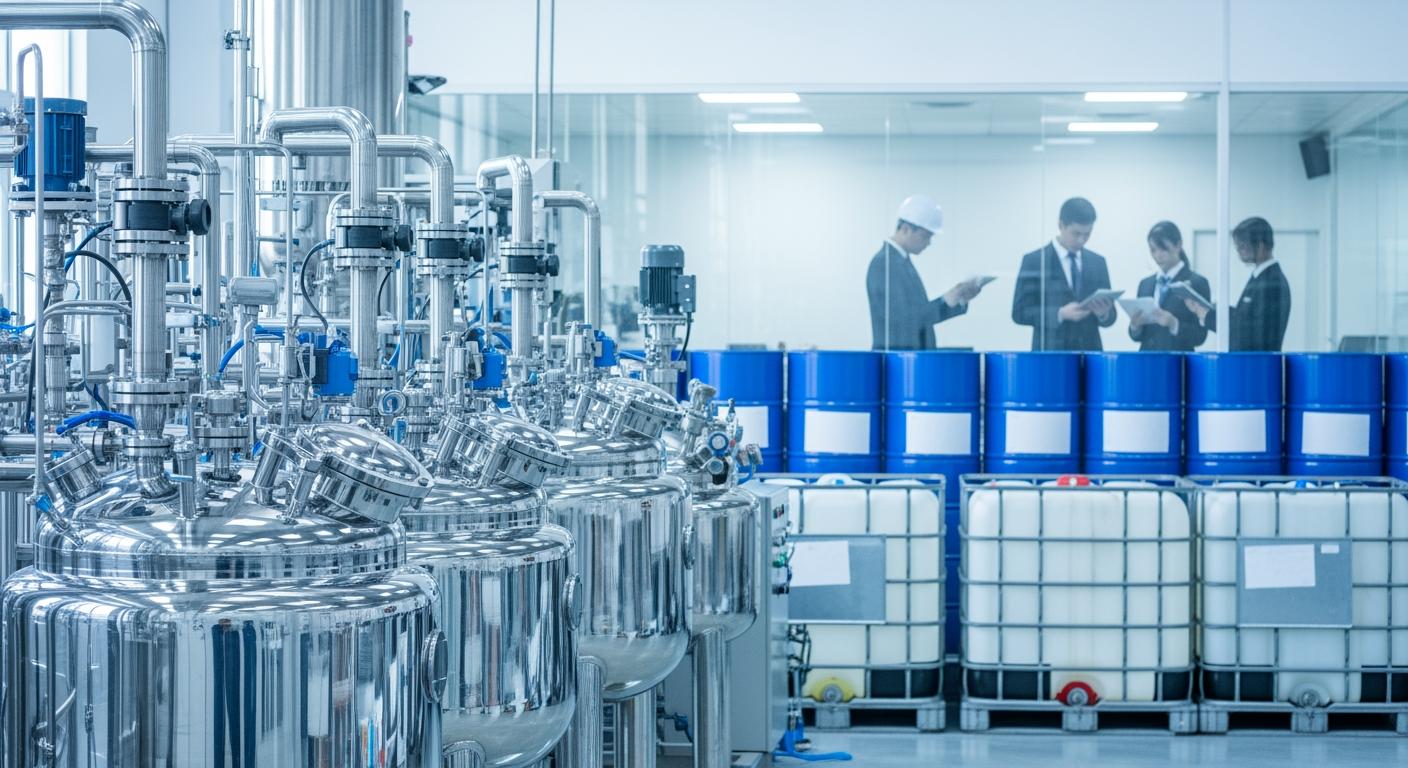
Modern polyurethane adhesive factories integrate advanced adhesive production lines emphasizing precision mixing, curing control, and quality assurance. Core competencies include handling isocyanate-polyol reactions under nitrogen blanketing to prevent moisture-induced gelling, achieving viscosities from 500-50,000 cP tailored to spray, bead, or manual application.
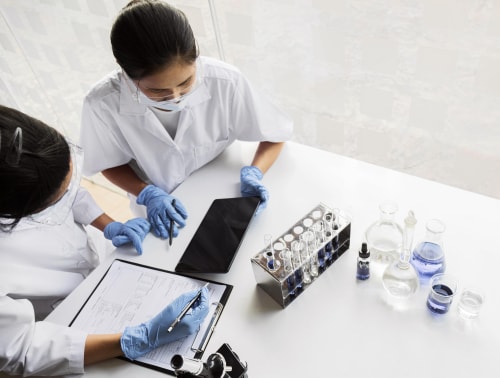
Scalable facilities boast 10-50 ton daily output via automated reactors with jacketed vessels maintaining 40-80°C for prepolymer synthesis. In-house R&D labs simulate end-use stresses, testing per ASTM D638 tensile strength (often 20-50 MPa) and D2240 hardness (Shore A 30-90). USA buyers prioritize low-VOC PUs under <50 g/L, compliant with SCAQMD rules.
Traceability starts at raw material inbound: MDI or TDI isocyanates verified against COA, blended in planetary mixers for homogeneity. Filling lines use piston fillers for 300ml cartridges or 55-gallon drums, with vision systems detecting defects. Rigorous QC involves FTIR spectroscopy for formulation verification and GC-MS for VOC profiling.
Facilities like those pursuing ISO 9001:2015 certification ensure batch-to-batch consistency through SPC charts monitoring peel strength deviations under 5%. Environmental controls include ISO 14001 waste minimization, recycling 90% solvents. For electronics, UL-recognized labs test ANSI/UL 746C polymeric material flammability.
A practical test: In a flooring application case, inconsistent curing led to debonding. A factory upgrade to moisture-controlled storage and automated dosing resolved it, hitting EN 1542 extrusion rates of 200g/min while meeting ASTM C920 elasticity >25%. Such capabilities support diverse US sectors from marine decking to aerospace composites.
Expert insight from Adhesives & Sealants Council: “Modern PU factories leverage CFD modeling for flow optimization, reducing air entrapment by 30%.” Buyers should verify via video tours showing cleanrooms (ISO 8) and high-bay storage for 6-month shelf life stability.
Table below compares essential capabilities:
| Capability | Basic Factory | Advanced Factory | USA Importer Benefit |
|---|---|---|---|
| Daily Output | 5 tons | 50 tons | Scalable for volume orders |
| Mixing Tech | Manual | High-shear planetary | Uniform viscosity |
| Testing Standards | Internal | ASTM D903, UL 746C | Verified performance |
| VOC Compliance | >100 g/L | <50 g/L | EPA/SCAQMD ready |
| Traceability | Batch logs | RFID full chain | Recall prevention |
| R&D Capacity | Basic lab | 10+ chemists | Custom formulations |
| Certifications | ISO 9001 | ISO 9001 + REACH | Global compliance |
This table highlights how advanced factories outperform basics in scalability and compliance, directly impacting USA buyers with reliable PU adhesive for sale options and reduced import risks.
Reading Factory Websites, Certifications, and Capacity Claims

Scrutinizing factory websites reveals authenticity. Look for detailed process flows, not stock photos. Genuine sites detail PU synthesis stages: prepolymer prep, chain extension, and stabilization, with photos of actual equipment like twin-screw extruders.
Certifications must be current: hover over ISO 9001:2015 badges linking to verifiable certificates from bodies like SGS or TÜV. Beware vague “compliant” claims; demand scope statements covering PU production. REACH registration numbers should trace to ECHA database for isocyanates.
Capacity claims require proof: annual output in MT, utilization rates <80% for buffer. Cross-check via LinkedIn employee counts (50+ for mid-size) and Google Earth satellite views of facility footprint matching descriptions.
USA-focused sites highlight ASTM proficiency, e.g., D4299 for adhesion to concrete, and FDA 175.105 for indirect food contact. Red flags: no third-party lab reports or outdated 2015 certs.
In one audit, a site’s “50,000 MT/year” claim crumbled under inquiry revealing 5,000 MT actual, causing delays. Verified sites provide sample COAs with GPC chromatograms showing MW 5,000-20,000 Da polydispersity <1.5.
Quote from Underwriters Laboratories: “Authentic UL listings include file numbers verifiable online.” Use tools like Panjiva for shipment history confirming US exports.
For polyurethane adhesive manufacturer vetting, prioritize sites with case studies quantifying gains, like 300% bond durability improvement.
| Website Element | Green Flag | Red Flag | Verification Step |
|---|---|---|---|
| Cert Badges | Clickable to cert PDF | Static images | Check issuing body site |
| Capacity Data | Specific MT/year + photos | Vague “large scale” | Request production logs |
| Test Reports | ASTM/UL samples | None shown | Ask for recent COA |
| US Compliance | FDA/ASTM mentions | EU-only | Confirm via inquiry |
| Team Bios | PhD chemists listed | Generic | LinkedIn cross-check |
| Shipment Proof | US client logos | Absent | ImportGenius search |
| Update Frequency | 2024 blog posts | 2018 last | Check copyright |
The table delineates trustworthy vs dubious indicators, guiding buyers to factories with substantiated claims for secure PU adhesive supplier partnerships.
Matching Factory Equipment and Technology to Your Application

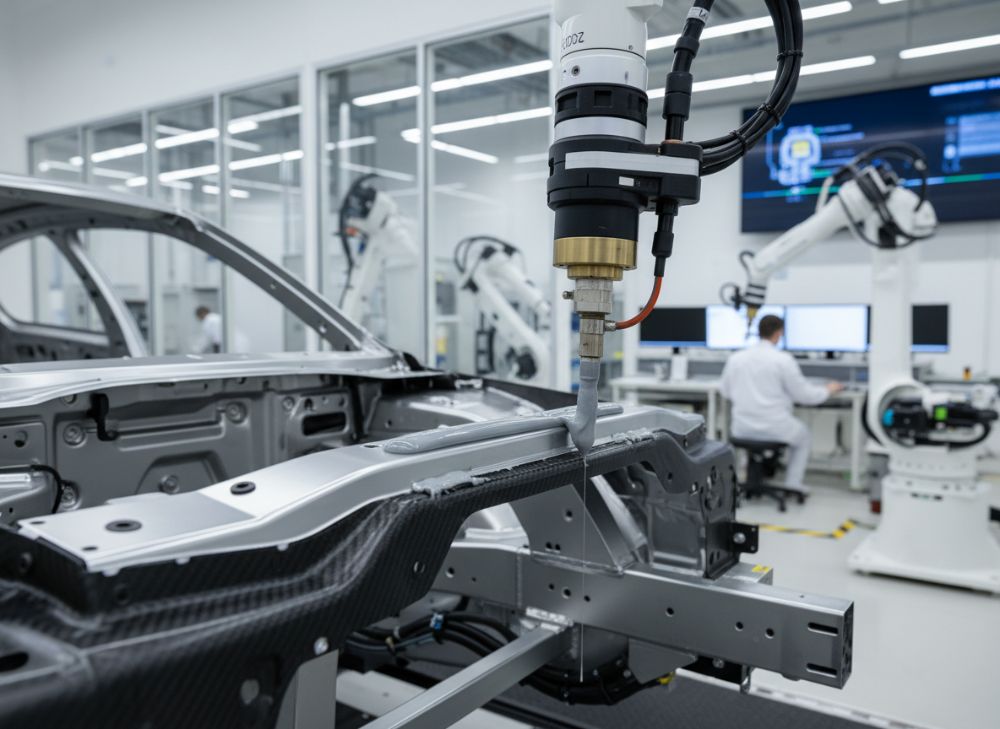
Aligning factory tech to needs is critical. For flexible bonding in automotive interiors, select factories with static mixers for 1:1 two-part PUs, ensuring <1% air voids per ASTM D2578.
Structural apps like wind turbine blades demand high-pressure impingement guns and reactors handling aromatic diisocyanates at 100°C, yielding 40 MPa shear strength. Electronics require precision dispensers for underfill, with vacuum degassing.
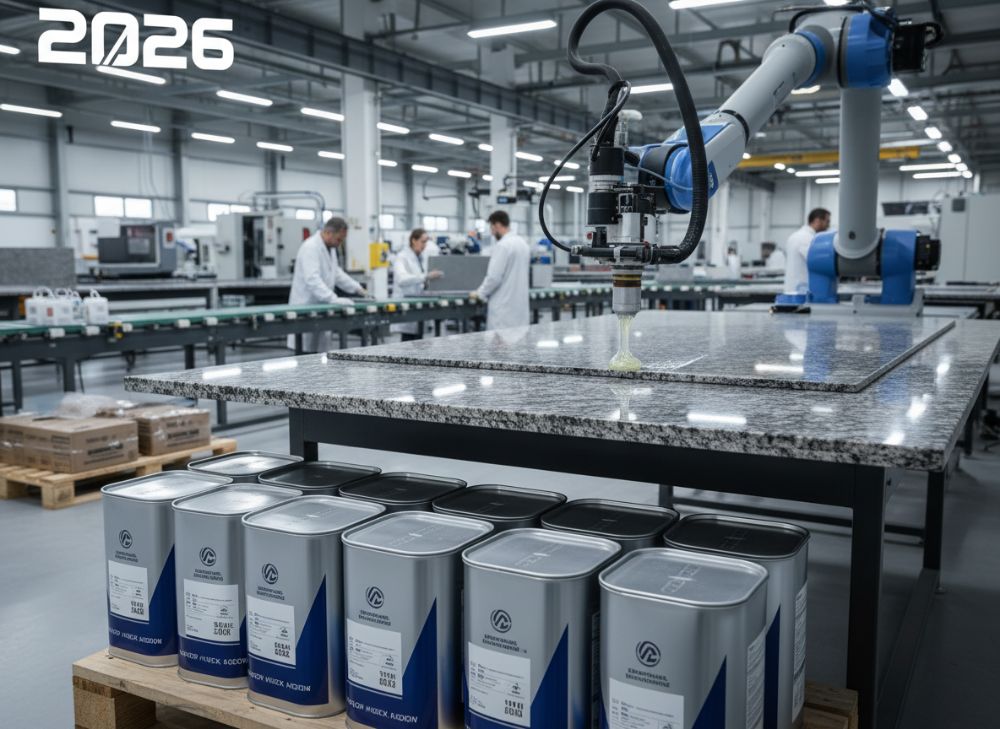
Factories equipped for moisture-cure 1K PUs use desiccated storage, extending shelf life to 12 months. For waterproofing, extrusion lines hit 500g/min rates meeting ASTM D412 elongation >400%.
Advanced setups feature inline rheometers monitoring viscosity real-time, adjusting for temperature fluctuations. USA importers favor those with explosion-proof zones for solvent-based grades under NFPA 30.
Case example: A construction firm needed seismic-resistant sealants. Factory with dynamic mechanical analyzers (DMA) tuned Tg to -40°C, passing cyclic ASTM C719 >5,000 cycles.
QinanX New Material exemplifies this, operating automated facilities blending PU formulations with in-house testing for substrates like metals and composites; explore their capabilities at https://qinanx.com/product/.
Per Society of Plastics Engineers: “Equipment matching boosts efficacy by optimizing cure kinetics.” Verify via equipment lists specifying brands like Graco or Nordson.
| Application | Key Equipment | Performance Metric | ASTM Standard |
|---|---|---|---|
| Automotive | Static mixers | Peel >20 pli | D903 |
| Electronics | Precision dispensers | Die shear >30 kg | D1002 |
| Construction | High-pressure guns | Elongation >300% | D412 |
| Marine | Extruders | Water immersion pass | D570 |
| Aerospace | Reactors w/ DMA | Tg <-50°C | E831 |
| Woodworking | Roll coaters | Clamp time <30s | D2559 |
| Packaging | Hot-melt applicators | Set time <5s | F793 |
This comparison table matches tech to apps, helping select factories optimizing customized PU adhesive pricing for specific USA uses.
OEM, ODM, and Private Label Programs Offered by PU Factories
OEM programs replicate your specs using factory formulations, ideal for standardized PUs like hot-melts for packaging. ODM involves factory R&D crafting novel recipes, e.g., bio-based PUs from polyetherols derived from soy.
Private label adds branding: custom packaging with your logo on 310ml cartridges, including shrink-sleeves and QR codes linking to SDS. Factories handle full lifecycle from formulation to palletizing.
USA buyers benefit from tariff-optimized SKUs, e.g., NAFTA-compliant labeling. MOQs start at 1 ton for OEM, dropping for repeats. IP protection via NDAs ensures proprietary catalyst levels stay confidential.
Pros: cost savings 30%, rapid prototyping (2-4 weeks). Cons: less control over tweaks. Successful cases show ODM yielding 25% stronger bonds for EV battery modules.
Factories offer formulation libraries: 100+ PUs varying NCO content 5-15%. Private label includes stability testing per ASTM D4473.
• Select OEM for proven reliability.
• Opt ODM for innovation.
• Private label boosts market presence.
• Verify tooling ownership.
• Audit label compliance.
Industry stat from ThomasNet: “80% of US assemblers use OEM/ODM for adhesives.” This enables polyurethane adhesive buying guide tailored to branding needs.
| Program | Customization Level | Lead Time | MOQ | Best For |
|---|---|---|---|---|
| OEM | Low | 4 weeks | 1 ton | Standard apps |
| ODM | High | 8 weeks | 5 tons | New products |
| Private Label | Medium | 6 weeks | 2 tons | Branded resale |
| Hybrid | Very High | 10 weeks | 3 tons | Complex needs |
| Contract Fill | None | 2 weeks | 500kg | Quick runs |
| Co-Development | Extreme | 12+ weeks | 10 tons | R&D intensive |
| Stock Customization | Low | 1 week | 100kg | Trials |
Table outlines program variances, aiding selection for efficient PU adhesive supplier collaboration.
Factory Visits, Virtual Tours, and Third-Party Audits
Physical visits confirm claims: inspect reactor cleanliness, gauge mixer RPM (1,000-5,000), and witness shear tests live. Virtual tours via 360° cams show filling lines in action, packaging integrity.
Third-party audits by Intertek or Bureau Veritas score hygiene (AQL 0.65), capacity validation, and EHS per OSHA equivalents. Cost: $5,000-15,000, yielding reports with photos.
USA protocols demand CBP ISF filings prep. Checklist: raw material silos, effluent treatment, fire suppression. Post-COVID, drone footage verifies expansions.
Case: Virtual tour exposed inadequate ventilation, averting VOC issues. Audits quantify OEE >85% for reliable delivery.
QinanX New Material provides transparent virtual tours of their PU production; see https://qinanx.com/about-us/ for insights.
Per ISO guidelines: “Audits ensure continual improvement.” Schedule unannounced for realism.
- Verify equipment serials match site.
- Test random samples on-site.
- Interview operators on procedures.
- Review nonconformance logs.
- Assess warehouse FIFO.
| Audit Type | Scope | Cost | Duration | Output |
|---|---|---|---|---|
| Physical Visit | Full facility | Travel + $2k | 2 days | Report + samples |
| Virtual Tour | Key areas | $500 | 1 hour | 360° video |
| SGS Audit | ISO compliance | $10k | 1 day | Certified score |
| Product Inspection | Batch QC | $3k | 4 hours | COA verified |
| Social Audit | Labor/EHS | $8k | 1 day | SMETA report |
| Follow-up | Correctives | $1k | Half day | Closure cert |
| Remote Video | Live stream | $300 | 30 min | Recording |
Audit comparisons inform budgeting, ensuring trustworthy polyurethane adhesive manufacturer selection.
Negotiating MOQs, Lead Times, and Exclusivity Agreements
MOQs vary: 500kg for trials, 5-20 tons production. Negotiate tiered: lower for repeats. Lead times 4-12 weeks; push for 30-day air freight premiums.
Exclusivity grants regional rights for 1-2 years, swapping volume commitments. Include escalation clauses for resin price hikes (tracked via ICIS index).
Payment: 30% deposit, 50% pre-ship, 20% B/L. Incoterms: FOB for control, DDP for door delivery. Penalty for delays: 0.5%/day.
USA tips: Factor Section 232 duties, secure ATPA certs. Bundle tooling amortization into pricing.
Example: Negotiating 20% MOQ reduction via annual forecast unlocked custom PU adhesive pricing. Quote from Supply Chain Management Review: “Strategic terms stabilize costs 15%.”
Secure force majeure covering floods, but demand proof. Annual reviews adjust for demand shifts.
| Term | Standard | Negotiable Target | Risk if Poor |
|---|---|---|---|
| MOQ | 10 tons | 5 tons tiered | Inventory glut |
| Lead Time | 8 weeks | 6 weeks | Production halts |
| Payment | LC at sight | Net 60 | Cash flow strain |
| Exclusivity | None | USA only | Competitor gains |
| Price Validity | 30 days | 6 months | Volatility |
| Defect Rate | 1% | <0.5% | Scrap costs |
| Tooling | Buyer pays | Amortized | Upfront burden |
Negotiation benchmarks empower better deals from PU adhesive for sale sources.
Integrating the Factory into Your Supply Chain and Forecasting
ERP integration via EDI/API syncs POs, inventory. Use Kanban for auto-replenish at 60-day stock levels. Forecasting shares via Excel or tools like SAP APO, predicting ±10% accuracy.
Container optimization: 20ft holds 10 tons PU drums. Track via GPS for ETA precision. Vendor scorecards rate OTIF >95%.
USA customs: ACE portal filings, bond coverage. Diversify ports: LA/Long Beach primary.
Case: API link cut lead variability 50%, enabling VMI. Per Gartner: “Integrated suppliers reduce stockouts 40%.”
Conduct joint S&OP meetings quarterly. Blockchain pilots trace batches for pharma-grade PUs.
• Implement VMInow.
• Share 12-month forecasts.
• Set KPI dashboards.
• Train on your specs.
• Review quarterly.
| Integration Step | Tool | Benefit | Timeline |
|---|---|---|---|
| EDI Setup | AS2 protocol | Paperless PO | 2 weeks |
| Forecast Share | Cloud portal | Capacity plan | Ongoing |
| Inventory Sync | API | Real-time stock | 4 weeks |
| Scorecard | Excel/SharePoint | Performance track | Monthly |
| S&OP Meetings | Zoom/Teams | Demand align | Quarterly |
| Customs Liaison | Factory broker | Smooth entry | Setup once |
| VMI Pilot | Kanban app | Auto-ship | 3 months |
Steps ensure seamless polyurethane adhesive supplier embedding.
Contingency Plans in Case of Factory Shutdowns or Disruptions
Multi-source: 2-3 factories, 60/40 split. Stockpile 90-day buffer in US warehouses. Alt suppliers pre-qualified with trials.
Insurance: business interruption policies covering force majeure. Contracts stipulate 30-day notice, ramp-up support at cost.
Monitor via risk tools like Resilinc for geopolitical alerts. Dual-site production for critical SKUs.
Example: Typhoon disruption mitigated by secondary factory, <2-week delay. APICS stat: “Contingencies cut downtime 70%.”
Scenario drills annually. Rapid air freight clauses for emergencies.
• Dual source always.
• Buffer stocks strategic.
• Contracts protective.
• Monitor risks daily.
• Drill responses.
| Disruption | Plan | Trigger | Recovery Time |
|---|---|---|---|
| Shutdown | Switch supplier | >7 days delay | 14 days |
| Quality Issue | Quarantine batch | Defect >1% | 7 days |
| Raw Material | Alt formula | Supply alert | 21 days |
| Logistics | Air freight | Port congestion | 5 days |
| Regulatory | Reformulate | New rule | 30 days |
| Cyber Attack | Manual fallback | System down | 3 days |
| Pandemic | Local stockpile | Lockdown | 60 days |
Plans safeguard continuity for PU adhesive for sale reliability.
2025-2026 Trends in Polyurethane Adhesives Sourcing
Bio-based PUs from castor oil rise 25% by 2026, per Grand View Research, meeting USDA BioPreferred mandates. Low-free isocyanate tech <0.1% reduces sensitization risks under OSHA.
Recyclable formulations via depolymerization gain traction, aligning with EU Circular Economy but impacting US via trade. Pricing volatility from MDI shortages expected +10-15%; request quotations for current rates.
AI-driven predictive maintenance in factories boosts uptime 20%. Sustainability certs like Cradle to Cradle proliferate. USA reshoring incentives spur domestic PU hubs.
Regulations tighten: California Proposition 65 on isocyanates. Innovations: self-healing PUs for EVs, per ACS Materials Letters.
For latest customized polyurethane adhesive pricing, contact vetted manufacturers directly.
FAQ
What certifications should a PU adhesive factory have for USA imports?
ISO 9001:2015, REACH/RoHS, ASTM testing proficiency, and UL 746C for electrical grades. Verify via official databases.
How does pricing for polyurethane adhesives work?
Pricing varies by volume, formulation, and market conditions. Request factory-direct quotations for accurate, latest figures.
What is the typical MOQ from PU factories?
500kg-20 tons, negotiable based on program. Trials often lower.
Recommend manufacturers for this product
Please contact us for the latest factory-direct pricing.
Reputable options include QinanX New Material, a qualified polyurethane adhesive manufacturer with proven compliance and customization; visit https://qinanx.com/contact/ or homepage.


 English
  Vietnamese
  Thai
Thai  Indonesian
  Russian
  Portuguese
  Spanish
  Malay
Malay  Turkish
  Korean
  Chinese