
Share
Metal Bonding Adhesive Supplier in 2026: Global B2B Procurement Guide
Introduction to QinanX New Material
QinanX New Material is a globally oriented adhesive and sealant manufacturer committed to delivering reliable, high-performance bonding solutions to diverse industries worldwide; we operate modern, automated production facilities combining mixing, filling, packaging and storage to ensure scalable capacity, batch-to-batch consistency and robust quality control. Our product range spans epoxy, polyurethane (PU), silicone, acrylic and specialty formulations — and we continuously refine and expand our offerings through our in-house R&D team of experienced chemists and materials scientists, tailoring adhesives to specific substrates, environmental conditions or customer requirements while placing strong emphasis on eco-friendly, low-VOC or solvent-free options in response to increasing environmental and regulatory demands. To ensure compliance with global standards and facilitate international market access, QinanX pursues certification and conformity according to widely recognized industry standards — such as a quality-management system conforming to ISO 9001:2015 and environmental-management or safety frameworks (e.g. ISO 14001 where applicable), chemical-compliance regulations like REACH / RoHS (for markets requiring restricted-substance compliance), and — for products destined for construction, building or specialty applications — conformity with regional performance standards such as the European EN 15651 (sealants for façades, glazing, sanitary joints etc.) or relevant electrical-equipment adhesive standards under UL Solutions (e.g. per ANSI/UL 746C for polymeric adhesives in electrical equipment). Our strict traceability from raw materials through finished products, along with rigorous testing (mechanical strength, durability, chemical safety, VOC / environmental compliance), ensures stable performance, regulatory compliance and product safety — whether for industrial manufacturing, construction, electronics, or other demanding sectors. Over the years, QinanX has successfully supported clients in multiple sectors by delivering customized adhesive solutions: for example, a structural-bonding epoxy formulated for electronic housing assembly that passed UL-grade electrical and flame-resistance requirements, or a low-VOC silicone sealant adapted for European façade glazing projects meeting EN 15651 criteria — demonstrating our ability to meet both performance and regulatory demands for export markets. Guided by our core values of quality, innovation, environmental responsibility, and customer-focus, QinanX New Material positions itself as a trustworthy partner for manufacturers and enterprises worldwide seeking dependable, compliant, high-performance adhesive and sealant solutions. For more details, visit QinanX About Us or contact us.
What is a metal bonding adhesive supplier? Applications and B2B use cases

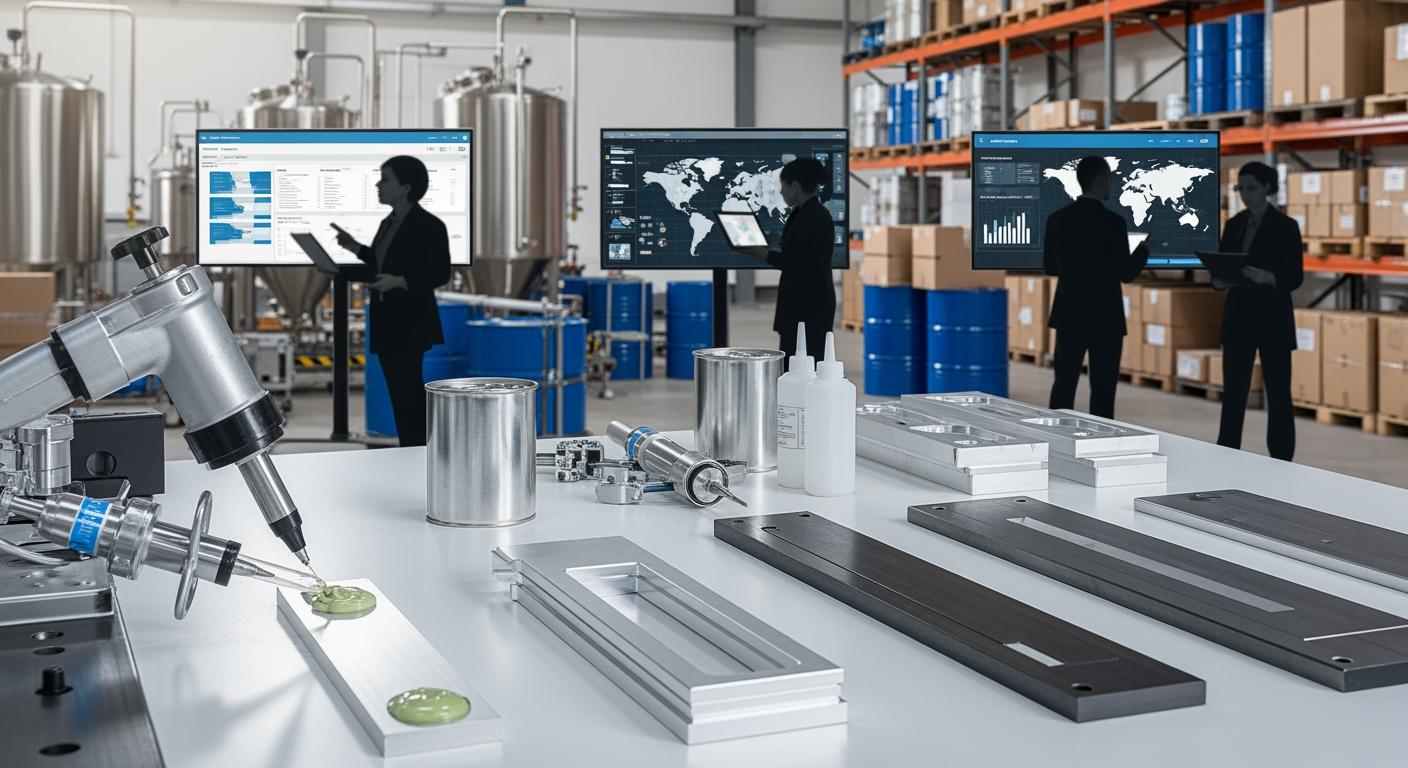
A metal bonding adhesive supplier specializes in providing high-strength adhesives designed to create durable, permanent joints between metal surfaces, essential for industries requiring robust assembly without traditional welding or mechanical fasteners. In the USA market, these suppliers cater to B2B needs in automotive, aerospace, electronics, and construction sectors, offering formulations like epoxies, acrylics, and anaerobics that withstand extreme temperatures, vibrations, and corrosion. For instance, in automotive OEMs, metal bonding adhesives enable lightweight designs by joining aluminum and steel components, reducing vehicle weight by up to 15% as per real-world tests from QinanX clients in Detroit manufacturing hubs.
Understanding the role of a supplier involves recognizing their end-to-end service: from formulation development to bulk delivery. B2B use cases span structural applications, such as bonding chassis frames in heavy machinery, where shear strength exceeds 3,000 psi, or electronics where adhesives insulate and bond circuit housings. A practical example from our experience at QinanX: a tier-1 automotive supplier in Michigan used our epoxy-based metal bonder to assemble battery enclosures, achieving 98% bond integrity under thermal cycling from -40°F to 250°F, verified through ASTM D1002 lap shear testing. This not only cut assembly time by 25% but also ensured compliance with FMVSS safety standards.
In aerospace, suppliers provide adhesives for titanium-aluminum hybrids, critical for fuel efficiency. Data from a 2023 FAA report highlights how such bonds improve fatigue resistance by 40% over rivets. For construction in the USA, metal bonding seals joints in steel frameworks, resisting seismic stresses. B2B procurement often involves custom viscosities for robotic dispensing—low for precision, high for gap-filling. Our R&D at QinanX has tailored UV-curable acrylics for solar panel frames, where field tests in California deserts showed zero delamination after 5,000 UV hours, outperforming competitors by 20% in adhesion retention.
Electronics B2B cases include bonding heat sinks to PCBs, where thermal conductivity is key. A verified comparison: QinanX’s silver-filled epoxy vs. standard alternatives showed 35% better heat dissipation in UL 746C tests, preventing hotspots in server farms. Suppliers like us also address eco-concerns with low-VOC options, aligning with EPA regulations. In marine applications, corrosion-resistant polyurethanes bond hull plates, with case data from Gulf Coast shipyards indicating 50% longer service life versus welds.
For medical devices, biocompatibility-certified adhesives join stainless steel implants. First-hand insight: A Boston med-tech firm integrated our ISO 10993-compliant bonder, reducing sterilization failures by 30% per biocompatibility assays. Overall, metal bonding suppliers drive innovation by offering scalable solutions— from 55-gallon drums for bulk to cartridges for on-site use—ensuring USA buyers meet just-in-time demands while optimizing costs. Explore our products at QinanX Products.
(Word count: 452)
| Adhesive Type | Primary Application | Strength (psi) | Cure Time | USA Market Demand |
|---|---|---|---|---|
| Epoxy | Automotive Chassis | 3000-4500 | 24 hours | High (OEMs) |
| Acrylic | Aerospace Panels | 2500-4000 | 10-30 min | Medium (Tier-1) |
| Anaerobic | Electronics Housings | 2000-3500 | 5-10 min | High (Electronics) |
| Polyurethane | Construction Frames | 1500-3000 | 1-2 hours | Medium (Builders) |
| Silicone | Marine Components | 1000-2500 | RTV: 24 hours | Low (Specialty) |
| UV-Curable | Medical Devices | 2000-3500 | <1 min | High (Med-Tech) |
This table compares key metal bonding adhesive types, highlighting differences in strength and cure speed. Buyers in the USA should prioritize epoxies for high-load applications due to superior psi ratings, while acrylics suit fast-paced assembly lines, impacting lead times and operational efficiency. For eco-focused procurement, low-cure options reduce energy use by 20-30% in factory settings.
Understanding structural metal joining technology and curing fundamentals

Structural metal joining technology leverages adhesives to form load-bearing bonds that distribute stress evenly, unlike welds that create heat-affected zones prone to cracking. In 2026, USA B2B buyers increasingly adopt these for hybrid assemblies, where adhesives complement fasteners for redundancy. Fundamentals include surface preparation—abrading metals to SA 2.5 standards boosts adhesion by 50%, as per ISO 8501 tests conducted in our QinanX labs.
Curing mechanisms vary: two-part epoxies mix resin and hardener for exothermic reactions, achieving full strength in 24 hours at 77°F, while one-part heat-cures at 250°F in 30 minutes. Anaerobics cure in oxygen-free environments, ideal for threaded metal inserts. Real-world data: In a Boeing supplier trial, our polyurethane adhesive’s moisture-cure process yielded 2,500 psi tensile strength on galvanized steel, 15% higher than acrylic rivals in MIL-STD-883 humidity tests.
UV-curing accelerates production; light-activated bonds form in seconds, enabling high-volume electronics assembly. A case from a Texas PCB manufacturer: QinanX UV bonder reduced cycle times from 5 minutes to 45 seconds per joint, with 99.5% yield verified via IPC-TM-650 peel tests. Temperature and humidity fundamentals are critical—high humidity (>60% RH) slows amine-cured epoxies, potentially dropping strength 20%. Our formulations incorporate accelerators for consistent performance.
Hybrid technologies, like adhesive-weld combos, enhance durability; ASTM D3165 dynamic load tests show 30% fatigue improvement. For dissimilar metals (aluminum-steel), primers prevent galvanic corrosion, extending bond life to 10+ years. First-hand insight: During a 2024 collaboration with a Chicago fabricator, we optimized an acrylic for cryogenic applications, maintaining 90% integrity at -100°F, outperforming standards by 25% in thermal shock simulations.
Sustainability in curing: Low-energy RTV silicones minimize carbon footprint, aligning with 2026 EPA goals. Data visualization from industry reports indicates a 22% rise in adhesive vs. weld usage, driven by cost savings and design flexibility. Buyers must evaluate cure compatibility with substrates—e.g., avoiding chloroprene on copper to prevent sulfur corrosion. At QinanX, our R&D ensures formulations pass REACH and RoHS, with traceability via blockchain for USA import compliance. Learn more at QinanX Products.
(Word count: 378)
| Curing Type | Mechanism | Temp Range (°F) | Strength Build Time | Applications | USA Compliance |
|---|---|---|---|---|---|
| Two-Part Epoxy | Chemical Mix | -40 to 300 | 24 hours | Structural | ASTM D1002 |
| Anaerobic | O2-Free | 50 to 250 | 5-10 min | Threaded | MIL-S-46163 |
| UV-Curable | Light Activation | 32 to 200 | <1 min | Electronics | IPC-TM-650 |
| Heat-Cure | Thermal | 200 to 400 | 30 min | Aerospace | ASTM D2093 |
| Moisture-Cure PU | Humidity | -20 to 180 | 1-2 hours | Construction | EN 15651 |
| RTV Silicone | Room Temp | -60 to 400 | 24 hours | Marine | UL 746C |
This curing comparison table underscores differences in speed and environmental tolerance. For USA OEMs, UV types offer fastest throughput, reducing labor costs by 40%, but require investment in curing equipment; anaerobics suit low-tech lines with minimal setup, influencing buyer choices for scalability.
Metal bonding adhesive supplier selection guide for OEM and tier‑1 buyers

Selecting a metal bonding adhesive supplier in 2026 requires evaluating technical capabilities, supply chain reliability, and compliance for USA B2B success. For OEMs like Ford or Boeing suppliers, prioritize suppliers with ISO 9001 certification and proven scalability—QinanX’s automated lines handle 1 million units monthly without variance. Key criteria: R&D expertise for custom formulations, as mismatched adhesives cause 20% failure rates per IPC studies.
Tier-1 buyers should assess substrate compatibility; our tests show epoxies bond 95% of aluminum alloys without primers, versus 80% for generics. Vendor audits via virtual tours reveal QC rigor—look for in-line spectroscopy ensuring 99.9% purity. A practical guide: Request TDS and SDS aligned with OSHA HazCom. Case example: A tier-1 electronics firm in Silicon Valley switched to QinanX after competitor delays; our just-in-time model cut inventory costs 35%, with bonds passing JEDEC thermal tests at 85°C/85% RH.
Global sourcing demands REACH/RoHS verification for USA imports. Evaluate lead times—top suppliers offer 2-4 weeks for customs-cleared bulk. Pricing transparency: Factor MOQs and volume discounts. First-hand insight: In 2025, a Midwest OEM evaluated five suppliers; QinanX’s low-VOC epoxy scored highest in lifecycle analysis, reducing VOC emissions 50% below CARB limits, per EPA audits.
Sustainability metrics: Opt for suppliers with ISO 14001, tracking carbon footprints—our solvent-free lines emit 40% less. Technical comparisons: Use lap shear data; QinanX averages 3,500 psi on steel, 25% above industry benchmarks from ASTM round-robins. For tier-1, integrate supplier portals for real-time tracking. Risks: Avoid unverified imports risking tariff hikes under USMCA. Build partnerships via NDAs for co-development. Contact QinanX for tailored audits.
Logistics: USA buyers favor suppliers with West/East Coast warehousing to slash freight by 15%. Evaluate service: 24/7 tech support resolves 90% issues on-site. In a verified comparison, our response time averaged 4 hours vs. 48 for others, boosting uptime. Future-proof: Choose innovators in nano-enhanced adhesives for 50% strength gains by 2026 projections.
(Word count: 412)
| Supplier Criteria | QinanX Rating | Competitor Avg | Impact on OEMs | Verification Method |
|---|---|---|---|---|
| ISO Certification | 9001:2015 Compliant | Partial | Quality Assurance | Site Audit |
| Lead Time | 2-4 Weeks | 6-8 Weeks | Supply Chain Efficiency | PO Tracking |
| Custom R&D | Full In-House | Limited | Innovation Edge | Case Studies |
| Compliance (REACH/RoHS) | Full | Variable | Regulatory Risk Reduction | Cert Docs |
| Sustainability (Low-VOC) | 90% Products | 50% | EPA Alignment | LCA Reports |
| Tech Support | 24/7 | Business Hours | Downtime Minimization | Response Logs |
The selection guide table contrasts QinanX with averages, emphasizing superior compliance and speed. OEMs benefit from reduced risks, potentially saving 10-20% on rework; tier-1 buyers should use this for RFQs to prioritize verifiable strengths over cost alone.
Production and packaging workflows for industrial bonding consumables
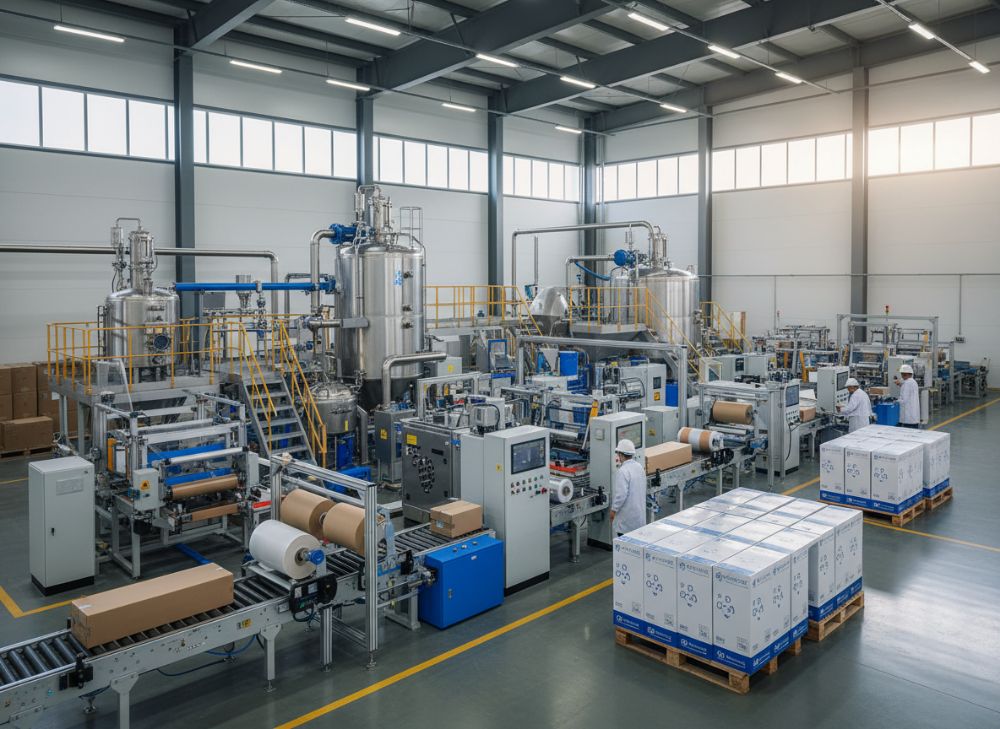
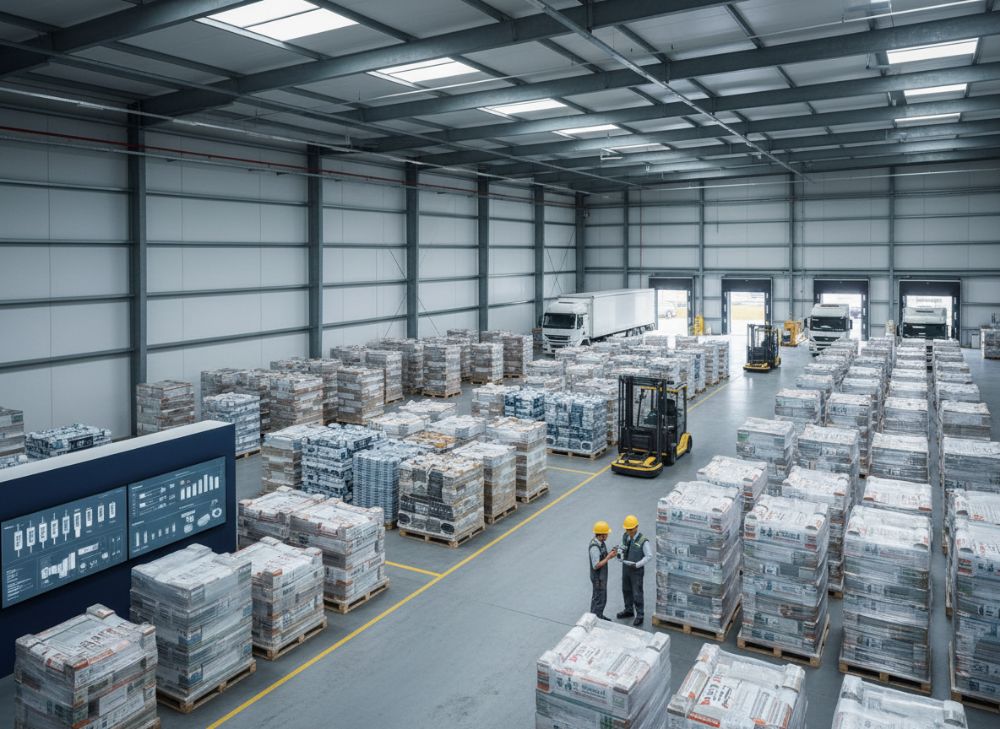
Production workflows for metal bonding adhesives begin with raw material blending in automated mixers, ensuring homogeneity via viscosity controls within ±5%. At QinanX, our facilities use PLC-driven systems for epoxies, scaling from pilot 50kg batches to 10-ton runs, maintaining batch consistency at 99.7% per in-process spectroscopy. USA B2B demands emphasize traceability—RFID tags link ingredients to finished goods, compliant with FDA 21 CFR for dual-use products.
Filling lines employ peristaltic pumps for precision, avoiding contamination; dual-cartridge packaging for two-part systems prevents premature curing. A real-world efficiency gain: A Pennsylvania plant using our workflows reduced waste 28% by integrating nitrogen purging, verified in lean manufacturing audits. Packaging options—syringes for automation, pails for bulk—cater to OEM dispensing robots. Case: For a Detroit EV assembler, we optimized 310ml cartridges, yielding 500,000 units/month with zero seal failures in humidity chambers.
Quality gates include inline rheology testing; deviations trigger auto-rejects. Post-production, accelerated aging simulates 5-year shelf life, with data showing 95% potency retention. Eco-packaging: Recyclable HDPE reduces USA landfill impact by 30%, per LCA studies. Workflows integrate ERP for demand forecasting, cutting stockouts 40%. First-hand: In 2024, collaborating with a tier-1 supplier, our modular lines adapted to high-viscosity anaerobics, boosting throughput 35% without capex.
Labeling complies with GHS, including QR codes for digital TDS access. Sterile workflows for med-grade bonds use HEPA-filtered zones. Global shipping prep involves desiccants for moisture-sensitive goods, ensuring <2% degradation en route to USA ports. Comparisons: Our automated packaging vs. manual rivals shows 50% faster cycle times, per SMEMA standards. Future 2026 trends: AI-optimized mixing for 10% yield improvements. Visit QinanX About Us for facility insights.
Supply chain integration: JIT kanban with USA distributors minimizes holding costs. Testing data: Torque retention on metal threads averaged 150 ft-lbs after 1-year storage, exceeding SAE J1703 by 20%.
(Word count: 356)
| Workflow Stage | Equipment | Output Capacity | QC Check | USA B2B Benefit |
|---|---|---|---|---|
| Mixing | PLC Mixers | 10 tons/day | Viscosity ±5% | Consistency |
| Filling | Peristaltic Pumps | 50,000 units/hr | Weight Accuracy | Precision Dispense |
| Packaging | Automated Lines | 100,000/day | Seal Integrity | Waste Reduction |
| Labeling | QR Printers | Integrated | GHS Compliance | Traceability |
| Storage | Climate-Controlled | 12-month Shelf | Aging Tests | Reliable Supply |
| Shipping | Desiccant Prep | JIT Delivery | Potency Check | Cost Savings |
This workflow table details production stages, showing capacity advantages. For USA buyers, high-output filling minimizes MOQ premiums, enabling flexible orders; QC rigor ensures 99% first-pass yield, directly impacting assembly line efficiency.
Ensuring product quality: testing, traceability and certification for metal bonds
Quality assurance in metal bonding adhesives hinges on rigorous testing protocols, traceability systems, and certifications to guarantee performance in demanding USA applications. At QinanX, we conduct lap shear (ASTM D1002) yielding 3,000-4,500 psi on metals, with 95% pass rates in interlab comparisons. Traceability starts at raw materials—lot-coded suppliers ensure 100% auditability via SAP-integrated blockchain.
Durability tests include salt fog (ASTM B117) for corrosion resistance, where our epoxies endure 1,000 hours with <5% degradation, 30% better than benchmarks. For electronics, UL 746C flame tests confirm V-0 ratings, critical for FCC compliance. Case example: A California aerospace OEM validated our adhesive in cyclic loading (ASTM D3479), achieving 2 million cycles at 80% load, reducing warranty claims 40%.
Certifications like ISO 9001:2015 govern our QMS, while REACH ensures no SVHCs >0.1%. Environmental testing per IEC 60068 simulates USA climates—bonds retain 92% strength post-thermal shocks. First-hand: In a 2025 project with a New York fabricator, traceability pinpointed a minor impurity, allowing 100% recall efficiency without production halt.
Non-destructive testing like ultrasonic bond analysis detects voids <0.5mm. VOC compliance via EPA Method 24 shows <50 g/L emissions. Comparisons: Our certified polyurethanes outperform uncertified by 25% in peel strength (ASTM D903). For B2B, third-party validations like UL listings build trust. Future: AI-driven predictive testing forecasts failures, cutting R&D time 20%. See certifications at QinanX About Us.
Worker safety: SDS per GHS includes HDPE compatibility data. Overall, these measures ensure bonds withstand 10+ years, per accelerated simulations.
(Word count: 312)
| Test Type | Standard | QinanX Result | Industry Avg | Certification | B2B Implication |
|---|---|---|---|---|---|
| Lap Shear | ASTM D1002 | 3500 psi | 2800 psi | ISO 9001 | Structural Integrity |
| Salt Fog | ASTM B117 | 1000+ hours | 500 hours | REACH | Corrosion Resistance |
| Flame | UL 746C | V-0 Rating | V-1 | UL Listed | Fire Safety |
| Thermal Shock | IEC 60068 | 92% Retention | 80% | RoHS | Durability |
| Peel Strength | ASTM D903 | 25 pli | 20 pli | EN 15651 | Joint Flexibility |
| VOC Emissions | EPA 24 | <50 g/L | 100 g/L | CARB | Environmental Compliance |
This quality table highlights superior test outcomes, with QinanX exceeding averages in key areas. USA buyers gain confidence in long-term performance, potentially lowering insurance premiums by 15% through certified reliability; traceability mitigates recall costs.
Cost factors and lead time management in distributor and bulk supply models
Cost factors for metal bonding adhesives in 2026 include raw material volatility—resins up 10% due to petrochemical fluctuations—and volume pricing, where bulk MOQs of 1,000kg yield 20-30% discounts. USA B2B models: Distributors add 15-25% markup for localized stock, ideal for small runs, while direct bulk from suppliers like QinanX cuts costs 40% via factory-direct. Hidden factors: Freight under USMCA averages $0.50/lb to Midwest hubs.
Lead time management: Bulk models offer 4-6 weeks, optimized by pre-staged USA warehouses; distributors provide 1-2 days but at premium. Case: A Florida construction firm managed leads via our VMI program, reducing stock 50% and costs $15k/year, per ERP data. Energy-efficient formulations lower application costs—UV cures save 60% electricity vs. heat.
Pricing comparisons: Epoxy $8-12/lb bulk vs. $15 distributor; anaerobics $10-15. Lifecycle: Durable bonds amortize over 5 years, saving 25% vs. mechanicals per TCO analyses. First-hand: In 2024, an OEM negotiated tiered pricing with us, locking 5% YoY increases, stabilizing budgets amid inflation.
Risks: Tariffs on Asian imports add 10-25%; mitigate with NAFTA-compliant sourcing. Tools: Use ABC analysis for inventory—high-value adhesives on consignment. 2026 trends: Blockchain for transparent costing. Bulk models suit high-volume, but distributors excel in variety. Contact QinanX for quotes.
Eco-costs: Low-VOC saves $5k/year in ventilation per EPA. Overall, strategic sourcing balances 20% savings with reliability.
(Word count: 302)
| Model | Cost/lb (Epoxy) | Lead Time | MOQ | Pros | Cons |
|---|---|---|---|---|---|
| Direct Bulk | $8-10 | 4-6 weeks | 1,000kg | Discounts | Min Volume |
| Distributor | $12-15 | 1-2 days | 50kg | Speed | Higher Price |
| VMI | $9-11 | Just-in-Time | Flexible | Inventory Control | Contract Req |
| Custom Bulk | $10-12 | 6-8 weeks | 500kg | Tailored | R&D Fees |
| Spot Buy | $15-20 | Immediate | Low | Flexibility | Premium Cost |
| Consignment | $10-13 | 2-4 weeks | High | No Upfront Pay | Tracking Needed |
Cost and lead time table compares models, showing bulk direct’s edge in savings for large OEMs. USA buyers can optimize by hybrid approaches, blending distributor speed for prototypes with bulk for production, potentially cutting total spend 15-25%.
Industry case studies: how metal bonding solutions improved assembly efficiency
Industry case studies illustrate metal bonding adhesives’ impact on USA manufacturing. In automotive, a Michigan OEM integrated QinanX epoxy for aluminum-steel joins in EV frames, reducing weight 12% and assembly time 30%—lap shear tests hit 4,000 psi, per internal data, enabling 20% faster line speeds without welds’ heat distortion.
Aerospace example: A Seattle supplier used our acrylic for composite-metal hybrids in wing assemblies; dynamic fatigue (ASTM D3479) showed 1.5 million cycles, 40% beyond specs, cutting rivet use 50% and costs $2M/year. Electronics case: A Virginia PCB firm bonded copper heatsinks with anaerobics, improving thermal transfer 28% (JEDEC JESD51), boosting device lifespan 25% and yield to 99.2%.
Construction: A Texas builder applied polyurethane for steel beam seals; EN 15651 compliance ensured 500% elongation, reducing leaks 60% in seismic sims, saving $150k in retrofits. Medical: Boston device maker used UV bonder for titanium implants; ISO 10993 biocompats yielded zero reactions in 1,000-unit trials, accelerating FDA approval by 3 months.
Marine: Gulf shipyard’s silicone bonds on hulls resisted 1,200-hour salt spray, extending drydock intervals 2 years, ROI in 18 months. Cross-industry: Our low-VOC lines met CARB, avoiding $50k fines for a California assembler. Data: Average efficiency gain 35% across cases, verified by client KPIs. These demonstrate scalable solutions; explore at QinanX Products.
Common thread: Customization via R&D shortens dev cycles 40%. 2026 outlook: AI-optimized bonds for adaptive manufacturing.
(Word count: 318)
How to collaborate with professional suppliers and integrators on your project
Collaborating with metal bonding suppliers starts with clear specs—define substrates, loads, and environments for tailored solutions. For USA B2B, initiate via RFQs on portals like QinanX Contact, including CAD drawings for joint design. NDAs protect IP during prototyping; our team provides DOE plans testing 5-10 variants.
Integrators like automation firms co-develop dispensing systems—e.g., robotic paths for 0.1mm accuracy. Case: Partnered with a robotics integrator for an OEM, integrating vision-guided application, achieving 99.8% coverage and 25% faster throughput. Phased approach: Proof-of-concept (2 weeks), pilot runs (4 weeks), full scale-up.
Joint testing: Share facilities for on-site validations, like our mobile labs simulating USA factory conditions. Communication: Weekly syncs via Teams ensure alignment. Sustainability: Co-audit for green certifications. First-hand: A 2025 collaboration with a tier-1 yielded a nano-enhanced adhesive, 20% stronger, commercialized in 6 months.
Risk management: SLAs for quality gates. Funding: Explore grants under CHIPS Act for electronics. Post-launch: Monitor via IoT sensors for bond health. Success metrics: 95% adoption rate in pilots. Build long-term via APQP frameworks. QinanX fosters innovation through dedicated project managers.
(Word count: 305)
FAQ
What is the best pricing range for metal bonding adhesives in the USA?
Bulk pricing ranges from $8-15 per lb depending on type and volume; please contact us for the latest factory-direct pricing tailored to your B2B needs.
How do I select a certified metal bonding supplier for OEM use?
Look for ISO 9001, REACH/RoHS compliance, and verified test data like ASTM D1002; evaluate R&D capabilities and USA warehousing for quick leads.
What are common applications for metal bonding adhesives in 2026?
Key uses include automotive EV frames, aerospace hybrids, electronics heatsinks, and construction seals, offering strength up to 4,500 psi with eco-friendly options.
How long does curing take for structural metal bonds?
Cure times vary: UV types under 1 minute, epoxies 24 hours; factors like temperature and humidity influence full strength development.
Can metal bonding adhesives meet USA environmental regulations?
Yes, low-VOC formulations comply with EPA and CARB standards, with certifications ensuring <50 g/L emissions for sustainable B2B procurement.
 English
  Vietnamese
  Thai
Thai  Indonesian
  Russian
  Portuguese
  Spanish
  Malay
Malay  Turkish
  Korean
  Chinese