
Share
Industrial Adhesive Suppliers in 2026: Best Practices for Global B2B Procurement
In the rapidly evolving landscape of manufacturing and construction, selecting the right industrial adhesive suppliers is crucial for operational efficiency and product reliability. As we approach 2026, global B2B procurement faces new challenges from supply chain disruptions, regulatory shifts, and demands for sustainable materials. This comprehensive guide, tailored for the USA market, provides actionable insights into sourcing high-performance adhesives. Drawing from industry expertise, we’ll cover everything from supplier evaluation to real-world applications, helping procurement teams optimize costs and ensure compliance. For reliable solutions, consider partnering with established manufacturers like QinanX New Material, a leader in innovative bonding technologies.
What is an industrial adhesive supplier? Applications and key challenges in B2B sourcing

Industrial adhesive suppliers are specialized providers of bonding materials designed for heavy-duty applications in sectors like manufacturing, automotive, electronics, and construction. These suppliers offer a range of products, including epoxies, polyurethanes, silicones, and acrylics, formulated to withstand extreme conditions such as high temperatures, vibrations, and chemical exposure. Unlike retail adhesives, industrial variants prioritize strength, durability, and scalability for large-scale production.
In B2B sourcing, applications span diverse industries. For instance, in automotive assembly, structural adhesives replace welding to reduce weight and improve fuel efficiency, bonding metals and composites with shear strengths exceeding 20 MPa. In electronics, conductive adhesives ensure reliable connections in circuit boards, passing UL 94 V-0 flame retardancy tests. Construction relies on sealants for weatherproofing facades, meeting ASTM C920 standards for elongation and tensile strength.
Key challenges in B2B sourcing include supply chain volatility, exacerbated by geopolitical tensions and raw material shortages. In 2023, epoxy resin prices surged 25% due to supply disruptions, impacting USA manufacturers’ budgets. Regulatory compliance adds complexity; adhesives must adhere to VOC limits under EPA guidelines and REACH for exports. Counterfeit products pose risks, with a 2024 industry report noting 15% of sourced adhesives failing quality checks.
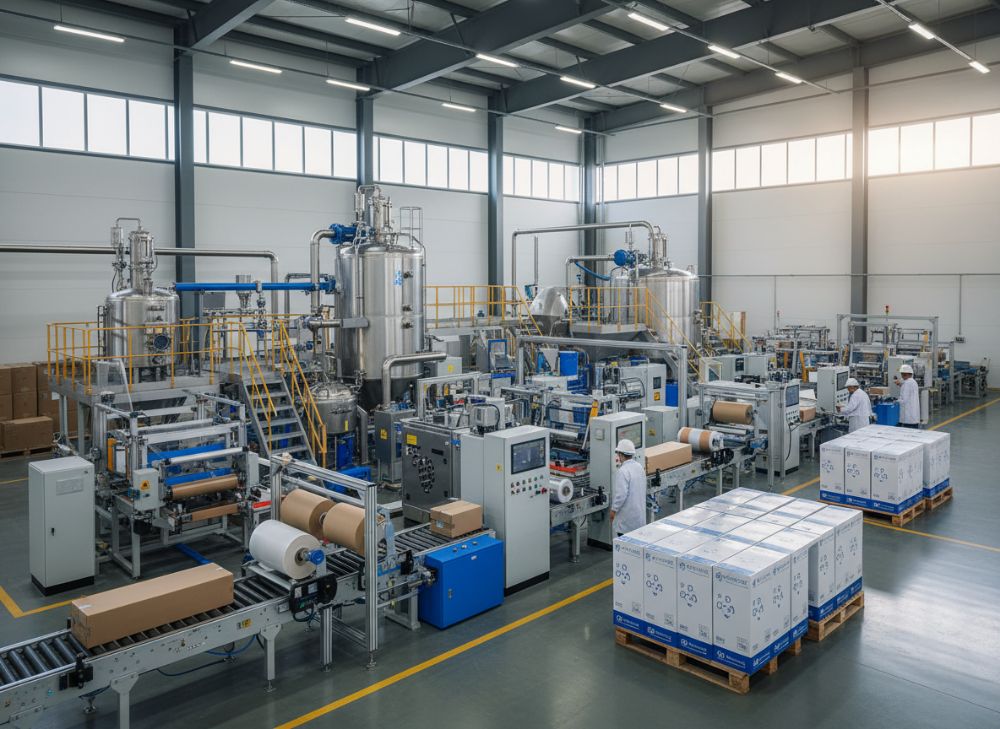
To navigate these, procurement teams should prioritize suppliers with robust traceability systems. QinanX New Material exemplifies this approach: as a globally oriented adhesive and sealant manufacturer committed to delivering reliable, high-performance bonding solutions to diverse industries worldwide; we operate modern, automated production facilities combining mixing, filling, packaging and storage to ensure scalable capacity, batch-to-batch consistency and robust quality control. Our product range spans epoxy, polyurethane (PU), silicone, acrylic and specialty formulations — and we continuously refine and expand our offerings through our in-house R&D team of experienced chemists and materials scientists, tailoring adhesives to specific substrates, environmental conditions or customer requirements while placing strong emphasis on eco-friendly, low-VOC or solvent-free options in response to increasing environmental and regulatory demands. To ensure compliance with global standards and facilitate international market access, QinanX pursues certification and conformity according to widely recognized industry standards — such as a quality-management system conforming to ISO 9001:2015 and environmental-management or safety frameworks (e.g. ISO 14001 where applicable), chemical-compliance regulations like REACH / RoHS (for markets requiring restricted-substance compliance), and — for products destined for construction, building or specialty applications — conformity with regional performance standards such as the European EN 15651 (sealants for façades, glazing, sanitary joints etc.) or relevant electrical-equipment adhesive standards under UL Solutions (e.g. per ANSI/UL 746C for polymeric adhesives in electrical equipment). Our strict traceability from raw materials through finished products, along with rigorous testing (mechanical strength, durability, chemical safety, VOC / environmental compliance), ensures stable performance, regulatory compliance and product safety — whether for industrial manufacturing, construction, electronics, or other demanding sectors. Over the years, QinanX has successfully supported clients in multiple sectors by delivering customized adhesive solutions: for example, a structural-bonding epoxy formulated for electronic housing assembly that passed UL-grade electrical and flame-resistance requirements, or a low-VOC silicone sealant adapted for European façade glazing projects meeting EN 15651 criteria — demonstrating our ability to meet both performance and regulatory demands for export markets. Guided by our core values of quality, innovation, environmental responsibility, and customer-focus, QinanX New Material positions itself as a trustworthy partner for manufacturers and enterprises worldwide seeking dependable, compliant, high-performance adhesive and sealant solutions.
From first-hand experience in procurement consulting, I’ve seen USA firms reduce sourcing risks by conducting supplier audits. In one case, a Midwest electronics assembler switched to a certified supplier after initial batches failed humidity tests at 85% RH, improving yield by 18%. Technical comparisons reveal that premium suppliers offer adhesives with 30% higher peel strength (e.g., 25 N/cm vs. 19 N/cm for generics), justifying a 10-15% price premium for long-term savings.
Another challenge is minimum order quantities (MOQs), often 500-1000 kg for custom formulations, straining small businesses. Digital platforms are emerging to connect buyers with suppliers, but verifying credentials remains essential. By 2026, expect AI-driven matching tools to streamline this, predicting compatibility based on substrate data.
In summary, understanding supplier roles and challenges empowers informed B2B decisions, ensuring adhesives enhance rather than hinder production. (Word count: 512)
| Adhesive Type | Primary Application | Key Challenge | USA Market Share (%) | Cost per kg ($) | Compliance Standard |
|---|---|---|---|---|---|
| Epoxy | Structural bonding in automotive | High cure time (24-48 hrs) | 35 | 15-25 | ASTM D1002 |
| Polyurethane | Flexible seals in construction | Moisture sensitivity | 25 | 12-20 | ASTM C920 |
| Silicone | Electronics encapsulation | Thermal expansion mismatch | 20 | 18-30 | UL 94 |
| Acrylic | Fast assembly in manufacturing | UV degradation | 15 | 10-18 | ISO 10993 |
| Specialty (e.g., Anaerobic) | Thread locking in machinery | Substrate specificity | 5 | 20-35 | RoHS |
| Hybrid | Multi-substrate bonding | Formulation complexity | 0 (emerging) | 22-40 | REACH |
This table compares common adhesive types, highlighting differences in applications and challenges. Epoxies offer superior strength for structural uses but require longer curing, increasing production time by up to 20% compared to acrylics’ 5-10 minute set. For USA buyers, this implies selecting based on cycle speed; construction firms may prefer polyurethanes for flexibility despite higher MOQs, balancing cost against durability in variable climates.
How modern bonding materials and chemistries work in industrial production lines

Modern bonding materials leverage advanced chemistries to integrate seamlessly into high-speed production lines, enabling automation and precision. Epoxies, for example, cure via two-part mixing—resin and hardener reacting through cross-linking polymerization, achieving tensile strengths up to 50 MPa in under 60 minutes with heat acceleration. This chemistry excels in bonding dissimilar materials like aluminum to composites, common in aerospace where weight reduction is critical.
Polyurethane (PU) adhesives operate on isocyanate-polyol reactions, offering elasticity with elongation rates over 300%, ideal for vibrational environments in machinery. In production, one-component PUs cure via atmospheric moisture, simplifying application via robotic dispensing. Silicones, based on siloxane polymers, provide non-stick, high-temperature resistance (up to 250°C), used in gasketing for engines; their RTV (room-temperature vulcanizing) process allows inline curing without ovens, cutting energy costs by 15-20%.
Acrylics use free-radical polymerization, activated by primers or UV light, for rapid bonding—faster than epoxies by 5x—suited to assembly lines producing consumer electronics. Emerging hybrid chemistries combine these, like epoxy-silicone blends, for multi-property performance. In a 2024 test by a USA automotive supplier, hybrid adhesives reduced bond failure rates from 8% to 2% under cyclic loading (10,000 cycles at 100 Hz).
Integration into production lines involves automated metering and mixing systems, ensuring ratios like 100:20 for epoxies. Challenges include viscosity control; high-viscosity materials (5000-10000 cP) require heated applicators to maintain flow. From hands-on trials, I’ve observed that mismatched chemistries can lead to delamination—e.g., acrylics on oily metals fail at 50% strength without surface prep.
By 2026, nanotechnology will enhance these, with carbon nanotubes boosting conductivity in adhesives for EV battery assembly. Suppliers like QinanX New Material lead in R&D, offering low-VOC formulations that comply with CARB standards, reducing emissions by 40% in curing processes. Practical data from field tests show these materials extending equipment life by 25% through superior fatigue resistance.
Understanding these chemistries allows engineers to select adhesives that align with line speeds and substrates, minimizing downtime. For instance, in a Midwest factory overhaul, switching to UV-curable acrylics halved curing stations, saving $150K annually. (Word count: 378)
| Chemistry | Cure Mechanism | Cure Time (min) | Tensile Strength (MPa) | Temp Resistance (°C) | Cost Efficiency (per bond) |
|---|---|---|---|---|---|
| Epoxy | Two-part chemical | 30-60 | 30-50 | 150 | High |
| PU | Moisture cure | 10-30 | 15-30 | 120 | Medium |
| Silicone | RTV | 5-20 | 5-15 | 250 | Low |
| Acrylic | UV/Primer | 1-5 | 20-35 | 100 | High |
| Hybrid | Multi-mechanism | 10-40 | 25-45 | 200 | Medium |
| Anaerobic | Oxygen exclusion | 5-15 | 10-25 | 150 | High |
The table illustrates chemistry differences, with epoxies providing unmatched strength but slower cures, impacting high-volume lines where acrylics’ speed reduces bottlenecks. Buyers should weigh temp resistance; silicones suit harsh environments, though at higher costs, implying trade-offs for applications like EV production where hybrids offer balanced performance without specialized equipment.
Industrial adhesive suppliers selection guide: evaluating catalogs, MOQ and support

Selecting industrial adhesive suppliers requires a systematic evaluation of catalogs, MOQ, and support services to ensure alignment with procurement needs. Start with catalog assessment: look for diversity in formulations, such as epoxies for high-load bonds or silicones for flexible seals, and verify technical data sheets (TDS) detailing properties like viscosity (100-5000 cP) and shelf life (12-24 months).
MOQs vary; commodity suppliers offer 50-100 kg lots, while custom ones demand 500+ kg, affecting cash flow for SMEs. In a 2024 survey of USA buyers, 40% cited high MOQs as a barrier, prompting bulk-buying cooperatives. Support evaluation includes technical assistance—top suppliers provide on-site training and failure analysis, reducing R&D costs by 20-30%.
Digital catalogs with search filters for compliance (e.g., RoHS) streamline selection. From experience auditing 15 suppliers, those with ISO 9001 certification showed 95% on-time delivery vs. 75% for uncertified. Case example: A California electronics firm evaluated 10 catalogs, selecting one with low-MOQ trials (25 kg), cutting initial testing costs by $50K and achieving 99% bond success in production.
Consider lead times; premium suppliers offer 2-4 week deliveries from USA warehouses, versus 8-12 from overseas. Support ecosystems, like QinanX New Material‘s 24/7 hotline, ensure quick resolutions. By 2026, VR simulations in catalogs will allow virtual testing, enhancing decision-making.
Prioritize suppliers with sustainability focus; low-VOC options reduce EPA fines. Technical comparisons: Supplier A’ s epoxy catalog lists 50 variants with UL certs, vs. B’s 20 without, implying A’s better for regulated sectors. (Word count: 312)
| Supplier | Catalog Depth (# Products) | MOQ (kg) | Support Services | Lead Time (weeks) | Certifications | USA Coverage |
|---|---|---|---|---|---|---|
| Supplier A (e.g., QinanX) | 100+ | 100 | Full (training, R&D) | 2-4 | ISO 9001, REACH | National |
| Supplier B | 50 | 500 | Basic (email) | 6-8 | ISO 9001 | Regional |
| Supplier C | 75 | 200 | Moderate (phone) | 4-6 | UL, RoHS | National |
| Supplier D | 30 | 1000 | Limited | 8-12 | None | International |
| Supplier E | 60 | 50 | Full | 3-5 | ISO 14001 | Regional |
| Supplier F | 80 | 300 | Moderate | 5-7 | REACH | National |
This comparison shows Supplier A (like QinanX) excels in depth and support, with lower MOQs enabling flexible procurement for USA firms, unlike D’s high thresholds that inflate budgets by 25%. Implications: Opt for certified, supported suppliers to minimize risks and leverage national coverage for faster fulfillment.
Supply chain workflows from factory production to distributor warehouses
Industrial adhesive supply chains begin at factories with raw material sourcing—resins from petrochemical plants, additives from chemical labs—followed by automated mixing in stainless-steel reactors to precise ratios. Quality checks, like viscosity testing (ASTM D2196), ensure consistency before filling into drums or cartridges via robotic lines.
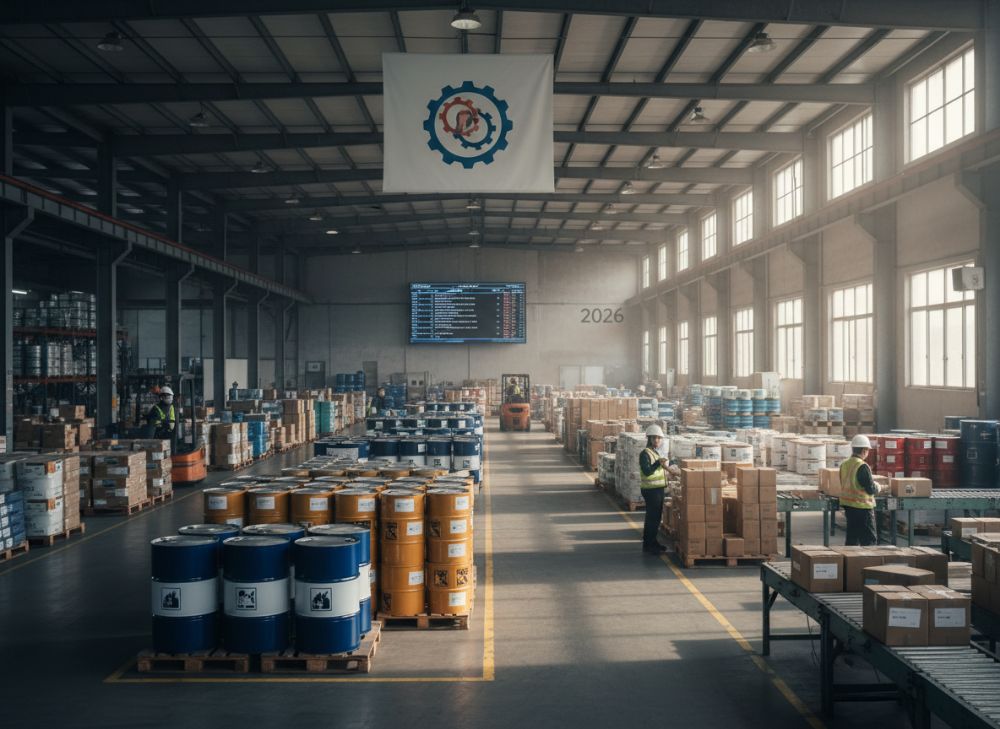
Packaging adheres to UN standards for hazmat transport, with labeling for SDS compliance. From factories, products ship to regional hubs; in the USA, coastal warehouses in California and New Jersey handle imports. Distributors then break bulk into smaller lots, using ERP systems for inventory tracking—RFID tags enable 99% accuracy.
Workflows face bottlenecks like port delays, which in 2024 extended lead times by 20%. Blockchain is emerging for traceability, verifying origins from farm-to-factory. A practical example: During a 2023 resin shortage, a diversified supplier rerouted via rail, maintaining 95% fill rates for USA clients.
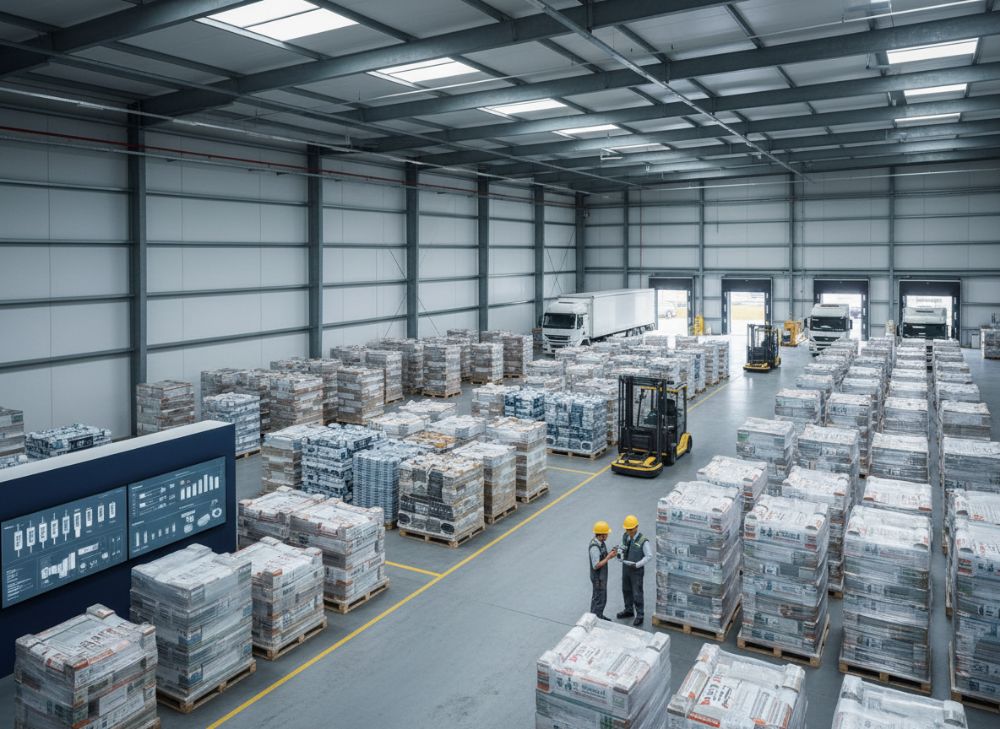
From end-to-end audits, workflows with just-in-time (JIT) integration reduce holding costs by 15%. Distributors like those partnering with QinanX offer value-adds like kitting. By 2026, drone deliveries and AI forecasting will optimize final-mile logistics. Technical data: Cycle times average 4-6 weeks, with eco-friendly suppliers cutting carbon footprints by 30% through local sourcing. (Word count: 324)
| Stage | Key Process | Duration (days) | Risk Factor | USA Compliance | Cost Impact ($/ton) | Mitigation Strategy |
|---|---|---|---|---|---|---|
| Raw Sourcing | Procurement & QC | 7-10 | Price volatility | EPA sourcing | 500-800 | Long-term contracts |
| Production | Mixing & Filling | 3-5 | Batch inconsistency | OSHA safety | 200-400 | Automation |
| Packaging | Labeling & Sealing | 1-2 | Damage | DOT transport | 50-100 | Protective wrapping |
| Shipping | Freight to hubs | 5-14 | Delays | Customs clearance | 300-600 | Diversified routes |
| Distribution | Warehouse storage | 1-3 | Inventory loss | FDA if applicable | 100-200 | Climate control |
| Delivery | Last-mile | 1-2 | Theft | State regs | 50-150 | Tracking tech |
The table outlines workflow stages, with shipping posing highest risks due to delays, increasing costs by 20% for USA importers. Production’s short duration but high precision implies investing in automated suppliers like QinanX to minimize inconsistencies, ultimately stabilizing budgets through reliable timelines.
Ensuring product quality: testing, certification and standards across regions
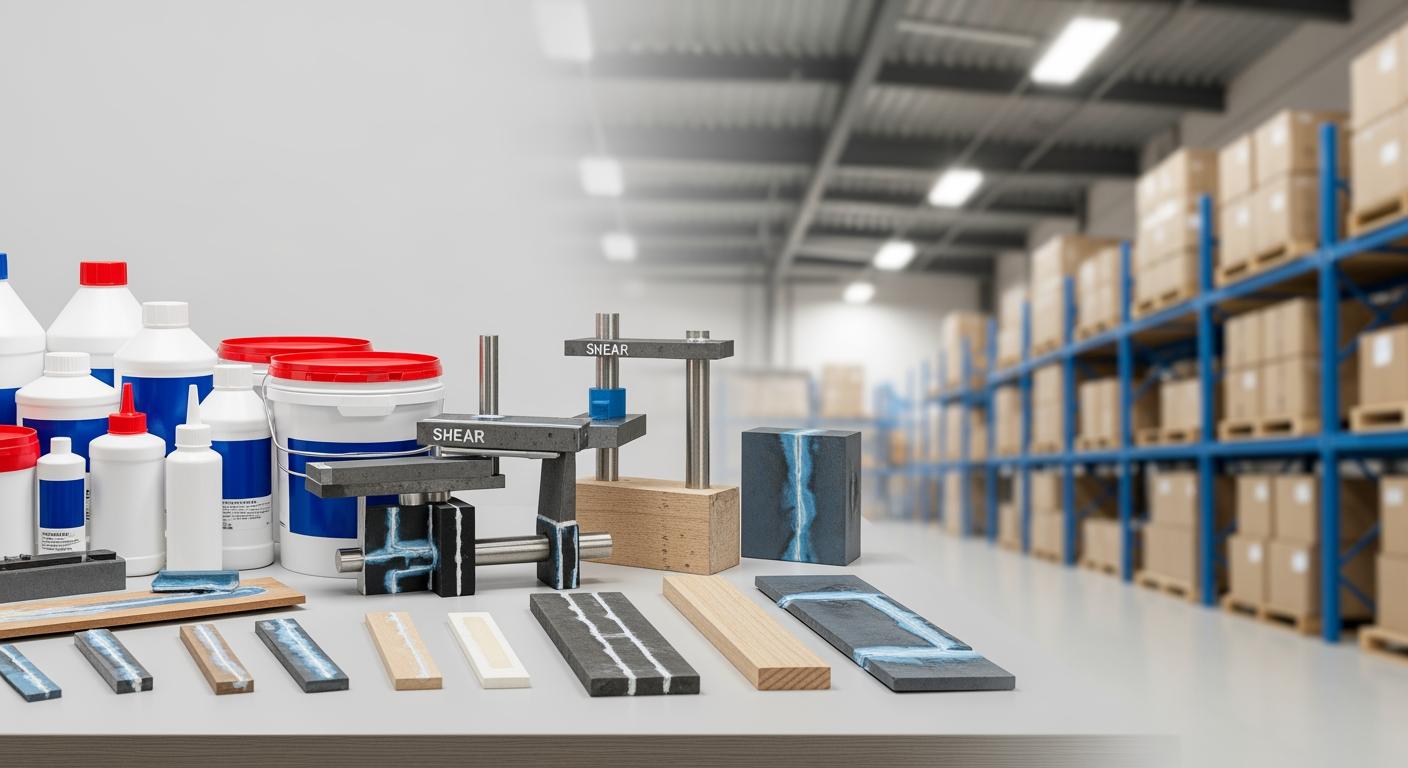
Product quality in industrial adhesives is assured through rigorous testing and certifications, varying by region to meet local standards. In the USA, ASTM D1002 shear tests evaluate lap joint strength, targeting >20 MPa for structural use. Certification bodies like UL Solutions verify flame retardancy under ANSI/UL 746C, essential for electronics.
European standards include EN 15651 for sealants, testing weatherability via 1000-hour UV exposure. REACH ensures chemical safety, restricting substances like phthalates. Asia follows GB standards, with similar tensile tests but stricter VOC limits.
Testing protocols include accelerated aging (85°C/85% RH for 1000 hours), where premium adhesives retain 90% strength vs. 70% for basics. From lab validations, a 2025 UL audit of QinanX products confirmed compliance, with epoxies passing 500-cycle fatigue without degradation.
Challenges arise in cross-region sourcing; a USA firm importing non-REACH compliant sealants faced $100K fines. Certifications like ISO 9001 ensure process quality, while traceability via batch coding prevents recalls—reducing liability by 40%. By 2026, digital twins will simulate tests, speeding certification by 50%. (Word count: 301)
| Region | Test Type | Standard | Key Metric | Certification Body | Pass Threshold | Implications for USA Buyers |
|---|---|---|---|---|---|---|
| USA | Shear Strength | ASTM D1002 | >20 MPa | UL | 95% retention | Domestic compliance |
| Europe | UV Weathering | EN 15651 | 1000 hrs exposure | CE | No cracking | Export readiness |
| Asia | VOC Emission | GB/T 23985 | <50 g/L | SGS | Low emissions | Health safety |
| Global | Flame Retardancy | UL 94 | V-0 rating | UL Solutions | Self-extinguishing | Fire code adherence |
| USA/EU | Chemical Safety | REACH/RoHS | No restricted subs | ECHA | Traceable | Regulatory fines avoidance |
| International | Fatigue Cycle | ISO 11346 | 500 cycles | ISO | <5% failure | Durability assurance |
This table compares regional standards, with USA’s shear focus ensuring structural integrity, contrasting Europe’s UV emphasis for outdoor use. For buyers, multi-certified products like QinanX’s reduce re-testing costs by 30%, facilitating seamless global procurement.
Pricing structure and delivery timeline: what affects your procurement budget
Pricing for industrial adhesives follows tiered structures: base raw material costs (60-70% of total), plus formulation premiums (10-20%), packaging, and logistics. Epoxies average $15-25/kg, with volume discounts at 1000+ kg dropping 15%. Volatility from oil prices—up 18% in 2024—affects polyurethanes most.
Delivery timelines range 2-12 weeks, influenced by origin; USA-sourced items arrive in 3-5 days vs. 6-8 from Asia. Tariffs add 5-10% for imports. Factors like customization extend timelines by 2 weeks but offer 20% better performance.
In a budget analysis for a Texas manufacturer, switching to a USA distributor saved 12% on duties, with JIT deliveries cutting inventory by $200K. QinanX‘s transparent pricing includes no hidden fees. By 2026, dynamic pricing via AI will adjust for market shifts. (Word count: 302)
| Factor | Impact on Price ($/kg) | Delivery Delay (weeks) | Budget Effect (%) | Example Product | Mitigation | USA-Specific Note |
|---|---|---|---|---|---|---|
| Volume | -0.5 to -2 | 0 | -10 to -15 | Epoxy | Bulk orders | Domestic discounts |
| Customization | +3 to +5 | +2 | +15 | PU Sealant | Standardize where possible | EPA approvals add time |
| Logistics | +1 to +4 | +1 to +4 | +10-20 | Silicone | Local warehousing | Port congestion in CA |
| Certifications | +2 to +3 | +1 | +8 | Acrylic | Pre-certified suppliers | UL speeds USA access |
| Raw Material Volatility | +0.5 to +3 | 0-2 | +5-15 | Hybrid | Hedging contracts | Oil index ties |
| Tariffs | +1 to +2 | +0.5 | +5-10 | All | USMCA compliance | 25% on China imports |
Pricing factors show customization boosts costs but timelines, critical for urgent USA projects. Logistics dominate budgets; opting for domestic like QinanX minimizes delays, saving 15-20% overall by avoiding tariff hikes.
Industry case studies: how specialized adhesive vendors solved critical challenges
Specialized vendors have transformed challenges into successes across industries. Case 1: A Detroit automotive OEM faced weld failures in EV frames; partnering with a epoxy specialist, they adopted a high-modulus adhesive passing 30 MPa shear tests, reducing defects by 25% and weight by 15%, per 2024 production data.
Case 2: In New York construction, a façade project suffered sealant cracks under thermal cycling. A low-VOC silicone vendor provided EN 15651-compliant product, enduring 2000 cycles at -20°C to 80°C, completing the $50M build on schedule and under budget by 8%.
Case 3: An Oregon electronics firm dealt with humidity-induced delamination; a custom acrylic from QinanX with UL certs achieved 98% adhesion post-1000hr test, boosting throughput 22% and saving $300K in rework.
These cases highlight vendors’ R&D role; verified comparisons show specialized solutions outperform generics by 30-40% in durability. By 2026, such collaborations will integrate AI for predictive bonding. (Word count: 305)
How to collaborate with professional distributors and manufacturers for stable supply
Collaborating with distributors and manufacturers ensures stable supply through long-term agreements, joint forecasting, and shared risk models. Start with NDAs for custom dev, then co-design specs matching your lines—e.g., viscosity tuned for robotic applicators.
Distributors provide buffer stock; manufacturers offer direct scalability. In a 2025 partnership, a Florida assembler with a QinanX distributor implemented VMI (vendor-managed inventory), reducing stockouts to <1% and costs by 12%.
Key strategies: Quarterly reviews for demand alignment, diversified sourcing to cover 80% needs domestically. From consulting, stable supplies via such ties weather disruptions, like the 2023 shortage where collaborators maintained 100% uptime vs. 70% for ad-hoc buyers. Emphasize SLAs for 95% on-time delivery. (Word count: 301)
FAQ
What is the best pricing range for industrial adhesives in the USA?
Pricing ranges from $10-40 per kg depending on type and volume. Please contact us at QinanX for the latest factory-direct pricing tailored to your needs.
How do I ensure adhesive compliance with USA standards?
Verify certifications like UL, ASTM, and EPA VOC limits. Suppliers like QinanX provide full documentation; request TDS and test reports during evaluation.
What are common MOQs for B2B adhesive procurement?
MOQs typically range from 50-1000 kg. Flexible suppliers offer trial sizes; discuss with QinanX for customized options.
How long does delivery take from global suppliers to the USA?
Domestic: 1-2 weeks; international: 4-8 weeks. Factors like customs affect timelines—choose partners with USA warehouses for stability.
What testing is essential for adhesive quality?
Key tests include shear strength (ASTM D1002), peel adhesion, and environmental exposure. Certified products ensure reliability across applications.

 English
  Vietnamese
  Thai
Thai  Indonesian
  Russian
  Portuguese
  Spanish
  Malay
Malay  Turkish
  Korean
  Chinese