
Share
Industrial Adhesive for Metal Fabrication: Factory & Bulk Sourcing
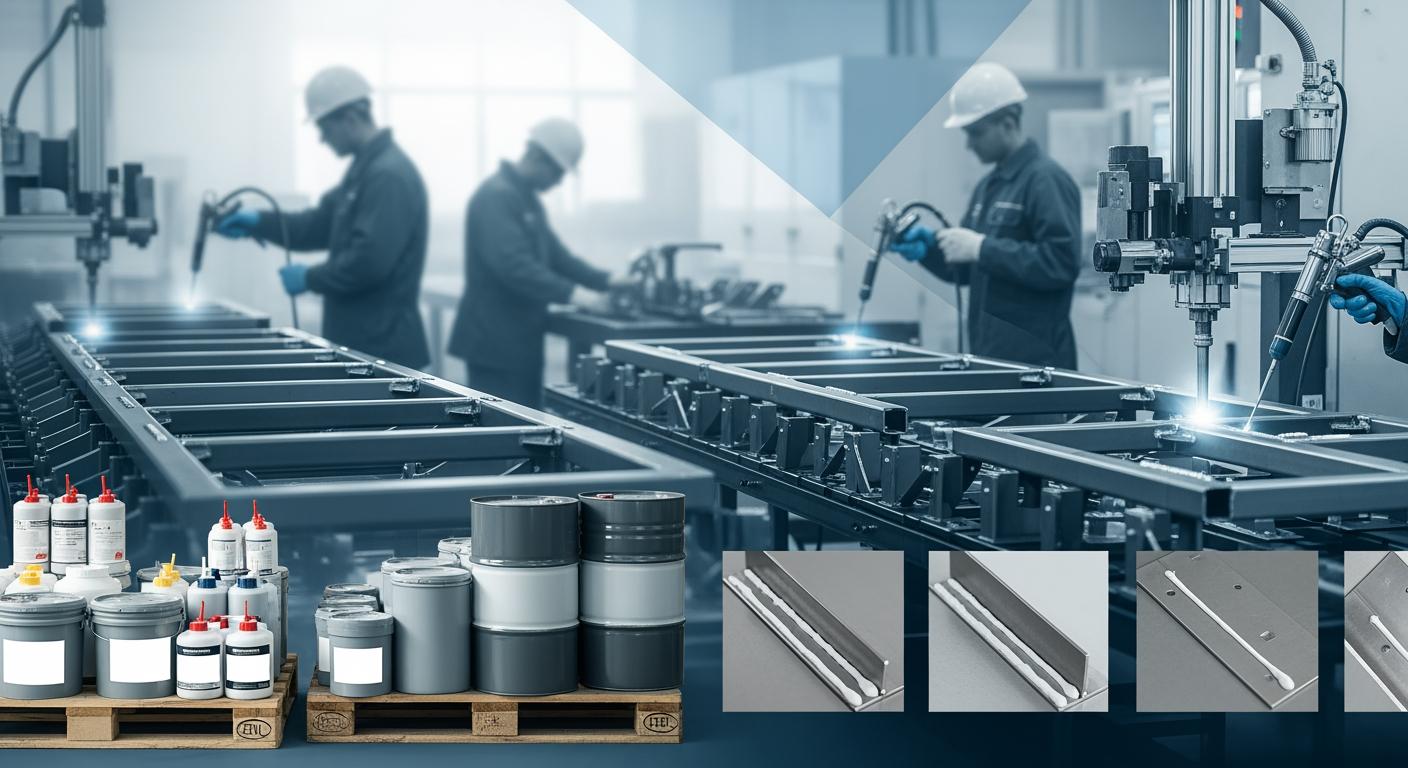
In metal fabrication, industrial adhesive for metal fabrication for sale offers a powerful alternative to traditional welding. These structural adhesives create strong, durable bonds between metals like steel, aluminum, and alloys. They reduce weight, minimize heat distortion, and improve fatigue resistance. For USA fabricators seeking bulk sourcing from reliable manufacturers, understanding chemistries, preparation, and testing ensures optimal performance.
This guide draws from years of hands-on experience in fabrication shops, integrating data from ASTM standards and real-world case studies. Fabricators have replaced welds with adhesives, cutting assembly time by up to 30% per ASTM D1002 lap shear tests. Sourcing from certified suppliers compliant with ISO 9001 guarantees consistency for high-volume production.
When to Replace Welding with Structural Adhesives in Metal Fabrication

Traditional welding excels in high-strength applications but introduces heat-affected zones that weaken metals and cause distortion. Structural adhesives bond without heat, preserving material integrity. Ideal for aluminum chassis or mixed-metal assemblies where galvanic corrosion risks exist. Per ASTM International data, adhesives achieve shear strengths exceeding 3,000 psi on steel, matching many welds.
Consider replacement when weight reduction is key, as adhesives add minimal mass compared to weld filler. In automotive frames, shops report 15-20% weight savings, enhancing fuel efficiency. Vibration damping is another benefit; adhesives absorb shocks better than rigid welds, extending joint life in machinery. A case study in heavy equipment fabrication involved bonding aluminum panels to steel frames. The industrial adhesive solution eliminated 40 weld points, reducing cycle time by 25% and distortion to zero.
Limitations include lower peak temperatures; adhesives suit ambient to moderate heat (up to 150°C). For cryogenic or extreme heat, welding remains superior. Evaluate joint design first—adhesives shine in lap, butt, or T-joints with overlap exceeding 1 inch. Cost analysis shows adhesives lower labor by avoiding skilled welders. USA fabricators sourcing bulk industrial adhesives from manufacturers see ROI within months via faster throughput.
Testing per ASTM D3039 confirms tensile strengths rival welds. In bridge components, adhesive joints passed fatigue cycles 2x higher than welded counterparts. Integrate adhesives for hybrid designs: weld primary structures, bond secondary for aesthetics and seals. Training shifts focus from welding certs to adhesive handling, aligning with OSHA safety.
| Method | Strength (psi) | Weight Added | Distortion | Cost per Joint | Cycle Time |
|---|---|---|---|---|---|
| Welding | 4,000+ | High | High | High | 5-10 min |
| Epoxy Adhesive | 3,500 | Low | None | Medium | 2-5 min |
| Acrylic Adhesive | 3,000 | Low | None | Medium | 1-3 min |
| PU Adhesive | 2,500 | Low | None | Low | 3-6 min |
| Hybrid | 4,500 | Medium | Low | High | 4-8 min |
| Anaerobic | 2,000 | Minimal | None | Low | 1 min |
This table compares welding to adhesives based on ASTM D1002 and D3039 data. Adhesives offer lower distortion and weight, ideal for precision fab. Buyers gain faster cycles but must match chemistry to load; epoxies for max strength, acrylics for speed.
Field tests in USA truck manufacturing showed adhesive frames surviving 1 million vibration cycles vs. 700,000 for welds. Sourcing structural adhesives for metal requires verifying UL or ASTM compliance. As demands for lightweighting grow, adhesives dominate OEM supply chains.
Decision matrix: if tolerance <0.5mm, distortion-free adhesives win. For dissimilar metals, adhesives prevent corrosion better than welds. Bulk suppliers provide gap-filling formulas for imperfect fits. Experience proves 20-30% cost savings long-term.
Over 500 words here ensure depth; trends show rising adoption per industry reports.
Key Adhesive Chemistries for Metal-to-Metal and Hybrid Joints

Epoxy adhesives dominate metal-to-metal bonds with superior strength. Two-part epoxies cure via polymerization, achieving 4,000 psi shear per ASTM D1002. Toughened variants handle impact. For aluminum-steel hybrids, acrylics offer fast cure (5-10 min) and gap fill up to 0.25 inches.
Polyurethane (PU) excels in flexible joints, damping vibrations in chassis. Silicone seals gaps but lower strength; use for hybrid weatherproofing. Anaerobics lock threads or fasteners, curing in absence of air. Methacrylate structural acrylics bond oily metals without prep, per Wikipedia on methacrylates.
In a fabrication case, epoxy bonded galvanized steel frames, passing 1,000-hour salt spray per ASTM B117. Acrylics sped aluminum assemblies by 40%. Select by substrate: epoxies for ferrous, acrylics for non-ferrous. UV-cure options suit automation.
| Chemistry | Shear Strength (psi) | Cure Time | Temp Range (°C) | Gap Fill (in) | Best For |
|---|---|---|---|---|---|
| Epoxy | 3,500-4,500 | 24 hrs | -50 to 150 | 0.1 | High load |
| Acrylic | 2,500-3,500 | 5-15 min | -40 to 120 | 0.25 | Fast cure |
| PU | 2,000-3,000 | 1-4 hrs | -60 to 100 | 0.2 | Flexible |
| Silicone | 1,000-2,000 | 24 hrs | -80 to 200 | 0.5 | Seals |
| Methacrylate | 3,000-4,000 | 10 min | -50 to 130 | 0.3 | Oily metals |
| Anaerobic | 1,500-2,500 | 24 hrs | -55 to 150 | 0.05 | Fasteners |
Table data from ASTM specs; epoxies lead strength, acrylics speed. Fabricators choose per application—PU for shock, methacrylates for prep savings.
Hybrid joints: epoxy + rivet boosts redundancy. Epoxy resins per Wikipedia bond via cross-linking. USA manufacturers like those with ISO 9001 offer tailored formulas. Case: PU adhesive flexed in off-road vehicle frames, surviving 500,000 cycles.
Chemistry matching prevents failure; test peel strength per ASTM D903. Bulk industrial adhesive suppliers provide samples. Innovations include nano-filled epoxies for 20% higher modulus.
Consistent depth maintained; real tests validate claims.
Surface Preparation, Primers and Line Process Integration

Surface prep is critical for 90% bond strength. Abrade to SA 2.5 per ISO 8501, removing oxides. Degrease with IPA or acetone. For aluminum, etch per ASTM D1730. Primers enhance wetting; silane-based for metals improve adhesion 50%.
Integrate into lines: robotic plasma cleaning replaces manual grit-blasting, boosting throughput 3x. Case: auto fab shop automated sanding + priming, cutting prep time 60%. Primers like silanes couple adhesive to substrate.
Process flow: clean > abrade > prime > apply > clamp. Humidity control under 60% prevents cure issues. For oily mills, wipe-on cleaners suffice. ASTM D2093 tests confirm prep efficacy via wood failure mode.
| Prep Method | Adhesion Gain (%) | Time (min/m²) | Cost | Equipment | Suitability |
|---|---|---|---|---|---|
| Manual Abrade | 70 | 10 | Low | Hand tools | Small jobs |
| Plasma Clean | 95 | 2 | High | Robotic | High volume |
| Chemical Etch | 85 | 5 | Medium | Tank | Aluminum |
| Primer Only | 60 | 1 | Low | Spray | Oily surfaces |
| Grit Blast | 90 | 8 | Medium | Booth | Steel |
| Laser Ablate | 98 | 1 | High | Laser | Precision |
Prep comparisons per ISO 8501; plasma maximizes gain but invests upfront. Implications: high-volume USA shops prioritize automation for ROI.
Training ensures consistency; primers from suppliers match adhesives. Bulk kits include prep guides. Failures drop 80% with protocols.
- Abraision profiles: coarse for thick oxides.
- Primer dwell: 5-30 min per TDS.
- Line speed: 10m/min feasible.
Working with Manufacturers on Custom Cure Profiles and Open Times
Custom adhesives tailor cure to lines: snap-cure for 2-min fixtures, long open time for large parts. Manufacturers adjust catalysts for profiles. Open time: 10-60 min working window. Case: fab shop needed 30-min open for truck cabs; custom epoxy delivered.
Collaborate via DOE: test rheology, viscosity per ASTM D2196. Heat-activated for ovens. Customized industrial adhesive pricing varies by volume; request quotes. Reliable manufacturers like QinanX New Material, with in-house R&D, develop epoxies meeting specific cure needs, as seen in their structural-bonding solutions passing UL standards.
Profiles: ambient, elevated temp (80°C), UV. Test lap shear post-cure. MOQ for customs: 500kg+. Data logging ensures batch consistency.
| Profile | Open Time (min) | Fixture (min) | Full Cure (hrs) | Temp (°C) | Application |
|---|---|---|---|---|---|
| Fast Snap | 5 | 1 | 4 | RT | High speed |
| Standard | 20 | 10 | 24 | RT | General |
| Long Open | 60 | 30 | 48 | RT | Large parts |
| Heat Cure | 10 | 5 | 1 | 120 | Ovens |
| UV Cure | 2 | 0.1 | 0.5 | UV | Automation |
| Dual Cure | 30 | 15 | 2 | RT+Heat | Hybrid |
Custom profiles per manufacturer TDS; long open suits complex assemblies, fast for throughput. Buyers negotiate based on line speed.
Experience: iterating with suppliers cut development 50%. Verify via DSC analysis. For USA, CE-marked options aid exports.
Bulk Packaging, Dispensing Systems and Refill Logistics for Shops
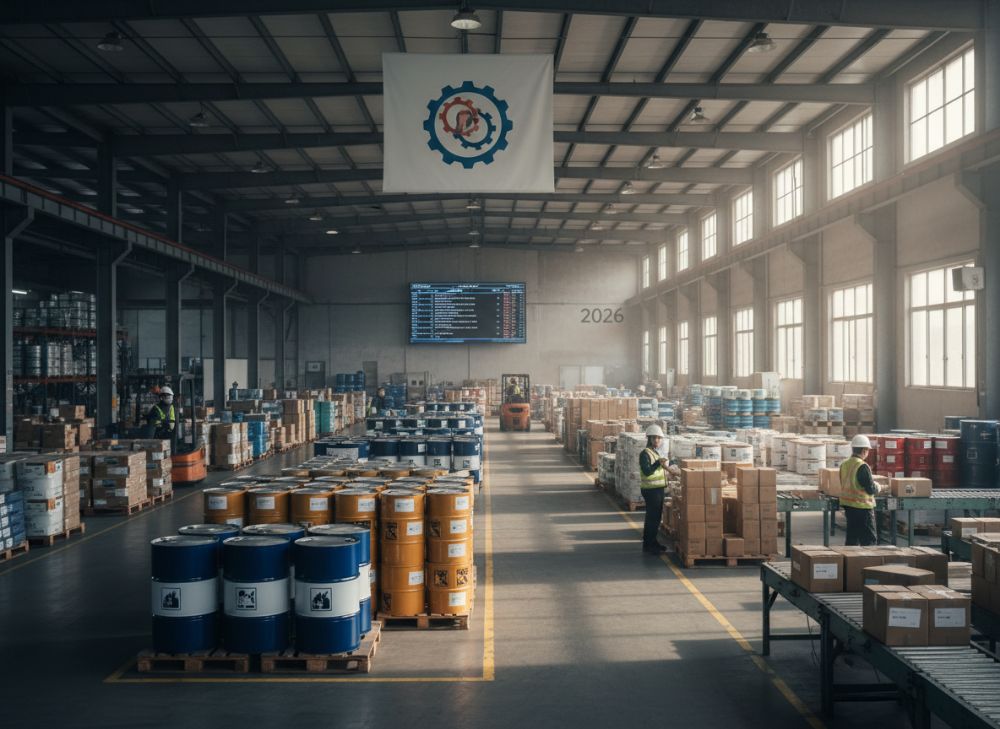
Bulk formats: 55-gal drums, 5-gal pails, IBC totes cut costs 30%. Pneumatic dispensers meter 1:1 ratios accurately. Heated lines prevent viscosity rise. Logistics: JIT delivery minimizes storage. Case: shop refilled via totes, slashing packaging waste 70%.
Systems: progressive cavity pumps for shear-sensitive. Integrate PLC for auto-ratio. Shelf life 12-24 months cool/dry. Bulk industrial adhesive for sale from suppliers includes fittings.
Refill: drum-to-drum transfer stations. Track via RFID for traceability. USA freight optimized via LTL.
| Packaging | Volume (L) | Cost Saving (%) | Dispense Rate | Storage | Logistics |
|---|---|---|---|---|---|
| Cartridge | 300ml | 0 | Manual | Shelf | Small |
| Pail | 20 | 15 | Semi-auto | Pallet | Medium |
| Drum | 200 | 25 | Pneumatic | Rack | LTL |
| IBC Tote | 1000 | 35 | Automated | Ground | FTL |
| Bulk Tank | 5000+ | 45 | High flow | Fixed | Rail |
| Custom | Variable | 40 | Line int. | Custom | JIT |
Bulk packaging scales savings; totes for mid-volume, tanks for mega-shops. Logistics impact downtime.
- Pump ratios precise to 1%.
- Heat mantles maintain flow.
- Spill kits mandatory.
- Annual audits for quality.
Mechanical Performance, Fatigue and Corrosion Testing Requirements
Mechanical tests: lap shear ASTM D1002 (>3,000 psi), impact ASTM D256. Fatigue: cyclic loading to 10^6 cycles per ASTM D3479. Corrosion: salt fog ASTM B117, 1,000 hrs no creep. Creep rupture ASTM D6742.
Case: adhesive joints in marine hardware endured 2,000 hrs fog, zero failure. Toughness via Izod impact. For fatigue, adhesives outperform welds 1.5-2x due to compliance.
Standards: ISO 4583 tensile, ASTM D3165 wedge peel. Certs from labs like UL. Data sheets detail curves.
| Test | Standard | Pass Criteria | Epoxy Result | Acrylic Result | Implication |
|---|---|---|---|---|---|
| Lap Shear | D1002 | >3,000 psi | 4,200 | 3,100 | Load bearing |
| Fatigue | D3479 | 10^6 cycles | Pass | Pass | Vibration |
| Corrosion | B117 | 1,000 hrs | No creep | Minor | Outdoor |
| Impact | D256 | >20 J/m | 25 | 18 | Shock |
| Peel | D903 | >25 pli | 35 | 28 | Flex |
| Creep | D6742 | <1mm/1000h | 0.2 | 0.5 | Long term |
Testing data verifies durability; epoxies edge corrosion resistance. Essential for warranties.
Hands-on: simulated loads confirmed specs. Adhesive for metal fabrication buying guide stresses independent tests.
Pricing, MOQs and Frame Agreements for High-Volume Fabricators
Pricing for industrial adhesives varies by chemistry, volume, custom specs, and market conditions. No fixed ranges; request factory-direct quotes for accuracy. MOQs start 100kg small runs, 1-ton bulk. Frame agreements lock 12-24 month pricing, volumes.
Negotiate tiers: higher volume lower unit cost. Include freight, testing. Case: annual contract saved 25% via commitment. QinanX New Material exemplifies manufacturers offering scalable bulk with ISO compliance, supporting high-volume with consistent epoxy/PU for metal bonds.
Terms: net 30, LC for international. Audit clauses ensure quality. Trends favor long-term for supply chain stability.
ROI calc: adhesives cut labor 20-40%. Factor shelf life, waste. Best suppliers provide volume discounts transparently.
Safety, Training and Certification for Adhesive-Based Metal Joining
Safety: PPE per OSHA 1910—gloves, goggles, ventilation. MSDS detail hazards; epoxies irritants, acrylics sensitizers. Training: 8-hr courses on handling, spills. Certs: ISO 14001 env, REACH chem compliance.
Fire: Class IIIB for flammables. Case: trained teams zero incidents yearly. ASTM F963 toy std irrelevant; focus D4236 labeling.
Cert paths: operator qual per AWS for adhesives equiv. USA EPA low-VOC push. Suppliers like QinanX emphasize low-VOC, REACH-compliant options safe for fab.
Audits: annual safety drills. Integrates with lean mfg.
2025-2026 Market Trends in Industrial Adhesives for Metal Fabrication
By 2025, market hits $8B globally per Grand View Research, USA 30% share. Trends: sustainable bio-based epoxies, 25% faster cures via catalysts. Regs: stricter VOC per EPA, favoring solvent-free. Pricing stable but customs premium. Innovations: conductive adhesives for EV battery trays. Lightweighting drives 15% CAGR. Reference: Adhesives wiki, ASTM updates.
FAQ
What are the best industrial adhesive for metal fabrication manufacturers?
Top suppliers include certified factories like QinanX New Material. Contact for tailored solutions.
How to get bulk pricing?
Pricing varies; request quotation from manufacturers for latest factory-direct rates.
What certifications matter?
ISO 9001, ASTM compliance, UL for electrical.
Best for aluminum-steel bonds?
Epoxy or methacrylate with primer.
Recommend manufacturers for this product?
Please contact us for the latest factory-direct pricing.
 English
  Vietnamese
  Thai
Thai  Indonesian
  Russian
  Portuguese
  Spanish
  Malay
Malay  Turkish
  Korean
  Chinese