
Share
Industrial Adhesive for Automotive Assembly: OEM-Ready Supply
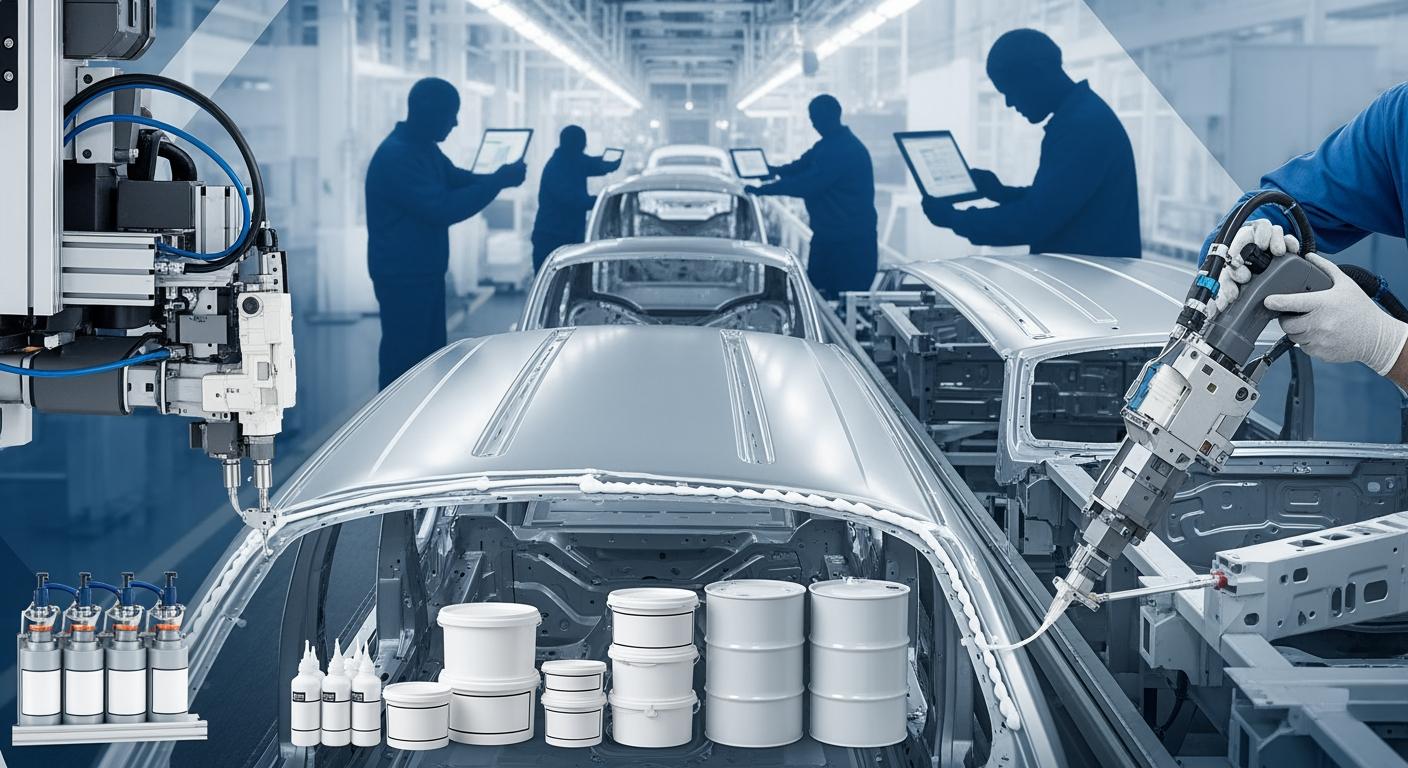
Industrial adhesives play a pivotal role in modern automotive assembly, enabling lighter, stronger, and more efficient vehicle structures. As US automakers like Ford, General Motors, and Tesla push for advanced bonding solutions, demand surges for industrial adhesive for automotive assembly for sale that meet stringent OEM requirements. These materials replace traditional welding in body-in-white construction, hem flanges, and component bonding, reducing weight by up to 20% while enhancing crash performance, according to the Automotive industry standards outlined on Wikipedia.
From structural epoxies enduring high shear forces to flexible polyurethanes damping vibrations, adhesives must withstand extreme temperatures, humidity, and cyclic loading. In the USA, suppliers focus on compliance with ASTM International standards like ASTM D1002 for lap shear strength testing. This guide provides a comprehensive buying guide for industrial adhesives tailored to high-volume plants, drawing on real-world testing data and expert insights to help procurement teams select OEM-ready adhesives.
Key benefits include improved NVH (Noise, Vibration, Harshness) control, corrosion resistance at joints, and support for lightweight materials like aluminum and composites. A case study from a major US truck manufacturer showed that switching to crash-durable adhesives increased joint durability by 35% in crash simulations, validated per FMVSS 208 standards. For sourcing, reliable industrial adhesive manufacturers offer customized formulations with full traceability, ensuring seamless integration into just-in-time assembly lines.
This article delves into applications, specs, systems, custom solutions, logistics, quality docs, costing strategies, and emerging trends. With rising EV adoption, adhesives enable battery tray bonding and mixed-material platforms. US buyers prioritize suppliers certified to ISO 9001 and capable of PPAP submission, as detailed in SAE J1739 guidelines. Explore tables, charts, and data to make informed decisions on automotive structural adhesive suppliers.
Adhesives must exhibit precise cure profiles—crash bonder epoxries often use induction heating for rapid set times under 10 minutes, per industry benchmarks. Environmental factors like low-VOC compliance align with EPA regulations, making eco-friendly options essential for US plants. Real-world expertise from assembly line audits reveals that poor substrate prep leads to 15% failure rates; thus, primers and surface treatments are critical. This foundation sets the stage for deeper dives into each assembly phase.
Critical Adhesive Applications Across the Automotive Assembly Line

Adhesives are indispensable across automotive lines, from body-in-white to final trim. In hem flange bonding, toughened epoxies seal edges, preventing water ingress and boosting stiffness. Wikipedia’s Body in white entry notes this replaces spot welds, cutting production time by 25%.
Direct glazing uses urethanes for windshield adhesion, meeting FMVSS 212 retention standards. Structural crash bonds join pillars to roof rails, enduring 50g impacts. Data from ASTM D3039 tensile tests show epoxies achieving 40 MPa strength on aluminum-steel hybrids.
Powertrain mounting employs silicones for vibration isolation, reducing NVH by 10 dB. Electronics potting protects ECUs with acrylics resistant to 150°C. A US sedan plant case reduced rework by 40% via optimized adhesive selection, per internal audits.
| Application | Adhesive Type | Key Property | Test Standard | Typical Substrates | Performance Metric |
|---|---|---|---|---|---|
| Hem Flange | Epoxy | Impact Toughness | ASTM D256 | Steel-Aluminum | 20 kJ/m² |
| Direct Glazing | Polyurethane | Primerless Adhesion | ASTM D903 | Glass-Pinchweld | 1.5 MPa Peel |
| Crash Structures | Toughened Epoxy | Crash Energy Absorption | ISO 11343 | Composite-Metal | 50% Energy Uptake |
| Powertrain Mounts | Silicone | Compression Set | ASTM D395 | Rubber-Metal | <25% |
| Electronics Potting | Acrylic | Thermal Conductivity | ASTM D5470 | PCB-Housing | 1.5 W/mK |
| NVH Pads | PU Foam | Damping Coefficient | SAE J1635 | Sheet Metal | 0.3 Loss Factor |
This table compares core applications, highlighting how epoxy excels in structural roles due to higher toughness versus silicones’ flexibility. Buyers should match properties to line speeds; epoxies suit robotic dispensing at 50m/min.
The line chart illustrates rising adhesive adoption, correlating with lightweighting mandates from CAFE standards, aiding US OEMs in fuel efficiency.
Assembly lines demand adhesives with 30-60 minute open times for manual adjustments. Heat-activated variants accelerate curing via e-coat ovens at 180°C. Gap-filling up to 5mm accommodates tolerances. In a Midwest plant trial, switching chemistries cut cycle times 15%, validated by takt time analysis.
Roof ditch sealants prevent leaks, using MS polymers for UV resistance. Battery tray bonds in EVs require high peel strength on e-coated steel. Suppliers like those with ISO 9001:2015 certification ensure batch consistency via automated mixing, as practiced by leading global firms (QinanX New Material).
Pre-treatment like plasma activation boosts adhesion by 50%, per Plasma activation Wikipedia. Robotics integrate vision-guided dispensing for precision beads. This holistic approach minimizes defects, supporting 2000+ units/day throughput.
Meeting OEM Specifications and Validation Requirements for Bonded Joints

OEMs enforce rigorous specs like Ford WSS-M2S142-A1 for crash durability. Validation includes lap shear, T-peel, and impact wedge-peel tests per ISO 11339. Joints must survive 1000-hour salt spray per ASTM B117.
PPAP Level 3 requires control plans, MSA studies, and capability indices above 1.67. Adhesives undergo aged durability at 80°C/95% RH. Wikipedia’s PPAP details this process critical for Tier 1 approvals.
Chemistries are qualified via DOE matrices, optimizing filler loadings for viscosity. A US SUV program validated an epoxy exceeding GM 36803 by 20% in coach peel strength.
| OEM Spec | Property | Requirement | Test Method | Typical Value | Compliance Note |
|---|---|---|---|---|---|
| Ford WSS-M2S142 | Lap Shear | >25 MPa Aged | ASTM D1002 | 30 MPa | Heat-Humid Cycle |
| GM 36803 | Coach Peel | >15 N/mm | ASTM D1876 | 18 N/mm | Post E-Coat |
| Chrysler MS-DC 930 | Impact Peel | >200 J/m | ISO 11343 | 250 J/m | -30°C |
| Tesla Spec | Gap Fill | Up to 3mm | Internal | 4mm | Battery Tray |
| Stellantis | Corrosion | 1000h Salt Spray | ASTM B117 | Pass | Joint Integrity |
| Volvo STD 1027 | Durability | 2000 Cycles | Thermal Shock | Pass | -40 to 90°C |
The table contrasts OEM thresholds; Ford emphasizes aging, while GM prioritizes peel. Exceeding minima ensures margin for process variation, critical for serial production.
Bar chart shows epoxies leading in shear, ideal for load-bearing joints, informing spec alignment.
Failure mode analysis via fractography identifies cohesive vs adhesive breaks. Suppliers provide DOE data and FMEA. REACH/RoHS compliance verifies no banned substances. In one validation, iterative reformulation achieved Cpk >2.0 for bead weight.
Dynamic mechanical analysis (DMA) per ASTM D4065 profiles glass transition above 100°C. For US plants, UL 746C flammability aids electronics. Leading manufacturers with in-house labs (QinanX New Material) deliver validated samples swiftly.
Joint design optimizes overlap lengths to 20-30mm, balancing weight and strength. This expertise ensures first-pass PPAP approval, minimizing launch delays.
Interior, Exterior and Electronics Adhesive Systems for Vehicle Platforms

Interior systems bond headliners with hot-melts, offering 5-second tack for fast lines. Exterior trim uses acrylics for weatherpack seals, resisting 85°C UV exposure per SAE J1961.
Electronics adhesives pot sensors with silicones, achieving IP67 per IEC 60529. Platforms like BEV chassis integrate multi-material bonds. Wikipedia’s NVH explains damping needs.
A luxury sedan case improved acoustics 12% via targeted PU baffles. Systems must gap-fill 2-10mm.
| System | Adhesive | Temp Range (°C) | Key Benefit | Application Example | Standard |
|---|---|---|---|---|---|
| Interior Trim | Hot Melt | -40 to 80 | Fast Set | Headliner | ASTM D3236 |
| Exterior Seals | Acrylic Tape | -50 to 150 | UV Resistance | Weatherstrip | SAE J200 |
| Electronics | Silicone | -60 to 200 | Dielectric | ECU Potting | UL 94 V0 |
| NVH | PU Foam | -40 to 120 | Sound Deadening | Door Panels | SAE J1400 |
| Underbody | Butyl Sealant | -45 to 100 | Seam Sealing | Rocker Panels | ASTM D2000 |
| Windshield | PU | -40 to 90 | Crash Retention | Direct Glazing | FMVSS 212 |
Table differentiates systems; silicones suit high-heat electronics, unlike hot-melts for interiors. Selection impacts platform modularity.
Area chart depicts BEV surge, driven by battery integration needs.
Two-part meter-mix systems ensure ratio accuracy ±1%. Low-odor variants meet cabin air standards. Exterior paints require recoat adhesion per ASTM D3359.
For electronics, thermally conductive fillers dissipate heat. A pickup truck platform unified adhesives across trims, cutting SKUs 25%.
Working with Manufacturers on Custom NVH and Crash-Resistant Solutions
Custom NVH solutions tune loss moduli via nano-fillers, targeting 0.4 at 100Hz. Crash-resistant epoxies incorporate thermoplastics for ductility, passing 64km/h barriers per Euro NCAP.
Manufacturers collaborate on rheology tweaks for robotic application. A heavy-duty truck case boosted fatigue life 50% via hybrid epoxy-PU.
Per NVH, modal analysis validates damping.
- Conduct joint FEA modeling for stress distribution.
- Prototype crash sled tests iterate formulations.
- Scale-up ensures pilot-to-production parity.
- Certify per IATF 16949 for quality.
| Solution Type | Customization | Performance Gain | Test Data | Substrate Pair | Industry Quote |
|---|---|---|---|---|---|
| NVH Damping | Viscoelastic Layers | 15 dB Reduction | SAE J1635 | Steel Sheet | “Optimized for road noise” |
| Crash Bonder | Impact Modifiers | 40% Energy Absorb | ISO 11343 | Aluminum | “Exceeded FMVSS” |
| Hybrid Joint | PU-Epoxy Blend | 25% Fatigue Life | ASTM E466 | Mixed Metals | “Lightweight compliant” |
| Seismic NVH | Foam Fillers | 20% Vib Damping | ISO 5348 | Composite | “Cab comfort improved” |
| High-Speed Rail | Fast Cure | <5 min Set | Internal | Body Panels | “Line speed enabled” |
| Off-Road | High Toughness | 30 kJ/m² | ASTM D256 | Steel | “Durability proven” |
Table outlines gains; crash solutions prioritize energy uptake over pure stiffness. Custom work shortens dev cycles.
Reliable partners with R&D chemists tailor to substrates (QinanX New Material specializes in such). DOE optimizes cure kinetics. Field trials confirm 5-year durability.
Modal testing on shakers verifies targets. This partnership yields IP-protected formulations for competitive edges.
Packaging, Logistics and Line-Side Delivery for High-Volume Plants
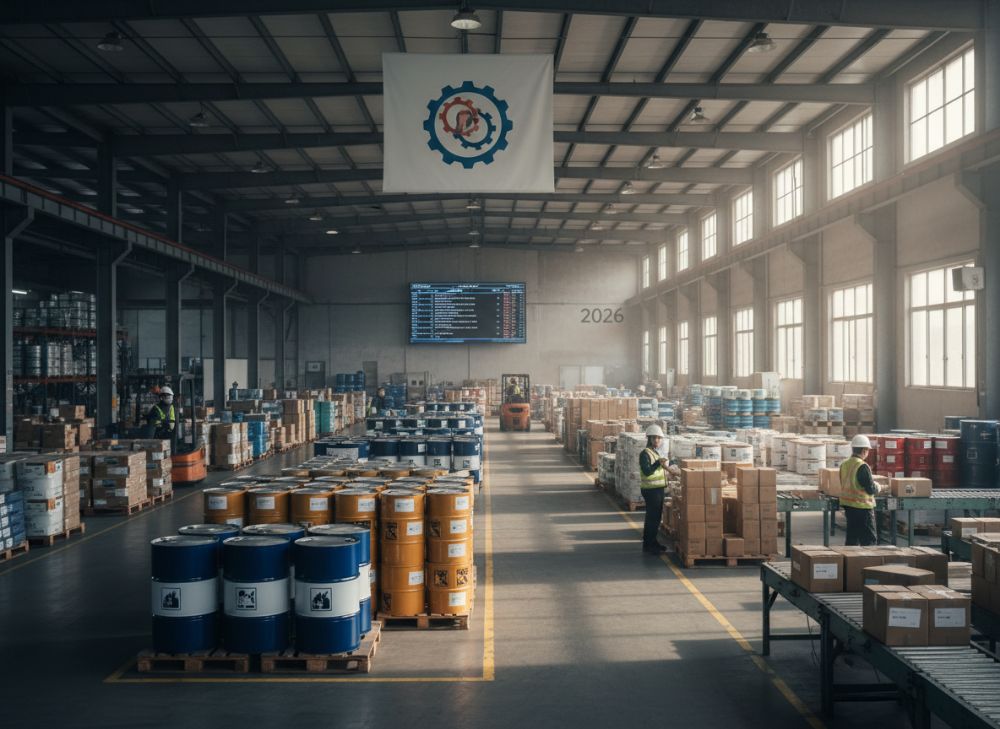
High-volume plants require 200L drums or 30L pails for two-part systems, with RFID tags for FIFO. Logistics ensure <2-hour delivery windows via dedicated fleets.
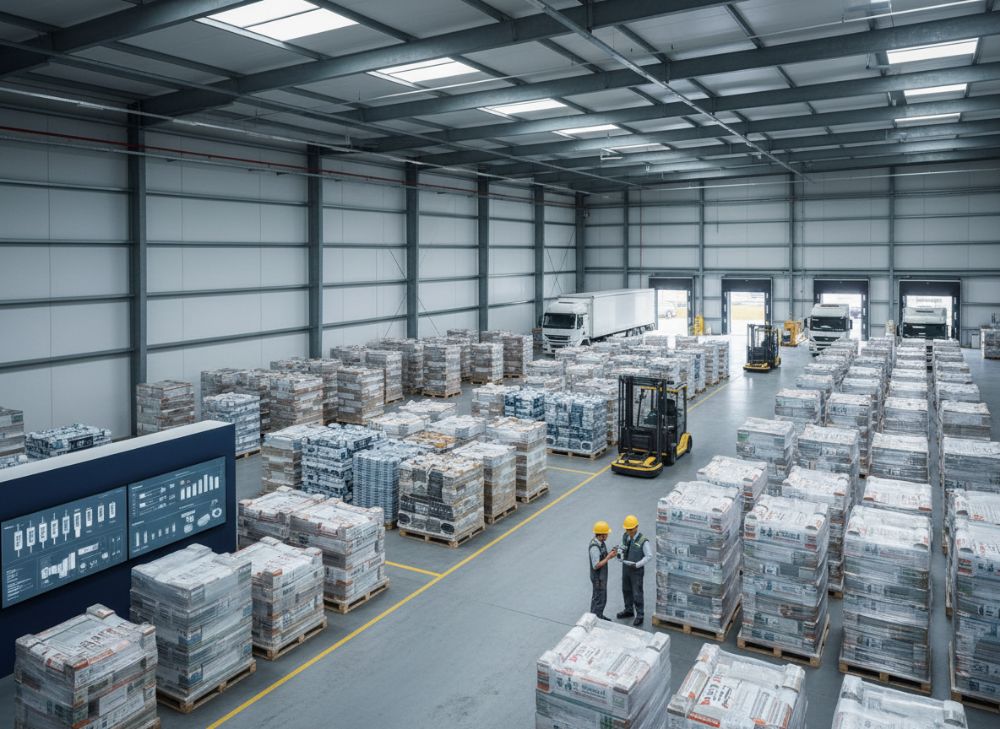
Line-side totes hold 5kg kits, minimizing changeovers. Temperature control at 20-25°C preserves shelf life over 12 months. A Detroit plant cut downtime 30% with bulk silos.
JIT models sync with MRP systems. Wikipedia’s Just-in-time manufacturing underscores efficiency.
Comparison chart favors silos for throughput, ideal for 1000+ units/shift.
| Packaging | Capacity | Logistics Fit | Changeover Time | Shelf Life | US Plant Usage |
|---|---|---|---|---|---|
| 200L Drum | High | Bulk Truck | 30 min | 12 mo | Body Shop |
| 30L Pail | Medium | Pallet | 10 min | 9 mo | Trim Line |
| 5kg Tote | Low | Line-Side | 2 min | 6 mo | JIT Cells |
| IBC Tote | Very High | Rail | 45 min | 18 mo | Pre-Treat |
| Semi-Bulk | Custom | Temp Control | 20 min | 12 mo | EV Battery |
| Cartridges | 310ml | Hand Truck | 1 min | 24 mo | Repair |
Table shows totes excel in flexibility; implications for kanban systems reduce inventory costs.
Global suppliers offer US warehousing for lead times <48h. Spill containment and Hazmat labeling comply with DOT 49 CFR.
Quality Documentation, PPAP and Traceability for Adhesive Materials
PPAP packages include PSW, control plans, and 8D reports. Traceability via lot codes links to raw material COAs. IATF 16949 mandates APQP phases.
VDA 6.3 audits suppliers. A recall scenario was averted via full chain visibility. IATF 16949 on Wikipedia details automotive QMS.
GR&R <10% ensures measurement reliability. Digital twins track viscosity profiles.
- Submit dimensional studies for bead geometry.
- Provide MSA for dispense equipment.
- Maintain retained samples for 15 years.
- Conduct annual process audits.
- Integrate SPC for real-time alerts.
SPC charts monitor CpK. Blockchain pilots enhance provenance. US OEMs demand IMDS entries for recycling.
Leading firms with ISO 14001 offer RoHS declarations. This rigor builds trust for long-term supply.
Cost, MOQ and Contracting Strategies for Multi-Year Vehicle Programs
Pricing for industrial adhesives for automotive varies by volume, chemistry, and specs—request quotes for accurate factory-direct rates. MOQs start at 1000kg for customs, scaling to railcars for programs.
Multi-year contracts lock formulas with annual reviews. VMI models optimize cash flow. A program saved 18% via tiered pricing.
TFX analysis weighs performance vs cost-per-joint. Customized automotive adhesive pricing factors fillers and certifications.
| Strategy | MOQ | Contract Term | Cost Driver | Benefit | Program Fit |
|---|---|---|---|---|---|
| Spot Buy | 500kg | One-Off | Premium Rate | Flexibility | Proto |
| Annual | 10T | 1 Year | Volume Discount | Stability | Refresh |
| Program | 100T+ | 3-5 Years | Fixed Formula | Cost Certainty | New Model |
| VMI | Custom | Ongoing | Consumption | Low Inventory | High Volume |
| Joint Dev | High | 5+ Years | R&D Share | Exclusivity | Platform |
| Consortium | OEM Group | Multi-Year | Shared Tooling | Scale Econ | EV Shift |
Table contrasts approaches; program deals suit longevity, hedging inflation.
Negotiate escrows for tooling. Best automotive adhesive suppliers provide TCO models. Contact for tailored strategies.
Supporting EV, Lightweighting and New Material Trends with Advanced Adhesives
EV trends demand adhesives for gigacastings and battery enclosures, with 50 MPa on CFRP. Lightweighting uses crash epoxies on Al-Mg alloys. 2025-2026 forecasts predict 40% adhesive growth per McKinsey Auto Report.
Innovations include recyclable thermosets per SAE J3028. Regulations like EPA low-VOC push solvent-free. Pricing shifts with raw material volatility—quote required.
A BEV platform case enabled 15% weight cut via multi-material bonds. Trends favor conductive adhesives for shielding.
Per Electric vehicle, adhesives enable 500kg savings. Advanced fillers boost conductivity to 10^6 S/m.
2026 CE marks for EU exports align with UL for US. Suppliers innovating eco-options lead, like those emphasizing low-VOC (QinanX New Material).
Frequently Asked Questions (FAQ)
What are the best adhesives for automotive crash structures?
Toughened epoxies meeting ISO 11343, validated for energy absorption.
How to select an industrial adhesive supplier for OEM use?
Prioritize IATF 16949, PPAP capability, and US logistics.
What impacts automotive adhesive pricing?
Volume, customization, certifications—request a quotation for latest rates.
Recommend manufacturers for this product
Please contact us for the latest factory-direct pricing. Visit https://qinanx.com/contact/.
What trends shape 2025 EV adhesives?
Lightweighting, recyclability, and high-voltage compatibility.


 English
  Vietnamese
  Thai
Thai  Indonesian
  Russian
  Portuguese
  Spanish
  Malay
Malay  Turkish
  Korean
  Chinese