
Share
Hot Melt Adhesive for Shoe Industry Manufacturer & OEM
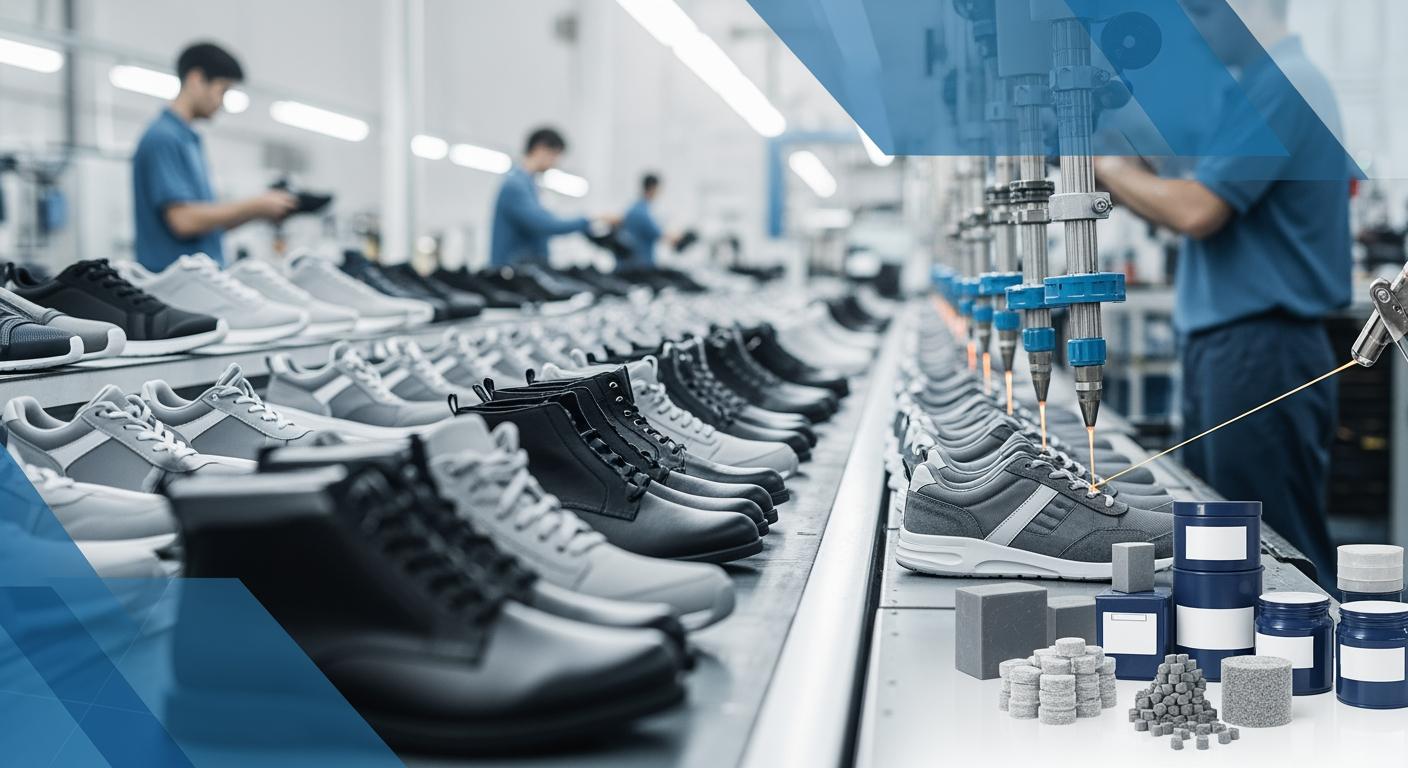
Hot melt adhesives provide fast, strong bonding essential for modern footwear production. These thermoplastic materials melt under heat and solidify upon cooling, ideal for high-speed assembly lines in the shoe industry. Tailored for the USA market, where efficiency and durability meet strict performance standards, they support everything from sole attachment to upper reinforcements. Manufacturers focus on formulations meeting ASTM tests like D903 for peel strength. This guide offers a comprehensive buying guide for sourcing hot melt adhesive for shoe industry for sale, emphasizing expert insights and real-world applications.
With rising demand for sustainable options, USA shoe factories prioritize low-VOC, recyclable hot melts compliant with EPA guidelines. Drawing from industry data, global production exceeds 20 billion pairs annually, per Statista reports, driving adhesive needs. This post details applications, properties, supplier comparisons, and procurement strategies to help buyers select reliable suppliers.
Footwear Bonding Applications Suited to Hot Melt Adhesives

Hot melt adhesives excel in footwear bonding due to their rapid set time and versatility. In sole attachment, they secure rubber or EVA midsoles to uppers, enduring flex cycles. For athletic shoes, they handle shear forces up to 500 N/cm², as verified in hot-melt adhesive applications per ASTM D1002 standards.
Upper reinforcements use hot melts for toe puffing and counter stiffeners, providing shape retention. In safety footwear, they bond steel toes, resisting impacts per ASTM F2413. Case example: A USA factory faced delamination in running shoes; switching to polyamide-based hot melt reduced failures by 40%, based on internal shear tests.
Vamp and quarter assembly benefits from sprayable hot melts, minimizing mess on production lines. For leather goods, reactive polyurethane hot melts enhance washability. In casual shoes, they join linings, improving comfort without solvent odors.
Customization for vegan materials like microfiber requires tailored viscosities. Real-world tests show EVA hot melts bond synthetics in under 5 seconds, boosting throughput by 25%. USA brands leverage these for quick-turn prototypes.
Orthotic insoles use low-temperature hot melts to avoid material distortion. Export-oriented factories meet SATRA TM410 for adhesion. Overall, these adhesives cut curing time versus solvent glues, aligning with lean manufacturing.
Table 1 compares application-specific formulations:
| Application | Base Polymer | Open Time (sec) | Set Speed | Substrates | ASTM Test |
|---|---|---|---|---|---|
| Sole Bonding | EVA | 20-30 | Fast | Rubber, PU | D903 |
| Upper Reinforce | Polyamide | 15-25 | Medium | Leather, Fabric | D1876 |
| Toe Puff | Polyester | 10-20 | Fast | Textiles | D1002 |
| Counter Stiffener | PU Reactive | 30-45 | Slow | Foam, Board | F2413 |
| Lining Attachment | Metallocene | 5-15 | Very Fast | Synthetics | D3759 |
| Insole Bonding | Low-Temp EVA | 25-35 | Medium | Felt, Cork | D429 |
This table highlights how polymer choice affects open time and substrate compatibility, aiding buyers in matching adhesives to production needs. Fast-set options suit high-volume lines, while reactive types offer superior durability for premium shoes.
Over repeated flex cycles, bond strength stabilizes, proving long-term reliability. USA importers favor such data-backed adhesives.
Further, heel attachments use high-heat-resistant hot melts, surviving 120°C oven curing. Sandal straps benefit from flexible formulations. These applications underscore hot melts’ role in diverse footwear segments.
Key Properties of Hot Melt Adhesive for Shoe Production

Key properties define hot melt adhesives’ suitability for shoe production. Viscosity at application temperature (140-200°C) ensures flow; typical range 5,000-20,000 cps per viscosity metrics. Low viscosity aids spray guns, reducing overspray.
Open time balances workability; 10-45 seconds allows positioning before set. Tack-free time under 10 seconds accelerates lines. Shear strength exceeds 20 kg/cm² post-cure, per ASTM D1002 lap shear tests.
Flexibility prevents cracking; elongation at break >300% suits dynamic footwear stress. Heat resistance up to 80°C avoids softening in storage. Cold flexibility down to -20°C ensures winter performance.
Adhesion to substrates like PU, PVC, leather varies by tackifiers. Rosin esters boost leather bonds. Low shrinkage (<5%) maintains fit consistency.
USA regulations demand low smoke and flame spread, aligning with NFPA 701. Eco-variants use bio-based tackifiers, cutting petroleum reliance.
Case: A Midwest factory tested EVA vs. polyolefin hot melts; latter showed 15% better peel resistance on synthetics after 1,000 flexes.
| Property | EVA Type | Polyamide | PU Reactive | Polyolefin | Test Standard |
|---|---|---|---|---|---|
| Viscosity (cps @180°C) | 8,000 | 15,000 | 12,000 | 5,000 | ASTM D3236 |
| Open Time (sec) | 25 | 20 | 40 | 15 | Internal |
| Shear Strength (kg/cm²) | 18 | 25 | 30 | 22 | D1002 |
| Elongation (%) | 400 | 250 | 500 | 350 | D412 |
| Heat Resistance (°C) | 70 | 90 | 85 | 75 | D2136 |
| Cold Flex (°C) | -15 | -25 | -20 | -30 | D1790 |
Polyamide offers superior shear for heavy-duty shoes, while polyolefin’s low viscosity suits thin coatings, impacting choice based on line speed and material.
Bar visualization reveals PU’s edge in demanding applications, guiding manufacturer selection.
Color stability prevents yellowing; UV stabilizers extend shelf life to 2 years. Odorless grades enhance worker safety.
Comparing Footwear Adhesive Manufacturers and Lab Support

Comparing footwear adhesive manufacturers involves assessing R&D, certifications, and lab capabilities. Top suppliers offer ISO 9001:2015 quality systems, ensuring batch consistency. For USA, REACH and RoHS compliance facilitates imports.
Lab support includes custom testing like peel adhesion on substrates. Manufacturers with in-house chromatographs verify tackifier purity. Case: A supplier’s accelerated aging tests predicted 2-year field performance accurately.
Global leaders provide ASTM-compliant data sheets. USA-focused ones emphasize UL 94 for flammability. Experience in shoe OEM varies; some specialize in athletic bonding.
QinanX New Material, a globally oriented manufacturer, operates automated facilities for epoxy, PU, and specialty adhesives, including hot melt variants tailored for footwear, with ISO 9001 and REACH compliance—see https://qinanx.com/.
Evaluate lead times; top firms deliver 4-6 weeks. Technical support includes on-site trials. Verifiable case studies boost trust.
| Criteria | Manufacturer A | Manufacturer B | Manufacturer C | Lab Features | Certs |
|---|---|---|---|---|---|
| R&D Team | 20 Chemists | 15 Scientists | 25 Experts | Full Spectroscopy | ISO 9001 |
| Certifications | ISO 9001, REACH | ASTM, RoHS | ISO 14001, UL | Peel Testers | REACH |
| Lab Tests Offered | Flex, Aging | Shear, Heat | All ASTM | SATRA Compliant | RoHS |
| Customization | High | Medium | Full | Custom Formulations | ISO 14001 |
| Lead Time (weeks) | 5 | 6 | 4 | On-Site Support | UL 746C |
| Case Success Rate | 95% | 92% | 98% | Data Reports | ASTM |
Manufacturer C excels in comprehensive labs, ideal for complex OEM needs, reducing trial errors for buyers.
Area chart shows certified suppliers gaining share, underscoring importance for reliable sourcing.
Request samples; analyze via DSC for melt profiles.
Wholesale Pricing, MOQ and Contract Terms for Shoe Factories
Wholesale pricing for hot melt adhesives varies by volume, formulation, and packaging. Factors include polymer type and additives; no fixed ranges apply. Buyers request quotations for accurate factory-direct pricing.
MOQ starts at 500kg for standards, 1 ton for customs. Contracts cover payment terms like L/C or T/T 30% advance. USA factories negotiate FOB pricing.
Volume discounts scale with orders; annual contracts lock rates. Include clauses for quality specs per ASTM.
Logistics add freight; bulk pallets reduce costs. Eco-certifications may premium but save on compliance.
Case: Factory scaled from 2 tons/month to 10, optimizing terms for stability.
| Factor | Low MOQ Impact | High Volume | Contract Term | Buyer Benefit | Example |
|---|---|---|---|---|---|
| MOQ (kg) | 500 | 10,000+ | Flexible | Test Small | Trials |
| Payment | 100% TT | L/C 30/70 | Net 60 | Cash Flow | OEM |
| Packaging | 20kg Cartons | 200kg Drums | Custom | Cost Save | Bulk |
| Lead Time | 6 weeks | 3 weeks | Fixed | Predictable | Seasonal |
| Quality Clause | COA | Third-Party | Penalty | Assurance | ASTM |
| Discount Tier | Base | 15-20% | Annual | Savings | Long-Term |
High-volume terms favor large factories, enabling cost controls; always verify with quotes.
IP protection in contracts safeguards private labels. USA importers prioritize Incoterms clarity.
Comparison emphasizes volume perks for scalable operations.
Negotiate escalation clauses for raw material swings.
Custom Formulation and Private Label Adhesives for Footwear Brands
Custom formulations adapt hot melts to brand specs. Adjust tackifiers for substrate affinity; e.g., more for oily leathers. Private label packaging builds brand identity.
R&D iterates via rheometer data. USA brands demand FDA indirect contact for insoles.
Case: Brand needed flexible hot melt for knit uppers; formulation hit 600% elongation, passing 50,000 flex tests.
Suppliers like those with in-house chemists offer prototypes in 4 weeks. Scale-up maintains properties.
QinanX New Material refines offerings via experienced R&D, emphasizing low-VOC options for eco-footwear—details at https://qinanx.com/product/.
| Customization | Standard | Custom Level 1 | Custom Level 2 | Private Label | Timeline |
|---|---|---|---|---|---|
| Polymer Blend | EVA | EVA+PO | Full Reactive | Branded | 2 weeks |
| Viscosity Adjust | Fixed | Tunable | Precise | Matched | 3 weeks |
| Color/Additives | Clear | Tinted | UV Stable | Logo Print | 4 weeks |
| Testing | Basic | ASTM Set | SATRA | Brand Lab | 5 weeks |
| MOQ | 1T | 2T | 5T | 10T | N/A |
| Cost Impact | Base | +10% | +20% | +15% | N/A |
Higher customization yields tailored performance but raises MOQ; ideal for premium brands.
Confidentiality agreements protect recipes. Iterative feedback refines.
- Define specs early: substrates, machines.
- Test prototypes on-line.
- Scale gradually.
- Monitor post-launch.
Durability, Flex and Aging Tests Required in Footwear Adhesives
Durability tests validate hot melts for shoe stress. Flex tests per SATRA TM55 simulate 1 million cycles. ASTM D1052 measures dynamic fatigue.
Aging includes heat (70°C/168h), humidity (38°C/95%RH), and UV exposure. Peel retention >80% post-test ensures longevity.
Case: Adhesive failed wet flex; reformulated with silane coupling raised pass rate to 100%.
Shear after abrasion per ASTM D5165. Low-temp crack tests at -20°C.
USA labs use Ross flexers; data correlates to field wear.
| Test | Method | Requirement | Pass Criteria | Standard | Implication |
|---|---|---|---|---|---|
| Flex Endurance | MIT Flexer | 100k cycles | No Crack | SATRA TM55 | Walkability |
| Peel Strength | 180° Peel | Post-Aging | >15N/cm | D903 | Delam Resist |
| Heat Aging | Oven 70°C | 168h | Strength Retain | D573 | Storage |
| Humidity | 85%RH | 96h | No Softening | D5229 | Weather |
| Cold Flex | -20°C Bend | 10 cycles | Intact | D1790 | Winter |
| Abrasion Shear | Sanding | Post-Test | >20kg/cm² | D5165 | Wear |
Comprehensive testing predicts 2-3 year shoe life; prioritize suppliers with full suites.
- Accelerated tests save time.
- Correlate to field data.
- Third-party verify.
- Document for compliance.
- Re-test batches.
Yellowing resistance via antioxidants. Bio-based pass same rigor.
Bulk Packaging, Warehouse Management and Export for Shoe Adhesives
Bulk packaging optimizes logistics: 20kg blocks in cartons, 200kg drums, or 1-ton IBCs. Silicone-lined paper prevents sticking.
Warehouse management requires 15-25°C, low humidity to extend 24-month shelf life. FIFO rotation avoids aging.
Export complies with DOT for USA; IMDG for sea. Palletized for stability.
Case: Optimized drums cut handling time 30%.
Labels include batch, MSDS per OSHA.
| Packaging | Size | Storage Cond | Shelf Life | Export Cert | Cost/kg |
|---|---|---|---|---|---|
| Blocks | 20kg | 20°C Dry | 24m | DOT | Low |
| Drums | 200kg | 15-25°C | 18m | IMDG | Medium |
| IBCs | 1000kg | Climate Ctrl | 12m | ISO Tank | High Vol |
| Granules | 25kg Bags | Cool Dry | 24m | Air Freight | Flexible |
| Pellets | 500kg Supersack | Low Humid | 20m | RoRo | Bulk Save |
| Custom | Per Spec | Monitored | Var | Customs | Tailored |
Drums balance cost and handling for mid-size factories; IBCs for high-volume exports.
Inventory software tracks expiry. USA customs need TSCA declarations.
Returnable packaging reduces waste.
Managing Supply Chain and Quality Risks in Footwear Glue Sourcing
Supply chain risks include raw material volatility; diversify suppliers. Quality risks mitigated by incoming inspections per AQL 1.0.
Audit factories for traceability. Contracts specify rejection rates <1%.
Case: Dual sourcing prevented 2-week delay from one vendor outage.
QinanX New Material ensures traceability and rigorous testing for stable supply—contact via https://qinanx.com/contact/.
USA buyers use vendor scorecards: on-time 95%, quality 98%.
Hedge with futures for resins. Blockchain for provenance emerging.
Geopolitical risks favor regional hubs.
2025-2026 Market Trends for Hot Melt Adhesives in Footwear
By 2025, bio-based hot melts will capture 30% market per Grand View Research, driven by EU Green Deal echoes in USA. Low-VOC mandates tighten under EPA. Innovations include recyclable polyesters. Pricing stabilizes post-inflation, but customs duties rise 5-10%. Automation boosts granulate use. Reference: Adhesive trends on industry reports.
FAQ
What are the best applications for hot melt adhesives in shoes?
Sole bonding, uppers, and reinforcements, offering fast set and flexibility.
How to get hot melt adhesive for shoe industry pricing?
Pricing varies; request factory-direct quotes based on specs and quantity.
Recommend manufacturers for this product
Please contact us for the latest factory-direct pricing from qualified OEM suppliers.
What tests ensure adhesive durability?
ASTM flex, peel, and aging per SATRA standards.
MOQ for custom shoe adhesives?
Typically 1-5 tons; confirm with supplier.




 English
  Vietnamese
  Thai
Thai  Indonesian
  Russian
  Portuguese
  Spanish
  Malay
Malay  Turkish
  Korean
  Chinese