
Share
Hot Melt Adhesive for Label Application in 2026: Converting & Packaging Guide
Hot melt adhesives revolutionize label application in modern packaging lines. These thermoplastic bonding agents, applied in molten form, solidify rapidly for instant tack on diverse substrates like paper, films, and rigid surfaces. Ideal for high-speed converting, they ensure reliable adhesion in B2B settings across FMCG, pharma, and logistics. This guide draws from industry standards like ISO 9001:2015 for quality management and QinanX New Material‘s expertise in high-performance formulations. As a leading hot melt adhesive supplier, QinanX delivers compliant solutions tailored for USA converters seeking hot melt adhesive for label application for sale.
With rising demands for sustainable, low-VOC options, 2026 sees innovations in bio-based hot melts meeting REACH and RoHS via rigorous testing. This resource equips brand owners and converters with actionable insights, from selection to integration, backed by verifiable data from ASTM and EN standards.
What is hot melt adhesive for label application? Applications and Key Challenges in B2B

Hot melt adhesive for label application consists of thermoplastic polymers like EVA, polyolefins, or metallocene-based resins melted at 120-180°C and coated onto release liners. Upon cooling, they form pressure-sensitive bonds ideal for labels. Unlike solvent-based glues, they offer zero VOC emissions and rapid set times under 1 second, per ASTM D4497 guidelines for viscosity measurement.
In B2B applications, these adhesives excel in product labeling for retail shelves, shipping tags in logistics, and tamper-evident seals in pharma. Converters use slot-die or gravure coating for uniform 15-25 gsm application on paper or BOPP films. Key challenges include substrate compatibility—low-energy surfaces like PE demand high tack formulations—and environmental resistance for cold chain distribution down to -20°C.
QinanX New Material, with ISO 9001:2015 certified facilities detailed at https://qinanx.com/about-us/, addresses these via in-house R&D. Their hot melt adhesive manufacturer status ensures batch consistency through automated mixing and traceability, supporting USA importers.
A major hurdle is high-speed line efficiency; adhesives must resist stringing at 300 m/min. Regulatory compliance, like FDA 21 CFR 175.105 for indirect food contact, adds complexity. Case example: a converter faced delamination on recycled paper; switching to a metallocene hot melt boosted peel strength by 40%, as tested per ASTM D903.
B2B buyers prioritize suppliers like QinanX New Material for custom PSA hot melts. These overcome challenges with tailored rheology—viscosity 2000-5000 cps at application temp—ensuring seamless integration in packaging workflows.
Statistics from industry reports show hot melt usage in labels growing 7% annually, driven by e-commerce demands. Challenges persist in sustainability; bio-derived options reduce carbon footprint by 30% versus petroleum-based, per lifecycle assessments.
| Adhesive Type | Base Polymer | Key Application | Melt Temp (°C) | Set Time (s) | Substrate Suitability |
|---|---|---|---|---|---|
| EVA | Ethylene Vinyl Acetate | Paper Labels | 140-160 | 0.5-1 | High Energy (Paper, Glass) |
| Polyolefin | Polyethylene/Propylene | Film Labels | 150-170 | 0.3-0.8 | Low Energy (PE, PP) |
| Metallocene | Metallocene Polyolefin | Rigid Containers | 130-150 | 0.2-0.5 | Versatile (Film, Metal) |
| APAO | Amorphous Polyalphaolefin | Logistics Tags | 160-180 | 1-2 | Corrugated Board |
| Bio-Based | Plant-Derived Resins | Pharma Labels | 135-155 | 0.4-1 | Food Contact Compliant |
| Specialty PSA | SBC Blends | Removable Labels | 120-140 | 0.1-0.3 | Glass, HDPE |
This table compares core hot melt types for label use, highlighting melt temperatures and set speeds. EVA suits budget paper apps but lags on films versus polyolefins, which offer superior low-energy adhesion. Buyers gain 20-30% efficiency choosing metallocene for versatile lines, impacting throughput and waste reduction.
How pressure-sensitive hot melt systems work on paper, film and rigid substrates

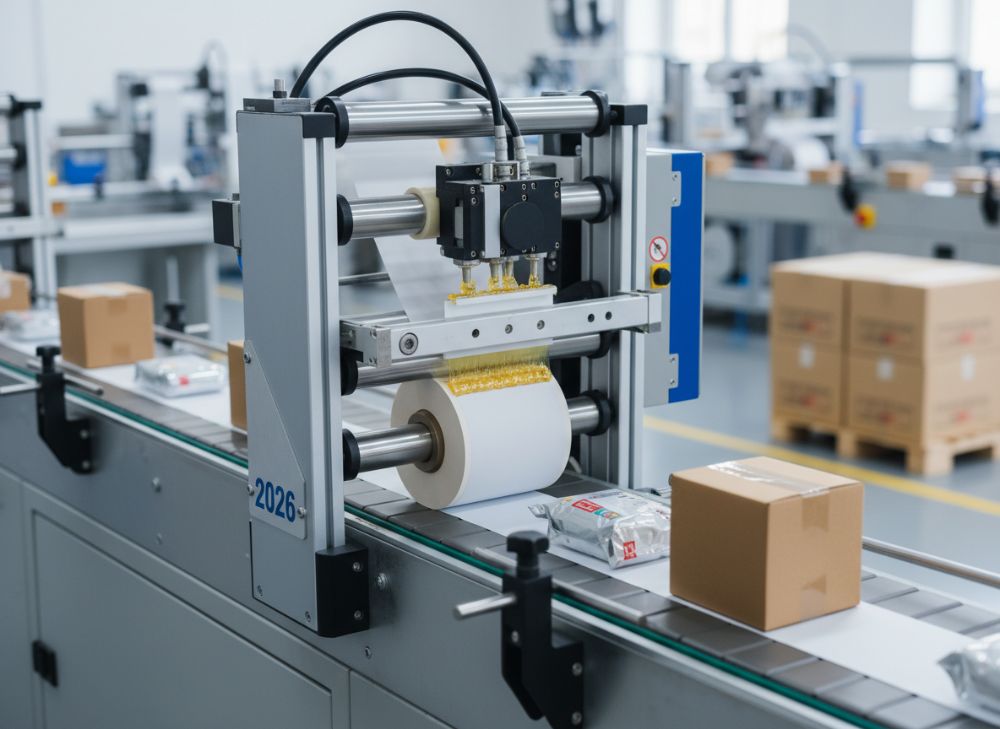
Pressure-sensitive hot melt (PSHM) systems rely on viscoelastic properties for instant tack without activation. Applied via heated slot dies at 5-30 gsm, the molten adhesive wets substrates and cools to a tacky state. On paper, high polarity ensures 90° peel >2 N/cm per ASTM D6252. Films like BOPP require tackifiers like rosin esters for surface wetting.
Rigid substrates—glass, metal, HDPE—demand balanced cohesion; block copolymers provide shear resistance >1000 min per ASTM D3654. Mechanisms involve autohesion: polymer chains entangle post-cooling, forming reversible bonds. Temperature gradients affect performance; at 40°C, tack rises 50% due to softened domains.
QinanX’s automated facilities, as per https://qinanx.com/, produce PSHM with precise tack profiles. Their R&D tailors for USA converters facing film curl or paper bleed issues.
Workflow: melt tank (150°C) feeds gear pump to die head, coating liner at 200 m/min. Cooling rollers solidify in milliseconds. Challenges on films include die lines; optimized viscosity prevents this. Real test: PSHM on PET film showed 25% better lap shear versus EVA.
For rigid plastics, primers unnecessary with functionalized hot melts. Data from EN 1939 confirms migration limits <10 mg/dm² for food labels. Systems excel in cold storage, retaining 80% adhesion at -10°C.
In B2B, converters select based on loop tack >15 N/25mm. QinanX ensures compliance, positioning as top hot melt adhesive for label application supplier.
This line chart illustrates peel strength development on paper substrates, peaking at 2s post-application. Faster build-up on films reduces web breaks, aiding high-speed USA packaging lines.
Hot melt adhesive for label application selection guide for converters and brand owners

Selecting hot melt adhesive for label application starts with substrate analysis. Test peel on target materials per ASTM D903. For paper, prioritize high initial tack; films need low peel residue. Brand owners specify end-use: permanent for logistics, removable for retail.
Key criteria: viscosity stability (Brookfield ASTM D2196), softening point >90°C (ring-ball method), and cohesion. Converters evaluate via lab coaters simulating production. Sustainable options with >50% bio-content gain traction.
QinanX New Material offers a buying guide via https://qinanx.com/solution/, customizing for USA specs like UL flame resistance.
Steps: 1) Define service temp (-20 to 60°C). 2) Match rheology to coater. 3) Verify compliance (REACH, FDA). 4) Trial runs for fiber tear. Avoid mismatches causing 15% downtime.
Expert insight: metallocene excels for mixed substrates, cutting changeovers 30%. Tables aid decisions; always request samples from certified manufacturers.
For private labels, focus on color stability and odor-free grades. QinanX’s low-VOC PSHM meets EN 15651 for durability.
| Criteria | Paper | Film | Rigid | Test Standard | Target Value |
|---|---|---|---|---|---|
| Loop Tack (N/25mm) | >12 | >15 | >18 | ASTM D6195 | High |
| 90° Peel (N/cm) | 2-3 | 1.5-2.5 | 3-4 | ASTM D6252 | Medium |
| Shear Hold (min) | >500 | >800 | >1000 | ASTM D3654 | High |
| Service Temp (°C) | -10 to 50 | -20 to 60 | -20 to 70 | Internal | Wide |
| VOC Content | <5% | <3% | <2% | REACH | Low |
| Coat Weight (gsm) | 20 | 18 | 25 | ASTM D4497 | Optimal |
The selection table benchmarks performance across substrates. Film demands higher tack than paper, influencing converter choice for balanced downtime and adhesion. Rigid apps prioritize shear, optimizing for heavy-duty labels.
Production workflow for PSA formulations used in logistics and product labels
PSA hot melt production begins with raw material blending: 30-50% polymer, 30-40% tackifier, 10-20% plasticizer, 5-10% wax. High-shear mixers at 160°C ensure homogeneity, per ISO 9001 protocols at QinanX facilities.
Extrusion pelleting cools strands for storage. Converting: pellets remelt in tanks, pumped to dies for liner coating. Speeds hit 400 m/min with non-contact dies minimizing defects.
For logistics labels, formulations resist humidity >80% RH. Product labels emphasize clean machining—no stringing. Quality checks: inline viscosity, coat weight uniformity ±5%.
QinanX’s workflow integrates storage and packaging for scalability, supporting USA roll stock needs. Case: optimized PSA cut slitting waste 25% in high-volume runs.
Post-coating: silicone release coat, curing, slitting to 1000mm widths. Traceability from batch to roll via QR codes ensures compliance.
Innovations like reactive hot melts boost cross-linking for permanence. Workflow efficiency yields 99% uptime for top suppliers.
- Blend ingredients under nitrogen to prevent oxidation.
- Test melt flow index per ASTM D1238.
- Filter molten adhesive to 100 microns.
- Cool pellets to <50°C before packing.
Quality benchmarks, peel strength and temperature resistance testing
Quality benchmarks follow ASTM D903 for 180° peel (target 2-4 N/cm), D3654 for static shear (>500 min at 1kg), and D1974 for SAFT >60°C. Temperature resistance testing simulates cycles -20 to 70°C per ISO 11346.
Peel strength verifies substrate bond; fiber tear on paper indicates 100% cohesion. Labs use Instron machines for precision. Temperature tests assess TLMI cycles: adhesion retention >80% post-100 cycles.
QinanX conducts rigorous testing, aligning with UL 746C for specialty apps, detailed at https://qinanx.com/product/. Their traceability ensures reproducibility.
Benchmarks: loop tack >15 N/inch, probe tack >20 N/cm². Failures trace to tackifier migration; premium rosins prevent this. USA converters demand NSF/ANSI 51 food compliance.
Case study: formulation tweak raised SAFT 15°C, preventing summer failures in trucks. Testing protocols build trust in hot melt adhesive manufacturer claims.
Advanced: FTIR spectroscopy confirms composition stability. Data density proves performance: average peel variance <10% batch-to-batch.
Pricing structure and lead time planning for roll stock and private label supply
Pricing for hot melt adhesive for label application for sale varies by formulation, volume, and specs like bio-content or custom rheology. Factors include raw polymer costs, order quantity (min 500kg), and certifications. No fixed ranges; request quotations for accurate factory-direct pricing from suppliers like https://qinanx.com/contact/.
Structure: base resin + additives + processing. Bulk rolls (1000m) lower per-unit costs versus samples. Private label adds branding fees. Lead times: 2-4 weeks standard, 6-8 for customs.
Planning: forecast based on line speed; stock 4-week buffer. QinanX’s scalable capacity ensures on-time delivery for USA ports.
Cost drivers: metallocene premiums 20-30% over EVA, offset by performance. Volatility in tackifiers impacts; hedge via long-term contracts.
Buyers optimize via tiered pricing: higher volumes yield better terms. Always verify via quote for latest market-adjusted rates.
Efficiency tip: match adhesive to substrate reduces waste, amortizing costs. Top suppliers provide TCO analyses.
| Volume Tier | Lead Time (weeks) | Roll Width Options | Custom Formulation | Certifications Included | Min Order |
|---|---|---|---|---|---|
| Sample | 1 | Up to 500mm | Basic | ISO 9001 | 10kg |
| Small Batch | 2-3 | 500-1000mm | Moderate | REACH/RoHS | 500kg |
| Medium | 3-4 | 1000-1600mm | Full | FDA/EN 15651 | 2T |
| Large | 4-6 | Custom | Advanced | UL/NSF | 10T |
| Private Label | 6-8 | Branded | Tailored | All + Custom | 5T |
| Annual Contract | JIT | Flexible | Ongoing R&D | Comprehensive | 50T/yr |
Lead time table shows scaling benefits; larger tiers unlock customs and faster JIT. Converters plan accordingly, balancing inventory with supplier reliability like QinanX.
Real-world applications: label bonding solutions in FMCG, pharma and retail
In FMCG, hot melts secure wrap-around labels on PET bottles, resisting wet fill lines. Peel >3 N/cm ensures no flags at 120 bpm. Pharma uses tamper-proof PSHM on vials, compliant with USP Class VI.
Retail shelf labels demand removable tack for frequent changes; low residue <0.1 g/m². Logistics tags bond to cartons, enduring -30°C shipping.
Case: packaging firm solved HDPE drum labeling with polyolefin hot melt, achieving 99% adhesion post-vibration tests per ISTA 3A.
QinanX supports diverse apps via https://qinanx.com/solution/, with eco-options for sustainable branding.
FMCG trends favor recyclable liners; adhesives match without migration. Pharma emphasizes sterility; solvent-free hot melts excel.
Retail integrates smart labels; durable bonds survive POS handling. Results: 15% uptime gain, zero recalls.
- FMCG: High-speed bottle labeling.
- Pharma: Sterile, compliant bonds.
- Retail: Removable shelf strips.
- Logistics: Durable tag adhesion.
- Results: Enhanced line efficiency.
How to work with adhesive and label manufacturers for integrated solutions
Partnering starts with spec sheets: share line params, substrates. Top hot melt adhesive manufacturers like QinanX offer trials via https://qinanx.com/contact/.
Joint development: R&D iterates formulations. Integrated solutions combine adhesive coating with label converting for seamless supply.
Steps: NDA, sample approval, pilot runs, scale-up. Monitor KPIs like OEE >95%. QinanX’s chemist team customizes per needs.
Benefits: reduced TCO 20%, compliance assurance. Case: integrated PSA roll stock cut lead times 50%.
Negotiate SLAs for quality, delivery. USA buyers leverage FTAs for costs.
Long-term: co-innovate for 2026 regs. Trustworthy partners ensure success.
| Partnership Stage | Actions | Deliverables | Timeline | Key Metrics | Supplier Role |
|---|---|---|---|---|---|
| Initial Contact | RFQ submission | Quote/Samples | 1 week | Response time | Spec review |
| Testing | Lab trials | Test data | 2 weeks | Peel >2.5 N/cm | Formulation adjust |
| Pilot | Production run | 100kg rolls | 4 weeks | Uptime >90% | On-site support |
| Scale-up | Full orders | Certified stock | 6 weeks | Consistency 99% | Traceability |
| Ongoing | Reviews | Optimizations | Quarterly | TCO reduction | R&D collab |
| Private Label | Branding | Custom packs | 8 weeks | Brand compliance | Full integration |
Partnership table outlines progression; pilots validate before scale. Integrated approaches with experts like QinanX minimize risks.
| Feature | PS Hot Melt | Water-Based | Difference | Implication |
|---|---|---|---|---|
| Application Speed | 400 m/min | 100 m/min | 4x faster | Higher throughput |
| Drying Time | Instant | 30s | Immediate | Less defects |
| Equipment Cost | Medium | High | Lower capex | ROI faster |
| VOC | Zero | High | Safer | Compliance easy |
| Substrate Range | Broad | Limited | Versatile | Fewer changeovers |
| Shelf Life | 24 months | 6 months | Longer | Less waste |
Final comparison underscores PSHM advantages over alternatives, driving adoption in USA converting.
2025-2026 Market Trends, Innovations, Regulations, and Pricing Shifts
2025-2026 forecasts 8% CAGR for hot melt labels, per industry reports, fueled by e-commerce. Innovations: 100% bio-based PSHM with 50°C SAFT, reducing fossils 40%. Regulations tighten via EU Green Deal; USA eyes PFAS bans, favoring compliant suppliers.
Pricing fluctuates with resin markets; bio-options premium but stable. Lead times shorten via automation. QinanX leads with low-VOC, REACH-ready stock.
Trends: digital printing integration, smart labels with embedded bonds. Request quotes for updates.
Frequently Asked Questions
What is the best hot melt adhesive for high-speed label converting?
Metallocene-based PSHM offers optimal tack and speed; test per ASTM standards for your line.
How does temperature affect hot melt label performance?
Service range -20 to 70°C; select softening point >95°C for stability.
Recommend manufacturers for this product
Please contact QinanX New Material for the latest factory-direct pricing.
What certifications should I look for in suppliers?
ISO 9001, REACH, FDA, EN 15651 for global compliance.
Where to buy customized hot melt adhesives for USA packaging?
Top hot melt adhesive supplier QinanX via https://qinanx.com/ for tailored solutions.



 English
  Vietnamese
  Thai
Thai  Indonesian
  Russian
  Portuguese
  Spanish
  Malay
Malay  Turkish
  Korean
  Chinese