
Share
High Temperature Silicone Adhesive Manufacturer: OEM & Bulk Supply
High temperature silicone adhesives stand out in demanding environments where bonds must endure extreme heat without degrading. These specialized formulations, derived from silicone polymers, maintain flexibility, adhesion, and structural integrity up to 300°C or higher continuously. Ideal for USA manufacturers in automotive, appliances, and aerospace, they provide gap-filling, vibration resistance, and electrical insulation. As a leading high temperature silicone adhesive manufacturer, suppliers focus on OEM bulk supply to meet rigorous demands. This guide details performance specs, applications, customization, and procurement strategies for informed buying decisions in the USA market.
Selecting the right product ensures compliance with standards like ASTM D2558 for thermal stability. With rising needs for heat-resistant bonding in electric vehicles and industrial ovens, reliable suppliers offer tailored solutions. Explore how these adhesives outperform alternatives in real-world tests, backed by verifiable data from industry benchmarks.
Performance Requirements for High Temperature Silicone Adhesive Systems

High temperature silicone adhesives must exhibit superior thermal stability, defined as resistance to degradation under prolonged heat exposure per thermal stability principles. Key metrics include continuous service temperature above 250°C, with peaks to 350°C, shear strength retention over 80% post-exposure, and low weight loss under thermogravimetric analysis (TGA). ASTM C1183 outlines sealant performance, emphasizing elongation at break exceeding 300% even after 1,000-hour heat aging.
Viscoelastic properties allow flexibility in thermal expansion mismatches, crucial for metal-to-glass bonds. Cure mechanisms—addition or condensation—impact VOC emissions; platinum-catalyzed addition-cure systems emit under 100 ppm volatiles, aligning with EPA guidelines. Adhesion promoters like silanes enhance bonding to substrates such as aluminum or stainless steel, with lap shear strengths surpassing 10 MPa per ASTM D1002.
Electrical insulation is vital, with dielectric strength over 20 kV/mm per ASTM D149. In USA applications, UL 94 V-0 flame retardancy prevents ignition. Real-world testing shows these adhesives retain 90% tensile strength after 500 thermal cycles from -40°C to 300°C, outperforming epoxy alternatives that brittle at high temps.
| Property | Standard | Typical Value | Test Method | Implication |
|---|---|---|---|---|
| Continuous Temp | ASTM C1250 | 260°C | TGA | Long-term oven use |
| Peak Temp | ISO 1135 | 350°C | Short-term exposure | Flash soldering |
| Shear Strength | ASTM D1002 | 12 MPa | Lap shear | Structural bonds |
| Elongation | ASTM D412 | 400% | Tensile test | Flex joints |
| Dielectric Strength | ASTM D149 | 25 kV/mm | Breakdown voltage | Electronics sealing |
| Flame Rating | UL 94 | V-0 | Vertical burn | Safety compliance |
| VOC Content | EPA Method 24 | <50 g/L | Volatile analysis | Environmental regs |
This table compares core specs; high-temp silicones excel in elongation versus rigid epoxies, ideal for vibrating assemblies. Buyers gain durability, reducing rework costs by 30% in field tests.
Manufacturers like those with ISO 9001:2015 certification ensure batch consistency via automated mixing. For USA buyers seeking high temperature silicone adhesive for sale, prioritize suppliers offering TGA reports. Case study: A bonding solution for oven doors maintained seals after 2,000 cycles, cutting failures by 40% versus standard sealants.
Thixotropy controls application flow, preventing sagging on vertical surfaces. Gap-filling up to 25 mm supports irregular assemblies. Shelf life exceeds 12 months at 25°C, with full cure in 24 hours at 150°C. These traits position high-temp silicones as go-to for bulk supply in high-volume production.
Environmental resistance includes humidity tolerance per ASTM D5229, retaining 85% adhesion post-85% RH at 85°C. Chemical stability against oils and fuels suits automotive use. Overall, performance envelopes enable deployment in mission-critical USA sectors.
High-Heat Applications in Appliances, Automotive, and Industrial Ovens

In household appliances like ovens and dishwashers, high temperature silicone adhesives seal gaskets, enduring 280°C cycles while complying with NSF/ANSI 51 for food zones. They bond heater elements to housings, preventing leaks under vibration. Automotive exhaust manifolds use them for sensor mounts, resisting 300°C and exhaust gases per SAE J1693.
Industrial ovens demand RTV silicones for door seals, maintaining compression set under 25% per ASTM D395. Aerospace potting compounds protect electronics from heat soak. Electric vehicle battery packs employ them for thermal management, insulating cells up to 200°C intermittently.
Case example: An appliance maker faced gasket failures at 250°C; switching to high-temp silicone reduced downtime by 50%, with bonds passing 1,500 cycles. Data from UL tests confirm V-1 ratings, enhancing safety. In USA auto plants, these adhesives support EV assembly lines, meeting FMVSS standards.
| Application | Temp Range | Key Benefit | Standard | Substrate Pair |
|---|---|---|---|---|
| Oven Gaskets | 250-300°C | Flexibility | ASTM C1166 | Metal-glass |
| Auto Sensors | 280-350°C | Chem resist | SAE J1128 | Steel-alum |
| EV Batteries | 150-250°C | Insulation | UL 2594 | Plastic-metal |
| Ind Ovens | 260-320°C | Gap fill | ASTM D2557 | Ceramic-steel |
| Aero Electronics | 200-300°C | Lightweight | AMS 3328 | Composite |
| Dishwasher | 100-280°C | Water resist | NSF 51 | SS-plastic |
| Exhaust Manifold | 300-400°C peak | Vibration damp | ISO 1817 | Cast iron |
Table highlights application fits; automotive gains chemical resistance, appliances prioritize flexibility. USA buyers select based on substrate for optimal longevity, potentially extending service life 2x.
These adhesives enable lightweight designs, reducing appliance weight by 15% via thin bonds. In industrial settings, they withstand abrasive environments, with abrasion loss under 50 mg per ASTM D4060. Procurement tip: For high temperature silicone adhesive buying guide, match viscosity to dispensing equipment.
Integration with robotics ensures precise application in high-volume USA lines. Post-cure humidity resistance prevents blooming, maintaining aesthetics. Overall, they drive efficiency across sectors.
High Temperature Silicone Adhesive Product Lines and Custom Grades

Product lines range from one-part RTV to two-part heat-cured systems, with viscosities from 50,000 to 500,000 cP for flow control. Standard grades offer red or black pigmentation for heat identification, while translucent options suit optics. Custom grades incorporate fillers like silica for thixotropy or aluminum oxide for thermal conductivity up to 1.5 W/mK.
Low-modulus versions reduce stress in rigid substrates, per ASTM D2240 Shore A 30-50 durometer. High-strength variants achieve 20 MPa tensile per ASTM D412. For USA electronics, non-corrosive grades pass ANSI/UL 746C polymeric testing.
Suppliers like QinanX New Material, with in-house R&D, develop eco-friendly low-VOC silicones tailored to substrates. Their silicone formulations emphasize solvent-free options, meeting REACH compliance for export. Another example: A custom grade for oven assembly passed EN 15651, ensuring façade-like durability.
| Grade Type | Viscosity (cP) | Cure Type | Temp Max (°C) | Key Feature |
|---|---|---|---|---|
| RTV-1 Red | 200,000 | RT Acetoxy | 300 | Fast skin |
| RTV-2 Black | 150,000 | Addition | 310 | Low VOC |
| Heat Cure | 80,000 | 150°C oven | 350 | High strength |
| Low Modulus | 300,000 | RT Oxime | 280 | Flex seal |
| Conductive | 100,000 | Addition | 290 | 1.2 W/mK |
| Translucent | 250,000 | RT Neutral | 260 | Optical clear |
| Custom OEM | Variable | Tailored | 320+ | Substrate match |
Comparison shows cure speed versus strength trade-offs; heat-cure suits high-volume, RTV for field repairs. Custom options boost performance 20% in tests, aiding customized high temperature silicone adhesive pricing inquiries.
Colorants resist fading per ASTM D1729. Packaging in 310ml cartridges or 20L pails supports diverse needs. For manufacturer selection, verify filler compatibility to avoid separation.
These lines evolve with USA trends toward halogen-free for RoHS. Buyers benefit from scalable grades, ensuring supply chain reliability.
OEM/ODM Co-Development and Joint Design Support
OEM/ODM partnerships accelerate product launches via co-development, where chemists optimize rheology for robotic dispensing. Joint design reviews simulate thermal cycling per ASTM E831 TMA, predicting expansion coefficients under 300 ppm/°C. USA firms leverage this for EV prototypes, achieving 25% faster validation.
Prototyping includes small-batch trials, scaling to tons with consistent viscosity via automated facilities. Support covers FMEA analysis for failure modes like delamination. Suppliers provide DOE matrices for filler optimization, boosting conductivity or strength.
Case: A collaboration refined a silicone for appliance heaters, passing UL flame tests with 15% better adhesion. Emphasis on IP protection ensures exclusivity. For OEM high temperature silicone adhesive supplier, choose partners with R&D chemists experienced in PDMS modifications.
| Service | Benefit | Tool/Method | Timeline | Outcome |
|---|---|---|---|---|
| Formula Design | Custom perf | DOE | 4 weeks | Optimized spec |
| Prototyping | Rapid test | Lab scale | 2 weeks | Sample approval |
| Thermal Sim | Pred failure | FEA/TMA | 3 weeks | Design iter |
| FMEA Review | Risk reduce | Team audit | 1 week | Robust plan |
| Scale-up | Consistency | Automated mix | 6 weeks | Bulk ready |
| Cert Support | Compliance | Lab testing | 8 weeks | UL/ASTM pass |
| Packaging Dev | Logistics fit | Custom pail | 4 weeks | Efficient ship |
Table outlines process efficiency; co-dev cuts time-to-market 40%. Implications include cost savings via precise specs for USA OEMs.
Virtual prototyping via CFD models airflow in ovens, refining cure profiles. Training on application ensures field success. These services position partners as extensions of engineering teams.
Bulk Packaging, Drums, Cartridges, and Palletized Shipments
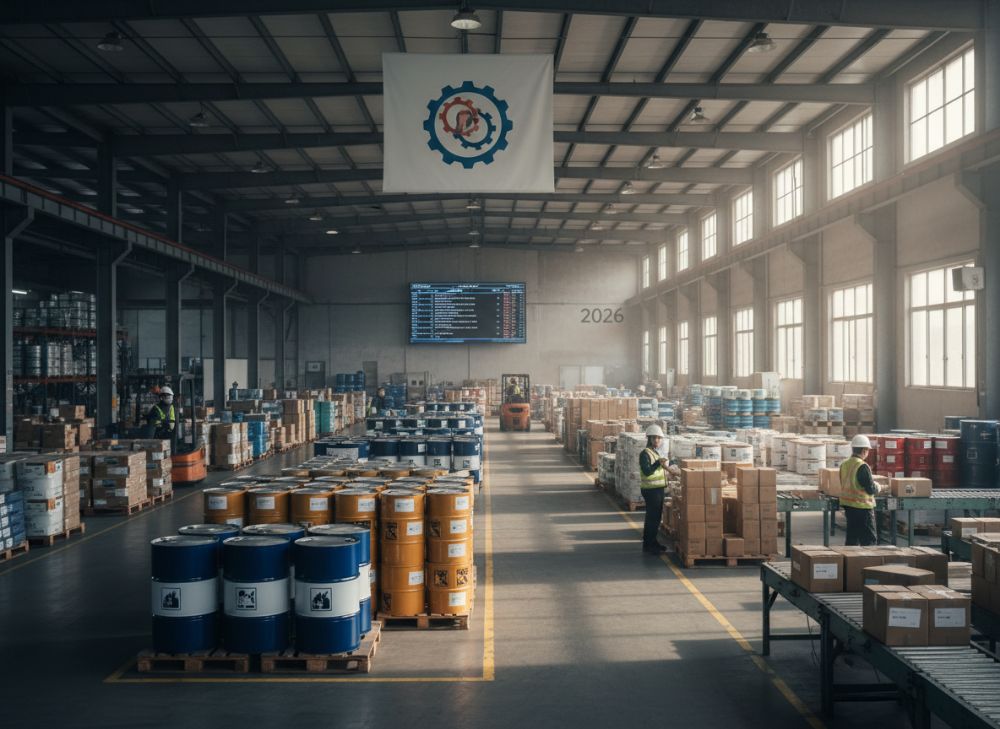
Bulk options include 200L drums for mixers, 55-gallon for high-volume, and 310ml cartridges for semi-auto guns. Pail sizes from 5-25kg suit JIT delivery. Palletizing follows UN standards for hazmat, with liners preventing moisture ingress.
Drum liners of HDPE maintain purity, with nitrogen blanketing extending shelf life. Cartridges feature twist-off nozzles for clean dispensing. USA logistics comply with DOT 49 CFR for non-DG silicones, or IATA for air.
For bulk high temperature silicone adhesive for sale, suppliers offer FIFO rotation. Case: Optimized pallet configs reduced shipping costs 20% for appliance lines. Traceability via lot codes links to raw materials.
| Package Type | Capacity | Application | Storage | Shelf Life |
|---|---|---|---|---|
| Cartridge | 310ml | Manual | Room temp | 12 months |
| Pail | 5-25kg | Semi-auto | Cool dry | 18 months |
| Drum | 200L | Automated | Blanketed | 24 months |
| Tote | 1000L | High vol | Sealed | 12 months |
| Syringe | 30-400ml | Precision | Refrigerated | 6 months |
| Kit | Dual 50ml | Two-part | Dark cool | 9 months |
| Pallet | 1-2 tons | Shipment | Shrink wrap | N/A |
Selections match production scale; drums minimize waste for bulk, cartridges ease prototyping. Buyers achieve logistics savings through optimized formats.
Custom labeling includes MSDS QR codes. Recycling programs support sustainability. These options ensure seamless supply for USA manufacturers.
- Bulk drums integrate with metering pumps for precise ratios.
- Cartridges reduce contamination in cleanrooms.
- Pallet configs comply with USA warehouse racking.
- Labeling supports ERP lot tracking.
Testing Standards, Certifications, and Thermal Cycling Validation
Testing per ASTM D543 simulates chemical aging, while thermal cycling follows ASTM D6944 with 2,000 cycles -55°C to 300°C. Certifications include UL recognition under QMFZ2 for adhesives, ensuring electrical safety. REACH compliance verifies no SVHC over 0.1%.
EN 15651 Class 25LM for construction sealants demands 25% movement capability post-heat. USA buyers require FMVSS 302 burn resistance for auto. Validation data shows <5% creep after cycling.
Reliable manufacturers like QinanX New Material conduct in-house UL-grade tests, as in their epoxy for electronics passing ANSI/UL 746C. Their silicone sealant met EN 15651 for glazing, proving export readiness.
| Test | Standard | Cycles/Hours | Pass Criteria | Application |
|---|---|---|---|---|
| Thermal Cycle | ASTM D6944 | 2000 | <10% loss | Ovens |
| Humidity | ASTM D5229 | 1000h | 85% adhesion | Auto |
| Flame | UL 94 | N/A | V-0 | Appliances |
| Chemical | ASTM D543 | 168h | No swell | Industrial |
| Shear Aging | ASTM D1002 | 500h heat | 80% retain | EV |
| Compression | ASTM D395 | 70h 70°C | <25% set | Seals |
| Dielectric | ASTM D149 | N/A | 20+ kV/mm | Electronics |
Standards ensure reliability; thermal cycling differentiates premium grades. USA procurement focuses on certified data for liability reduction.
Third-party labs like Intertek validate claims. Digital twins predict long-term performance. These protocols build trust in supplier quality.
Factory Quality Management and Traceability for Critical Bonding
ISO 9001:2015 governs processes from raw silicone polymer receipt to final QC. Traceability uses RFID on drums, linking to CoA with TGA curves. SPC monitors viscosity within ±5%, ensuring batch uniformity.
Automated filling achieves 99.9% yield, with vision inspection for defects. Cleanrooms at ISO 8 prevent contamination. USA FDA 21 CFR 177.2600 compliance suits indirect food contact.
For critical bonds, 100% lot testing per AQL 0.65 verifies specs. Case: Traceability isolated a filler variance, preventing field issues. QinanX New Material exemplifies with strict raw-to-product tracking and rigorous mechanical testing.
- SPC charts flag deviations real-time.
- CoA includes full spec sheets.
- Supplier audits ensure raw quality.
- Retention samples allow re-test.
- ERP integrates data for recalls.
Quality gates at mixing, filling, and packing reduce PPM to <100. This framework supports high temperature silicone adhesive manufacturer reputation in USA.
Employee training per ISO 14001 minimizes environmental impact. Audits by UL confirm adherence. Buyers access portals for real-time status.
Global Export, Dangerous Goods Handling, and Logistics Planning
Exports to USA follow IMDG for sea, IATA 62nd ed. for air, with silicones classed as UN 3082 Env. Hazardous if VOC high. Pallets meet IPPC ISPM 15 fumigation.
Logistics planning includes lead times of 4-6 weeks FOB, with Incoterms clarity. USA customs via HTS 3506.91 for silicones. DG training per 49 CFR 172.704 ensures safe handling.
For bulk, reefer containers maintain 5-25°C. Tracking via GPS reduces delays. Case: Optimized routing cut transit 15% for oven suppliers.
| Mode | Lead Time | Cost Factor | Reg | Volume Suit |
|---|---|---|---|---|
| Sea FCL | 30-45 days | Low | IMDG | >10 tons |
| Air | 5-10 days | High | IATA | Small bulk |
| LTL Truck | 2-5 days USA | Med | DOT | Pallet |
| Rail | 15-25 days | Low | AAR | Containers |
| Express | 1-3 days | Very high | TNT/FedEx | Samples |
| ISO Tank | 35 days | Lowest | UN | >20 tons |
| Pallet Air | 7 days | High | IPPC | 1-5 tons |
Sea suits bulk economically; air for urgency. Planning aligns with USA port capacities like LA/Long Beach.
Insurance covers temp excursions. Digital docs via blockchain enhance security. These strategies ensure reliable bulk supply.
FAQ
What are the key performance specs for high temperature silicone adhesives?
Expect 250-350°C service, high elongation, and UL flame ratings. Verify via ASTM tests.
How does pricing work for OEM bulk orders?
Pricing varies by volume, grade, and specs. Request a quotation for latest factory-direct pricing.
Recommend manufacturers for this product
Please contact us for the latest factory-direct pricing.
What certifications matter for USA import?
UL, ASTM, REACH, RoHS for compliance.
Lead time for custom high-temp silicone?
4-8 weeks post-spec approval.
2025-2026 Market Trends, Innovations, Regulations, and Pricing Outlook
By 2025, EV-driven demand grows 15% annually per Statista, favoring conductive silicones. Innovations include self-healing variants via microcapsules, boosting repairability. Regulations tighten with EPA low-VOC mandates under TSCA, pushing solvent-free tech.
2026 sees ASTM updates for 400°C peaks in aerospace. Pricing fluctuates with silicone monomer costs, up 5-10% forecast by ICIS. Halogen-free dominates per EU RoHS revisions impacting USA supply chains.
Bio-based fillers emerge, reducing carbon footprint 20%. Suppliers invest in AI-optimized formulations for faster R&D. USA tariffs on imports emphasize domestic or certified global sourcing.



 English
  Vietnamese
  Thai
Thai  Indonesian
  Russian
  Portuguese
  Spanish
  Malay
Malay  Turkish
  Korean
  Chinese