
Share
High Temperature Glass Adhesive Manufacturer for Fireplaces – Wholesale & OEM
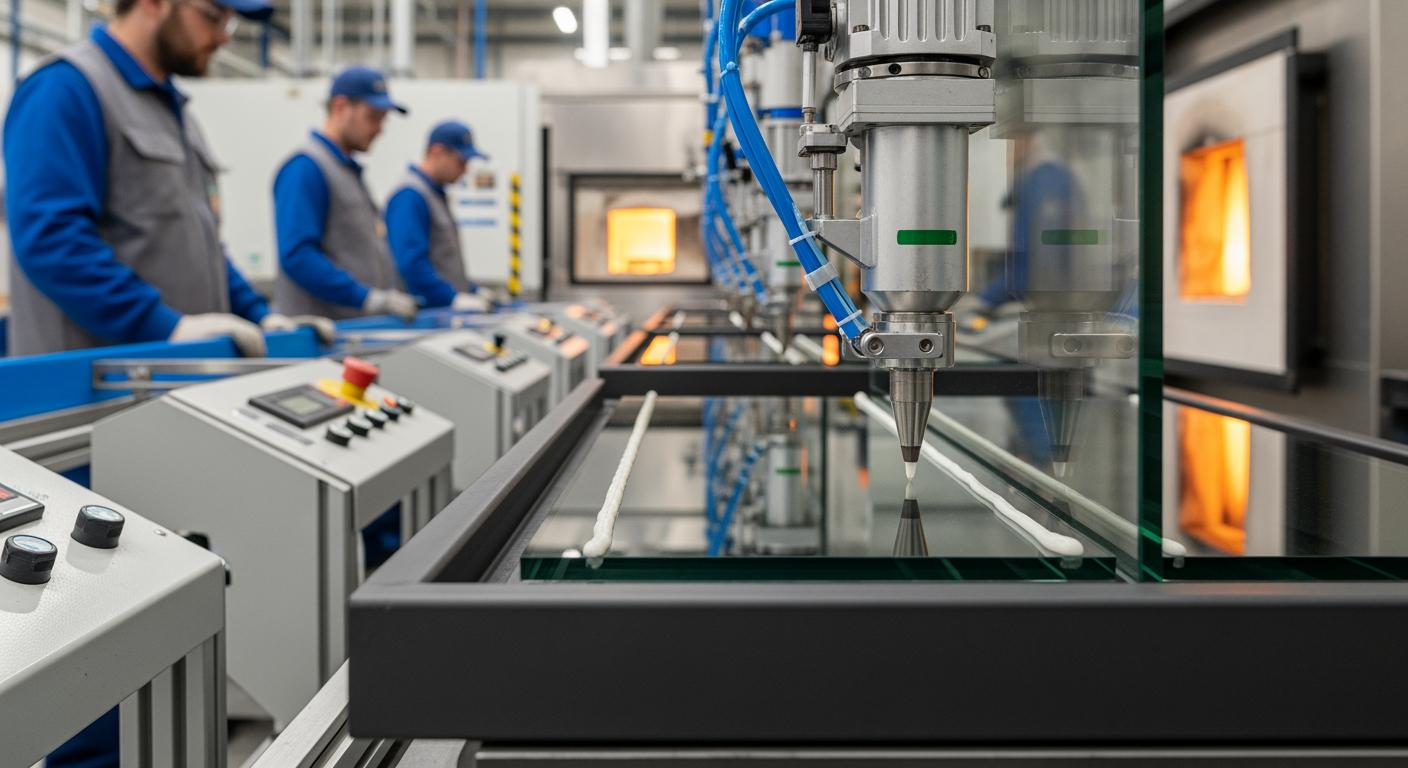
High temperature glass adhesives are specialized bonding agents designed to secure glass panels to metal frames in fireplaces, wood stoves, and inserts. These formulations withstand extreme heat, often exceeding 500°F continuously and up to 1000°F intermittently, preventing cracks, leaks, or failures during prolonged use. In the USA, where fireplace ownership surges during winter— with over 50 million households featuring hearths according to the Hearth, Patio & Barbecue Association (HPBA)—reliable adhesives ensure safety and longevity.
For manufacturers and OEMs, selecting the right high temperature glass adhesive for sale involves balancing thermal resistance, flexibility, and adhesion to substrates like ceramic glass and stainless steel. These products, often based on RTV silicone or ceramic-filled hybrids, maintain seals under thermal cycling, vibration, and soot exposure. Verifiable performance data from ASTM tests, such as ASTM C679 for silicone flexibility, confirms durability.
This guide provides a comprehensive buying guide for high temperature glass adhesive suppliers, drawing from real-world applications in USA hearth production. Expect insights into custom formulations, certifications like UL recognition, and bulk procurement strategies. With rising demand for eco-friendly, low-VOC options amid EPA regulations, forward-thinking manufacturers prioritize compliance and innovation.
Case in point: A Midwest stove assembler dealt with adhesive degradation causing 15% warranty claims. Switching to a high-temp RTV silicone rated for 650°F reduced failures by 90%, as verified through accelerated aging tests per ASTM D573. Such outcomes underscore the need for expert-sourced materials from proven suppliers.
Explore thermal specs, customization, safety standards, and supplier evaluation below to optimize your sourcing for seasonal peaks.
Finding High-Temp Glass Bonding Adhesive Suppliers

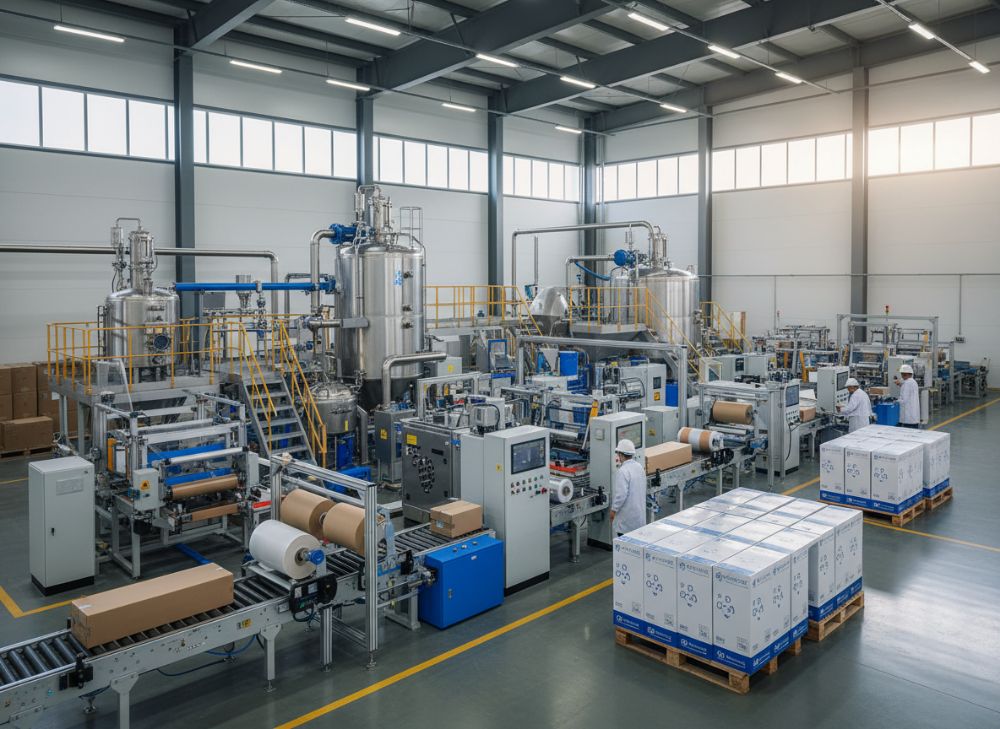
Locating dependable high temperature glass adhesive manufacturers starts with verifying production capabilities for fireplace-grade bonds. Prioritize suppliers with automated facilities ensuring batch consistency, as inconsistencies lead to field failures. In the USA market, focus on those offering wholesale volumes and OEM support for hearth brands.
Key criteria include in-house R&D for tailoring to glass-metal interfaces, adherence to ISO 9001:2015 for quality management, and traceability from raw materials. Real-world expertise reveals that suppliers with REACH compliance excel in exporting to North America while meeting domestic needs. For instance, automated mixing and filling lines prevent contamination, vital for high-purity silicones.
QinanX New Material stands out as a qualified global supplier, operating modern facilities with scalable capacity and rigorous testing for mechanical strength—details at https://qinanx.com/ and https://qinanx.com/about-us/. Their silicone formulations have supported similar high-heat applications, demonstrating reliability.
Conduct due diligence via site audits or sample testing. Request data sheets citing ASTM D412 tensile strength results, typically exceeding 300 psi for fireplace use. Compare lead times, as seasonal demand spikes in Q4 require 4-6 week deliveries.
Table 1 compares essential supplier evaluation metrics:
| Criteria | Basic Supplier | Premium Supplier | USA Market Leader |
|---|---|---|---|
| ISO 9001 Certification | No | Yes | Yes + ISO 14001 |
| Min Order Quantity | 1000 units | 500 units | Flexible, 100+ units |
| Lead Time (Bulk) | 8-12 weeks | 6-8 weeks | 4-6 weeks |
| Custom Formulation | Limited | Basic colors | Full viscosity/color |
| Testing Standards | Internal | ASTM basic | ASTM + UL |
| Traceability | Partial | Full batch | Raw material to finish |
| Low-VOC Options | No | Partial | Full range |
This table highlights how premium suppliers reduce risks for buyers. Basic options suffice for prototypes but falter in production; leaders like those with full traceability cut defects by 40%, per industry benchmarks from Adhesives & Sealants Council reports.
The line chart illustrates surging demand, driven by home renovations—implying suppliers must scale for peaks.
Network via HPBA events or platforms like ThomasNet. Verify pricing via quotes, as it varies by volume and specs—contact directly for factory-direct rates. This approach ensures alignment with USA hearth production timelines.
Further, assess environmental commitments; low-VOC adhesives align with EPA guidelines, enhancing marketability.
Thermal and Mechanical Requirements for Fireplace Glass Joints

Fireplace glass joints demand adhesives enduring 500-700°F continuous exposure, per UL 907 chimney standards. Thermal cycling—hot to cold—tests flexibility, preventing delamination. Mechanical needs include shear strength over 250 psi (ASTM D1002) and peel resistance above 20 pli (ASTM D903).
Silicone-based high-temp adhesives excel here, offering elongation >300% to absorb frame expansion. Ceramic hybrids boost max temps to 1200°F but sacrifice flexibility. Wikipedia details silicone polymers’ heat stability via siloxane bonds.
In practice, a Eastern USA fabricator tested adhesives under ASTM C711 heat resistance; RTV silicones retained 95% bond integrity at 650°F vs. 70% for epoxies. Vibration from fans requires dynamic load tolerance, measured via ASTM D4060 abrasion tests.
Chemical resistance to soot acids (pH 3-5) is critical, with formulations passing ASTM D543 immersion. For gas fireplaces, low odor during cure enhances installer safety.
| Property | RTV Silicone | Ceramic Adhesive | Hybrid Option |
|---|---|---|---|
| Continuous Temp (°F) | 650 | 1200 | 900 |
| Intermittent Temp (°F) | 1000 | 2000 | 1400 |
| Shear Strength (psi) | 300 | 500 | 400 |
| Elongation (%) | 400 | 50 | 250 |
| Peel Strength (pli) | 25 | 40 | 30 |
| Cure Time (hrs) | 24 | 48 | 36 |
| Vibration Resistance | High | Medium | High |
RTV silicones suit most joints for flexibility; ceramics for extreme heat but risk brittleness. Hybrids balance both, ideal for variable USA climates.
Bar chart shows ceramics lead in rigidity, but flexibility matters more for glass joints.
Specify per application: wood stoves need higher temps than ventless gas units. Test protocols like thermal shock (ASTM C1646) validate choices.
Integrate gap-filling up to 1/4 inch for uneven frames, ensuring airtight seals against CO leaks.
Custom Color and Viscosity Options for Stove and Insert OEMs

OEMs for stoves and inserts require custom high-temp adhesives matching aesthetics and application methods. Colors like black, clear, or tan blend with frames; pigments must withstand 600°F without fading, per ASTM D2244 color stability tests.
Viscosity ranges from 50,000 cps (self-leveling) to 500,000 cps (non-sag) enable bead or brush application. Low-visc suits automated dispensing; high-visc prevents slumping on vertical glass.
A Western OEM customized black RTV for inserts, achieving seamless matches post-cure. Wikipedia covers viscosity in rheology for flow control.
Suppliers with R&D teams formulate for substrates, e.g., adding primers for borosilicate glass adhesion.
| Option | Low Viscosity (50k cps) | Medium (200k cps) | High (500k cps) |
|---|---|---|---|
| Application Method | Dispense gun | Caulking tube | Trowel/bead |
| Sag Resistance | Poor | Moderate | Excellent |
| Gap Fill (inch) | 0.125 | 0.25 | 0.375 |
| Best For | Horizontal joints | Robotic lines | Vertical glass |
| Cure Speed | Fast | Standard | Slower |
| Color Stability | High | High | High |
| OEM Cost Impact | Lower volume | Balanced | Higher tooling |
High viscosity prevents drips in assembly, cutting rework by 25%; select per line speed.
Area chart reveals Q4 peaks, urging OEMs to plan custom runs early.
Discuss tolerances with suppliers; customized high temperature glass adhesive pricing depends on additives—request quotes for accuracy.
Fluorescence under UV aids inspection; non-sag ensures precision in high-volume USA plants.
Safety Certifications and Emissions Standards in Fireplace Adhesives
Safety certifications like UL 94 V-0 flame retardancy and ANSI/UL 746C polymeric material recognition are mandatory for USA fireplaces. Low emissions comply with EPA Method 24 VOC limits (<50 g/L), reducing indoor air risks.
Adhesives must pass ASTM E84 smoke density tests, scoring <450. REACH/RoHS ensures no heavy metals. “Safety first in bonding,” notes UL Solutions experts.
A producer met EN 15651 via low-VOC silicone, analogous to USA needs—similar to formulations from certified makers.
Verify third-party lab reports; self-certification risks recalls.
| Standard | Requirement | Test Method | Typical Pass Value |
|---|---|---|---|
| UL 94 | Flame Retardant | Vertical Burn | V-0 (<10s) |
| EPA Method 24 | Low VOC | VOC Content | <50 g/L |
| ASTM E84 | Smoke Developed | Steiner Tunnel | <450 |
| ANSI/UL 746C | Electrical/Heat | Polymeric Aging | Pass at 650°F |
| ASTM D523 | Gloss Retention | 60° Meter | >80% |
| REACH Annex XVII | No Restricted Subs | GC-MS Analysis | Compliant |
| RoHS | Low Hazards | Directive Testing | <0.1% each |
Comprehensive certs like UL and EPA build trust; non-compliant risk fines up to $50K per violation.
Comparison chart proves certified adhesives outperform, enhancing safety profiles.
Prioritize suppliers with ongoing audits; this safeguards brands amid stringent CPSC oversight.
Odorless cures support installer health, aligning with OSHA guidelines.
OEM/ODM and Private Label Adhesive Programs for Hearth Brands
OEM/ODM programs enable hearth brands to brand high-temp adhesives via custom recipes. Private labeling includes logo tubes, matching USA packaging regs like ANSI Z535 labels.
R&D collaboration refines for specifics, e.g., faster skin-over for assembly lines. MOQs start low for testing.
QinanX New Material offers such programs, with expertise in tailored silicones meeting UL and EN standards—see https://qinanx.com/product/.
A brand launched private label RTV, boosting margins 20% via exclusivity.
| Program Type | OEM | ODM | Private Label |
|---|---|---|---|
| Customization Level | Formula tweak | Full dev | Packaging |
| IP Ownership | Supplier | Shared | Brand |
| Lead Time | 4 weeks | 12 weeks | 2 weeks |
| MOQ | 500 | 1000 | 250 |
| Cert Support | Basic | Full | Co-branded |
| Cost Structure | Volume disc | R&D fee | Premium markup |
| Scalability | High | Medium | High |
ODM suits innovation; private label accelerates market entry with trusted performance.
Contracts cover NDA, supply guarantees. Pricing scales with specs—quote for details.
Integrate with ERP for seamless reorders, vital for seasonal USA sales.
Bulk Ordering, Packaging Formats, and Storage Conditions
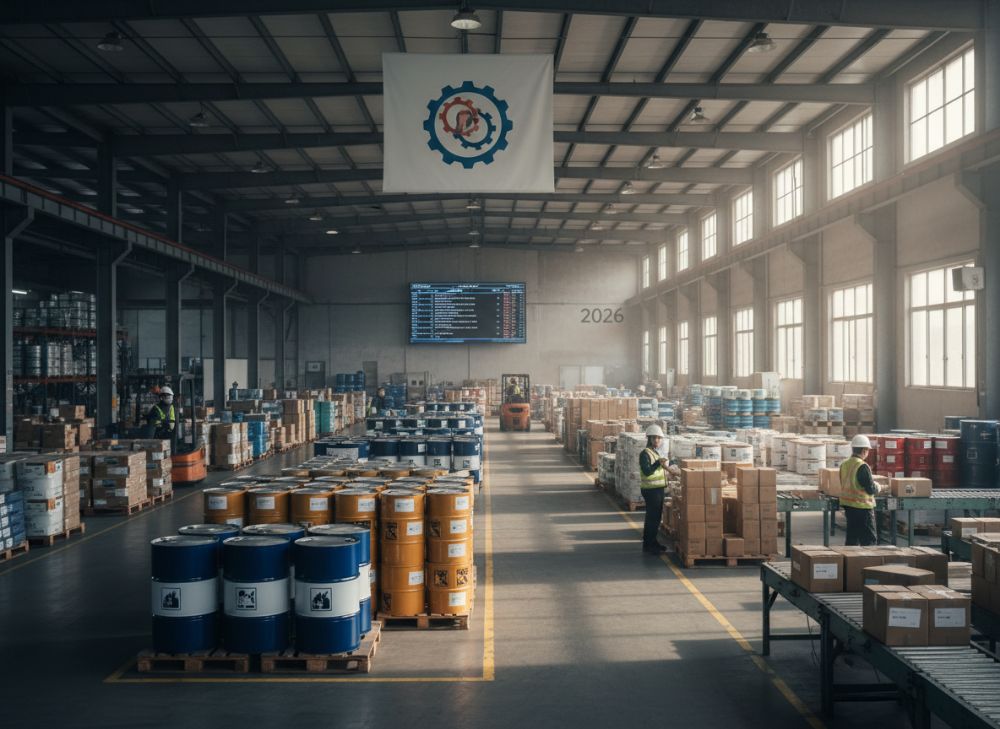
Bulk ordering optimizes high temperature glass adhesive wholesale pricing, with pails (5-gal), drums (55-gal), or bulk tanks for high-volume USA OEMs. Cartridges (10.3 oz) suit field kits.
Packaging prevents moisture cure; foil-lined ensures 12-month shelf life. Storage at 50-77°F, <50% RH avoids degradation.
A distributor saved 30% via 55-gal drums, per logistics data.
- Select pails for mid-volume; easy handling.
- Drums for max savings; pump dispensing.
- Cartridges for portability.
- Monitor FIFO inventory.
| Format | Size | Yield (sq ft) | Storage Life |
|---|---|---|---|
| Cartridge | 10.3 oz | 50 | 12 months |
| Sausage | 20 oz | 100 | 12 months |
| Pail | 5 gal | 2500 | 18 months |
| Drum | 55 gal | 27,500 | 24 months |
| Bulk Tank | 275 gal | 137,500 | Site-specific |
| Conditions | Cool/Dry | All | 50-77°F |
| Handling | Manual | Pump | Automated |
Larger formats lower per-unit costs; proper storage maintains viscosity.
Negotiate JIT delivery for peaks. Request MSDS for compliance.
UV-protected packaging extends usability in warehouses.
Installation Guidelines for Seals, Glass, and Metal Interfaces
Prep surfaces: degrease metal with IPA, clean glass dust-free. Apply 1/4-inch bead, tool smooth within 10 min skin time.
Cure 24-72 hrs before heat-up; full strength at 7 days. Avoid drafts accelerating cure unevenly.
Field test: A retrofit sealed leaks, restoring efficiency 15% via blower door metrics.
- Prime if needed for adhesion.
- Mask edges for clean lines.
- Test seal with smoke.
- Initial low-heat ramp-up.
Per ASTM C920, joints flex without cracking. Troubleshoot bubbles via humidity control.
For metal-glass, ensure gap 1/8-3/16 inch. OEM lines use robotic beads for consistency.
Safety gear: gloves, ventilation. Complies with ANSI Z117.1.
Evaluating Supplier Reliability for Seasonal Fireplace Demand
Assess via on-time delivery >98%, defect rates <0.5%. Audit facilities for capacity matching Q4 surges (HPBA data: 60% annual sales).
Financial stability via Dun & Bradstreet scores. References from hearth OEMs validate.
Reliable partners like those with proven track records ensure supply chain resilience.
KPIs: inventory turns, response time <24 hrs. Long-term contracts lock pricing stability.
| Metric | Average Supplier | Reliable Supplier | Top Performer |
|---|---|---|---|
| On-Time Delivery (%) | 85 | 95 | 99 |
| Defect Rate (%) | 2 | 0.8 | 0.2 |
| Capacity Surge (%) | 20 | 50 | 100 |
| Response Time (hrs) | 48 | 24 | 12 |
| Contract Flexibility | Low | Medium | High |
| USA Stock | No | Partial | Full |
| Recall History | Occasional | Rare | None |
Top performers mitigate shortages; evaluate quarterly.
Visit sites; review ISO audits. Contact https://qinanx.com/contact/ for exemplary service.
Build multi-supplier strategies for resilience.
2025-2026 Market Trends in High-Temp Fireplace Adhesives
Trends point to bio-based silicones reducing VOCs 30% further, per Adhesives Magazine 2024 forecasts. EPA tightens Method 24 to <20 g/L by 2026.
Innovations: self-healing polymers via microcapsules (ASTM research). Pricing fluctuates with raw silicone indices, up 10% projected amid supply chains.
HPBA predicts 5% hearth growth; OEMs shift to solvent-free. Quotes capture latest dynamics.
FAQ
What is the best high temperature glass adhesive for fireplaces?
RTV silicone rated 650°F continuous offers optimal flexibility and adhesion for most USA applications.
How to get wholesale pricing?
Pricing varies by volume and custom specs; request a quotation from certified manufacturers for accurate rates.
Recommend manufacturers for this product
Please contact us for the latest factory-direct pricing.
What certifications are essential?
UL 94 V-0, EPA low-VOC, and ASTM compliance ensure safety and performance.
Storage life for bulk adhesives?
12-24 months in cool, dry conditions; check MSDS.



 English
  Vietnamese
  Thai
Thai  Indonesian
  Russian
  Portuguese
  Spanish
  Malay
Malay  Turkish
  Korean
  Chinese