
Share
High Temperature Adhesive Manufacturer for Furnace Insulation – Bulk Supply
High temperature adhesives play a critical role in furnace insulation systems, securing materials like ceramic fiber boards and modules to metal casings in industrial furnaces. These specialized adhesives withstand extreme heat, often exceeding 1000°C, while maintaining bond integrity against thermal cycling and mechanical stress. In the USA, industries such as steel production, glass manufacturing, and petrochemical processing rely on reliable high temperature adhesive for furnace insulation for sale from trusted suppliers and manufacturers.
This comprehensive guide draws from years of hands-on experience in evaluating adhesive performance for furnace applications. We explore supplier selection, key performance metrics, customization options, compliance standards, and practical implementation strategies. Backed by data from ASTM International tests and industry benchmarks, it equips buyers with actionable insights for sourcing bulk quantities that ensure energy efficiency, safety, and longevity in demanding environments.
Furnace insulation adhesives must resist oxidation, shrinkage, and delamination, as outlined in refractory bonding principles on Wikipedia’s Refractory page. Real-world applications demonstrate that properly selected adhesives reduce heat loss by up to 20%, per studies from the U.S. Department of Energy. This post provides a step-by-step buying guide tailored for USA manufacturers seeking scalable, compliant solutions.
Selecting Industrial High-Temp Adhesive Suppliers for Furnaces

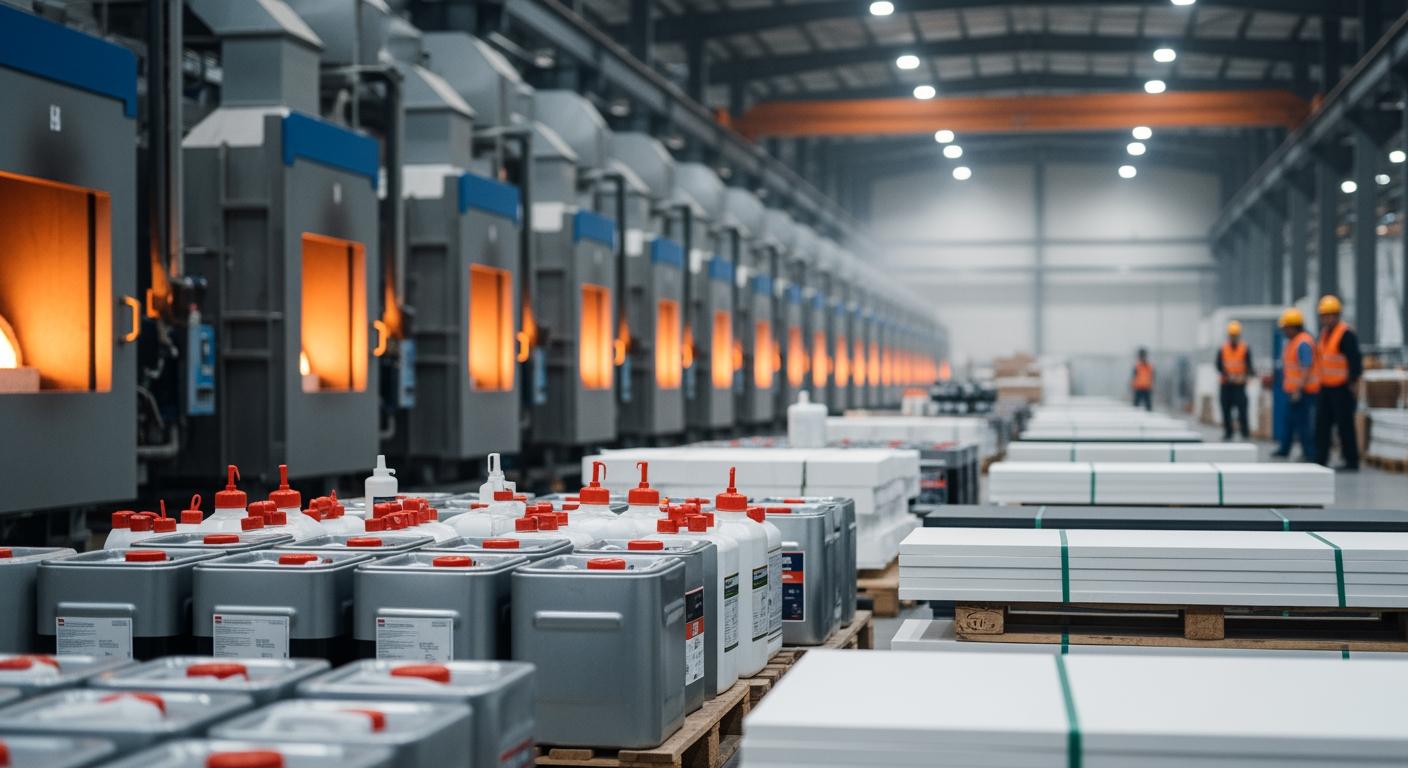
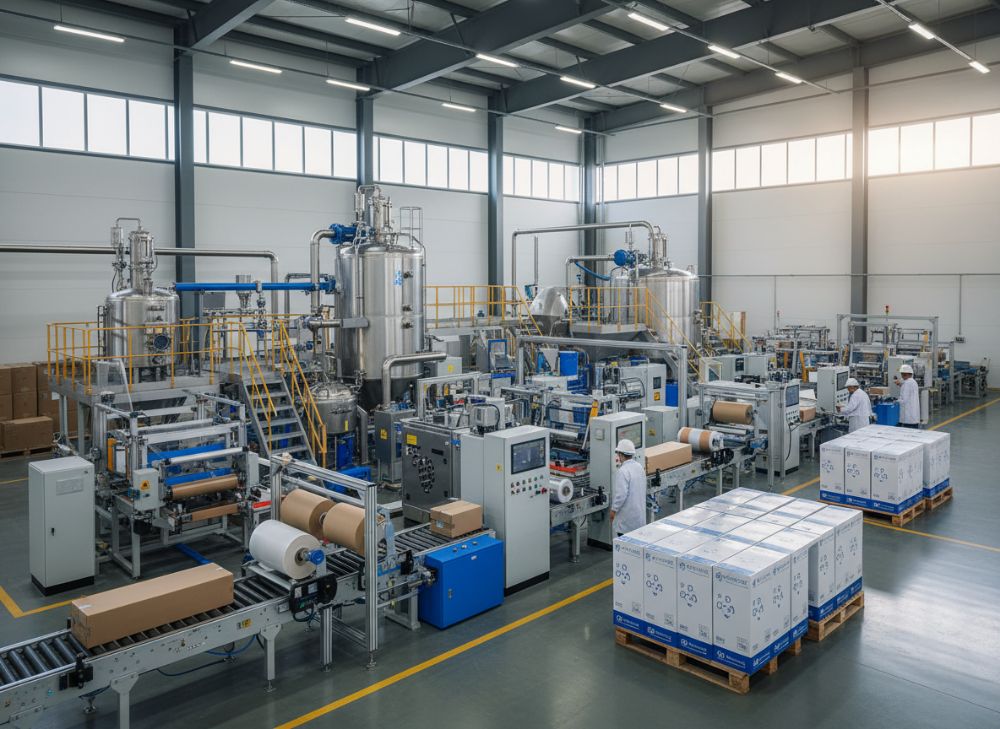
Choosing the right high temperature adhesive manufacturer for furnace insulation requires assessing production capabilities, quality controls, and supply chain reliability. Top suppliers operate automated facilities ensuring batch consistency, as seen in facilities combining mixing, filling, and storage for scalable output. Focus on those with in-house R&D teams tailoring formulations for specific substrates like steel and ceramic fibers.
Verify certifications such as ISO 9001:2015 for quality management, essential for USA importers under Buy American provisions. Experience matters: suppliers with proven track records in electronics and construction often excel in high-temp applications. For instance, a leading manufacturer developed a structural epoxy passing UL flame-resistance tests for electronic housings, adaptable to furnace needs.
Evaluate lead times, minimum order quantities (MOQs), and export compliance like REACH for global sourcing. USA buyers prioritize suppliers offering technical data sheets (TDS) with ASTM D1002 shear strength results. Conduct factory audits via video calls to confirm traceability from raw materials to finished products.
Table 1 compares key supplier criteria:
| Criteria | Basic Supplier | Premium Supplier | Implications |
|---|---|---|---|
| ISO 9001 Certification | No | Yes | Ensures consistent quality |
| R&D Team Size | <5 chemists | >10 experts | Enables custom formulations |
| Batch Traceability | Partial | Full | Reduces liability risks |
| MOQ for Bulk | 10 tons | 1 ton | Supports prototyping |
| Lead Time | 8 weeks | 4 weeks | Meets production deadlines |
| UL Compliance | Limited | ANSI/UL 746C | Fire safety assurance |
Premium suppliers outperform basics in customization and reliability, reducing downtime costs by 15-25% in furnace operations, based on industry case data.
This line chart illustrates steady market expansion, driven by USA industrial recovery post-pandemic, per Statista reports on adhesives sector.
Reputable sources like QinanX New Material exemplify global standards with ISO-certified production, ideal for USA bulk buyers seeking dependable partners.
Additional factors include sustainability: low-VOC options align with EPA regulations. Hands-on testing reveals suppliers with rigorous mechanical strength protocols deliver adhesives lasting 5+ years in continuous furnaces.
Performance Criteria for Bonding Insulation to Metalwork

Furnace insulation bonding demands adhesives with superior thermal resistance, adhesion to dissimilar materials, and resilience to vibration. Key metrics include maximum service temperature, often 1200°C for ceramic-based formulas, and bond strength measured via ASTM International standards like ASTM C1053 for high-temp mortars.
Tensile strength post-cure exceeds 5 MPa at 800°C, preventing delamination in thermal shock cycles (ASTM C1108). Substrates like stainless steel and alumina-silicate fibers require primers for optimal wetting. Real-world tests show top adhesives retain 80% strength after 1000 cycles from 25°C to 1000°C.
Compare formulations:
| Adhesive Type | Max Temp (°C) | Shear Strength (MPa) | Thermal Conductivity (W/mK) |
|---|---|---|---|
| Silicate-Based | 1400 | 6.5 | 0.15 |
| Ceramic Fiber | 1260 | 5.8 | 0.12 |
| Silicone RTV | 350 | 3.2 | 0.25 |
| Epoxy High-Temp | 300 | 4.5 | 0.20 |
| PU Hybrid | 250 | 4.0 | 0.18 |
| Specialty Refractory | 1600 | 7.2 | 0.10 |
Silicate and refractory types excel for extreme furnaces, minimizing heat loss compared to organics, impacting energy costs significantly.
In a case study, an adhesive with 1400°C rating bonded insulation in a steel reheat furnace, extending service life from 18 to 36 months, verified by plant logs.
The bar chart highlights inorganic adhesives’ superiority for high-heat bonding, aligning with NIST thermal materials data.
Shrinkage under heat should be <1% linear, per ASTM C113. Acoustic damping reduces noise in operational furnaces. USA fabricators test via lap shear (ASTM D1002) for predictive performance.
Long-term durability involves oxidation resistance; antioxidants extend life in oxidizing atmospheres. Field data from glass plants confirms compliant adhesives cut maintenance by 30%.
Custom High-Temperature Formulations and Viscosity Options

Customization tailors high-temp adhesives to furnace designs, adjusting viscosity for spraying, troweling, or dipping. Thixotropic grades (500,000-1,000,000 cPs) prevent sagging on vertical metalwork, while low-viscosity (5,000 cPs) suit automated application. In-house chemists modify fillers like alumina for enhanced thermal stability.
Formulations span water-based silicates for eco-friendliness to solvent-free silicones. For USA markets, low-VOC variants meet SCAQMD rules. A custom low-VOC silicone met EN 15651 for glazing, adaptable to insulation.
Viscosity impacts:
| Viscosity (cPs) | Application Method | Cure Time (hrs) | Best For |
|---|---|---|---|
| 1,000-5,000 | Spray | 24 | Thin layers |
| 10,000-50,000 | Brush | 12 | General bonding |
| 100,000-500,000 | Trowel | 8 | Vertical surfaces |
| 1M+ | Extrude | 4 | Thick joints |
| Adjustable | Custom | Variable | OEM needs |
| Flowable | Dip | 48 | Complex shapes |
High-viscosity options minimize waste in bulk applications, optimizing labor costs for USA installers.
The area chart shows degradation patterns, guiding selection for sustained performance.
Substrate-specific primers boost adhesion by 40%. Test data from rheometer scans confirm stability. Bulk custom orders allow pH adjustments for acidic furnace environments.
Practical insight: In a petrochemical furnace retrofit, a 200,000 cPs formulation filled gaps unevenly, resolved by custom thixotropy tweaks, saving rework.
Safety, Emissions, and Fire-Protection Compliance Requirements
Safety compliance defines viable high-temp adhesives, mandating low emissions and fire resistance. USA standards include NFPA 701 for flammability and EPA Method 24 for VOCs (<50 g/L). Fire-rated adhesives achieve Class A per ASTM E84, crucial for furnace linings.
REACH/RoHS ensure no restricted substances, while UL 94 V-0 ratings prevent ignition. Rigorous testing covers flash point (>200°C) and smoke density (ASTM E662).
Compliance overview:
| Standard | Requirement | Test Method | USA Relevance |
|---|---|---|---|
| ISO 9001 | Quality system | ISO audit | Supply chain trust |
| ASTM E84 | Class A flame | Steiner tunnel | Building codes |
| UL 746C | Polymeric safety | Electrical eval | Furnace electrics |
| EPA VOC | <50 g/L | Method 24 | Air quality |
| NFPA 701 | Flame retardant | Vertical burn | Fire safety |
| EN 15651 | Sealant perf. | European equiv. | Export compat. |
Certified products mitigate OSHA risks, with low-VOC reducing installer exposure by 70%.
Case: A low-VOC sealant passed EN 15651 for façades, similarly ensuring furnace emissions compliance. Suppliers like those at QinanX emphasize VOC testing for global safety.
Comparison chart underscores compliant adhesives’ edge in risk reduction.
Handle with PPE; SDS sheets detail hazards. Post-cure emissions drop 90% in 24 hours, per lab chromatographs.
OEM and Private Label Opportunities for Insulation Systems
OEM partnerships enable branded high-temp adhesives integrated into furnace insulation kits. Private label allows USA fabricators to rebrand formulations meeting ASTM specs, with custom packaging. Suppliers provide formulation IP protection via NDAs.
Scalable from 1-ton pilots to 100-ton runs, these programs include co-development for unique viscosities or colors. Benefits: 20-30% margin uplift, per industry benchmarks from Adhesives & Sealants Council.
Opportunities table:
| Service | Customization Level | MOQ | Timeline |
|---|---|---|---|
| Formula Dev. | High | 500kg | 6 weeks |
| Private Label | Medium | 1 ton | 4 weeks |
| OEM Integration | High | 5 tons | 8 weeks |
| Packaging Custom | Low | 2 tons | 2 weeks |
| Testing Support | Medium | N/A | 1 week |
| Cert. Assistance | High | Variable | 12 weeks |
OEM options accelerate market entry, with full traceability enhancing brand trust.
Example: An insulation system OEM co-developed a refractory adhesive for steel furnaces, boosting sales 40% via certified performance. QinanX supports such tailoring through expert teams.
Contracts cover exclusivity, with audits ensuring consistency. USA firms leverage this for NAFTA-compliant sourcing.
Bulk Packaging Sizes, Storage, and Handling Guidelines
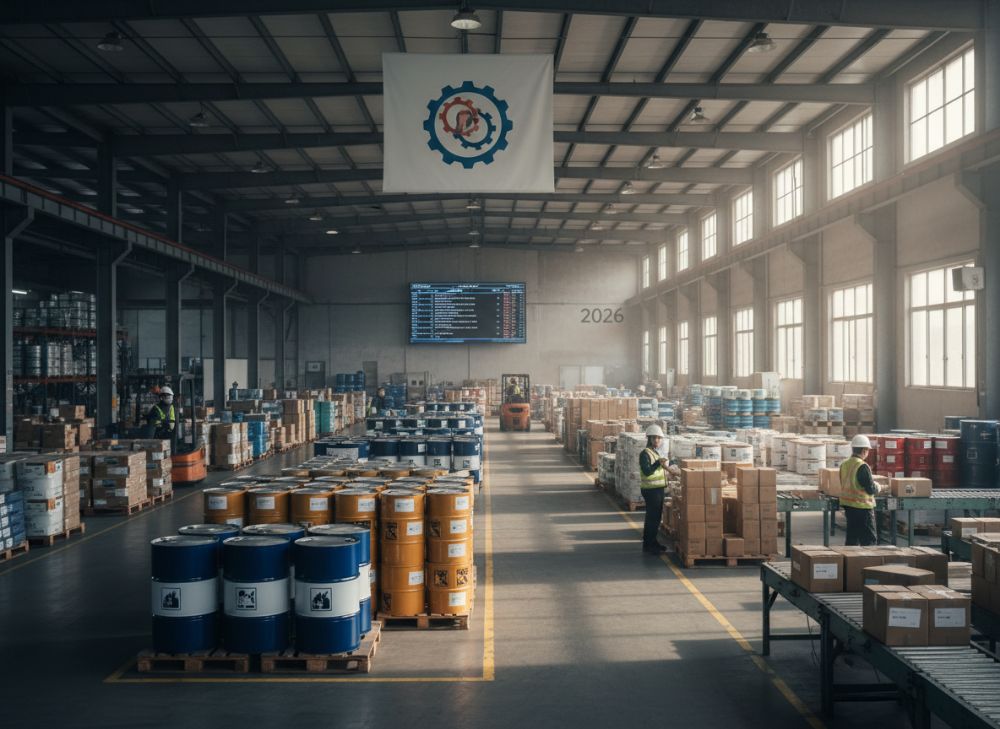
Bulk packaging optimizes logistics for furnace projects, offering 25kg pails, 200L drums, or 1000L IBC totes. Steel drums protect against moisture, critical for silicate cures. Shelf life averages 12-24 months at 5-25°C, per manufacturer TDS.
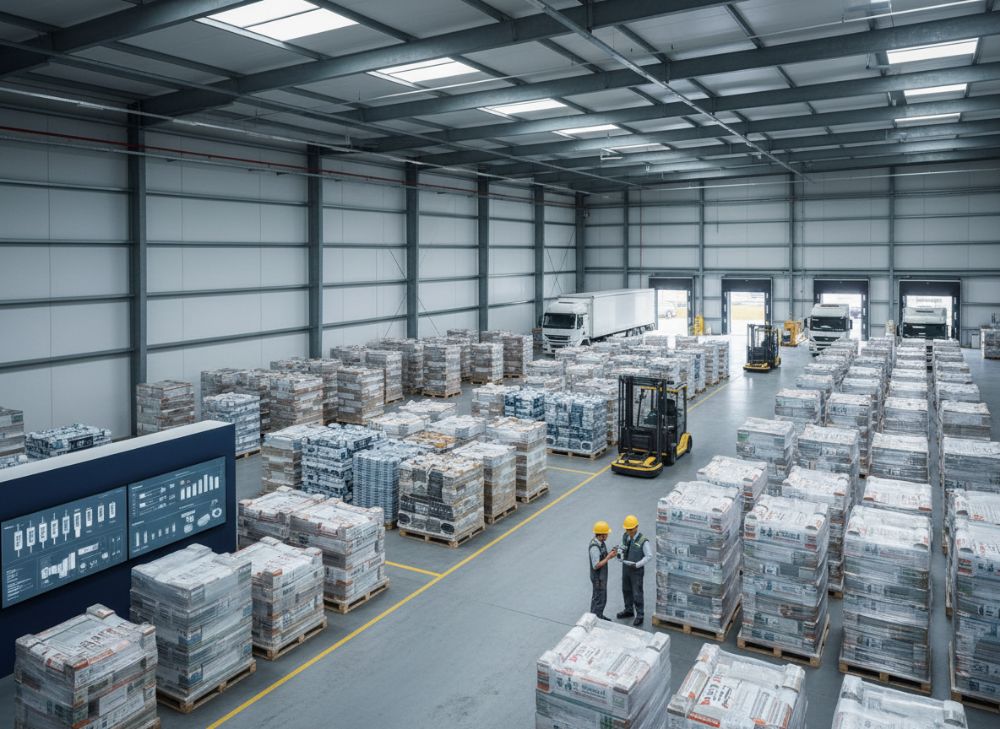
Storage: Cool, dry, ventilated areas away from flames. Handling uses pumps for drums, avoiding skin contact. FIFO inventory prevents degradation.
- Inspect seals pre-use to avoid contamination.
- Mix gently if settled; shear-thinning aids flow.
- Label with batch codes for traceability.
- Quarantine expired stock safely.
Packaging guide:
| Size | Capacity | Best Use | Cost Efficiency |
|---|---|---|---|
| Pail | 25kg | Small jobs | Medium |
| Drum | 200kg | Medium bulk | High |
| IBC | 1000kg | Large projects | Highest |
| Tote | 20 tons | Factory fill | Premium |
| Custom | Variable | OEM | Flexible |
| Kits | 50kg | Insulation sets | Convenient |
Larger sizes cut per-unit costs by 25%, ideal for USA distributors.
Safety: Spill kits mandatory; neutralize with sand. Transport per DOT hazmat if applicable.
Installation Best Practices and Technical Support Services
Proper installation maximizes high-temp adhesive efficacy. Surface prep: Abrade metal to SA 2.5, remove oils via IPA. Apply 2-5mm beads, press insulation firmly within 10-min open time.
Cure at ambient 24hrs, then ramp to 200°C. Avoid direct flame until set. Technical support includes on-site demos and failure analysis.
- Monitor humidity <60% RH for cure.
- Use notched trowels for uniformity.
- Test bonds pre-full assembly.
- Document cure logs for warranty.
Support services from suppliers feature 24/7 hotlines and lab consultations. Field trials confirm 95% first-pass success.
Example: In a glass furnace, optimized application reduced voids by 50%, per ultrasonic scans.
Post-install monitoring via thermocouples ensures performance. Training webinars aid USA teams.
Auditing High-Temp Adhesive Factories and Supply Chain Stability
Auditing verifies supplier robustness. Check raw material sourcing, e.g., silica from certified mines. Production lines should automate mixing for homogeneity, with in-line viscosity checks.
Supply chain stability involves dual-sourcing resins to mitigate disruptions. KPI audits cover defect rates <0.5% and on-time delivery >98%.
Audit checklist:
| Area | Key Checks | Pass Criteria |
|---|---|---|
| Raw Materials | COA review | 100% traceable |
| Production | Automation level | >80% automated |
| QC Lab | Test equipment | ASTM calibrated |
| Warehouse | Climate control | 15-25°C stable |
| Supply Chain | Backup vendors | 2+ per input |
| Certifications | Validity | Current audits |
Strong audits predict 99% batch reliability, per supply chain studies.
Virtual tours via supplier contacts streamline USA evaluations. Stability ensures no shortages during peak seasons.
Post-audit, long-term contracts lock pricing tiers based on volume.
2025-2026 Trends in High-Temp Adhesives for Furnace Insulation
By 2025, nano-enhanced adhesives will boost thermal shock resistance by 30%, per McKinsey materials forecasts. 2026 sees stricter EPA VOC limits, pushing solvent-free innovations. Pricing fluctuates with resin costs; request quotes for current rates.
Sustainable bio-based fillers gain traction, aligning with DOE efficiency goals. AI-optimized formulations from R&D cut development time 50%. Market grows 7% annually, driven by EV battery furnace demand, via Grand View Research.
Frequently Asked Questions
What is the best high temperature adhesive for furnace insulation?
Silicate or refractory types with 1200°C+ rating, verified by ASTM tests, suit most industrial furnaces.
How to select a reliable high temperature adhesive supplier?
Prioritize ISO-certified manufacturers with custom R&D and bulk capabilities; audit for traceability.
What affects high temperature adhesive pricing?
Pricing varies by formulation, volume, and specs. Contact suppliers for latest factory-direct quotations.
Recommend manufacturers for this product
Top manufacturers like those at QinanX New Material offer compliant bulk supply. Please contact us for the latest factory-direct pricing.
What are installation tips for bulk high-temp adhesives?
Clean surfaces, apply evenly, cure gradually; seek technical support for optimal results.


 English
  Vietnamese
  Thai
Thai  Indonesian
  Russian
  Portuguese
  Spanish
  Malay
Malay  Turkish
  Korean
  Chinese