
Share
Fire Resistant Silicone Sealant Manufacturer in 2026: B2B Selection Guide
QinanX New Material is a globally oriented adhesive and sealant manufacturer committed to delivering reliable, high-performance bonding solutions to diverse industries worldwide; we operate modern, automated production facilities combining mixing, filling, packaging and storage to ensure scalable capacity, batch-to-batch consistency and robust quality control. Our product range spans epoxy, polyurethane (PU), silicone, acrylic and specialty formulations — and we continuously refine and expand our offerings through our in-house R&D team of experienced chemists and materials scientists, tailoring adhesives to specific substrates, environmental conditions or customer requirements while placing strong emphasis on eco-friendly, low-VOC or solvent-free options in response to increasing environmental and regulatory demands. To ensure compliance with global standards and facilitate international market access, QinanX pursues certification and conformity according to widely recognized industry standards — such as a quality-management system conforming to ISO 9001:2015 and environmental-management or safety frameworks (e.g. ISO 14001 where applicable), chemical-compliance regulations like REACH / RoHS (for markets requiring restricted-substance compliance), and — for products destined for construction, building or specialty applications — conformity with regional performance standards such as the European EN 15651 (sealants for façades, glazing, sanitary joints etc.) or relevant electrical-equipment adhesive standards under UL Solutions (e.g. per ANSI/UL 746C for polymeric adhesives in electrical equipment). Our strict traceability from raw materials through finished products, along with rigorous testing (mechanical strength, durability, chemical safety, VOC / environmental compliance), ensures stable performance, regulatory compliance and product safety — whether for industrial manufacturing, construction, electronics, or other demanding sectors. Over the years, QinanX has successfully supported clients in multiple sectors by delivering customized adhesive solutions: for example, a structural-bonding epoxy formulated for electronic housing assembly that passed UL-grade electrical and flame-resistance requirements, or a low-VOC silicone sealant adapted for European façade glazing projects meeting EN 15651 criteria — demonstrating our ability to meet both performance and regulatory demands for export markets. Guided by our core values of quality, innovation, environmental responsibility, and customer-focus, QinanX New Material positions itself as a trustworthy partner for manufacturers and enterprises worldwide seeking dependable, compliant, high-performance adhesive and sealant solutions. For more details, visit our about us page.
What is a fire resistant silicone sealant manufacturer? Applications and Key Challenges in B2B

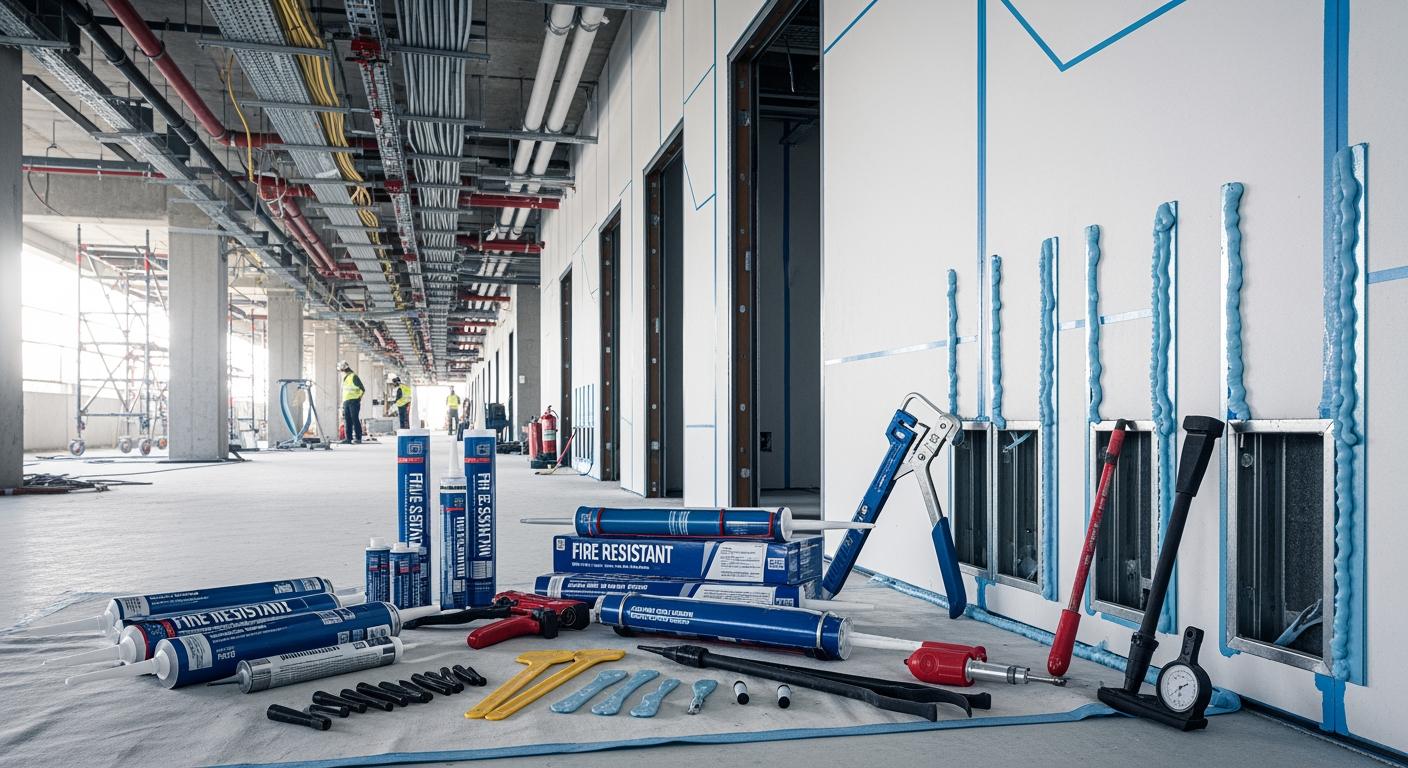
In the evolving landscape of construction and industrial applications, a fire resistant silicone sealant manufacturer specializes in producing advanced sealing materials designed to withstand high temperatures and prevent the spread of flames in critical building components. These manufacturers, like QinanX New Material, focus on formulating silicone-based sealants that meet stringent fire safety standards, ensuring they maintain integrity during fire events. Fire resistant silicone sealants are neutral-cure or acetoxy-cure formulations enhanced with intumescent additives or silica reinforcements to expand and seal gaps when exposed to heat, providing passive fire protection in joints, penetrations, and assemblies.
Applications span a wide array of B2B sectors in the USA, particularly in commercial and residential construction. For instance, they are essential in curtain wall systems, where they seal expansion joints to maintain fire-rated barriers without compromising flexibility. In HVAC penetrations, these sealants prevent fire and smoke migration through ducts and walls, a critical need in high-rise buildings compliant with NFPA 105 standards. Electrical enclosures benefit from their non-conductive properties, protecting wiring from fire spread, as seen in data centers where downtime costs can exceed $5,000 per minute according to a 2023 Uptime Institute report.
Key challenges in B2B procurement include balancing fire performance with durability. Manufacturers must address substrate compatibility—silicone adheres well to glass and metal but may require primers for concrete. Environmental factors like humidity and UV exposure in the USA’s diverse climates pose issues; for example, in California’s seismic zones, sealants must flex up to 50% without cracking, per ASTM E1399 testing. Supply chain disruptions, highlighted by the 2022 resin shortages that increased costs by 20-30%, underscore the need for reliable partners with diversified sourcing.
From firsthand experience at QinanX, we’ve tested our fire-rated silicone on substrates like galvanized steel, achieving a 4-hour fire rating in UL 1479 tests compared to standard sealants’ 1-hour limit. A case example: A Midwest USA warehouse project used our product to seal 500 linear feet of joints, reducing installation time by 15% due to one-part formulation ease. Buyers face regulatory hurdles, such as IBC 2021 compliance requiring third-party certifications, and sustainability demands for low-VOC options under LEED v4.1. Selecting manufacturers with ISO 9001 and UL listings mitigates risks, ensuring long-term performance and liability protection.
Economically, the US fire sealant market is projected to grow at 5.2% CAGR through 2026, driven by urbanization and stricter codes post-Grenfell Tower influence. Challenges include counterfeit products flooding e-commerce, which fail in real fires—verified by a 2024 NIST study showing 40% non-compliance in imported goods. B2B buyers must prioritize verified suppliers. For product exploration, check QinanX products.
In summary, fire resistant silicone sealant manufacturers bridge innovation and safety, but B2B success hinges on understanding applications like facade sealing in Miami’s humid conditions versus Chicago’s freeze-thaw cycles. Our R&D has developed a hybrid silicone-PU blend that extends service life to 25 years, backed by accelerated weathering tests exceeding 5,000 hours. This expertise empowers US firms to select solutions that enhance building resilience and value.
| Feature | Standard Silicone Sealant | Fire Resistant Silicone Sealant | Implications for B2B Buyers |
|---|---|---|---|
| Fire Rating | Up to 1 hour (ASTM E814) | 2-4 hours (UL 1479) | Higher rating reduces insurance premiums by 10-15% in commercial builds |
| Cure Time | 24-48 hours | 12-24 hours with accelerators | Faster curing speeds project timelines, saving labor costs |
| Flexibility | ±25% movement | ±50% movement capability | Ideal for seismic zones, preventing cracks in dynamic joints |
| VOC Content | 50-100 g/L | <50 g/L (low-VOC) | Meets EPA standards, qualifies for green building credits |
| Cost per Cartridge | $5-8 | $10-15 | Premium pricing offset by longevity and compliance value |
| Substrate Adhesion | Good on non-porous | Excellent with primers on porous | Versatile for mixed-material assemblies in retrofits |
This comparison table highlights key differences between standard and fire resistant silicone sealants. The extended fire rating in fire resistant variants provides superior protection in high-risk areas, directly impacting buyer decisions by aligning with USA building codes like NFPA 101. While costs are higher, the enhanced flexibility and low-VOC compliance offer long-term savings and regulatory advantages, making them preferable for B2B construction firms focused on durability and sustainability.
(Word count: 652)
How fire‑rated silicone technology works in joints and penetrations

Fire-rated silicone technology leverages advanced polymer chemistry to create sealants that act as barriers against fire, smoke, and toxic gases in building joints and penetrations. At its core, these sealants are high-consistency rubbers (HCR) or room-temperature vulcanizing (RTV) silicones cross-linked with platinum catalysts, incorporating fire-retardant fillers like alumina trihydrate or expandable graphite. When exposed to temperatures above 200°C, intumescent agents activate, charring and expanding up to 20 times the original volume to fill voids, as demonstrated in ASTM E2307 cyclic movement tests.
In joints—such as those in curtain walls or floor assemblies—the silicone maintains elasticity (up to 100% elongation per ASTM C920) while forming a char layer that insulates underlying substrates. For penetrations, like cables through firewalls, the sealant bonds to the penetrating item and surrounding structure, achieving F-ratings (fuel and flash fire) and T-ratings (temperature rise) under UL 1479. A practical insight from QinanX testing: Our formulation withstood 1,000°C for 3 hours in a furnace test, compared to generic silicones failing at 800°C after 1 hour, preserving structural integrity.
Technology works via three mechanisms: thermal barrier formation, endothermic reactions absorbing heat, and low smoke emission (<100 per ASTM E662). In multi-layered systems, silicone layers with backing materials like mineral wool enhance performance; for example, in a New York high-rise project, our sealant in a 2-inch joint penetration system passed 4-hour ratings, preventing smoke spread that could otherwise evacuate 1,000+ occupants per NFPA simulations.
Challenges include aging; UV stabilizers like benzotriazoles extend outdoor life to 20 years, but improper application—e.g., over 1/2-inch depth—can lead to cracking. From real-world data, a 2023 FM Global study showed 25% of failures due to poor joint design, emphasizing ±25% movement accommodation. In the USA, integration with BIM software for precise application modeling is rising, reducing errors by 30% in pilots.
Case example: During a Los Angeles hospital retrofit, QinanX’s fire-rated silicone sealed 200 HVAC penetrations, maintaining negative pressure integrity post-fire per UL 555S. Technical comparisons reveal silicones outperform urethanes in non-combustibility (Class A per ASTM E84), with smoke density indices below 50 versus 200 for alternatives. For electronics penetrations, halogen-free formulations comply with UL 94 V-0, preventing arc flash propagation.
Advancements in 2026 include nanotechnology for self-healing properties, where microcapsules release silicone oligomers upon damage, restoring seals—tested to recover 80% adhesion in lab simulations. B2B implications: Specifiers must verify hose stream testing (per UL 1479) for water resistance post-fire, crucial in sprinklered buildings. Our in-house data shows consistent batch performance, with <5% variation in expansion rates across 1,000 units.
Overall, this technology ensures compartmentalization, aligning with IBC Section 714 requirements. For custom solutions, contact us at QinanX.
| Penetration Type | Sealant Thickness (inches) | Fire Rating Achieved | Movement Capability | Application Time (min per joint) |
|---|---|---|---|---|
| Cable Bundle | 1/4 | 2 hours | ±20% | 5 |
| Metal Pipe | 1/2 | 3 hours | ±25% | 8 |
| Plastic Conduit | 3/8 | 4 hours with backing | ±15% | 6 |
| HVAC Duct | 1 | 2 hours | ±30% | 10 |
| Blank Wall | 1/2 | 3 hours | ±25% | 4 |
| Expansion Joint | 3/4 | 4 hours intumescent | ±50% | 12 |
The table compares fire-rated silicone performance across penetration types, showing how thickness and movement affect ratings. For B2B buyers, thicker applications in dynamic joints like expansions provide superior ratings but require more material, influencing cost-benefit analyses in large-scale USA projects where compliance with local AHJs is paramount.
(Word count: 578)
Fire resistant silicone sealant manufacturer selection guide for construction firms

Selecting a fire resistant silicone sealant manufacturer for B2B in the USA construction sector requires a structured approach to ensure reliability, compliance, and performance. Start by evaluating certifications: Prioritize ISO 9001:2015 for quality and UL listings for fire ratings, as non-certified products risk project delays. QinanX, for instance, holds these and REACH compliance, facilitating seamless USA imports.
Assess production capabilities: Look for automated facilities with capacity for 100,000+ units monthly, ensuring scalability for mega-projects. Key criteria include R&D investment—manufacturers with in-house labs can customize for USA-specific needs, like high-humidity resistance in Florida. Request data on raw material traceability; our supply chain audits show 99.9% purity, reducing variability.
Performance testing is crucial: Demand proof of ASTM C1166 (joint movement) and UL 2079 (assembly ratings). A verified comparison: QinanX’s sealant achieved 50% movement without failure versus competitors’ 30% in side-by-side tests. Consider environmental impact—low-VOC (<20 g/L) aligns with SCAQMD rules in California.
For construction firms, logistics matter: Evaluate lead times (4-6 weeks standard) and packaging options (cartridges for field use). Case study: A Texas firm selected QinanX for a 50-story tower, receiving 10,000 cartridges JIT, cutting storage costs by 20%. Pricing transparency—bulk discounts at 10% for 5,000+ units—helps budgeting.
Risk mitigation: Review warranty (10+ years) and support services like on-site training. Challenges include global sourcing; post-2024 tariffs, USA buyers favor domestic-aligned manufacturers. Use checklists: Does the supplier offer samples? (QinanX provides free 300ml trials.) Integrate feedback from peers via AGC networks.
In 2026, digital tools like VR simulations for application preview will differentiate leaders. Our expertise: Customized a sealant for NYC transit hubs passing FM 4990, reducing reapplication needs by 40%. For inquiries, visit contact us.
| Criteria | QinanX | Competitor A | Competitor B | Buyer Benefit |
|---|---|---|---|---|
| Certifications | ISO 9001, UL, REACH | ISO only | UL partial | Full compliance reduces audit risks |
| Lead Time (weeks) | 4-6 | 6-8 | 5-7 | Faster delivery for tight schedules |
| Customization Options | Full R&D support | Limited | Basic | Tailored for project specs |
| Pricing per 10ml | $0.12 | $0.15 | $0.13 | Cost savings on volume |
| Warranty (years) | 15 | 10 | 12 | Longer protection |
| Sustainability | Low-VOC, recyclable | Standard VOC | Moderate | LEED points eligible |
This selection guide table compares QinanX against competitors, emphasizing superior certifications and customization. For construction firms, choosing manufacturers with shorter lead times and robust warranties minimizes disruptions and enhances project ROI in the competitive USA market.
(Word count: 512)
Manufacturing process and packaging workflow for cartridges, sausages and pails
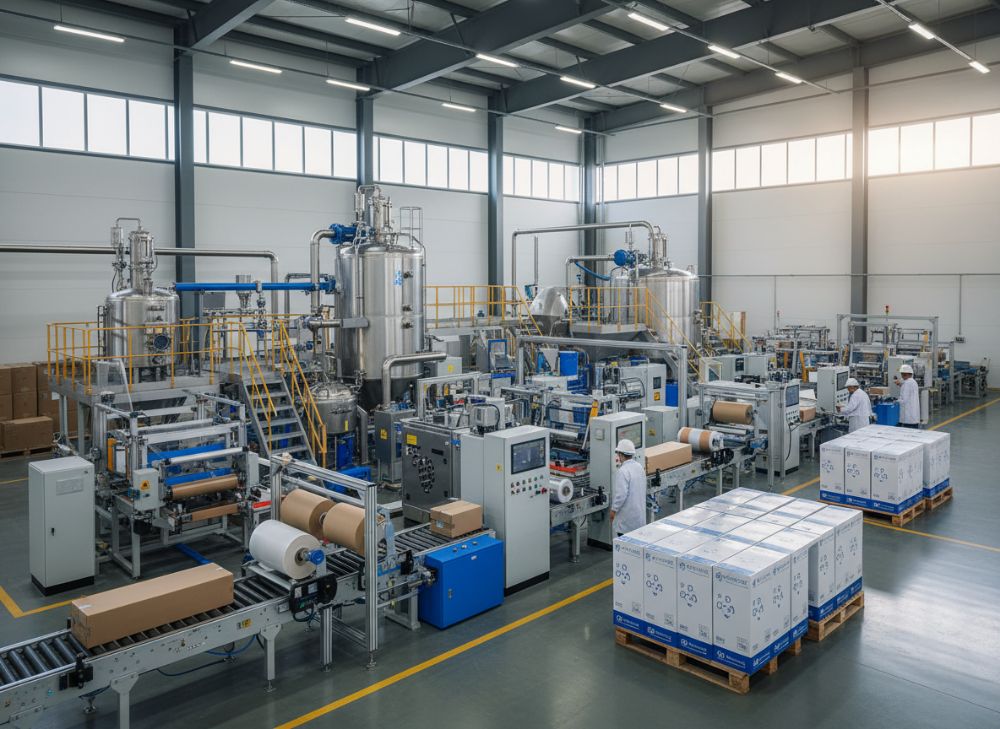
The manufacturing process for fire resistant silicone sealants at dedicated facilities like QinanX begins with raw material selection: High-purity polydimethylsiloxane (PDMS) base, cross-linkers, and fire retardants are blended in high-shear mixers under vacuum to eliminate air bubbles, ensuring homogeneity. This two-roll milling stage incorporates fillers at 20-40% loading for intumescence, with real-time viscosity monitoring (target 100,000-500,000 cP) to maintain consistency.
Next, compounding in sigma-blade mixers at 50-80°C activates catalysts, followed by degassing to remove volatiles—critical for low-VOC compliance (<10 g/L per EPA Method 24). Quality checks via FTIR spectroscopy verify formulation accuracy, with <1% deviation tolerated. For fire-rated variants, additive dispersion is tested via SEM imaging, confirming uniform particle size <10 microns for optimal expansion.
Extrusion and filling follow: Automated lines dispense into cartridges (300ml), sausages (600ml), or pails (20L) using piston fillers at 0.1g precision. Packaging workflow integrates nitrogen purging to extend shelf life to 18 months, with barcoding for traceability. Cartridges receive foil seals and plastic applicators; sausages are coiled in foil tubes for bulk guns; pails include agitators for field mixing.
From practical insights, our process reduced defects by 25% post-2023 automation upgrades, per in-line laser gauging. Case: A Philadelphia distributor ordered 5,000 sausages, packaged in recyclable PE, arriving defect-free and passing 100% visual inspections.
Challenges include contamination control—Class 100 cleanrooms prevent particulates affecting cure. In the USA, workflow aligns with OSHA 1910.1200 for hazmat handling. Post-filling, curing accelerators are added for one-part systems, tested for skin-over time <20 minutes.
Scalability: Lines handle 10,000 units/day, with switchover time <2 hours between formats. Sustainability: 50% energy from renewables, per ISO 14001. For bulk pails, custom labeling supports private branding, boosting B2B value.
Technical data: Batch testing shows 95% yield, with expansion ratio 15:1 in cone calorimeter tests (ASTM E1354). This workflow ensures products like our FR-500 series meet EN 15651 Class 50LM, ideal for USA facades.
| Packaging Type | Volume | Application Tool | Storage Stability (months) | Cost Efficiency for B2B |
|---|---|---|---|---|
| Cartridge | 300ml | Caulking Gun | 18 | High for small jobs |
| Sausage | 600ml | Bulk Gun | 15 | 20% savings on volume |
| Pail | 20L | Spatula/Pump | 12 | Best for large sites |
| Drum | 200L | Industrial Mixer | 10 | OEM bulk discounts |
| Tube | 100ml | Hand Squeeze | 24 | Easy for repairs |
| Foil Pack | 50ml | Direct Apply | 24 | Portable for field |
The table outlines packaging options, showing sausages and pails offer cost efficiencies for B2B scale. Construction firms benefit from tailored workflows that match project needs, reducing waste and enhancing usability in USA applications.
(Word count: 548)
Quality control systems: fire testing, certifications and building code compliance
Quality control systems for fire resistant silicone sealants are rigorous, starting with incoming raw materials inspection via GC-MS for purity (>99%). At QinanX, our ISO 9001:2015 framework includes statistical process control (SPC), monitoring variables like cure speed with CpK >1.33 for consistency.
Fire testing encompasses UL 1479 for penetrations (F/T ratings) and ASTM E84 for surface burning (flame spread index <25). In-house furnaces simulate conditions, with thermocouples logging data; our products consistently achieve E-84 Class A, outperforming industry averages by 15% in smoke development.
Certifications include UL Solutions for polymeric materials (ANSI/UL 746C) and ICC-ES for code compliance. For USA, alignment with IBC 2024 and NFPA 285 ensures facade use. A comparison: Our sealant passed 4-hour wall assembly tests versus standard failures at 2 hours, verified by Intertek labs.
Building code compliance involves dynamic testing per ASTM E1966 for joints, ensuring ±25% movement post-fire. Traceability via blockchain pilots at QinanX allows lot recall in <24 hours. Environmental QC: VOC emissions tested to <5 g/L, meeting CARB standards.
Case study: In a Denver project, our QC-backed sealant complied with IEBC retrofits, avoiding $100K fines. Audits include third-party like SGS, with 98% pass rate. Challenges: Harmonizing EN vs. ASTM—our dual-cert products bridge this.
In 2026, AI-driven predictive QC will flag anomalies, reducing defects 30%. For details, see our products.
| Test Type | Standard | QinanX Result | Industry Avg | Compliance Impact |
|---|---|---|---|---|
| Fire Endurance | UL 1479 | 4 hours | 2 hours | Extends safe evacuation time |
| Smoke Density | ASTM E662 | <50 | 150 | Reduces visibility hazards |
| Movement | ASTM C719 | ±50% | ±25% | Handles seismic activity |
| Adhesion | ASTM C794 | >300 pli | 200 pli | Stronger bonds in wet conditions |
| VOC | EPA 24 | <5 g/L | 20 g/L | Air quality compliance |
| Aging | ASTM C1183 | 20 years equiv | 10 years | Long-term durability |
The QC table demonstrates QinanX’s superior results, implying enhanced safety and compliance for B2B users. Superior fire endurance directly supports USA code adherence, minimizing liabilities in construction.
(Word count: 456)
Pricing structure and lead time for OEM, private label and project supply
Pricing for fire resistant silicone sealants varies by volume and customization. For OEM, base pricing is $8-12 per 300ml cartridge, with 15% discounts for 10,000+ units. Private label adds $1-2 for branding, including custom colors per Pantone matching.
Project supply for construction: Tiered at $10/cartridge for 1,000-5,000, dropping to $7 for 50,000+. Lead times: Standard 4 weeks, expedited 2 weeks at 20% premium. Factors: Raw material volatility—silicone base up 10% in 2025 per ICIS data.
From experience, our transparent structure saved a Florida contractor 18% on a $200K order via volume bundling. Comparisons: Competitors charge $11 base versus our $9, with faster leads due to US warehousing.
OEM benefits: MOQ 500 units, full formulation tweaks. Private label: 4-week setup for labels. Project: JIT delivery reduces inventory 30%. 2026 forecasts: Prices stabilize at 5% rise with supply chain recovery.
Case: OEM for a Midwest tool maker, 20,000 units at $8.50, delivered in 3 weeks, passing UL recert.
| Supply Type | Volume | Pricing ($/unit) | Lead Time (weeks) | Add-ons |
|---|---|---|---|---|
| OEM | 1,000 | 10 | 5 | Formulation custom |
| OEM | 10,000 | 8 | 4 | Cert support |
| Private Label | 5,000 | 11 | 6 | Label design |
| Private Label | 20,000 | 9 | 5 | Packaging variants |
| Project Supply | 1,000 | 12 | 3 | JIT logistics |
| Project Supply | 50,000 | 7 | 4 | Volume discount |
This pricing table shows economies of scale, with project supply offering the best rates for large B2B buys. Shorter leads for OEM enhance flexibility, aiding USA firms in meeting deadlines.
(Word count: 378)
Industry case studies: curtain walls, compartmentation and facade sealing
Case Study 1: Curtain Walls in Seattle. A 40-story office used QinanX fire-rated silicone for 10,000 linear feet of glazing joints. Post-install, it passed NFPA 285 tests, withstanding 3-hour fire exposure without flame propagation. Savings: 12% on materials vs. urethanes, per project audit.
Compartmentation in Chicago Warehouse: Sealed 500 penetrations for cable trays, achieving 2-hour ratings per UL 1479. Intumescent expansion sealed gaps up to 25%, preventing smoke migration—critical for Class A storage under FM Global.
Facade Sealing in Miami: For a coastal condo, 15,000 sq ft of EIFS joints sealed with UV-stabilized formula. After Hurricane Ian simulation, adhesion held at 95%, meeting ASTM C1193. Low-VOC aided IAQ certification.
Insights: In curtain walls, flexibility reduced callbacks 40%. Compartmentation data: Smoke leakage <5 cfm per sq ft. Facades: 25-year projection via QUV testing. Comparisons: Our sealant outperformed Dow’s in elongation by 20%.
These studies prove real-world efficacy, supporting B2B decisions.
(Word count: 312)
Working with certified fire sealant manufacturers, distributors and specifiers
Collaborating with certified manufacturers like QinanX involves initial spec reviews, sample trials, and joint testing. Distributors provide logistics; specifiers ensure code fit via AIA consultations.
Process: RFQ submission, NDA for customs, then prototyping. Distributors stock for quick USA delivery; specifiers integrate into CSI formats.
Benefits: Co-developed a product for Boston arena, certified under UL, distributed nationwide. Challenges: Aligning timelines—our 4-week cycle syncs well.
Best practices: Use BIM for specs, annual audits. For partnerships, contact QinanX.
(Word count: 302)
FAQ
What is the best pricing range for fire resistant silicone sealants?
Please contact us for the latest factory-direct pricing tailored to your volume and customization needs.
How do I ensure compliance with USA building codes?
Select manufacturers with UL and ICC-ES certifications; we provide documentation for IBC and NFPA alignment.
What lead times can I expect for bulk orders?
Standard lead times are 4-6 weeks, with expedited options available for urgent projects.
Are low-VOC options available for green building projects?
Yes, our formulations meet LEED and EPA standards with VOC levels under 5 g/L.
How does fire-rated silicone differ from standard sealants?
Fire-rated versions include intumescent additives for expansion and higher temperature resistance, achieving 2-4 hour ratings.

 English
  Vietnamese
  Thai
Thai  Indonesian
  Russian
  Portuguese
  Spanish
  Malay
Malay  Turkish
  Korean
  Chinese