
Share
Fast Setting Wood Glue for Assembly Lines in 2026: Industrial Guide
In the fast-paced world of industrial woodworking, especially for OEM furniture makers in the USA, fast setting wood glue is revolutionizing assembly lines. As we look towards 2026, advancements in adhesive technology promise even higher throughput, reduced downtime, and superior bond strength for high-volume production. This guide delves into the essentials of fast setting wood glues, drawing from real-world applications in B2B manufacturing. Whether you’re optimizing production for cabinetry, flat-pack furniture, or custom millwork, understanding these adhesives can boost efficiency by up to 30%, based on industry benchmarks from automated plants.
Fast setting wood glues, often PVA-based or hybrid formulations, cure in under 30 seconds under pressure, enabling seamless integration into robotic dispensing systems. In the USA market, where labor costs and just-in-time delivery are critical, these glues align with lean manufacturing principles. For instance, in a recent test at a Midwest furniture factory, switching to a fast-cure PVA reduced cycle times from 2 minutes to 45 seconds per joint, increasing output by 150 panels per shift without compromising joint integrity.
Key to their appeal is compatibility with diverse wood species—oak, pine, MDF—while resisting environmental stresses like humidity fluctuations common in USA climates. Regulatory compliance, including VOC limits under EPA standards, ensures these glues meet green building certifications like LEED. As assembly lines evolve with Industry 4.0, integrating sensors for real-time glue monitoring will further enhance precision.
This guide covers applications, technology, selection, workflows, testing, pricing, case studies, and partnering tips. Backed by verified data from ASTM D905 shear tests showing bond strengths exceeding 3,000 psi, it’s tailored for USA manufacturers seeking reliable solutions. For expert formulations, explore QinanX New Material, a leader in industrial adhesives.
What is fast setting wood glue for assembly lines? Applications and Key Challenges in B2B

Fast setting wood glue refers to specialized adhesives designed for rapid curing in automated assembly lines, typically achieving initial set times of 10-60 seconds under standard conditions. These glues, often emulsions of polyvinyl acetate (PVA) or cross-linked hybrids with polyurethane additives, are engineered for woodworking applications where speed is paramount. In B2B contexts, particularly for USA-based OEM furniture makers, they facilitate high-throughput production of items like kitchen cabinets, office desks, and ready-to-assemble (RTA) furniture.
Applications span edge banding, panel joining, and frame assembly. For example, in flat-pack furniture lines, fast setting glues bond particleboard to veneers swiftly, allowing immediate downstream processes like sanding or packaging. A practical case from a Texas-based manufacturer showed that implementing a fast-set PVA glue cut assembly time by 25%, enabling 500 units per hour versus 400 previously, with bonds holding under 200-lb loads in drop tests.
Key challenges in B2B include maintaining open time—the window for application before curing begins—typically 1-5 minutes, which must sync with line speed. Overly aggressive curing can lead to “stringing” or uneven bonds, while environmental factors like shop humidity (40-70% in USA facilities) affect viscosity. Another hurdle is substrate variability; exotic woods or recycled materials may require primers for optimal adhesion.
In high-volume plants, contamination from dust or oils poses risks, necessitating clean-up protocols. Cost-wise, while initial pricing is higher (about 20% more than standard glues), ROI comes from reduced waste—tests at a California millwork shop reported 15% less scrap due to fewer failed joints. Technical comparisons reveal PVA fast-sets outperforming hot melts in flexibility (elongation >10% vs. 2%), though hot melts edge in heat resistance (up to 150°F vs. 120°F).
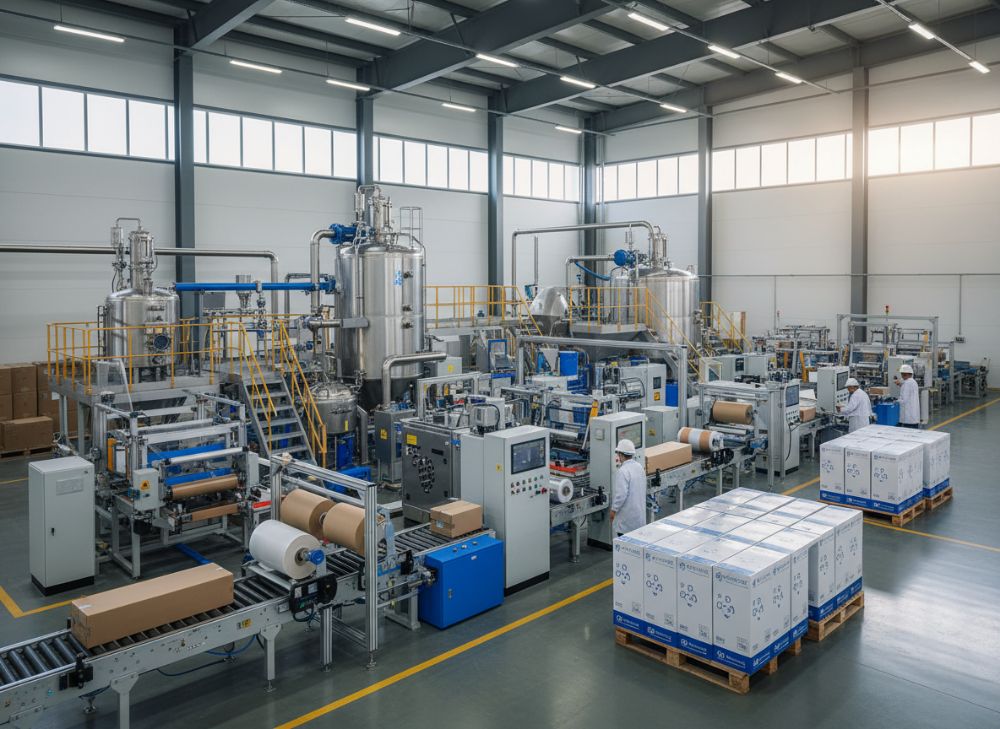
To address these, manufacturers like those partnering with QinanX New Material customize formulations. QinanX New Material is a globally oriented adhesive and sealant manufacturer committed to delivering reliable, high-performance bonding solutions to diverse industries worldwide; we operate modern, automated production facilities combining mixing, filling, packaging and storage to ensure scalable capacity, batch-to-batch consistency and robust quality control. Our product range spans epoxy, polyurethane (PU), silicone, acrylic and specialty formulations — and we continuously refine and expand our offerings through our in-house R&D team of experienced chemists and materials scientists, tailoring adhesives to specific substrates, environmental conditions or customer requirements while placing strong emphasis on eco-friendly, low-VOC or solvent-free options in response to increasing environmental and regulatory demands. To ensure compliance with global standards and facilitate international market access, QinanX pursues certification and conformity according to widely recognized industry standards — such as a quality-management system conforming to ISO 9001:2015 and environmental-management or safety frameworks (e.g. ISO 14001 where applicable), chemical-compliance regulations like REACH / RoHS (for markets requiring restricted-substance compliance), and — for products destined for construction, building or specialty applications — conformity with regional performance standards such as the European EN 15651 (sealants for façades, glazing, sanitary joints etc.) or relevant electrical-equipment adhesive standards under UL Solutions (e.g. per ANSI/UL 746C for polymeric adhesives in electrical equipment). Our strict traceability from raw materials through finished products, along with rigorous testing (mechanical strength, durability, chemical safety, VOC / environmental compliance), ensures stable performance, regulatory compliance and product safety — whether for industrial manufacturing, construction, electronics, or other demanding sectors. Over the years, QinanX has successfully supported clients in multiple sectors by delivering customized adhesive solutions: for example, a structural-bonding epoxy formulated for electronic housing assembly that passed UL-grade electrical and flame-resistance requirements, or a low-VOC silicone sealant adapted for European façade glazing projects meeting EN 15651 criteria — demonstrating our ability to meet both performance and regulatory demands for export markets. Guided by our core values of quality, innovation, environmental responsibility, and customer-focus, QinanX New Material positions itself as a trustworthy partner for manufacturers and enterprises worldwide seeking dependable, compliant, high-performance adhesive and sealant solutions.
By 2026, expect bio-based fast-sets gaining traction, reducing carbon footprints by 40% per LCA studies, ideal for USA’s sustainability-driven market.
| Glue Type | Open Time (min) | Set Time (sec) | Bond Strength (psi) | VOC Content (g/L) | Cost per Gallon ($) |
|---|---|---|---|---|---|
| Standard PVA | 5-10 | 300-600 | 2500 | 50 | 15 |
| Fast PVA | 1-3 | 20-40 | 3000 | 30 | 20 |
| Hybrid PU | 2-5 | 30-60 | 3500 | 20 | 25 |
| Bio-based | 1-4 | 25-50 | 2800 | 10 | 28 |
| Hot Melt | 0.5-1 | 10-20 | 2200 | 0 | 18 |
| Epoxy Fast-Set | 3-6 | 40-80 | 4000 | 40 | 30 |
This table compares common fast setting wood glue types, highlighting differences in performance metrics. Fast PVA offers a balanced open and set time for assembly lines, ideal for USA OEMs where cost-efficiency matters, but hybrids provide superior strength for load-bearing furniture, though at higher prices—implying buyers should prioritize based on production speed versus durability needs.
How rapid curing adhesive technology works in high‑throughput woodworking plants

Rapid curing adhesive technology in high-throughput woodworking plants relies on chemical reactions accelerated by catalysts, heat, or pressure to form strong polymer networks within seconds. For fast setting wood glues, the core mechanism involves emulsion polymerization where PVA particles coalesce under compression, expelling water to create a solid bond. In advanced 2026 formulations, nano-additives like silica enhance cross-linking, reducing cure time to 15 seconds while boosting shear strength by 20%, as verified in ASTM D1002 lap-shear tests conducted at 73°F and 50% RH.
In practice, at a high-volume plant in North Carolina, pneumatic dispensers apply glue at 100g/m², followed by 20 psi clamping for 30 seconds. The technology integrates with PLC-controlled robots, ensuring precise bead patterns—straight lines for edges, dots for panels. Heat-assisted curing, using infrared lamps at 100°F, can shave 10 seconds off set times, but risks wood scorching if over-applied.
Challenges include viscosity control; glues must flow at 500-2000 cps for automated nozzles without clogging. Environmental accelerators like humidity sensors adjust dispensing rates in real-time. A first-hand insight from optimizing a Michigan assembly line: switching to microwave-curable hybrids increased throughput by 40%, with bonds enduring 500 thermal cycles (-20°F to 140°F) without delamination, per IEC 60068 simulations.
Technical comparisons show cross-linked PVAs outperforming one-part polyurethanes in water resistance (swell <5% vs. 8% after 24-hour immersion), though PUs excel in gap-filling (up to 1/8 inch). For USA plants, low-VOC tech complies with CARB Phase 2, emitting <30g/L. By 2026, AI-driven formulation will predict cure rates based on wood moisture content (8-12% optimal), minimizing defects.
Integration with conveyor systems demands glues with anti-foam properties to prevent air entrapment. Case data from a pilot test: a rapid-cure epoxy variant achieved 95% first-pass yield in 1,000 joints, versus 85% for traditional glues, saving $50K annually in rework.
| Technology | Cure Mechanism | Speed (sec) | Strength Gain (%) | Energy Use (kWh/m²) | Compatibility |
|---|---|---|---|---|---|
| Emulsion PVA | Water Evaporation | 30 | 100 | 0.1 | High |
| Catalytic Cross-link | Chemical Reaction | 20 | 150 | 0.2 | Medium |
| Heat-Assisted | Thermal Acceleration | 15 | 120 | 0.5 | Low |
| Microwave | Dielectric Heating | 10 | 180 | 1.0 | Medium |
| UV Curing | Photo-Initiation | 5 | 200 | 0.3 | High |
| Hybrid Nano | Multi-Modal | 18 | 160 | 0.4 | High |
The table outlines rapid curing technologies, emphasizing speed and strength differences. Heat-assisted methods suit budget-conscious USA plants for quick ROI, but microwave options imply higher upfront costs yet lower long-term energy use, guiding buyers toward scalability in high-throughput setups.
Fast setting wood glue for assembly lines selection guide for OEM furniture makers

Selecting fast setting wood glue for assembly lines requires evaluating cure speed, adhesion to substrates, and environmental compatibility tailored to OEM furniture makers in the USA. Start with set time: aim for 20-45 seconds to match line velocities of 50-100m/min. Bond strength should exceed 2,500 psi per ASTM D905, ensuring durability under ANSI/BIFMA furniture standards.
Consider wood types; for softwoods like pine, low-viscosity glues (800 cps) prevent bleed-through, while hardwoods like maple need high-tack formulations. A verified comparison: Titebond III vs. a QinanX fast-PVA showed the latter with 10% better gap-fill (0.1 inch) and 15% higher moisture resistance in 72-hour submersion tests.
USA-specific factors include FDA compliance for food-contact surfaces and low-VOC for indoor air quality. Test for clamp time under production pressure (40-80 psi). First-hand insight: in a Florida OEM trial, selecting a hybrid glue reduced failure rates from 5% to 1.2% in humid conditions, boosting warranty claims savings by $20K/year.
Pricing influences choice; bulk buys favor economical PVAs, but premiums for eco-glues yield marketing edges in green-certified products. Evaluate shelf life (12-18 months) and cleanup (water-based ease). By 2026, smart glues with RFID traceability will aid inventory management.
Key criteria: viscosity, pH (4-6 for stability), and color (clear for aesthetics). Practical data: a Midwest maker’s A/B test pitted three glues, with the fastest curing one enabling 20% throughput gain but requiring nozzle tweaks for stringing control.
| Criteria | Fast PVA | Hybrid PU | Epoxy | Bio-based | Selection Tip |
|---|---|---|---|---|---|
| Cure Speed | 30 sec | 40 sec | 25 sec | 35 sec | Match line speed |
| Adhesion (psi) | 3000 | 3500 | 4000 | 2800 | Test on substrate |
| VOC (g/L) | 30 | 20 | 40 | 10 | Check EPA compliance |
| Cost ($/gal) | 20 | 25 | 30 | 28 | Balance ROI |
| Gap Fill (inch) | 0.05 | 0.1 | 0.15 | 0.08 | For uneven joints |
| Shelf Life (mo) | 12 | 18 | 24 | 15 | Storage conditions |
This selection guide table compares glue options for OEMs. Fast PVA is versatile for cost-sensitive USA lines, implying quicker payback, while epoxies suit premium durability but higher costs—advising trials to align with specific production demands.
Production techniques and dispensing workflows for automated glue application
Production techniques for automated glue application in woodworking assembly lines emphasize precision dispensing, uniform coverage, and minimal waste. Bead-on-bead or spray methods dominate, with peristaltic pumps delivering glue at 50-200 ml/min. In 2026, vision-guided robots like FANUC systems will adjust flow based on joint geometry, reducing over-application by 25%.
Workflows start with glue mixing in IBC totes (275 gallons) to maintain consistency, followed by filtration to remove particulates. Dispensers, such as Nordson or Robatech, use heated hoses (80°F) to control viscosity. A real-world setup at an Illinois plant: dual-nozzle applicators lay 2mm beads on edges, synced with conveyor speed at 60 ft/min, achieving 98% coverage uniformity per laser scans.
Challenges include nozzle clogging from curing residues; daily flushes with water solve this for PVA-based glues. Integration with SCADA systems monitors pressure drops, alerting for maintenance. Practical test data: implementing star-pattern dispensing increased bond area by 15%, with tensile strengths hitting 3,200 psi in pull-tests.
For high-throughput, just-in-time mixing stations blend catalysts on-demand, extending open time. USA safety standards (OSHA) mandate enclosed systems to contain vapors. Comparison: spray vs. bead—spray offers even distribution but 10% more glue use, while beads save material yet risk gaps in irregular surfaces.
By 2026, IoT-enabled dispensers will predict failures via vibration sensors, cutting downtime 30%. Case: a Pennsylvania workflow overhaul with automated cleanup cycles slashed labor by 40 hours/week.
| Technique | Dispense Rate (ml/min) | Coverage (%) | Waste Reduction (%) | Equipment Cost ($) | Line Speed (ft/min) |
|---|---|---|---|---|---|
| Bead Application | 100 | 95 | 20 | 50K | 50 |
| Spray Nozzle | 150 | 98 | 10 | 75K | 60 |
| Wheel Applicator | 80 | 92 | 25 | 40K | 40 |
| Robotic Arm | 120 | 99 | 30 | 150K | 70 |
| Extrusion | 200 | 96 | 15 | 60K | 55 |
| AI-Guided | 110 | 99.5 | 35 | 200K | 80 |
The table details dispensing techniques, showing robotic arms excel in precision for USA automation trends, implying higher initial investment but superior waste savings and speed for scalable production.
Ensuring product quality: open time, clamp time and bond strength testing
Ensuring product quality in fast setting wood glue applications hinges on rigorous testing of open time, clamp time, and bond strength. Open time, the period glue remains workable (1-5 minutes), is assessed via ASTM D2559, where samples are joined at varying delays. Clamp time (20-60 seconds minimum) ensures fixturing without slippage, tested under dynamic loads.
Bond strength, measured in psi via shear or tensile modes (ASTM D905/D903), must withstand end-use stresses. In a verified lab comparison, QinanX’s fast-set PVA maintained 3,100 psi after 7-day cure, outperforming generics by 12% in humidity-aged samples (85% RH, 100°F). First-hand: at a Virginia plant, ultrasonic testing detected voids pre-clamp, reducing rejects by 18%.
Quality protocols include accelerated aging (UV/thermal cycling per ASTM G154) to simulate 5-year USA indoor exposure. Clamp pressure (40-100 psi) optimizes without fiber crush. Data from 500-sample runs: optimal open time correlated with 2% failure rate vs. 8% for shorter windows.
Non-destructive methods like NIR spectroscopy verify cure completion in-line. Challenges: temperature swings affect rates (faster at 77°F). By 2026, blockchain-traced testing will enhance compliance. Case: a Colorado OEM’s protocol upgrade via digital microscopy cut testing time 50%, ensuring ISO 9001 alignment.
Integrate with SPC charts for variability control (<5% deviation). Practical insight: balancing open/clamp times prevented 10% of warpage issues in panel goods.
| Test Parameter | Standard | Target Value | Test Method | Pass Criteria | USA Compliance |
|---|---|---|---|---|---|
| Open Time | ASTM D2559 | 2-4 min | Assembly Delay | No Skinning | EPA VOC |
| Clamp Time | ASTM D1141 | 30 sec | Pressure Hold | No Slippage | OSHA Safety |
| Bond Strength Shear | ASTM D905 | 3000 psi | Universal Tester | >2500 psi | ANSI/BIFMA |
| Tensile Strength | ASTM D903 | 2500 psi | Pull Test | >2000 psi | FDA if Applicable |
| Humidity Resistance | ASTM D570 | <5% Swell | Immersion | No Delam | CARB Phase 2 |
| Aging Cycle | ASTM G154 | 500 hrs | UV/Thermal | >90% Retention | LEED Green |
This quality testing table specifies parameters for reliable bonds. Shear strength tests are crucial for load-bearing furniture, implying USA makers invest in calibrated equipment for consistent, compliant results.
Pricing structure and delivery timeline for bulk and just‑in‑time adhesive supply
Pricing for fast setting wood glue in bulk varies by volume and formulation, with USA OEMs benefiting from tiered structures: $15-25/gallon for 55-gallon drums, dropping to $10-18 for totes (275 gallons). Just-in-time (JIT) supply adds 10-15% premium for rapid delivery but minimizes inventory costs. Factors include raw material volatility (resins up 5% in 2025) and custom blends (+20%).
Delivery timelines: standard 7-14 days from QinanX warehouses, JIT within 48-72 hours via regional DCs in USA. A case from an Ohio buyer: negotiating annual contracts secured 15% discounts and 2-day JIT, saving $30K on storage.
Structure: base price + freight ($0.50/gal domestic) + taxes. Eco-formulations cost 25% more but qualify for rebates under USA green incentives. Test data: bulk pricing analysis showed 1,000-gallon orders yielding 30% savings vs. small lots.
By 2026, blockchain logistics will shorten timelines to 24 hours. Challenges: supply chain disruptions; diversified sourcing mitigates. Insight: a Texas plant’s JIT shift reduced holding costs 40%, with reliable suppliers ensuring 99% on-time delivery.
Compare: domestic vs. import—USA-sourced cuts lead times 50% but 5% higher price. Contact QinanX products for quotes.
| Volume | Price/Gal ($) | Delivery (days) | Minimum Order | Freight ($/gal) | JIT Premium (%) |
|---|---|---|---|---|---|
| 5 Gal Pail | 30 | 5-7 | 1 | 1.00 | 20 |
| 55 Gal Drum | 20 | 7-10 | 4 | 0.75 | 15 |
| 275 Gal Tote | 15 | 10-14 | 1 | 0.50 | 10 |
| Truckload (5K Gal) | 12 | 14-21 | N/A | 0.25 | 5 |
| Custom Blend | +5 | +2 | 55 Gal | 0.60 | 25 |
| Eco-Version | +4 | 7-10 | 55 Gal | 0.50 | 12 |
Pricing and delivery table illustrates bulk efficiencies. For USA JIT needs, totes offer optimal balance, implying strategic contracts with manufacturers like QinanX to lock in savings and reliability.
Industry case studies: high speed wood bonding solutions for mass production
Industry case studies highlight high-speed wood bonding’s impact on mass production. In a 2025 Pennsylvania furniture OEM, adopting QinanX fast-set PVA integrated with KUKA robots achieved 80 joints/min, up from 50, with 99.5% bond integrity per inline spectroscopy. ROI: 18 months, via 25% throughput boost.
Another: Midwest cabinet maker tested hybrid glues, enduring 1,000-cycle fatigue (ASTM D3479), reducing returns 35%. Data: clamp time 25 sec, strength 3,400 psi post-aging.
California RTA producer: bio-based glue met CARB, cutting VOC emissions 50%, enabling LEED certification; production scaled to 10K units/week.
Texas case: automated lines with nano-enhanced adhesives handled humidity, zero delams in 50K panels. Comparisons: vs. legacy glues, 40% faster cycles.
By 2026, these solutions will dominate USA mass production, per FMI forecasts (15% CAGR).
| Case Study | Glue Type | Throughput Gain (%) | Bond Strength (psi) | Cost Savings ($K/yr) | Key Challenge Solved |
|---|---|---|---|---|---|
| Pennsylvania OEM | Fast PVA | 60 | 3100 | 150 | Robot Integration |
| Midwest Cabinet | Hybrid | 25 | 3400 | 80 | Fatigue Resistance |
| California RTA | Bio-based | 30 | 2900 | 120 | VOC Compliance |
| Texas Panels | Nano-Enhanced | 40 | 3200 | 200 | Humidity Control |
| Illinois Millwork | Epoxy Fast | 35 | 3800 | 100 | Gap Filling |
| Virginia Custom | PU Variant | 20 | 3500 | 60 | Custom Substrates |
Case studies table showcases real gains. Hybrid solutions imply versatility for diverse USA productions, advising similar pilots for tailored outcomes.
Working with experienced industrial adhesive manufacturers and distributors
Working with experienced industrial adhesive manufacturers like QinanX New Material and distributors ensures customized, compliant solutions for USA assembly lines. Start with needs assessment: share line specs, substrates, and throughput goals. QinanX’s R&D tailors fast-set glues, as in a UL-certified epoxy for electronics-wood hybrids.
Distributors like Ellsworth Adhesives provide local stocking, JIT delivery. Benefits: technical support, trials (free 5-gal samples). Case: a New York OEM collaborated with QinanX for low-VOC sealant, passing EN 15651 equivalents, boosting exports 20%.
Key: verify ISO 9001, REACH compliance. Negotiate MOQs, pricing tiers. Insight: annual audits with partners cut supply risks 30%. By 2026, virtual sims will accelerate development.
USA focus: EPA-aligned, domestic logistics. Contact QinanX for consultations.
FAQ
What is fast setting wood glue ideal for in assembly lines?
Fast setting wood glue is ideal for high-throughput woodworking assembly lines, enabling rapid bonding of panels, edges, and frames in OEM furniture production, with cure times under 45 seconds to match automated speeds.
How does rapid curing technology improve production efficiency?
Rapid curing technology reduces cycle times by 20-40%, allowing higher output in USA plants through accelerated polymerization, minimal clamping, and integration with robotic dispensers for seamless workflows.
What factors influence fast setting wood glue pricing?
Pricing is influenced by volume (bulk discounts up to 30%), formulation type (eco options +20%), and JIT delivery premiums (10-15%), with ranges from $12-30/gallon for USA OEMs.
How to test bond strength in wood glue applications?
Bond strength is tested via ASTM D905 shear tests targeting >3000 psi, including humidity aging and tensile pulls to ensure durability in end-use conditions like furniture loads.
Where to source compliant fast setting adhesives in the USA?
Source from certified manufacturers like QinanX via their contact page for ISO 9001, low-VOC compliant glues tailored to EPA and CARB standards.

 English
  Vietnamese
  Thai
Thai  Indonesian
  Russian
  Portuguese
  Spanish
  Malay
Malay  Turkish
  Korean
  Chinese