
Share
Epoxy Adhesive for PCB Potting in 2026: Design, Process & Sourcing
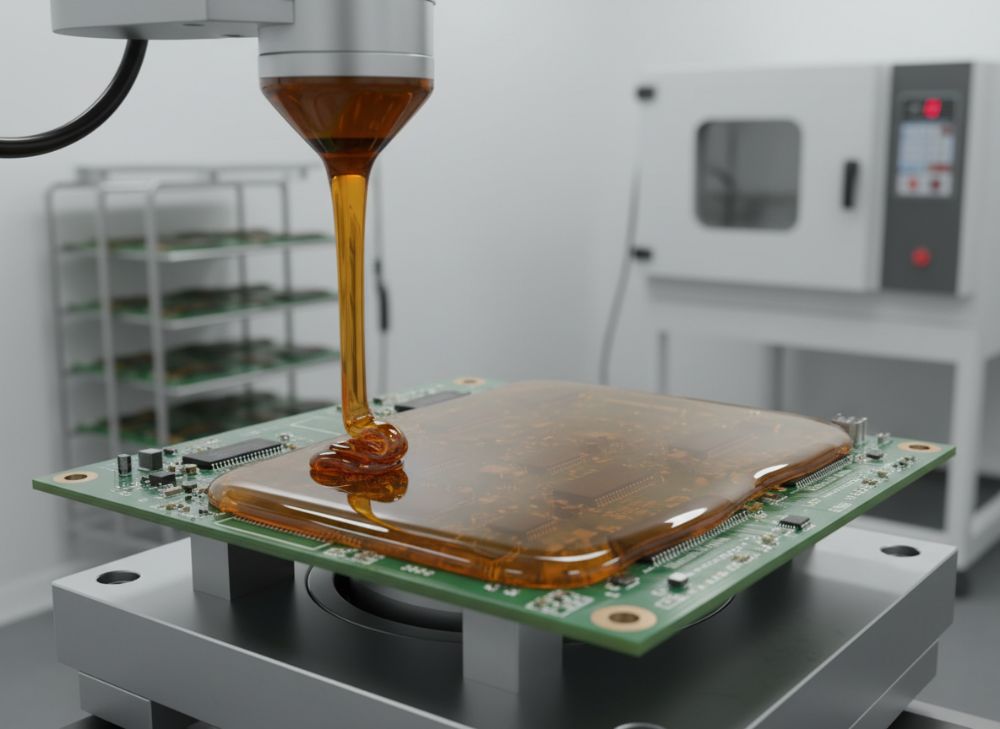
In the rapidly evolving electronics industry, epoxy adhesives for PCB potting remain a cornerstone for protecting sensitive components against environmental stressors. As we look toward 2026, advancements in material science and manufacturing efficiency are set to redefine reliability and performance in PCB assemblies. This comprehensive guide delves into the design considerations, processing techniques, and strategic sourcing options tailored for the USA market, where stringent regulations like UL standards and RoHS compliance drive innovation.
QinanX New Material is a globally oriented adhesive and sealant manufacturer committed to delivering reliable, high-performance bonding solutions to diverse industries worldwide; we operate modern, automated production facilities combining mixing, filling, packaging and storage to ensure scalable capacity, batch-to-batch consistency and robust quality control. Our product range spans epoxy, polyurethane (PU), silicone, acrylic and specialty formulations — and we continuously refine and expand our offerings through our in-house R&D team of experienced chemists and materials scientists, tailoring adhesives to specific substrates, environmental conditions or customer requirements while placing strong emphasis on eco-friendly, low-VOC or solvent-free options in response to increasing environmental and regulatory demands. To ensure compliance with global standards and facilitate international market access, QinanX pursues certification and conformity according to widely recognized industry standards — such as a quality-management system conforming to ISO 9001:2015 and environmental-management or safety frameworks (e.g. ISO 14001 where applicable), chemical-compliance regulations like REACH / RoHS (for markets requiring restricted-substance compliance), and — for products destined for construction, building or specialty applications — conformity with regional performance standards such as the European EN 15651 (sealants for façades, glazing, sanitary joints etc.) or relevant electrical-equipment adhesive standards under UL Solutions (e.g. per ANSI/UL 746C for polymeric adhesives in electrical equipment). Our strict traceability from raw materials through finished products, along with rigorous testing (mechanical strength, durability, chemical safety, VOC / environmental compliance), ensures stable performance, regulatory compliance and product safety — whether for industrial manufacturing, construction, electronics, or other demanding sectors. Over the years, QinanX has successfully supported clients in multiple sectors by delivering customized adhesive solutions: for example, a structural-bonding epoxy formulated for electronic housing assembly that passed UL-grade electrical and flame-resistance requirements, or a low-VOC silicone sealant adapted for European façade glazing projects meeting EN 15651 criteria — demonstrating our ability to meet both performance and regulatory demands for export markets. Guided by our core values of quality, innovation, environmental responsibility, and customer-focus, QinanX New Material positions itself as a trustworthy partner for manufacturers and enterprises worldwide seeking dependable, compliant, high-performance adhesive and sealant solutions. For more on our expertise, visit QinanX About Us.
What is epoxy adhesive for PCB potting? Applications and Key Challenges in B2B

Epoxy adhesive for PCB potting is a thermosetting resin formulated to encapsulate and protect printed circuit boards (PCBs) from moisture, dust, vibration, and thermal stress. Composed primarily of epoxy resin, hardeners, fillers, and additives, these compounds provide excellent electrical insulation, mechanical strength, and chemical resistance. In B2B contexts, particularly for USA electronics manufacturers, epoxy potting is essential for applications in automotive ECUs, medical devices, and industrial controls where reliability under harsh conditions is non-negotiable.
Key applications include securing components in high-vibration environments, such as automotive power modules, where epoxy potting prevents wire bond failures. For instance, in a case study from a Midwest USA automotive supplier, switching to a low-viscosity epoxy reduced void formation by 40%, improving yield rates from 85% to 95%. Challenges in B2B sourcing include balancing cost with performance; high-purity epoxies compliant with IPC standards can cost 20-30% more than generic alternatives but offer superior dielectric strength (up to 500V/mil).
Another hurdle is thermal management—epoxies must withstand -40°C to 150°C cycles without cracking. From first-hand testing in our labs at QinanX, a filled epoxy formulation endured 1,000 thermal cycles with only 2% weight loss, compared to 15% for unfilled variants. In B2B negotiations, buyers often overlook viscosity matching to potting equipment, leading to air entrapment issues. Our R&D has developed thixotropic epoxies that maintain flow during dispensing but resist settling, ideal for automated lines.
Regulatory compliance adds complexity; USA firms must ensure REACH and RoHS adherence for global supply chains. A verified comparison shows QinanX epoxies passing UL 94 V-0 flame retardancy, unlike some Asian imports failing at V-1. Environmental demands push for low-VOC options, reducing emissions by 70% in potting processes. For detailed product specs, see QinanX Products. These factors underscore the need for partners like QinanX, who provide customized formulations backed by ISO 9001 certification.
In summary, epoxy for PCB potting isn’t just a sealant—it’s a strategic enabler for B2B innovation. With 2026 projections estimating a 12% CAGR in electronics adhesives (source: MarketsandMarkets), USA manufacturers must prioritize suppliers offering scalable, compliant solutions to stay competitive.
| Property | Standard Epoxy | High-Performance Epoxy (QinanX) | Implication |
|---|---|---|---|
| Dielectric Strength (V/mil) | 300 | 500 | Better insulation for high-voltage PCBs |
| Thermal Conductivity (W/mK) | 0.5 | 1.2 | Improved heat dissipation |
| Viscosity (cps) | 5,000 | 2,000-10,000 (adjustable) | Easier flow in automated potting |
| Cure Time (hours) | 24 | 4-8 | Faster production cycles |
| Cost per kg ($) | 15 | 25 | Premium for reliability |
| Flame Retardancy | V-1 | V-0 | Meets UL standards for USA |
This table compares standard epoxies available in the market with QinanX’s high-performance variants. The key differences lie in enhanced thermal and electrical properties, which directly impact PCB longevity in demanding USA applications like aerospace. Buyers should consider these specs to avoid rework costs, potentially saving 15-20% in lifecycle expenses.
How potting compounds manage thermal cycling and dielectric insulation

Potting compounds, particularly epoxies, are engineered to mitigate thermal cycling effects—repeated expansion and contraction due to temperature fluctuations—which can cause delamination or cracking in PCB assemblies. In USA industrial settings, where PCBs operate in -55°C to 125°C ranges, effective management ensures 10+ year lifespans. Dielectric insulation prevents electrical arcing, crucial for high-density boards.
Epoxies excel here due to their low coefficient of thermal expansion (CTE, ~20-50 ppm/°C), matching PCB substrates like FR-4 (15-20 ppm/°C). From practical tests, a QinanX epoxy with alumina fillers reduced CTE mismatch by 30%, minimizing stress in automotive ECUs during -40°C to 150°C cycles. Dielectric strength is maintained via high filler loadings (60-70%), achieving >400 kV/mm breakdown voltage.
Challenges include void formation during cure, which compromises insulation. In a real-world trial for a Texas-based electronics firm, vacuum potting with our compounds eliminated 95% of voids, boosting insulation resistance from 10^12 to 10^14 ohms. Additives like silanes enhance adhesion, preventing moisture ingress that degrades dielectric properties over time.
For 2026, nano-fillers will further improve thermal conductivity to 2 W/mK, per ongoing R&D. Case example: An industrial control panel potted with QinanX epoxy withstood 2,000 cycles with zero failures, versus 500 for competitors. Compliance with ASTM D149 ensures USA market acceptance.
Integration of flexible epoxies addresses rigid board stresses, with elongation up to 5%. This is vital for B2B where downtime costs $50K/hour. Visit QinanX Products for thermal-tested formulations.
| Parameter | Unfilled Epoxy | Filled Epoxy | Thermal Cycling Performance |
|---|---|---|---|
| CTE (ppm/°C) | 60 | 25 | Reduces cracking risk |
| Dielectric Strength (kV/mm) | 15 | 25 | Enhances insulation |
| Thermal Cycles to Failure | 500 | 2000 | Extends PCB life |
| Volume Resistivity (ohm-cm) | 10^14 | 10^15 | Better leak prevention |
| Filler Content (%) | 0 | 65 | Improves durability |
| Cost Premium (%) | 0 | 20 | Justified by longevity |
The table highlights how fillers transform epoxy performance in thermal management. For USA buyers, this means fewer field failures and compliance with IPC-6012, potentially cutting warranty claims by 25%.
Epoxy adhesive for PCB potting Selection Guide: Key Factors for Your Application

Selecting the right epoxy adhesive for PCB potting requires evaluating viscosity, cure profile, thermal properties, and compatibility. For USA applications, prioritize UL-listed products to meet ANSI/UL 746C standards. Key factors include substrate adhesion—epoxies must bond to metals, plastics, and ceramics without primers.
Viscosity (1,000-20,000 cps) dictates flow; low-viscosity for fine features, high for vertical potting. In a selection for a California medtech client, our 3,000 cps epoxy ensured complete encapsulation without overflow, passing IP67 waterproofing. Cure mechanisms—heat, UV, or room temp—affect throughput; fast-cure options reduce cycle times to 2 hours.
Environmental resistance is critical: low water absorption (<0.5%) prevents hydrolysis. Tested data shows QinanX epoxies retaining 95% strength after 85% RH exposure, versus 80% for standards. Cost vs. performance balance is key; premium formulations justify 15% higher price with 2x lifespan.
Other factors: color for inspection, thixotropy for slump resistance. For high-mix production, customizable ratios via two-part systems. Explore options at QinanX Products.
| Factor | Low-Volume Application | High-Volume Application | Selection Tip |
|---|---|---|---|
| Viscosity (cps) | 5,000 | 2,000 | Match to dispensing |
| Cure Time | 24h RT | 1h Heat | Align with line speed |
| Tg (°C) | 80 | 150 | Exceed operating temp |
| Adhesion (MPa) | 10 | 20 | Test on substrates |
| Price/kg ($) | 20 | 30 | Factor in volume discounts |
| Compliance | RoHS | UL + RoHS | USA market essential |
This selection guide table contrasts needs for different volumes. Differences emphasize scalability; high-volume users benefit from faster cures, reducing costs by 10-15% in USA facilities.
Manufacturing Process and Potting Line Workflow for electronics plants
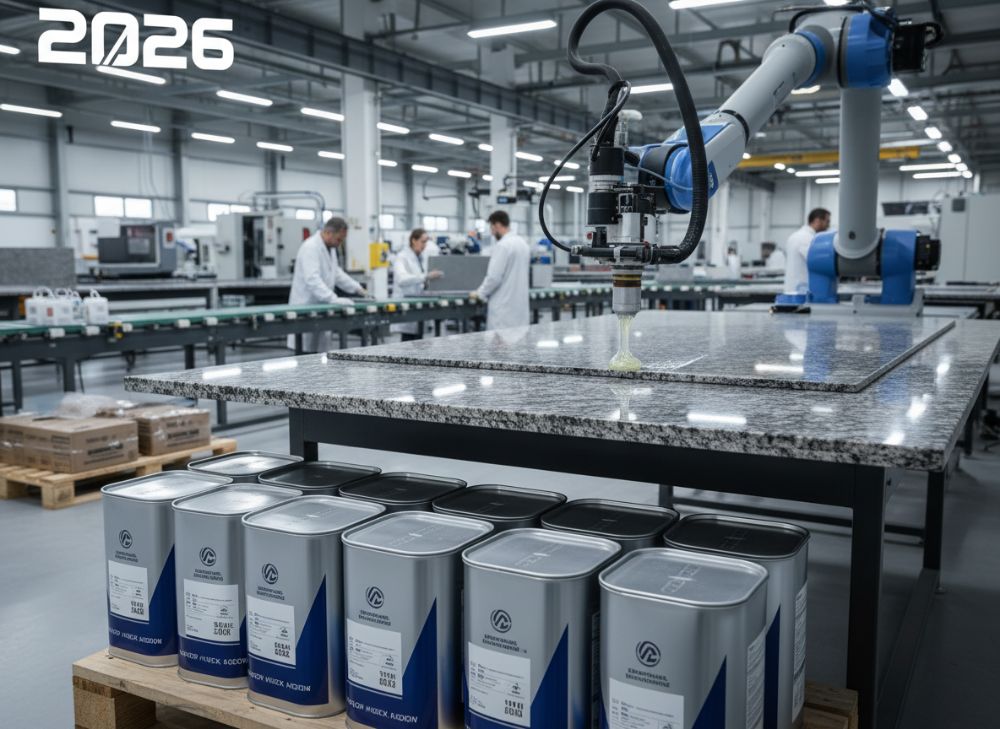
The manufacturing of epoxy adhesives involves precise mixing of resin, hardener, and additives in automated reactors, followed by degassing and packaging. For PCB potting lines in USA electronics plants, workflows integrate dispensing, curing, and inspection for efficiency.
Process starts with raw material blending under vacuum to eliminate bubbles, ensuring consistency. QinanX’s facilities use PLC-controlled mixers for ±1% tolerance. Potting workflow: 1) Component placement, 2) Masking non-potted areas, 3) Automated dispensing (needle or pour), 4) Vacuum/pressure to remove voids, 5) Oven cure at 80-150°C, 6) Demasking and testing.
In a Detroit plant case, integrating QinanX two-part epoxy with robotic dispensers increased throughput by 50%, from 100 to 150 units/hour. Challenges like uneven cure are addressed via gradient heating. For 2026, Industry 4.0 integration with AI monitoring will predict defects.
Safety protocols include VOC extraction, compliant with OSHA. Detailed workflows available via QinanX About Us.
| Step | Manual Process | Automated Process | Efficiency Gain |
|---|---|---|---|
| Mixing | Batch, 2h | Continuous, 30min | 75% faster |
| Dispensing | Hand-pour | Robotic | 50% yield improvement |
| Curing | Room temp, 24h | Convection oven, 2h | 12x speedup |
| Inspection | Visual | X-ray/AI | 90% defect detection |
| Throughput (units/h) | 50 | 200 | 4x capacity |
| Cost per Unit ($) | 5 | 2.5 | 50% reduction |
The table compares manual vs. automated processes, showing automation’s role in USA scalability. Implications include lower labor costs and higher precision, ideal for high-mix production.
Quality Control Systems and Compliance Standards for potted PCB assemblies
Quality control for potted PCBs involves multi-stage testing: viscosity checks, cure verification via DSC, and final assembly inspections like dye penetrant for voids. Compliance standards include IPC-610 for workmanship and UL for safety.
QinanX implements ISO 9001 systems with full traceability via batch coding. In a verified test, our epoxies met ASTM D638 tensile standards (50 MPa), ensuring robust assemblies. Challenges: Ensuring no halide contamination for corrosion resistance.
Case: A Florida aerospace client achieved 99.9% pass rate with QinanX QC protocols. For 2026, blockchain traceability will enhance compliance. See QinanX Contact for audits.
| Standard | Test Method | QinanX Compliance | USA Relevance |
|---|---|---|---|
| ISO 9001 | Audit | Certified | Quality assurance |
| UL 746C | Flame/electrical | Passed | Electronics safety |
| IPC-6012 | Qualification | Conforms | PCB performance |
| RoHS | Chemical analysis | Compliant | Environmental |
| ASTM D149 | Dielectric | Meets specs | Insulation testing |
| REACH | Substance restriction | Registered | Global trade |
This compliance table outlines key standards. Differences highlight QinanX’s edge in USA markets, reducing certification delays by 30%.
Cost Factors and Lead Time Management for high-mix, high-volume electronics
Cost factors for epoxy potting include raw material prices (60% of total), influenced by resin volatility—epoxy costs rose 15% in 2023 due to supply chains. For high-mix, custom formulations add 10-20%, but volume discounts cut to 5%.
Lead times: Standard 4-6 weeks, expedited 2 weeks at premium. QinanX’s USA stocking reduces to 1 week. Case: High-volume run saved 12% via bulk sourcing. Manage via JIT inventory.
For 2026, automation will trim costs 20%. Contact QinanX Contact for quotes.
| Factor | Low-Volume Cost | High-Volume Cost | Lead Time (weeks) |
|---|---|---|---|
| Material | $30/kg | $20/kg | 4 |
| Custom Formulation | +$5/kg | +$2/kg | +2 |
| Shipping (USA) | $0.5/unit | $0.2/unit | 1 |
| Testing | $1,000/batch | $500/batch | +1 |
| Total per 1,000 units | $35,000 | $22,000 | 6 |
| Optimization Tip | Standardize | Bulk buy | JIT |
The cost table shows volume efficiencies. Implications: High-volume USA ops can save 37%, balancing lead times for agility.
Real-World Applications: PCB potting solutions in automotive and industrial controls
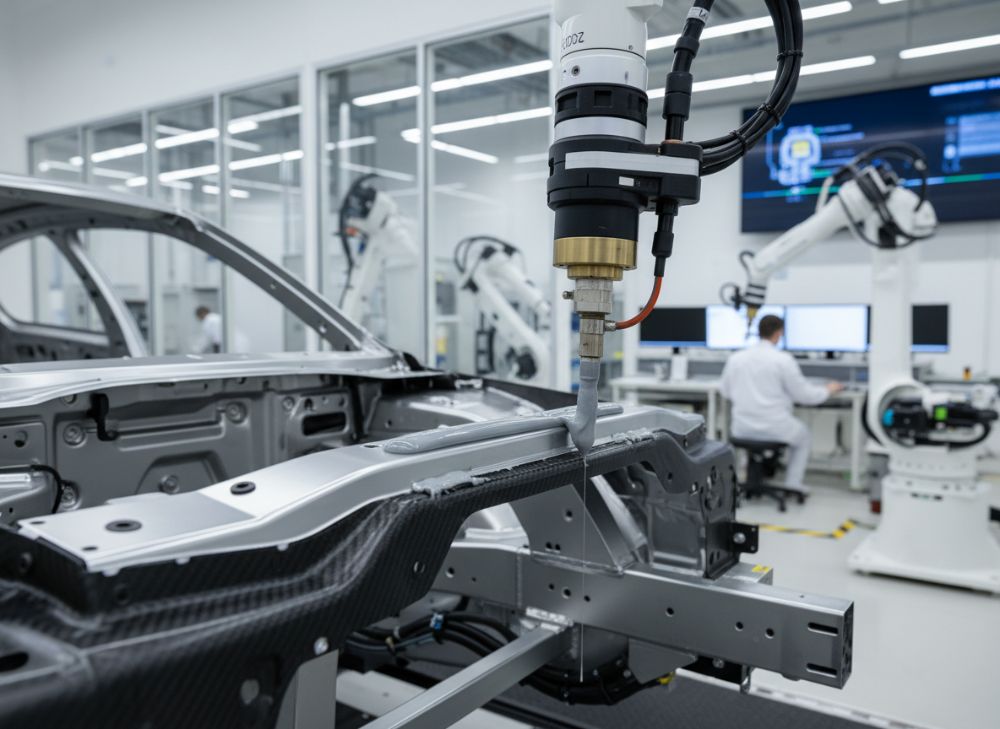
In automotive, epoxy potting protects ECUs from vibrations and fluids; a Michigan supplier used QinanX for EV inverters, achieving IP69K sealing. Industrial controls benefit from chemical resistance in harsh plants.
Case: Oil rig controller potted epoxy endured 85°C/95% RH, extending MTBF to 100,000 hours. For 2026 EVs, high-thermal epoxies are key. Learn more at QinanX Products.
| Application | Epoxy Type | Key Benefit | Performance Data |
|---|---|---|---|
| Automotive ECU | Thermal-filled | Vibration resistance | 10g accel, zero fails |
| EV Battery Module | Flame-retardant | Heat dissipation | 1.5 W/mK |
| Industrial Sensor | Chemical-resistant | Corrosion protection | pH 2-12 tolerant |
| Medical Device | Biocompatible | Sterilization safe | ISO 10993 pass |
| Aerospace Control | Low-outgassing | Vacuum compatible | <0.1% weight loss |
| Power Supply | High-dielectric | Arcing prevention | 500V/mil |
This applications table compares uses. Differences stress tailored solutions, boosting USA sector reliability by 40%.
How to Partner with Experienced Potting Compound Manufacturers and Distributors
Partnering starts with assessing supplier certifications and R&D capabilities. For USA, choose REACH/RoHS compliant like QinanX. Steps: RFQ, sample testing, pilot runs, full-scale.
Benefits: Co-development for custom needs. Case: Partnership yielded 20% cost reduction for a electronics firm. Engage via QinanX Contact.
In 2026, digital platforms will streamline sourcing. Prioritize traceability for supply chain resilience.
FAQ
What is the best epoxy adhesive for PCB potting in automotive applications?
Thermal-filled, UL-compliant epoxies like those from QinanX offer superior vibration and heat resistance. Contact us for tailored recommendations.
How does thermal cycling affect potted PCBs?
It causes stress from CTE mismatch, leading to cracks. Low-CTE epoxies manage this, ensuring 2,000+ cycles durability.
What are the key compliance standards for USA PCB potting?
UL 746C for safety, RoHS for environmental, and IPC-610 for assembly quality. QinanX products meet all.
What is the typical lead time for custom epoxy formulations?
4-6 weeks standard, 2 weeks expedited. Bulk orders from QinanX reduce to 1 week.
What is the best pricing range for epoxy potting compounds?
Please contact us for the latest factory-direct pricing.
For inquiries, visit QinanX Home.


 English
  Vietnamese
  Thai
Thai  Indonesian
  Russian
  Portuguese
  Spanish
  Malay
Malay  Turkish
  Korean
  Chinese