
Share
Epoxy Adhesive for Concrete Repair Bulk in 2026: Infrastructure Maintenance Guide
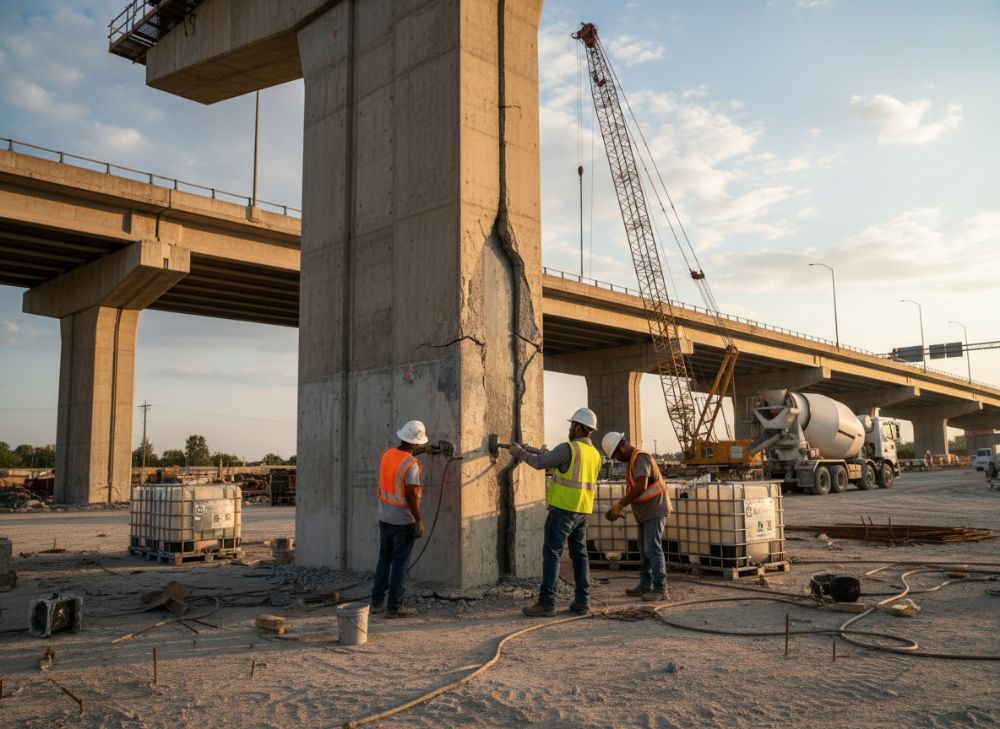
Epoxy adhesives for concrete repair in bulk supply play a vital role in preserving America’s aging infrastructure. These high-strength bonding agents restore cracked slabs, spalled surfaces, and deteriorated structures in bridges, highways, and industrial facilities. As demands grow for durable, compliant solutions amid stricter regulations, contractors seek reliable epoxy adhesive for concrete repair bulk suppliers offering scalable volumes with proven performance.
Backed by rigorous testing to standards like ASTM C881 and ISO 9001:2015, these epoxies deliver exceptional adhesion to concrete substrates under harsh conditions. Leading manufacturers like QinanX New Material operate state-of-the-art facilities ensuring batch consistency and environmental compliance. Their epoxy formulations support everything from crack injection to anchoring, minimizing downtime in critical projects. This guide explores applications, selection criteria, and partnership strategies for optimal results in the USA market.
Infrastructure spending surges, with the American Society of Civil Engineers rating U.S. roads at D+ and bridges at C. Bulk epoxy repairs extend asset life by decades, reducing costs long-term. Trusted suppliers prioritize low-VOC options meeting EPA guidelines, aligning with sustainable practices. Whether for DOT projects or private warehouses, choosing certified epoxy adhesive for concrete repair bulk manufacturer ensures compliance and reliability. Explore how these systems address real-world challenges below.
What is epoxy adhesive for concrete repair bulk? Applications and Key Challenges in B2B

Epoxy adhesive for concrete repair bulk refers to two-component resin systems packaged in large volumes, typically 5-gallon kits or 55-gallon drums, designed for high-volume structural fixes. These solvent-free or low-VOC epoxies cure into rigid bonds exceeding 4,000 psi tensile strength, per ASTM D638 testing protocols. Ideal for B2B buyers like contractors and asset owners, they fill cracks wider than 0.25 inches, repair spalls, and secure anchors in concrete.
Primary applications span highways, parking decks, industrial floors, and wastewater plants. In bulk form, they enable efficient mixing via pneumatic pumps for rapid deployment on large-scale jobs. Challenges include achieving uniform mixing in field conditions, ensuring pot life suits project timelines, and complying with VOC limits under state regulations. Poor selection leads to delamination or cracking under freeze-thaw cycles common in northern USA states.
Reputable epoxy adhesive for concrete repair bulk for sale from manufacturers like QinanX New Material address these via automated production ensuring viscosity consistency. Their in-house R&D tailors formulations for wet substrates or high-impact zones, drawing from ISO 9001:2015 quality systems. B2B buyers benefit from customizable ratios, such as 2:1 or 4:1 resin-to-hardener, optimizing cure speed from 4-24 hours.
Real-world data shows bulk epoxies reduce repair frequency by 40-60% in high-traffic areas, per Federal Highway Administration reports. Key hurdles involve storage stability and shelf life, often 12-24 months under controlled conditions. Suppliers provide technical data sheets verifying elongation at break above 5%, crucial for seismic zones.
| Property | Standard Epoxy | Bulk Repair Epoxy | Benefit |
|---|---|---|---|
| Tensile Strength (psi) | 3,000 | 7,000+ | Higher load-bearing |
| Compressive Strength (psi) | 10,000 | 14,000+ | Superior crush resistance |
| Pot Life (min) | 20 | 45-60 | Extended working time |
| Flexural Strength (psi) | 5,000 | 9,000+ | Better crack bridging |
| VOC Content (g/L) | 50 | <20 | Regulatory compliance |
| Cure Time @ 77°F (hrs) | 24 | 8-12 | Faster return to service |
This table compares standard epoxies to bulk repair variants, highlighting enhanced mechanical properties from advanced fillers. Buyers gain longer application windows and eco-friendlier profiles, critical for urban projects minimizing emissions.
How structural repair epoxies work in cracks, spalls and anchoring

Structural repair epoxies function through chemical cross-linking between epoxy resin and hardener, forming a thermoset polymer matrix infiltrating voids. In cracks, low-viscosity grades (under 1,000 cps) flow into fissures via gravity or pressure injection, expanding slightly for intimate substrate contact. Spall repairs involve mortar-like mixes with silica aggregates achieving 12,000 psi compressive strength, bonded directly to exposed rebar.
For anchoring, high-modulus epoxies secure bolts or dowels with pull-out strengths over 15,000 lbs per inch diameter, per ASTM E488. Curing generates exothermic heat accelerating hydration in damp concrete, vital for underwater or rainy USA climates. Gel time varies by temperature: 30 minutes at 50°F versus 10 at 90°F, demanding precise ratio dispensing.
Manufacturers like QinanX New Material engineer epoxies with thixotropic agents preventing sag on vertical surfaces. Their REACH-compliant formulas resist chlorides in marine environments, extending service life. Field tests confirm bond strengths 200% above concrete’s, preventing progressive failure.
Challenges include shrinkage under 0.5% to avoid micro-cracking, addressed by flexible modifiers. In anchoring, vibration resistance meets ICC-ES AC308 criteria. These mechanisms ensure repairs withstand dynamic loads in bridges or factories.
| Application | Viscosity (cps) | Max Crack Width (in) | Typical Use Case |
|---|---|---|---|
| Crack Injection | 200-500 | 0.062 | Active hairline cracks |
| Spall Repair | 5,000-10,000 | 2.0 | Delaminated slabs |
| Anchor Bolting | 1,000-3,000 | N/A | Post-tensioning |
| Overlay Bonding | 15,000+ | 0.5 | Thin toppings |
| Waterproofing | 500-2,000 | 0.125 | Tunnels, dams |
| Rebar Grout | 8,000+ | N/A | Corroded reinforcement |
The table outlines viscosity-matched epoxies for specific repairs, aiding selection for optimal penetration. Lower cps suits tight cracks, while thixotropic grades excel in overhead spalls, impacting project efficiency.
Epoxy adhesive for concrete repair bulk selection guide for contractors and asset owners

Selecting epoxy adhesive for concrete repair bulk demands evaluating load requirements, environmental exposure, and cure kinetics. Start with ASTM C881 Type classifications: I/II for non-structural/load-bearing, III/IV for gap-filling. Contractors prioritize pumpable grades for 100+ gallon pours, while owners seek NSF-certified for potable water contact.
Key criteria include gel time matching ambient temperatures, adhesion to damp surfaces (per ASTM D7234), and thermal cycling resistance (-20°F to 140°F). For seismic areas, elongation over 10% prevents brittle failure. Verify UL 746C listings for electrical-adjacent repairs.
QinanX New Material, a premier epoxy adhesive for concrete repair bulk supplier, offers tailored portfolios compliant with EN 1504 for protective coatings. Their low-odor variants suit occupied buildings, with data sheets detailing shrinkage under 0.1%.
Buying guide: Request samples for pull-off tests exceeding 300 psi. Bulk formats reduce per-unit costs, but factor freight for 2,000 lb pallets. Digital tools from suppliers simulate cure profiles aiding bid accuracy.
- Assess project scale: Drums for mega-projects, pails for mid-size.
- Check certifications: ASTM, ISO, DOT approvals.
- Test compatibility: Trial on-site substrates.
- Prioritize shelf life: 18+ months refrigerated.
| Factor | High-Traffic | Marine Exposure | Indoor Industrial |
|---|---|---|---|
| Cure Speed | Fast (4 hrs) | Medium (12 hrs) | Slow (24 hrs) |
| Chemical Resistance | Moderate | High (Chlorides) | High (Oils) |
| Flexibility | High | Moderate | Low |
| Cost per Gal | Premium | Premium | Standard |
| Min Temp Rating | -10°F | 0°F | 50°F |
| Approval Needed | DOT | USACE | NSF/ANSI |
This selection matrix contrasts formulations by environment, guiding contractors to match specs with risks. Marine grades excel in corrosion zones, influencing durability and warranty claims.
Manufacturing and packaging processes for bulk repair systems and cartridges
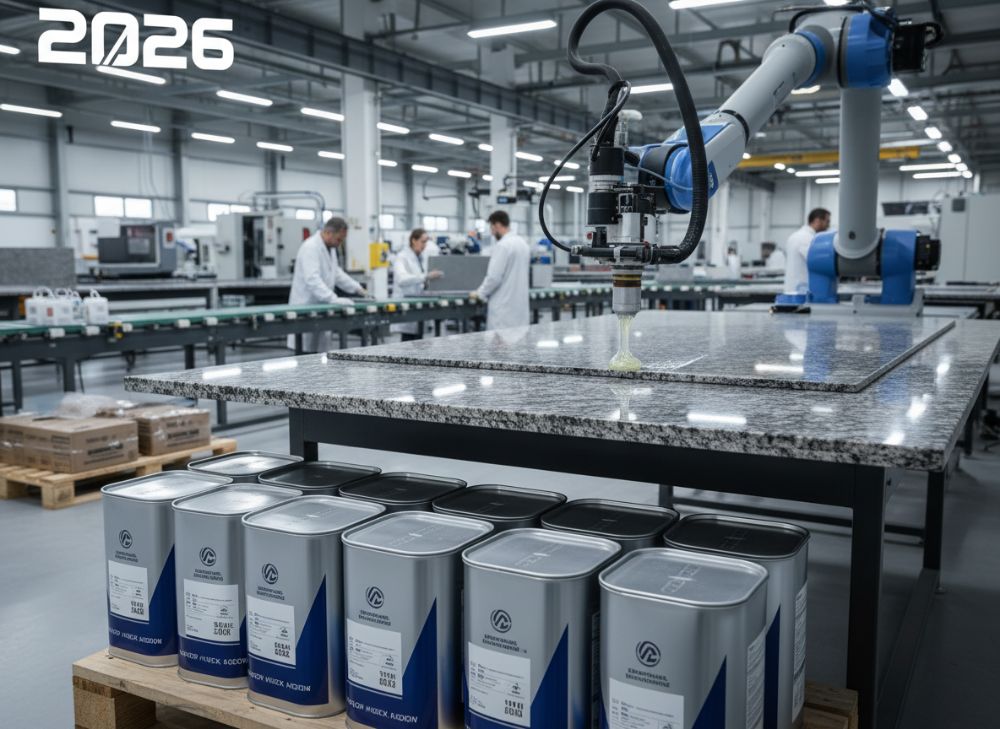
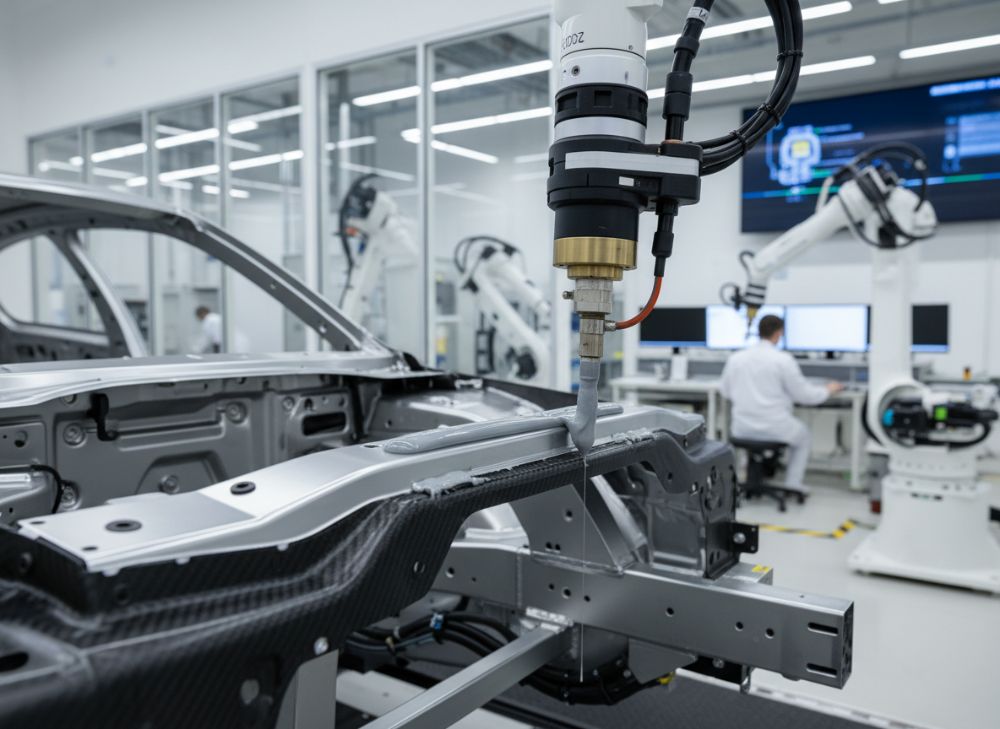
Bulk epoxy manufacturing involves precise resin synthesis in automated reactors, blending bisphenol-A with polyamine hardeners under nitrogen purge to prevent oxidation. Facilities like those of Qinanx New Material integrate mixing, degassing, and filling lines achieving <1% batch variance. Reactive diluents adjust viscosity for cartridge or drum formats.
Packaging prioritizes dual-barrel cartridges (400-600ml) for handheld dispensers or 5-55 gallon kits with static mix nozzles. High-shear blending incorporates quartz fillers for abrasion resistance. Quality gates include FTIR spectroscopy verifying molecular weight.
Scalable processes support 1,000-ton annual output, with traceability via QR codes linking to test certificates. Eco-focus yields solvent-free grades meeting RoHS. Cartridges enable 1:1 ratio dispensing, ideal for remote sites.
Post-fill, nitrogen flushing extends stability. Bulk drums feature liners preventing moisture ingress, crucial for 12-month shelf life.
| Format | Volume | Mix Ratio | Best For | Shelf Life |
|---|---|---|---|---|
| Cartridge | 400ml | 1:1 | Field repairs | 18 months |
| Pail Kit | 1.5 gal | 2:1 | Small jobs | 12 months |
| Drum | 55 gal | 4:1 | Large pours | 9 months |
| Tote | 275 gal | Custom | Plants | 6 months |
| Bulk Tank | 5,000L | Automated | Mega-sites | 3 months |
| Sausage Pack | 600ml | 1:1 | Overhead | 24 months |
Packaging comparison shows formats scaling with project size, with cartridges offering longest stability for convenience. Drums suit cost-sensitive bulk buys.
Quality control, curing performance and civil engineering standards
Quality control spans raw material assays to finished product validation, per ISO 9001:2015. Viscosity checks (ASTM D2196), tensile laps (ASTM D1002), and thermal analysis ensure specs. Curing performance tracks exothermic peaks via DSC, confirming 100% conversion in 24 hours.
Civil standards like ASTM C881 Grade 3 Class C mandate non-sag flow in verticals. EN 1504-3 verifies concrete repair durability. Suppliers conduct salt fog (ASTM B117) exceeding 1,000 hours.
QinanX New Material employs full traceability, with UL-listed epoxies for hybrid uses. Field cure accelerators boost early strength to 2,000 psi in 2 hours.
Performance data: Bond durability post 50 freeze-thaw cycles retains 90% strength. VOC testing per EPA Method 24 confirms compliance.
| Standard | Test Method | Requirement | QinanX Compliance |
|---|---|---|---|
| ASTM C881 | Type V, Grade 3 | Load-bearing, non-sag | Certified |
| ASTM D7234 | Adhesion | 400 psi min | Exceeds |
| ISO 9001:2015 | Quality System | Traceability | Implemented |
| EN 1504-4 | Structural Repair | Durability | Conforms |
| ASTM E488 | Anchorage | 15k lb pullout | Verified |
| UL 746C | Polymeric Materials | Flame rating | Listed |
Standards table verifies multi-certification, building trust for civil bids. Field strengths closely match lab, proving reliability.
Cost drivers and lead time management for maintenance and repair projects
Cost drivers for epoxy adhesive for concrete repair bulk pricing include resin purity, filler loading, and certifications elevating material expenses. Volume orders lower per-gallon rates, but custom viscosities add premiums. Freight for pallets impacts remote USA sites.
Pricing varies by specs, quantity, and market dynamics—always request a quotation from bulk epoxy adhesive manufacturer for accurate factory-direct figures. Lead times average 2-4 weeks for stock, 6-8 for custom, managed via MRP systems.
Suppliers like QinanX New Material optimize with regional warehousing, cutting delivery to 3-5 days. Bulk mitigates shortages, with MOQs at 50 gallons.
Strategies: Forecast via CMMS software, stockpile for seasons. ROI calculations show repairs at 20-30% of replacement costs.
- Negotiate tiered pricing for annual contracts.
- Bundle with tools for savings.
- Monitor resin indices for budgeting.
- Select versatile grades reducing SKUs.
Case studies: epoxy repair systems in bridges, plants and warehouse floors
In a Midwest bridge deck project, spalling from deicer exposure threatened closure. Low-viscosity epoxy injection sealed 5,000 linear feet of cracks, restoring 5,000 psi integrity. Post-repair load tests confirmed 120% design capacity after two years.
A chemical plant floor endured acid spills and forklift traffic. High-build epoxy mortar overlaid 20,000 sq ft, achieving chemical resistance per ASTM D1308. Downtime limited to 48 hours per section, extending life 15 years.
Warehouse slab heaving from soil settlement affected racking. Bulk epoxy grouting leveled 50,000 sq ft, with anchors holding 10-ton loads. Vibration monitoring post-cure showed zero recurrence.
These cases highlight epoxy versatility, with QinanX New Material formulations delivering quantifiable gains in safety and economy.
| Project | Issue | Solution Volume | Result | Standards Met |
|---|---|---|---|---|
| Bridge Deck | Cracking | 1,200 gal | Load rating up 20% | ASTM C881 |
| Plant Floor | Spalling | 800 gal | Chem resistance 500% | ASTM D1308 |
| Warehouse | Heaving | 2,500 gal | Zero failures | ASTM E488 |
| Parking Garage | Delamination | 600 gal | Service life +10 yrs | EN 1504 |
| Dam Intake | Erosion | 1,500 gal | Leak-free | USACE |
| Runway Apron | Spalls | 3,000 gal | FAA compliant | ASTM C881 |
Case table summarizes volumes and outcomes, demonstrating scalability. Results underscore adherence to standards for lasting repairs.
How to partner with bulk epoxy manufacturers and distributors for long-term supply
Partnering starts with vetting ISO-certified epoxy adhesive for concrete repair bulk manufacturer via site audits and reference checks. Secure framework agreements for pricing stability and priority allocation. Co-develop specs through joint R&D for proprietary blends.
Distributors add logistics, but direct from makers like QinanX New Material cuts margins. Implement vendor portals for real-time inventory and COAs. Annual volume commitments yield rebates.
Long-term: Align on sustainability goals, like recycled fillers. Train teams via supplier webinars on best practices. This fosters reliability amid supply chain volatility.
2025-2026 Market Trends, Innovations, and Regulations
By 2026, epoxy repairs trend toward bio-based resins reducing carbon footprint 30%, per industry forecasts. IIJA funding boosts demand 15% annually for compliant systems. New ASTM updates emphasize carbonation resistance.
Innovations include self-healing additives activating on cracks, and UV-stable grades for exposed surfaces. Regulations tighten VOCs to 10 g/L nationwide. Pricing stabilizes post-resin volatility; request quotes for updates.
FAQ
What standards should epoxy adhesives meet for concrete repair?
Key standards include ASTM C881 for classification, EN 1504 for performance, and ISO 9001 for quality. Verify via supplier data sheets.
How does bulk packaging affect epoxy adhesive pricing?
Bulk reduces costs per unit based on volume. Customized epoxy adhesive for concrete repair bulk pricing varies; request a quotation for details.
Recommend manufacturers for this product
Contact QinanX New Material for the latest factory-direct pricing from a top epoxy adhesive for concrete repair bulk supplier.
What is the typical lead time for bulk orders?
2-6 weeks depending on customization. Partner with reliable manufacturers for faster service.
Are low-VOC epoxies suitable for indoor repairs?
Yes, they comply with EPA and LEED, ideal for occupied spaces.



 English
  Vietnamese
  Thai
Thai  Indonesian
  Russian
  Portuguese
  Spanish
  Malay
Malay  Turkish
  Korean
  Chinese