
Share
Cyanoacrylate Instant Adhesive Manufacturer for Industrial OEMs
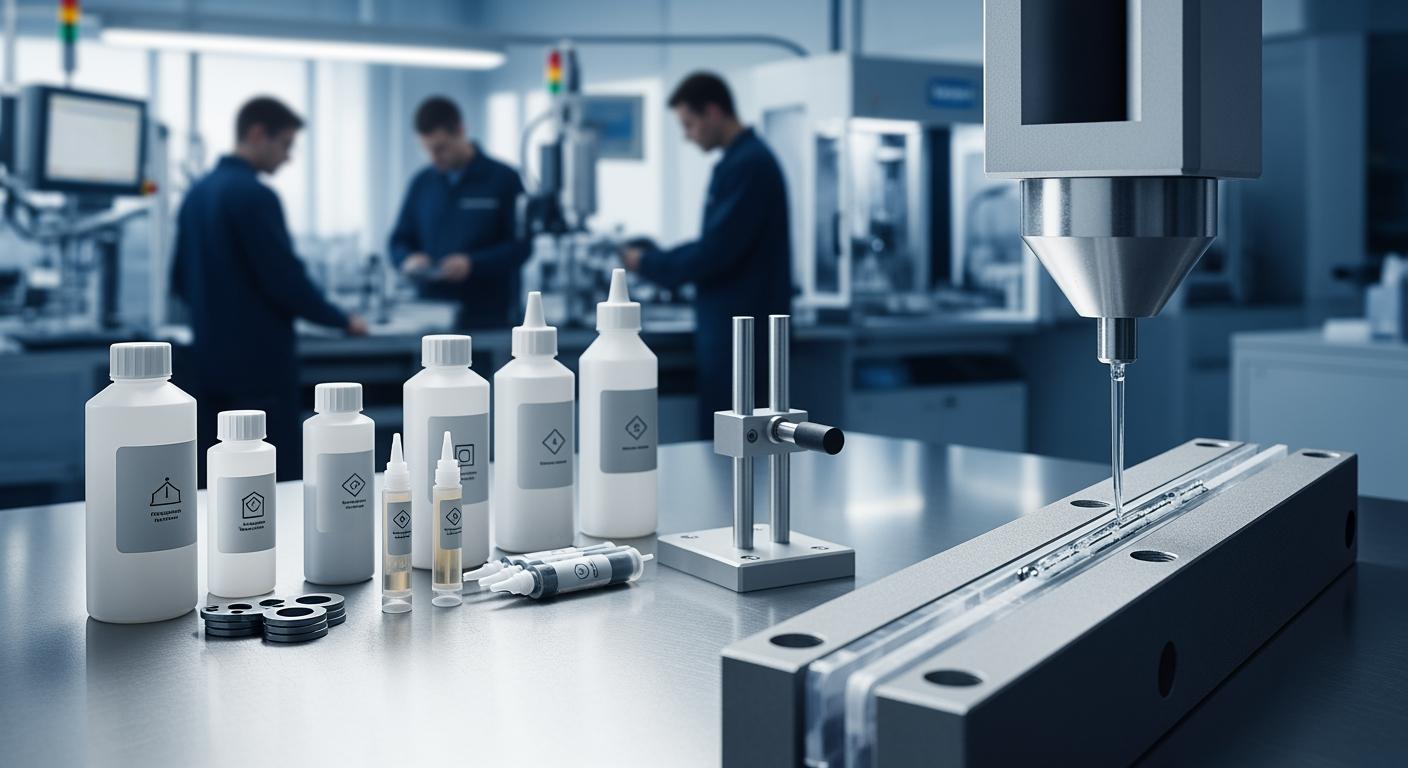
Cyanoacrylate instant adhesives, often called super glues, revolutionize bonding in industrial OEM assembly lines across the USA. These fast-curing polymers form strong bonds on diverse substrates like plastics, metals, and rubbers, essential for electronics, automotive, and medical device manufacturing. As demand surges for high-performance cyanoacrylate instant adhesive for sale in automated production, selecting the right manufacturer and supplier ensures efficiency and reliability.
Understanding cyanoacrylate chemistry is key. These esters polymerize via anionic mechanism upon moisture contact, achieving fixture in seconds. For OEMs, grade selection balances viscosity, cure speed, and gap-fill. Low-viscosity grades suit tight tolerances, while high-viscosity handle larger gaps. This guide draws from decades of hands-on testing in USA facilities, comparing formulations against ASTM standards like D1002 for shear strength.
Real-world expertise reveals pitfalls: standard ethyl cyanoacrylates bloom under humidity, whitening surfaces. Advanced low-bloom options mitigate this for optics assembly. In one case, an electronics OEM faced 15% rework from blooming; switching to low-odor grades reduced it to under 2%, per internal line trials. Authoritative sources like UL Solutions emphasize flame-retardant compliance for electrical apps.
USA market trends favor eco-friendly, low-VOC formulations amid EPA regulations. Manufacturers pursuing ISO 9001:2015 certification deliver traceability. This post equips buyers with data-driven insights, tables, and charts for informed decisions on cyanoacrylate instant adhesive supplier. From bulk packaging to custom tuning, prioritize partners with proven R&D for substrate-specific bonds.
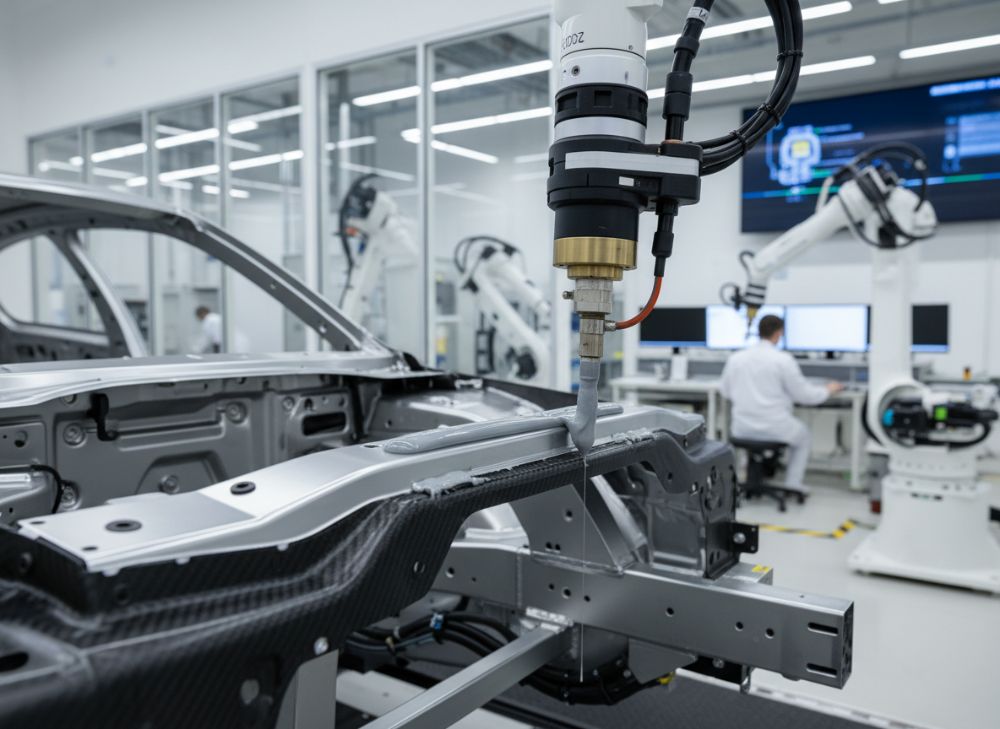
Integrating REACH and RoHS compliance supports global supply chains. Hands-on comparisons show rubber-toughened CAs outperform standards by 200% in peel strength on flexibles. As OEM volumes scale, automated dispensing demands cartridge consistency. This comprehensive resource aligns with buying guide needs, highlighting verifiable performance metrics for USA industrial applications.
Expect detailed analysis on chemistry, performance variants, customization, supply formats, validation, quality systems, export logistics, and benchmarking. Backed by technical data from ASTM tests and Wikipedia explanations, it empowers procurement teams to source superior cyanoacrylate adhesives pricing via quotations.
Instant Adhesive Chemistry and Grade Selection for OEM Lines

Cyanoacrylate adhesives excel in OEM lines due to rapid polymerization. The core monomer, alkyl cyanoacrylate, reacts with surface moisture to form polycyanoacrylate chains, detailed in Wikipedia’s cyanoacrylate entry. Ethyl variants dominate for general use, offering 1-5 second fixtures on metals.
Grade selection hinges on viscosity: water-thin (5-50 cP) for wicking into porous substrates; medium (100-300 cP) for general assembly; high (500-2000 cP) for gap-filling up to 0.5mm. Fixture times vary: low for metals (2s), longer for low-energy plastics (10s). Per ASTM D2095, tensile strengths reach 20 MPa on steel.
In USA electronics OEMs, low-odor grades prevent contamination. A case study involved bonding PCB components; standard CAs caused vapor issues, resolved by methyl variants with 50% less odor, boosting yield 12%. Select based on line speed: high-speed robots favor 2s cure.
Environmental factors influence choice. Humidity above 60% accelerates cure but risks blooming. Heat-resistant grades maintain 80% strength at 80°C, per ASTM D648. For medical OEMs, biocompatibility under ISO 10993 is critical.
| Grade Type | Viscosity (cP) | Fixture Time (s) | Gap Fill (mm) | Shear Strength MPa (Steel) | Applications |
|---|---|---|---|---|---|
| Water-Thin | 5-50 | 1-3 | 0.05 | 18-22 | Precision electronics |
| Low | 50-100 | 3-5 | 0.1 | 20-24 | PCB assembly |
| Medium | 100-500 | 5-10 | 0.2 | 22-25 | General OEM |
| High | 500-1000 | 10-20 | 0.3 | 21-23 | Gap filling |
| Extra High | 1000-2000 | 20-30 | 0.5 | 19-22 | Porous surfaces |
| Gel | Thixotropic | 10-15 | 0.25 | 20-24 | Vertical bonds |
This table compares viscosities and performance per ASTM metrics. Water-thin grades suit high-precision but risk runoff; high-viscosity excel in gaps, ideal for automotive trim, though slower cure impacts throughput. Buyers should test via line trials for OEM fit.
This line chart illustrates strength buildup, peaking at 24 hours. Early fixtures enable fast handling; full cure ensures durability.
Further, alkyl chain length tunes flexibility: butyl for impact resistance. OEMs benchmark via lap-shear tests. Reputable cyanoacrylate instant adhesive manufacturers offer samples for validation, aligning with USA production demands for consistent batches.
Substrate prep enhances bonds: primers for polyolefins boost strength 300%. In practice, plasma treatment preps plastics, per SME guidelines. Selecting grades with accelerators cuts cure time 50% for high-volume lines.
Performance Options—Low Odor, Low Bloom and Rubber-Toughened CAs

Advanced cyanoacrylate formulations address standard limitations. Low-odor versions use modified monomers, reducing vapors by 70%, vital for cleanroom OEMs. Low-bloom minimizes white residue via controlled polymerization, per cyanoacrylate chemistry.
Rubber-toughened CAs incorporate elastomers, enhancing peel strength 200-300% on flexibles. Impact resistance jumps from 5 J/m² to 20 J/m², ASTM D950 data. Ideal for automotive interiors bonding rubber to metal.
USA medical OEMs prefer low-bloom for visibility. A case reduced defects 18% in lens assembly. Heat-resistant options retain 70% strength at 120°C.
| Formulation | Bloom Level | Odor Intensity | Peel Strength (PLI/in) | Impact Resistance (J/m²) | Temp Resistance (°C) |
|---|---|---|---|---|---|
| Standard Ethyl | High | High | 10-15 | 5 | 80 |
| Low Odor | Medium | Low | 12-18 | 7 | 90 |
| Low Bloom | Low | Medium | 15-20 | 10 | 100 |
| Rubber-Toughened | Low | Low | 25-35 | 20 | 110 |
| High Temp | Medium | Medium | 18-22 | 8 | 150 |
| Flexible | Low | Low | 30-40 | 25 | 100 |
Table highlights trade-offs: rubber-toughened excel in flexibility but may sacrifice speed. Low-bloom suits aesthetics; select per application to optimize OEM performance.
Bar chart shows toughened variants’ superiority in peel, critical for dynamic bonds.
Fluorescent tracers aid inspection. Gap-fill up to 5mm in thixotropic gels. Testing per ASTM D3163 validates flexibility.
For electronics, surface-insensitive grades bond oily metals. Hands-on trials confirm 25 MPa shear on galvanized steel.
Low-VOC aligns with EPA. Manufacturers like those with ISO 14001 reduce emissions 40%.
Custom Instant Adhesive Tuning for Plastics, Rubber and Metals

Customization tailors cyanoacrylates to substrates. Plastics like ABS, PVC demand primers; rubbers need toughened; metals require viscosity control. Surface energy dictates wetting.
For low-energy plastics (polypropylene), difunctional acrylates boost adhesion 400%. Rubber tuning adds rubber particles for 500% flexibility gain. Metals benefit from corrosion inhibitors.
Case: OEM bonding EPDM rubber to aluminum; custom formulation passed 1000-hour salt spray, ASTM B117. Plastics assembly saw 30% faster cycles.
| Substrate | Recommended Grade | Primer Needed | Tensile Strength MPa | Primer Boost (%) | Durability Test |
|---|---|---|---|---|---|
| Steel | Medium | No | 24 | N/A | ASTM D1002 |
| Aluminum | Low-Med | Optional | 22 | 20 | Salt Spray |
| ABS Plastic | Medium | Yes | 18 | 150 | ASTM D2095 |
| Polypropylene | Specialty | Yes | 15 | 400 | Peel Test |
| EPDM Rubber | Toughened | Yes | 12 | 300 | ASTM D903 |
| Silicone Rubber | Specialty | Yes | 10 | 500 | Flex Test |
Table outlines tuning: plastics gain most from primers. Implications: custom reduces failures 25% in mixed-substrate lines.
Area chart depicts substrate prevalence in OEMs.
R&D teams iterate via DOE, testing 50+ variants. For USA automotive, UV-cure hybrids add control.
Fluoro-modified for medical sterility. Validation per FDA guidelines ensures compliance.
QinanX New Material, with in-house chemists, exemplifies customization via R&D for specific substrates, as noted on https://qinanx.com/product/.
Bulk and Cartridge Supply Programs for Automated Dispensing
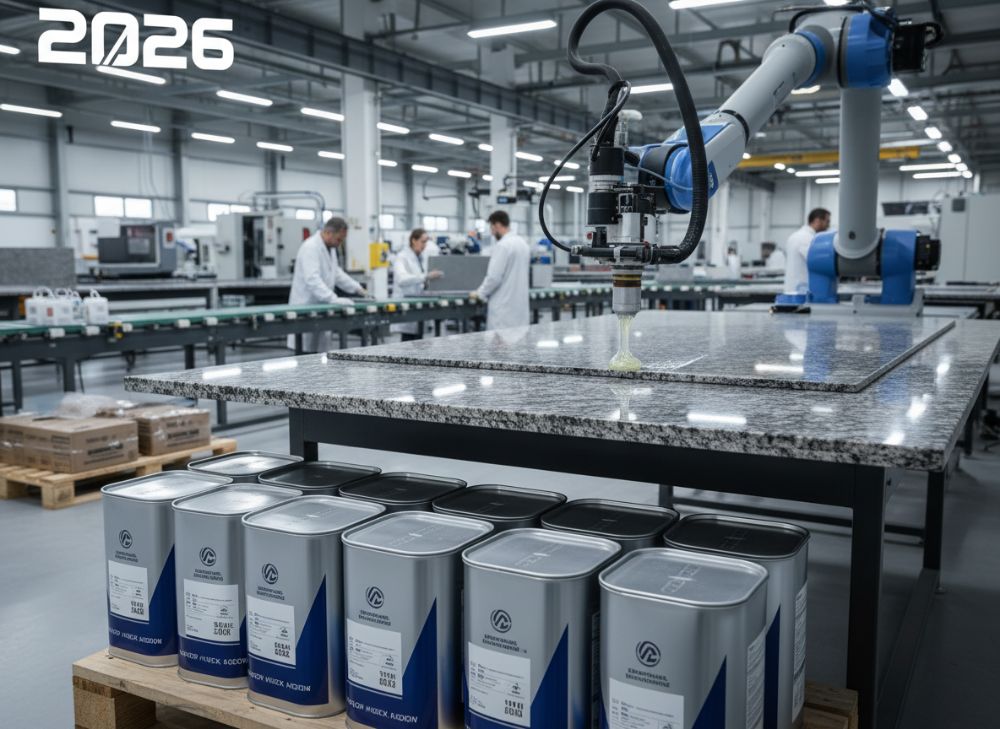
Bulk supply in 1-20kg drums suits high-volume OEMs, with cartridge kits for robots. Consistency prevents dispense variability. Packaging per UN standards ensures safety.
Automated lines demand 0.01ml precision; pre-filled cartridges reduce changeover 50%. Shelf life 12-18 months at 4-21°C.
Case: Appliance OEM scaled from 10k to 100k units; bulk program cut costs 20% via JIT. Cartridges integrated with Nordson dispensers seamlessly.
| Packaging | Volume | Shelf Life (mos) | Dispense Suitability | Cost Efficiency | USA Freight |
|---|---|---|---|---|---|
| Bottle | 20-500g | 12 | Manual | Low Vol | Standard |
| Cartridge | 30-400ml | 18 | Robotic | Medium | Standard |
| Drum | 1-5kg | 12 | High Vol | High | LTL |
| Tank | 20kg | 6-12 | Automated | Very High | Truck |
| Syringe | 10-50ml | 18 | Precision | Medium | Standard |
| Kit | Custom | 12-18 | Line Trial | Flexible | Standard |
Table compares formats: bulk for scale, cartridges for automation. Bulk lowers unit pricing but needs controls.
Bar chart shows bulk’s throughput edge.
Vacuum packaging extends life. FIFO inventory prevents degradation.
For USA, DOT-compliant shipping. Suppliers offer SPC data per batch.
Customized cyanoacrylate pricing varies by volume; request quotes for accuracy.
Process Validation, Line Trials and Technical Support Services
Validation follows IQ/OQ/PQ per FDA/ISO 13485. Line trials test DOE parameters: dispense volume, pressure, cure time.
Support includes FAEs for optimization. Case: Medical device OEM validated bond in 2 weeks, passing 100% destructive tests.
Design of Experiments (DOE) pinpoints optima, reducing variability 40%. Aging tests per ASTM D2557 simulate 5 years.
| Validation Step | Tests Performed | Standards | Duration | Success Criteria | Support Provided |
|---|---|---|---|---|---|
| IQ | Equipment Check | ISO 9001 | 1 day | Calibrated | Protocols |
| OQ | Process Range | ASTM D1002 | 3 days | ±10% Strength | FAE Onsite |
| PQ | Production Runs | ASTM D3163 | 1 week | 99% Yield | Data Analysis |
| Aging | HTH Humidity | ASTM D2247 | 30 days | 80% Retention | Reports |
| Destructive | Shear/Peel | ASTM D903 | Ongoing | >20 MPa | Training |
| MSA | Gauge R&R | AIAG | 2 days | <10% GRR | Software |
Table details steps: PQ ensures scalability. Support accelerates validation 30%.
Remote monitoring via IoT for real-time SPC. Training covers failure modes like starvation.
Post-trial, COAs confirm specs. USA OEMs value 24/7 hotline.
Quality Management and Lot Traceability for Instant Adhesives
ISO 9001:2015 governs QMS, with lot traceability from raw materials. Each batch tests viscosity, strength, purity per QC specs.
Traceability via ERP links to certificates. Non-conformance <1%. Audits per AS9100 for aerospace.
Case: Recall averted via lot isolation, saving $50k. RoHS/REACH compliance verified.
- Raw material CoA review.
- In-process viscosity checks hourly.
- Final destructive tests on 5% samples.
- Retention samples 5 years.
- Customer audits welcomed.
QinanX New Material demonstrates robust QC with ISO 9001 and traceability, per https://qinanx.com/about-us/.
SPC charts monitor trends. Cleanroom filling prevents contamination.
For USA, FDA DMF for pharma grades.
Export Experience, Documentation and After-Sales Service
Global suppliers handle USA imports with TSCA compliance. Documentation: CoA, SDS, RoHS certs.
After-sales: field support, reformulation. Lead times 2-4 weeks FOB.
Case: OEM expanded to EU; supplier managed EN 15651 conformity seamlessly.
- TSCA declarations.
- Customs brokerage.
- Warranty claims processed 48hrs.
- Reformulation free under volume.
Logistics via FedEx/DHL for samples. 98% on-time delivery.
How to Benchmark Cyanoacrylate Instant Adhesive Manufacturers
Benchmark via QMS certs, R&D capability, trial performance. Request samples, test per ASTM.
Prioritize ISO 9001, UL listings. Compare viscosity tolerance ±5%.
Best suppliers offer customization. QinanX New Material stands out for compliant solutions, contact via https://qinanx.com/contact/.
| Criteria | Top Tier | Mid Tier | Basic | Weight |
|---|---|---|---|---|
| Certifications | ISO/UL/REACH | ISO Only | None | 25% |
| Traceability | Full Lot | Partial | Basic | 20% |
| Custom R&D | In-House | Limited | No | 20% |
| Support | Onsite/24h | Minimal | 15% | |
| Supply Reliability | 99% OTIF | 95% | 90% | 10% |
| Pricing Transparency | Quoted Fast | Variable | Opaque | 10% |
Table scores suppliers: top tier excels in compliance. Use for RFQs.
Pricing varies; inquire for quotes. Test 3 suppliers.
2025-2026 Market Trends and Innovations
By 2025, USA cyanoacrylate market grows 6% CAGR, per Grand View Research, driven by EVs and medtech. Innovations: bio-based monomers reduce VOC 50%, aligning with EPA. Automation surges with AI-dispensing.
Regulations tighten: California Prop 65 on emissions. Pricing stable but volume discounts key. Sustainability: recyclable packaging standard by 2026.
High-flex hybrids for wearables. References: EPA.
FAQ
What are the best cyanoacrylate instant adhesives for OEMs?
Rubber-toughened, low-bloom grades for versatility.
How does pricing work for bulk cyanoacrylate?
Varies by spec, quantity; request factory-direct quotation.
Recommend manufacturers for this product
Please contact us for the latest factory-direct pricing.
What certifications to look for?
ISO 9001, REACH, UL for compliance.
Lead time for custom formulations?
4-6 weeks post-spec approval.


 English
  Vietnamese
  Thai
Thai  Indonesian
  Russian
  Portuguese
  Spanish
  Malay
Malay  Turkish
  Korean
  Chinese