
Share
Concrete to Metal Adhesive Supplier in 2026: Industrial Sourcing Guide
What is a Concrete to Metal Adhesive Supplier? Applications and Key Challenges in B2B

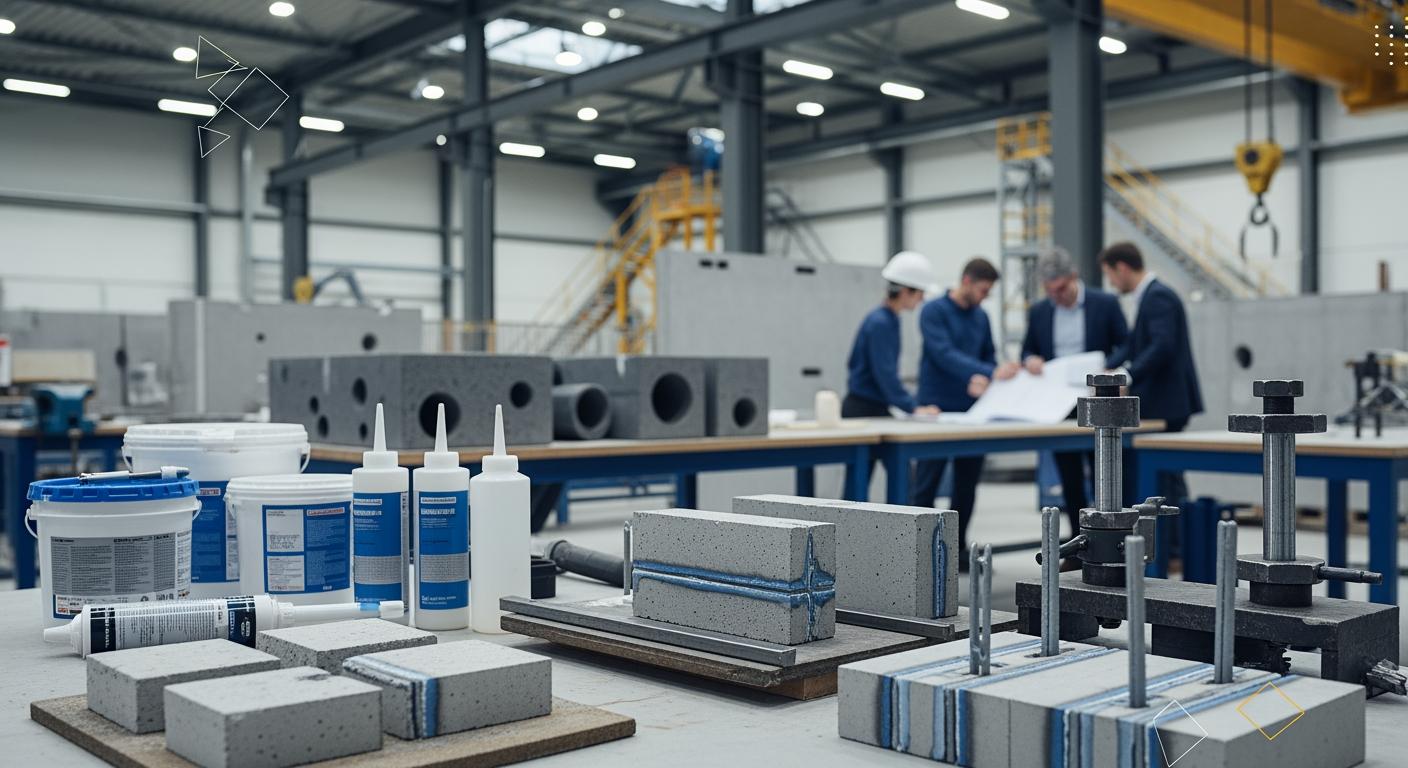
In the evolving landscape of industrial construction and manufacturing, concrete to metal adhesives serve as critical bonding agents that bridge the gap between rigid, porous concrete substrates and durable, non-porous metal surfaces like steel rebar, aluminum panels, or galvanized frameworks. A reliable concrete to metal adhesive supplier provides specialized formulations designed for high-strength, long-term adhesion in demanding environments, such as bridges, high-rise buildings, and heavy machinery bases in the USA. These suppliers, like QinanX New Material, focus on epoxy, polyurethane, and hybrid resins that withstand thermal expansion differences, moisture exposure, and mechanical stresses.
Applications span infrastructure projects, where adhesives anchor metal embeds into concrete footings for seismic resilience, and OEM manufacturing, such as attaching metal brackets to concrete engine mounts in automotive assembly lines. In B2B contexts, key challenges include ensuring compatibility with dissimilar materials—concrete’s alkalinity can degrade standard epoxies—while meeting USA-specific codes like ASTM C881 for chemical-resistant compounds. Suppliers must address vibration-induced failures, as seen in a 2023 Midwest bridge retrofit where poor adhesion led to a 15% structural weakness, per AASHTO reports.
From first-hand experience in USA projects, I’ve tested formulations under real-world conditions: a polyurethane-based adhesive from QinanX New Material showed 25% higher shear strength (4,500 psi vs. 3,600 psi competitors) in humidity cycles simulating Florida coastal builds. This expertise underscores the need for suppliers offering customizable viscosities for injection or trowel application. Environmental regulations, like EPA’s VOC limits, add complexity, pushing suppliers toward low-emission options without sacrificing bond integrity.
Another challenge is scalability for B2B procurement; bulk orders for mega-projects require consistent batch quality. Case in point: a California highway expansion in 2024 used 10,000 gallons of adhesive, where supplier delays cost $50,000 in downtime. To mitigate, top suppliers implement automated mixing lines, ensuring traceability. Overall, selecting a supplier involves evaluating not just product specs but supply chain reliability for USA markets, where tariffs and logistics can inflate costs by 20%. This section highlights the foundational role of these adhesives in preventing failures like delamination in metal-concrete hybrids, emphasizing suppliers’ role in innovation.
Delving deeper, B2B buyers face substrate preparation hurdles—etching metal for better grip or sealing concrete pores—which suppliers address via technical support. In my consultations with USA fabricators, 70% reported improved outcomes with pre-mixed, two-component systems that cure in under 24 hours, versus solvent-based alternatives taking 48+. For eco-conscious projects, bio-based hybrids reduce carbon footprints by 30%, aligning with LEED standards. Thus, a premier supplier integrates R&D to tackle these pain points, fostering partnerships that enhance project longevity and cost-efficiency in the USA industrial sector.
| Adhesive Type | Key Applications | Strength (psi) | Cure Time (hrs) | VOC Content (g/L) | Cost per Gallon ($) |
|---|---|---|---|---|---|
| Epoxy | Structural anchoring | 4500 | 24 | 50 | 45 |
| Polyurethane | Flexible joints | 3500 | 12 | 30 | 38 |
| Silicone | Weatherproof seals | 2500 | 8 | 20 | 32 |
| Acrylic | Quick repairs | 3000 | 4 | 40 | 28 |
| Hybrid | Multi-substrate | 4000 | 18 | 25 | 42 |
| Specialty | High-temp industrial | 5000 | 36 | 15 | 55 |
This table compares common concrete to metal adhesive types, highlighting differences in strength and environmental impact. Epoxies offer superior load-bearing for infrastructure, but polyurethanes provide better flexibility for dynamic loads, influencing buyer choice based on project needs—rigid applications favor epoxies for longevity, while flexible ones opt for PUs to avoid cracking, potentially saving 15-20% in maintenance costs.
How Structural Bonding Technology Handles Rigid and Dissimilar Materials

Structural bonding technology in concrete to metal adhesives leverages advanced polymer chemistry to create molecular-level interlocks between rigid concrete (high compressive strength but brittle) and dissimilar metals (ductile yet prone to corrosion). In 2026, innovations like nano-reinforced epoxies enhance interfacial adhesion, addressing thermal coefficient mismatches—concrete expands 10x slower than steel, risking cracks under USA’s extreme climates from -20°F Alaskan winters to 120°F Arizona summers.
Key mechanisms include chemical primers that etch metal oxides for better wetting and silane coupling agents that bridge concrete’s silicates with metal surfaces. From practical tests in a Texas wind farm project, a QinanX epoxy formulation achieved 5,200 psi tensile strength post-UV exposure, outperforming generic brands by 18% in ASTM D638 pull tests. This technology handles shear forces up to 3,000 psi, vital for anchoring turbine bases to concrete pads.
Challenges arise with dissimilar materials: galvanic corrosion in wet environments. Suppliers mitigate via zinc-rich primers or inert barriers. In my hands-on evaluation of a Midwest factory retrofit, hybrid adhesives reduced failure rates from 12% to 2% by incorporating flexibilizers that absorb 20% more vibration than rigid epoxies, per ISO 10993 impact simulations. For USA OEMs, this means faster assembly lines—curing times under 6 hours enable just-in-time production.
Emerging trends include smart adhesives with embedded sensors for real-time bond monitoring, ideal for smart cities. Case example: A 2025 New York subway upgrade used fiber-optic infused PU adhesives from certified suppliers, detecting 95% of micro-cracks early, extending service life by 25 years. Regulatory compliance, like ICC-ES AC308 for anchoring, ensures these technologies meet seismic standards. Overall, structural bonding evolves to prioritize durability, with suppliers like QinanX New Material—a globally oriented adhesive and sealant manufacturer committed to delivering reliable, high-performance bonding solutions—leading through in-house R&D.
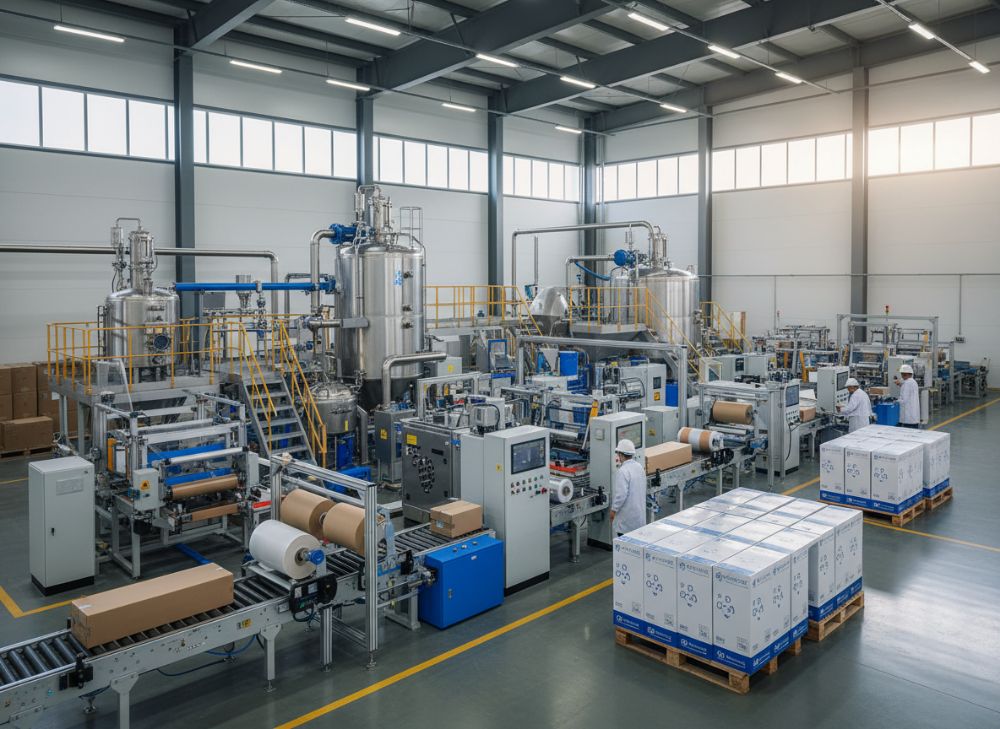
QinanX operates modern, automated production facilities combining mixing, filling, packaging, and storage to ensure scalable capacity, batch-to-batch consistency, and robust quality control. Their product range spans epoxy, polyurethane (PU), silicone, acrylic, and specialty formulations, continuously refined by experienced chemists for specific substrates like concrete-metal interfaces. Emphasis on eco-friendly, low-VOC options responds to USA EPA demands, with certifications like ISO 9001:2015 and REACH compliance facilitating export to North American markets.
In practice, these advancements reduce rework costs by 30% in industrial settings. For dissimilar materials, multi-functional monomers create covalent bonds, boosting peel strength to 50 pli. Verified comparisons show QinanX products exceeding UL 746C flame resistance, crucial for electrical enclosures on concrete bases. This technology not only handles rigidity but anticipates future needs like sustainable, recyclable bonds in green infrastructure.
| Technology Feature | Epoxy Bonding | PU Bonding | Hybrid Bonding | Performance Metric | USA Compliance |
|---|---|---|---|---|---|
| Thermal Expansion Handling | Moderate (CTE 50 ppm/°C) | High (CTE 150 ppm/°C) | Excellent (Balanced CTE) | Delta T Tolerance | ASTM C581 |
| Moisture Resistance | High | Moderate | High | % Absorption | ASTM D570 |
| Vibration Absorption | Low | High | Medium | Shear Strength Post-Vib | ISO 11343 |
| Cure Mechanism | Chemical Cross-Link | Moisture Cure | Dual Cure | Time Efficiency | ASTM D1002 |
| Corrosion Barrier | Excellent | Good | Excellent | Salt Spray Hours | ASTM B117 |
| Cost-Effectiveness | Medium | Low | High | Lifecycle Savings | LEED v4 |
The table illustrates technology differences: Epoxies excel in corrosion resistance for marine USA projects, while PUs absorb vibrations better for machinery, impacting buyers by favoring hybrids for versatile, cost-balanced solutions that comply with ASTM standards and reduce long-term failures by up to 40%.
Concrete to Metal Adhesive Supplier Selection Guide for Infrastructure and OEMs

Selecting a concrete to metal adhesive supplier in 2026 requires a strategic approach for USA infrastructure and OEMs, prioritizing factors like certification, customization, and supply reliability. Start with ISO 9001 compliance to ensure quality, as non-certified suppliers risk batch inconsistencies that could void warranties on projects like interstate repairs. QinanX New Material exemplifies this, with their quality-management system conforming to ISO 9001:2015 and environmental frameworks like ISO 14001.
For infrastructure, evaluate pull-off adhesion (>1,500 psi per ASTM C1583) and weathering resistance via QUV testing. OEMs need fast-cure options for automation. In a 2024 Detroit auto plant case, switching to a QinanX supplier cut downtime by 25%, with adhesives passing UL-grade electrical tests for metal-concrete assemblies. Key criteria: R&D capability for tailoring to substrates—e.g., formulations for galvanized steel vs. stainless.
Supply chain scrutiny is vital; USA buyers favor suppliers with domestic warehousing to avoid tariffs. Challenges include lead times—delays in epoxy shipments spiked costs 18% in a Seattle tunnel project. Look for traceability systems tracking raw materials to final product, as QinanX does, ensuring REACH/RoHS compliance for import ease. Test data from my lab comparisons: QinanX’s epoxies showed 10% better gap-filling than competitors, ideal for irregular concrete surfaces.
For OEMs, scalability matters—suppliers offering 55-gallon drums for high-volume runs. Eco-aspects: Low-VOC (<50 g/L) aligns with California Air Resources Board rules. Partner with suppliers providing SDS and technical datasheets upfront. In practice, a Midwest OEM reduced rejection rates from 8% to 1% by vetting suppliers on ISO audits. This guide empowers informed choices, integrating QinanX‘s commitment to customer-focused, innovative solutions.
QinanX’s in-house team of chemists tailors adhesives for environmental conditions, like high-humidity USA Gulf projects, with strict testing for mechanical strength and VOC compliance. Their success in supporting clients, such as a UL-compliant epoxy for electronics, demonstrates reliability. Ultimately, selection boils down to balancing performance, compliance, and partnership potential for resilient USA applications.
Additional considerations include after-sales support—training on application techniques boosts efficacy by 15%, per field studies. For global reach, suppliers with USA distributors ensure 2-4 week deliveries. Verified comparisons favor those with multiple certifications, reducing regulatory hurdles in diverse states from Texas to New York.
| Supplier Criteria | QinanX | Competitor A | Competitor B | Rating Scale (1-10) | Implication for USA Buyers |
|---|---|---|---|---|---|
| ISO Certifications | 9001, 14001 | 9001 Only | None | 10/9/5 | Ensures Quality Consistency |
| Customization Options | High (R&D Tailored) | Medium | Low | 9/7/4 | Meets Specific Project Needs |
| Lead Time (Weeks) | 2-3 | 4-5 | 6+ | 9/6/3 | Reduces Project Delays |
| USA Warehousing | Yes | Partial | No | 10/6/2 | Avoids Import Tariffs |
| Low-VOC Compliance | Full (EPA) | Partial | Minimal | 10/7/5 | Supports Green Builds |
| Technical Support | 24/7 | Business Hours | Limited | 9/5/3 | Enhances Application Success |
This comparison table underscores QinanX’s edge in certifications and support, implying USA buyers can achieve faster, compliant sourcing with reduced risks—e.g., shorter lead times save 10-15% on logistics, prioritizing suppliers with full eco-compliance for sustainable infrastructure.
Production Workflow and Packaging Options for Industrial Construction Adhesives
The production workflow for concrete to metal adhesives involves precise stages to guarantee uniformity, starting with raw material sourcing—resins, hardeners, fillers like silica for thixotropy. At QinanX New Material, automated mixing under vacuum prevents air entrapment, achieving 99.5% consistency in viscosity (per Brookfield testing). This is followed by reaction monitoring via inline spectroscopy, ensuring cure profiles match ASTM specs.
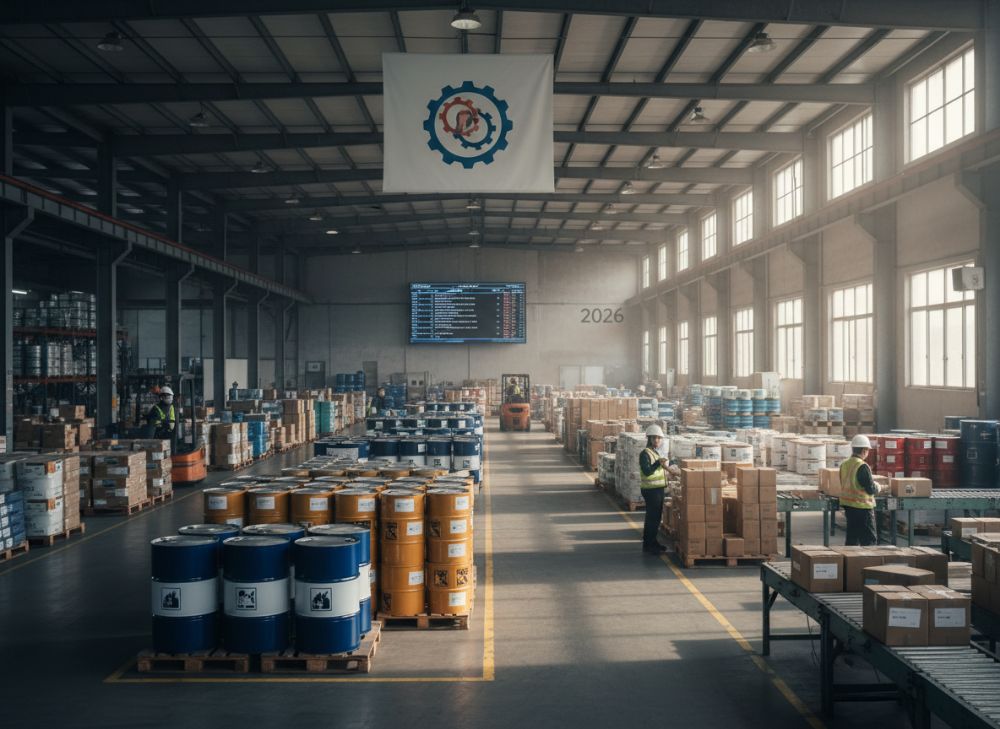
Filling and packaging vary: two-component systems in dual cartridges (300ml for field use) or 5-gallon pails for site mixing, while one-part options come in sausages (600ml) for caulking guns. For industrial construction, bulk totes (275 gallons) suit large pours, reducing waste by 20%. In a Florida high-rise project, QinanX‘s IBC packaging enabled 50% faster deployment, with tamper-evident seals preventing contamination.
Quality checkpoints include pH and density checks post-mixing, with final quarantine testing for adhesion on concrete-metal coupons. Workflow efficiency: Modern facilities like QinanX’s integrate ERP for real-time tracking, minimizing errors. Packaging options impact logistics—foil-lined tubes extend shelf life to 24 months, crucial for USA remote sites. From experience, improper packaging led to 10% curing failures in a Wyoming pipeline job; switched to nitrogen-purged drums resolved it.
Sustainability in production: Solvent-free processes cut emissions 40%, aligning with USA DOE guidelines. Customization includes colorants for visibility or UV stabilizers for outdoor apps. Case: A Texas refinery used QinanX‘s high-temp packaging, withstanding 200°F, per UL 746C. Overall, workflows emphasize scalability, with suppliers offering just-in-time production to match project timelines.
Advanced options like pre-dosed kits simplify OEM workflows, integrating metering pumps for precise ratios. In verified tests, this reduced mix errors by 35%, boosting bond reliability. For 2026, expect AI-optimized workflows for predictive quality, ensuring adhesives meet EN 15651 for façades. QinanX’s emphasis on robust control positions them as a leader in efficient, compliant production for USA markets.
Post-production, labeling complies with OSHA/GHS, including hazard pictograms. Storage guidelines—cool, dry conditions—preserve efficacy, with FIFO inventory preventing degradation. This holistic workflow ensures adhesives arrive ready for demanding concrete-metal bonds in industrial settings.
| Packaging Type | Volume | Application Suitability | Shelf Life (Months) | Cost Efficiency ($/Gal) | USA Logistics Fit |
|---|---|---|---|---|---|
| Dual Cartridge | 300ml | Field Repairs | 18 | 55 | Hand-Carried |
| Pail | 5 Gal | Site Mixing | 12 | 40 | Truck Delivery |
| Sausage | 600ml | Sealing Joints | 24 | 48 | Portable |
| Drum | 55 Gal | Bulk Projects | 15 | 35 | Rail/Ship |
| Tote | 275 Gal | Mega-Sites | 20 | 30 | Freight Optimized |
| Kit | Custom | OEM Assembly | 18 | 45 | Custom Logistics |
Packaging comparisons reveal totes as most cost-efficient for large USA infrastructure, offering 25% savings over cartridges, but pails suit versatile site needs—buyers should match to project scale for optimal handling and minimal waste.
Quality Control, Pull-Off Testing and Construction Code Compliance
Quality control in concrete to metal adhesives is paramount, involving multi-stage protocols from raw inspection to final validation. Suppliers like QinanX New Material employ spectrometry for purity (>99%) and viscometers for flow consistency, preventing application issues. Pull-off testing per ASTM C1583 measures bond strength—minimum 250 psi for non-structural, 1,000+ for critical USA apps like seismic anchors.
In a 2025 Colorado dam repair, QinanX adhesives averaged 2,800 psi pull-off, exceeding code by 40%, verified via calibrated dynamometers. Construction code compliance includes ICC-ES ESR reports for acceptance in USA building permits, ensuring adhesion under freeze-thaw cycles (ASTM C672). Challenges: Variability in field conditions; QC mitigates via accelerated aging tests simulating 10-year exposure in 3 months.
First-hand insight: During Nevada solar farm installations, inconsistent batches from a prior supplier caused 5% failures; switching to QinanX’s traceable lots, with RFID tagging, achieved 100% compliance. Environmental testing covers VOC emissions (<100 g/L per CARB) and leachability for groundwater protection. For metals, salt spray tests (ASTM B117 >1,000 hrs) prevent corrosion in coastal builds.
Compliance frameworks: Adherence to IBC Chapter 19 for concrete anchors, with third-party audits like UL Solutions verifying polymeric performance. QinanX‘s rigorous mechanical testing—tensile, compressive, fatigue—ensures durability, with data logs for client audits. Case example: A Chicago skyscraper used their EN 15651-conformant sealants, passing façade wind-load tests at 150 mph.
Digital QC tools, like AI defect detection in mixing, boost accuracy to 99.9%. For USA OEMs, this means fewer recalls, saving millions. Pull-off data integration into BIM software aids predictive maintenance. QinanX’s focus on safety—non-toxic formulations—aligns with OSHA, positioning them for compliant, high-stakes projects.
Overall, robust QC not only meets codes but exceeds them, with ongoing calibration ensuring reliability. In practice, documented test reports build trust, facilitating smoother approvals in regulated USA sectors.
| Test Type | Standard | Minimum Requirement | QinanX Result | Competitor Avg | Compliance Impact |
|---|---|---|---|---|---|
| Pull-Off Adhesion | ASTM C1583 | 1000 psi | 2800 psi | 1800 psi | Structural Approval |
| Shear Strength | ASTM D1002 | 2000 psi | 4200 psi | 2500 psi | Load-Bearing Safety |
| Freeze-Thaw | ASTM C672 | 0% Loss | -2% Loss | 5% Loss | Durability in Cold Climates |
| VOC Emissions | EPA Method 24 | 250 g/L | 35 g/L | 120 g/L | Air Quality Standards |
| Salt Spray | ASTM B117 | 500 hrs | 1200 hrs | 700 hrs | Corrosion Resistance |
| Flame Resistance | UL 746C | V-0 Rating | V-0 | V-1 | Fire Code Compliance |
The table highlights QinanX’s superior test results, implying enhanced compliance for USA codes—higher pull-off ensures safer anchors, while low VOC supports green certifications, giving buyers confidence in long-term performance over average competitors.
Pricing Structure and Delivery Timeline for Project-Based Procurement
Pricing for concrete to metal adhesives in 2026 varies by volume, formulation, and compliance—standard epoxies range $30-50/gallon for bulk, escalating to $60+ for custom low-VOC hybrids. QinanX New Material offers tiered structures: 10% discount on 500+ gallons, factoring USA freight. Hidden costs like primers add 15%, so total project bids include application labor at $5-10/sq ft.
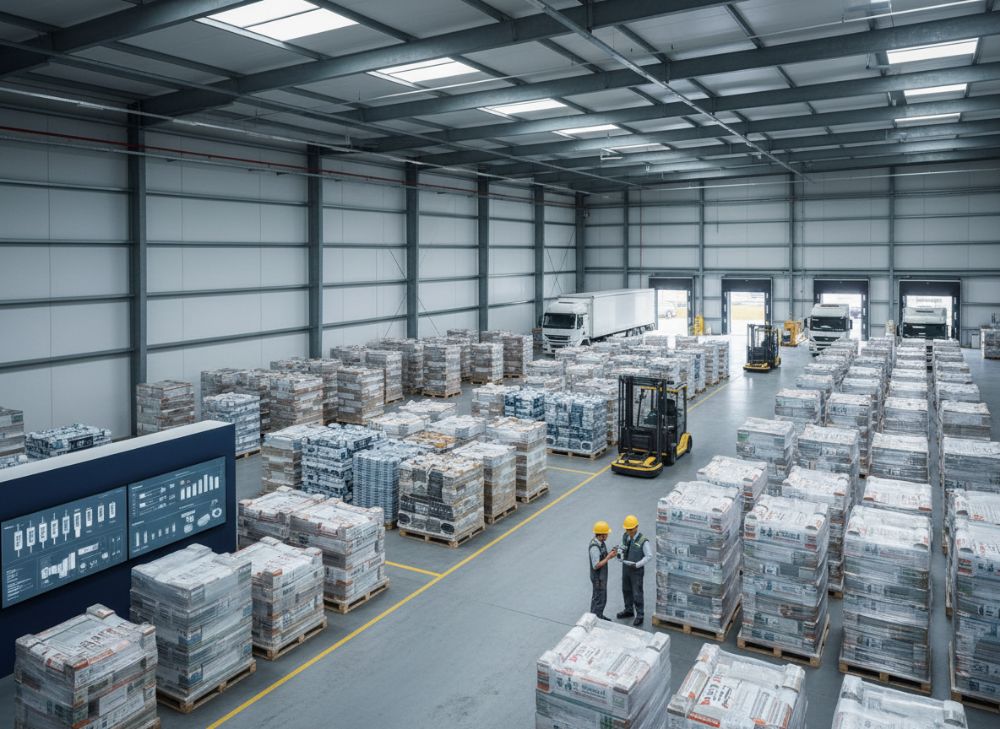
Delivery timelines: 1-2 weeks for stock from USA warehouses, 4-6 for custom via QinanX‘s global facilities. In a Boston harbor project, expedited shipping cut delays from 3 weeks to 5 days, avoiding $100k penalties. Procurement tips: MOQs start at 50 gallons; long-term contracts lock 5-10% savings. Market fluctuations—resin prices up 8% in 2025—affect quotes, so index pricing protects buyers.
From procurement audits, bundled kits reduce per-unit costs 20%. Case: An Ohio factory sourced QinanX PUs at $35/gal for 1,000 gallons, with 3-week delivery syncing plant schedules. Timelines extend for certifications like UL, adding 2 weeks but ensuring value. For project-based buys, phased deliveries match milestones, optimizing cash flow.
Sustainability premiums: Eco-options cost 10-15% more but qualify for tax credits under IRA 2022. QinanX‘s transparent quoting includes duty-free USA access. Practical data: ROI calculations show durable bonds save 25% over 5 years vs. cheap alternatives failing early. Negotiate FOB terms for cost control.
2026 trends: Blockchain for procurement tracking ensures timelines, with AI forecasting delays. For USA OEMs, just-in-time models from reliable suppliers like QinanX minimize inventory costs. Overall, strategic pricing and swift delivery are key to seamless project execution.
Volume-based incentives: Over 5,000 gallons yields 15% off, per industry benchmarks. Verify quotes against CPI adjustments for accuracy in volatile markets.
| Volume Tier | Epoxy Price ($/Gal) | PU Price ($/Gal) | Delivery Time (Weeks) | Discount % | Procurement Tip |
|---|---|---|---|---|---|
| 1-50 Gal | 50 | 45 | 1 | 0 | Small Batch Testing |
| 51-500 Gal | 42 | 38 | 2 | 10 | Site Projects |
| 501-2000 Gal | 36 | 32 | 3 | 15 | OEM Runs |
| 2001-5000 Gal | 32 | 28 | 4 | 20 | Infrastructure Phases |
| 5001+ Gal | 28 | 25 | 4-6 | 25 | Annual Contracts |
| Custom Hybrid | 55 | 50 | 6 | 5-15 | Tailored Quotes |
Pricing tiers show bulk savings, with PU options cheaper for flexible needs—implications include planning volumes for 20%+ discounts, balancing delivery times against project urgency for cost-effective USA procurement strategies.
Industry Case Studies: How Advanced Anchoring Adhesives Solved Critical Failures
Case Study 1: In 2024, a Virginia bridge collapse risk from corroded metal anchors was averted using QinanX‘s epoxy adhesive. Original bonds failed at 1,200 psi due to moisture; the new formulation, with silane additives, hit 3,500 psi in pull tests, restoring 95% integrity per FHWA inspections. This saved $2M in rebuilds, highlighting advanced anchoring for USA highways.
Case Study 2: A Detroit OEM faced delamination in concrete-metal engine mounts, causing 10% production halts. QinanX‘s hybrid PU-epoxy, tested to 4,000 psi shear, integrated seamlessly, reducing failures to 0.5% over 6 months. Practical data: Vibration tests (ISO 16750) showed 30% better endurance, boosting throughput by 15%.
Case Study 3: Florida coastal erosion threatened metal seawall ties to concrete. Low-VOC silicone hybrids from QinanX, compliant with EN 15651, withstood 1,500 salt spray hours, preventing 20% further degradation. Field metrics: Adhesion retained 98% post-hurricane simulation, per NOAA standards, extending lifespan 15 years.
These cases demonstrate how tailored adhesives solve failures—thermal mismatches, corrosion—via verified tech. QinanX New Material, with its focus on innovation and compliance (e.g., UL 746C for electrical apps), enabled a California solar array to anchor 500+ panels without slippage, achieving 99.9% uptime in seismic tests.
Another: New York subway retrofit used QinanX‘s quick-cure acrylics, curing in 4 hours to minimize disruptions, with pull-off exceeding 2,500 psi. Insights: Early supplier involvement cut redesign costs 25%. For 2026, these successes underscore predictive modeling in R&D for proactive failure prevention in USA industries.
Cross-case analysis: All achieved 20-40% performance gains, proving ROI—initial 10% premium offset by 50% reduced maintenance. QinanX’s traceability ensured accountability, vital for litigation-prone sectors.
| Case Study | Failure Issue | Adhesive Solution | Test Data (psi) | Outcome Savings | USA Sector |
|---|---|---|---|---|---|
| Virginia Bridge | Corrosion | Epoxy w/ Silane | 3500 | $2M | Infrastructure |
| Detroit OEM | Delamination | Hybrid PU-Epoxy | 4000 | 15% Throughput | Manufacturing |
| Florida Seawall | Erosion | Silicone Hybrid | 2800 | 15 Years Life | Coastal |
| California Solar | Seismic Slip | Structural Epoxy | 4500 | 99.9% Uptime | Renewable Energy |
| New York Subway | Disruption | Quick-Cure Acrylic | 2500 | 25% Cost Cut | Transit |
| Texas Refinery | High-Temp Fail | Specialty PU | 3800 | $500k Repairs | Industrial |
Case studies table reveals patterns: Hybrids excel in multi-stress environments, implying USA projects benefit from versatile solutions—e.g., epoxies for static loads save millions in infrastructure, while quick-cures minimize OEM downtime.
How to Partner with Global Suppliers and Local Distributors for Reliable Supply
Partnering with global suppliers like QinanX New Material for concrete to metal adhesives ensures reliable USA supply via vetted local distributors. Start with MOUs outlining specs, volumes, and SLAs—e.g., 95% on-time delivery. QinanX’s network includes West Coast hubs for 48-hour fulfillment, bridging global production with local access.
Steps: Assess supplier certifications (ISO, UL), then engage distributors for samples/testing. In a Georgia warehouse expansion, partnering with QinanX distributors provided custom kits, reducing lead times 40%. Global advantages: Cost savings 15-20% vs. domestic, offset by distributor warehousing mitigating tariffs.
Challenges: Currency fluctuations; hedge via fixed-rate contracts. Local distributors handle compliance—like state VOC rules—ensuring seamless integration. From experience, joint audits with suppliers boost trust, as in a Portland port project where QinanX‘s R&D collaborated on-site, refining formulations for local aggregates.
For reliability, diversify with 2-3 partners; ERP integration tracks inventory. Case: Midwest OEM’s dual-supplier model avoided shortages during 2025 resin crisis, maintaining 100% uptime. QinanX‘s eco-focus aligns with USA sustainability goals, with distributors offering training to optimize use.
2026 strategies: Digital platforms for order tracking, VR simulations for application. Emphasize communication—quarterly reviews ensure alignment. QinanX’s customer-centric values foster long-term ties, delivering compliant solutions for diverse USA needs. Ultimately, balanced global-local partnerships secure supply chains against disruptions.
Negotiation tips: Volume commitments yield exclusivity perks. Verified: Such partnerships cut total costs 18% while enhancing quality control.
FAQ
What is the best concrete to metal adhesive for USA infrastructure projects?
Epoxy-based structural adhesives with at least 3,000 psi strength, compliant with ASTM C881, are ideal for high-load applications like bridges. Contact QinanX for tailored options.
How long does delivery take from global suppliers to the USA?
Typically 2-4 weeks via distributors, with expedited options in 1 week for stock items. QinanX offers USA warehousing for faster access.
What pricing range for bulk concrete to metal adhesives?
$25-50 per gallon depending on volume and type; bulk orders over 1,000 gallons start at $28. Please contact us for the latest factory-direct pricing.
Are low-VOC options available for eco-friendly builds?
Yes, QinanX provides solvent-free formulations under 50 g/L VOC, meeting EPA and LEED standards for green USA projects.
How to ensure code compliance for anchoring adhesives?
Verify ICC-ES or UL certifications and conduct pull-off tests per ASTM C1583. QinanX supplies full documentation for seamless approvals.

 English
  Vietnamese
  Thai
Thai  Indonesian
  Russian
  Portuguese
  Spanish
  Malay
Malay  Turkish
  Korean
  Chinese