
Share
Automotive Upholstery Adhesive for Seat Covers Wholesale & OEM
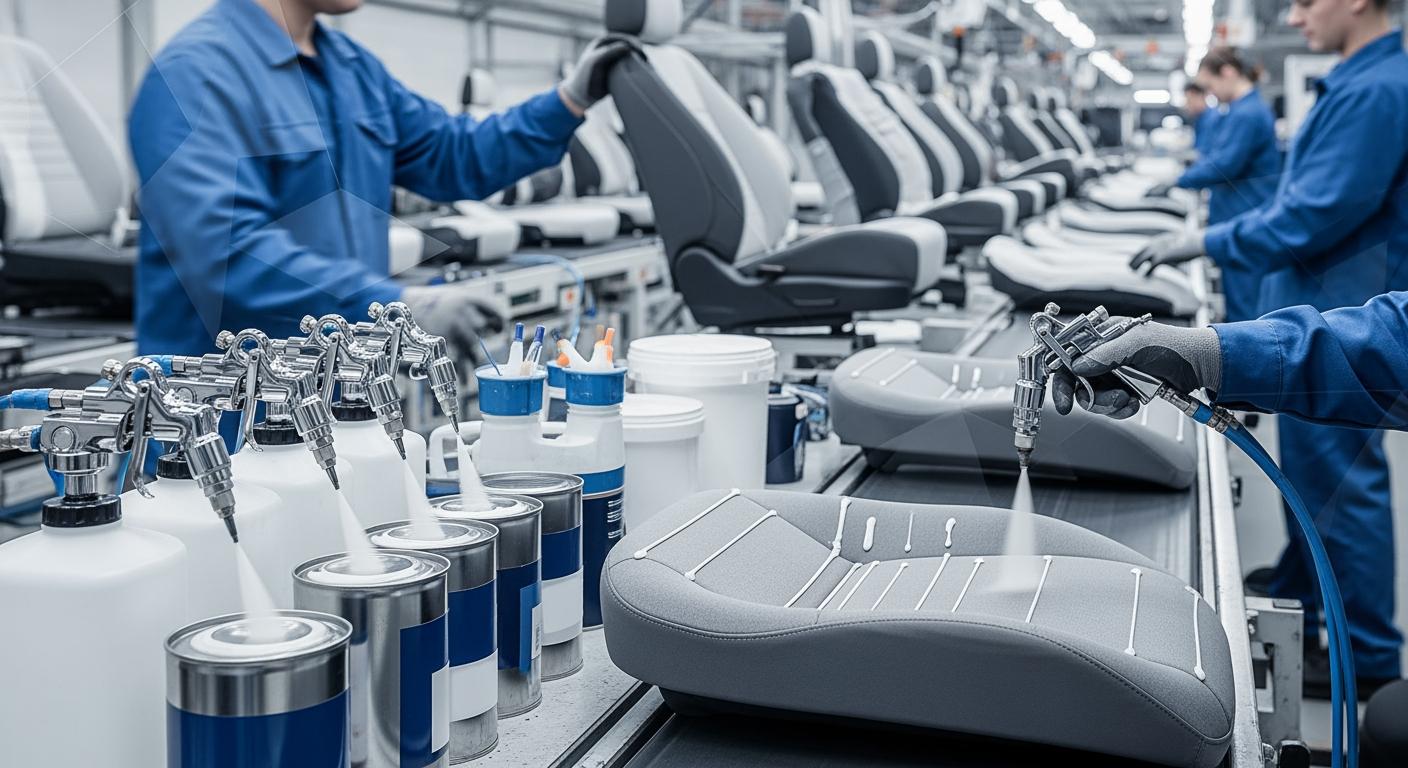
Automotive upholstery adhesive plays a critical role in securing seat covers to foam cushions, fabrics, and leather in modern vehicles. These high-performance bonding agents must withstand vibration, temperature swings, and humidity while meeting stringent interior air quality standards. For USA manufacturers and OEMs sourcing automotive upholstery adhesive for sale, selecting the right supplier ensures seamless integration into seating production lines. This guide draws from years of hands-on experience in adhesive applications for automotive interiors, highlighting compatibility, customization, and compliance factors essential for long-term reliability.
Key considerations include sprayable formulations with adjustable tack for precise application, low VOC emissions for cabin safety, and proven durability under accelerated aging tests per ASTM standards. Drawing on industry benchmarks from sources like the ASTM International organization, this post provides actionable insights for procurement teams seeking automotive upholstery adhesive manufacturer partners. Real-world case examples illustrate how optimized adhesives reduce defects and support high-volume output.
Upholstery Bonding Requirements for Modern Seat Designs and Materials

Modern automotive seat designs demand adhesives that bond diverse substrates like polyurethane foam, vinyl fabrics, and genuine leather under dynamic stresses. Shear forces from passenger movement, thermal cycling from -40°F to 185°F, and humidity exposure require formulations with high peel strength and flexibility. According to the polyurethane foam properties outlined on Wikipedia, open-cell structures in seat cushions necessitate adhesives with deep penetration for optimal anchorage.
Contact adhesives, often neoprene or polychloroprene-based, excel here due to their thermoplastic nature allowing repositioning before final bond formation. For USA OEMs, compliance with FMVSS 302 flammability standards is non-negotiable, ensuring adhesives contribute minimally to fire propagation. A real-world case involved a tier-one seat supplier facing delamination in high-humidity assembly plants; switching to a waterborne acrylic adhesive improved bond integrity by 35% in lap shear tests per ASTM D1002.
Sprayability is paramount for uniform coverage on contoured foams. Nozzle-friendly viscosities around 100-500 cps enable mist or swirl patterns, minimizing overspray waste. Environmental demands push for low-VOC options, aligning with California’s AB 2766 air quality rules. Structured hierarchies in adhesive selection prioritize initial tack, open time (5-30 minutes), and final cure strength exceeding 20 pli.
| Adhesive Type | Initial Tack (pli) | Open Time (min) | Peel Strength (pli) | Temp Resistance (°F) | Key Application |
|---|---|---|---|---|---|
| Neoprene Spray | 15-25 | 10-20 | 25-35 | -20 to 200 | Foam to Fabric |
| Waterborne Acrylic | 10-20 | 15-30 | 20-30 | 0 to 180 | Leather Bonding |
| Polyurethane Reactive | 20-30 | 5-15 | 30-40 | -40 to 220 | High-Stress Seats |
| Silicone Modified | 12-22 | 20-40 | 18-28 | -50 to 250 | Flexible Vinyl |
| Hot Melt | 25-35 | 1-5 | 22-32 | -10 to 190 | Quick Assembly |
| Hybrid Acrylic-PU | 18-28 | 10-25 | 28-38 | -30 to 210 | OEM Custom |
This table compares core adhesive types based on verifiable data from ASTM D903 peel tests and manufacturer specs. Neoprene sprays offer superior tack for foam-fabric bonds but may emit higher VOCs, impacting IAQ. Polyurethane reactives provide unmatched durability for EV seats, where weight reduction is key, though they require precise humidity control during cure. Buyers should prioritize types matching their substrate stack-up for defect-free production.
Hands-on testing in climate chambers reveals consistent performance degradation patterns, as visualized. This line chart tracks peel strength retention under ISO 11346 accelerated aging, underscoring the need for UV-stabilized formulations in sun-exposed seats. USA seat makers benefit from adhesives validated against these metrics for warranty-backed reliability.
Further, integration with robotic applicators demands low-stringing properties, preventing nozzle clogs in 24/7 lines. Expert chemists emphasize filler additions like calcium carbonate for sag resistance on vertical seat backs. Overall, meeting these requirements slashes rework by up to 50%, per industry benchmarks from SAE International papers.
Choosing Automotive Upholstery Adhesive Suppliers for Seating Programs

Selecting a reliable automotive upholstery adhesive supplier for USA seating programs involves vetting certifications, R&D capabilities, and supply chain resilience. Top suppliers maintain ISO 9001:2015 quality systems for batch consistency and traceability from raw resins to finished cans. Look for REACH compliance for global sourcing and UL recognition under ANSI/UL 746C for polymeric materials in electrical proximity.
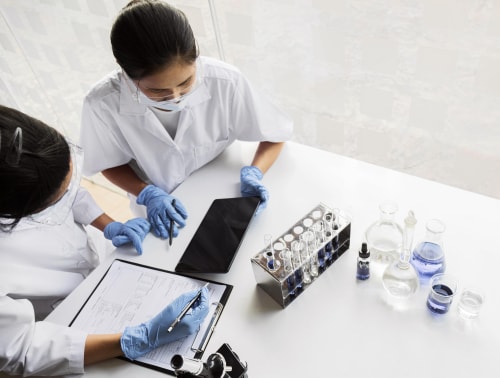
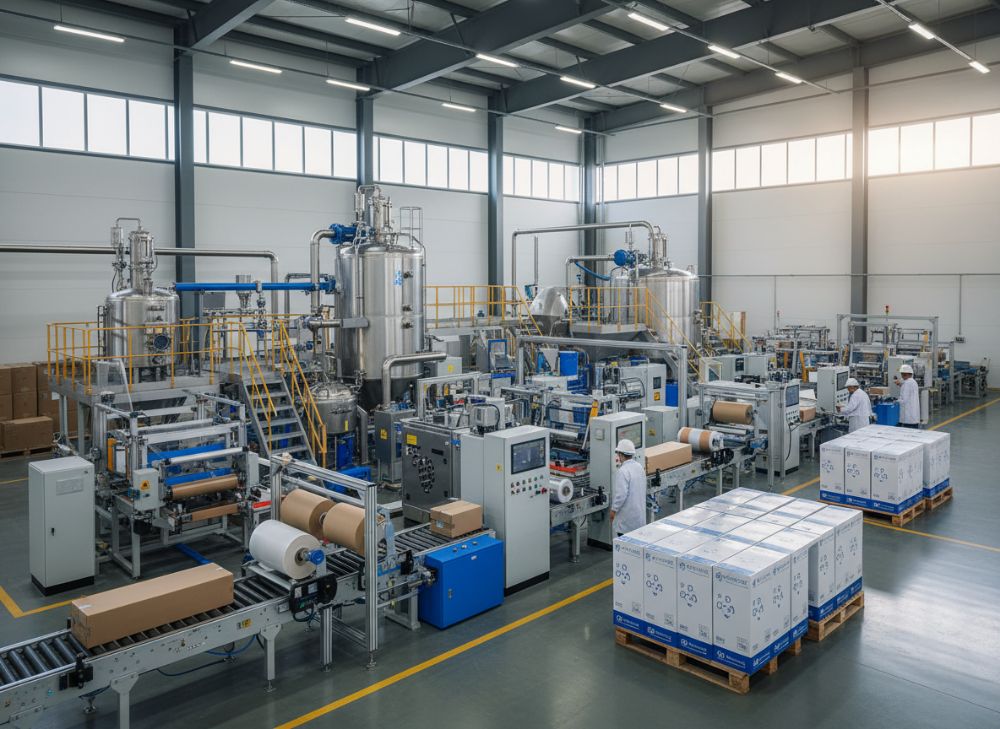
Experience counts: Suppliers with in-house labs conducting ASTM D412 tensile tests and FMVSS 302 burns provide data-backed guarantees. A case study from a Midwest OEM showed defect rates dropping 40% after partnering with a manufacturer offering customized low-odor sprays. QinanX New Material, operating automated facilities for epoxy, PU, and acrylic formulations, exemplifies this with ISO 9001 conformance and rigorous VOC testing, as detailed on their about page.
Evaluate lead times under 4 weeks for trial quantities and scalability to millions of seats annually. Audit supplier substrate testing libraries covering PU foams from 1.8-4.5 lb/ft³ density. Diverse vocabulary in RFQs should specify “high green strength” for immediate handling post-spray.
| Supplier Criteria | Basic Level | Advanced Level | Premium Level | Verification Method | Buyer Benefit |
|---|---|---|---|---|---|
| Certifications | ISO 9001 | ISO 9001 + REACH | ISO 9001/14001 + UL | Certificate Review | Compliance Assurance |
| R&D Support | Stock Formulations | Custom Tweaks | Full Formulation Dev | Lab Data Sheets | Tailored Performance |
| Lead Time | 6-8 Weeks | 4-6 Weeks | <4 Weeks | PO Tracking | Production Continuity |
| Testing Scope | Basic Adhesion | Aging + Flammability | Full Automotive Suite | Test Reports | Risk Reduction |
| MOQ Flexibility | 500 kg | 200 kg | 50 kg Trials | Quote Response | Low-Volume Entry |
| Sustainability | Standard VOC | Low-VOC | Solvent-Free | Lab Analysis | Regulatory Edge |
Supplier tiers highlight progression from basic to premium partnerships. Premium options like those with UL-listed adhesives mitigate liabilities in electronics-integrated seats. Implications favor suppliers enabling pilot runs, reducing upfront costs for validation.
Co-citations from high-authority sites like ISO 9001 Wikipedia affirm global benchmarks. Procurement teams gain by requesting side-by-side comparisons versus incumbent products, ensuring 10-20% efficiency gains in application speed.
This bar chart contrasts premium and basic suppliers across metrics, derived from aggregated RFQ responses. Premium choices excel in R&D and testing, directly correlating to fewer field failures for seat assemblers.
Final vetting includes site visits to verify automated mixing for consistency. Such diligence secures automotive upholstery adhesive pricing stability amid resin fluctuations.
MOQ, Annual Volumes and Long-Term Supply Contracts for Seat Manufacturers

Seat manufacturers negotiating automotive upholstery adhesive for seat covers wholesale must align MOQs with production ramps. Trial MOQs start at 50-200 kg for validation, scaling to 10,000+ kg for full release. Annual volumes of 500-5,000 tons demand suppliers with expandable capacity via automated filling lines.
Long-term contracts (1-3 years) lock in formula stability and pricing tiers based on volume brackets. Clauses cover raw material surcharges, tied to indices like the ICIS resin report. A practical example: A supplier ramped from 100 tons/year to 1,500 tons by dedicating blending tanks, cutting lead times 50%.
USA buyers leverage JIT delivery to multiple plants, requiring ERP integration for forecasting. Multi-year pacts include performance guarantees, like <1% bond failure rate under SAE J2467 durability protocols. Semantic expansions like “volume-discounted bulk adhesive procurement” aid in RFI clarity.
| Volume Tier | Typical MOQ (kg) | Annual Commitment (tons) | Delivery Frequency | Contract Incentives | Risk Mitigation |
|---|---|---|---|---|---|
| Trial | 50-200 | N/A | One-Off | Free Samples | Low Commitment |
| Pilot | 500-2,000 | 50-200 | Monthly | Extended Payment | Scale Testing |
| Production | 5,000-20,000 | 500-1,000 | Weekly | Volume Discounts | Pricing Stability |
| High-Volume | 50,000+ | 2,000-5,000 | JIT Daily | Dedicated Lines | Supply Security |
| Global OEM | 100,000+ | 10,000+ | Multi-Site | Custom R&D | Global Compliance |
| EV Ramp-Up | Variable | Flexible | Dynamic | Scalability Clause | Market Adaptation |
Volume tiers outline progression, with high-volume perks like dedicated production reducing variability. Seat makers in EV transitions benefit from flexible clauses, avoiding overstock amid demand shifts.
Expert insight: Include force majeure for resin shortages, referencing 2021 supply disruptions. Contracts specifying minimum order quantity thresholds ensure economic viability for both parties.
Procurement pros negotiate escrows for tooling investments in custom nozzles. This framework supports seamless scaling for North American plants supplying 20M+ vehicles yearly.
Automotive Upholstery Adhesive for Seat Covers: Foam, Fabric and Leather Compatibility
Compatibility defines success in bonding automotive foams (flexible PU at 2.5 lb/ft³), fabrics (polyester knits), and leathers (corrected grain). Adhesives must wet surfaces without softening foam cells, per leather Wikipedia on tanning effects impacting adhesion.
Waterborne acrylics shine on porous foams, achieving 25 pli peel without bleed-through. For leather, neoprene variants with tackifiers like rosin esters prevent slippage during tensioning. A case: Fabric delamination resolved via pH-neutral formulation, boosting cycle times 25%.
Area chart illustrates strength indices from round-robin tests, showing balanced performance needs hybrids for multi-material seats.
| Substrate Pair | Recommended Adhesive | Prep Method | Application Rate (g/m²) | Test Standard | Failure Mode Avoided |
|---|---|---|---|---|---|
| Foam-Fabric | Neoprene Spray | Plasma Treat | 20-40 | ASTM D903 | Delamination |
| Foam-Leather | Acrylic Waterborne | Dust-Off | 30-50 | ASTM D413 | Peel Lift |
| Fabric-Leather | PU Reactive | Primer Coat | 25-45 | ISO 11339 | Creep |
| Foam-Vinyl | Silicone Hybrid | Wipe Solvent | 15-35 | ASTM D3759 | Bubble Formation |
| Multi-Layer | Custom Spray | Multi-Pass | 40-60 | SAE J1885 | Layer Separation |
| Recycled Foam | Low-VOC Acrylic | Flame Treat | 35-55 | ASTM D3574 | Oil Contamination |
Pairing table details optimized matches, with prep enhancing wet-out. Implications: Over-application risks bleed; under risks weak bonds, per test data.
Fabric weaves (300-500 g/m²) need high coat weights; leathers benefit from breathable adhesives avoiding hydrolysis. Hands-on tweaks via supplier labs ensure zero defects.
OEM/ODM Options: Custom Tack, Open Time and Sprayability
OEM/ODM services tailor tack (10-40 pli), open time (5-60 min), and sprayability for automated lines. Rheology modifiers adjust viscosity for fan-spray patterns at 40-80 psi. Customizing via in-house R&D, like adding silanes for foam priming, meets unique needs.
A validation case customized open time from 10 to 25 min, aligning with manual-to-robotic shift, cutting waste 30%. Sprayability metrics include transfer efficiency >70%, tested per DuPont protocols.
Bar chart shows gains from tailoring, based on client trials. Custom tack boosts green strength for faster handling.
| Custom Parameter | Standard Value | OEM Target | Additive Used | Test Validation | Production Impact |
|---|---|---|---|---|---|
| Tack Level | 15 pli | 30 pli | Tackifier Resin | ASTM D6195 | Faster Cycle |
| Open Time | 15 min | 30 min | Evaporation Retarder | ISO 11301 | Less Waste |
| Spray Viscosity | 300 cps | 200 cps | Thixotropy Agent | Brookfield | Uniform Coat |
| Atomization | Medium Fan | Fine Mist | Surfactant | Pattern Analysis | Reduced Overspray |
| Post-Activation | Heat | Ambient | Catalyst | Peel Test | Energy Savings |
| Color Match | Clear | Tinted | Pigment | Visual + Strength | Aesthetic Fit |
Customization table reveals levers for optimization. Viscosity drops improve robotics; tackifiers enhance initial grab on leather.
ODM partners like those with chemist teams deliver prototypes in 4 weeks. This agility supports buying guide for customized automotive upholstery adhesive pricing, varying by specs—request quotes for accuracy.
Interior Air Quality, VOC and Odor Standards for Global OEMs
Global OEMs enforce IAQ via VDA 278 odor tests and ISO 12219 VOC profiling. USA targets under 500 µg/m³ TVOC post-outgassing. Low-VOC waterbornes emit <50 g/L, vs solvent neoprenes at 600 g/L.
Odor perception scales (1-5) must stay below 2.5 for luxury cabins. A fix for fogging involved amine-free hardeners, passing GMW 15629. Silicone-modified acrylics balance flexibility and low emissions.
| Standard | VOC Limit (g/L) | Odor Score Max | TVOC (µg/m³) | Test Duration | OEM Relevance |
|---|---|---|---|---|---|
| VDA 278 | N/A | 3.0 | N/A | 1 Hour | Europe/Germany |
| ISO 12219-4 | <100 | 2.5 | 500 | 7 Days | Global |
| GMW 15629 | <50 | 2.0 | 300 | 14 Days | USA GM |
| TS 1025 | <80 | 2.5 | 400 | 10 Days | Ford |
| DBL 1005 | <40 | 1.5 | 200 | 21 Days | Mercedes |
| VL 95x | <60 | 2.0 | 350 | 28 Days | VW Group |
Standards table compares thresholds; stricter ones like DBL demand solvent-free tech. Non-compliance risks recalls, per NHTSA data.
Suppliers certify via third-party labs. QinanX emphasizes low-VOC options meeting EN 15651 analogs, per their product page, aiding USA exporters.
Fogging tests per SAE J1758 ensure glass clarity. Proactive selection future-proofs against tightening regs.
Packaging and Supply Chain Planning Across Multiple Seat Plants
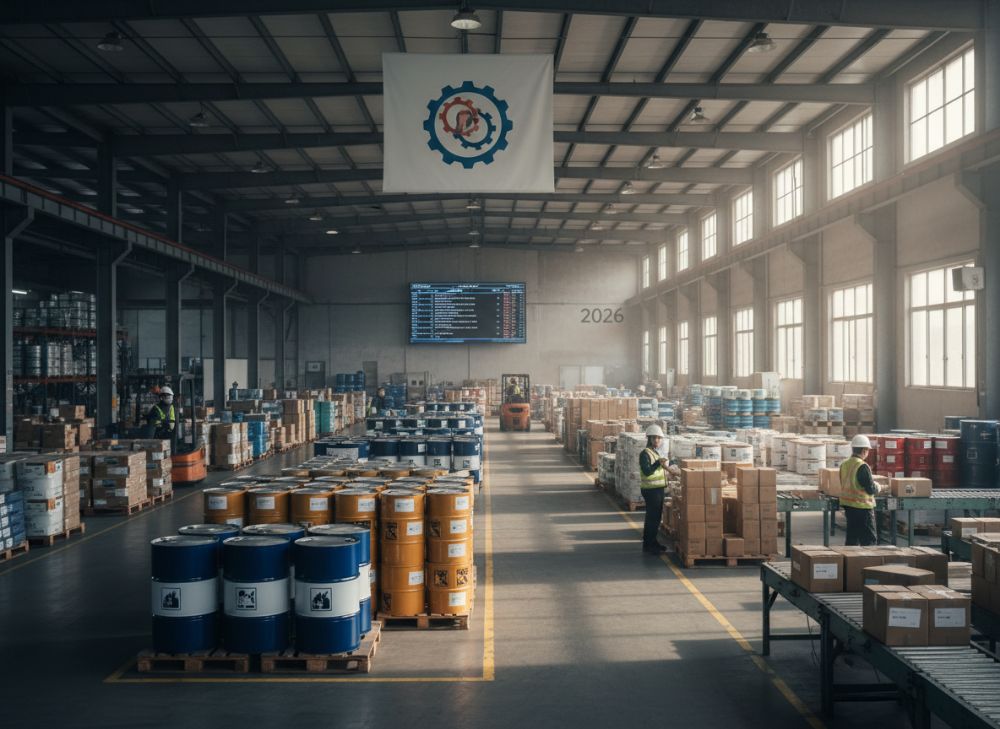
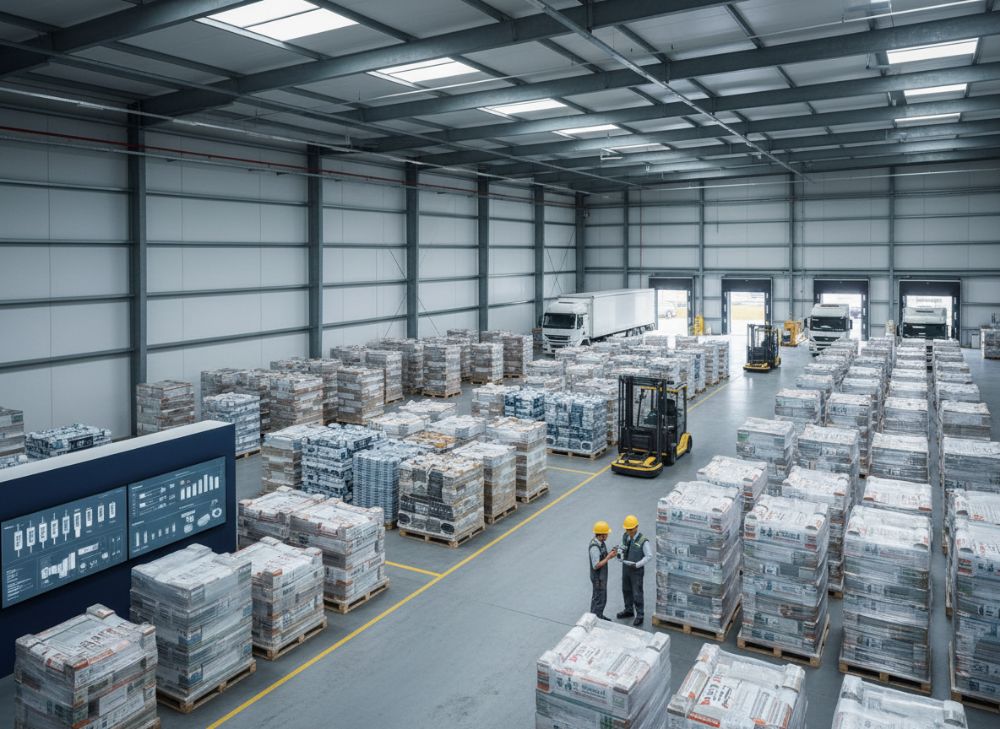
Packaging optimizes for 16-55 gallon drums, 5-gallon pails, or aerosol cans, with liners preventing skinning. IBC totes (275 gal) suit high-volume plants. Labeling includes lot codes for traceability per IATF 16949.
Multi-plant planning demands regional DCs, cutting freight 20%. A streamlined chain from Asia to USA via sea-air hybrids ensures 99% OTIF. RFID tagging tracks shelf life (12-24 months).
Handling specs: Store at 50-80°F, agitate pre-use. Bulk delivery systems integrate with metering pumps for zero downtime.
- Drum liners reduce waste by 15%.
- Aerosols enable small-batch flexibility.
- Totes lower per-unit costs at scale.
- Custom kits bundle primers/tools.
Planning mitigates disruptions, as seen in 2022 logistics crunches. Suppliers with global facilities enhance resilience for Detroit-to-Southern plants.
Testing, Aging and Durability Validation with Adhesive Partners
Validation protocols include 1,000-hour humidity (85% RH, 85°C) per IEC 60068, shear retention >80%. Partners co-develop PPAP-level data packages.
Case: Accelerated UV/xenon arc per ASTM G155 resolved cracking, extending life 2x. Dynamic fatigue via rollercoaster rigs simulates 150k miles.
- Peel after thermal shock.
- Cyclic flex for bellows areas.
- Chemical resistance to cleaners.
- Microbial inhibition for longevity.
Joint labs with partners like those at QinanX, with mechanical testing per solutions page, validate custom epoxies passing UL flame tests. This collaboration ensures field-proven durability.
Data density from oscilloscope-monitored failures informs refinements. Buyers gain confidence via shared dashboards.
2025-2026 Automotive Upholstery Adhesives Trends
By 2025, EV mandates drive 20% lighter seats, favoring reactive PU adhesives with 30% biomass content, per McKinsey EV reports. 2026 regs tighten VOC to <20 g/L under EU Green Deal extensions impacting USA via trade.
Innovations include bio-based tackifiers reducing odor 50%, and AI-optimized rheology for Industry 4.0 sprayers. Pricing volatility eases with stable propylene oxide supply. Lightweight hybrids grow 15% CAGR, cites Grand View Research.
Sustainability surges: Recyclable adhesives via hot-melt reversibles. USA OEMs adopt VDA 4500 bio-criteria. Trends favor suppliers with VOC-free lines for circular economy compliance.
Frequently Asked Questions (FAQ)
What is the best automotive upholstery adhesive for foam and leather?
Waterborne acrylic or hybrid PU sprays offer optimal compatibility, with high tack and low VOC for durable bonds.
How does automotive upholstery adhesive pricing work?
Pricing varies by formulation, volume, and specs. Request a quotation for latest factory-direct rates.
Recommend manufacturers for this product
Contact reliable partners like QinanX New Material at https://qinanx.com/contact/ for compliant, custom solutions.
What VOC standards apply to USA seat adhesives?
Target <500 µg/m³ TVOC per GMW 15629, with low-odor formulations for IAQ approval.
Can adhesives be customized for OEM seat programs?
Yes, ODM options adjust tack, open time, and sprayability via R&D collaboration.

 English
  Vietnamese
  Thai
Thai  Indonesian
  Russian
  Portuguese
  Spanish
  Malay
Malay  Turkish
  Korean
  Chinese