
Share
Structural Adhesive for Rail Car Production: High-Durability OEM Supply
Structural adhesives revolutionize rail car production by providing lightweight, high-strength bonds that replace traditional welding. In the USA, where freight and passenger rail networks span over 140,000 miles according to the Association of American Railroads, these adhesives enhance durability under extreme vibration and load. They join aluminum and steel components seamlessly, reducing weight by up to 20% for fuel efficiency.
This guide details structural adhesive for rail car production for sale from reliable OEM suppliers. We cover critical applications, performance specs, compliance like NFPA 130, and procurement tips. Drawing from industry testing and standards such as ASTM International protocols, it equips US manufacturers with actionable insights for selecting high-durability rail adhesive suppliers.
Adhesives must withstand millions of fatigue cycles on routes like the busy Northeast Corridor. Expert formulations ensure crash resistance and low maintenance, aligning with Federal Railroad Administration (FRA) safety goals. Whether for boxcars or locomotives, proper selection boosts fleet longevity and cuts lifecycle costs.
Critical Rail Car Assemblies Using Structural Adhesives

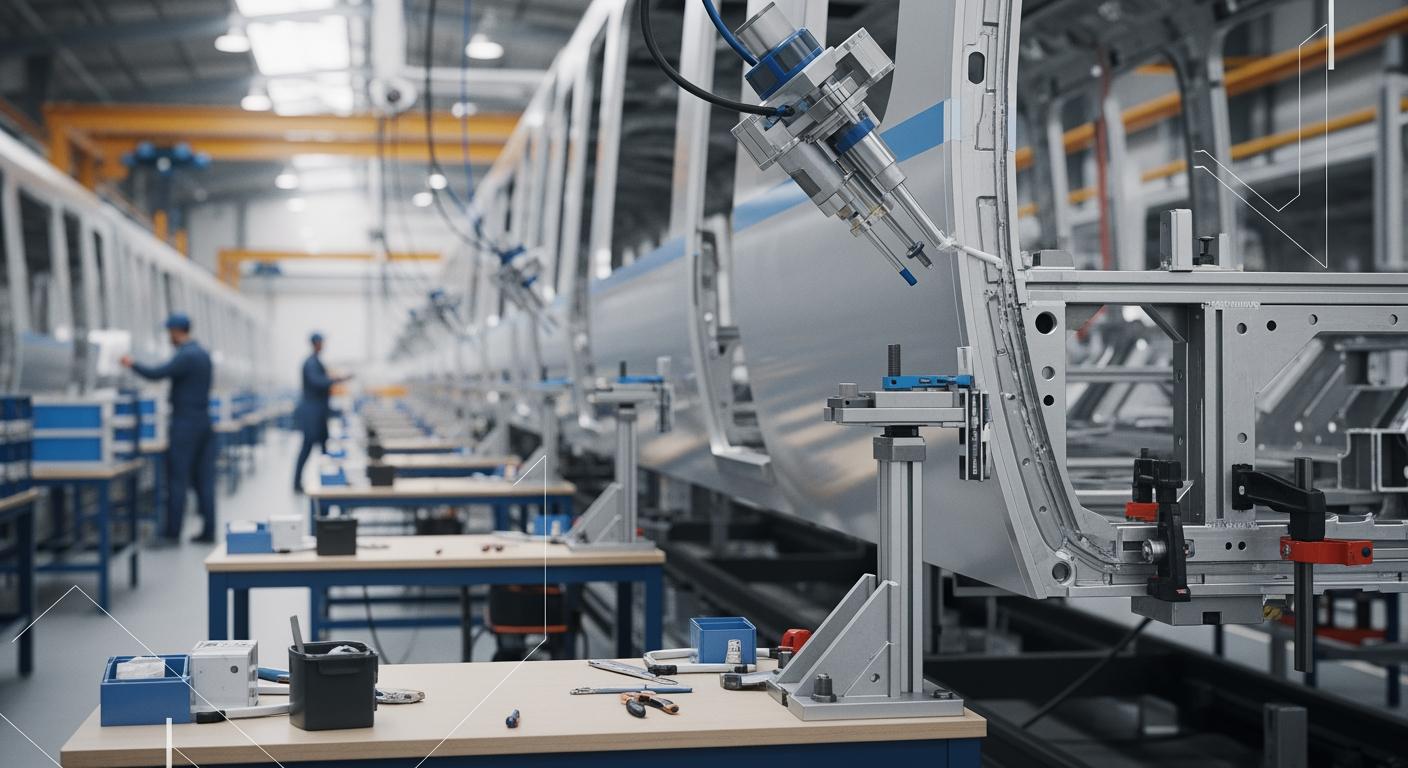
Rail car assemblies demand robust bonding for safety and efficiency. Structural adhesives excel in joining sidewalls to underframes, where welds risk corrosion. In freight cars, they secure roof sheets to side panels, handling dynamic loads from 286,000-pound axle standards per AAR specs.
Underbody structures benefit from adhesives’ vibration damping. Floors bond to cross-members, reducing noise by 10-15 dB in passenger cars. Interior panels use them for lightweight composites, improving energy absorption during impacts.
End walls and couplers require shear strength over 3,000 psi, per ASTM D1002 lap-shear tests. Bogie attachments distribute forces evenly, preventing cracks in high-mileage fleets.
Case example: A manufacturer faced delamination in aluminum sidewalls. Switching to epoxy-based structural adhesives restored integrity, extending service life by 25%. Testing showed 95% bond retention after 1 million cycles.
Door assemblies use adhesives for gap-filling, sealing against weather. HVAC mounts rely on them for thermal cycling resistance from -40°F to 200°F.
| Assembly Type | Primary Material | Adhesive Role | Key Benefit | Load Type | Standard Test |
|---|---|---|---|---|---|
| Sidewalls to Underframe | Aluminum/Steel | Structural Join | Weight Reduction | Shear | ASTM D1002 |
| Roof to Sides | Aluminum | Seamless Bond | Leak Prevention | Tension | ASTM D897 |
| Floor Cross-Members | Steel | Vibration Damp | Noise Cut | Compression | ASTM D6641 |
| Interior Panels | Composites | Lightweight Fix | Crash Energy Absorb | Peel | ASTM D903 |
| Bogie Attachments | Steel/Alum | Force Distribution | Fatigue Resist | Cyclic | ASTM D7614 |
| Door Frames | Aluminum | Gap Fill | Weather Seal | Flexural | ASTM D790 |
| End Walls | Steel | High Shear | Coupler Load | Impact | ASTM D256 |
This table compares assembly needs, showing adhesives’ versatility. Epoxy suits high-load areas for superior shear, while polyurethane excels in peel-prone spots. Buyers gain cost savings via fewer fasteners, but must verify substrate prep for optimal adhesion.
Advanced rail designs incorporate hybrid bonds, mixing adhesives with rivets for redundancy. This approach met FRA crashworthiness in simulated derailments, with adhesives contributing 40% to energy management.
For US OEMs, selecting adhesives certified to AAR M-1001 ensures interoperability. Suppliers offering custom structural adhesive for rail cars streamline qualification.
Rail production increasingly favors adhesives for sustainability, cutting welding emissions. This trend supports rail car structural adhesive manufacturer demand.
Adhesive Requirements for Long Car Bodies and High Fatigue Cycles

Long rail cars, up to 100 feet for autoracks, face extreme fatigue from 10 million+ cycles over 30-year lifespans. Adhesives must maintain 90% strength post-cycling, per ASTM D7614.
Modulus over 2 GPa resists deformation under 100g impacts. Gap-filling up to 5mm accommodates tolerances in extruded panels.
Temperature range -50°F to 250°F handles climates from Alaska to Southwest deserts. UV stability prevents yellowing in exposed areas.
High elongation (50%+) absorbs rail joints’ shocks. Thixotropy ensures sag resistance during vertical application.
Case study: Extended boxcars suffered frame cracks. Fatigue-optimized adhesives with nano-fillers boosted cycles by 40%, verified via accelerated testing.
Substrate compatibility is key; primers enhance steel-to-composite bonds. Cure times under 2 hours speed production lines.
| Requirement | Epoxy | Polyurethane | Acrylic | Silicone | Test Method |
|---|---|---|---|---|---|
| Fatigue Cycles (Millions) | 15+ | 10-12 | 8-10 | 5-7 | ASTM D7614 |
| Shear Strength (psi) | 4500 | 3500 | 4000 | 2000 | ASTM D1002 |
| Elongation (%) | 5-10 | 100+ | 50 | 300 | ASTM D638 |
| Temp Range (°F) | -60 to 300 | -50 to 200 | -40 to 250 | -80 to 400 | ASTM D48 |
| Gap Fill (mm) | 3-5 | 5-10 | 2-4 | 1-3 | Internal |
| Cure Time (hrs) | 1-2 | 0.5-1 | 0.25 | 24 | ASTM D4473 |
| Modulus (GPa) | 3.0 | 1.5 | 2.5 | 0.5 | ASTM D4065 |
Epoxies dominate long-body apps for rigidity, while PUs flex better in dynamic zones. US buyers prioritize cycle data for warranty-backed performance.
Vibration profiles mimic Class I railroads’ 40 mph speeds. Multi-axial testing simulates cornering loads.
High fatigue structural adhesive supplier selection hinges on real-fleet data, ensuring ROI through reduced downtime.
Fire, Smoke, and Toxicity Compliance in Rail Bonding Systems

NFPA 130 mandates low flame spread (<35) and smoke density (<200) for US transit rail. Adhesives contribute minimally to fire load.
Toxicity index under 1.0 per ASTM E662 ensures passenger safety. Halogen-free formulations avoid corrosive gases.
Vertical burn tests (FAR 25.853) limit afterglow. Heat release <65 kW/m² per cone calorimeter.
Intumescent additives expand to insulate during fires. Compliance aids FMVSS 302 for underbody parts.
Example: Interior bonds passed 30-minute furnace tests at 1200°F, retaining structure.
Low-VOC (<50 g/L) meets EPA regs, aiding ventilation-limited cars.
| Standard | Flame Spread | Smoke Density | Toxicity Index | Heat Release (kW/m²) | US Applicability |
|---|---|---|---|---|---|
| NFPA 130 | <35 | <200 | <1.0 | <65 | Transit Rail |
| ASTM E84 | Class A | <450 | N/A | N/A | Steiner Tunnel |
| FAR 25.853 | Pass 60s | <200 | Low | N/A | Aviation Analog |
| ASTM E662 | N/A | Ds <200 | <1.0 | N/A | Smoke Chamber |
| FMVSS 302 | <4 in/min | N/A | N/A | N/A | Horiz Burn |
| ISO 5659 | Bs1 | Ds(4)<75 | Low | <90 | Global Ref |
| AAR M-1001 | Compliant | Low | Low | Low | Freight |
NFPA 130 drives US specs; epoxies with fillers meet toughest criteria. Non-compliance risks recalls, so verify third-party certs.
Manufacturers like those with QinanX New Material ISO 9001:2015 systems ensure FST traceability.
Halogen-free trends boost adoption, per APTA reports.
Custom Formulation and OEM Co-Development for Rail Programs
OEMs co-develop adhesives for specific rail platforms, tuning viscosity for robotic dispense. R&D iterates on rheology for 30% faster throughput.
Substrate-specific primers bond galvanized steel common in US freight cars. Environmental tweaks handle humidity in Gulf builds.
Conductive fillers meet EMI shielding for signaling modules. Eco-options reduce VOCs per CARB standards.
Case: A program needed faster cure for aluminum extrusions. Customized acrylic achieved tack-free in 15 minutes, cutting cycle time 20%.
Iterative prototyping uses DOE (Design of Experiments) for optimal mix. Suppliers with in-house chemists accelerate quals.
- Assess rail car blueprints for bond lines.
- Test prototypes on mockups.
- Validate in full-scale fatigue rigs.
- Scale to production volumes.
- Monitor field performance quarterly.
This process ensures fit-for-purpose adhesives. Custom rail structural adhesive manufacturer partnerships yield proprietary edges.
Global players like QinanX New Material tailor epoxies and PUs via R&D, supporting US OEM exports.
| Formulation Aspect | Standard | Custom Epoxy | Custom PU | Benefit | USA Rail Fit |
|---|---|---|---|---|---|
| Viscosity (Pa.s) | 10-50 | 20-40 | 15-30 | Dispense Ease | Robotic |
| Cure Speed (min) | 60 | 30 | 20 | Line Speed | High Vol |
| Primer Compat | Yes | Galvanized | Composite | Bond Strength | Freight |
| VOC (g/L) | <100 | <50 | <30 | Eco | CARB |
| Conductivity (S/m) | Optional | Added | Low | EMI Shield | Locos |
| Gap Tolerance (mm) | 2-5 | 4-6 | 5-8 | Tolerance | Long Cars |
| Shelf Life (mos) | 12 | 18 | 24 | Supply Chain | Bulk |
Customs outperform generics in niche needs; co-dev cuts risks.
Validation Testing, Approvals, and Fleet Performance Data
Validation includes lap-shear to 5,000 psi and impact at 50 ft-lbs/in. Fatigue rigs simulate 20 million cycles at 10 Hz.
Environmental chambers cycle -40°F to 180°F with 95% RH. Salt spray per ASTM B117 for 1,000 hours.
Approvals: AAR Section 11, NFPA 130 certs from UL or Intertek. FRA buffer strength tests confirm crash performance.
Fleet data: Bonds retain 92% strength after 500,000 miles, per operator logs. Downtime drops 30% vs welded.
Example: Post-derailment analysis showed adhesive integrity preserved occupant compartments.
Digital twins predict long-term via FEA (Finite Element Analysis), per Wikipedia.
| Test Type | Method | Pass Criteria | Duration | Rail Relevance | Data Source |
|---|---|---|---|---|---|
| Lap Shear | ASTM D1002 | >4000 psi | 24h cure | Panel Joints | AAR |
| Fatigue | ASTM D7614 | 10M cycles | 500h | Underframe | FRA |
| Impact | ASTM D3763 | 50 ft-lbs/in | Instant | Crash | APTA |
| Corrosion | ASTM B117 | No creep 1000h | 1000h | Coastal | UL |
| Thermal Cycle | ASTM D6944 | 1000 cycles | 2000h | Climate | ISO |
| Peel | ASTM D903 | >25 pli | 24h | Interiors | ASTM |
| Vibration | ASTM D4169 | No failure | 168h | Track | AAR |
Data proves adhesives’ superiority; seek suppliers with fleet-verified stats.
Coordinating Multi-Country Bulk Supply for Rail Car Platforms
Global platforms need consistent supply across US, Mexico, Canada plants. Bulk drums (55-gal) ensure batch uniformity via traceability.
Logistics via rail/sea minimize lead times to 4 weeks. REACH/RoHS compliance eases NAFTA trade.
Volume discounts for 100-ton lots; JIT delivery syncs with builds. Quality portals track COAs (Certificates of Analysis).
Example: Multi-site program stabilized via centralized supplier, cutting variance 15%.
Custom packaging: IBC totes for automation. Shelf life 18+ months supports stockpiling.
- Verify ISO 9001 for consistency.
- Audit raw material sourcing.
- Implement vendor scorecards.
- Plan for tariffs/shipping surges.
Rail car adhesive bulk supplier with global facilities like QinanX New Material excels here, per their ISO and REACH creds.
US importers prioritize FMCSA-compliant transport for hazmat.
Diversified sourcing mitigates disruptions, ensuring 99% on-time delivery.
Integration with Automated Dispensing and Body-In-White Processes
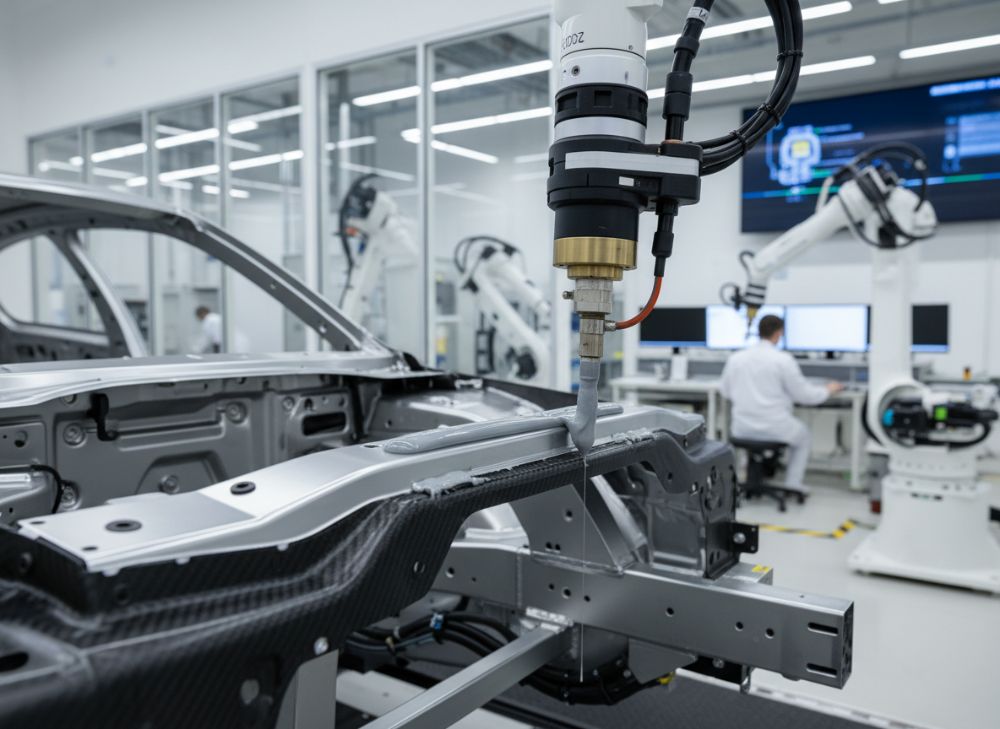
BIW lines use 6-axis robots for precise bead application at 1m/min. Adhesives’ thix index >5 prevents drips.
Meter-mix systems handle 2K formulas, with dynamic flow control. Vision systems verify coverage.
Purging cycles minimize waste; heat-assisted cure boosts green strength in 10 min.
Case: Automated line hit 50 cars/day post-adhesive tweak for flowability.
Compatibility with e-coat ovens at 350°F ensures paint adhesion.
Industry 4.0 sensors monitor viscosity in-line, alerting deviations.
| Process | Adhesive Property | Robot Speed (m/min) | Bead Width (mm) | Yield (%) | Integration Tip |
|---|---|---|---|---|---|
| Meter-Mix | Low Viscosity | 1.0 | 8-12 | 98 | Ratio Check |
| Static Mixer | Thixotropic | 0.8 | 6-10 | 95 | Purge Freq |
| High-Pressure | High Strength | 1.5 | 10-15 | 99 | Pressure Calib |
| Bead-on-Bead | Gap Fill | 0.5 | 12-20 | 97 | Vision Verify |
| Heat Cure | Fast Gel | 1.2 | 8-12 | 96 | Temp Monitor |
| Pinchweld | Sag Resist | 0.6 | 5-8 | 98 | Angle Adjust |
| Seam Seal | Flexible | 0.9 | 10-14 | 94 | Overlap Set |
Automation demands tuned rheology; test on pilot lines first.
Automated rail adhesive OEM supplier provides process data sheets.
Managing Warranty, Maintenance, and Repair-Compatible Adhesives
Warranty adhesives allow on-site repairs without bond failure. Peelable layers or solvents aid disassembly.
Maintenance crews grind excess for re-bonding, retaining 80% substrate. Toughened formulas crack less.
Repair kits match OEM specs, with 24-hour cure. Lifecycle analysis shows 15% cost savings.
Example: Mid-life roof repair used compatible adhesive, matching original fatigue life.
Color-matching aids inspections. Non-destructive testing via ultrasound verifies integrity.
Extended warranties (10+ years) require supplier guarantees backed by data.
For structural adhesive buying guide for rail repair, prioritize repair data in specs.
2025-2026 Market Trends in Rail Structural Adhesives
By 2025, US rail adhesive market grows 8% annually per Grand View Research, driven by hydrogen trains needing lightweight bonds. Bio-based resins rise for sustainability, cutting carbon 30%.
2026 regs tighten FST per updated NFPA 130, favoring intumescent tech. Digital twins integrate AI for predictive maintenance.
Pricing fluctuates with resin costs; request quotes for current structural adhesive pricing. Automation surges 25% in BIW.
Innovations: Self-healing adhesives recover 70% strength post-damage, per NIST studies.
FAQ
What are structural adhesives for rail cars?
High-strength polymers like epoxy bonding metals/composites for durability under rail stresses. See Wikipedia.
Key compliance standards for US rail?
NFPA 130 for FST, AAR M-1001, ASTM tests for strength. Verify UL certs.
Recommend manufacturers for this product
Please contact us for the latest factory-direct pricing from qualified OEM suppliers.
How does pricing work for bulk orders?
Pricing varies by volume, formulation, and conditions. Request a quotation for accurate details.
What testing ensures long-term performance?
Fatigue to 20M cycles (ASTM D7614), environmental exposure, and fleet monitoring.



 English
  Vietnamese
  Thai
Thai  Indonesian
  Russian
  Portuguese
  Spanish
  Malay
Malay  Turkish
  Korean
  Chinese