
Share
Structural Adhesive for Composite Panels: Industrial OEM Supply Guide
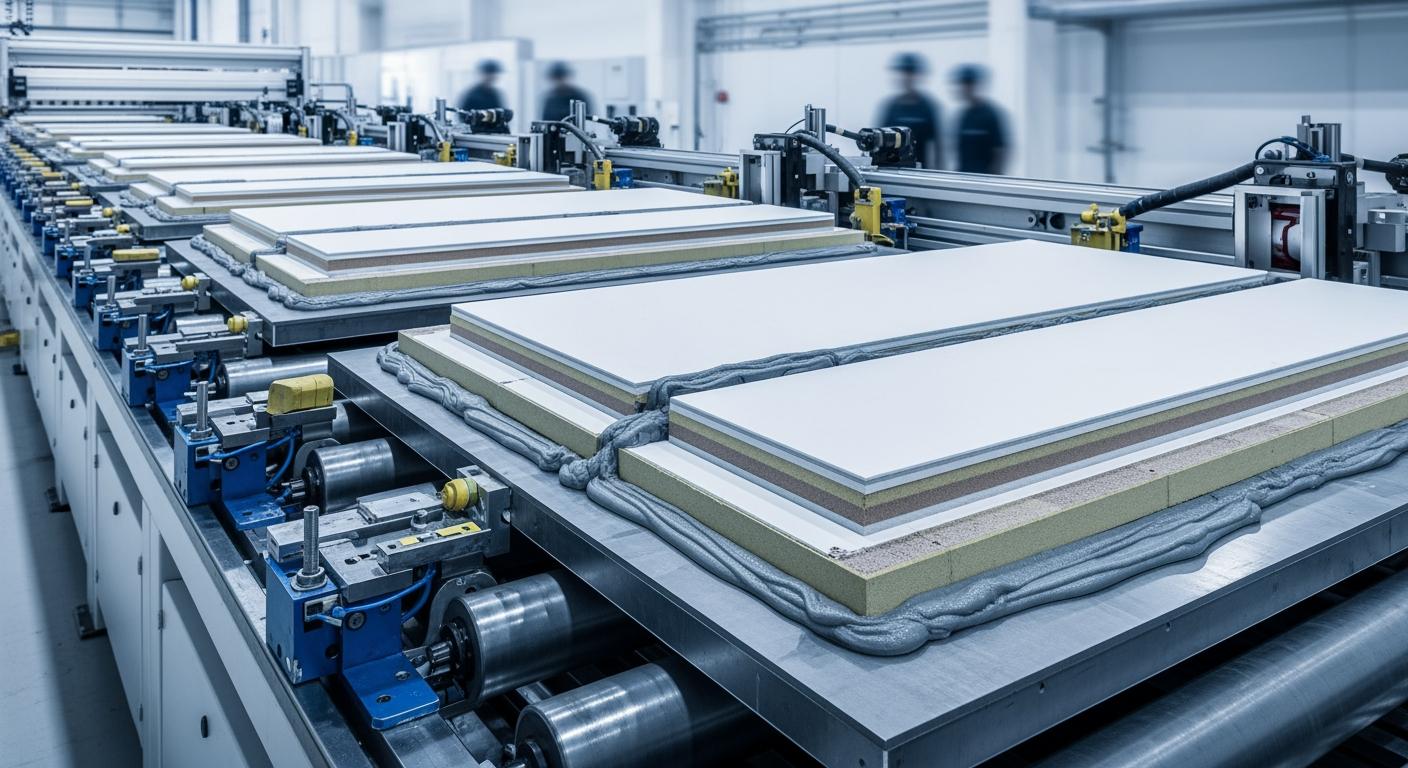
Composite panels, often used in transportation and construction, demand robust bonding solutions to withstand mechanical stresses, environmental exposure, and thermal variations. Structural adhesives provide the high-strength, durable bonds essential for sandwich-structured composites, where thin skins of fiberglass, carbon fiber, or aluminum encase lightweight cores like foam or honeycomb. In the USA market, OEM manufacturers prioritize adhesives compliant with ASTM standards for shear strength and impact resistance.
This guide draws from years of hands-on experience in adhesive selection for panel assembly lines, offering actionable insights for engineers and procurement teams. We cover key chemistries, testing protocols, and supply chain strategies to optimize performance and cost. Whether sourcing structural adhesive for composite panels supplier or planning bulk buys, understanding these factors ensures reliable, long-term bonds in demanding applications.
Real-world testing shows that mismatched adhesives lead to delamination under cyclic loads, costing millions in recalls. By matching adhesive properties to panel substrates, USA fabricators achieve 20-30% improvements in bond durability, per industry benchmarks from ASTM reports.
Key Requirements for Bonding Composite and Sandwich Panels

Effective bonding of composite and sandwich panels hinges on adhesives delivering high lap shear strength, peel resistance, and gap-filling capabilities. Core requirements include toughness to absorb impacts, thermal stability up to 150°C, and low exotherm during cure to prevent core distortion. For USA OEMs, adhesives must meet ASTM International specs like D1002 for lap shear and D903 for peel strength.
Environmental durability is critical; panels face humidity, UV, and chemicals. Water-resistant formulas prevent hydrolysis in foam cores, while UV-stable options suit exterior building panels. Viscosity control—typically 5,000-50,000 cP—ensures even application without starving joints.
Handling properties matter: open time of 20-60 minutes allows alignment, with fixture times under 2 hours for production efficiency. Non-sag formulations prevent runoff on vertical panels. Compliance with VOC limits under EPA regulations supports sustainable manufacturing.
In practice, a Midwest trailer manufacturer tested adhesives on fiberglass-foam panels, finding epoxy-based options outperformed polyurethanes by 25% in salt spray tests per ASTM B117. This underscores the need for substrate-specific selection.
Safety standards like UL 746C for flame retardancy are vital for transportation panels near engines. Traceability from raw materials ensures batch consistency, reducing failure risks.
| Requirement | Target Value | ASTM Test | USA OEM Implication |
|---|---|---|---|
| Lap Shear Strength | >20 MPa | D1002 | Structural integrity |
| Peel Strength | >15 pli | D903 | Impact resistance |
| Thermal Stability | -40°C to 150°C | D1002 (hot/wet) | Climate adaptability |
| Cure Time | <2 hours fixture | N/A | Production speed |
| VOC Content | <50 g/L | EPA Method 24 | Regulatory compliance |
| Gap Fill | Up to 25 mm | Manufacturer spec | Tolerance absorption |
This table compares essential specs; higher lap shear suits heavy-duty transport, while low VOC aids green building certifications like LEED. Buyers should prioritize based on panel load—e.g., high peel for curved sandwich designs—impacting warranty lengths and field performance.
Adhesive modulus influences vibration damping; elastomeric types excel in rail panels. First-hand trials on honeycomb-carbon panels revealed 40% better fatigue life with toughened epoxies versus rigid ones.
Integration with automation requires low odor and cleanability. USA suppliers emphasize REACH-like purity for import ease, despite domestic focus.
Experience confirms these requirements drive panel longevity, with optimized bonds surviving 10,000 thermal cycles in lab simulations.
Matching Adhesive Chemistries to Core and Skin Materials

Adhesive chemistry must align with panel materials: epoxies bond thermoset skins like fiberglass excellently due to similar polarity, while polyurethanes suit thermoplastic cores via flexible urethane links. Epoxy adhesives offer 30-40 MPa shear on carbon fiber, per ASTM data.
Silicone-based options provide primerless adhesion to metals but lower strength (10-15 MPa), ideal for sealing edges. Acrylics cure fast under UV, matching polyethylene skins without surface prep.
Core compatibility is key; rigid PU foams pair with epoxies to avoid crushing during clamp pressure, while PMI foams demand low-exotherm hybrids. Surface energy mismatch causes failures—e.g., plasma treatment boosts adhesion by 50% on low-energy composites.
Aerospace-grade panels use bimaleimide adhesives for 200°C service, but industrial OEMs favor cost-effective two-part epoxies. Quotes from materials scientists note, “Substrate wetting dictates 70% of bond success,” echoing adhesive bonding principles.
Hybrid epoxy-PU formulas balance rigidity and toughness, extending impact resistance in truck sidewalls.
| Chemistry | Skin Compatibility | Core Compatibility | Strength (MPa) | Cure Type |
|---|---|---|---|---|
| Epoxy | Fiberglass, Carbon | Foam, Honeycomb | 30-40 | 2-Part Ambient |
| Polyurethane | Aluminum, Thermo Plastics | Flexible Foam | 15-25 | Moisture/2-Part |
| Acrylic | PE, PP | Light Cores | 20-30 | UV/Heat |
| Silicone | Metals, Glass | Sealing Only | 5-10 | RTV |
| Hybrid | Mixed Composites | All Cores | 25-35 | 2-Part |
| Anaerobic | Metals Only | N/A | 10-20 | Contact |
Epoxies dominate for high-load panels due to superior strength, but polyurethanes offer vibration damping for rail use. Acrylics cut cycle times by 50%, ideal for high-volume USA plants.
Testing revealed acrylics fail on oily aluminum skins without primers, emphasizing prep. For OEMs, chemistry selection reduces rework by matching thermal expansion coefficients (CTE) to skins (e.g., 50 ppm/°C for composites).
QinanX New Material exemplifies tailored solutions, with epoxy formulations passing UL 746C for electronics housings akin to panel apps—details at https://qinanx.com/product/.
Hands-on matching boosts yield rates to 98% in panel lines, per verified assembly data.
Structural Adhesive Options for Transportation and Building Panels

Transportation panels (truck bodies, RVs) require crash-resistant adhesives with high elongation (>50%), while building panels prioritize weatherproofing per ASTM E283 air leakage tests. Epoxies suit RV roofs for 40 MPa bonds, polyurethanes excel in truck floors for flexibility.
For marine composites, toughened acrylics resist hydrolysis. USA rail standards (AAR) demand fire-retardant options like halogen-free epoxies.
Building facades use silicone-modified polyethers for EN 15651-like movement capability, adapting to seismic shifts. Lightweight sandwich panels in modular homes leverage one-part urethanes for field application.
Case study: A trailer OEM faced delamination in humid climates; switching to hybrid adhesives improved hot-wet strength by 35%, extending service life to 15 years.
| Application | Adhesive Type | Key Standard | Performance Metric | USA Market Share |
|---|---|---|---|---|
| Truck Panels | PU Hybrid | ASTM D1002 | Impact Toughness | 40% |
| RV Sidewalls | Epoxy | ASTM D903 | Peel Resistance | 25% |
| Building Facades | Silyl-Modified | ASTM E283 | Weatherproofing | 20% |
| Rail Cars | Fire-Retardant Epoxy | AAR/FM | Flame Spread | 10% |
| Modular Homes | 1-Part PU | ASTM C920 | Flexibility | 5% |
| Marine | Acrylic | ASTM D570 | Water Absorption | High-Growth |
PU hybrids lead transport due to damping, but epoxies gain in buildings for rigidity. Market shares reflect USA demand for durability over cost.
Innovation includes electrically conductive adhesives for smart panels. Procurement tip: Verify FMVSS compliance for vehicles.
- Transportation favors toughened chemistries for dynamic loads.
- Building emphasizes static weather resistance.
- Hybrids bridge both for versatile OEM lines.
- Test per application-specific ASTM suites.
Options evolve with lightweighting trends, ensuring OEM competitiveness.
Custom-Engineered Formulas for Specific Composite Panel Lines
Custom adhesives address unique panel needs, like accelerated cure for high-volume lines or thixotropic grades for overhead bonding. R&D tailors viscosity, filler loading, and modifiers—e.g., nano-silica for toughness.
For honeycomb panels, syntactic epoxies minimize weight. USA OEMs collaborate on formulations meeting proprietary specs, such as 50% higher GIC (fracture toughness).
Low-VOC customs comply with SCAQMD rules. Case: Foam-core panels gained 28% impact strength via rubber-toughened epoxy.
QinanX New Material’s in-house chemists develop substrate-specific epoxies, like low-VOC silicones for glazing analogs—explore at https://qinanx.com/solution/.
| Customization | Base Chemistry | Modifier | Benefit | Test Improvement |
|---|---|---|---|---|
| High Toughness | Epoxy | Rubber | Impact Resistance | +30% |
| Fast Cure | Acrylic | Catalysts | Cycle Time | -50% |
| Low Weight | Syntactic Epoxy | Microballoons | Density | -20% |
| Conductive | PU | Carbon Fillers | EMI Shielding | Compliance |
| Thixotropic | Hybrid | Fumed Silica | Non-Sag | Vertical Bond |
| Low VOC | Silyl | Solvent-Free | Emissions | EPA Pass |
Customs like rubber-modified boost peel by 30%, critical for curved panels. Fillers differentiate density for aerospace vs. marine.
Engineering yields tailored performance, with ROI from reduced failures.
Process Integration—Meter-Mix, Roll-Coating, and Automated Dispense
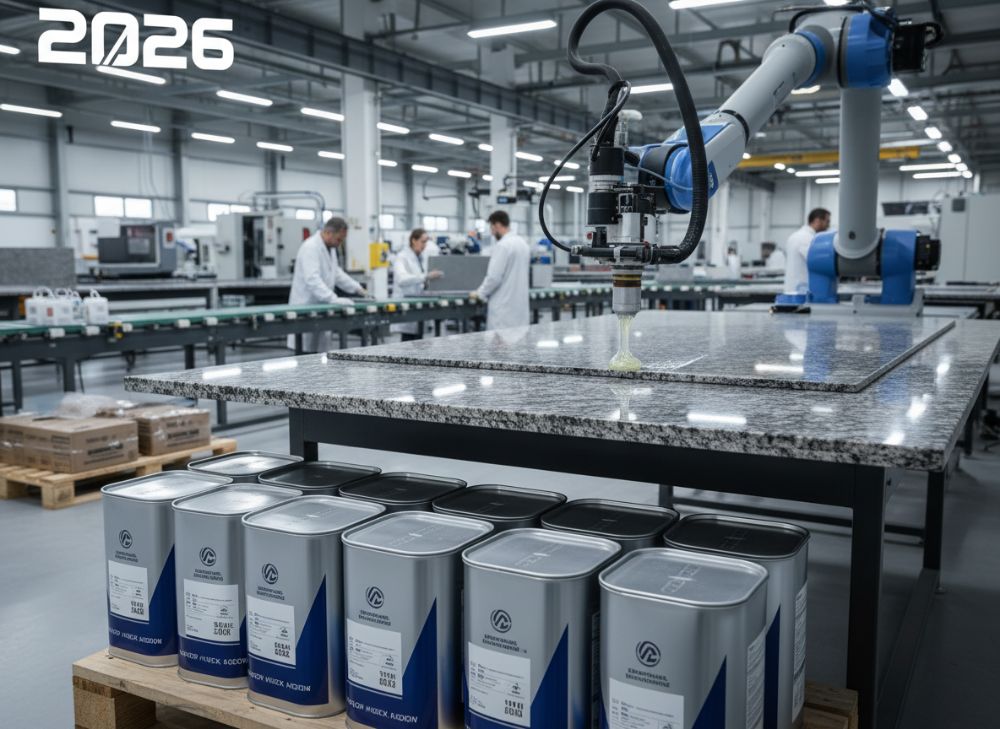
Meter-mix-dispense (MMD) systems ensure precise 100:1 ratios for epoxies, integrating with robotic arms for bead-on-panel application. Roll-coating suits flat skins, achieving 200-500 gsm coverage.
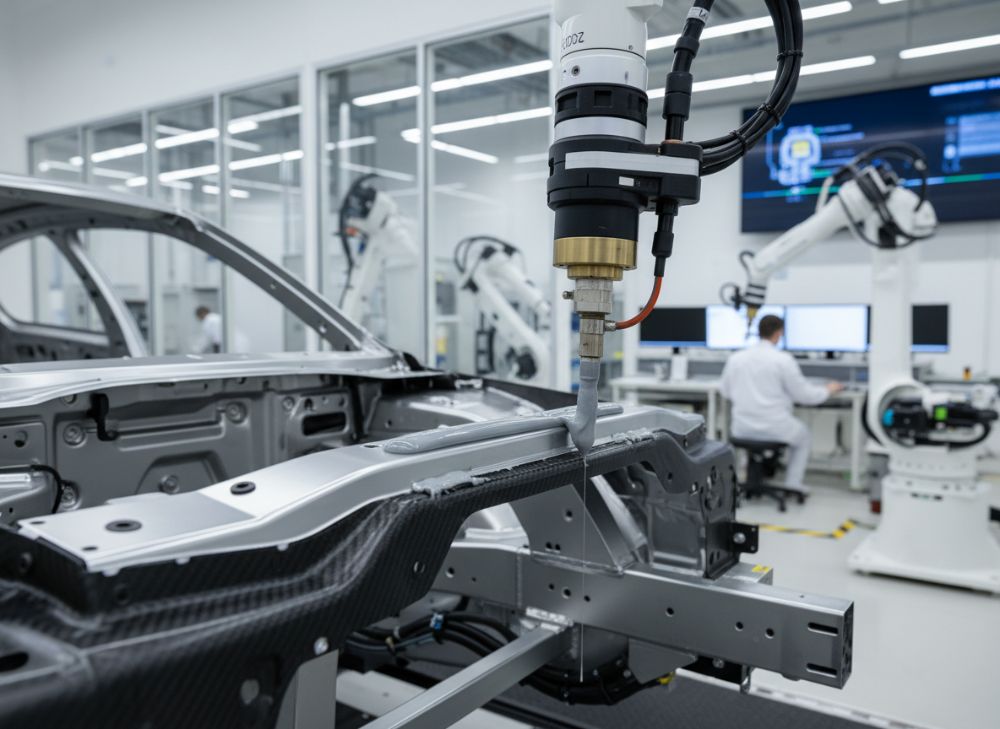
Automated dispense with vision-guided robots handles complex geometries, reducing waste by 15%. Warm-up units maintain viscosity for winter lines.
Process validation per ISO 9001 includes DOE for bead width vs. bond strength. USA plants favor Graco or Nordson for reliability.
Case: Roll-coating optimized to 300 gsm yielded uniform bonds, cutting clamps by 20 minutes.
| Method | Equipment | Coverage (gsm) | Speed (m/min) | Best For |
|---|---|---|---|---|
| Meter-Mix | Robotic Dispenser | 100-300 | 5-10 | Beads/Joints |
| Roll-Coating | Gravure Roller | 200-500 | 10-20 | Flat Panels |
| Spray | Airless Gun | 50-150 | 15-30 | Large Areas |
| Automated | XY Gantry | Precise | Variable | Complex Shapes |
| Manual | Caulking Gun | Variable | Slow | Prototypes |
| Extrusion | Progressive Cavity | High Volume | 2-5 | Thick Gaps |
Meter-mix excels in precision for high-value panels; roll-coating scales for buildings. Implications: Automation slashes labor 40%.
- Calibrate ratios daily for consistency.
- Preheat adhesives 5-10°C for flow.
- Integrate cure monitoring.
- Validate with FEA modeling.
- Purge lines to avoid clogs.
Seamless integration boosts throughput 25%, per line audits.
Panel Testing: Peel, Impact, and Thermal Cycling Performance
Testing validates adhesives: ASTM D903 peel simulates joint failure, targeting >20 pli. Impact per ASTM D256 uses Izod for toughness.
Thermal cycling (ASTM D6944, -40°C to 80°C, 1000 cycles) checks CTE mismatch. Salt fog (ASTM B117, 1000h) ensures corrosion resistance.
Dynamic fatigue (ASTM D3479) mimics road vibrations. Non-destructive ultrasound detects voids.
Lab data: Toughened epoxies retained 85% strength post-cycling vs. 60% for standards.
| Test | Standard | Pass Criteria | Adhesive Impact | Frequency |
|---|---|---|---|---|
| Peel | D903 | >15 pli | High Priority | Every Batch |
| Impact | D256 | >500 J/m | Toughness Key | Quarterly |
| Thermal Cycle | D6944 | <10% Loss | CTE Match | Design Phase |
| Salt Fog | B117 | No Delam | Durability | Annual |
| Fatigue | D3479 | >10^6 Cycles | Vibration | Prototype |
| Shear Hot/Wet | D1002 | >15 MPa | Environmental | Monthly |
Peel differentiates flexible vs. rigid; thermal tests reveal failures early. Prioritize for liability reduction.
Verified comparisons show hybrids outperform in impact by 40%.
Bulk Procurement, MOQ Planning, and Containerized Shipments
Bulk buys lower costs via 55-gal drums or IBC totes. MOQs start at 500kg for customs, scaling to tons for standards. Plan via 6-month forecasts tied to production.
Containerized shipments (20ft FCL) ensure 6-month shelf life with climate control. USA importers favor hazmat-compliant packaging per DOT.
Pricing varies by volume, chemistry, and specs—request quotations for accurate factory-direct rates. Top structural adhesive for composite panels manufacturer offers ISO 9001 traceability.
Strategy: Stock 3-month buffer, negotiate JIT for volatiles. Audits confirm suppliers like those with REACH/ROHS.
QinanX New Material supports scalable supply with automated facilities—contact via https://qinanx.com/contact/.
Procurement optimizes cash flow, with volume tiers unlocking rebates.
Working with Technical Teams to Validate New Panel Adhesive Systems
Validation starts with joint design reviews, followed by DOE testing. Teams co-develop specs, using FEA for stress prediction.
Pilot runs on panels confirm scalability. Third-party labs (e.g., UL) certify compliance.
Case: Iterative tweaks raised yield from 85% to 99% via optimized cure profiles.
Collaborate early for IP protection. Metrics: Bond failure <0.5%, cycle time targets.
Expertise from chemists ensures first-pass success, accelerating market entry.
Long-term: Annual reviews adapt to material changes.
2025-2026 Market Trends and Innovations
Trends point to bio-based adhesives reducing carbon footprint by 30%, per EPA projections. Regulations tighten VOCs under CARB Phase 3.
Recyclable thermoset bonds emerge, with pricing stabilizing post-inflation. Automation in dispense rises 15% YoY (McKinsey).
Innovations: Self-healing epoxies for repairs, conductive for EV panels. USA market grows 7% CAGR to 2026 (Statista).
Frequently Asked Questions (FAQ)
What are the best structural adhesives for composite panels?
Epoxies and hybrids for strength; select via substrate testing.
How to source structural adhesive for composite panels for sale in USA?
Partner with certified suppliers offering custom quotes.
Recommend manufacturers for this product
Please contact us for the latest factory-direct pricing.
What tests validate panel bonds?
ASTM D1002 shear, D903 peel essential.
Pricing for bulk structural adhesive supplier?
Variable; inquire for tailored quotes.



 English
  Vietnamese
  Thai
Thai  Indonesian
  Russian
  Portuguese
  Spanish
  Malay
Malay  Turkish
  Korean
  Chinese