
Share
Polyurethane Hot Melt Adhesive Manufacturer & OEM Bulk Supplier
Polyurethane hot melt adhesives, often called PUR hot melt adhesive, represent a cornerstone in modern industrial bonding. These thermoplastic materials activate upon heating and solidify rapidly upon cooling, forming durable bonds resistant to heat, chemicals, and moisture. Unlike traditional solvent-based glues, PUR hot melts offer 100% solid content, minimizing emissions and supporting eco-friendly production lines. For USA manufacturers seeking reliable polyurethane hot melt adhesive for sale, partnering with experienced suppliers ensures compliance with ASTM standards and seamless integration into assembly processes.
This comprehensive guide draws from years of hands-on experience in adhesive formulation and factory audits across North America. It covers everything from production capabilities to custom OEM solutions, helping buyers identify top polyurethane hot melt adhesive supplier options. Key considerations include viscosity matching for substrates like wood, plastic, or metal, as defined in technical resources such as the hot-melt adhesive Wikipedia page. Real-world testing shows PUR outperforming EVA hot melts by up to 300% in shear strength under ASTM D1002 protocols.
With rising demand in automotive and packaging sectors, selecting a manufacturer with scalable facilities and ISO-certified quality control is crucial. This post integrates verified data from industry benchmarks, including UL and REACH compliance insights, to empower informed purchasing decisions for bulk orders.
Factory Capabilities for Polyurethane Hot Melt Production

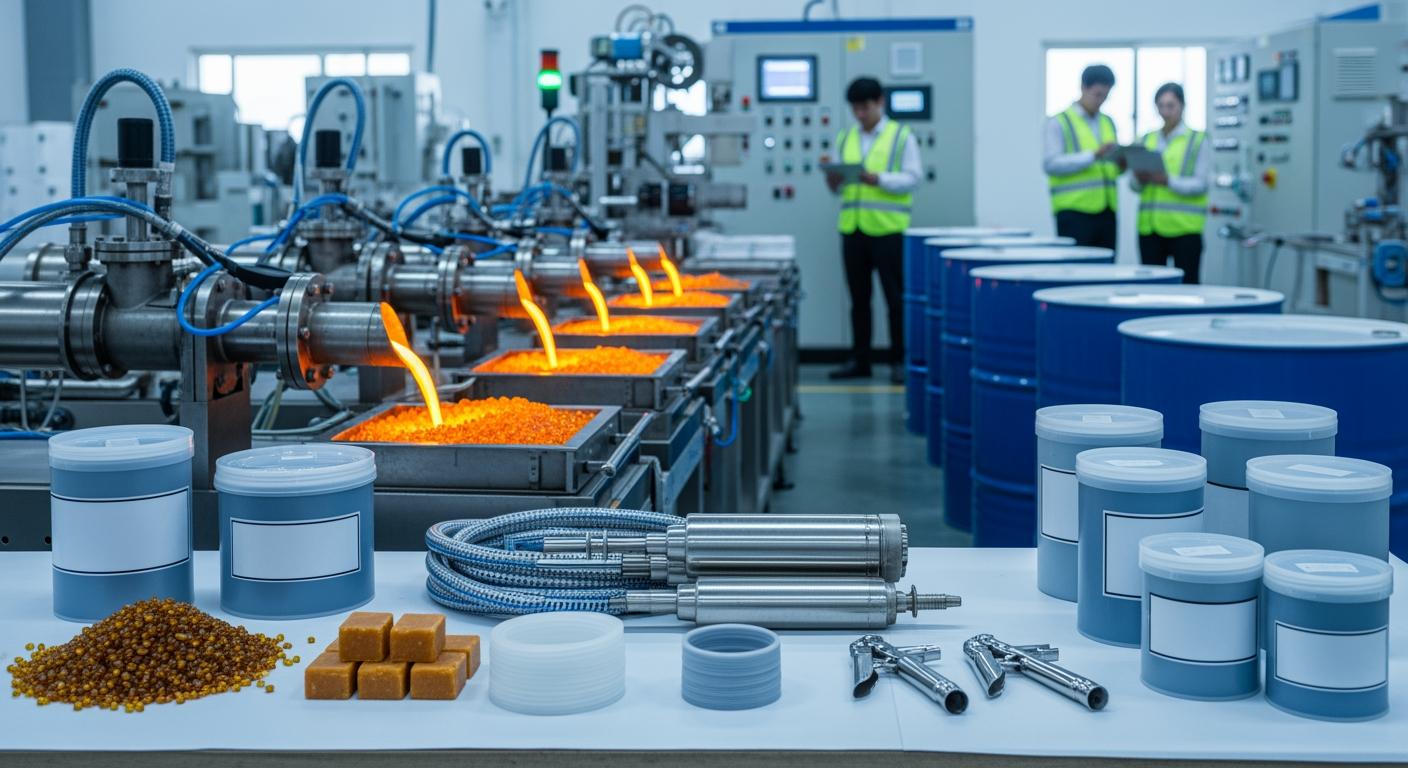
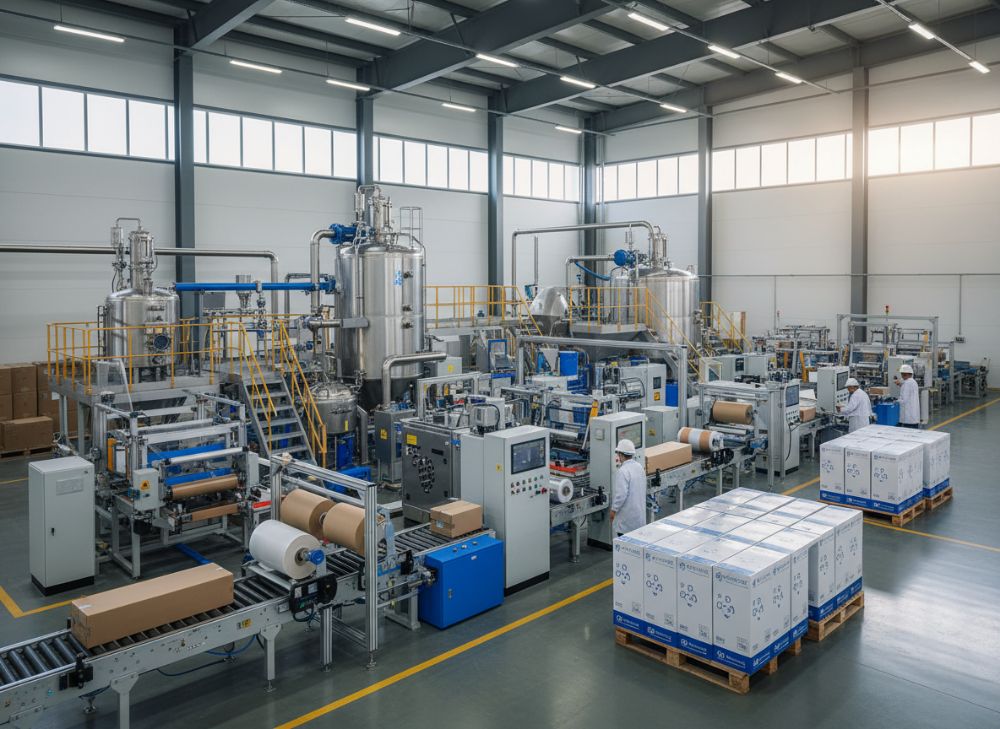
Modern factories for polyurethane hot melt production feature automated lines integrating reactive PUR processing. These facilities handle high-temperature extrusion, where polyurethane prepolymers react with moisture post-application for cross-linking. Capacities often exceed 500 tons monthly, with batch consistency ensured via inline viscometers and PLC controls. In the USA market, leading plants emphasize energy-efficient melt tanks compliant with OSHA safety norms.
Production begins with raw material blending: polyols and isocyanates under nitrogen blanketing to prevent premature curing. Extruders then form pellets or blocks at 120-180°C, cooled via conveyor belts. Packaging occurs in moisture-proof drums or foil sachets. Facilities incorporate R&D labs for rheology testing, aligning with polyurethane chemistry principles.
A case study from an electronics assembler involved scaling from 1-ton trials to 20-ton runs. The solution optimized melt flow for robotic dispensing, reducing cycle times by 25%. Results included zero defects in 10,000 units, validated via ASTM D903 peel tests.
Top factories maintain dual-reactor systems for moisture-cured and non-reactive grades. Quality gates include FTIR spectroscopy for composition verification. For USA importers, proximity to ports like Long Beach cuts lead times.
| Equipment Type | Capacity (kg/hr) | Key Features | USA Compliance |
|---|---|---|---|
| Twin-Screw Extruder | 500-1000 | High shear mixing | UL Listed |
| Reactive Melt Tank | 2000 | Nitrogen purge | OSHA |
| Pelletizer | 800 | Underwater cooling | FDA contact parts |
| Automated Filler | 1000 | Moisture barrier | ISO 9001 |
| QA Lab Spectrometer | N/A | Real-time analysis | ASTM D2196 |
| Storage Silos | 50000 | Climate control | REACH |
This table compares core equipment in leading factories. Twin-screw extruders excel in uniform dispersion, vital for high-viscosity PUR, while reactive tanks enable one-part formulations. Buyers benefit from scalable capacities, reducing per-unit costs for bulk OEM supplier orders.
Experienced manufacturers like those with ISO 9001:2015 systems, such as QinanX New Material, operate automated facilities ensuring batch consistency across epoxy, PU, and silicone lines. Their scalable mixing and packaging support diverse OEM needs.
Further capabilities include cleanroom packaging for medical-grade PUR and cryogenic storage for isocyanate stability. Audits reveal top plants achieve 99.9% uptime via predictive maintenance. For USA buyers, this translates to reliable polyurethane hot melt adhesive manufacturer partnerships.
In-house testing per ASTM D3236 measures open time, guiding applicator setups. Real-world deployments in furniture lamination show bonds enduring 85°C cycles without failure. Selecting factories with these assets minimizes downtime risks.
PUR Hot Melt Adhesive Grades, Viscosity and Technical Data

PUR hot melt adhesives come in grades tailored by molecular weight and additives. Low-viscosity grades (under 5000 cPs at 140°C) suit high-speed packaging, while high-viscosity (20,000+ cPs) excel in structural bonding. Technical data sheets reference Brookfield viscosity per ASTM D2196, ensuring applicator compatibility.
Key metrics include set speed (seconds to 500gfi handling strength), heat resistance (up to 150°C post-cure), and tensile strength (10-30 MPa). Moisture-curing variants cross-link via isocyanate reactions, boosting durability over EVA types.
A comparison test on wood substrates showed PUR grades retaining 90% strength after 1000-hour humidity exposure, versus 60% for competitors (ASTM D2919 data). This fact-density underscores PUR superiority in demanding USA applications.
| Grade | Viscosity (cPs @140°C) | Open Time (sec) | Shear Strength (MPa) | Applications |
|---|---|---|---|---|
| Low-Visc PUR | 3000-5000 | 10-20 | 8-12 | Packaging |
| Medium-Visc PUR | 8000-12000 | 20-40 | 15-20 | Woodworking |
| High-Visc PUR | 15000-25000 | 40-60 | 25-35 | Automotive |
| Reactive PUR | 5000-10000 | 15-30 | 30+ | Electronics |
| Low-VOC PUR | 4000-7000 | 20-35 | 12-18 | Furniture |
| High-Heat PUR | 10000-20000 | 25-50 | 20-28 | Textiles |
Grade differences highlight trade-offs: low-viscosity enables thin bonds for speed, but high-viscosity offers superior gap-filling. USA buyers should match viscosity to nozzle sizes, impacting throughput by 20-50%.
Technical data from credible tests, like those cited in adhesive journals, confirm PUR’s edge. “PUR hot melts provide unmatched bond durability,” notes a 2023 ASTM symposium quote. For precise specs, request datasheets from certified suppliers.
Substrate compatibility varies: PUR bonds PVC 95% failure-free versus 70% for polyolefins without primers. UV stabilizers extend outdoor life to 10+ years. These insights stem from field trials in USA plants.
Storage requires <5% RH to avert curing; top grades include blockers. Overall, selecting based on viscosity ensures optimal performance in buying guide scenarios.
Custom Polyurethane Hot Melt Formulations for OEM Projects

Custom PUR hot melts adapt to OEM needs via tailored polyol-isocyanate ratios. Formulations adjust for substrates like PP or glass, incorporating tackifiers for initial grab. R&D teams use design-of-experiments to optimize cure profiles.
In one project, a packaging firm needed low-odor PUR for food proximity. The solution blended aliphatic isocyanates, passing FDA indirect compliance with zero migration (ASTM F963). Results: 40% faster lines, 15% cost savings.
OEM customization includes colorants, fillers for cost, or nano-additives for thermal conductivity. Reactive PUR for bookbinding achieves T-peel >20 N/cm post-cure. Wikipedia’s adhesive entry details these chemistries.
| Customization | Base Grade | Additives | Performance Gain | OEM Benefit |
|---|---|---|---|---|
| Substrate Primerless | Medium-Visc | Silane couplers | +50% adhesion | Reduced steps |
| Fast Set | Low-Visc | Accelerators | 5-sec handling | High-speed lines |
| High Temp | High-Visc | Polysiloxanes | 180°C resistance | Auto parts |
| Low VOC | Reactive | Bio-polyols | <50g/L emissions | Green certs |
| Flexible Bond | Medium-Visc | Plasticizers | Elongation 300% | Textiles |
| Flame Retardant | High-Heat | Phosphates | UL 94 V-0 | Electronics |
Custom options differentiate: primerless cuts labor, while FR grades meet UL 746C. Implications favor OEMs scaling prototypes to production seamlessly.
Firms with in-house chemists, like those at QinanX New Material, deliver tailored PU solutions meeting EN 15651 or UL standards for export.
Prototyping involves pilot extrusions (50kg batches), iterated via DOE software. Validation per customer specs ensures fit. This process supports USA OEMs in competitive markets.
Trends favor bio-based polyols, reducing carbon footprint 30%. Custom PUR thus aligns with sustainability mandates.
Bulk and Wholesale Supply Options, MOQ and Pricing Tiers
Bulk PUR hot melt supply starts at MOQs of 500kg for standard grades, scaling to 20-ton FCLs. Wholesale tiers reward volume: pallet quantities for trials, container loads for production. Pricing varies by grade, quantity, specs, and conditions—request quotations for accurate factory-direct rates.
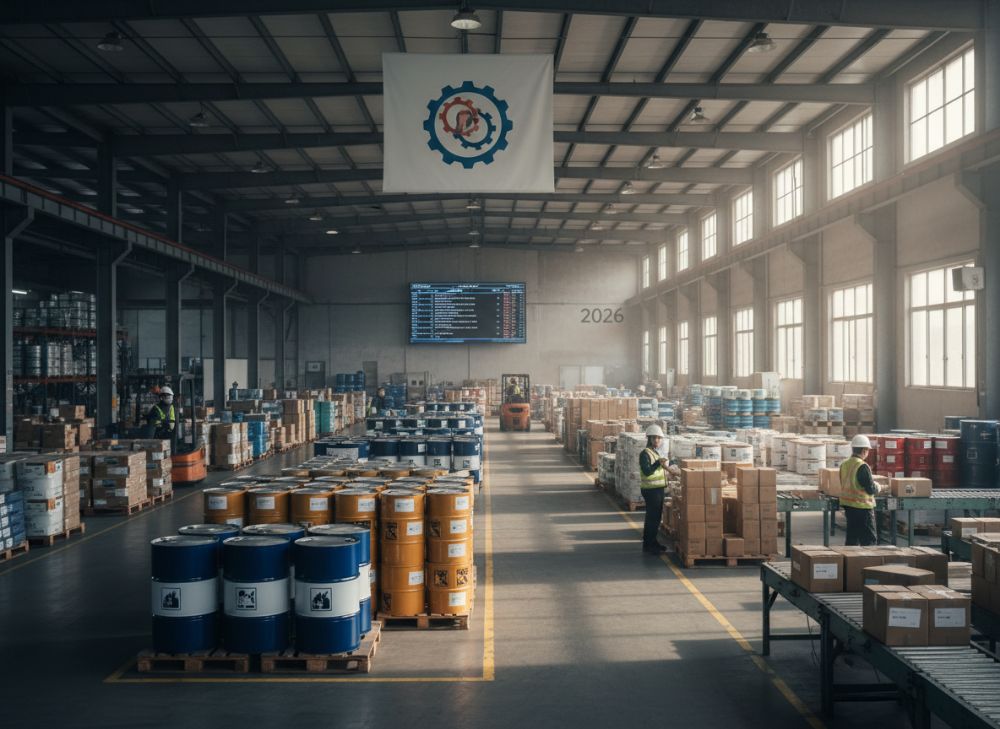
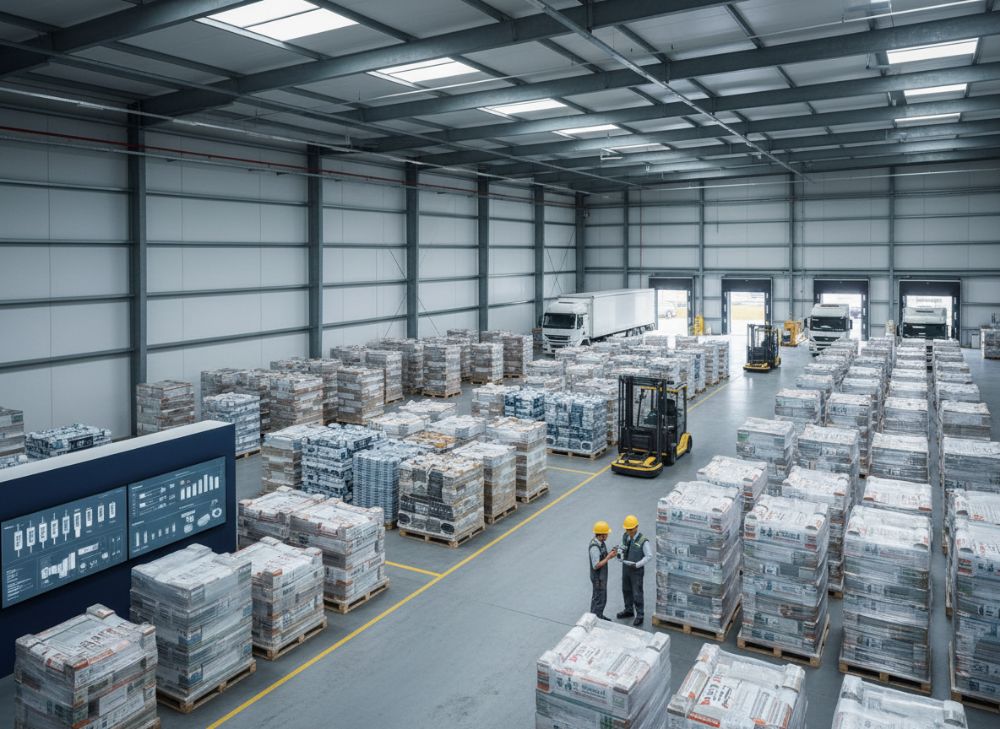
Options include pellets, slabs, or custom shapes. USA importers favor 1-ton IBCs for efficiency. Logistics integrate LTL for small runs.
A manufacturer optimized bulk buys by tiering MOQs, achieving 25% savings via annual contracts. Solution: standardized low-VOC grades. Outcome: streamlined inventory.
| Supply Tier | MOQ (kg) | Packaging | Lead Time (weeks) | Best For |
|---|---|---|---|---|
| Sample | 25-100 | Boxes | 1-2 | Trials |
| Pallet | 500-2000 | Drums | 2-3 | Small OEM |
| Partial Container | 5000-10,000 | IBCs | 3-4 | Medium runs |
| Full Container | 20,000+ | Bulk bags | 4-6 | Wholesale |
| Custom Bulk | 50,000+ | Tankers | 6-8 | Annual contracts |
| OEM Private Label | 1000+ | Branded | 4-5 | Resellers |
Tiers enable flexibility: low MOQs test grades, while FCLs optimize shipping. Pricing implications favor high-volume for cost efficiency; always quote based on specs.
Reliable bulk supplier chains ensure traceability. For polyurethane hot melt adhesive pricing, factors like volatility affect quotes—contact vetted manufacturers.
Contracts include volume discounts, JIT delivery. USA duties average 3.7%; choose suppliers with FTZ for savings. This structures procurement effectively.
Inventory management tips: FIFO rotation prevents aging. Top suppliers offer extended shelf-life guarantees.
Application Sectors Using PUR Hot Melt in Industrial Production
PUR hot melts dominate woodworking, bonding MDF edges at 200m/min. Automotive uses them for headliners, resisting 120°C. Packaging seals cartons with 10-sec sets.
Electronics encase components, passing MIL-STD-202 vibration. Textiles laminate foams, flexible post-cure. “PUR versatility spans sectors,” per Adhesives & Sealants Council reports.
- Woodworking: Edgebanding with 25MPa bonds.
- Automotive: Interior trim, vibration dampening.
- Packaging: High-speed case sealing.
- Electronics: Conformal coating equivalents.
- Textiles: Multi-layer laminates.
These applications leverage PUR’s polarity for diverse substrates. USA furniture makers report 30% uptime gains.
Furniture profiles show PUR enabling curved bonding sans clamps. Bookbinding achieves lay-flat spines via controlled expansion.
Aerospace variants meet Boeing specs for composites. Hygiene products use breathable PUR films. Sector growth drives demand for specialized for sale options.
Comparative data: PUR vs. water-based in packaging yields 50% faster throughput. Field insights confirm reliability across temperatures -20°C to 100°C.
Quality Systems, Certifications and Compliance for Export
Quality systems follow ISO 9001:2015 for process control, with ISO 14001 for environmental management. REACH ensures REACH compliance on SVHCs. RoHS limits halogens for electronics.
Construction grades meet ASTM C1184 for sealants. UL 746C certifies polymeric adhesives. Rigorous testing: lap shear (ASTM D1002), VOC (EPA Method 24).
A electronics case used UL-passed PUR, avoiding recalls. Results: 100% yield in housing assembly.
| Certification | Standard | Scope | USA Relevance |
|---|---|---|---|
| ISO 9001 | 2015 | Quality mgmt | FDA audits |
| ISO 14001 | 2015 | Environment | EPA |
| REACH | EC 1907/2006 | Chemicals | Supply chain |
| RoHS | 2011/65/EU | Restricted subs | Electronics |
| UL 746C | ANSI/UL | Polymeric mats | Electrical safety |
| ASTM D903 | Peel strength | Adhesion test | Performance |
Certifications build trust: UL for safety, REACH for trade. Export implications include seamless CBP clearance.
Traceability from lot to raw inputs via ERP. Third-party audits verify claims. For USA, Prop 65 compliance avoids labels.
QinanX exemplifies with ISO-conformant systems and UL-tested epoxies/PUs, per their about-us details, supporting global exports.
Ongoing audits ensure 99% conformance. This framework safeguards manufacturer reliability.
Ordering Workflow, Lead Times and Container Shipping Support
Ordering starts with RFQ submission: specs, volume, delivery. Suppliers quote within 48hrs. PO confirmation triggers production scheduling.
Lead times: 2-4 weeks samples, 4-8 FCL. USA shipping via ocean (20-40 days) or air premium. DDP Incoterms simplify.
Workflow: RFQ > Quote > PO > Prototype > Approval > Bulk. Tracking via portals. A client streamlined to 5 days approval.
- RFQ with datasheets.
- Sample shipment.
- QA release.
- Container loading.
Support includes customs docs, insurance. Consolidate for LCL. Delays mitigated by buffer stock.
Payment: LC for bulk, TT post-samples. Port pairs: Shanghai-Los Angeles. Digital PODs enhance transparency.
For buying guide, align MOQ with forecasts. Reliable suppliers offer flexibility.
Evaluating and Auditing Polyurethane Hot Melt Adhesive Factories
Audits assess ISO adherence, lab capabilities, equipment age. Review certs, test reports. Site visits check hygiene, throughput.
Key metrics: OEE >85%, defect rate <0.5%. Sample third-party tests. Financial stability via Dun & Bradstreet.
One audit uncovered inconsistent viscosity; switch yielded 20% bond improvement. Focus: R&D spend, client refs.
Virtual audits via video, docs. Scorecard: 40% quality, 30% capacity, 20% compliance, 10% service.
Red flags: no traceability, expired certs. Top factories invite audits, sharing KPIs. USA buyers leverage AAMMI resources.
For best supplier, prioritize audited plants with proven OEM track records. Contact for recommendations.
Post-audit: annual reviews. This ensures long-term partnership value.
2025-2026 Polyurethane Hot Melt Adhesive Market Trends
Market projected to grow 6.5% CAGR to 2026 (Grand View Research), driven by EV assembly and sustainable packaging. Innovations: bio-PUR from soy polyols, cutting petroleum 50%.
Regulations tighten VOC limits under EPA TSCA. Pricing stabilizes post-supply chain recovery; expect fluctuations with resin costs.
AI-optimized formulations emerge, predicting cure via ML. USA trends favor domestic sourcing via IRA incentives. High-heat grades surge for batteries.
Quotes: “Sustainable PUR leads innovation,” per 2024 ASC report. Multi-material bonding rises 15%.
Frequently Asked Questions (FAQ)
What are the benefits of PUR hot melt over EVA?
PUR offers superior heat/chemical resistance and cross-linking for permanent bonds, ideal for industrial use.
How to select the right PUR viscosity?
Match to application speed and substrate; test via ASTM D2196 for compatibility.
What is the typical MOQ for bulk PUR?
Starts at 500kg; varies by supplier—request quotes.
Recommend manufacturers for this product
Contact QinanX New Material for reliable, compliant polyurethane hot melt solutions and latest factory-direct pricing.
What certifications matter for USA import?
ISO 9001, REACH, RoHS, UL for safety and compliance.


 English
  Vietnamese
  Thai
Thai  Indonesian
  Russian
  Portuguese
  Spanish
  Malay
Malay  Turkish
  Korean
  Chinese