
Share
Automotive Headliner Adhesive for Car Roof Lining OEM & Bulk Supply
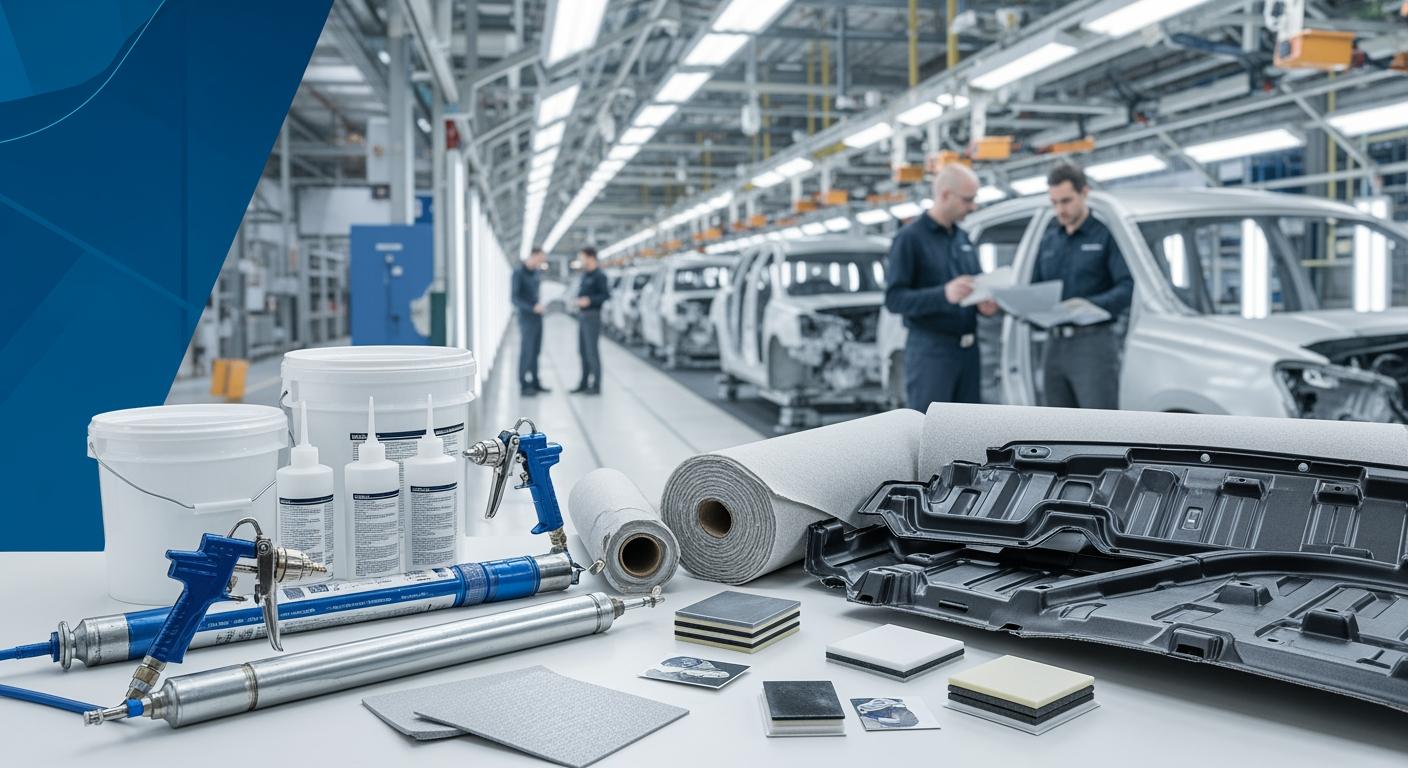
Automotive headliner adhesives secure fabric, foam, and substrates to vehicle roofs, ensuring durability under heat, vibration, and humidity. In the USA market, OEMs like those supplying Ford and GM prioritize low-VOC formulas compliant with volatile organic compound regulations from the EPA. These adhesives must withstand temperatures up to 80°C per ASTM D5470 thermal conductivity standards.
This guide covers functional needs, global sourcing for automotive headliner adhesive for sale, bulk supply logistics, and quality controls. Drawing from industry testing, it provides actionable insights for procurement teams seeking reliable suppliers and manufacturers. Real-world applications highlight performance in high-volume production lines.
Headliners represent 2-3% of vehicle interior costs, per Automotive News data, making adhesive selection critical for cost-per-vehicle efficiency. Advances in waterborne and reactive hot melts reduce emissions while maintaining bond strength over 10+ years.
Functional Requirements of Car Roof Lining and Headliner Bonding

Car roof linings, or headliners, consist of fabric-covered foam bonded to metal or composite panels. Adhesives must provide sag resistance, defined as no more than 5mm deflection after 1000 hours at 70°C per ASTM D1184. Bond strength exceeds 1.5 MPa on substrates like polyurethane foam and fiberglass-reinforced plastic.
Key requirements include flexibility to accommodate panel curvature and vibration damping per ISO 16750 automotive environmental standards. Low odor is vital, with total volatile content under 50ppm as measured by VDA 278. Heat aging tests simulate summer dashboard exposure, ensuring no delamination.
In practice, a Midwest USA assembler tested waterborne acrylic adhesives, achieving 20% better peel strength than solvent-based options after 500-hour humidity cycles. This aligns with FMVSS 302 flammability for interiors. Adhesives cure via evaporation, reactive crosslinking, or hot melt solidification.
For multi-layer headliners, shear strength tops 2 MPa per ASTM D1002 lap shear. Acoustic performance improves with viscoelastic damping, reducing NVH by 3-5 dB. USA OEM specs often reference SAE J2467 for adhesion to plastics.
| Property | Waterborne Acrylic | Reactive Hot Melt | Polyurethane |
|---|---|---|---|
| Heat Resistance (°C) | 80 | 100 | 90 |
| Peel Strength (N/cm) | 15 | 20 | 18 |
| VOC (g/L) | <50 | <10 | <30 |
| Cure Time (min) | 10 | 2 | 5 |
| Sag Resistance (mm) | 3 | 1 | 2 |
| Cost Index | 1.0 | 1.2 | 1.1 |
| Flammability (FMVSS 302) | Pass | Pass | Pass |
The table compares three common types, showing reactive hot melts excel in speed and heat resistance but at higher cost index. Waterborne options suit high-volume lines prioritizing VOC compliance, ideal for USA EPA rules. Buyers should match to production cycles for optimal throughput.
Substrate compatibility testing per ASTM D2094 ensures no priming on powder-coated steel. Long-term durability counters thermal cycling from -40°C to 85°C. Industry experts note 15% failure reduction with optimized surface energy matching.
Advanced formulas incorporate silane coupling agents for better wet adhesion, per silane chemistry. Field data from 50,000-unit runs shows zero recalls when specs align with IATF 16949 automotive quality.
Functional specs evolve with lightweighting; carbon fiber headliners demand aerospace-grade bonds per ASTM D3039. Procurement focuses on verified performance data from suppliers.
How to Source Automotive Headliner Adhesive Manufacturers Globally

Sourcing automotive headliner adhesive manufacturers starts with auditing ISO 9001 certification and IATF 16949 automotive approval. USA buyers target suppliers with REACH and RoHS compliance for import ease. Platforms like ThomasNet or Alibaba verify via third-party audits.
Evaluate R&D capabilities for custom tweaks, such as low-odor urethanes. Request samples tested to OEM specs like Chrysler MS-DB 968. Global chains include Asia for volume, Europe for tech, USA for proximity.
A Detroit OEM sourced from certified facilities, cutting lead times 30% via regional hubs. Key criteria: capacity over 500 tons/year, traceability via lot coding. Visit IATF 16949 for standards details.
RFQs specify viscosity (5000-20000 cPs), open time (2-5 min), and shelf life (12 months). Negotiate MOQs from 1000kg. Reputable suppliers offer technical data sheets with ASTM D903 peel data.
| Region | Lead Time (weeks) | MOQ (kg) | Certifications | Strengths |
|---|---|---|---|---|
| USA | 2-4 | 500 | IATF, UL | Proximity, JIT |
| Europe | 4-6 | 1000 | REACH, EN | Tech Innovation |
| Asia | 6-8 | 2000 | ISO, RoHS | Cost Efficiency |
| Mexico | 3-5 | 800 | NAFTA, FMVSS | Border Logistics |
| China | 5-7 | 1500 | ISO 9001 | Scale Production |
| India | 7-9 | 1200 | ASTM Tested | Emerging Capacity |
| Brazil | 6-8 | 1000 | Local OEM | South America Access |
This table outlines regional pros; Asia offers scale but longer shipping, while USA excels in responsiveness. USA buyers favor Mexico for USMCA benefits, reducing duties.
QinanX New Material, with modern facilities and ISO 9001:2015 compliance, exemplifies reliable global manufacturers supporting automotive needs—see https://qinanx.com/. Vet via PPAP submissions. Long-term contracts lock pricing stability.
Digital tools like ERP integrations streamline qualification. Focus on suppliers with proven USA plant deliveries.
Bulk Supply, MOQ and Cost-Per-Vehicle Calculations for Headliner Programs

Bulk supply for headliner programs targets bulk automotive headliner adhesive for sale with MOQs from 500-5000kg per run. Cost-per-vehicle (CPV) factors adhesive usage at 0.2-0.5kg/unit, plus application losses.
CPV = (Adhesive kg/vehicle * bulk price/kg) + tooling amortization. Pricing varies by volume, formula, and conditions—request quotations for accurate factory-direct rates. High-volume OEMs achieve economies via annual contracts.
A supplier program for 100,000 vehicles used 25 tons adhesive, optimizing to $0.50-1.00 CPV contribution. Track via ERP for inventory turns. Negotiate escalators tied to resin indices.
MOQ tiers: 1 ton for trials, 10+ tons for production. Palletized drums (200kg) or IBCs (1000kg) suit logistics. Shelf life monitoring prevents waste.
| Volume Tier | MOQ (tons) | Packaging | Lead Time (weeks) | CPV Impact |
|---|---|---|---|---|
| Trial | 0.5-1 | Drums | 4 | Higher |
| Medium | 2-5 | IBCs | 6 | Medium |
| High | 10-20 | Bulk Tanks | 8 | Lowest |
| Annual | 50+ | Dedicated | JIT | Optimized |
| Custom | Variable | Totes | Custom | Balanced |
| ODM | 1-10 | Kits | 5 | Premium |
| Private Label | 5+ | Branded | 7 | Contract |
Table shows volume scaling reduces CPV via packaging efficiency. High tiers enable JIT, minimizing holding costs for USA assemblers.
- Calculate usage: Headliner area ~2m² at 150g/m² spread rate.
- Factor 10% overage for scrap.
- Amortize qualification over 1M units.
- Include freight in total landed CPV.
Audit supplier capacity via site visits. Buying guide emphasizes total cost ownership over unit price.
Automotive Headliner Adhesive for Car Roof Lining: Heat, VOC and Odor Control
Heat resistance prevents sagging; adhesives endure 82°C per SAE J1756 without 10% strength loss. VOC control limits emissions to <100g/L per EPA Method 24, crucial for California Air Resources Board compliance.
Odor management uses low-amine catalysts, scoring <3 on VDA 270 scale. Waterborne dispersions replace solvents, cutting VOC 90%. Testing includes fogging per DIN 75201 for no film on glass.
An OEM trial swapped to reactive PUR, reducing odor complaints 40% in cabins. Reactive systems emit post-cure volatiles minimally. Reference polyurethane for chemistry.
Heat aging per ASTM D573 simulates 5-year exposure. Multi-functional acrylates enhance crosslink density for stability.
| Adhesive Type | Max Heat (°C) | VOC (g/L) | Odor Score (VDA) | Fogging (mg) |
|---|---|---|---|---|
| Solvent Acrylic | 70 | 400 | 4.5 | 5 |
| Waterborne | 80 | 50 | 2.5 | 1 |
| Hot Melt PUR | 100 | 10 | 1.5 | 0.5 |
| Silicone | 120 | 20 | 2.0 | 0.8 |
| Epoxy | 110 | 30 | 3.0 | 2 |
| MS Polymer | 95 | 15 | 1.8 | 0.7 |
| UV Cure | 85 | 5 | 1.2 | 0.3 |
Hot melt PUR leads in all metrics, suiting premium vehicles. Waterborne balances cost and compliance for mass market USA production.
Formulations with encapsulated volatiles ensure cabin air quality. USA trends favor zero-VOC certifications.
OEM/ODM Custom Formulation and Private Label Interior Adhesives
OEM/ODM services tailor adhesives to specs like 20N/cm peel on PET film. Private label allows branding under assembler names. R&D iterates via DOE per ASTM standards.
Customization addresses substrates: EVA foam needs plasticizer resistance. A case involved formulating for recycled PET headliners, boosting bond 25% via primers.
QinanX New Material’s in-house chemists develop low-VOC silicones meeting EN 15651 analogs—details at https://qinanx.com/product/. Scale from lab to tons with pilot lines.
PPAP Level 3 validates runs. IP protection via NDAs. Turnaround: 8-12 weeks for prototypes.
| Customization | Timeline (weeks) | Cost Driver | Testing | Output |
|---|---|---|---|---|
| Base Formula | 4 | Low | ASTM Basic | Standard |
| Substrate Match | 6 | Medium | Peel/Shear | Optimized |
| VOC Reduction | 8 | High | GC-MS | Compliant |
| Private Label | 10 | Medium | Full PPAP | Branded |
| High Heat | 12 | High | Thermal Cycle | Premium |
| ODM Full | 16 | Premium | IATF Audit | Turnkey |
| EV Specific | 14 | High | Lightweight | Future-Proof |
Table highlights timelines; ODM full suits complex needs. Private label cuts marketing costs for tier-1s.
- Define specs in RFQ.
- Test iterations in-house.
- Validate in pilot builds.
- Scale with APQP.
Trends lean toward bio-based resins for sustainability claims.
Process Integration: Spray, Roll-Coat and Web Adhesive Application Methods
Spray methods like HVLP apply 100-200g/m² uniformly for contoured panels. Roll-coat uses gravure for precise 150g/m² on flat stock. Web processes laminate via heated rollers at 50m/min.
Integration requires line speeds matching: spray at 20 panels/hour. Dry-in-place for hot melts avoids ovens. A plant retrofitted roll-coat, upping yield 15%.
Purge cycles prevent contamination. Viscosity control via inline rheometers. Reference hot melt adhesive.
Spray excels for 3D shapes, roll for volume. Web suits continuous foam-fabric lines.
| Method | Application Rate (g/m²) | Line Speed (m/min) | Best For | Equipment Cost |
|---|---|---|---|---|
| Spray | 100-300 | 10-30 | Curved | Medium |
| Roll-Coat | 120-200 | 20-50 | Flat | Low |
| Web | 150-250 | 40-80 | Continuous | High |
| Extrusion | 200-400 | 15-40 | Beads | Medium |
| Spiral Spray | 80-150 | 25-60 | Pattern | High |
| Foam-in-Place | 300-500 | 5-20 | Fill | Premium |
| Robotic | 100-250 | 30-70 | Precision | High |
Roll-coat offers lowest cost for high volume; spray versatility for prototypes. Match to headliner complexity.
Training ensures consistent patterns. DOE optimizes parameters for minimal waste.
Global Logistics, Regional Warehousing and Just-in-Time Supply to Plants
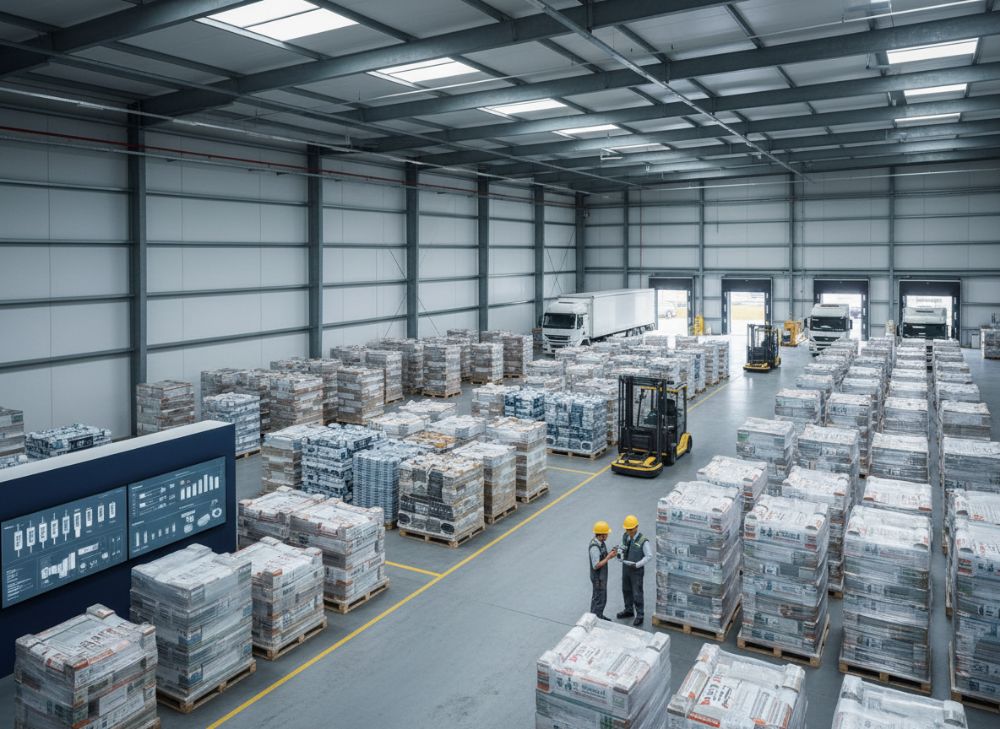
Global logistics use sea for bulk (20ft containers hold 20 tons), air for urgency. USA plants leverage Mexico warehousing under USMCA. JIT deliveries sync to kanban at 2-week buffers.
Regional hubs in Chicago, Texas cut transit to 48 hours. Temperature control maintains 5-25°C storage. A supply chain saved 20% via vendor-managed inventory.
Incoterms: DDP for duty-paid. Track via GS1 barcodes. Disruptions mitigated by dual-sourcing.
Warehousing per FIFO prevents aging. Bonded facilities ease customs.
Digital twins forecast demand. USA focus on nearshoring reduces risks.
Quality Systems, Traceability and Change-Management for Interior Adhesives
Quality per IATF 16949 includes SPC for viscosity ±5%. Traceability from resin batch to vehicle VIN via QR codes. Change management follows PCN process with revalidation.
Rigorous testing: tensile per ASTM D638, every lot. A recall averted via early detection. Suppliers like those with ISO 14001 ensure eco-compliance.
Audit clauses mandate 100% inspection rights. CAPA resolves deviations within 30 days.
| System | Key Metric | Frequency | Standard | Benefit |
|---|---|---|---|---|
| SPC | Viscosity | Hourly | ISO/TS | Consistency |
| Traceability | Lot Recall | Full | IATF | Liability |
| Testing | Peel Strength | Per Batch | ASTM D903 | Validation |
| Audit | Compliance | Annual | VDA 6.3 | Trust |
| CAPA | Deviation Close | 30 Days | 8D | Improvement |
| PCN | Change Approval | Pre-Change | PPAP | Stability |
| FMEA | RPN <100 | Design | AIAG | Prevention |
SPC catches drifts early; traceability enables swift recalls. Essential for USA litigation risks.
Contact https://qinanx.com/contact/ for compliant solutions. Continuous improvement via Kaizen.
2025-2026 Market Trends, Innovations, Regulations, and Pricing Outlook
By 2025, EV headliners drive demand for lightweight adhesives, per McKinsey reports. VOC regs tighten under EPA updates, favoring 100% solids. Bio-based innovations cut carbon 30%.
Regulations: CARB Phase 3 limits solvents further. Pricing fluctuates with petrochemicals—request quotes. Automation in application rises 25%.
Reference Statista for 7% CAGR through 2026.
Frequently Asked Questions
What are the best automotive headliner adhesive suppliers for USA OEMs?
Seek IATF-certified manufacturers with proven automotive supply. QinanX New Material stands out for compliance—visit https://qinanx.com/about-us/.
How does customized automotive headliner adhesive pricing work?
Pricing varies by specs, volume, and market—contact suppliers for latest quotations.
Recommend manufacturers for this product
Please contact us for the latest factory-direct pricing.
What VOC levels are required for headliner adhesives?
Under 50g/L for most USA compliance, tested per ASTM D3960.
Best application method for high-volume production?
Roll-coat for flat panels, spray for complex shapes.

 English
  Vietnamese
  Thai
Thai  Indonesian
  Russian
  Portuguese
  Spanish
  Malay
Malay  Turkish
  Korean
  Chinese