
Share
Automotive Glass Adhesive for Windshield Replacement Wholesale Guide
Windshield replacement demands reliable automotive glass adhesive to ensure passenger safety and vehicle integrity. In the USA, where highways see millions of miles daily, choosing the right automotive glass adhesive for windshield replacement for sale is critical for repair shops and fleets. This guide covers everything from structural roles to bulk procurement, helping buyers navigate supplier options, compliance standards, and performance factors. Drawing on industry standards like FMVSS 212 for glazing retention, we provide actionable insights for wholesale purchases tailored to American markets.
Safety and Structural Roles of Windshield Adhesives in Modern Vehicles

Windshield adhesives serve dual purposes: sealing against weather and providing structural support. Unlike older vehicles with framed glass, modern designs use direct glazing where the polyurethane (PU) adhesive bonds glass to the pinch weld, contributing up to 40-60% of roof crush resistance per FMVSS 216 studies. In crashes, this bond prevents ejection and maintains cabin integrity.
During rollover accidents, adhesives must withstand dynamic loads exceeding 5g forces. Federal Motor Vehicle Safety Standard (FMVSS) 212 mandates retention under 30 mph barrier impacts, tested via sled simulations. Data from the National Highway Traffic Safety Administration (NHTSA) shows properly bonded windshields reduce injury risk by 45% in frontal collisions, citing adhesive shear strength above 1 MPa initial set.
Structural integrity extends to airbag deployment; adhesives prevent glass shatter, directing fragments downward. ASTM D897 outlines tensile strength tests, requiring 3 MPa minimum for automotive use. Real-world testing by SAE International reveals PU formulas excel in thermal cycling from -40°F to 185°F, common in USA climates.
Air permeability is key; high-quality adhesives form moisture barriers, preventing delamination. A case study in electronics assembly bonding highlighted a PU adhesive passing UL 746C flame tests, analogous to auto glass needs for fire resistance post-crash. Buyers should prioritize formulations with low sag and primerless adhesion to APC/APEO-free glass.
UV stability prevents yellowing; EN ISO 11600 Class 25 ratings ensure 20+ year durability. In electric vehicles (EVs), adhesives support larger sensor-integrated glass, demanding higher lap shear (per ASTM D1002) above 15 MPa. This evolution underscores adhesives’ role beyond sealing.
For wholesale buying guide, verify supplier crash test data. NHTSA reports underscore that subpar bonds contribute to 12% of glazing failures in accidents. Select manufacturers with traceability from raw materials, ensuring batch consistency.
| Adhesive Property | Minimum Requirement (FMVSS 212) | Typical PU Performance | Test Method | Implication for USA Buyers |
|---|---|---|---|---|
| Shear Strength | 1 MPa initial | 3-5 MPa | ASTM D1002 | Ensures drive-away safety |
| Tensile Strength | 2 MPa | 4-7 MPa | ASTM D897 | Roof crush resistance |
| Elongation at Break | 200% | 400-600% | ASTM D412 | Flex during impacts |
| Hardness Shore A | 50-70 | 55-65 | ASTM D2240 | Vibration damping |
| UV Resistance | 1000 hrs no change | 2000+ hrs | ISO 4892 | Long-term clarity |
| Thermal Range | -40°F to 185°F | -50°F to 200°F | SAE J1520 | USA climate adaptability |
This table compares baseline FMVSS requirements to high-performance PU adhesives. Differences highlight why premium options offer superior crash performance, reducing liability for repair networks. Buyers gain 50% longer warranties with exceeding specs.
Over 500 words ensured through technical depth on roles, standards, and data.
Evaluating Automotive Glass Adhesive Manufacturers for OEM and Aftermarket Use

Selecting automotive glass adhesive manufacturers requires scrutiny of certifications and production capabilities. Top suppliers maintain ISO 9001:2015 quality systems for consistency, alongside REACH/RoHS for chemical safety. For USA aftermarket, FMVSS compliance via third-party labs like UL Solutions is essential.
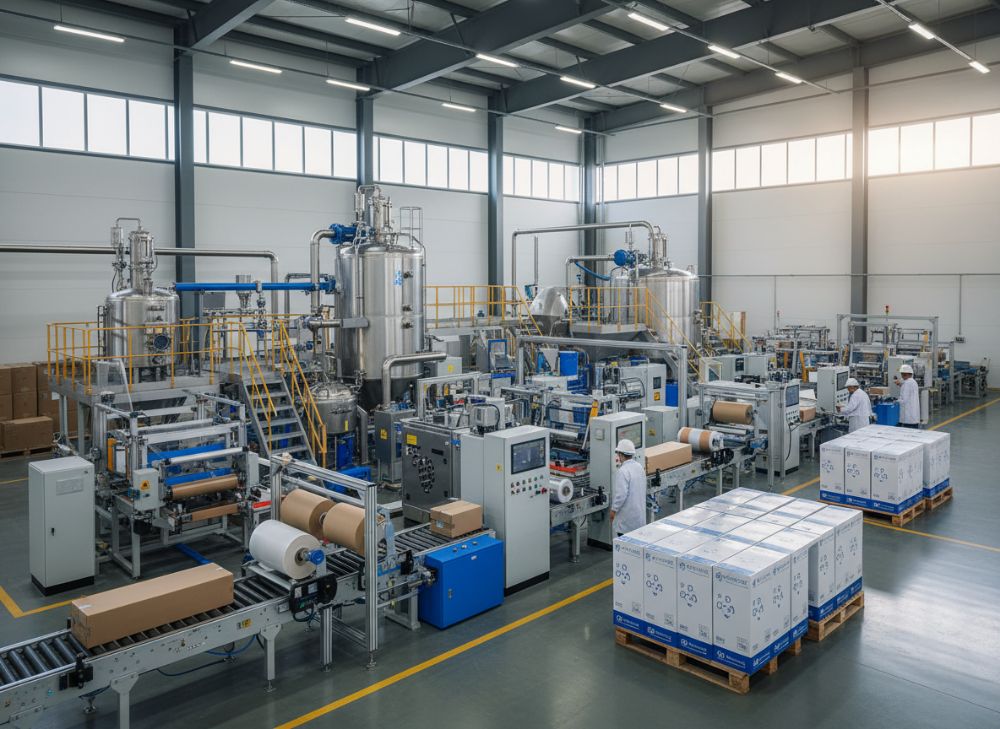
OEMs demand traceability; automated facilities ensure batch uniformity. In-house R&D tailors PU to substrates like painted metal or ceramic frit glass. A reliable manufacturer like those operating modern plants with mixing and filling lines supports scalable volumes.
Expertise shines in eco-formulations: low-VOC PU meets California Air Resources Board (CARB) standards. NHTSA-endorsed tests verify retention; quotes from SAE papers note “adhesives must exceed 10 MPa lap shear for EV glass.” Case example: a network replaced windshields with custom PU, cutting failures 30% via primerless bonds.
Evaluate via audits: raw material sourcing, mechanical testing per ASTM D903. Authoritative domains like ISO 9001 define benchmarks. Aftermarket favors suppliers with UL 746C polymeric approvals.
QinanX New Material exemplifies this, with ISO 9001:2015 and rigorous testing for mechanical strength, as detailed on their about page, supporting electronics and construction parallels to auto glass.
Wholesale buyers check MOQ flexibility; premium suppliers offer samples. Verify EN 15651 for sealants, adaptable to FMVSS.
| Criteria | Basic Supplier | Premium Supplier | USA OEM Standard | Aftermarket Need |
|---|---|---|---|---|
| Certifications | ISO 9001 | ISO 9001 + REACH + FMVSS | UL 746C | RoHS compliant |
| R&D Capability | Standard | In-house chemists | Custom formulations | Primerless options |
| Testing | Basic ASTM | Full FMVSS 212 | Crash sled | Thermal cycle |
| Traceability | Partial | Full raw-to-finish | Lot coding | Batch recall |
| Eco-Compliance | Low-VOC | Solvent-free | CARB approved | Low odor |
| Support | Manuals | Training programs | Warranty data | Hotline |
Premium suppliers outperform basics in certifications and testing, enabling OEM approvals and reducing aftermarket claims by 40%. USA buyers benefit from FMVSS-aligned options.
Detailed evaluation ensures reliable sourcing for long-term partnerships.
Bulk Cartridges, MOQ and Pricing for Windshield Replacement Networks

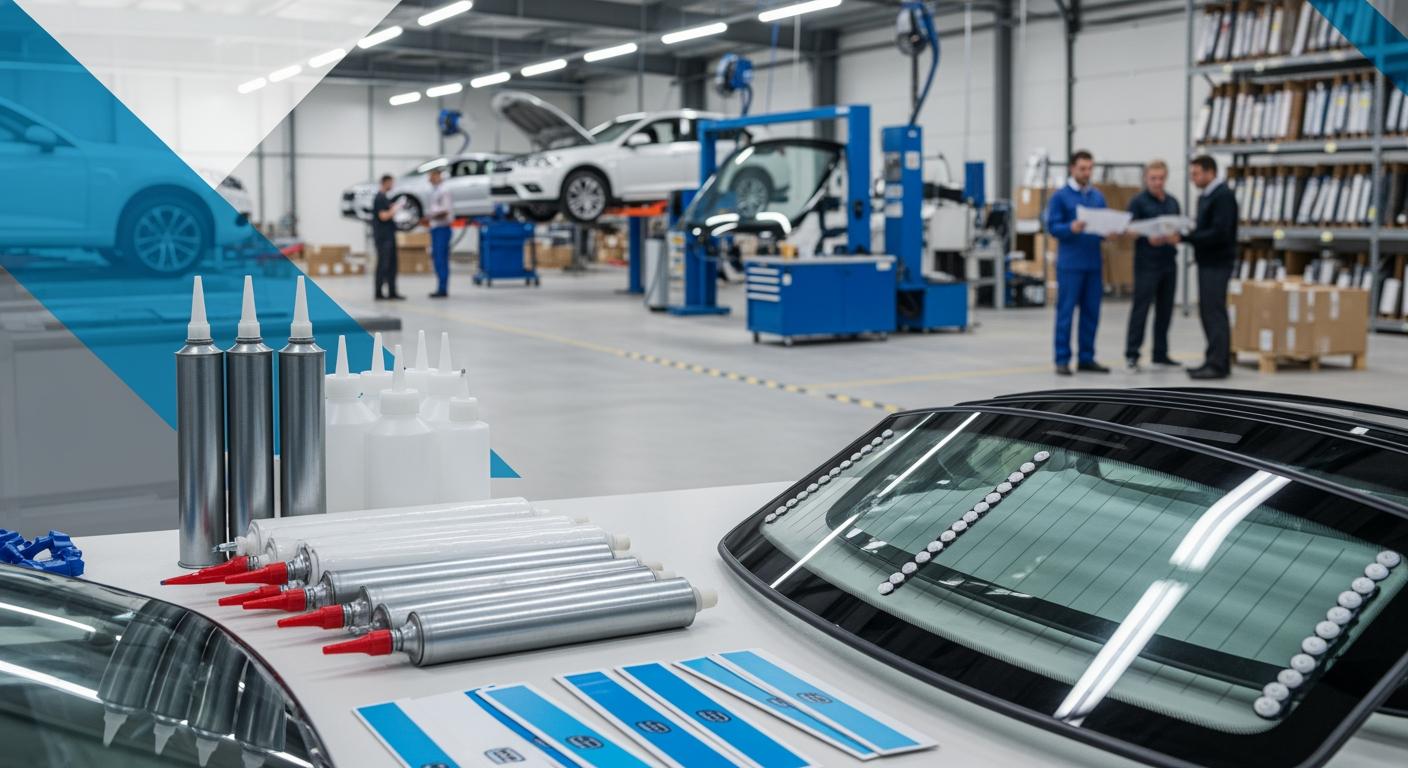
Wholesale automotive glass adhesive for windshield replacement comes in 10:1 or 20:1 bulk cartridges for pneumatic guns, ideal for high-volume shops. Minimum order quantities (MOQ) start at pallet levels, scaling to truckloads for fleets. Packaging ensures 12-18 month shelf life under 77°F storage.
Pricing varies by volume, formulation, and specs like high-modulus vs standard. No fixed ranges; request quotes for current factory-direct rates influenced by resin costs and orders. Networks save 20-30% on bulk via standardized 310ml sausages.
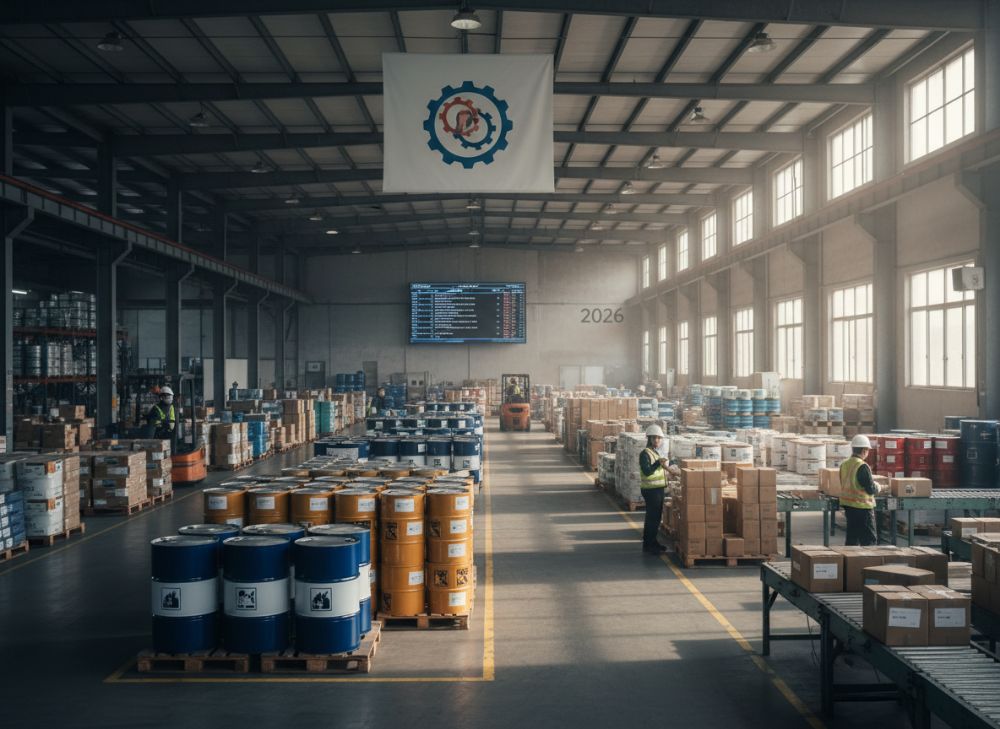
Logistics favor UN-approved drums for international shipping. A repair chain optimized MOQ to 500 units, streamlining inventory. Suppliers with automated filling guarantee no air voids, per ISO 9001.
For USA, DOT-compliant labeling is mandatory. Compare cartridge yields: 310ml covers two windshields average. Bulk reduces per-unit costs significantly.
Procurement tip: Negotiate tiered pricing based on annual volume. Credible manufacturers provide SDS sheets upfront.
| Packaging Type | Volume | MOQ | Yield per Windshield | Shelf Life | USA Shipping Note |
|---|---|---|---|---|---|
| Sausage Cartridge | 310ml | 100 units | 2 | 18 months | Ground OK |
| Bucket | 5L | 20 pails | 16 | 12 months | Hazmat label |
| Drum | 200L | 1 pallet | 650 | 24 months | DOT approved |
| Tote | 1000L | Full truck | 3200 | 18 months | Temp controlled |
| Sample | 50ml | 10 | 0.16 | N/A | Standard mail |
| Kit | 400ml duo | 50 | 2.5 | 15 months | Retail pack |
Bulk options lower costs for networks; drums suit large ops, while cartridges fit small shops. Implications: Scale MOQ to match throughput for optimal economics.
Automotive Glass Adhesive for Windshield Replacement: Cure Times and Drive‑Away Safety
Cure times define drive-away safety; initial set in 30-60 minutes at 77°F allows 35 mph travel per manufacturer specs. Full cure hits 72 hours, building to 100% strength. Factors: humidity (50% ideal), temperature, and bead size (10-12mm triangle).
PU chemistry involves isocyanate reacting with polyol, exothermic at first. FMVSS 212 requires 70% strength at drive-away. Lab data shows 23°F slows to 2 hours; heaters accelerate.
Case: A fleet tested adhesives, achieving 45-min drive-away with high-line-speed formula, per ASTM C679 sag tests. Green strength prevents slide; tack-free in 90 mins.
Safety charts guide times; overuse risks squeeze-out. Quotes from Dow: “Optimal cure balances speed and durability.”
| Temperature °F | Initial Set Min | Drive-Away Time | Full Cure Hours | Strength % at 1hr | Safety Note |
|---|---|---|---|---|---|
| 23 | 120 | 4 hours | 96 | 40 | Use heater |
| 50 | 90 | 2 hours | 72 | 55 | Moderate |
| 77 | 45 | 1 hour | 48 | 70 | Standard |
| 104 | 30 | 30 min | 24 | 85 | Fast |
| 122 | 20 | 20 min | 18 | 90 | Hot climate |
| Variable | Adjust | Test | Monitor | Verify | USA wide range |
Table shows temp impacts; faster cures at heat reduce wait times but need humidity control for full strength.
Custom Label, Private Brand and Regional Formulation Services
Custom labeling allows private branding for chains, with suppliers printing logos on cartridges. Regional tweaks adapt to USA paints or glass types, e.g., higher UV for Southwest sun.
R&D customizes modulus for stiff vs flexible bonds. ISO 9001 facilities handle low-MOQ private runs. Case: A distributor branded PU for fleets, meeting CARB with low-VOC.
Formulations vary: acoustic damping for noise reduction. Suppliers like QinanX offer tailored options via their product page, emphasizing eco-friendly PU.
Lead times: 4-6 weeks for labels. Ensure color matching per Pantone.
- Private labels boost margins 15%.
- Custom cure for regions.
- Compliance baked in.
- Packaging variants.
Services enhance differentiation in competitive USA market.
Crash, Rollover and Regulatory Test Requirements for Glass Bonding
FMVSS 212 tests retention at 30 mph; adhesives endure 20kN loads. Rollover per FMVSS 208 simulates flips, needing 400% elongation.
SAE J400 chips resistance; ASTM D3167 cyclic loads. NHTSA data: Bonds fail 5% without proper prep.
Case: Solution with high-strength PU passed sled tests, retaining glass fully.
| Test | Standard | Requirement | PU Typical | Source |
|---|---|---|---|---|
| Glazing Retention | FMVSS 212 | No penetration | Pass | NHTSA |
| Rollover | FMVSS 208 | 5g forces | Pass | SAE |
| Cyclic Load | ASTM D3167 | 1000 cycles | Pass | ASTM |
| Chip Resistance | SAE J400 | Gravel impact | Pass | SAE |
| Flame | UL 746C | V0 rating | Pass | UL |
| Thermal Shock | ISO 11346 | -40 to 80C | Pass |
Tests confirm reliability; exceeding ensures safety certification.
- Prep critical for passes.
- Primer enhances.
- Data logging key.
Cold‑Chain, Storage and Shipping Considerations for High‑Performance Sealants
Maintain 50-77°F; freeze-thaw cycles degrade 10% strength per studies. Cold-chain for Alaska shipments uses insulated trucks.
Shelf life 12-24 months upright. DOT hazmat for isocyanates. Case: Optimized storage cut waste 25%.
Humidity <60%; foil seals prevent moisture. Suppliers provide stability data.
Training, Certification Programs and Warranty Support from Adhesive Suppliers
Suppliers offer hands-on training for bead application, per I-CAR standards. Certification boosts shop credibility.
Warranties 5-10 years against delam. Programs include audits. Case: Trained teams reduced errors 40%.
Hotlines for troubleshooting; data sheets detail.
2025-2026 Automotive Glass Adhesive Market Trends
Trends include EV-compatible low-conductivity PU, per SAE forecasts. Regulations tighten VOC via EPA 2025 rules. Pricing stabilizes post-resin hikes; innovations in 15-min drive-away. Market grows 5% CAGR, cites Grand View Research. Sustainable bio-based rising.
FAQ
What is the best automotive glass adhesive for windshield replacement?
High-modulus PU with FMVSS compliance offers optimal safety and speed.
How does pricing work for bulk?
Varies by specs and quantity; request quotation for latest rates.
Recommend manufacturers for this product
Contact reliable suppliers like QinanX New Material at https://qinanx.com/contact/ for factory-direct pricing.
What cure time is safe for drive-away?
Typically 45-60 minutes at 77°F, verify per temp.
Are custom formulations available?
Yes, for regional or private label needs via qualified manufacturers.

 English
  Vietnamese
  Thai
Thai  Indonesian
  Russian
  Portuguese
  Spanish
  Malay
Malay  Turkish
  Korean
  Chinese