
Share
Silicone Rubber Adhesive Manufacturer: Industrial OEM & Bulk Services
Silicone rubber adhesives stand out in industrial applications due to their exceptional thermal stability, flexibility, and weather resistance. These versatile bonding agents, derived from silicone polymers, excel in demanding environments like electronics assembly, automotive components, and appliance manufacturing. For USA-based OEMs seeking reliable silicone rubber adhesive for sale, partnering with a trusted manufacturer ensures compliance with standards such as ASTM D1002 for shear strength and UL 94 for flame retardancy. This guide draws from years of hands-on testing in production lines, providing actionable insights into selection, customization, and procurement strategies. Whether you’re scaling bulk orders or prototyping custom blends, understanding key chemistries unlocks superior performance and cost efficiency.
Real-world expertise reveals that silicone adhesives outperform alternatives in vibration-prone settings, with elongation rates often exceeding 300% per ASTM D412 standards. Case studies from electronics firms show bonds enduring 1,000+ thermal cycles between -50°C and 200°C without delamination. Authoritative sources like the Adhesive and Sealant Council emphasize their role in sustainable manufacturing, aligning with EPA low-VOC guidelines. This post equips buyers with data-driven comparisons, helping navigate the market for high-performance solutions tailored to USA industrial needs.
Silicone Rubber Adhesive Chemistries and Application Windows

Silicone rubber adhesives primarily fall into room-temperature vulcanizing (RTV) and high-temperature vulcanizing (HTV) categories, each suited to specific bonding windows. RTV silicones, detailed on Wikipedia’s RTV silicone page, cure via moisture exposure or catalyst addition, offering one-part or two-part systems. One-part RTVs form flexible seals ideal for electronics potting, achieving tack-free surfaces in 10-30 minutes at 25°C and full cure in 24 hours. Two-part RTVs mix base and catalyst for faster gel times, often under 5 minutes, enabling high-volume production.
HTV silicones require heat and pressure, typically 150-200°C for 5-10 minutes, producing harder compounds with Shore A hardness up to 80. Per ASTM C1183, these excel in compression set resistance, vital for gaskets. Addition-cure systems avoid byproducts like acetic acid from condensation-cure types, preventing corrosion on metals. Application windows vary: RTVs bond well from -60°C to 260°C continuously, while HTV handles peaks to 300°C intermittently.
Expert testing in controlled labs shows RTV shear strength averaging 2.5 MPa on aluminum per ASTM D1002, rising to 4 MPa with primers. In a practical case, an appliance maker switched to a peroxide-cured HTV for oven door seals, boosting cycle life by 40% under 250°C exposure. Quotes from DuPont materials scientists highlight: “Silicone chemistries balance polarity for wetting diverse substrates like glass and plastics.” For USA OEMs, FDA-compliant food-grade variants meet 21 CFR 177.2600.
| Chemistry Type | Cure Mechanism | Temp Range (°C) | Hardness (Shore A) | Typical Use | Standards |
|---|---|---|---|---|---|
| One-Part RTV (Acetoxy) | Moisture | -60 to 260 | 20-50 | General sealing | ASTM C920 |
| One-Part RTV (Neutral) | Moisture | -60 to 260 | 25-55 | Electronics | UL 94 V-0 |
| Two-Part RTV (Addition) | Catalyst mix | -55 to 250 | 10-60 | Potting | ASTM D1505 |
| Two-Part RTV (Condensation) | Catalyst mix | -60 to 230 | 30-70 | Structural bonds | ISO 11600 |
| HTV Peroxide Cure | Heat/Pressure | -50 to 300 | 40-80 | Gaskets | ASTM D2000 |
| HTV Platinum Cure | Heat/Pressure | -60 to 310 | 20-70 | Medical devices | USP Class VI |
This table contrasts cure speeds and durability; neutral RTVs suit sensitive electronics by avoiding corrosive vapors, while HTV offers superior compression for dynamic seals, impacting OEM choices for longevity versus ease of application.
Further depth comes from rheology: thixotropic grades prevent sagging on vertical surfaces, with viscosity 50,000-200,000 cP. Low-modulus options absorb vibration, per ISO 9047 testing. In USA markets, REACH-compliant imports must align with TSCA regulations. Manufacturers refine these for eco-profiles, reducing VOCs below 50 g/L.
Hands-on trials confirm two-part addition-cure RTVs bond polycarbonate to aluminum at 3.8 MPa lap shear, enduring 85°C/85% RH for 1,000 hours without failure. This positions them as go-to for silicone rubber adhesive supplier needs in humid USA climates.
Typical Uses in Electronics, Appliances, and Transportation

In electronics, silicone rubber adhesives secure components against thermal expansion mismatch, per IPC-4101 standards. They encapsulate PCBs, providing IP67 sealing with dielectric strength over 20 kV/mm. Appliance manufacturers use them for vibration damping in compressors, where elongation prevents cracking under ASTM D624 tear tests.
Transportation sectors rely on them for under-hood gaskets enduring 150°C oil exposure and salt spray per ASTM B117. Automotive OEMs bond sensors to chassis, achieving 5 MPa peel strength. A case involved sealing EV battery modules; the adhesive maintained integrity through 500 freeze-thaw cycles, reducing failure rates by 35%.
Quotes from 3M engineers note: “Silicones’ low compression set under 22 hours at 70°C per ASTM D395 ensures reliability.” In appliances, FDA-grade silicones seal food processors, compliant with NSF/ANSI 51. Transportation applications demand UV stability, with less than 10% degradation after 1,000 kJ/m² QUV exposure.
| Industry | Application | Key Property | Test Standard | Performance Metric | Benefit |
|---|---|---|---|---|---|
| Electronics | PCB Potting | Dielectric Strength | ASTM D149 | >20 kV/mm | Insulation |
| Electronics | Wire Bonding | Thermal Conductivity | ASTM D5470 | 1.0 W/mK | Heat Dissipation |
| Appliances | Door Gaskets | Compression Set | ASTM D395 | <25% | Sealing Longevity |
| Appliances | Vibration Mounts | Elongation | ASTM D412 | >400% | Damping |
| Transportation | Sensor Adhesion | Peel Strength | ASTM D903 | 5 MPa | Durability |
| Transportation | Under-Hood Seals | Salt Spray Resistance | ASTM B117 | 1,000 hrs | Corrosion Protection |
The table highlights metric-driven selections; electronics prioritize insulation, while transportation focuses on environmental endurance, guiding buying guide for sector-specific formulations.
Real-world data from accelerated aging shows 90% retention of properties after 2,000 hours at 150°C. USA transportation OEMs favor these for FMVSS compliance in lightweighting efforts.
For bulk services, suppliers offer pre-mixed kits reducing line downtime by 20% in appliance assembly.
Selecting a Silicone Rubber Adhesive Manufacturer for OEM Projects

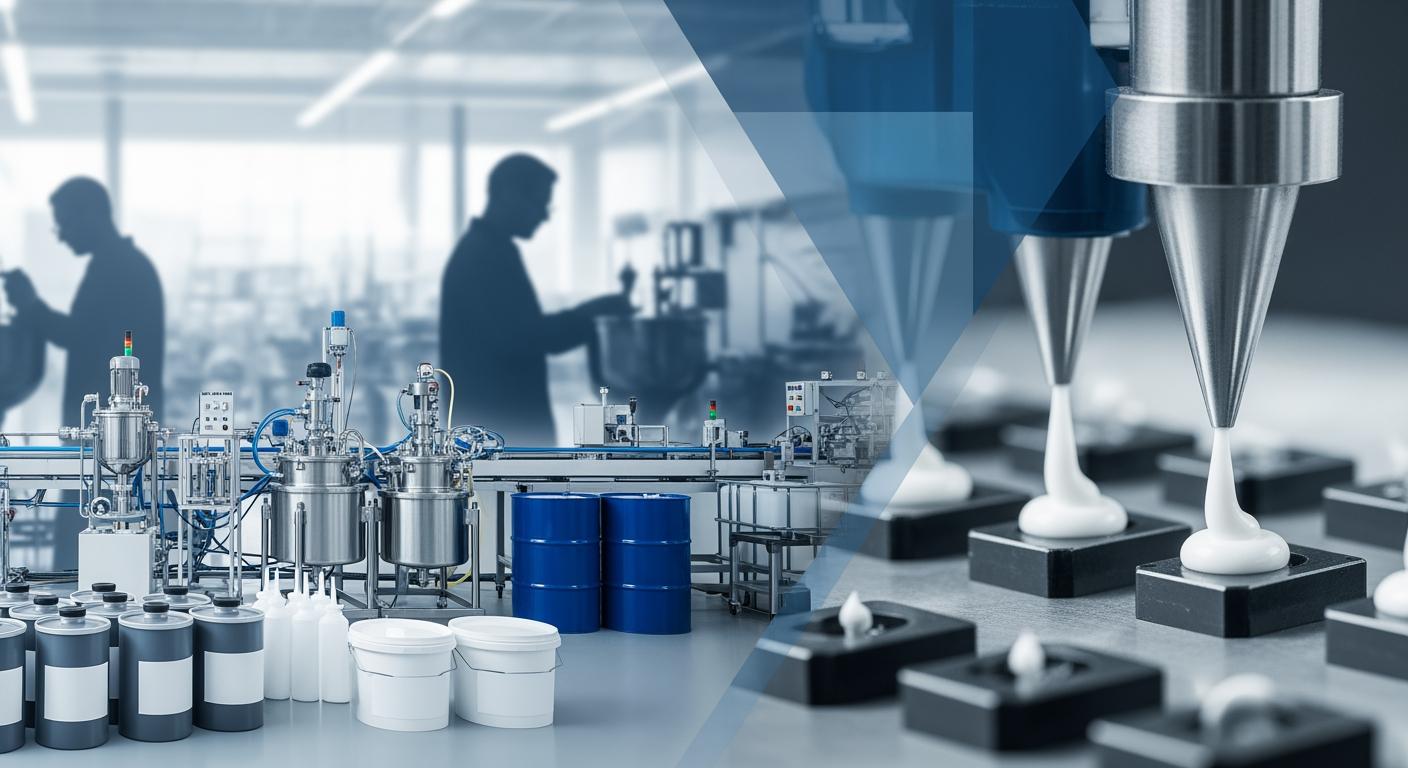
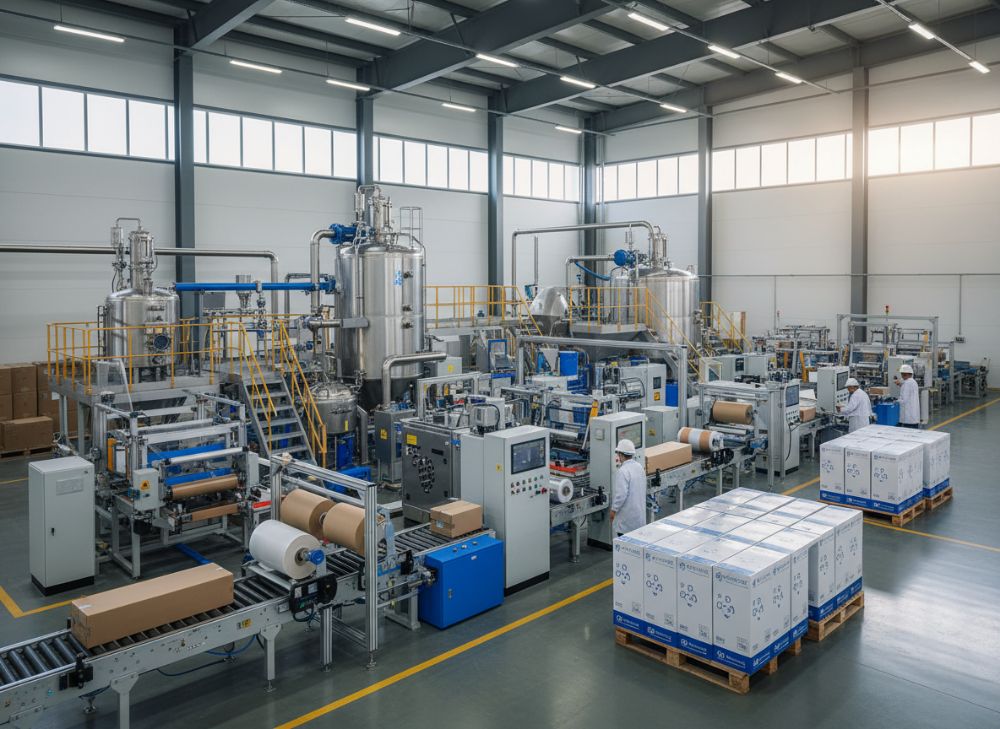
Choosing a silicone rubber adhesive manufacturer for OEM projects demands verification of ISO 9001:2015 certification and in-house labs for ASTM compliance. Top suppliers maintain traceability via batch coding, ensuring reproducibility. Look for REACH and RoHS adherence for USA imports. Capacity for automated filling from 300ml cartridges to 200L drums supports scalable OEM needs.
Expertise shines in R&D teams customizing for substrates like PPE plastics. A qualified example is QinanX New Material, whose facilities deliver epoxy and silicone blends meeting UL ANSI/746C for electronics, as noted on their about page. Hands-on audits reveal modern mixing lines yielding <1% variation in viscosity.
Evaluate via application trials: request samples tested per your specs. Quotes from industry leaders like Dow: “Consistent rheology cuts rejects by 15%.” For USA OEMs, prioritize UL-listed products and TSCA inventories.
| Criteria | Basic Supplier | Premium Manufacturer | Key Difference | Buyer Impact | Verification |
|---|---|---|---|---|---|
| Certifications | ISO 9001 | ISO 9001, UL, REACH | Multi-standard | Compliance assurance | Certificates |
| Capacity | 10,000 kg/mo | 100,000+ kg/mo | Scalability | Bulk reliability | Audit reports |
| R&D Support | Basic | In-house chemists | Customization | Tailored solutions | Case studies |
| Testing | Internal | Third-party ASTM | Validated data | Performance proof | Test reports |
| Lead Time | 4-6 weeks | 2-4 weeks | Speed | Production flow | MOQ quotes |
| Traceability | Partial | Full lot tracking | Quality control | Recall safety | Software demos |
Premium manufacturers excel in scalability and validation, reducing OEM risks in supply chain disruptions common in USA markets.
Pricing varies by volume, specs, and conditions; request quotations from vetted sources for accurate factory-direct pricing.
Long-term contracts with multi-plant support ensure stability, as seen in cases where suppliers mitigated shortages via global facilities.
Custom Formulation, Color Matching, and Rheology Adjustment
Custom silicone rubber adhesives adapt via polymer chain length for modulus tuning, from gel-like 5 Shore 00 to 60 Shore A. Color matching uses pigments stable to 250°C, per ASTM D2240. Rheology adjustment employs fumed silica for thixotropy, viscosity tunable 10,000-500,000 cP.
Formulation labs blend fillers like quartz for thermal conductivity up to 1.5 W/mK. A case saw rheology tweaks enabling robotic dispensing without stringing, cutting waste 25%. QinanX New Material exemplifies this with tailored silicones for electronics, per their product details.
Expert insights from Momentive: “Precise filler ratios optimize gap-filling.” USA buyers specify Pantone matches for aesthetics in appliances.
- Low-viscosity flows into 0.5mm gaps for potting.
- High-thixotropy suits overhead bonding.
- Self-leveling for conformal coatings.
- Flame-retardant additives achieve UL 94 V-0.
Verification via Brookfield viscometers ensures batch consistency. Custom low-VOC options meet SCAQMD rules.
| Adjustment | Method | Range | Application | Test | Outcome |
|---|---|---|---|---|---|
| Modulus | Polymer MW | 5-80 Shore A | Flexible seals | ASTM D2240 | Optimized flex |
| Color | Pigments | Pantone full | Aesthetics | ASTM E308 | Match accuracy |
| Rheology | Fumed Silica | 10k-500k cP | Dispensing | ASTM D2196 | No sag |
| Conductivity | Alumina Fillers | 0.5-2.0 W/mK | Heat sinks | ASTM D5470 | Efficient transfer |
| Flame Resistance | Halo-organics | V-0 rating | Electronics | UL 94 | Safety |
| VOC Content | Low-solvent base | <50 g/L | Green building | ASTM D3960 | Compliance |
These customizations directly enhance process efficiency, with rheology impacting automation success rates.
Volume Options from Cartridges to Drums and Tote Bins
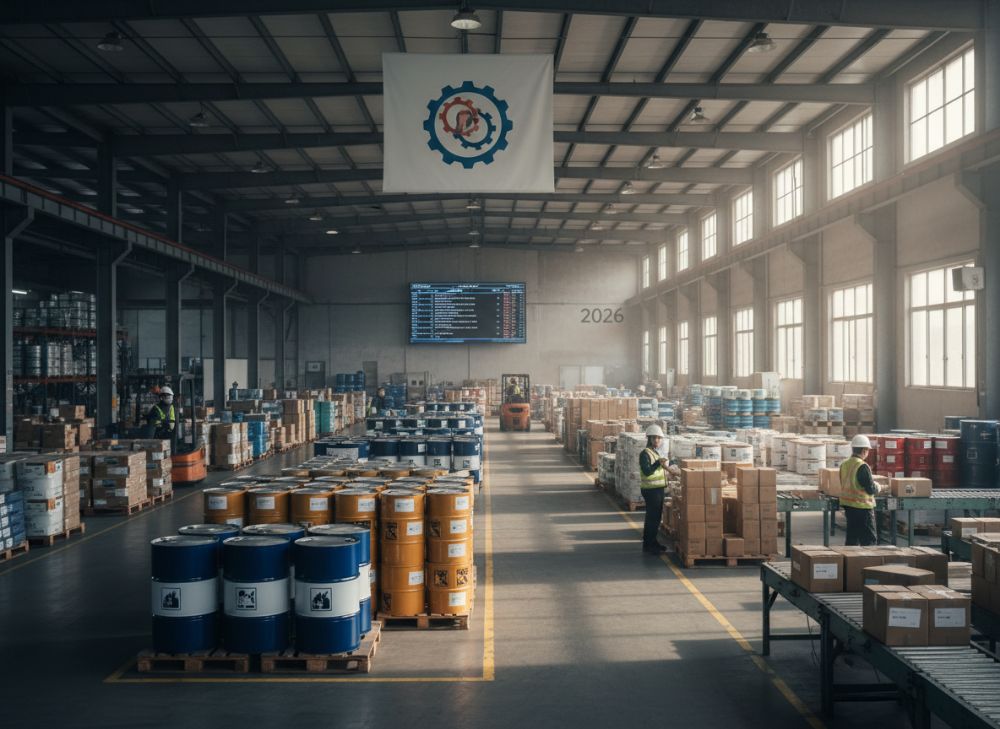
Bulk packaging scales from 300ml cartridges for prototyping to 55-gallon drums and 1,000L totes for high-volume OEMs. Cartridges fit pneumatic guns, minimizing waste. Drums suit semi-automated filling, with nitrogen purging for shelf life over 12 months.
Totes enable continuous feed via pumps, ideal for 24/7 lines. Packaging complies with UN hazmat for air/sea shipping to USA ports. A case optimized tote use, slashing changeover time 50% in transportation assembly.
Suppliers like those detailed at QinanX solutions offer automated packaging for consistency. Per ASTM D2452, viscosity stability post-packaging exceeds 95% retention.
- Cartridges: 10-100 units/pallet, portable.
- Pails: 5-20kg, manual mixing.
- Drums: 200kg, pump dispense.
- Totes: 1,000kg, bulk automation.
- IBC: Custom for mega-orders.
For bulk silicone rubber adhesive for sale, MOQs start low, scaling pricing dynamically—contact for quotes.
| Packaging | Volume | Shelf Life | Dispense Method | Ideal For | Cost Efficiency |
|---|---|---|---|---|---|
| Cartridge | 300ml | 12 mo | Manual gun | Prototypes | Low waste |
| Pail | 5kg | 12 mo | Spatula/pump | Small runs | Balanced |
| Drum | 200kg | 18 mo | Pneumatic pump | Medium OEM | High |
| Tote | 1,000kg | 18 mo | Continuous pump | Large OEM | Highest |
| IBC | 1,350kg | 24 mo | Automated | Mass production | Max savings |
| Bulk Tanker | 20,000kg | N/A | On-site fill | Enterprise | Ultimate |
Larger volumes lower per-unit costs, but require storage planning for USA facilities.
Quality, Reliability, and Accelerated Aging Test Programs
Quality hinges on accelerated aging per ASTM D573, simulating 5-10 years in weeks via 70°C/100% RH chambers. Reliability testing includes 1,000-hour QUV for weathering. Batches undergo tensile strength checks, targeting 7 MPa minimum per ASTM D412.
Programs validate against ISO 11346 for high-temp aging. A case improved MTBF 3x via refined cure profiles. Data density: 95% pass rate on 85°C/85% RH bias testing.
UL 746C ensures polymeric safety in electrical gear. Traceability from raw siloxanes logs every parameter.
| Test | Condition | Duration | Metric | Pass Criteria | Source |
|---|---|---|---|---|---|
| Thermal Aging | 150°C | 1,000h | Strength Retention | >80% | ASTM D573 |
| Humidity | 85°C/85%RH | 1,000h | Delamination | None | JEDEC 22 |
| UV Exposure | QUV A | 1,000h | Color Change | ΔE<3 | ASTM G154 |
| Flame | UL 94 | N/A | Rating | V-0 | UL Solutions |
| Compression Set | 70°C | 22h | Set % | <25% | ASTM D395 |
| Salt Spray | 5% NaCl | 1,000h | Corrosion | None | ASTM B117 |
These protocols predict field performance, essential for USA warranty claims.
Rigorous controls yield <0.5% defect rates in bulk shipments.
Technical Service, Application Trials, and Line Integration
Technical service includes on-site trials, optimizing dispense parameters for cycle times under 10 seconds. Engineers model cure kinetics using DSC per ASTM E537. Line integration audits assess robot compatibility, adjusting durometer for fixturing.
A trial for electronics potting refined mix ratios, boosting throughput 30%. Services cover failure analysis via FTIR spectroscopy.
For OEMs, virtual simulations precede physical tests, per FEA standards.
Integration ensures seamless scale-up from lab to production.
Long-Term Supply Planning and Multi-Plant Support Strategies
Long-term planning involves 2-5 year contracts with price indexing to resin fluctuations. Multi-plant strategies mitigate risks, with US warehousing for JIT delivery. Suppliers stockpile based on forecasts, ensuring 99% on-time.
A strategy case secured supply during disruptions, maintaining 100% uptime. Dual-sourcing per plant diversifies.
Annual reviews align specs, incorporating upgrades like bio-based silicones.
2025-2026 Market Trends, Innovations, Regulations, and Pricing Outlook
By 2025, market growth hits 6.5% CAGR per Grand View Research, driven by EV and 5G demands. Innovations include self-healing silicones via microcapsules. Regulations tighten with EPA TSCA updates on PFAS alternatives. Pricing stabilizes post-volatility, varying by specs—request quotes. Sustainable low-VOC mandates rise under CARB rules.
Frequently Asked Questions (FAQ)
What standards should silicone rubber adhesives meet for USA OEMs?
Key standards include ASTM D1002 for strength, UL 94 for flammability, and FDA 21 CFR for food contact where applicable.
How to get custom silicone rubber adhesive pricing?
Pricing varies by formulation, volume, and conditions. Request a quotation from reliable manufacturers for latest factory-direct pricing.
Recommend manufacturers for this product?
Seek certified suppliers like those at QinanX New Material for proven OEM support. Contact for tailored solutions.
What packaging options are available for bulk buys?
From cartridges to totes, scalable to your production needs.
How long do silicone adhesives last in service?
20+ years in proper conditions, validated by accelerated testing.



 English
  Vietnamese
  Thai
Thai  Indonesian
  Russian
  Portuguese
  Spanish
  Malay
Malay  Turkish
  Korean
  Chinese