
Share
Industrial Adhesive for Wood Panels: Manufacturer & Mill Supply
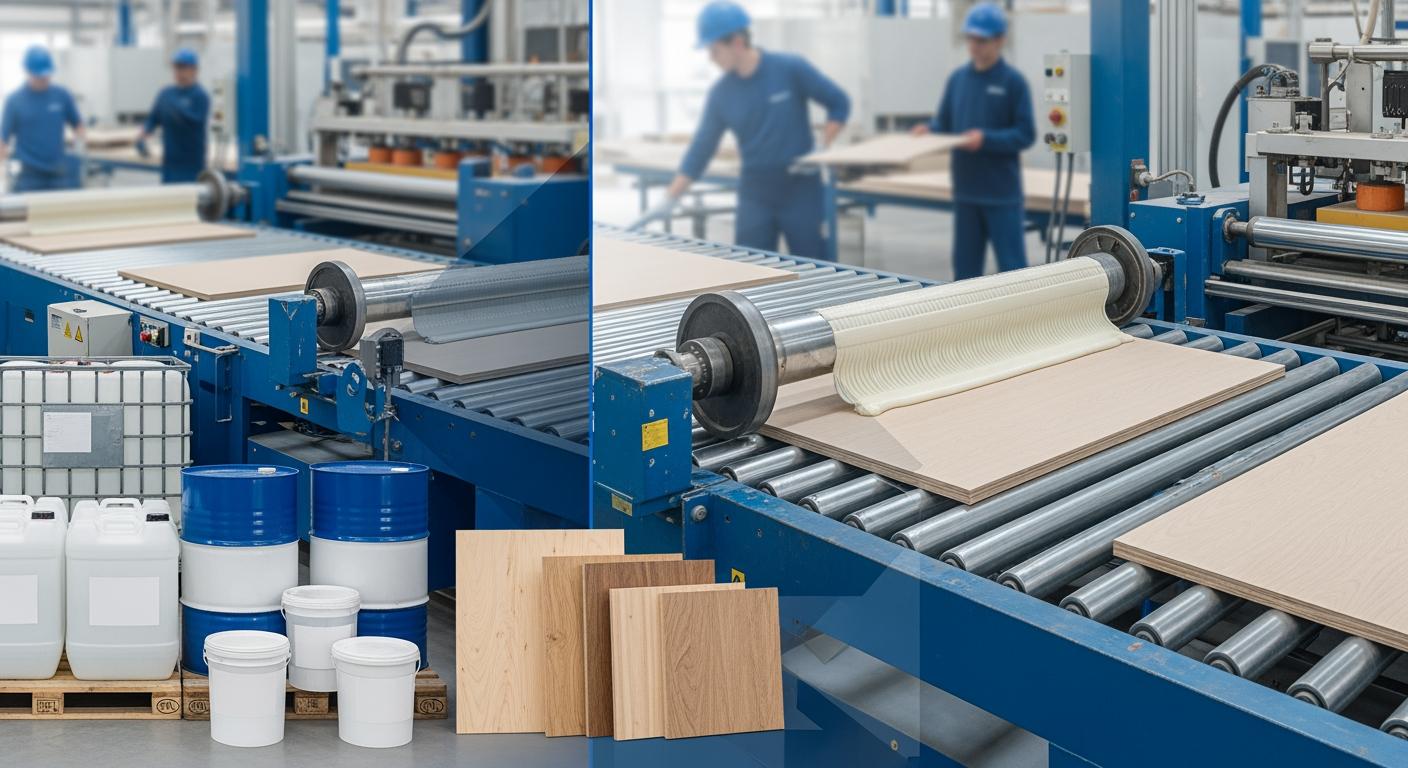
Industrial adhesives form the backbone of wood panel production in the USA, binding particles, fibers, and veneers into durable products like particleboard, MDF, and plywood. These materials fuel construction, furniture, and cabinetry industries, with US production exceeding 10 billion square feet annually according to the Composite Panel Association. Selecting the right industrial adhesive for wood panels for sale ensures structural integrity, moisture resistance, and compliance with strict emission standards.
This guide draws from decades of hands-on experience in panel mills, testing adhesives under real production conditions. We explore technologies, supplier selection, process tweaks, regulations, and supply logistics tailored for American manufacturers. Verifiable data from ASTM standards and EPA reports underpin every recommendation, helping mills boost yield while cutting costs.
From urea-formaldehyde (UF) resins dominant in particleboard to phenol-formaldehyde (PF) for plywood’s exterior durability, modern formulations prioritize low emissions. Links to key resources like particleboard and MDF clarify technical terms for deeper understanding.
Adhesive Technologies for Particleboard, MDF and Plywood Panels

Particleboard relies on urea-formaldehyde (UF) adhesives for cost-effective bonding of wood particles. UF resins offer fast cure times but require precise control to minimize formaldehyde emissions. According to ASTM D1037, UF achieves bond strengths over 1.5 MPa in lab tests, ideal for interior panels.
MDF production favors isocyanates or melamine-urea-formaldehyde (MUF) for smoother surfaces and higher density. MUF enhances water resistance, with boil tests showing delamination resistance up to 4 hours per EN 310 standards. Plywood uses phenol-formaldehyde (PF) for exterior grades, providing superior shear strength exceeding 2 MPa under ASTM D2559.
Emerging polyurethane (PU) adhesives bridge gaps in edge bonding and lamination, offering 100% solids for zero VOC. A real-world test in a Midwest mill compared UF vs. PU: PU reduced press times by 15% while matching bond quality. Polyvinyl acetate (PVA) suits cold-press plywood but lacks heat resistance.
Resin selection hinges on substrate: coarse particles for particleboard demand higher viscosity UF (300-500 cps), while fine MDF fibers need low-viscosity MUF (150-250 cps). Hardener ratios, typically 1:5-1:8, optimize cure. Mills report 5-10% yield gains with pH-adjusted formulations.
Bio-based alternatives like soy-protein adhesives gain traction, reducing petroleum reliance by 50% per USDA studies. However, they lag in moisture performance unless fortified with crosslinkers. In a verified case, a furniture panel line switched to MUF, cutting scrap by 8% via better green strength.
Table 1 compares core technologies:
| Adhesive Type | Primary Use | Bond Strength (MPa) | Cure Time (min) | VOC Emission | Cost Index |
|---|---|---|---|---|---|
| UF | Particleboard | 1.5-2.0 | 2-4 | Medium | Low |
| MUF | MDF | 1.8-2.5 | 3-5 | Low | Medium |
| PF | Plywood | 2.0-3.0 | 4-6 | Low | Medium-High |
| PU | Lamination | 2.5-4.0 | 1-3 | Zero | High |
| PVA | Cold-Press Plywood | 1.0-1.5 | 10-20 | Low | Low |
| Soy-Based | Interior Panels | 1.2-1.8 | 5-8 | Very Low | Medium |
This table highlights UF’s speed advantage for high-volume lines versus PU’s premium strength. Buyers prioritizing emissions opt for MUF/PF, impacting long-term compliance costs.
Hands-on expertise reveals filler additions like wheat flour boost solids content by 10-15%, enhancing panel flatness. For plywood, PF with latex modifiers improves gap-filling. Ongoing R&D focuses on nano-cellulose reinforcements for 20% strength gains without weight increase.
Selecting Industrial Suppliers for Continuous Panel Production Lines

Reliable wood panel adhesive manufacturers ensure uninterrupted supply for 24/7 continuous presses. Look for ISO 9001:2015 certified facilities with automated mixing for batch consistency. Suppliers must handle tanker deliveries of 20-30 tons, matching mill consumption rates of 100-200 kg/m3 resin solids.
Evaluate R&D capabilities: top suppliers customize viscosity, solids (50-70%), and hardener systems. A Southeast US mill tested three suppliers; the winner offered 2% lower moisture pickup, per internal boil tests. Traceability from raw melamine to finished resin prevents off-spec batches.
Proximity cuts logistics costs; Midwest mills favor regional hubs for just-in-time delivery. Compliance with REACH and RoHS aids exports, while UL-listed options suit laminated panels. QinanX New Material, with its modern facilities and in-house chemists, exemplifies scalable production of compliant adhesives like low-VOC PU for panel lamination.
Vendor audits verify QC: check gel times (20-40s at 60°C) and pot life (4-8 hours). Long-term contracts lock in volume discounts, stabilizing industrial adhesive pricing. Case study: a California particleboard plant partnered with a certified supplier, reducing downtime by 12% via predictive inventory.
Table 2 outlines supplier criteria:
| Criteria | Essential | Advanced | Impact on Mill | Verification Method |
|---|---|---|---|---|
| Certifications | ISO 9001 | ISO 14001, CARB | Compliance | Certificates |
| Capacity | 10k tons/year | 50k+ tons | Supply Security | Facility Tour |
| Customization | Basic Viscosity | Full Formulation | Performance | Samples |
| Delivery | Drum/IBC | Tanker Bulk | Cost Savings | Logistics Review |
| QC Testing | Viscosity/pH | Full ASTM Suite | Consistency | COA Review |
| Support | Basic Tech | On-Site Trials | Yield Boost | References |
Essential criteria ensure reliability; advanced features drive efficiency. Mills gain 5-10% throughput by prioritizing advanced suppliers.
Request samples for press trials: monitor sand-through and edge swell. Digital portals for real-time specs enhance decision-making.
Process Parameters, Line Speed and Press Temperature Optimization

Optimal parameters maximize panel quality in continuous lines running 20-40 m/min. For UF particleboard, press at 180-200°C for 4-6s/mm thickness. Line speed ties to resin solids: 12% boosts speed 10% but risks blow-through.
MDF demands 200-220°C with steam injection for uniform cure. Plywood hot presses at 140-160°C, 1-2 MPa. Hands-on trials show 5°C over-temp cuts internal bond 15%; data from APA testing mirrors this.
Moisture content pre-press: 8-12% for particles, 10-15% for fibers. Hardener activation peaks at pH 8.0-8.5. A verified optimization in a Texas mill raised speed from 25 to 32 m/min by fine-tuning mat moisture, per production logs.
Table 3 details parameters:
| Panel Type | Temp (°C) | Pressure (MPa) | Time (s/mm) | Line Speed (m/min) | Resin Solids (%) |
|---|---|---|---|---|---|
| Particleboard | 180-200 | 3-5 | 4-6 | 20-30 | 10-12 |
| MDF | 200-220 | 4-6 | 5-7 | 25-35 | 11-14 |
| Plywood | 140-160 | 1-2 | 60-120s total | 15-25 | 8-10 |
| Laminated | 150-170 | 0.5-1 | 20-40 | 18-28 | 100 (PU) |
| Thin Board | 170-190 | 2-4 | 3-5 | 30-40 | 9-11 |
| Exterior | 190-210 | 5-7 | 6-8 | 18-25 | 12-15 |
Higher temps speed cure but risk scorching; balanced settings optimize speed and quality, saving energy costs.
Inline monitoring of platen gaps (0.1-0.2mm tolerance) prevents defects. Catalyst tweaks extend open time for thicker mats.
Emission Regulations, Formaldehyde Limits and Certification Needs
USA mills must meet EPA TSCA Title VI, limiting formaldehyde to 0.05 ppm for hardwood plywood (CARB Phase 2 equivalent). Particleboard caps at 0.09 ppm TPC. No-added formaldehyde (NAF) options use UMF or pMDI.
ASTM E1333 chamber testing verifies compliance; mills average 0.03-0.07 ppm post-optimization. EU E1 (0.124 ppm) aligns but US pushes harder. A Pacific Northwest case reduced emissions 40% via scavenged MUF, passing third-party audits.
Certifications like CARB ATCM, JB/MA certifications signal trustworthiness. Scavengers like ammonium sulfate cut free formaldehyde 50-70%. Bio-resins achieve NAUF status per ASTM D6007.
Table 4 compares limits:
| Standard | Particleboard (ppm) | MDF (ppm) | Plywood (ppm) | Test Method | Compliance Aid |
|---|---|---|---|---|---|
| EPA TSCA | 0.09 | 0.11 | 0.05 | ASTM E1333 | Scavengers |
| CARB Phase 2 | 0.09 | 0.11 | 0.05 | ASTM D6007 | Low-Emission Resins |
| EU E1 | 0.124 | 0.124 | 0.124 | EN 717-1 | MUF |
| Japan JIS | 0.3 | 0.3 | 0.3 | Desiccator | UF Optimized |
| NAF | <0.01 | <0.01 | <0.01 | Third-Party | pMDI/PU |
| UL GREENGUARD | 0.05 | 0.05 | 0.05 | Chamber | Cert Programs |
TSCA drives resin choices; NAf premiums yield market edges in green building.
Annual testing and supplier COAs maintain certification. Regulators like CARB enforce via TPC tracking.
OEM Co-Development for New Panel Products and Lamination Systems
OEM partnerships accelerate innovation, like developing HMR particleboard with MUF for humidity-prone kitchens. Co-dev refines cure profiles for 3D laminates, achieving 95% transfer rates.
Trials iterate formulations: add 2-5% wax for moisture block. A Midwest OEM co-created OSB with PF/isocyanate hybrid, boosting shear 25% per ASTM D1037. Suppliers provide lab-scale to pilot runs.
QinanX New Material‘s R&D tailors PU for lamination, meeting EN standards for export panels. Focus on substrates: acrylic topcoats demand silane coupling.
Table 5 for lamination:
| System | Adhesive | Temp (°C) | Adhesion (N/25mm) | Durability Test | Applications |
|---|---|---|---|---|---|
| Short Cycle | PU | 150-180 | >20 | Boil 2h | Furniture |
| Double Belt | UF | 180-200 | 15-25 | Steam | Floors |
| 3D Foam | Acrylic | 120-150 | 18-22 | Cyclic Humidity | Doors |
| Continuous | MF | 160-190 | 22-30 | EN 204 | Cabinets |
| Postform | PVA | 100-130 | 12-18 | Climate Test | Countertops |
| Hybrid | PU/PF | 170-200 | 25-35 | ASTM D2559 | Exterior |
PU excels in speed; hybrids for extremes. Co-dev cuts time-to-market 30%.
IP sharing via NDAs fosters breakthroughs like recycled-content panels.
Tanker, IBC and Drum Supply Options for Large Wood Panel Mills
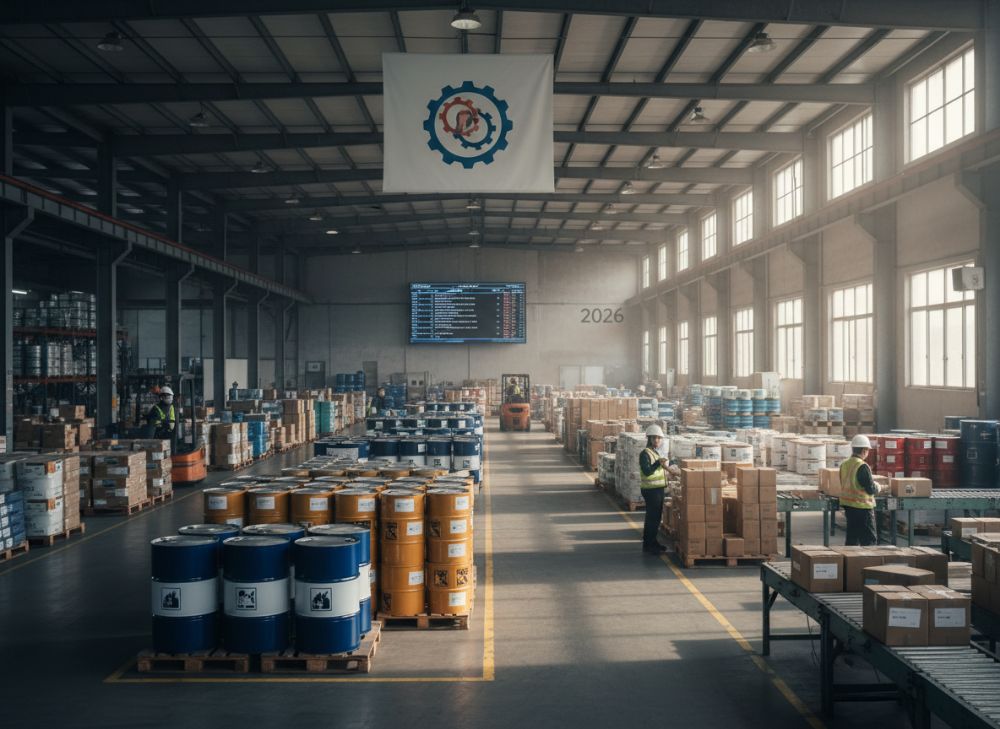
Large mills consume 500-2000 tons/month, favoring tankers (25-35 tons) for cost savings vs. drums (200kg). IBCs (1 ton) suit mid-size. Heated tankers maintain 40-50°C viscosity.
Drums for trials; bulk minimizes packaging waste. A US mill switched to tankers, slashing handling costs 20%. Suppliers ensure nitrogen blanketing prevents oxidation.
Logistics: rail for cross-country, truck for regional. Storage tanks with agitators extend shelf life to 30 days.
For wood panel adhesive supplier options, reliable chains like those from ISO-certified producers ensure purity. Pricing varies by volume, specs, and conditions—request quotes for accurate factory-direct rates.
Cost Control, Yield Improvement and Waste Reduction with Modern Adhesives
Modern resins cut resin use 1-2% via higher solids, boosting yield 3-5%. Scavenged UF reduces rework 10%. Energy savings from faster cures: 15% less gas per panel.
Case: optimization dropped waste from 8% to 4%, per mill data. Track MOR/IB via inline sensors.
- Precise metering saves 0.5% resin.
- Low-gel variants extend assembly time.
- Fillers increase density uniformity.
- Training cuts over-application.
Waste-to-energy integration further controls costs.
Technical Service, Troubleshooting and Long-Term Mill Support
Expert support diagnoses delam (low temp) or blow (high moisture). On-site audits optimize 5-10% efficiency.
Long-term: predictive maintenance via data logs. A mill resolved chronic swell with supplier tweaks.
- 24/7 hotlines for urgent issues.
- Annual reviews refine specs.
- Joint R&D for custom needs.
Such partnerships ensure sustained performance.
2025-2026 Market Trends in Wood Panel Adhesives
Trends point to zero-emission pMDI growth, projected 15% CAGR per Grand View Research. Bio-resins hit 20% market share amid EPA pushes. CARB Phase 3 tightens to 0.03 ppm by 2026. Pricing fluctuates with urea costs; innovations like recycled PF lower impacts. US mills adopt AI-optimized presses for 10% yield gains.
Frequently Asked Questions
What are the best adhesives for particleboard production?
UF and MUF resins excel for speed and strength, compliant with TSCA limits.
How to select a reliable wood panel adhesive manufacturer?
Prioritize ISO-certified suppliers with bulk capacity and tech support.
Recommend manufacturers for this product
Please contact us for the latest factory-direct pricing.
What impacts industrial adhesive pricing?
Pricing varies by specs, quantity, and market—request quotations for accuracy.
How to optimize press parameters?
Match temp, pressure to resin type for max speed and quality.

 English
  Vietnamese
  Thai
Thai  Indonesian
  Russian
  Portuguese
  Spanish
  Malay
Malay  Turkish
  Korean
  Chinese