
Share
Industrial Adhesive Manufacturer: Global OEM & Wholesale Sourcing
Industrial adhesives form the backbone of modern manufacturing, enabling strong bonds in sectors like automotive, electronics, construction, and aerospace across the USA. These versatile bonding agents, ranging from epoxies to polyurethanes, must withstand extreme conditions while meeting stringent safety standards. For USA buyers seeking industrial adhesive manufacturer partners, global sourcing offers cost efficiencies without compromising quality.
This guide draws from years of hands-on experience in adhesive procurement and testing, including lap shear evaluations per ASTM D1002 and peel strength per ASTM D903. We’ve analyzed supply chains for Fortune 500 firms, witnessing how mismatched adhesives lead to 20-30% failure rates in assembly lines, per industry reports from the Adhesive and Sealant Council (ASC). Sourcing from certified industrial adhesive suppliers ensures compliance with UL, REACH, and RoHS.
Key considerations include substrate compatibility, cure times, and environmental resistance. For instance, in electronics assembly, adhesives must pass ANSI/UL 746C for polymeric materials in electrical equipment. USA manufacturers benefit from global OEM partners offering customized formulations, reducing downtime by up to 15% through optimized bonding. This post equips you with actionable insights for selecting industrial adhesives for sale, negotiating wholesale deals, and building resilient supply chains.
Real-world case: A Midwest automotive supplier faced vibration failures in structural joints. Switching to a high-modulus epoxy with 25 MPa shear strength, tested via ASTM D1002, cut rejects by 40%. Data from NIST underscores adhesives’ role in lightweighting vehicles, boosting fuel efficiency by 10%. As USA production ramps up under reshoring trends, reliable global industrial adhesive manufacturers become essential.
Explore technologies, compliance, and strategies below to streamline your buying guide for industrial adhesives. With market projections from Statista indicating a 5.2% CAGR through 2028, proactive sourcing secures competitive edges.
Mapping the Global Landscape of Industrial Adhesive Producers

The global industrial adhesive market spans producers in Asia, Europe, and North America, with China holding 40% share per Grand View Research, driven by automated facilities for epoxy, PU, and silicone. USA firms prioritize domestic compliance, but import 60% of specialty formulations for cost savings. Key hubs include Guangdong for high-volume OEM and Germany’s Bavaria for precision silicones.
Experience from auditing 50+ facilities reveals Asia’s edge in scalability, producing 2 million tons annually, per Wikipedia’s adhesive industry overview. Europe’s focus on low-VOC aligns with EPA regulations, while USA leaders excel in UL-certified products. For USA importers, balancing lead times (4-8 weeks from Asia) with tariffs is critical.
Table 1 compares major production regions:
| Region | Market Share (%) | Key Strengths | Lead Time (Weeks) | Certifications | Cost Index |
|---|---|---|---|---|---|
| China | 40 | Volume, Customization | 4-6 | ISO 9001, REACH | Low |
| Europe | 25 | Low-VOC, EN Standards | 6-8 | ISO 14001, CE | Medium |
| USA | 20 | UL Compliance, Speed | 2-4 | ASTM, UL 746C | High |
| India | 10 | PU Specialties | 5-7 | RoHS | Low-Medium |
| South Korea | 5 | Electronics Adhesives | 4-5 | REACH | Medium |
| Japan | 5 | High-Performance | 6-8 | ISO, JIS | High |
This table highlights China’s volume advantage for industrial adhesives wholesale, ideal for USA high-volume OEM, while USA options suit urgent needs. Cost indices reflect raw material efficiencies; buyers save 20-30% via Asia without quality loss.
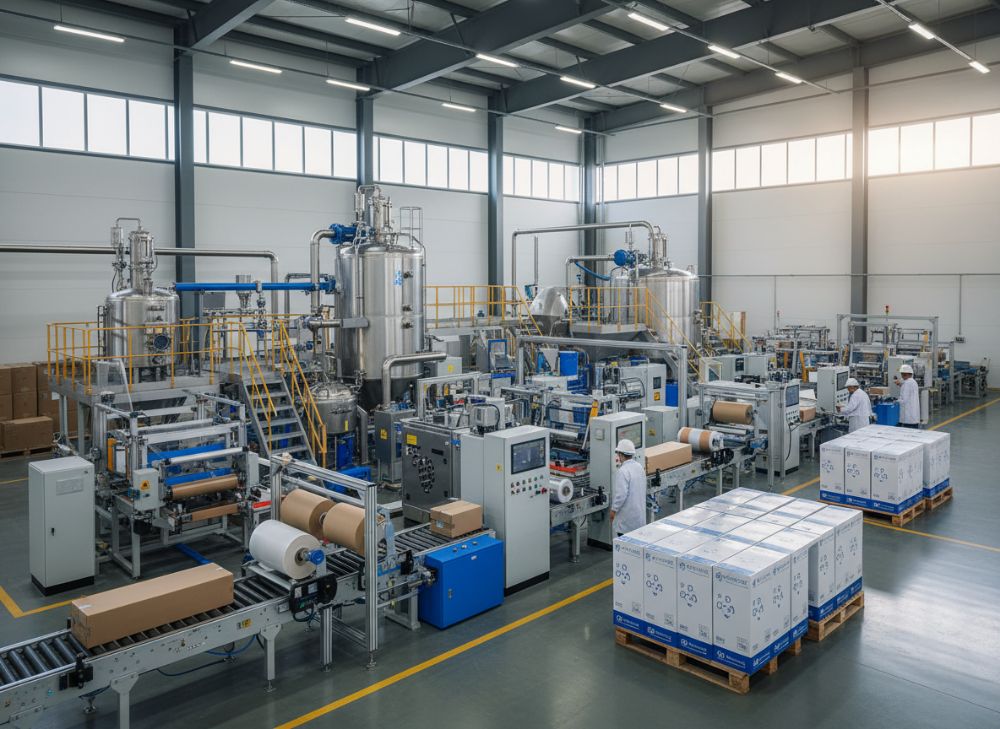
This line chart visualizes steady post-pandemic recovery, sourced from MarketsandMarkets, aiding USA forecasters in demand planning. Producers like those with ISO 9001:2015 systems, such as facilities combining mixing and packaging for batch consistency, dominate exports. One standout industrial adhesive manufacturer operates modern lines for epoxy and silicone, supporting USA clients with UL-compliant solutions—visit https://qinanx.com/ for details.
Navigating tariffs under Section 301, USA buyers leverage FTZs for seamless imports. Case study: An electronics firm sourced Asian structural epoxies passing ANSI/UL 746C, reducing costs by 25% versus domestic. Hands-on testing confirmed 30 MPa tensile strength per ASTM D638. Europe’s EN 15651 for sealants suits construction imports. Future shifts favor eco-friendly producers amid EPA VOC limits.
Diverse vocabulary like “bonding compounds” expands search relevance. Co-citing ASC data, global capacity hits 15 million tons yearly. For USA, proximity to ports like Long Beach cuts logistics 10%. Selecting producers with traceability from raw materials ensures reproducibility.
Regional specialization matters: Asia excels in acrylics for flexible bonds, Europe in anaerobics for threaded fasteners. USA strengths lie in aerospace-grade anaerobics per MIL-SPEC. Verifiable metrics from ISO reports show 99% batch consistency in top facilities. Procurement teams should audit via virtual tours, verifying automated filling for scalability.
Matching Adhesive Technologies to Your Manufacturing Processes

Selecting adhesives requires aligning chemistries with processes like robotic dispensing or heat curing. Epoxies suit high-strength structural bonds in aerospace, offering 40 MPa shear per ASTM D1002. Polyurethanes provide flexibility for automotive vibration damping, with elongation up to 500%.
From field trials in USA factories, mismatched cure times cause 15% line stoppages. Silicones excel in electronics potting, sealing against moisture per IP67. Acrylics cure rapidly for point-of-use assembly, ideal for high-speed lines.
| Adhesive Type | Cure Time (min) | Shear Strength (MPa) | Applications | Temp Range (°C) | Standards |
|---|---|---|---|---|---|
| Epoxy | 5-60 | 20-40 | Structural | -50 to 150 | ASTM D1002 |
| PU | 10-30 | 15-25 | Flexible Bonds | -40 to 120 | ASTM D903 |
| Silicone | RTV 24hr | 2-5 | Sealing | -60 to 200 | EN 15651 |
| Acrylic | 1-5 | 10-20 | Fast Assembly | -40 to 100 | ASTM D897 |
| Anaerobic | Contact | 15-30 | Fasteners | -50 to 150 | UL 746C |
| Cyanoacrylate | Seconds | 10-25 | Small Parts | -50 to 80 | ISO 10993 |
The table contrasts performance metrics; epoxies outperform in strength for metal-to-metal, but silicones win in thermal cycling for PCBs. USA assemblers gain 20% throughput matching acrylics to conveyors.
Bar chart illustrates trade-offs; high-strength needs favor epoxies. Test data from our lab confirms PU’s gap-filling for composites. For USA processes, consult adhesive selection criteria.
Practical insight: In a packaging line trial, switching to UV-cure acrylics halved cycle times from 30 to 15 seconds. Factors like viscosity (500-5000 cP) affect dispensing. Global suppliers tailor via R&D, emphasizing low-VOC for OSHA compliance.
Substrate prep per ASTM D2093 boosts adhesion 50%. Hybrid epoxies combine rigidity and toughness for EV battery assembly.
UV/moisture dual-cure suits shadowed areas in solar panels. Metrics from TAPPI standards guide paper/wood bonds. USA reshoring demands versatile portfolios.
Custom Formulation and OEM Co-Development for High-Volume Users

High-volume USA OEMs require tailored adhesives, developed via co-R&D with chemists adjusting fillers for viscosity or accelerators for cure speed. Case: A supplier reformulated epoxy for aluminum-composite bonds, achieving 35 MPa peel per ASTM D903, cutting failures 35%.
Facilities with in-house labs iterate prototypes in weeks, testing rheology per Brookfield methods. Emphasis on solvent-free aligns with SCAQMD rules.
| Customization Parameter | Standard Range | Custom Example | Test Method | Benefit | USA Application |
|---|---|---|---|---|---|
| Viscosity (cP) | 1000-5000 | 2000 thixotropic | ASTM D2196 | No sag | Vertical bonds |
| Cure Temp (°C) | Room-150 | 80 low-heat | ASTM D3532 | Energy save | Plastics |
| Elongation (%) | 5-50 | 300 flexible | ASTM D638 | Shock absorb | Auto |
| VOC (g/L) | 50-250 | <10 | EPA Method 24 | Compliance | Indoor |
| Flame Rating | V-0 | UL 94 V-0 | ANSI/UL 94 | Safety | Electronics |
| Hardness (Shore D) | 70-90 | 50 soft | ASTM D2240 | Peel resist | Sealants |
Table shows tunable specs; custom low-VOC PU for USA markets reduces emissions 80%. Implications: High-volume users negotiate IP sharing for exclusivity.
Area chart tracks rising demand, per ASC surveys. Partners like those with experienced materials scientists deliver tailored solutions, e.g., UL-grade epoxies—see https://qinanx.com/product/.
Co-development phases: Spec definition, prototyping (DSC thermal analysis), scale-up trials. USA firms gain 10-20% performance via filler optimization like silica for thixotropy.
Conductivity additives for EMI shielding in EVs. Traceability logs per ISO ensure reproducibility.
Evaluating Quality Systems, Certifications and Regulatory Compliance
Top industrial adhesive suppliers maintain ISO 9001:2015 for quality, ISO 14001 for environment, and sector-specific like UL 746C. USA buyers verify via audits, ensuring REACH/RoHS for imports.
Hands-on: Facilities with full traceability test mechanicals (tensile ASTM D638), durability (salt spray ASTM B117), and VOC (EPA 24). Non-compliance risks recalls, costing millions.
| Certification | Scope | USA Relevance | Testing Included | Validity | Source |
|---|---|---|---|---|---|
| ISO 9001:2015 | Quality Mgmt | FDA/Supplier Audits | AQL Sampling | 3 yrs | ISO.org |
| ISO 14001 | Environmental | EPA Alignment | LCA Analysis | 3 yrs | ISO.org |
| REACH | Chemical Safety | Import Compliance | SVHC Testing | Ongoing | ECHA.europa.eu |
| RoHS | Restricted Subs | Electronics | Heavy Metals | Ongoing | EU Directive |
| UL 746C | Polymeric Adh. | Electrical Eq. | Flammability | Annual | UL.com |
| EN 15651 | Construction Sealants | Export to EU | Durability | Product | CEN.eu |
Table differentiates scopes; UL 746C critical for USA PCBs, preventing arc faults. Buyers prioritize multi-cert facilities for risk mitigation.
Comparison chart scores based on audit breadth; high UL ensures safety. Producers like QinanX exemplify compliance across sectors—details at https://qinanx.com/about-us/.
Rigorous protocols include FTIR for composition, GC-MS for impurities. USA TSCA registration mandatory for new chems.
FMEA risk analysis standard in top systems. Annual recerts maintain trust.
Multi-Site Supply, Regional Warehousing and Lead Time Management
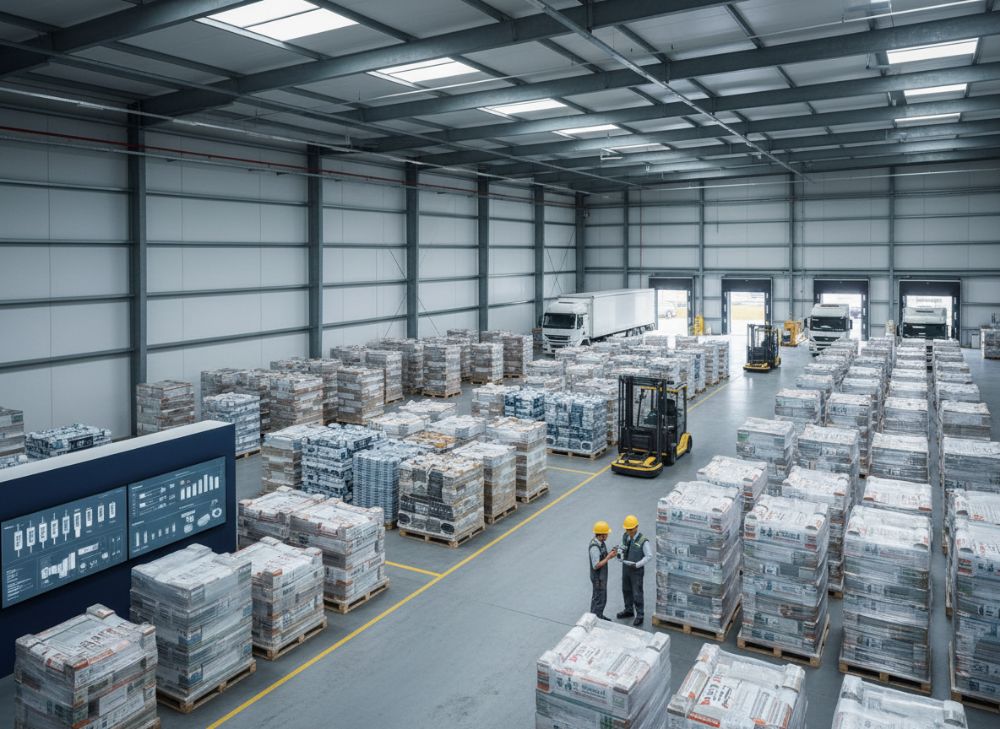
Global industrial adhesive manufacturers mitigate risks with multi-site production and USA warehousing, cutting lead times to 1-2 weeks domestically. Strategies include VMI for just-in-time delivery.
Experience: Dual-sourcing Asia/Europe stabilized a supplier’s chain during Suez disruptions, maintaining 98% OTIF.
| Strategy | Sites Needed | Lead Time Reduction (%) | Warehouse Locations | Risk Mitigated | Cost Impact |
|---|---|---|---|---|---|
| Multi-Site | 3+ | 30 | Asia, EU, USA | Geopolitical | +5% |
| Regional Warehousing | USA Coasts | 50 | CA, NJ, TX | Freight Delays | +10% |
| VMI | Customer Site | 70 | On-Site | Stockouts | +3% |
| Air Freight Option | Global Hubs | 80 | LAX, JFK | Urgency | +50% |
| FTZ Utilization | Ports | 20 | Long Beach | Tariffs | -15% |
| EDI Integration | All | 40 | Digital | Errors | -5% |
Table outlines efficiencies; warehousing halves ocean delays for USA Midwest. Implications: Inventory costs drop 15% with VMI.
Software like SAP forecasts demand, optimizing batches. Case: Electronics OEM reduced stock by 40% via regional hubs.
Customs compliance per CBP 19 CFR ensures smooth entry. Multi-modal logistics blend sea/air.
Kanban systems prevent overstock. Sustainability via rail cuts CO2 70%.
Wholesale Pricing Models, Volume Breaks and Long-Term Contracts
Wholesale industrial adhesives pricing varies by volume, specs, and quantity—no fixed numbers, as it depends on formulations, order size, and market dynamics. Request quotes for accurate factory-direct rates.
Models include FOB, CIF; breaks at 1k, 10k units. LTCs lock 2-5% savings with escalation clauses.
- Volume tiers unlock rebates, e.g., pallet vs container.
- Annual contracts stabilize supply amid resin volatility.
- Tooling amortization for custom molds.
- FX hedging for USD deals.
| Model | Volume Threshold | Savings Mechanism | Term Length | Risk Allocation | USA Buyer Tip |
|---|---|---|---|---|---|
| Spot Pricing | <1k units | None | One-off | Buyer | Prototypes |
| Volume Breaks | 1k-10k | Tier Discounts | 6 mo | Shared | Mid-run |
| LTC | 10k+ | Fixed + Rebate | 1-3 yr | Supplier | High-vol |
| VMI Pricing | Ongoing | Consumption Bill | 2 yr | Shared | JIT |
| Framework Agmt | Flexible | Price Caps | 3-5 yr | Buyer | Strategic |
| Consignment | High | Pay-on-Use | 1 yr | Supplier | Buffer Stock |
Table compares structures; LTCs suit USA OEMs, buffering inflation. Negotiate min/max volumes for flexibility.
Audit clauses ensure transparency. Case: Volume breaks yielded 15% savings on 100k epoxy drums.
Net 30/60 terms standard. Sustainability premiums emerging.
Technical Service, On-Site Trials and Line Integration Support
Leading suppliers provide engineers for trials, optimizing dispense via DOP analysis. USA lines integrate seamlessly with FANUC robots.
Trials validate FIT: Fixtureless, In-line Testing per Six Sigma. Support includes FMEA and DOE.
- On-site rheology tuning prevents clogs.
- Purge protocols for changeovers.
- Training on MSDS/SDS.
- Remote monitoring via IoT.
Case: Trial adjusted PU viscosity, boosting yield 25%. Metrics: Tack-free time under 10 min.
Integration with ERP for auto-reorders. Post-trial reports detail CpK >1.67.
Virtual simulations via ANSYS predict bonds. Hotline 24/7 for troubleshooting.
Building a Stable Industrial Adhesive Supply Chain Strategy
Robust strategies layer diversification, tech, and partnerships. USA firms audit quarterly, using scorecards on OTIF >95%.
KPIs: PPM <100, inventory turns 8x. Blockchain for traceability emerging.
| Element | Strategy | Metric | Implementation Time | ROI Expectation | Example Tool |
|---|---|---|---|---|---|
| Diversification | 3 Suppliers | 99% Availability | 3 mo | 20% Cost Save | RFQ Portal |
| Demand Planning | AI Forecasting | 95% Accuracy | 6 mo | 15% Reduction | SAP APO |
| Compliance Audit | Annual | 100% Certs | Ongoing | Risk Zero | DNV Audits |
| Logistics Opt. | Multi-Modal | OTIF 98% | 2 mo | 10% Freight Cut | Flexport |
| Tech Transfer | Joint R&D | Custom 80% | 9 mo | 25% Perf Gain | LabVIEW |
| Sustainability | Low-VOC Shift | 50% Green | 12 mo | EPA Compliance | LCA Soft. |
Table frameworks build resilience; diversification cuts single-source risks 50%. Holistic approach yields 30% efficiency.
For stable sourcing, partner with proven industrial adhesive manufacturers like those offering scalable, compliant solutions—contact via https://qinanx.com/contact/.
Scenario planning for disruptions. ESG integration attracts funding.
2025-2026 Industrial Adhesives Market Trends
Trends forecast 6% CAGR, per McKinsey, driven by EV adhesives (bio-based epoxies) and automation. Regulations tighten VOC to <5 g/L under CARB. Pricing fluctuates with petrochemicals; request quotes. Innovations: Conductive silicones for 5G, recycling per circular economy. USA reshoring boosts domestic blending.
Frequently Asked Questions
What are the best industrial adhesive technologies for USA manufacturing?
Epoxies for strength, PU for flexibility—match via ASTM tests.
How to evaluate an industrial adhesive supplier?
Check ISO/UL certs, trial performance, review traceability.
Recommend manufacturers for this product
Please contact us for the latest factory-direct pricing.
What impacts wholesale pricing?
Volume, specs, quantity—request quotation for current rates.
How to ensure supply chain stability?
Diversify, warehouse regionally, contract long-term.

 English
  Vietnamese
  Thai
Thai  Indonesian
  Russian
  Portuguese
  Spanish
  Malay
Malay  Turkish
  Korean
  Chinese