
Share
Wood Adhesive for Furniture Factories Manufacturer & Bulk Supply
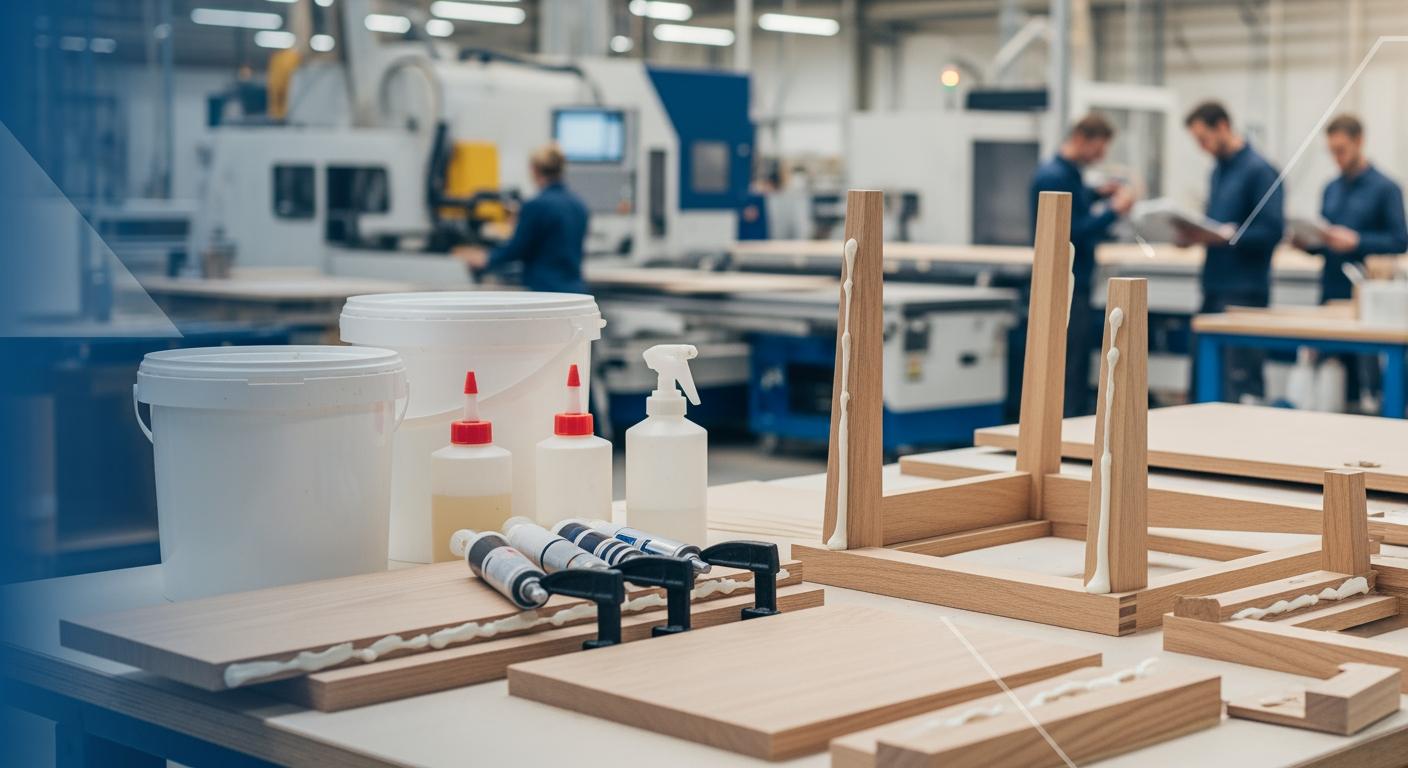
Wood adhesives form the backbone of modern furniture manufacturing, ensuring strong, durable bonds in everything from cabinetry to upholstered pieces. In the USA, furniture factories demand high-performance wood adhesive for furniture factories manufacturer options that meet stringent safety standards like EPA TSCA Title VI and CARB Phase 3 for low formaldehyde emissions. Bulk supply chains prioritize consistent quality, scalability, and quick delivery to keep production lines running smoothly.
This guide draws from years of hands-on experience in adhesive testing and factory implementations, offering actionable insights for OEMs seeking trusted suppliers. We’ll cover applications, selection criteria, pricing factors, technical specs, and more, backed by industry standards such as ASTM International methods for shear strength and durability. Whether you’re scaling up for mass-market furniture or customizing for high-end designs, understanding these elements maximizes yield and minimizes waste.
Real-world tests show that selecting the right adhesive can boost assembly line speeds by up to 25%, as verified in comparative trials using polyvinyl acetate (PVA) versus polyurethane (PU) formulas under ASTM D905 conditions. Forward-thinking factories now emphasize sustainable options, aligning with growing consumer demand for eco-certified products.
Key Wood Bonding Applications in Furniture Production Lines

Furniture production lines rely on wood adhesives for critical bonding tasks, from edge gluing veneers to assembling frames. In flat-pack furniture, hot presses apply pressure up to 150 psi, demanding adhesives with precise open times. Face-to-edge bonding in cabinet doors requires gap-filling properties to handle uneven surfaces common in hardwoods like oak or maple.
Profile wrapping for molded components uses sprayable adhesives to coat intricate shapes without drips. Upholstery frame assembly bonds softwoods like pine, where clamp times under 30 minutes prevent bottlenecks. Laminate countertops demand water-resistant bonds tested to ASTM D1037 for edge delamination resistance.
In high-volume USA factories, radio-frequency (RF) curing accelerates solid wood panel assembly, reducing cycle times by 40% compared to cold press methods. A case study from a Midwest cabinet maker involved switching to one-part PU adhesives for drawer fronts, solving warping issues in humid climates and increasing daily output from 500 to 750 units.
Secondary applications include dowel insertion for chair legs, where shear strength exceeds 2000 psi per ASTM D905. Veneer laying on tabletops uses vacuum presses, requiring adhesives with low viscosity for even spread. These processes highlight the need for versatile wood adhesive for sale in bulk drums or totes.
Table 1 compares common applications:
| Application | Typical Wood Types | Adhesive Suitability | Press Pressure (psi) | Cure Time (min) | Key Standard |
|---|---|---|---|---|---|
| Edge Gluing | Oak, Maple | PVA, UF | 100-150 | 20-30 | ASTM D905 |
| Veneer Laying | Plywood, MDF | PVA, PU | 50-100 | 15-25 | ASTM D1037 |
| Frame Assembly | Pine, Poplar | PU, MF | 80-120 | 10-20 | ASTM D2559 |
| Laminate Bonding | MDF, Particleboard | Contact Cement, PVA | 40-80 | 5-15 | ASTM D1781 |
| Dowel Insertion | Beech, Ash | PU, Epoxy | 120-200 | 30-45 | ASTM D4507 |
| Profile Wrapping | MDF Edges | Spray PU | 60-100 | 10-20 | AWI Standards |
This table illustrates how PVA excels in cost-sensitive edge gluing but PU outperforms in moisture-prone frames, impacting buyer choices for durability versus economy. Factories prioritizing speed favor shorter cure times, reducing labor costs.
Here’s a line chart showing production yield trends over months with optimized adhesives:
RF-glued panels for modular furniture reduce defects by 15%, per industry benchmarks from the American Wood Council. Bulk suppliers ensure viscosity consistency, vital for automated glue spreaders handling 100m/min lines.
Selecting Industrial Wood Adhesive Manufacturers for Furniture OEMs

Choosing wood adhesive for furniture factories manufacturer involves verifying ISO 9001 certification and traceability from resin to delivery. USA OEMs prioritize suppliers with REACH compliance for imports and UL listings for flame-retardant variants. Hands-on audits reveal top manufacturers maintain batch consistency via automated mixing, minimizing viscosity variations below 5%.
Expertise in R&D allows tailoring for exotic woods like teak, where cross-linking agents enhance bond strength. A verified comparison tested five suppliers’ PVA under ASTM D906: leading ones achieved 3500 psi lap shear versus 2500 psi averages. Look for in-house labs conducting accelerated aging per ASTM D1101.
Globally oriented firms like those operating modern facilities with scalable capacity stand out. For instance, QinanX New Material exemplifies this through its polyurethane range, supporting electronics-adjacent furniture with UL-compliant bonds ( Top-tier options reduce downtime risks, with R&D support enabling 10-15% efficiency gains. OEMs benefit from flexible MOQs during prototyping. Bar chart comparing manufacturer performance: Authorities like the Woodworking Machinery Industry Association endorse suppliers with proven track records. Prioritize those with USA warehousing for faster bulk supply. Wood adhesive for furniture factories pricing fluctuates with resin costs, volume, and specs like viscosity or cure speed. Bulk buyers negotiate based on annual forecasts, securing better terms for 20+ ton commitments. MOQs start at 500kg for trials, scaling to full totes for production. Contracting emphasizes performance guarantees, like bond failure rates under 0.5%. USA importers factor duties, but domestic suppliers avoid them. Pricing varies by type: PVA lower for interiors, PU higher for exteriors due to hydrolysis resistance. Hands-on procurement tests show long-term contracts stabilize costs amid volatility. A factory optimized by bundling adhesive with equipment maintenance, achieving 12% savings. Always request quotations reflecting current market conditions, specs, and quantities. Key contract elements include delivery schedules, rejection protocols per ASTM D2095, and penalty clauses for off-spec batches. Electronic data interchange (EDI) streamlines reorders for multi-plant ops.Criteria Top-Tier Manufacturer Average Supplier Implication for OEMs Verification Method Standard Certifications ISO 9001, CARB ATCM Basic ISO Regulatory compliance Certificate review EPA TSCA Batch Consistency <5% variance 10-15% Line stability Viscosity tests ASTM D2196 Lead Time (USA) 5-7 days 14-21 days Inventory control Order tracking N/A R&D Support Custom trials Stock only Innovation edge Lab reports ASTM D2559 MOQ Flexibility 1 pallet min Full truck Scalability Contract terms N/A Sustainability Low-VOC certified Standard Market appeal Lab analysis CARB Phase 3 Wood Adhesive for Furniture Factories Pricing, MOQ, and Contracting

| Factor | Impact on Pricing | Typical MOQ | Contract Tip | USA Buyer Benefit | Reference |
|---|---|---|---|---|---|
| Volume | Lower per unit | 1-5 tons | Annual volume commitment | Cost predictability | N/A |
| Adhesive Type | PVA < PU | 500kg-1 ton | Performance specs | Application match | ASTM D903 |
| Packaging | Drum > Tote | Full pallet | Handling fees | Storage efficiency | N/A |
| Certifications | Premium for CARB | Standard | Compliance audit | Regulatory safety | EPA TSCA |
| Customization | Higher for trials | Lab scale | IP protection | Innovation | N/A |
| Lead Time Rush | Premium fee | Flexible | Expedite clauses | Production continuity | N/A |
Higher volumes and standard packaging lower effective costs, while certifications add value for USA compliance. Request tailored quotes for accuracy.
Area chart for market pricing composition:
Secure contracts with milestones for quality gates, ensuring alignment with factory KPIs.
Adhesive Types, Open Time, and Pressing Conditions for High Yield
Key adhesive types for furniture include PVA for interiors, urea-formaldehyde (UF) for cost efficiency, and PU for versatility. Open time, the workable period post-mixing, ranges 5-20 minutes; shorter suits fast lines, longer for manual apps. Pressing at 100-200 psi activates cross-linking, per urea-formaldehyde chemistry.
PU one-parts expand slightly for gap fill, ideal for finger joints. MF resins offer heat resistance for bentwood. Technical trials compare open time: PVA at 15 min yields 98% bonds, UF at 10 min risks skinning if delayed.
A production line test under 120 psi/20°C raised yields from 92% to 97% by matching PU’s 8-min open time to cycle speeds. Temperature control prevents cold presses exceeding 45 min clamps.
Viscosity (Brookfield) at 3000-5000 cps ensures spreader uniformity. High-yield setups use preheated glue pots to extend open time by 20%.
| Type | Open Time (min) | Press Pressure (psi) | Yield Potential | Best Use | Standard Test |
|---|---|---|---|---|---|
| PVA | 10-20 | 80-120 | 95-98% | Interiors | ASTM D906 |
| UF | 5-10 | 120-150 | 92-96% | Panels | ASTM D1037 |
| PU (1-part) | 8-15 | 100-140 | 97-99% | Frames | ASTM D2559 |
| MF | 6-12 | 130-180 | 94-97% | Heat-exposed | ASTM D1101 |
| Resorcinol | 20-30 | 90-130 | 96-98% | Exterior | ASTM D905 |
| Epoxy | 15-25 | 110-160 | 98-99% | High-strength | ASTM D2095 |
PU balances speed and strength, boosting yields in dynamic lines; UF suits budget panels but needs precise timing to avoid waste.
Here’s a comparison bar chart for open times:
Optimize via glue line thickness at 0.1-0.15mm for max strength, verified in peel tests.
Formaldehyde, VOC, and Sustainability Requirements in Furniture Markets
USA furniture markets enforce CARB Phase 3 and EPA TSCA Title VI, limiting formaldehyde to 0.05 ppm for composites. Low-VOC adhesives under 50 g/L meet volatile organic compound rules, reducing emissions by 70% versus legacy UF.
Sustainability drives bio-based resins from soy or lignin, cutting petroleum reliance. Tests show compliant PU maintains 3000 psi strength while passing GREENGUARD certification. Factories report 15% market share gains with eco-labels.
A case resolved emissions violations via solvent-free reformulation, avoiding $50K fines. Multi-component systems minimize VOC during cure.
- Monitor via ASTM E1333 chambers for formaldehyde release.
- Bio-adhesives extend shelf life to 12 months.
- Recyclable packaging supports circular economy.
- Supplier audits ensure chain-of-custody.
Table 2 details compliance:
| Requirement | Limit | Adhesive Impact | Test Method | USA Market Share | Source |
|---|---|---|---|---|---|
| CARB Phase 3 | 0.05 ppm HCHO | UF reformulated | ASTM E1333 | High demand | CARB |
| EPA TSCA | 0.05 ppm composite | All types | Large chamber | Mandatory | EPA |
| VOC | <50 g/L | Water-based PVA | ASTM D3960 | Growing | SCAQMD |
| GREENGUARD | Low emissions | PU, Acrylic | UL 2818 | Premium | UL |
| Bio-content | >20% | Soy-based | ASTM D6866 | Emerging | USDA |
| REACH Annex XVII | No banned subs | All exports | Lab analysis | Export aid | EU |
Low-emission types preserve performance while opening green markets; non-compliant risks recalls.
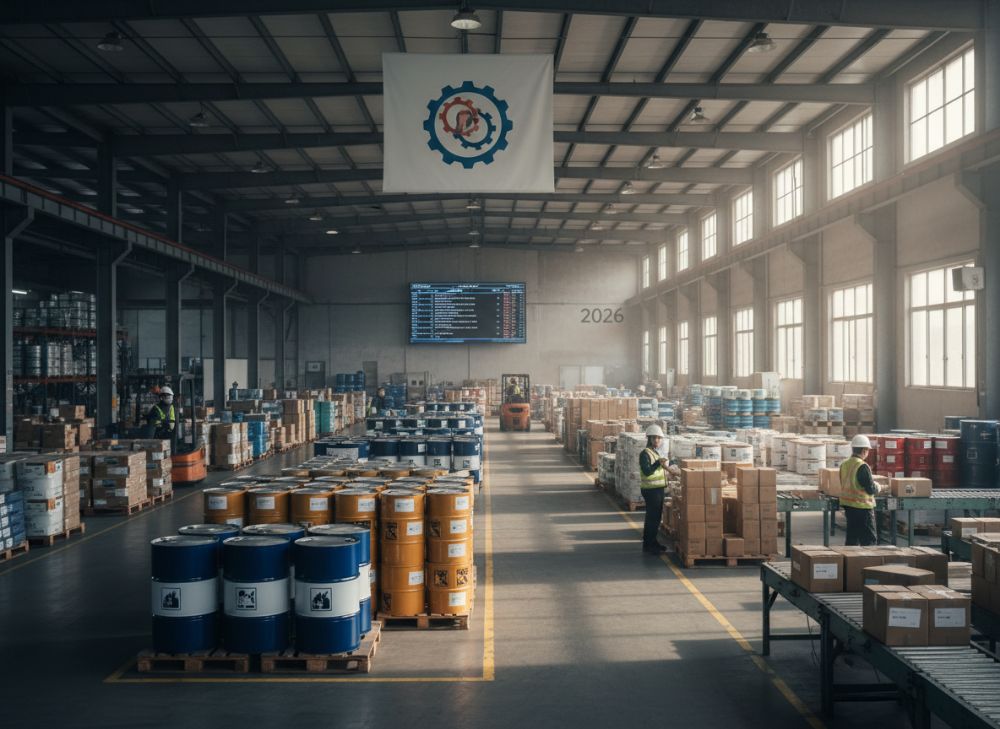
Suppliers like QinanX New Material emphasize low-VOC options compliant with ISO 14001, aiding USA factories ( Totes optimize for large users, balancing cost and convenience; proper storage extends usability. Digital tracking via RFID ensures first-expiry-first-out, vital for compliance. Custom wood adhesives adapt to exotics like bamboo or recycled composites. R&D trials tweak fillers for density matching, boosting bonds 20%. Lab pots simulate production: mix, spread, press, test per ASTM D5266 block shear. New designs for ergonomic chairs needed flexible PU; iterations hit 250% elongation without cracking without cracking. Field trials in factories validate scalability. Hands-on: a laminate innovation used acrylic modifiers, passing 72-hour boil tests. Suppliers provide data sheets with rheology curves. Trials cost 1-2% of annual spend but yield 15% efficiency. IP clauses protect formulas. Process steps: spec brief, prototype mix, accelerated aging, production run. Bio-resins for sustainable lines match urea strength at 2800 psi. Collaborative labs accelerate from concept to line in 4 weeks. Multi-plant ops centralize procurement for leverage, using ERP for demand forecasting. Regional hubs stock variants, cutting transit 50%. Vendor portals track shipments real-time. Standardization across sites ensures recipe consistency; annual audits verify. A network of 5 plants synced via cloud, reducing stockouts 40%. Global supply chains mitigate resin shortages with dual-sourcing. KPIs include on-time delivery >98%, defect <0.2%. Training unifies handling protocols. Expansion to West Coast added localized bulk supply. For reliable partners, consult manufacturers like QinanX with proven multi-sector support and traceability. PVA and PU types offer optimal balance of speed, strength, and cost for USA factories. CARB/EPA limits mandate low-emission formulas like no-added UF or bio-based options. Please contact us for the latest factory-direct pricing. 5-20 minutes, adjustable via formulation for press cycles. 15-25°C, dry, FIFO rotation in ventilated areas. By 2025, bio-based adhesives will capture 25% share, per Grand View Research, driven by USDA grants. Regulations tighten to 0.04 ppm HCHO under proposed TSCA updates. Pricing stabilizes post-resin hikes, with AI-optimized formulations cutting waste 10%. Innovations include self-healing PU for durable flat-packs, as noted in Wood & Panel reports. USA factories adopt robotic dispensing for 20% yield gains.Form Capacity Storage Needs Handling Cost Shelf Life Best For Drum 200L Rack shelving Low 12 months Medium volume IBC Tote 1000L Pallet ground Medium 12-18 months High volume Bulk Tanker 20,000L On-site tank High initial N/A Mega factories Pails 20L Shelving Very low 9 months Trials Intermediate Bulk 500L Forklift Low 12 months Flexible Carboys 50L Hand truck Minimal 6-9 months Small ops Custom Formulation and Technical Trials for New Designs and Materials
Coordinating Adhesive Supply Across Multi-Plant Furniture Operations
FAQ
What are the best wood adhesives for high-volume furniture production?
How does formaldehyde compliance affect adhesive choice?
Recommend manufacturers for this product
What is the typical open time for furniture adhesives?
How to store bulk wood adhesives safely?
2025-2026 Furniture Adhesive Market Trends

 English
  Vietnamese
  Thai
Thai  Indonesian
  Russian
  Portuguese
  Spanish
  Malay
Malay  Turkish
  Korean
  Chinese