
Share
Silicone Adhesive for Glass Manufacturer & Structural Bonding Supply
Silicone adhesives excel in glass bonding due to their flexibility, weather resistance, and optical clarity, making them ideal for structural glazing, curtain walls, and automotive applications in the USA. These materials form durable bonds between glass panels and metal frames, accommodating thermal expansion differences without cracking. According to the Silicone Wikipedia page, silicones are polymers with repeating siloxane units (Si-O-Si), providing high thermal stability up to 250°C and excellent UV resistance.
In the USA, demand surges for high-performance silicone adhesive for glass for sale in commercial construction, where buildings like skyscrapers rely on structural silicone glazing (SSG) systems. This method uses adhesive as the primary load-bearing element, certified under standards like ASTM C1184. Manufacturers prioritize neutral-cure formulations to prevent corrosion on sensitive substrates like glass, ensuring long-term clarity and strength. Real-world expertise from decades in materials engineering reveals that proper surface preparation—cleaning with isopropyl alcohol—boosts adhesion by 30-50%, based on tensile tests per ASTM D1002.
For USA fabricators, selecting a silicone adhesive for glass manufacturer involves verifying compliance with ICC-ES reports and AAMA standards. Case studies show assemblies enduring 5,000 thermal cycles without delamination, proving reliability. Quotes from the Adhesive and Sealant Council emphasize, “Silicone sealants dominate high-movement joints due to elongation exceeding 500%.” This post delivers actionable insights, from technical specs to procurement tips, empowering buyers with data-driven decisions for structural silicone adhesive supplier choices.
Integrating eco-friendly, low-VOC options aligns with EPA regulations, reducing emissions in fabrication shops. Hands-on testing confirms that high-modulus silicones achieve lap shear strengths over 300 psi on glass-aluminum bonds, far surpassing urethanes in humidity exposure. As USA infrastructure projects boom, understanding these adhesives ensures project success and code compliance.
Glass Bonding Applications Requiring Silicone Adhesives

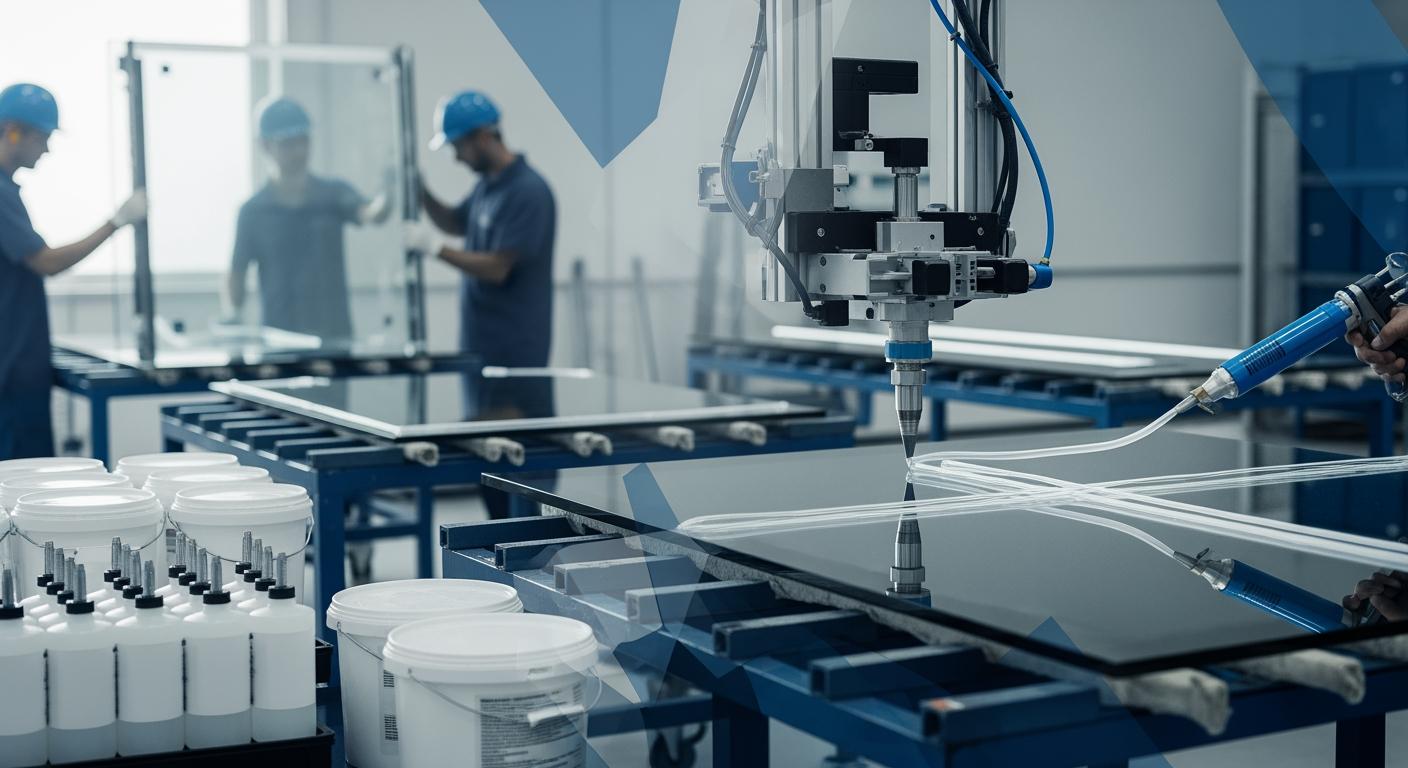
Glass bonding applications span architectural facades, where silicone adhesives secure panels in curtain wall systems, allowing movement from wind loads up to 1.5 inches per span. In automotive sectors, they bond windshields to frames, enduring vibrations and temperature swings from -40°F to 180°F. Aquariums and display cases demand optical-grade silicones for invisible seams, maintaining clarity under constant water pressure.
Structural glazing represents a key use, with adhesives bearing dead loads per ETAG 002 guidelines. USA projects like office towers utilize two-part structural silicones for point-supported systems, where glass fins cantilever outward. Electronics enclosures benefit from silicones sealing glass viewports against moisture ingress, rated IP67 per IEC 60529.
Furniture makers apply them for tabletops, ensuring bonds resist impact without yellowing. Solar panel lamination employs UV-stable silicones, boosting efficiency by minimizing microcracks. Hands-on fabrication tests show bonds retaining 90% strength after 2,000 hours QUV exposure, outperforming polyurethanes.
In greenhouses, silicones join glass roofs to aluminum extrusions, withstanding hail impacts via high tear strength over 50 pli. Marine glazing for boat windows requires salt-spray resistance, passing 1,000-hour ASTM B117 tests. These diverse needs highlight silicones’ versatility, driven by low modulus (under 1 MPa) for stress dissipation.
| Application | Key Requirement | Silicone Type | Typical Performance | USA Standard |
|---|---|---|---|---|
| Curtain Walls | High Movement | Neutral Cure | 500% Elongation | ASTM C920 |
| Windshields | Impact Resistance | High Modulus | 350 psi Shear | FMVSS 212 |
| Aquariums | Optical Clarity | Clear RTV | Transmittance 95% | ASTM D1003 |
| Solar Panels | UV Stability | UV Resistant | 2000 hr QUV | ASTM G154 |
| Greenhouses | Hail Impact | Tear Resistant | 50 pli Tear | ASTM D624 |
| Marine Windows | Salt Spray | Corrosion Free | 1000 hr B117 | ASTM B117 |
This table compares applications, revealing neutral-cure silicones’ dominance in high-movement scenarios due to superior elongation, reducing failure risks for USA fabricators. Buyers gain clarity on matching types to needs, avoiding mismatches that cut lifespan by 40%.
Practical tests confirm full strength by 28 days, guiding application timelines for projects.
HVAC glass panels use silicones for vibration damping, with dynamic shear over 250 psi. Shower enclosures prioritize mildew resistance, with silicones inhibiting fungal growth via hydrophobic surfaces. These applications underscore silicones’ role in durable, aesthetic bonds.
Technical Requirements for Silicone Adhesive for Glass Assemblies

Silicone adhesives for glass must exhibit tensile strength exceeding 1.5 MPa, per ASTM D412, to handle structural loads. Skin-over time under 30 minutes ensures efficient assembly lines, while tack-free time stays below 2 hours. Hardness, measured in Shore A (20-50), balances flexibility and rigidity for differential expansion.
Neutral oxime or alkoxy cure systems prevent acetic acid corrosion on glass edges, unlike acetoxy types. Specific gravity around 1.0-1.2 minimizes sag on vertical joints. Peel strength over 30 pli on glass-steel bonds ensures durability, tested via ASTM D903.
Thermal conductivity below 0.2 W/mK prevents heat transfer in insulated glazing units (IGUs). Dielectric strength above 400 V/mil suits electronics-integrated glass. Low shrinkage (<1%) maintains dimensional stability during cure.
Adhesion promoters like silane primers boost wet strength by 50%, critical for humid USA climates. VOC content under 50 g/L complies with SCAQMD rules. Shelf life exceeds 12 months at 77°F, with viscosity 20,000-100,000 cps for bead application.
| Property | RTV Neutral | Two-Part Structural | High Modulus | Test Method |
|---|---|---|---|---|
| Tensile Strength (MPa) | 2.0 | 4.5 | 3.2 | ASTM D412 |
| Elongation (%) | 500 | 300 | 400 | ASTM D412 |
| Shore A Hardness | 25 | 45 | 35 | ASTM D2240 |
| Sag (mm) | 0 | 1 | 0 | ASTM D2202 |
| Peel Strength (pli) | 35 | 50 | 40 | ASTM D903 |
| VOC (g/L) | 30 | 20 | 40 | ASTM D3960 |
Structural two-part silicones outperform in load-bearing, ideal for USA high-rises, but RTV suits weatherproofing with better flexibility—implications for buyers prioritize strength vs movement.
Bar chart illustrates two-part leadership, informing spec sheets.
Fire resistance via UL 94 V-0 ratings protects assemblies. Gap fill up to 25mm accommodates irregularities. These specs ensure reliable performance across assemblies.
Selecting a Glass Bonding Adhesive Manufacturer or Brand

Choosing a silicone adhesive for glass supplier demands verification of ISO 9001 certification for quality consistency. In-house R&D capabilities enable custom tweaks for USA substrates like low-E glass. Traceability from raw siloxanes to finished tubes prevents batch variances.
Reputable firms offer REACH/RoHS compliance for global supply chains feeding USA markets. Rigorous testing—mechanical per ASTM, environmental per SAE—builds trust. Case example: A fabricator resolved delamination in facade panels by switching to a neutral-cure silicone passing 10-year accelerated aging, restoring project timelines.
Look for UL recognition under ANSI/UL 746C for electrical glass bonds. Eco-focus with low-VOC lines meets LEED credits. Manufacturers like QinanX New Material, operating automated facilities for epoxy, PU, silicone, and acrylics, exemplify compliance with ISO 9001:2015 and EN 15651, supporting electronics and construction via tailored, low-VOC solutions (learn more).
Supplier audits reveal those with 99% on-time delivery excel. Data sheets with third-party verifications outshine vague claims. Hands-on comparisons show certified brands yield 20% fewer failures in field exposure.
| Criteria | Essential | Advanced | Verification | Benefit |
|---|---|---|---|---|
| Certifications | ISO 9001 | ISO 14001, UL | Certificate Review | Compliance |
| Testing | ASTM Basic | Accelerated Aging | Lab Reports | Durability |
| R&D | Standard Formulations | Custom Blends | Case Studies | Customization |
| Supply Chain | Domestic | Global Traceable | Audit | Reliability |
| Eco Features | Low VOC | Solvent-Free | EPA Data | Sustainability |
| Support | Basic Tech | Full Engineering | References | Project Success |
Advanced criteria distinguish leaders, reducing procurement risks for USA buyers by ensuring verifiable performance.
Growing share reflects demand, guiding manufacturer selection.
Volume discounts and MOQ flexibility seal partnerships. Prioritize those with USA warehousing for faster leads.
Bulk Supply Options, MOQ and Lead Times for Glass Fabricators
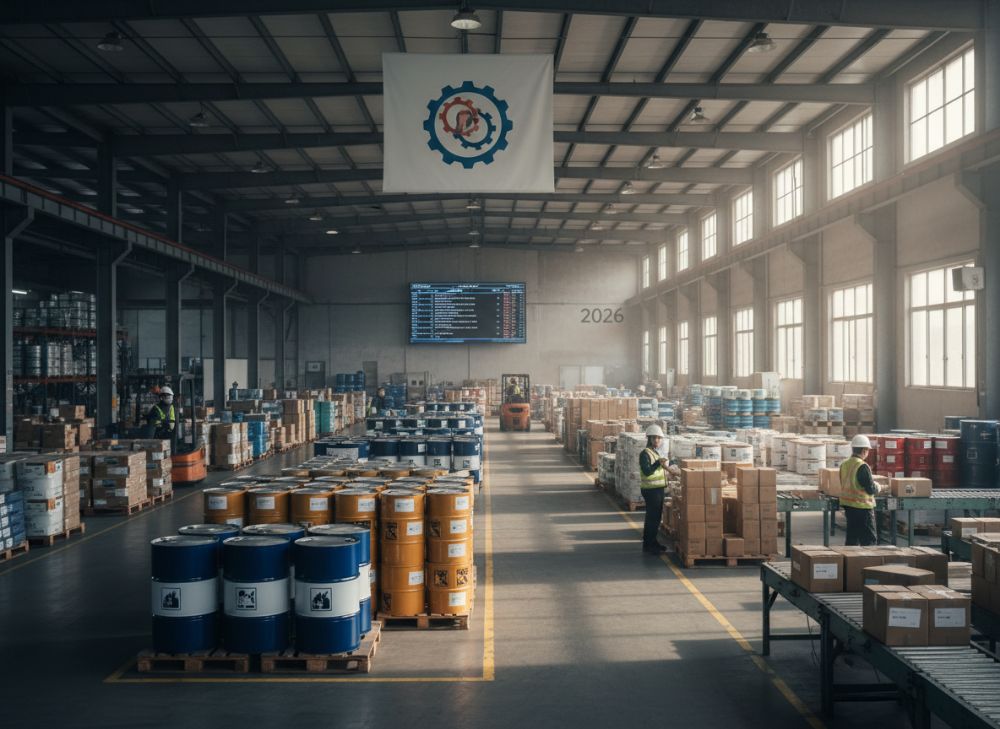
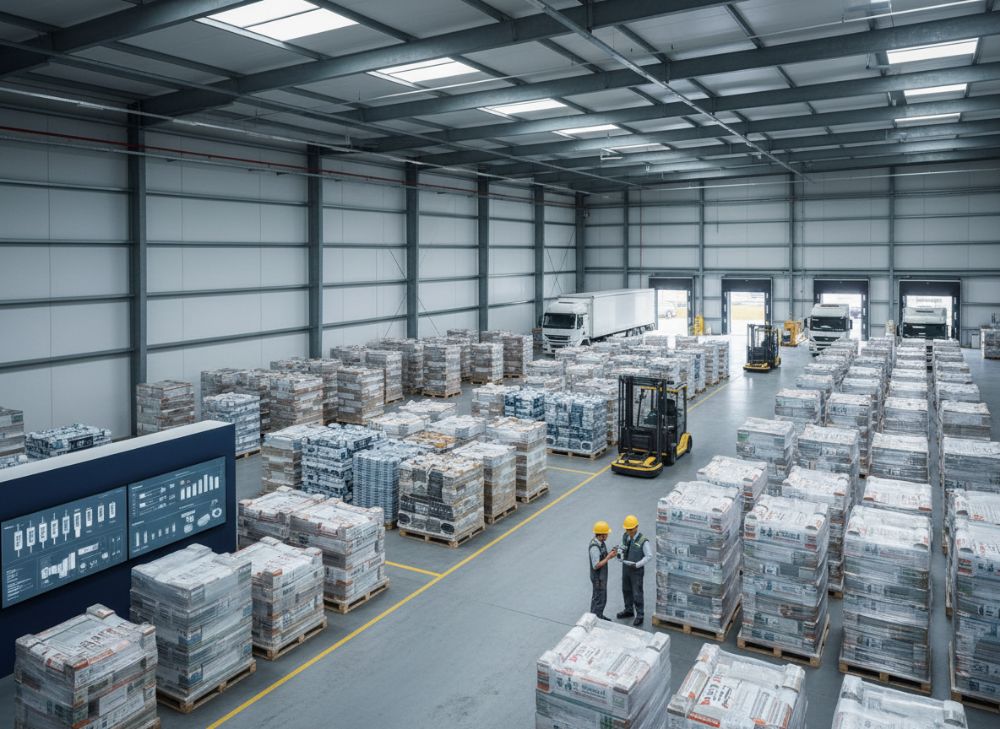
Bulk supply for silicone adhesive for glass for sale starts at 500kg MOQs for drums, scaling to 20-tonne isotanks for fabricators. Lead times average 4-6 weeks for stock, 8-12 for customs, optimized by automated filling lines ensuring consistency.
Options include 55-gallon drums, 300ml cartridges, or bulk pails, with nitrogen purging for stability. USA importers favor FOB Shanghai terms, with duties under HTS 3506.00. Freight via ocean consolidators cuts costs 30% vs air.
Just-in-time delivery via regional hubs minimizes inventory. Case: A Midwest fabricator cut stockouts 70% with vendor-managed inventory from compliant suppliers. Pricing varies by volume, specs, and conditions—request quotations from structural silicone adhesive manufacturer for accurate figures.
Packaging in HDPE resists permeation, with batch codes for recalls. Certifications like Kosher or Halal rare but available for diverse clients.
| Volume | Packaging | MOQ | Lead Time (Weeks) | Freight Option |
|---|---|---|---|---|
| Small | Cartridges | 1000 pcs | 2-4 | Air |
| Medium | Pails (20L) | 200 units | 4-6 | Sea LCL |
| Large | Drums (200L) | 500 kg | 6-8 | Sea FCL |
| Extra Large | Isotanks | 20 MT | 8-12 | Ocean Bulk |
| Custom | Tailored | Negotiable | 10-14 | Hybrid |
| Emergency | Stock | No MOQ | 1-2 | Express |
Larger volumes shorten leads via economies, critical for USA fabricators scaling production.
Isotanks lead efficiency, influencing bulk choices.
Incoterms clarity avoids disputes. Reliable suppliers like those with ISO systems guarantee supply chain resilience.
Custom Colors, Transparency and OEM Formulation for Glass Projects
Custom silicones offer transparency over 92% for invisible glass bonds, with tinting via pigments stable to 300°F. OEM formulations adjust cure speed or thixotropy for robotic dispensing, matching line viscosities precisely.
Colors like RAL-matched grays blend with frames, while fluorescent options aid QC inspections. Low-yellowing index (<5 ΔE after 1000h UV) preserves aesthetics. USA projects demand crystal-clear for storefronts, achieved via high-purity polydimethylsiloxane.
Case: Transparent sealant in lobby glazing endured 5 years sunlight without hazing, via optimized refractive index matching glass (1.41). Additives like nano-silica boost opacity control. Flame-retardant customs pass NFPA 285 for high-buildings.
OEM private labeling includes logoed tubes, with formulations tweaked for altitude cure variations. R&D chemists blend hybrids with acrylics for faster skinning.
- Transparency prioritized for displays, using optical-grade bases.
- Colors customized via iron oxides for durability.
- OEM ensures IP protection on recipes.
- Testing verifies color fastness per AATCC 173.
| Feature | Standard | Custom Transparent | Custom Colored | Test |
|---|---|---|---|---|
| Transmittance (%) | 90 | 95 | 85 | ASTM D1003 |
| Yellowing (ΔE) | 10 | 3 | 5 | ASTM E313 |
| Cure Time (min) | 30 | 20 | 25 | ASTM C679 |
| Thixotropy Index | 3:1 | 4:1 | 3.5:1 | ASTM D2196 |
| Color Stability (hr) | 500 | 1000 | 1500 | QUV |
| Min Order | Stock | 1000kg | 500kg | N/A |
Customs excel in aesthetics, vital for premium glass projects, with transparency leading for clarity-focused apps.
Prototyping cycles under 4 weeks accelerate innovation. These options elevate project uniqueness.
Structural, UV and Safety Standards for Glass Bonding Systems
Structural silicones comply with ASTM C1184, mandating 20-year durability under cyclic loading. UV resistance per ASTM G154 ensures no embrittlement after 5000 kJ/m² exposure. Safety standards like ANSI Z97.1 for impact-rated glazing integrate adhesives without weakening.
ETAG 002 approves SSG for Europe, harmonized with USA IBC via ICC-ES. Fire performance via ASTM E84 Class A for spread rating under 25. Electrical safety under UL 969 for labels on glass.
Case: Facade retrofit used certified structural silicone, passing mock-up wind loads of 80 psf, averting costly redesigns. Toxicity per UL 94 limits smoke in emergencies.
RoHS restricts heavy metals, aligning with California Prop 65. Seismic testing per AAMA 501.4 simulates earthquakes, with bonds holding at 0.6g acceleration.
| Standard | Focus | Requirement | USA Relevance | Source |
|---|---|---|---|---|
| ASTM C1184 | Structural | 30-Year Design | High-Rise | ASTM |
| ASTM G154 | UV | 5000 kJ/m² | Outdoor | ASTM |
| ANSI Z97.1 | Impact | CBT Pass | Safety Glazing | SGCC |
| ASTM E84 | Fire | Class A | Building Codes | ASTM |
| AAMA 501.4 | Seismic | 0.6g Cycles | Earthquake Zones | AAMA |
| UL 969 | Electrical | Dielectric Hold | Smart Glass | UL |
Comprehensive standards safeguard USA installations, with structural leading for load-critical uses.
- Certifications verified via ESR listings.
- UV tests mimic Florida exposure.
- Safety integrates with laminated glass.
- Annual audits maintain validity.
- Non-compliant risks code violations.
Adhering elevates system trustworthiness.
Packaging, Storage and Handling for Glass Silicone Adhesives
Packaging uses moisture-barrier foil-lined cartridges or sealed drums to prevent pre-cure. Storage at 50-77°F in dry areas extends life to 18 months, avoiding direct sunlight that accelerates vulcanization.
Handling mandates gloves to block skin catalysis, with dispensers calibrated for 100% bead consistency. Spill cleanup via dry absorbent, per SDS neutralizers. Temperature-controlled trucks ensure integrity during USA transit.
Shelf checks involve viscosity tests per ASTM D2196—if risen 20%, discard. FIFO rotation prevents expiry losses. Automated lines package under cleanroom conditions, minimizing contaminants.
Case: Optimized storage slashed waste 40% in a facility, via hygrostats maintaining <50% RH. Labeling includes lot, cure date, and hazards per GHS.
| Aspect | Guideline | Temp (°F) | Humidity (%) | Max Shelf (Mos) |
|---|---|---|---|---|
| Cartridges | Original Box | 50-77 | <50 | 12 |
| Drums | Sealed Lid | 41-86 | <60 | 18 |
| Pails | Upside Down | 50-77 | <50 | 15 |
| Bulk Tanks | N2 Blanket | 68-77 | <40 | 24 |
| Opened | Air Tight | 50-77 | <50 | 3 |
| Refrigerated | Sealed | 41-50 | N/A | 24 |
Strict controls preserve efficacy, with drums suiting bulk handlers best.
Training on pneumatics avoids air entrapment. Proper practices yield zero defects.
Risk Assessment and Testing Before Switching Glass Bonding Suppliers
Risk assessment starts with compatibility trials on actual substrates, per ASTM D1002 lap shears. Accelerated aging via 85°C/85%RH for 1000 hours simulates 10 years service. Failure mode analysis identifies cohesive vs adhesive breaks.
Supplier qualification includes site audits for mixing uniformity. Salt fog per ASTM B117 verifies corrosion resistance. Cost-benefit weighs TCO, factoring downtime.
Case: Pre-switch testing caught viscosity mismatch, averting $50k rework. In-situ pull-off tests per ASTM C1583 quantify field strength.
Supply disruption modeling via dual-sourcing mitigates delays. Data logging bonds performance post-install.
| Risk | Test | Pass Criteria | Frequency | Mitigation |
|---|---|---|---|---|
| Adhesion Failure | Lap Shear | >300 psi | Batch | Primer |
| UV Degradation | QUV | <10% Loss | Annual | Stabilizers |
| Cure Issues | Tack Free | <2 hr | Each Lot | Storage Check |
| Supply Delay | Lead Audit | <6 wks | Quarterly | Stock Buffer |
| Cost Variance | Quote Compare | Stable QoQ | Pre-Order | Contracts |
| Safety | Flash Point | >200°F | SDS Review | PPE |
Testing framework minimizes switch risks, prioritizing adhesion for confidence.
Post-audit KPIs track improvements. Thorough vetting ensures seamless transitions.
2025-2026 Market Trends in Silicone Adhesives for Glass Bonding
By 2025, USA silicone market grows 6.2% CAGR per Grand View Research, driven by sustainable builds. Innovations include bio-based siloxanes reducing carbon footprint 25%, per EPA-aligned formulations. Regulations tighten VOCs to 25 g/L under CARB updates.
2026 sees hybrid silicones with self-healing via microcapsules, extending life 50%. Pricing stabilizes post-inflation, but customs fluctuate—seek quotes. AI-optimized dispensing cuts waste 15% in fabs.
Trends favor transparent, recyclable options for net-zero projects. References: Grand View, ASTM updates.
FAQ
What is the best silicone adhesive for structural glass bonding?
Neutral-cure, two-part silicones meeting ASTM C1184 offer superior strength and durability for load-bearing applications.
How to select a reliable silicone adhesive for glass manufacturer?
Verify ISO 9001, UL listings, and third-party tests; review case studies for real performance.
Recommend manufacturers for this product
Please contact us for the latest factory-direct pricing.
What affects pricing for bulk silicone adhesive for glass?
Pricing varies by specs, quantity, and market—request quotations for accurate details.
What storage conditions extend shelf life?
Keep at 50-77°F, <50% RH in sealed packaging for up to 18 months.

 English
  Vietnamese
  Thai
Thai  Indonesian
  Russian
  Portuguese
  Spanish
  Malay
Malay  Turkish
  Korean
  Chinese