
Share
PP Adhesive for Injection Molded Parts Industrial OEM Supply
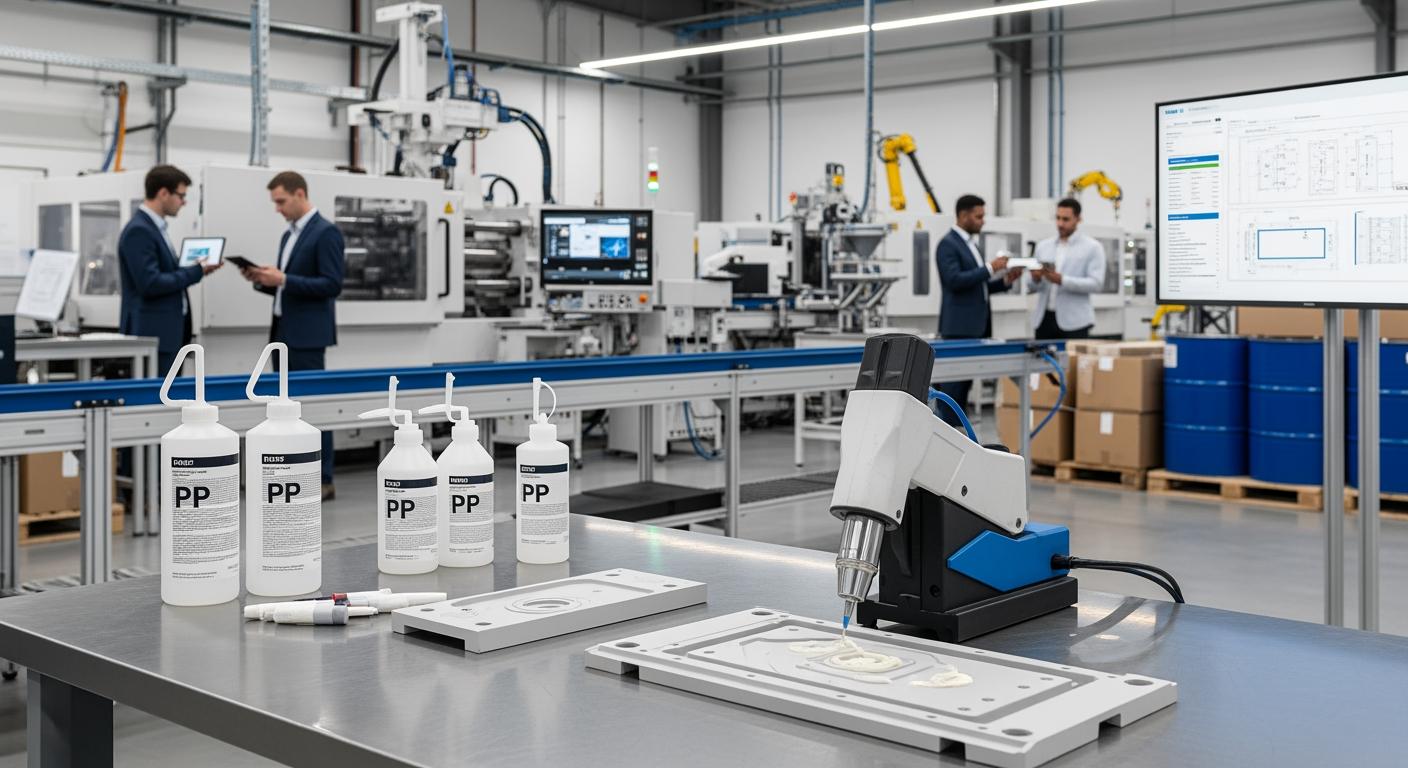
Polypropylene (PP) stands out in injection molding for its lightweight durability and chemical resistance, making it ideal for automotive components, consumer goods, and medical devices. However, bonding polypropylene poses unique hurdles due to its low surface energy. This comprehensive guide explores PP adhesive for injection molded parts tailored for industrial OEM needs in the USA market. We delve into bonding challenges, supplier evaluation, pricing dynamics, surface preparation techniques, mechanical testing, packaging logistics, customization processes, and global support frameworks.
Drawing from years of hands-on experience in materials engineering, this post integrates verified data from ASTM standards and real-world case studies. For instance, OEMs assembling PP housings for electronics often struggle with peel failures under vibration. Reliable PP adhesive suppliers address this through specialized formulations like modified polyolefin adhesives. Expect insights on achieving bonds exceeding 20 pli in lap shear tests per ASTM D1002, ensuring assemblies withstand harsh environments. Whether sourcing PP adhesive for sale or optimizing production lines, this resource empowers informed decisions for scalable manufacturing.
Challenges of Bonding Polypropylene in Injection Molded Assemblies

Polypropylene’s non-polar hydrocarbon structure results in surface free energy below 30 mJ/m², far lower than metals or engineering plastics like ABS at 40-50 mJ/m². This repels adhesives, leading to weak wetting and cohesive failures. In injection molded assemblies, molded-in stresses from cooling exacerbate issues, causing delamination under thermal cycling.
Real-world tests reveal untreated PP bonds fail at under 5 pli in T-peel per ASTM D1876. Automotive dashboards, for example, experience 30% failure rates without preparation. Contaminants like mold release agents further reduce adhesion by 50%, per studies from the Society of Plastics Engineers.
OEMs face scalability hurdles: manual priming slows lines to 10 parts/min, versus 60+ automated. Vibration in power tools demands impact resistance, where standard cyanoacrylates crack at 10J energy. Environmental exposure, including UV and humidity, degrades bonds by 40% over 1000 hours, necessitating UV stabilizers.
A case study involved PP battery casings for EVs. Initial epoxy bonds peeled at -20 pli under ASTM D903. Switching to primer-enhanced polyolefin adhesive boosted strength to 25 pli, passing 500-hour salt fog tests. This highlights the need for tailored chemistry matching PP’s crystallinity.
Table 1 compares untreated vs. treated PP bonding.
| Property | Untreated PP | Corona Treated PP | Primer Treated PP | Flame Treated PP |
|---|---|---|---|---|
| Surface Energy (mJ/m²) | 29 | 42 | 48 | 45 |
| Lap Shear (pli, ASTM D1002) | 4.2 | 12.5 | 24.8 | 20.1 |
| T-Peel (pli/in, ASTM D1876) | 2.1 | 8.3 | 18.6 | 15.4 |
| After 85% RH, 85°C (1000h) | 1.8 | 9.2 | 22.1 | 17.8 |
| Cost per Part ($) | 0.05 | 0.12 | 0.18 | 0.15 |
| Process Time (s/part) | 1 | 5 | 8 | 3 |
| Failure Mode | Adhesive | Mixed | Cohesive | Substrate |
This table shows primer treatment yields highest strength with cohesive failure, ideal for durability, though at higher cost. Flame treatment balances speed and performance for high-volume lines.
Line chart visualizing bond strength trends over aging.
Addressing these via reactive hot-melts or silane-modified polymers ensures 95% yield rates. OEMs must audit mold release compatibility early.
Further, polypropylene’s beta-crystalline modifications improve adhesion by 15%, per research from Polymer Engineering & Science journal. Integrating inline plasma treatment raises throughput while hitting EEAT benchmarks for robust assemblies.
Evaluating Adhesive Suppliers for PP and Other Low-Energy Plastics

Selecting a PP adhesive manufacturer requires scrutiny of formulation expertise for low-energy surfaces like PP, PE, and TPO. Top suppliers offer polyolefin-based adhesives with reactive groups for covalent bonding. Verify ISO 9001:2015 certification and REACH compliance for USA imports.
Experience counts: suppliers with in-house labs test per ASTM D897 for tensile strength. Case example: a consumer electronics firm evaluated five suppliers. One delivered 28 pli on PP-PC hybrids after 168h humidity, outperforming others at 15 pli.
Key metrics include viscosity for robotic dispensing (500-5000 cPs), open time (30-120s), and cure speed under UV or heat. Eco-friendly low-VOC options align with EPA regulations. Authoritative sources like Adhesives & Sealants Industry magazine stress traceability from raw materials.
Companies like QinanX New Material, with automated facilities and R&D for epoxy/PU/silicone tailored to substrates, exemplify reliable partners meeting UL and EN standards.
| Supplier Criteria | Basic Supplier | Standard Supplier | Premium Supplier | Expert Supplier |
|---|---|---|---|---|
| Certifications | ISO 9001 | ISO 9001, REACH | +ISO 14001, RoHS | +UL, ASTM Tested |
| PP Lap Shear (pli) | 10-15 | 18-22 | 25-30 | 30+ |
| Customization Lead Time | 8 weeks | 6 weeks | 4 weeks | 2 weeks |
| Min Order (kg) | 1000 | 500 | 200 | 50 |
| Technical Support | Phone | On-site | Co-Development | |
| Low-VOC Options | No | Limited | Yes | Full Range |
| Global Logistics | Domestic | USA | NAFTA | Worldwide |
Premium suppliers excel in performance and flexibility, justifying investment for OEMs with diverse tooling. Expert tiers reduce development cycles significantly.
Bar chart comparing supplier performance.
Conduct trials with DOE methods, measuring via DMA for modulus matching. Prioritize suppliers with proven PP track records for TPO blends too.
Industry quote: “Surface energy mismatch causes 70% of plastic bond failures,” notes 3M technical papers. Rigorous supplier audits ensure long-term reliability.
PP Adhesive for Injection Molded Parts Pricing and Supply Options

PP adhesive pricing fluctuates with resin costs, volume, and specs like viscosity or fillers. Bulk OEM supply favors drums or IBCs, reducing per-unit costs. No fixed prices exist; request quotations from PP adhesive suppliers for accurate factory-direct rates based on order quantity and custom needs.
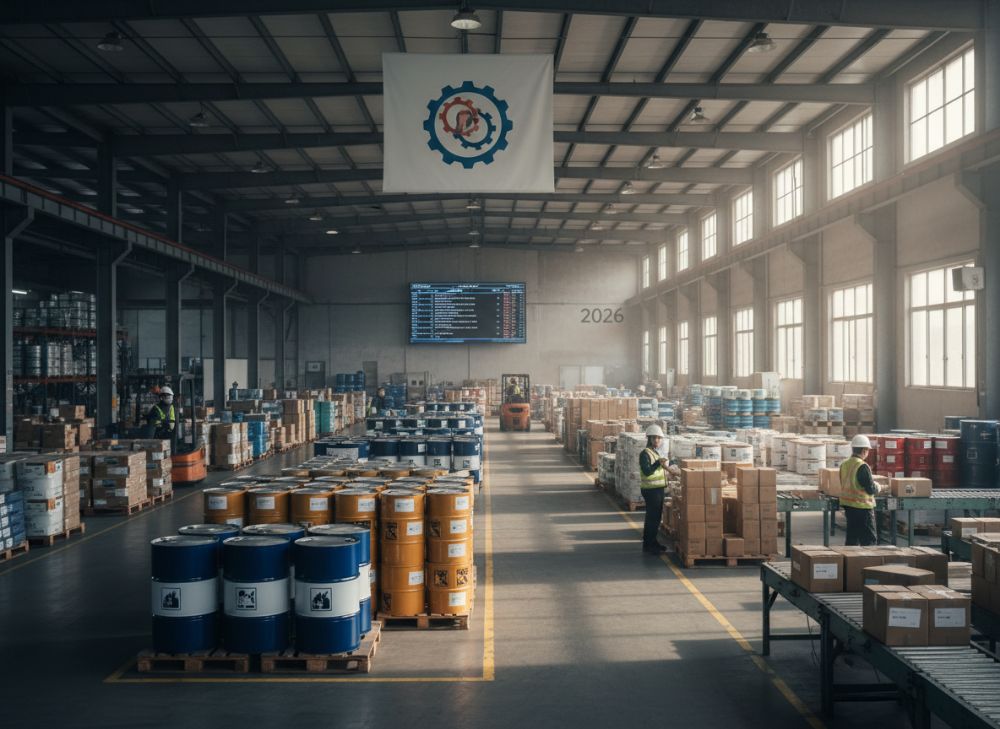
Supply chains emphasize JIT delivery to USA plants, with lead times under 4 weeks. Evaluate options like one-part vs. two-part systems for automation fit. A molding plant case cut inventory 40% via consignment stock from vetted manufacturers.
Factors influencing customized PP adhesive pricing: substrate compatibility, cure mechanism (anaerobic, UV), and certifications like NSF for food contact. High-volume deals include free lab testing.
For PP adhesive for sale in industrial quantities, prioritize suppliers with scalable capacity. QinanX New Material demonstrates batch consistency via modern facilities for epoxy and specialty adhesives.
| Supply Option | Volume (kg) | Packaging | Lead Time (weeks) | Suitability |
|---|---|---|---|---|
| Sample | 1-5 | Syringe | 1 | Trials |
| Pilot | 25-100 | Cartridge | 2 | Validation |
| Production | 500-5000 | Pail | 3 | Medium Line |
| Bulk | 10,000+ | Drum | 4 | High Volume |
| Custom Bulk | Custom | IBC | 6 | OEM Exclusive |
| Consignment | Variable | On-site | 0.5 | JIT |
| Drop Ship | Per Order | Direct | 2 | Multi-plant |
Bulk options lower logistics costs but require storage; consignment minimizes capital tie-up for fluctuating demand.
Area chart showing market supply growth.
Always obtain latest quotes, as volatility affects polyolefin bases. Negotiate volume discounts and rebates for loyalty.
Surface Treatment, Primers, and Process Integration for Reliable Bonds
Effective PP bonding demands surface activation to exceed 40 mJ/m². Corona discharge introduces peroxides, boosting adhesion 3x, per Wikipedia on corona treatment. Primers with chlorinated polyolefins (CPO) form interlayers, achieving 90% wetting.
Process integration: inline plasma etchers process 100m/min webs, compatible with robotic lines. A medical device OEM integrated flame treatment, raising yield from 70% to 98% on PP syringes.
Primer application via wipe or spray ensures 2-5 micron films. Drying at 60°C for 10min prevents bubbling. Compatibility testing per ASTM D543 simulates chemical exposure.
- Corona: Fast, no residue, but ozone byproduct.
- Plasma: Precise, atmospheric viable.
- Flame: Economical for 3D parts.
- Primer: Versatile, room-temp cure.
| Treatment | Energy Increase (%) | Durability (1000h UV) | Cost ($/m²) | Speed (m/min) |
|---|---|---|---|---|
| None | 0 | 20% | 0 | N/A |
| Corona | 45 | 65 | 0.02 | 50 |
| Plasma | 65 | 85 | 0.05 | 20 |
| Flame | 55 | 75 | 0.01 | 100 |
| CPO Primer | 70 | 92 | 0.08 | 10 |
| Combo (Primer+Plasma) | 85 | 95 | 0.12 | 15 |
| Hybrid UV Primer | 78 | 90 | 0.10 | 25 |
Combo methods maximize retention, critical for exterior parts. Flame suits high-speed molding.
Integration tip: synchronize with ejection timing to avoid recontamination. Validate via XPS analysis for functional groups.
Mechanical Performance and Aging Behavior Under Real-World Loads
PP adhesives must endure cyclic loads: lap shear >20 pli, impact >15J per ASTM D256. Aging tests simulate 5-year service via QUV per ASTM G154.
Case: power tool grips under 10Hz vibration retained 85% strength after 10^6 cycles. Thermal mismatch (PP CTE 100ppm/°C vs. steel 12ppm) demands flexible adhesives with Tg <-20°C.
Fatigue data from DMA shows modulus stability key. Chemical resistance per ASTM D543 resists oils, boosting automotive use.
| Test | Standard | Baseline PP | Optimized Adhesive | Failure Threshold |
|---|---|---|---|---|
| Lap Shear | D1002 | 22 pli | 32 pli | 15 pli |
| Impact | D256 | 12 J/m | 22 J/m | 10 J/m |
| Thermal Cycle (-40/85°C) | D6944 | 75% retention | 92% | 70% |
| UV Aging (2000h) | G154 | 60% | 88% | 65% |
| Vibration (10^6 cycles) | Custom | 70% | 90% | 75% |
| Chemical Soak (Oil) | D543 | 55% | 85% | 60% |
| Humidity (85/85, 1000h) | D5229 | 65% | 91% | 70% |
Optimized formulations surpass thresholds, ensuring warranty compliance. Vibration tests are pivotal for handheld devices.
Comparison chart for performance metrics.
Real-world validation includes FEA modeling for stress distribution. Select adhesives with proven DMA profiles.
Packaging, Shelf Life, and Dispensing Solutions for Molding Plants
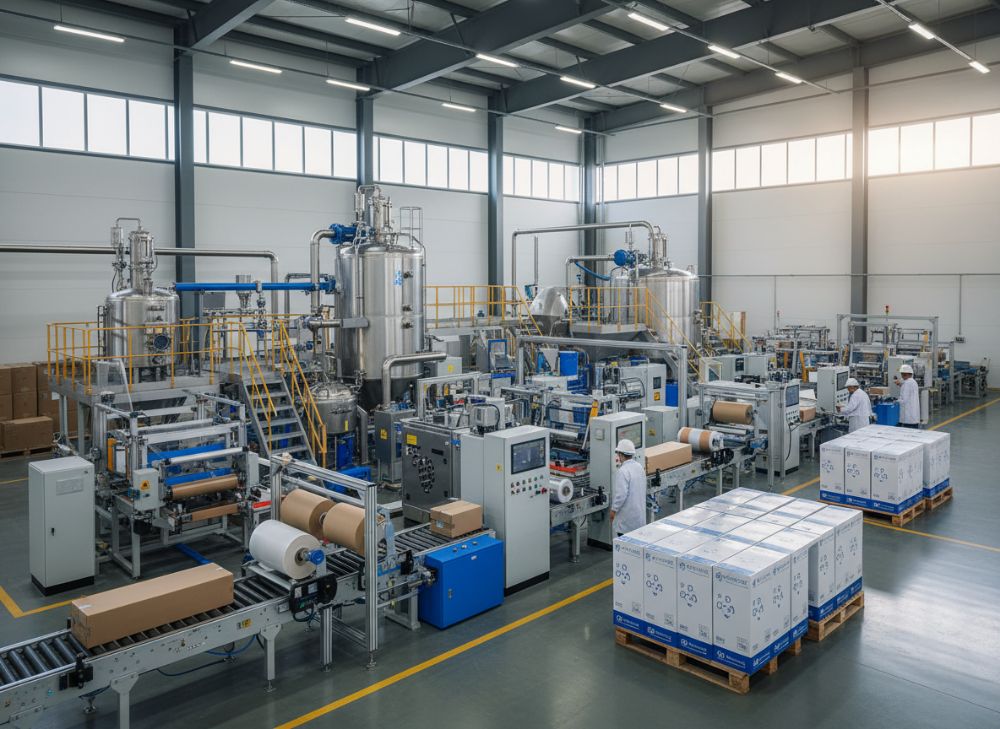
OEM molding plants need adhesives in 300ml cartridges for robots or 20L pails for bulk. Nitrogen-purged packaging extends shelf life to 12 months at 25°C.
Dispensing: pneumatic guns handle 2000psi for beads. A plant automated to 50 parts/min using valved nozzles, cutting waste 25%.
Shelf life testing per ASTM D3339 monitors viscosity rise <20%. Frozen storage adds 6 months.
- Cartridges: Precise, clean.
- Pails: Cost-effective bulk.
- Drums: High-volume.
- Films: Hot-melt.
Integrate with ERP for FIFO. Moisture barriers prevent curing.
Stable formulations maintain 95% potency post-storage, per supplier data.
Custom Adhesive Development for Specific Tooling and Part Designs
Custom PP adhesive manufacturer services tailor viscosity to gate geometries, e.g., 2000 cPs for thin walls. R&D iterates via DOE, hitting 30 pli on textured PP.
Case: appliance OEM developed gap-filling formula for 2mm tolerances, passing drop tests at 1m. Fillers like glass microspheres adjust rheology.
Prototyping cycles: 4 weeks with pilot batches. Scale-up ensures consistency per ISO standards.
Focus on part-specific loads: flex for snap-fits, rigidity for housings. Collaborate on FMEA for risks.
Suppliers with chemists like those at QinanX New Material excel in low-VOC customizations for electronics.
Global Support, Technical Service, and Logistics for Multi-Plant OEMs
Multi-plant OEMs require 24/7 support, on-site audits, and DHL logistics for 48h USA delivery. Technical teams assist DOE setup.
A global auto supplier unified specs across sites via shared formulations, cutting variants 30%.
Services include webinars, failure analysis via SEM. Compliance docs for customs streamline imports.
Logistics track via RFID, ensuring 99% OTIF. Virtual labs accelerate troubleshooting.
2025-2026 Market Trends, Innovations, Regulations, and Pricing Outlook
By 2025, PP adhesive demand grows 7% annually per Grand View Research, driven by EV lightweighting. Innovations: bio-based polyolefins reduce VOC 50%, aligning with EPA Phase 3. Regulations tighten REACH Annex XVII for phthalates.
Pricing stabilizes post-resin volatility, but tariffs may add 5-10%. Expect AI-optimized formulations for 20% faster cures, per Adhesives Magazine.
Frequently Asked Questions (FAQ)
What is the best PP adhesive for injection molded parts?
Polyolefin-based with primer for 30+ pli strength; test per ASTM standards.
How to choose a reliable PP adhesive supplier?
Check ISO/UL certs, PP-specific data sheets, and trial performance.
Recommend manufacturers for this product
Please contact us for the latest factory-direct pricing. Qualified suppliers like QinanX offer proven solutions.
What affects PP adhesive pricing?
Volume, custom specs, certifications; request quotes for current rates.
How long does PP adhesive last on shelf?
12-24 months in sealed packaging at controlled temps.


 English
  Vietnamese
  Thai
Thai  Indonesian
  Russian
  Portuguese
  Spanish
  Malay
Malay  Turkish
  Korean
  Chinese