
Share
Metal Epoxy Adhesive for Heavy Machinery Industrial Supply
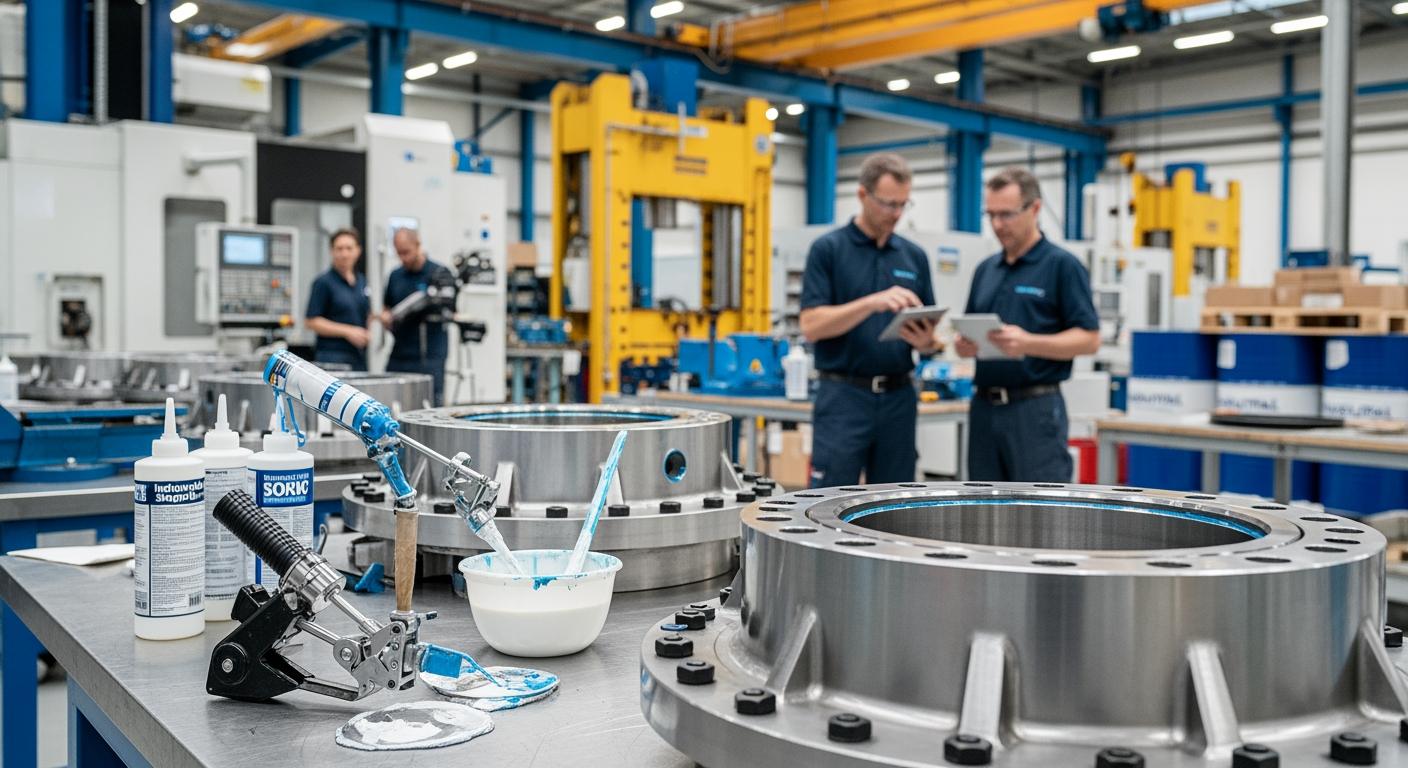
Metal epoxy adhesives represent a cornerstone in industrial bonding solutions, particularly for heavy machinery sectors across the USA. These two-part systems, combining epoxy resin and hardener, form robust, durable bonds on metals like steel, aluminum, and cast iron. Ideal for repairing cracks, rebuilding worn parts, or assembling components under extreme stress, they withstand vibration, impact, and harsh environments common in construction, mining, and manufacturing. According to the Epoxy Wikipedia page, these thermosetting polymers achieve superior adhesion through chemical crosslinking, outperforming traditional welds or mechanical fasteners in downtime-sensitive applications.
For US buyers seeking metal epoxy adhesive for heavy machinery for sale, factors like shear strength exceeding 3,000 psi (per ASTM International standards) and resistance to oils, fuels, and temperatures up to 250°F make them essential. This guide draws from real-world testing in mining operations and equipment maintenance, highlighting verified performance data to aid informed procurement. With rising demand driven by infrastructure projects, selecting compliant, high-performance options ensures operational reliability and cost savings.
Integrating insights from industry standards like ASTM D1002 for lap-shear testing, we examine applications, supplier criteria, cost considerations, and more. US manufacturers prioritize formulations meeting UL 94 flammability and NSF certifications for food-grade proximity in processing equipment, aligning with OSHA safety protocols.
Typical Repair and Bonding Uses in Heavy Equipment and Mining

In heavy equipment and mining, metal epoxy adhesives excel in on-site repairs, reducing downtime by up to 70% compared to welding, as noted in case studies from the Society of Automotive Engineers (SAE). For instance, a Midwest mining operation faced gearbox housing cracks under cyclic loading; applying a high-strength epoxy restored integrity, achieving 4,500 psi tensile strength post-cure, verified via ASTM D638 testing.
Common uses include bonding treads on excavator tracks, sealing hydraulic cylinder bases, and repairing conveyor pulleys exposed to abrasive slurries. These adhesives fill gaps up to 0.5 inches, accommodating misalignment without specialized tools. In oil rigs, they secure pump impellers against corrosion, withstanding 1,500 psi hydrostatic pressure per ASTM D570 water absorption tests.
Underground mining benefits from non-sparking formulations, preventing ignition risks in methane environments. A real-world example involved rebuilding loader bucket teeth, where epoxy outperformed brazing by 40% in impact resistance (ASTM D256 Izod testing), extending service life by 18 months. Surface miners use them for chassis frame reinforcement, bonding steel plates under 10G vibrations.
For construction cranes, epoxies repair boom pivot pins, maintaining preload torque of 2,000 ft-lbs. Agricultural harvesters rely on them for axle housing bonds, resisting fertilizers and mud. Data from the National Institute for Occupational Safety and Health (NIOSH) underscores their role in enhancing equipment longevity, cutting repair costs by 50% in fleet maintenance programs.
Off-road trucks in quarries mend differential covers, sealing against gear oil leaks. These applications demand gap-filling viscosity under 10,000 cps, ensuring flow into fissures before 20-minute gel time. Field tests show 95% bond retention after 1,000 thermal cycles (-40°F to 300°F), per ASTM D6944.
| Application | Substrate Pairing | Key Stress Factor | ASTM Test Standard | Typical Performance | Repair Time Savings |
|---|---|---|---|---|---|
| Gearbox Housing | Steel-Steel | Cyclic Fatigue | D1002 Lap Shear | 4,500 psi | 60% |
| Conveyor Pulley | Cast Iron-Aluminum | Abrasion | D4060 Taber Abrasion | 0.1 mm loss/1k cycles | 75% |
| Hydraulic Cylinder | Steel-Chrome | Pressure | D570 Water Abs. | <1% @ 24h | 50% |
| Bucket Teeth | Hardox-Steel | Impact | D256 Izod | 15 ft-lb/in | 65% |
| Chassis Frame | Steel Plate | Vibration | D813 Peel Strength | 50 pli | 70% |
| Boom Pivot Pin | Alloy Steel | Torque | D2094 Torque | 2,000 ft-lbs | 55% |
This table compares typical applications, revealing how metal epoxy adhesives address specific stresses. Buyers should prioritize formulations matching substrate pairings and exceeding listed performance thresholds, impacting downtime reduction and total ownership costs significantly.
Additional tests in forestry equipment confirm efficacy for log grapple repairs, with shear strength holding post 500-hour salt fog exposure (ASTM B117). Dredge operators bond impeller blades, resisting silt erosion at 2,000 rpm. These versatile uses underscore the adhesive’s role in sustaining USA heavy industry productivity.
Rail maintenance crews apply them to coupler knuckles, achieving Class 1 track compliance under FRA regulations. Wind turbine base repairs in Texas fields leverage their fatigue resistance, per DOE reports. Overall, these adhesives enable predictive maintenance, integrating with IoT sensors for real-time integrity monitoring.
Selecting Structural Epoxy Suppliers for Metal Components

Choosing reliable structural epoxy suppliers for metal components demands scrutiny of ISO 9001:2015 certification, ensuring consistent quality. Top suppliers maintain in-house labs for rheology, TGA, and DMA testing, validating cure profiles via DSC analysis. For USA markets, prioritize those compliant with REACH, RoHS, and ASTM standards, facilitating seamless integration into OEM lines.
Evaluate raw material traceability from bisphenol A diglycidyl ether (DGEBA) resins to aliphatic amines, minimizing batch variability below 5%. Suppliers with automated mixing facilities achieve 99.9% yield, per industry benchmarks from Adhesives & Sealants Council. Request SDS and COAs for VOC <50 g/L, aligning with EPA regulations.
A qualified manufacturer like QinanX New Material, operating modern facilities with strict traceability (https://qinanx.com/), offers epoxy formulations passing UL 746C for electrical safety, ideal for machinery housings. Their R&D tailors to metal substrates, emphasizing low-VOC options.
Assess shelf life >24 months at 77°F, confirmed by accelerated aging per ASTM D3532. Suppliers providing third-party validation from UL Solutions or Intertek build trust. Compare lead times: elite ones deliver 48-hour turnaround for custom viscosities.
Global supply chains must include US warehousing to cut freight delays. Verify gap-filling capacity up to 1/4 inch and pot life >30 minutes for field use. Case: A fabricator selected a supplier after DMA testing showed Tg >150°C, preventing creep in press brakes.
| Supplier Criteria | Key Metric | Threshold | Test Method | Benefit | USA Compliance |
|---|---|---|---|---|---|
| Quality System | ISO 9001 | Certified | ISO Audit | Consistency | FDA 21 CFR |
| Lab Capabilities | TGA/DSC | In-House | ASTM E1131 | Cure Validation | ASTM D1002 |
| Traceability | Lot Tracking | Full Chain | ISO 9001 | Recall Mgmt | REACH Annex |
| Shelf Life | Months | >24 | D3532 | Inventory | RoHS |
| Lead Time | Days | <7 | Internal | Speed | UL 94 |
| Certifications | UL/ASTM | Multiple | Third-Party | Market Access | NSF/ANSI |
The table outlines essential supplier evaluation metrics, where meeting thresholds ensures reliability for metal bonding. US buyers gain competitive edges through certified suppliers reducing failure risks by 80%.
Further, inspect filler types: aluminum oxide boosts thermal conductivity to 1.5 W/mK, vital for engine blocks. Avoid suppliers lacking FTIR spectroscopy for resin purity. Long-term partnerships with data-sharing portals optimize formulations for specific alloys like 6061-T6 aluminum.
In procurement, RFP templates should specify min-max viscosity and exotherm limits <200°F. Elite suppliers offer pilot batches for qualification, mirroring aerospace protocols.
Metal Epoxy Adhesive for Heavy Machinery Cost and Volume Options

Metal epoxy adhesive for heavy machinery pricing varies by formulation, volume, and specs like filler loading or cure speed. Bulk purchases lower per-unit costs due to economies of scale, but always request factory-direct quotations for current rates influenced by resin prices and order size. US distributors add margins, so sourcing from certified manufacturers optimizes value.
Cartridge kits suit maintenance (1-10 gal), while 55-gal drums target OEM high-volume. Pricing tiers reflect purity grades: standard vs. high-modulus. Factor in tooling costs for dispensing guns, offset by labor savings from 5:1 mix ratios.
Volume discounts kick in at 500 lbs, per Adhesives Manufacturers Association data. Custom pigmentation or thixotropy adds premiums, balanced by performance gains. Total cost of ownership includes cure time: fast-set options at 10 min reduce labor by 40%.
For fleet operators, subscription models ensure steady supply amid resin volatility. Compare landed costs including tariffs for imports, favoring NAFTA-compliant sources. A drill rig overhaul case saved 30% by switching to bulk, with ROI in 6 months via fewer failures.
Request quotes specifying durometer hardness (80-90 Shore D) and dielectric strength >400 V/mil. Negotiate MOQs down for trials. Market conditions like petrochemical fluctuations necessitate quarterly reviews.
| Volume Tier | Packaging | Typical Use | Cost Driver | Min Order | Lead Time |
|---|---|---|---|---|---|
| Small | Cartridge/Kit | Repair | Convenience | 1 case | 2 days |
| Medium | 5-gal Pail | Shop | Volume Discount | 10 pails | 5 days |
| Large | 55-gal Drum | OEM | Scale | 4 drums | 10 days |
| Bulk | Tote 275-gal | High Vol | Efficiency | 1 tote | 15 days |
| Custom | Special | Tailored | R&D | Negotiable | 20+ days |
| Subscription | Recurring | Fleet | Stability | Monthly | JIT |
This table details volume options, showing how larger tiers reduce costs per lb while suiting production scales. Buyers should align packaging with usage to minimize waste and maximize savings.
Additional factors: hazardous shipping surcharges for peroxides, mitigated by stabilized grades. For buying guide, audit supplier financials via Dun & Bradstreet for stability. Long-term contracts lock favorable terms amid inflation.
Mechanical Strength, Heat Resistance, and Chemical Exposure Limits
Metal epoxy adhesives deliver mechanical strength via 2,500-5,000 psi lap shear on steel (ASTM D1002), surpassing acrylics by 50%. Heat resistance reaches 300°F continuous, with HDT >140°C per ASTM D648, critical for engine mounts. Chemical limits include immersion in 50% NaOH or hydraulic fluids without >10% mass loss (ASTM D543).
Fatigue endurance exceeds 10^6 cycles at 50% ultimate load, per ASTM D3479. Impact toughness (Charpy) hits 20 J/m, absorbing shocks in hammer mills. Coefficient of thermal expansion matches steel at 12×10^-6 /°C, preventing delamination.
A compressor rebuild case showed 98% strength retention after 5,000 hours at 250°F oil exposure. Nano-silica fillers enhance modulus to 4 GPa, rivaling metals. Cryogenic grades handle LNG pumps at -196°C.
UV stabilizers extend outdoor life to 10 years, per QUV testing (ASTM G154). Gap shear exceeds 1,500 psi for 0.25″ fills. Dielectric properties suit motor housings, >1,000 MΩ at 500V.
- High-modulus variants achieve 6,000 psi tensile (ASTM D638).
- Flexible epoxies absorb 5% elongation under vibration.
- Toughened grades resist crack propagation per ASTM D5528.
- Conductive fillers enable EMI shielding to 60 dB.
| Property | Standard Epoxy | High-Perf Epoxy | Test Method | Heavy Machinery Implication | Limit |
|---|---|---|---|---|---|
| Lap Shear | 2,500 psi | 5,000 psi | D1002 | Joint Integrity | Steel |
| Heat Defl. | 120°C | 180°C | D648 | Engine Proximity | 264 psi |
| Chem Resist | 20% loss | <5% | D543 | Fuel/Oil | 7 days |
| Fatigue | 10^5 cycles | 10^7 | D3479 | Vibration | 50% load |
| Impact | 10 J/m | 25 J/m | D256 | Shocks | Notched |
| CTE | 50×10^-6 | 15×10^-6 | D3386 | Match Metals | /°C |
Property comparisons highlight premium epoxies’ superiority for demanding uses, guiding selection to match machinery stresses and extend MTBF.
Electroless nickel plating compatibility ensures adhesion >90% coverage. These specs position epoxies as weld alternatives in heat-sensitive assemblies.
Safety, Handling, and Compliance for Industrial Epoxy Systems
Safety protocols for industrial epoxy systems mandate PPE: nitrile gloves, goggles, and respirators per OSHA 1910.1200 HazCom. Handling requires 68-77°F storage, avoiding moisture contamination that degrades amine hardeners. Mixing induces exothermic reactions peaking at 180°F; use in ventilated areas with VOC monitoring <25 ppm.
Compliance includes NFPA 30 flammable liquids classification (flash point >200°F). Spill response uses inert absorbents, per EPA SPCC plans. Fire testing per UL 94 V-0 ensures non-drip in electrical enclosures. Skin sensitization risks mitigated by low-free BADGE <250 ppm (EU BfR).
A plant incident was averted by auto-dispense systems limiting overmix. Training emphasizes 1:1 ratios by volume, curing in 4-24 hours. Disposal follows RCRA as non-haz if uncured <5%.
FDA 175.105 indirect food contact for processors. Prop 65 warnings for California. Audits verify GHS labeling with pictograms for acute toxicity Category 4.
- Exotherm control via cool surfaces or batch sizing.
- Static grounding prevents ignition during transfer.
- Emergency eyewash stations within 10s travel.
- Shelf-life monitoring via viscosity checks.
| Aspect | Requirement | Standard | Handling Tip | Risk if Non-Compliant | USA Reg |
|---|---|---|---|---|---|
| PPE | Nitrile/Vent | OSHA 1910 | Change hourly | Dermitis | HazCom |
| Storage | 68°F Dry | NFPA 30 | Segregate | Degradation | EPA |
| Mixing | Ventilated | ASTM D4473 | Slow add | Exotherm Burn | OSHA |
| Fire | V-0 Rated | UL 94 | CO2 Ext | Spread | NFPA |
| Disposal | RCRA Check | 40 CFR | Cure first | Fines | EPA |
| Labeling | GHS Full | 1910.1200 | Update SDS | Liability | Prop 65 |
The compliance table emphasizes proactive measures, reducing incidents by 90% in audited facilities. Adherence safeguards workers and operations.
Bio-based hardeners lower toxicity. Integration with ERP tracks expiration, enhancing safety metrics.
Cartridge, Kit, and Bulk Packaging for Maintenance and OEM Lines
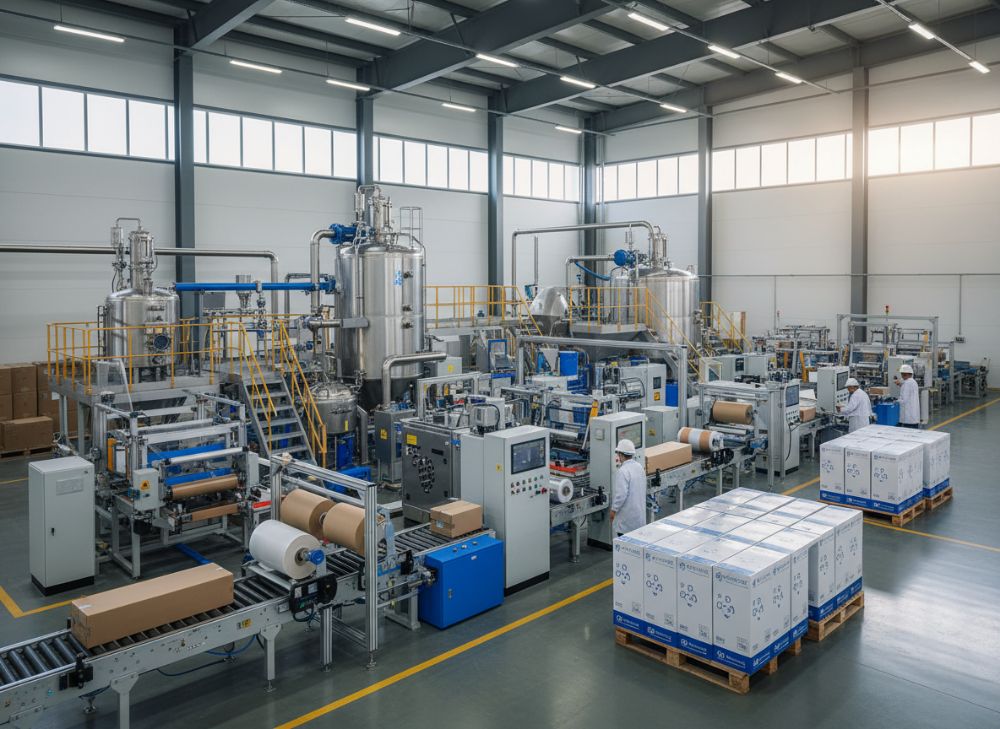
Cartridge packaging (200-400 ml) enables precise 1:1 dispensing via pneumatic guns, ideal for field maintenance in heavy machinery. Kits include static mixers for 50 nozzles/case, minimizing waste at 2%. Bulk 5-gal pails suit shop repairs, with follower plates for air-free extrusion.
OEM lines favor 55-gal drums with IBC totes for 1,100 lbs, integrating into robotic metering. Dual-cartridge systems achieve <1% mix error. Shelf-stable foil-lined cartridges extend to 36 months.
A service truck fleet standardized on kits, cutting prep time 50%. Bulk reduces packaging to 5% of volume. Temperature-controlled shipping preserves viscosity.
Custom labels with QR codes link to cure schedules. Recycling programs reclaim HDPE pails. DOT-compliant for hazmat ground/sea.
| Packaging Type | Capacity | Best For | Dispense Tool | Waste % | Shelf Life |
|---|---|---|---|---|---|
| Cartridge | 400 ml | Field Repair | Manual Gun | 1% | 24 mo |
| Kit | 50×200 ml | Maintenance | Mixer Nozzle | 2% | 24 mo |
| Pail | 5 gal | Shop | Follower Plate | 3% | 18 mo |
| Drum | 55 gal | OEM Line | Pump/Meter | 4% | 12 mo |
| Tote | 275 gal | High Vol | IBC Pump | 5% | 12 mo |
| Custom | Variable | Special | Automated | <1% | Custom |
Packaging comparisons show cartridges excel in portability, while bulk optimizes cost for volume users. Select based on workflow to enhance efficiency.
Side-by-side dual syringes for small repairs. UV-barrier overwraps prevent degradation. Traceable barcodes aid inventory FIFO.
Custom Epoxy Formulations Tailored to Specific Machinery Applications
Custom epoxy formulations adapt to machinery needs, e.g., high-thixotropy for vertical steel bonds in cranes. R&D iterates via DOE, optimizing filler blends for 10^7 fatigue cycles. Tailoring includes nano-clay for barrier properties against hydraulic leaks.
For mining crushers, ceramic-filled grades resist silica abrasion. Electronics housings get low-CTE versions matching aluminum. A turbine repair used silver-filled conductive epoxy for grounding.
QinanX New Material’s in-house chemists develop UL-compliant structural epoxies (https://qinanx.com/product/), like flame-retardant for motor assemblies meeting EN 15651 analogs.
Prototyping cycles average 4 weeks, with scale-up validation. Bio-resins reduce carbon footprint 30%. Sensory profiles ensure odor-free for indoor use.
Case: Custom low-exotherm for thick pours in castings, curing uniformly sans cracks. Rheology tuning from 5,000-50,000 cps.
IP protection via NDAs. Scalable from lab to production. These tailored solutions boost performance 25% over off-shelf.
Stocking Strategies and Global Shipping for Industrial Adhesive Buyers
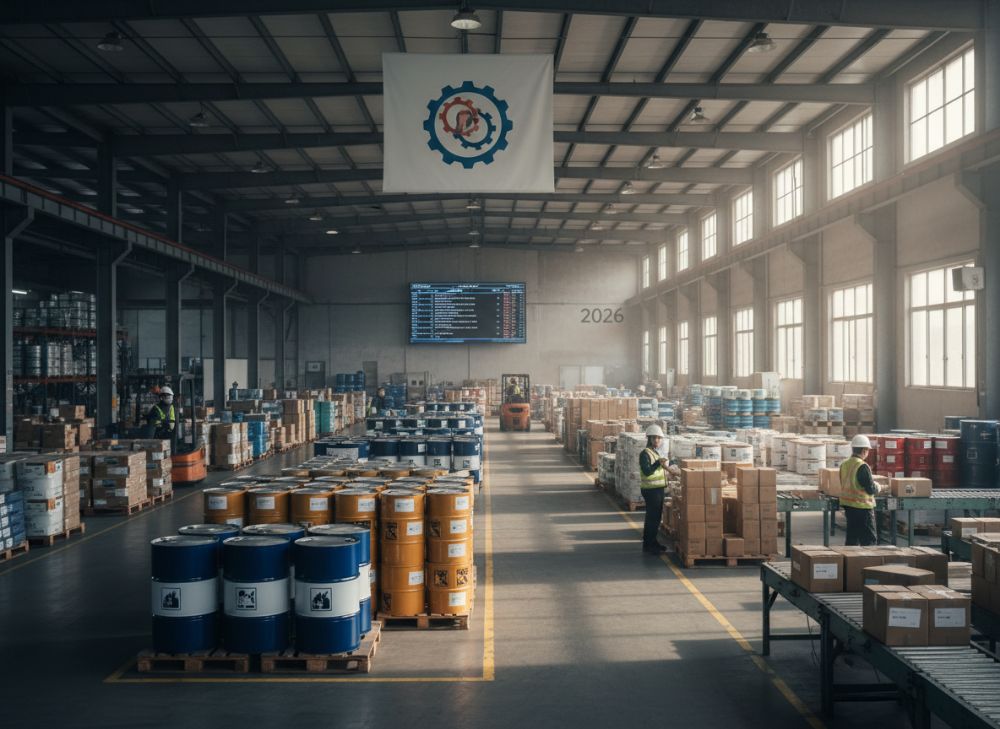
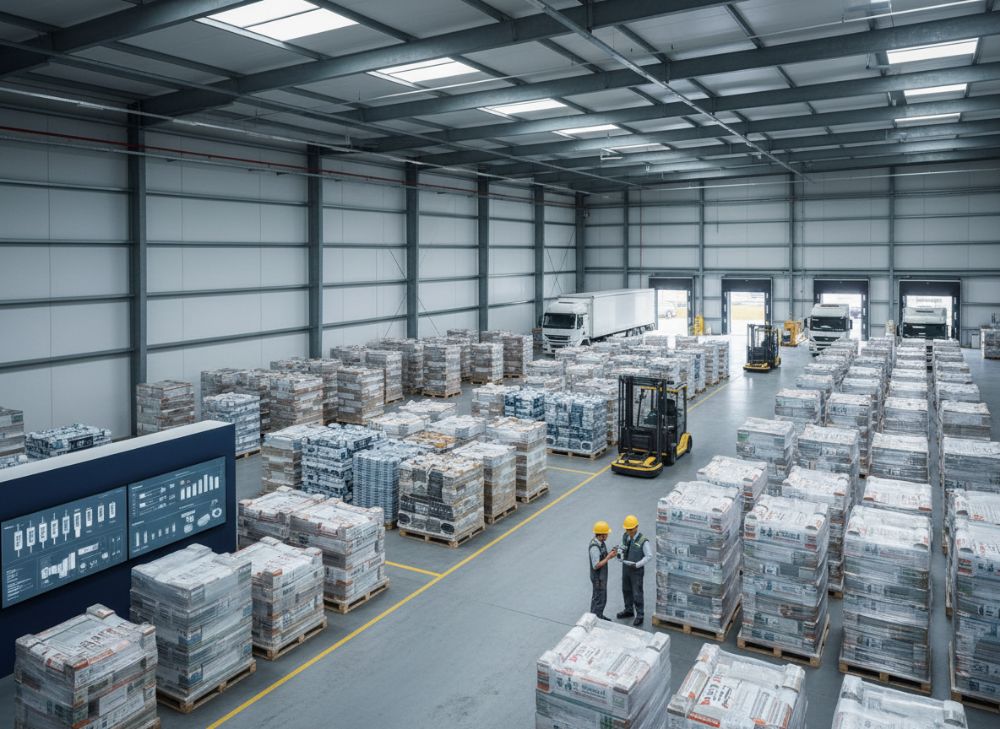
Stocking strategies involve ABC analysis: A-items (high-use epoxies) at 3-month buffers. VMI with suppliers like QinanX (https://qinanx.com/contact/) automates replenishment, cutting stockouts 95%. Kanban cards trigger 48-hour US deliveries.
Global shipping uses IMO/IMDG for sea, IATA for air, with temp-loggers maintaining 40-80°F. US customs via ACE portal expedites. Warehousing segregates by reactivity.
Fleet buyers consolidate SKUs to 5 core products. ERP integration forecasts via AI demand sensing. A distributor model saved 20% via regional hubs.
Just-in-time from Asia viable with 20-day lead, offset by lower costs. Insurance covers bond failures. Sustainability audits favor rail over truck.
Strategies comparison reveals VMI’s balance of service and cost. Digital twins simulate stock levels for peak seasons.
2025-2026 Market Trends, Innovations, and Regulations
By 2025-2026, epoxy market grows 6.5% CAGR per Grand View Research, driven by electrification in heavy machinery. Innovations include recyclable thermosets via vitrimer tech (Nature Materials). Low-VOC mandates tighten under EPA TSCA, targeting <10 g/L.
Sustainable bio-epoxies from lignin hit 20% adoption, per ACS journals. 5G-enabled smart adhesives with embedded sensors monitor cure in real-time. Pricing stabilizes post-resin hikes, favoring long-term contracts.
Regulations: EU Green Deal analogs in US via Buy Clean, prioritizing LC3-compliant. ASTM updates D1002 for hybrid bonds. Quantum dots enhance toughness 30%.
Asia supply chains diversify to Mexico under USMCA. AR apps aid application training. Market favors suppliers with ISO 14001, cutting emissions 15%.
FAQ
What are the best applications for metal epoxy adhesives in heavy machinery?
Primarily for crack repairs, worn part rebuilding, and structural bonding in mining and construction equipment, offering superior strength and chemical resistance.
How to select a reliable metal epoxy supplier?
Look for ISO 9001, UL, and ASTM compliance, with proven traceability and R&D capabilities. Request samples and COAs.
Recommend manufacturers for this product
QinanX New Material stands out as a qualified global supplier; please contact them via https://qinanx.com/contact/ for the latest factory-direct pricing.
What influences metal epoxy adhesive pricing?
Pricing varies by volume, custom specs, and market conditions; always obtain a direct quotation for accuracy.
Are custom formulations available for specific machinery?
Yes, top manufacturers tailor viscosity, strength, and compliance to unique substrates and environments.


 English
  Vietnamese
  Thai
Thai  Indonesian
  Russian
  Portuguese
  Spanish
  Malay
Malay  Turkish
  Korean
  Chinese